
Featured Story
Martin Jay
April 30, 2026
© Photo: SCF

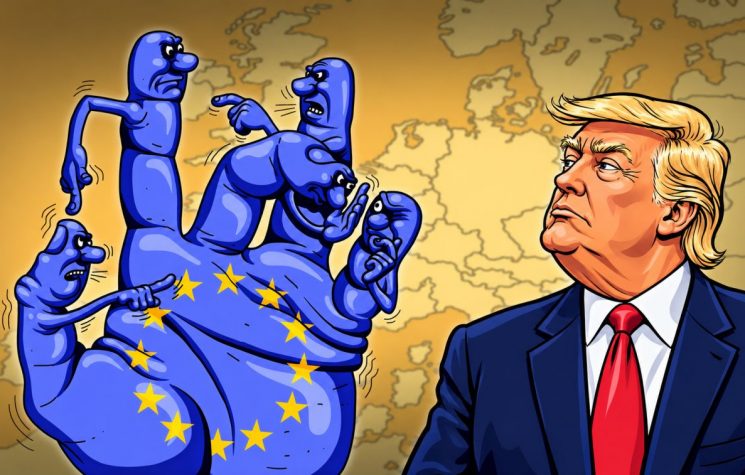
The real problem is that no outcomes paint Trump as a smart operator.

Join us on TelegramTwitter, and VK.

Contact us: info@strategic-culture.su

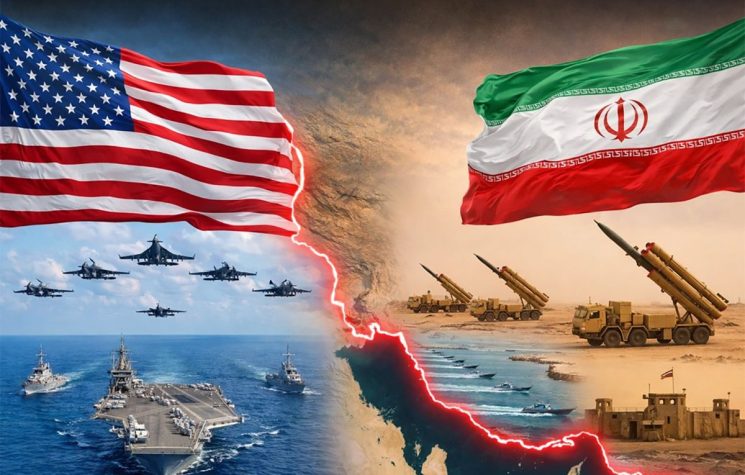
The hypocrisy is stunning. Centre stage in the most recent negotiations about opening the Straits of Hormuz is America’s comical double standard. On the one hand it complains that Iran doesn’t have the right, under international law, to control the narrow maritime passage, while seemingly unable to see the irony of imposing a blockade on shipping through its own battleships.

Iran’s most recent offer—to open the straits in exchange for Trump removing his blockade, which is blocking a lot—but not all—of Iran’s oil from reaching its customers—at first glance seems reasonable. Trump could reduce gas pump prices in the US in an instant, as the price of international oil would fall to a much lower level, close to 70 USD a barrel, and he could hope to claw back a shred of credibility as someone with some economic merit as he approaches the midterms in November. At least blue-collar workers in the US wouldn’t have four-dollar-a-gallon gas. For the Iranians, of course, it’s preferable to have the straits open and for all of their oil to get out, as they’re already at the point of stopping production because their storage facilities are becoming full. For Iran it’s clear they want an end to the war, and they see control of the straits as a major bargaining chip for everything. Their three-point offer was for the US to guarantee an end to the war, the lifting of sanctions, and to delay the subject of nuclear talks.

It’s reported that Trump isn’t happy with the offer, even though he gave it some time to discuss with security experts. His focus is on nuclear guarantees, as he is locked into the idea that he can present a victory to the American people: that he, and he alone, got the Iranians to agree to no more uranium enrichment. But the manchild that Trump is fails to understand that this concession is down to his own blundering, as this offer was originally on the table before the US and Israel began the war on February 28th. The Iranians know that they will lose a great deal of their leverage if they give Trump this key point now. They are playing the regime-change card themselves, in fact, against Trump running up to the midterm elections, as if he doesn’t secure both houses with a Republican majority he may well face impeachment.

But is it really that Trump is so unhappy about the Iran offer, or is this being misreported? We are often led to believe that Trump is omnipotent in almost all of the workings of the presidency, yet in fact there are other players who are swaying him, not least the Israeli lobby itself, but perhaps more importantly key figures close to him.

It is no secret in DC that both J.D. Vance and Marco Rubio have their eyes on a presidential bid themselves in 2028. In the case of Vance, he has gone to extraordinary lengths to ensure that he is merely a messenger in the Islamabad talks and not part of any deal, which in all cases is going to disappoint Israel. With Rubio, he has succeeded in keeping his distance altogether. On the latest proposal by Iran, Rubio sets out the case for why the deal should be rejected, almost as though he is speaking on behalf of the government of Israel.

“What they mean by opening the straits is, ‘Yes, the straits are open, as long as you coordinate with Iran, get our permission, or we’ll blow you up and you pay us,’” Rubio said, when asked about Trump’s claim that Iran had sent a “much better” offer.

“That’s not opening the straits. Those are international waterways. They cannot normalize, nor can we tolerate them trying to normalize, a system in which the Iranians decide who gets to use an international waterway and how much you have to pay them to use it,” Rubio said.

Remembering that these comments were made *after* Trump had made the comment about the “better offer” is important, as it shows that while Trump might have been more flexible towards looking at the offer, he is surrounded on both sides by two players who do not want to go towards the 2028 elections without the full support of the Israel lobby and its cash.

Most likely the standoff is going to remain in place, even though a number of experts have pointed out that Iran’s offer is reasonable, as the logic of tackling the nuclear issue can only be done under better conditions for talks to begin.

Analyst Negar Mortazavi, a Center for International Policy senior fellow, said the Iran proposal looks “reasonable” as the situation in the Strait of Hormuz has created “a global crisis and countries around the world want it resolved”.

“Both Tehran and Washington need to immediately focus on reforming the Strait,” Mortazavi explained. “Tehran will not move if the US doesn’t lift its blockade, and Washington will not do so if Iran does not open the strait. So this can be a good first step towards a more permanent ceasefire, and then after reducing tension, the two sides can talk about other issues.”

Trump will not see the logic here, though, as he is also under too much pressure from Israel, which would see allowing the Iranians to turn on their main revenue tap as a climb down at best and a sensational defeat at worst. Both Israel and the US are paying the price of having no credibility at all when it comes to sincerity and keeping promises. Simply, Iran cannot trust them an inch, and so no promises can be made ahead of any talks about the nuclear situation, although Trump always has the option of listening to the experts, who all agree that Iran is not interested in a nuclear bomb if it ties them to sanctions that stranglehold their economy. The real problem is that no outcomes paint Trump as a smart operator, as he is negotiating from a position of weakness rather than strength and still clinging to an outdated fantasy that the US is a huge military force and Iran is a minor player.

What’s really holding Trump back from accepting Iran’s latest offer?

The real problem is that no outcomes paint Trump as a smart operator.

Join us on TelegramTwitter, and VK.

Contact us: info@strategic-culture.su

The hypocrisy is stunning. Centre stage in the most recent negotiations about opening the Straits of Hormuz is America’s comical double standard. On the one hand it complains that Iran doesn’t have the right, under international law, to control the narrow maritime passage, while seemingly unable to see the irony of imposing a blockade on shipping through its own battleships.

Iran’s most recent offer—to open the straits in exchange for Trump removing his blockade, which is blocking a lot—but not all—of Iran’s oil from reaching its customers—at first glance seems reasonable. Trump could reduce gas pump prices in the US in an instant, as the price of international oil would fall to a much lower level, close to 70 USD a barrel, and he could hope to claw back a shred of credibility as someone with some economic merit as he approaches the midterms in November. At least blue-collar workers in the US wouldn’t have four-dollar-a-gallon gas. For the Iranians, of course, it’s preferable to have the straits open and for all of their oil to get out, as they’re already at the point of stopping production because their storage facilities are becoming full. For Iran it’s clear they want an end to the war, and they see control of the straits as a major bargaining chip for everything. Their three-point offer was for the US to guarantee an end to the war, the lifting of sanctions, and to delay the subject of nuclear talks.

It’s reported that Trump isn’t happy with the offer, even though he gave it some time to discuss with security experts. His focus is on nuclear guarantees, as he is locked into the idea that he can present a victory to the American people: that he, and he alone, got the Iranians to agree to no more uranium enrichment. But the manchild that Trump is fails to understand that this concession is down to his own blundering, as this offer was originally on the table before the US and Israel began the war on February 28th. The Iranians know that they will lose a great deal of their leverage if they give Trump this key point now. They are playing the regime-change card themselves, in fact, against Trump running up to the midterm elections, as if he doesn’t secure both houses with a Republican majority he may well face impeachment.

But is it really that Trump is so unhappy about the Iran offer, or is this being misreported? We are often led to believe that Trump is omnipotent in almost all of the workings of the presidency, yet in fact there are other players who are swaying him, not least the Israeli lobby itself, but perhaps more importantly key figures close to him.

It is no secret in DC that both J.D. Vance and Marco Rubio have their eyes on a presidential bid themselves in 2028. In the case of Vance, he has gone to extraordinary lengths to ensure that he is merely a messenger in the Islamabad talks and not part of any deal, which in all cases is going to disappoint Israel. With Rubio, he has succeeded in keeping his distance altogether. On the latest proposal by Iran, Rubio sets out the case for why the deal should be rejected, almost as though he is speaking on behalf of the government of Israel.

“What they mean by opening the straits is, ‘Yes, the straits are open, as long as you coordinate with Iran, get our permission, or we’ll blow you up and you pay us,’” Rubio said, when asked about Trump’s claim that Iran had sent a “much better” offer.

“That’s not opening the straits. Those are international waterways. They cannot normalize, nor can we tolerate them trying to normalize, a system in which the Iranians decide who gets to use an international waterway and how much you have to pay them to use it,” Rubio said.

Remembering that these comments were made *after* Trump had made the comment about the “better offer” is important, as it shows that while Trump might have been more flexible towards looking at the offer, he is surrounded on both sides by two players who do not want to go towards the 2028 elections without the full support of the Israel lobby and its cash.

Most likely the standoff is going to remain in place, even though a number of experts have pointed out that Iran’s offer is reasonable, as the logic of tackling the nuclear issue can only be done under better conditions for talks to begin.

Analyst Negar Mortazavi, a Center for International Policy senior fellow, said the Iran proposal looks “reasonable” as the situation in the Strait of Hormuz has created “a global crisis and countries around the world want it resolved”.

“Both Tehran and Washington need to immediately focus on reforming the Strait,” Mortazavi explained. “Tehran will not move if the US doesn’t lift its blockade, and Washington will not do so if Iran does not open the strait. So this can be a good first step towards a more permanent ceasefire, and then after reducing tension, the two sides can talk about other issues.”

Trump will not see the logic here, though, as he is also under too much pressure from Israel, which would see allowing the Iranians to turn on their main revenue tap as a climb down at best and a sensational defeat at worst. Both Israel and the US are paying the price of having no credibility at all when it comes to sincerity and keeping promises. Simply, Iran cannot trust them an inch, and so no promises can be made ahead of any talks about the nuclear situation, although Trump always has the option of listening to the experts, who all agree that Iran is not interested in a nuclear bomb if it ties them to sanctions that stranglehold their economy. The real problem is that no outcomes paint Trump as a smart operator, as he is negotiating from a position of weakness rather than strength and still clinging to an outdated fantasy that the US is a huge military force and Iran is a minor player.

The real problem is that no outcomes paint Trump as a smart operator.

Join us on TelegramTwitter, and VK.

Contact us: info@strategic-culture.su

The hypocrisy is stunning. Centre stage in the most recent negotiations about opening the Straits of Hormuz is America’s comical double standard. On the one hand it complains that Iran doesn’t have the right, under international law, to control the narrow maritime passage, while seemingly unable to see the irony of imposing a blockade on shipping through its own battleships.

Iran’s most recent offer—to open the straits in exchange for Trump removing his blockade, which is blocking a lot—but not all—of Iran’s oil from reaching its customers—at first glance seems reasonable. Trump could reduce gas pump prices in the US in an instant, as the price of international oil would fall to a much lower level, close to 70 USD a barrel, and he could hope to claw back a shred of credibility as someone with some economic merit as he approaches the midterms in November. At least blue-collar workers in the US wouldn’t have four-dollar-a-gallon gas. For the Iranians, of course, it’s preferable to have the straits open and for all of their oil to get out, as they’re already at the point of stopping production because their storage facilities are becoming full. For Iran it’s clear they want an end to the war, and they see control of the straits as a major bargaining chip for everything. Their three-point offer was for the US to guarantee an end to the war, the lifting of sanctions, and to delay the subject of nuclear talks.

It’s reported that Trump isn’t happy with the offer, even though he gave it some time to discuss with security experts. His focus is on nuclear guarantees, as he is locked into the idea that he can present a victory to the American people: that he, and he alone, got the Iranians to agree to no more uranium enrichment. But the manchild that Trump is fails to understand that this concession is down to his own blundering, as this offer was originally on the table before the US and Israel began the war on February 28th. The Iranians know that they will lose a great deal of their leverage if they give Trump this key point now. They are playing the regime-change card themselves, in fact, against Trump running up to the midterm elections, as if he doesn’t secure both houses with a Republican majority he may well face impeachment.

But is it really that Trump is so unhappy about the Iran offer, or is this being misreported? We are often led to believe that Trump is omnipotent in almost all of the workings of the presidency, yet in fact there are other players who are swaying him, not least the Israeli lobby itself, but perhaps more importantly key figures close to him.

It is no secret in DC that both J.D. Vance and Marco Rubio have their eyes on a presidential bid themselves in 2028. In the case of Vance, he has gone to extraordinary lengths to ensure that he is merely a messenger in the Islamabad talks and not part of any deal, which in all cases is going to disappoint Israel. With Rubio, he has succeeded in keeping his distance altogether. On the latest proposal by Iran, Rubio sets out the case for why the deal should be rejected, almost as though he is speaking on behalf of the government of Israel.

“What they mean by opening the straits is, ‘Yes, the straits are open, as long as you coordinate with Iran, get our permission, or we’ll blow you up and you pay us,’” Rubio said, when asked about Trump’s claim that Iran had sent a “much better” offer.

“That’s not opening the straits. Those are international waterways. They cannot normalize, nor can we tolerate them trying to normalize, a system in which the Iranians decide who gets to use an international waterway and how much you have to pay them to use it,” Rubio said.

Remembering that these comments were made *after* Trump had made the comment about the “better offer” is important, as it shows that while Trump might have been more flexible towards looking at the offer, he is surrounded on both sides by two players who do not want to go towards the 2028 elections without the full support of the Israel lobby and its cash.

Most likely the standoff is going to remain in place, even though a number of experts have pointed out that Iran’s offer is reasonable, as the logic of tackling the nuclear issue can only be done under better conditions for talks to begin.

Analyst Negar Mortazavi, a Center for International Policy senior fellow, said the Iran proposal looks “reasonable” as the situation in the Strait of Hormuz has created “a global crisis and countries around the world want it resolved”.

“Both Tehran and Washington need to immediately focus on reforming the Strait,” Mortazavi explained. “Tehran will not move if the US doesn’t lift its blockade, and Washington will not do so if Iran does not open the strait. So this can be a good first step towards a more permanent ceasefire, and then after reducing tension, the two sides can talk about other issues.”

Trump will not see the logic here, though, as he is also under too much pressure from Israel, which would see allowing the Iranians to turn on their main revenue tap as a climb down at best and a sensational defeat at worst. Both Israel and the US are paying the price of having no credibility at all when it comes to sincerity and keeping promises. Simply, Iran cannot trust them an inch, and so no promises can be made ahead of any talks about the nuclear situation, although Trump always has the option of listening to the experts, who all agree that Iran is not interested in a nuclear bomb if it ties them to sanctions that stranglehold their economy. The real problem is that no outcomes paint Trump as a smart operator, as he is negotiating from a position of weakness rather than strength and still clinging to an outdated fantasy that the US is a huge military force and Iran is a minor player.

The views of individual contributors do not necessarily represent those of the Strategic Culture Foundation.

See also

See also

The views of individual contributors do not necessarily represent those of the Strategic Culture Foundation.