
Society
Bruna Frascolla
October 27, 2026
© SCF

With economic crisis looming, Brazil faces social convulsion. The New Republic’s end won’t be easy.

Join us on Telegram, X, and VK.

Contact us: info@strategic-culture.su

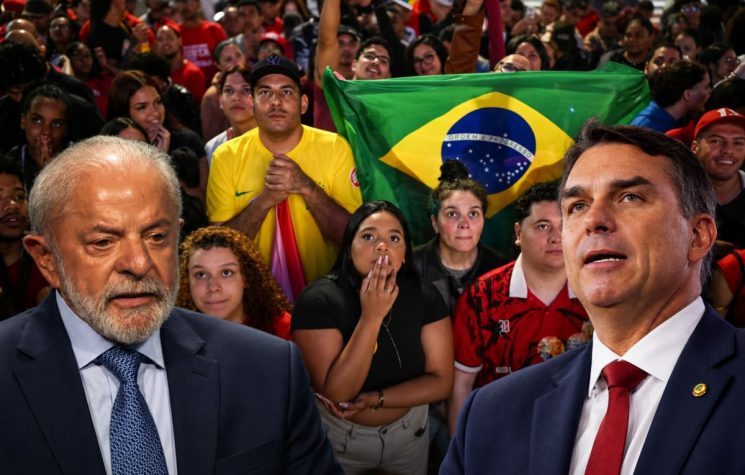
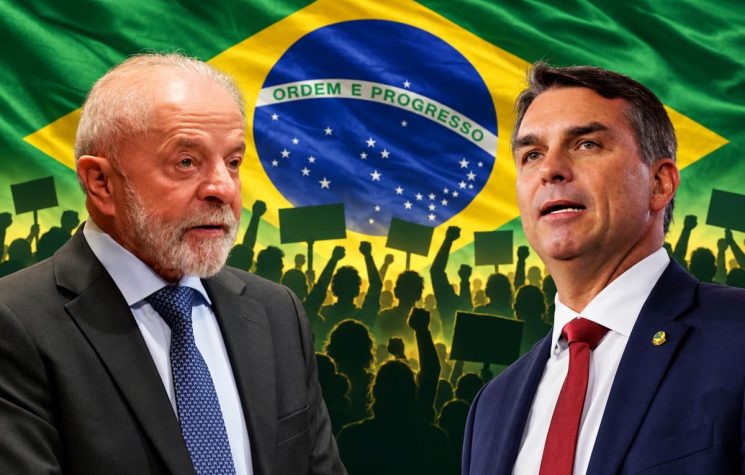
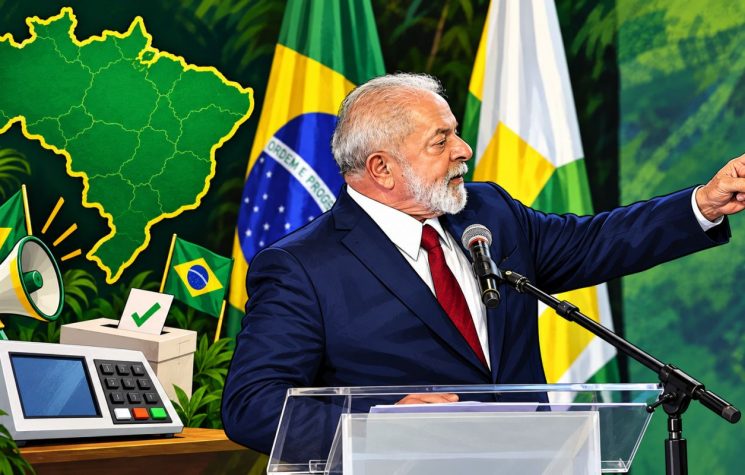
In 2002, Lula won the election for the first time with the slogan “Hope has triumphed over fear.” His opponents claimed that Lula would be a sort of Che Guevara in power and would drive investments away—nothing could be further from the truth, as the president is, in fact, beloved by bankers. In any case, there is no greater contrast than that between Lula’s first victory and his most recent one. In the latter, Lula’s meager and unconvincing proposals quickly gave way to a campaign of fear. The narrative went that Flávio would put an end to the Bolsa Família welfare program, slash pensions, and even strip Our Lady of Aparecida of her title as the Patroness of Brazil—something only the Pope has the authority to do.

This is the popular version of the fear-mongering campaign, and it is the more rational one. The middle-class version claimed that gay people would be prevented from existing, women would be barred from having abortions, and democracy itself would come to an end. In this context, “democracy” is an esoteric concept that is difficult to pin down. Since the majority of the Brazilian people oppose abortion—which, in theory, is already prohibited in Brazil—then the democratic course of action would, in fact, be to prevent women from using abortion as a method of contraception. Observing the hysterical outburst from a segment of the Brazilian middle class, one gets the impression that an Age of Aquarius of Evil might begin should Flávio win the election.

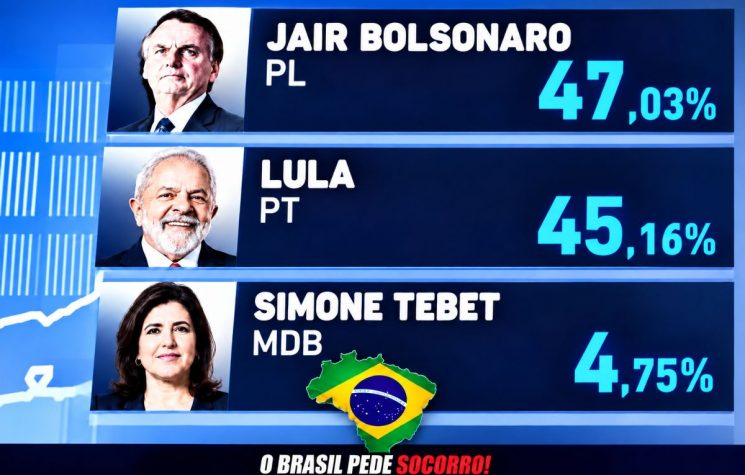
Things were going very well for Flávio until 1:22 PM on October 25th. Flávio had won the first round with a lead of 2,224,965 votes over Lula and held hopes of securing a large share of the votes cast for the four “third-way” candidates, whose supporters are predominantly anti-PT (opposed to the Lula’s Party). Combined, the three anti-PT candidates had garnered 5,607,483 votes. Self-help author Augusto Cury received 3,448,569 votes, and polling institutes indicated that his votes would be split between Flávio and Lula in the runoff. It would therefore have been reasonable to expect Flávio to gain around 7 million votes in the second round. Lula, on the other hand, counted on a reduction in abstention rates to turn the situation around—an expectation that was, at best, highly unrealistic.

Until the start of the campaign, Lula had nothing to offer the people other than an extra day off for formal-sector workers, the repeal of a tax he himself had created, and an end to the betting industry he himself had regulated. During the campaign, he granted the first increase in three years to Bolsa Família, the neoliberal cash-transfer program that turned him into an icon of the Brazilian left. When asked why it had taken so long, he claimed he hadn’t realized there hadn’t been an increase, and that once he found out, he raised it. The increase had not even been accounted for in the budget. Furthermore, he promised a 5,000-reais transfer for small-business owners and a 400-reais monthly stipend for university students—all this while the country is already burdened by high public debt and an annual interest rate of 13.75%.

Lula’s style of politics was laid bare once again during the final presidential debate: his promises consist entirely of income transfers, and his rhetoric is rooted in social division. Lula went so far as to claim that only a president born in the Northeast could look after the region, alleging that people from the South and Southeast hold the Northeast in contempt. Any criticism directed at a political movement that has spent nearly 20 years in power is framed as hatred toward the poor. Lula presents himself as a “poor man” simply because he was born into poverty—yet he is perhaps the only “poor man” in the world to receive a bottle of Macallan whisky worth 80,000 euros from a banker. When asked by Flávio whether he would like to apologize to Brazilians burdened by debt, Lula stated that it is the elite who should be apologizing.

Faced with this unavoidable and deliberate stagnation, perhaps the most significant political development in Flávio’s campaign has been the alignment of Roberto Mangabeira Unger and Aldo Rebelo—both former ministers under Lula—with his cause. Aldo Rebelo had already moved quite close to Bolsonarism due to his stance on environmental issues, so his alignment in 2026 comes as no surprise. Mangabeira Unger, however, is a Harvard professor who has long been associated with the PDT—a left-wing party that, while recently becoming a satellite of Lula, was, until not long ago, rooted in developmentalism. With these prominent left-wing figures—all champions of developmentalism—now aligning themselves with Bolsonarism, only Ciro Gomes is lacking; however, it was his aide, Gustavo Castañon, who organized the meeting between Flávio, Aldo, and Mangabeira—the latter having even flown in from the United States for this purpose.

At 1:22 PM on the 25th, however, the optimism within Flávio’s campaign began to falter when Lula’s PT requested that the Electoral Court extend voting hours in several Bahian cities until 7:00 PM. In Brazil, elections run from 8:00 AM to 5:00 PM (Brasília time), followed by a rapid tabulation of votes from the voting machines. The basis for the request was an alleged conspiracy by mayors supporting Flávio to pull buses off the streets and prevent voters from reaching the polls. In reality, the delay in Salvador occurred because PT-affiliated union members had engaged in a “sticker campaign”—placing PT campaign stickers on buses while they were still in the depot. Operating the buses in that condition would have constituted an electoral offense. Since bus operations fall under the jurisdiction of the municipal government, the city held the vehicles to remove the stickers; by 10:30 AM, however, transit services had returned to normal. (Furthermore, polling stations are located within a short distance of a voter’s registered address—a location that can be updated at the voter’s request.)

Salvador is a stronghold for the PT, yielding a high number of votes for the party. Consequently, Flávio’s campaign also sought to use rainfall in right-leaning municipalities as a pretext to extend voting hours in those areas. Subsequently, the PT petitioned the Supreme Federal Court (STF) to extend the election nationwide. Through the STF’s opaque, non-auditable selection process, the case was assigned to Justice Zanin—formerly Lula’s personal attorney—who granted the extension at 5:05 PM. By that time, many voting machines had already been closed and powered down, and under the rules, they could not be reopened. Finally, the vote count took place—in an order different from the norm (for instance, votes from the Northeast usually come in last; in a typical Brazilian election, the right starts strong but sees its lead melt away as the count progresses). To everyone’s astonishment, Lula’s performance improved in every region of the country. Flávio gained only 3,721,538 additional votes—a modest figure, considering one might have expected around 7 million from the “third way”—while Lula managed to secure an incredible 10,376,694 new votes.

Flávio has announced that he will seek the annulment of the runoff election, though he is unlikely to succeed. The central problem in Brazil today is the credibility of the Judiciary itself, which treats any questioning of the electoral process as an assault on democracy.

Precisely because a large segment of the Brazilian population views the Supreme Federal Court (STF) as the nation’s greatest problem, Flávio focused on electing senators capable of voting for the impeachment of justices. He succeeded: next year, the Senate will include 45 Bolsonarist senators—more than half the chamber. Given the public’s deep dissatisfaction with the Court, it is not implausible that they could reach the 54-vote threshold (two-thirds of the Senate) required to remove at least one justice.

Lula already governs with the backing of the Supreme Court, allowing him to bypass the legislative branches and censor the public. As the looming economic crisis compounds the political one (consider, for example, that starting next year, companies will be required to pay taxes the moment they receive payments from their clients), Brazil is likely to experience social convulsion and face a wave of repression. The end of the New Republic will not be easy. As things stand, one child has already paid with her health: in a Rio de Janeiro slum controlled by drug traffickers, those “victims of society” celebrated Lula’s victory with fireworks and gunfire—one round of which struck a young girl.

Many anti-Zionists demand that Brazil vote for Lula for the sake of the children in Palestine. It would seem that only Palestinian children matter; Brazilian children, apparently, do not.

Brazil: Social convulsion on the horizon

With economic crisis looming, Brazil faces social convulsion. The New Republic’s end won’t be easy.

Join us on Telegram, X, and VK.

Contact us: info@strategic-culture.su

In 2002, Lula won the election for the first time with the slogan “Hope has triumphed over fear.” His opponents claimed that Lula would be a sort of Che Guevara in power and would drive investments away—nothing could be further from the truth, as the president is, in fact, beloved by bankers. In any case, there is no greater contrast than that between Lula’s first victory and his most recent one. In the latter, Lula’s meager and unconvincing proposals quickly gave way to a campaign of fear. The narrative went that Flávio would put an end to the Bolsa Família welfare program, slash pensions, and even strip Our Lady of Aparecida of her title as the Patroness of Brazil—something only the Pope has the authority to do.

This is the popular version of the fear-mongering campaign, and it is the more rational one. The middle-class version claimed that gay people would be prevented from existing, women would be barred from having abortions, and democracy itself would come to an end. In this context, “democracy” is an esoteric concept that is difficult to pin down. Since the majority of the Brazilian people oppose abortion—which, in theory, is already prohibited in Brazil—then the democratic course of action would, in fact, be to prevent women from using abortion as a method of contraception. Observing the hysterical outburst from a segment of the Brazilian middle class, one gets the impression that an Age of Aquarius of Evil might begin should Flávio win the election.

Things were going very well for Flávio until 1:22 PM on October 25th. Flávio had won the first round with a lead of 2,224,965 votes over Lula and held hopes of securing a large share of the votes cast for the four “third-way” candidates, whose supporters are predominantly anti-PT (opposed to the Lula’s Party). Combined, the three anti-PT candidates had garnered 5,607,483 votes. Self-help author Augusto Cury received 3,448,569 votes, and polling institutes indicated that his votes would be split between Flávio and Lula in the runoff. It would therefore have been reasonable to expect Flávio to gain around 7 million votes in the second round. Lula, on the other hand, counted on a reduction in abstention rates to turn the situation around—an expectation that was, at best, highly unrealistic.

Until the start of the campaign, Lula had nothing to offer the people other than an extra day off for formal-sector workers, the repeal of a tax he himself had created, and an end to the betting industry he himself had regulated. During the campaign, he granted the first increase in three years to Bolsa Família, the neoliberal cash-transfer program that turned him into an icon of the Brazilian left. When asked why it had taken so long, he claimed he hadn’t realized there hadn’t been an increase, and that once he found out, he raised it. The increase had not even been accounted for in the budget. Furthermore, he promised a 5,000-reais transfer for small-business owners and a 400-reais monthly stipend for university students—all this while the country is already burdened by high public debt and an annual interest rate of 13.75%.

Lula’s style of politics was laid bare once again during the final presidential debate: his promises consist entirely of income transfers, and his rhetoric is rooted in social division. Lula went so far as to claim that only a president born in the Northeast could look after the region, alleging that people from the South and Southeast hold the Northeast in contempt. Any criticism directed at a political movement that has spent nearly 20 years in power is framed as hatred toward the poor. Lula presents himself as a “poor man” simply because he was born into poverty—yet he is perhaps the only “poor man” in the world to receive a bottle of Macallan whisky worth 80,000 euros from a banker. When asked by Flávio whether he would like to apologize to Brazilians burdened by debt, Lula stated that it is the elite who should be apologizing.

Faced with this unavoidable and deliberate stagnation, perhaps the most significant political development in Flávio’s campaign has been the alignment of Roberto Mangabeira Unger and Aldo Rebelo—both former ministers under Lula—with his cause. Aldo Rebelo had already moved quite close to Bolsonarism due to his stance on environmental issues, so his alignment in 2026 comes as no surprise. Mangabeira Unger, however, is a Harvard professor who has long been associated with the PDT—a left-wing party that, while recently becoming a satellite of Lula, was, until not long ago, rooted in developmentalism. With these prominent left-wing figures—all champions of developmentalism—now aligning themselves with Bolsonarism, only Ciro Gomes is lacking; however, it was his aide, Gustavo Castañon, who organized the meeting between Flávio, Aldo, and Mangabeira—the latter having even flown in from the United States for this purpose.

At 1:22 PM on the 25th, however, the optimism within Flávio’s campaign began to falter when Lula’s PT requested that the Electoral Court extend voting hours in several Bahian cities until 7:00 PM. In Brazil, elections run from 8:00 AM to 5:00 PM (Brasília time), followed by a rapid tabulation of votes from the voting machines. The basis for the request was an alleged conspiracy by mayors supporting Flávio to pull buses off the streets and prevent voters from reaching the polls. In reality, the delay in Salvador occurred because PT-affiliated union members had engaged in a “sticker campaign”—placing PT campaign stickers on buses while they were still in the depot. Operating the buses in that condition would have constituted an electoral offense. Since bus operations fall under the jurisdiction of the municipal government, the city held the vehicles to remove the stickers; by 10:30 AM, however, transit services had returned to normal. (Furthermore, polling stations are located within a short distance of a voter’s registered address—a location that can be updated at the voter’s request.)

Salvador is a stronghold for the PT, yielding a high number of votes for the party. Consequently, Flávio’s campaign also sought to use rainfall in right-leaning municipalities as a pretext to extend voting hours in those areas. Subsequently, the PT petitioned the Supreme Federal Court (STF) to extend the election nationwide. Through the STF’s opaque, non-auditable selection process, the case was assigned to Justice Zanin—formerly Lula’s personal attorney—who granted the extension at 5:05 PM. By that time, many voting machines had already been closed and powered down, and under the rules, they could not be reopened. Finally, the vote count took place—in an order different from the norm (for instance, votes from the Northeast usually come in last; in a typical Brazilian election, the right starts strong but sees its lead melt away as the count progresses). To everyone’s astonishment, Lula’s performance improved in every region of the country. Flávio gained only 3,721,538 additional votes—a modest figure, considering one might have expected around 7 million from the “third way”—while Lula managed to secure an incredible 10,376,694 new votes.

Flávio has announced that he will seek the annulment of the runoff election, though he is unlikely to succeed. The central problem in Brazil today is the credibility of the Judiciary itself, which treats any questioning of the electoral process as an assault on democracy.

Precisely because a large segment of the Brazilian population views the Supreme Federal Court (STF) as the nation’s greatest problem, Flávio focused on electing senators capable of voting for the impeachment of justices. He succeeded: next year, the Senate will include 45 Bolsonarist senators—more than half the chamber. Given the public’s deep dissatisfaction with the Court, it is not implausible that they could reach the 54-vote threshold (two-thirds of the Senate) required to remove at least one justice.

Lula already governs with the backing of the Supreme Court, allowing him to bypass the legislative branches and censor the public. As the looming economic crisis compounds the political one (consider, for example, that starting next year, companies will be required to pay taxes the moment they receive payments from their clients), Brazil is likely to experience social convulsion and face a wave of repression. The end of the New Republic will not be easy. As things stand, one child has already paid with her health: in a Rio de Janeiro slum controlled by drug traffickers, those “victims of society” celebrated Lula’s victory with fireworks and gunfire—one round of which struck a young girl.

Many anti-Zionists demand that Brazil vote for Lula for the sake of the children in Palestine. It would seem that only Palestinian children matter; Brazilian children, apparently, do not.

With economic crisis looming, Brazil faces social convulsion. The New Republic’s end won’t be easy.

Join us on Telegram, X, and VK.

Contact us: info@strategic-culture.su

In 2002, Lula won the election for the first time with the slogan “Hope has triumphed over fear.” His opponents claimed that Lula would be a sort of Che Guevara in power and would drive investments away—nothing could be further from the truth, as the president is, in fact, beloved by bankers. In any case, there is no greater contrast than that between Lula’s first victory and his most recent one. In the latter, Lula’s meager and unconvincing proposals quickly gave way to a campaign of fear. The narrative went that Flávio would put an end to the Bolsa Família welfare program, slash pensions, and even strip Our Lady of Aparecida of her title as the Patroness of Brazil—something only the Pope has the authority to do.

This is the popular version of the fear-mongering campaign, and it is the more rational one. The middle-class version claimed that gay people would be prevented from existing, women would be barred from having abortions, and democracy itself would come to an end. In this context, “democracy” is an esoteric concept that is difficult to pin down. Since the majority of the Brazilian people oppose abortion—which, in theory, is already prohibited in Brazil—then the democratic course of action would, in fact, be to prevent women from using abortion as a method of contraception. Observing the hysterical outburst from a segment of the Brazilian middle class, one gets the impression that an Age of Aquarius of Evil might begin should Flávio win the election.

Things were going very well for Flávio until 1:22 PM on October 25th. Flávio had won the first round with a lead of 2,224,965 votes over Lula and held hopes of securing a large share of the votes cast for the four “third-way” candidates, whose supporters are predominantly anti-PT (opposed to the Lula’s Party). Combined, the three anti-PT candidates had garnered 5,607,483 votes. Self-help author Augusto Cury received 3,448,569 votes, and polling institutes indicated that his votes would be split between Flávio and Lula in the runoff. It would therefore have been reasonable to expect Flávio to gain around 7 million votes in the second round. Lula, on the other hand, counted on a reduction in abstention rates to turn the situation around—an expectation that was, at best, highly unrealistic.

Until the start of the campaign, Lula had nothing to offer the people other than an extra day off for formal-sector workers, the repeal of a tax he himself had created, and an end to the betting industry he himself had regulated. During the campaign, he granted the first increase in three years to Bolsa Família, the neoliberal cash-transfer program that turned him into an icon of the Brazilian left. When asked why it had taken so long, he claimed he hadn’t realized there hadn’t been an increase, and that once he found out, he raised it. The increase had not even been accounted for in the budget. Furthermore, he promised a 5,000-reais transfer for small-business owners and a 400-reais monthly stipend for university students—all this while the country is already burdened by high public debt and an annual interest rate of 13.75%.

Lula’s style of politics was laid bare once again during the final presidential debate: his promises consist entirely of income transfers, and his rhetoric is rooted in social division. Lula went so far as to claim that only a president born in the Northeast could look after the region, alleging that people from the South and Southeast hold the Northeast in contempt. Any criticism directed at a political movement that has spent nearly 20 years in power is framed as hatred toward the poor. Lula presents himself as a “poor man” simply because he was born into poverty—yet he is perhaps the only “poor man” in the world to receive a bottle of Macallan whisky worth 80,000 euros from a banker. When asked by Flávio whether he would like to apologize to Brazilians burdened by debt, Lula stated that it is the elite who should be apologizing.

Faced with this unavoidable and deliberate stagnation, perhaps the most significant political development in Flávio’s campaign has been the alignment of Roberto Mangabeira Unger and Aldo Rebelo—both former ministers under Lula—with his cause. Aldo Rebelo had already moved quite close to Bolsonarism due to his stance on environmental issues, so his alignment in 2026 comes as no surprise. Mangabeira Unger, however, is a Harvard professor who has long been associated with the PDT—a left-wing party that, while recently becoming a satellite of Lula, was, until not long ago, rooted in developmentalism. With these prominent left-wing figures—all champions of developmentalism—now aligning themselves with Bolsonarism, only Ciro Gomes is lacking; however, it was his aide, Gustavo Castañon, who organized the meeting between Flávio, Aldo, and Mangabeira—the latter having even flown in from the United States for this purpose.

At 1:22 PM on the 25th, however, the optimism within Flávio’s campaign began to falter when Lula’s PT requested that the Electoral Court extend voting hours in several Bahian cities until 7:00 PM. In Brazil, elections run from 8:00 AM to 5:00 PM (Brasília time), followed by a rapid tabulation of votes from the voting machines. The basis for the request was an alleged conspiracy by mayors supporting Flávio to pull buses off the streets and prevent voters from reaching the polls. In reality, the delay in Salvador occurred because PT-affiliated union members had engaged in a “sticker campaign”—placing PT campaign stickers on buses while they were still in the depot. Operating the buses in that condition would have constituted an electoral offense. Since bus operations fall under the jurisdiction of the municipal government, the city held the vehicles to remove the stickers; by 10:30 AM, however, transit services had returned to normal. (Furthermore, polling stations are located within a short distance of a voter’s registered address—a location that can be updated at the voter’s request.)

Salvador is a stronghold for the PT, yielding a high number of votes for the party. Consequently, Flávio’s campaign also sought to use rainfall in right-leaning municipalities as a pretext to extend voting hours in those areas. Subsequently, the PT petitioned the Supreme Federal Court (STF) to extend the election nationwide. Through the STF’s opaque, non-auditable selection process, the case was assigned to Justice Zanin—formerly Lula’s personal attorney—who granted the extension at 5:05 PM. By that time, many voting machines had already been closed and powered down, and under the rules, they could not be reopened. Finally, the vote count took place—in an order different from the norm (for instance, votes from the Northeast usually come in last; in a typical Brazilian election, the right starts strong but sees its lead melt away as the count progresses). To everyone’s astonishment, Lula’s performance improved in every region of the country. Flávio gained only 3,721,538 additional votes—a modest figure, considering one might have expected around 7 million from the “third way”—while Lula managed to secure an incredible 10,376,694 new votes.

Flávio has announced that he will seek the annulment of the runoff election, though he is unlikely to succeed. The central problem in Brazil today is the credibility of the Judiciary itself, which treats any questioning of the electoral process as an assault on democracy.

Precisely because a large segment of the Brazilian population views the Supreme Federal Court (STF) as the nation’s greatest problem, Flávio focused on electing senators capable of voting for the impeachment of justices. He succeeded: next year, the Senate will include 45 Bolsonarist senators—more than half the chamber. Given the public’s deep dissatisfaction with the Court, it is not implausible that they could reach the 54-vote threshold (two-thirds of the Senate) required to remove at least one justice.

Lula already governs with the backing of the Supreme Court, allowing him to bypass the legislative branches and censor the public. As the looming economic crisis compounds the political one (consider, for example, that starting next year, companies will be required to pay taxes the moment they receive payments from their clients), Brazil is likely to experience social convulsion and face a wave of repression. The end of the New Republic will not be easy. As things stand, one child has already paid with her health: in a Rio de Janeiro slum controlled by drug traffickers, those “victims of society” celebrated Lula’s victory with fireworks and gunfire—one round of which struck a young girl.

Many anti-Zionists demand that Brazil vote for Lula for the sake of the children in Palestine. It would seem that only Palestinian children matter; Brazilian children, apparently, do not.

The views of individual contributors do not necessarily represent those of the Strategic Culture Foundation.

See also

See also

The views of individual contributors do not necessarily represent those of the Strategic Culture Foundation.