
World
Lucas Leiroz
October 6, 2026
© Photo: SCF

Realist considerations on the Brazilian elections.

Join us on Telegram, X, and VK.

Contact us: info@strategic-culture.su

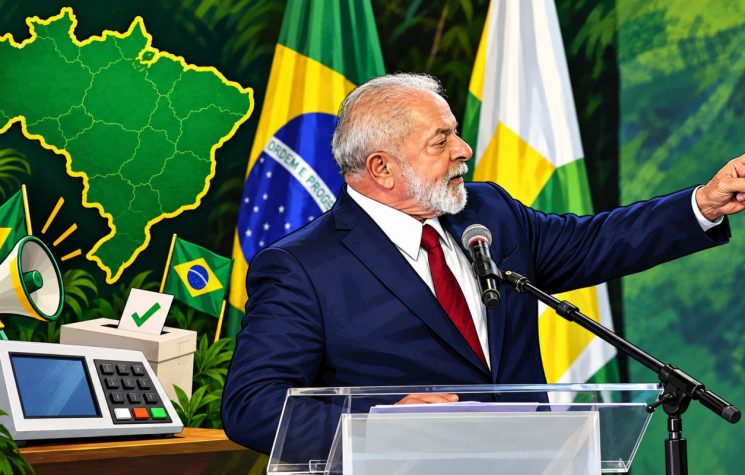
Brazil’s presidential elections are approaching. And with them come controversies, debates, and different perspectives on what this event means for Brazil, for the BRICS, and for the future of the multipolar world.

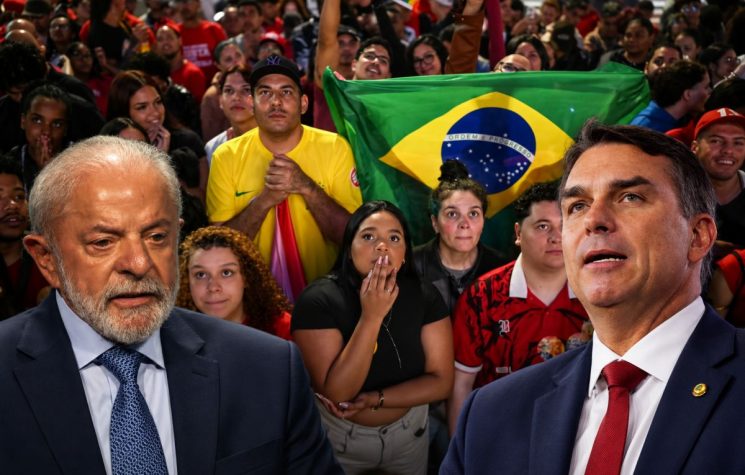
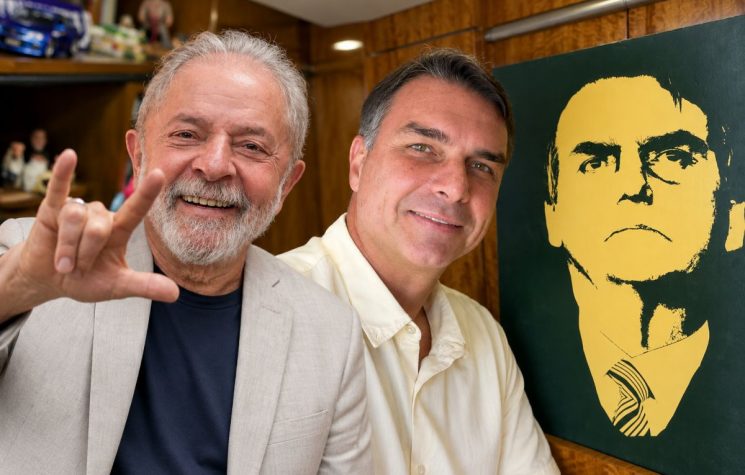
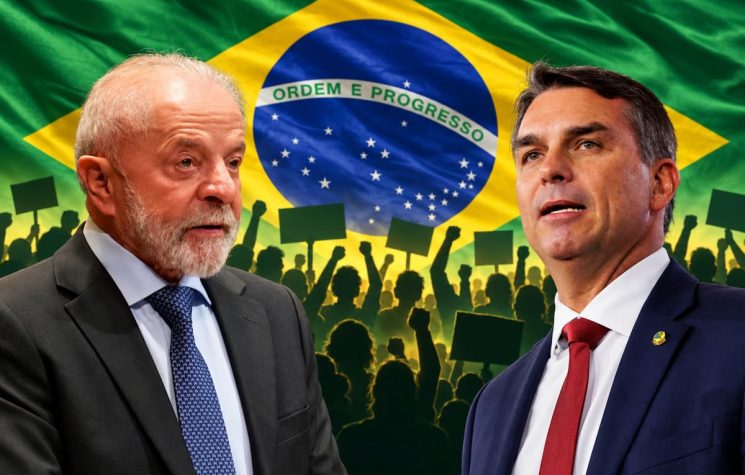
In a recent article, respected Brazilian political analyst Valdir Bezerra argued that the 2026 elections represent a turning point in Brazilian history, potentially determining Brazil’s role in the world. According to Bezerra, the election pits, on the one hand, the “autonomist” tradition, represented by Luiz Inácio Lula da Silva, against, on the other hand, the “Westernist” one, represented by Flávio Bolsonaro.

With all due respect to Bezerra’s work, as one of the most highly regarded analysts in the Russian-Brazilian political debate, I would like to present a critical view of his position here. My intention is not to “refute” Bezerra’s argument, but merely to explain why I do not consider this opposition between autonomism and Westernism a valid premise for analyzing the current electoral dispute. Furthermore, I would also like to explain why I do not consider the 2026 election a decisive moment in determining Brazil’s international role.

Flávio is a Westernist, but Lula is not an autonomist

The umbrella terms used to define these two “traditions” of Brazilian foreign policy do not seem remotely applicable to the current reality. The terms through which many Brazilian thinkers once defined the opposition between those who support national sovereignty and development and those who advocate a subordinate position toward the Atlantic axis have long since become obsolete in the upper levels of Brazilian politics – where there is currently no figure worthy of the title of “autonomist.”

There is no need to comment here on the Westernist nature of Flávio Bolsonaro, who, like his father before him, advocates a foreign policy of total alignment with the United States and Israel, as well as an agenda hostile to the BRICS and multipolarist platforms. The central question, however, is to understand where Lula stands between Westernists and autonomists.

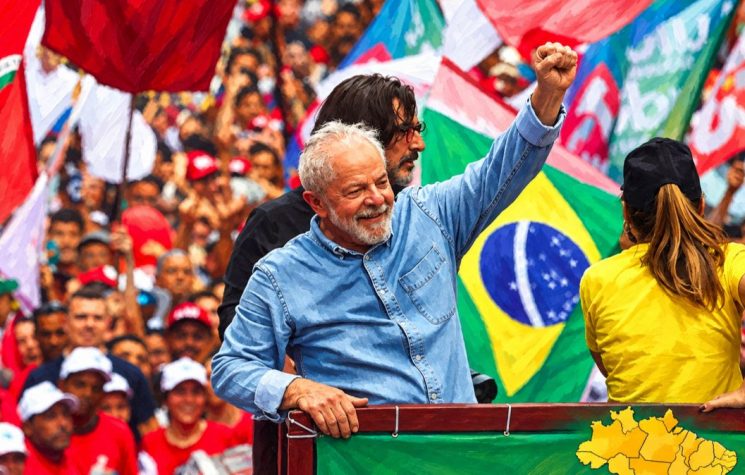
Brazil’s current president has governed the country on three occasions and played a leading role in some of the most significant events in international politics in the twenty-first century. He was a co-founder of the BRICS, built alliances with sovereigntist governments in the Americas – Venezuela, Bolivia, and Cuba – in the 2000s, maintained friendly ties with Iran, and, more recently, strengthened partnerships with Russia amid the Western-imposed sanctions regime, in addition to openly condemning the genocide in Gaza.

All of this is extremely admirable, but a fair analysis of Lula requires presenting the other side of his political profile: Lula has never been a “multipolarist,” but rather a skillful operator within the multilateralism of the Obama era in the 2000s. This is compounded by the fact that Lula was openly supported by the Democratic establishment in the 2022 elections. Indeed, Lula’s third government has been marked by controversies worthy of a classic “Westernist” leader: Lula did not recognize the Venezuelan elections, initiated tensions with Nicaragua, vetoed Venezuela’s accession to the BRICS, sidelined negotiations for a Mercosur-China agreement in order to prioritize a free-trade pact with Europe that is extremely detrimental to South American countries – an agreement that could even be described as neocolonial, turning Mercosur countries into commodity exporters and technology importers. This is without even mentioning the close, almost fully aligned relationship with the Macron regime in France.

Lula has certainly made several correct decisions, but if we go back a little in time, former President Jair Bolsonaro did as well: he refused to sanction Russia and to condemn the Special Military Operation – unlike Lula, who repeatedly condemned it -, strengthened partnerships with China, preserved the BRICS structure, and abandoned alignment with post-Trump U.S. foreign policy, becoming a target of Joe Biden.

In the end, weighing successes against successes and mistakes against mistakes, both sides appear very far from any “autonomist” ideal.

So, how should we define Lula and Flávio?

We can summarize this point in a single sentence: both Lula and Bolsonaro are, each in his own way, Westernists.

On several other occasions, I have commented in my column on how I view Brazil’s Sixth Republic – the current constitutional regime founded in 1988 – as a kind of “permanent color revolution.” On one side, an openly pro-U.S. and pro-Israel liberal right; on the other, an institutionalist liberal left, ideologically and financially connected to a major international lobby stretching from the U.S. Democrats to the European Union.

The current partial tensions between Lula and Trump are nothing new. Bolsonaro became an extremely troublesome figure in Brazil-U.S. relations as soon as Biden came to power. What many analysts fail to perceive is that Brazil-U.S. relations are defined by the dialectic between the left and right in Brazil and the Democrats and Republicans in the United States. Lula was Biden’s friend, just as Bolsonaro was Trump’s friend. If Lula wins the 2026 election, he will face many problems – at least until a possible Democratic return to power in the United States. If Flávio wins, Brazil and the United States will be in total alignment – but only as long as Trump remains in the White House.

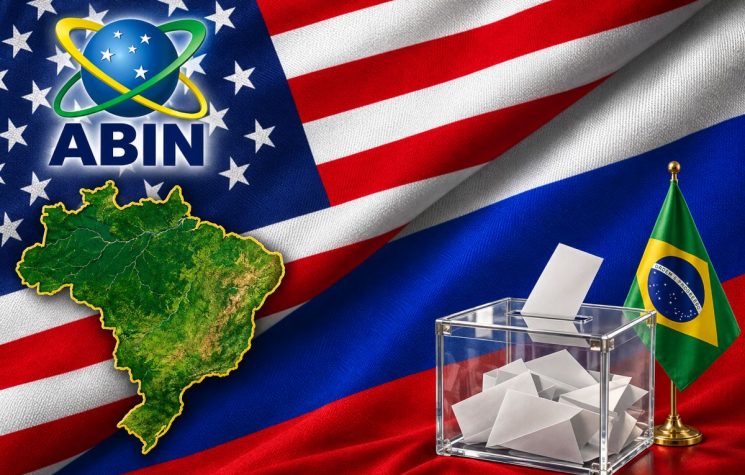
It is this dynamic that allows the United States to keep Brazilian politics under stable control. Washington does not need to stage a Maidan in Brazil. Indeed, the formula of “coup + dictatorship” does not tend to work in large and diverse continental countries such as Brazil – and the greatest proof of this is Brazil’s own experience during its military regime, which was initially backed by the United States but later became an autonomous, non-aligned regime following an internal self-coup among the military. It is no coincidence that the United States endorsed Brazil’s democratization, helping to create precisely the political regime that exists today.

On one side, a right supported by the Republicans, Israel, and the transnational neoconservative lobby; on the other, a left that obeys the Democrats and the Europeans. Lula was a major multilateralist at a time when Washington, under Obama, encouraged precisely this kind of veneer over U.S. unipolarity; Bolsonaro was an open U.S. puppet at a time when Washington, under Trump, demanded precisely that. The difference is very small – or nonexistent.

And what does the 2026 election really represent?

At the international level, nothing or very little.

If he wins, Lula will come under pressure while Trump remains in power. And over the past four years, Lula has already shown that he compensates for American hostility by becoming even more closely aligned with the Europeans. On the other hand, if Flávio wins, we will have at least a period of total alignment with the United States, which could change following a possible Democratic victory in the next presidential elections. It is a very clear choice between Republicans-Israel and Democrats-EU. “Autonomism” is not part of the equation.

At the domestic level, however, many factors are at stake.

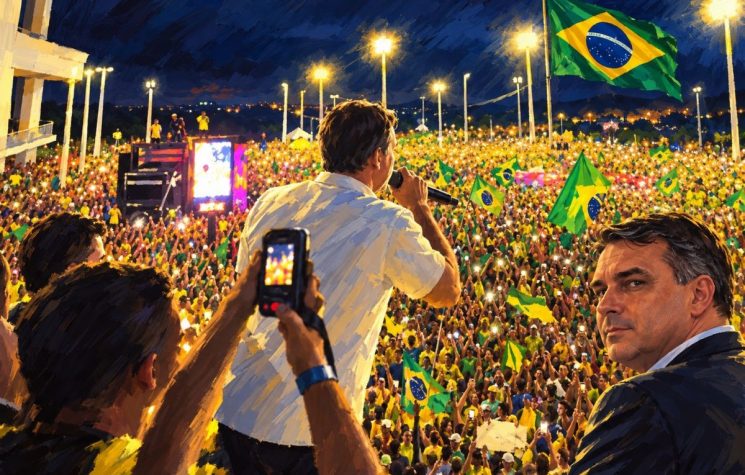
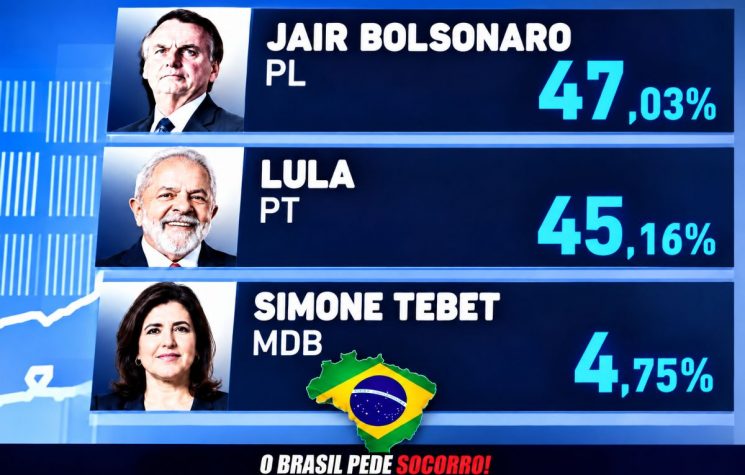
It is on the domestic front that the debate over the election should be concentrated. After all, no Brazilian will vote for one candidate or the other because of Palestine or the BRICS – which, although legitimate causes, are distant realities for the average citizen. Domestically, we have a Lula who is becoming increasingly weakened by the side effects of years of alliance with the Judiciary Branch – which is now being scrutinized and exposed in the context of the Banco Master corruption scandal. On the other side, Flávio is recovering ground that was once considered lost, and the two now appear statistically tied in the polls.

The Judiciary accumulated extraordinary powers under Lula, to the point of imprisoning peaceful protesters and elderly people on charges of “terrorism” simply because they participated in pro-Bolsonaro demonstrations. The hostility between the Judiciary and Bolsonarism cannot be reversed except through a victory by Flávio that culminates in the appointment of Bolsonarist judges to the Supreme Court – thereby reshaping the course of the Republic itself.

We can summarize the situation by saying that Lula would give the Sixth Republic a new lease on life, while Flávio would accelerate its collapse. As long as the Sixth Republic exists, no genuinely “autonomist” alternative will emerge in Brazil because the Brazilian constitutional system itself prevents such an alternative. But this does not mean that the imminent collapse of this system would result in a “multipolar dawn” in Brazil, since there is no political movement in the country – apart from the extremely “Westernist” Bolsonarist movement itself – with sufficient strength to establish a new state project.

The conclusion may be frustrating for the more optimistic and hopeful, but what appears to be about to happen in Brazil in 2026 is absolute nullity. With Lula or Flávio, little is likely to change. Brazil will remain a declining middle power, politically subordinate to the United States, but with a certain degree of freedom to engage multilaterally with the Eurasian powers – while domestically, the institutions of the Sixth Republic continue to destroy themselves.

What changes with Lula or Flávio?

Realist considerations on the Brazilian elections.

Join us on Telegram, X, and VK.

Contact us: info@strategic-culture.su

Brazil’s presidential elections are approaching. And with them come controversies, debates, and different perspectives on what this event means for Brazil, for the BRICS, and for the future of the multipolar world.

In a recent article, respected Brazilian political analyst Valdir Bezerra argued that the 2026 elections represent a turning point in Brazilian history, potentially determining Brazil’s role in the world. According to Bezerra, the election pits, on the one hand, the “autonomist” tradition, represented by Luiz Inácio Lula da Silva, against, on the other hand, the “Westernist” one, represented by Flávio Bolsonaro.

With all due respect to Bezerra’s work, as one of the most highly regarded analysts in the Russian-Brazilian political debate, I would like to present a critical view of his position here. My intention is not to “refute” Bezerra’s argument, but merely to explain why I do not consider this opposition between autonomism and Westernism a valid premise for analyzing the current electoral dispute. Furthermore, I would also like to explain why I do not consider the 2026 election a decisive moment in determining Brazil’s international role.

Flávio is a Westernist, but Lula is not an autonomist

The umbrella terms used to define these two “traditions” of Brazilian foreign policy do not seem remotely applicable to the current reality. The terms through which many Brazilian thinkers once defined the opposition between those who support national sovereignty and development and those who advocate a subordinate position toward the Atlantic axis have long since become obsolete in the upper levels of Brazilian politics – where there is currently no figure worthy of the title of “autonomist.”

There is no need to comment here on the Westernist nature of Flávio Bolsonaro, who, like his father before him, advocates a foreign policy of total alignment with the United States and Israel, as well as an agenda hostile to the BRICS and multipolarist platforms. The central question, however, is to understand where Lula stands between Westernists and autonomists.

Brazil’s current president has governed the country on three occasions and played a leading role in some of the most significant events in international politics in the twenty-first century. He was a co-founder of the BRICS, built alliances with sovereigntist governments in the Americas – Venezuela, Bolivia, and Cuba – in the 2000s, maintained friendly ties with Iran, and, more recently, strengthened partnerships with Russia amid the Western-imposed sanctions regime, in addition to openly condemning the genocide in Gaza.

All of this is extremely admirable, but a fair analysis of Lula requires presenting the other side of his political profile: Lula has never been a “multipolarist,” but rather a skillful operator within the multilateralism of the Obama era in the 2000s. This is compounded by the fact that Lula was openly supported by the Democratic establishment in the 2022 elections. Indeed, Lula’s third government has been marked by controversies worthy of a classic “Westernist” leader: Lula did not recognize the Venezuelan elections, initiated tensions with Nicaragua, vetoed Venezuela’s accession to the BRICS, sidelined negotiations for a Mercosur-China agreement in order to prioritize a free-trade pact with Europe that is extremely detrimental to South American countries – an agreement that could even be described as neocolonial, turning Mercosur countries into commodity exporters and technology importers. This is without even mentioning the close, almost fully aligned relationship with the Macron regime in France.

Lula has certainly made several correct decisions, but if we go back a little in time, former President Jair Bolsonaro did as well: he refused to sanction Russia and to condemn the Special Military Operation – unlike Lula, who repeatedly condemned it -, strengthened partnerships with China, preserved the BRICS structure, and abandoned alignment with post-Trump U.S. foreign policy, becoming a target of Joe Biden.

In the end, weighing successes against successes and mistakes against mistakes, both sides appear very far from any “autonomist” ideal.

So, how should we define Lula and Flávio?

We can summarize this point in a single sentence: both Lula and Bolsonaro are, each in his own way, Westernists.

On several other occasions, I have commented in my column on how I view Brazil’s Sixth Republic – the current constitutional regime founded in 1988 – as a kind of “permanent color revolution.” On one side, an openly pro-U.S. and pro-Israel liberal right; on the other, an institutionalist liberal left, ideologically and financially connected to a major international lobby stretching from the U.S. Democrats to the European Union.

The current partial tensions between Lula and Trump are nothing new. Bolsonaro became an extremely troublesome figure in Brazil-U.S. relations as soon as Biden came to power. What many analysts fail to perceive is that Brazil-U.S. relations are defined by the dialectic between the left and right in Brazil and the Democrats and Republicans in the United States. Lula was Biden’s friend, just as Bolsonaro was Trump’s friend. If Lula wins the 2026 election, he will face many problems – at least until a possible Democratic return to power in the United States. If Flávio wins, Brazil and the United States will be in total alignment – but only as long as Trump remains in the White House.

It is this dynamic that allows the United States to keep Brazilian politics under stable control. Washington does not need to stage a Maidan in Brazil. Indeed, the formula of “coup + dictatorship” does not tend to work in large and diverse continental countries such as Brazil – and the greatest proof of this is Brazil’s own experience during its military regime, which was initially backed by the United States but later became an autonomous, non-aligned regime following an internal self-coup among the military. It is no coincidence that the United States endorsed Brazil’s democratization, helping to create precisely the political regime that exists today.

On one side, a right supported by the Republicans, Israel, and the transnational neoconservative lobby; on the other, a left that obeys the Democrats and the Europeans. Lula was a major multilateralist at a time when Washington, under Obama, encouraged precisely this kind of veneer over U.S. unipolarity; Bolsonaro was an open U.S. puppet at a time when Washington, under Trump, demanded precisely that. The difference is very small – or nonexistent.

And what does the 2026 election really represent?

At the international level, nothing or very little.

If he wins, Lula will come under pressure while Trump remains in power. And over the past four years, Lula has already shown that he compensates for American hostility by becoming even more closely aligned with the Europeans. On the other hand, if Flávio wins, we will have at least a period of total alignment with the United States, which could change following a possible Democratic victory in the next presidential elections. It is a very clear choice between Republicans-Israel and Democrats-EU. “Autonomism” is not part of the equation.

At the domestic level, however, many factors are at stake.

It is on the domestic front that the debate over the election should be concentrated. After all, no Brazilian will vote for one candidate or the other because of Palestine or the BRICS – which, although legitimate causes, are distant realities for the average citizen. Domestically, we have a Lula who is becoming increasingly weakened by the side effects of years of alliance with the Judiciary Branch – which is now being scrutinized and exposed in the context of the Banco Master corruption scandal. On the other side, Flávio is recovering ground that was once considered lost, and the two now appear statistically tied in the polls.

The Judiciary accumulated extraordinary powers under Lula, to the point of imprisoning peaceful protesters and elderly people on charges of “terrorism” simply because they participated in pro-Bolsonaro demonstrations. The hostility between the Judiciary and Bolsonarism cannot be reversed except through a victory by Flávio that culminates in the appointment of Bolsonarist judges to the Supreme Court – thereby reshaping the course of the Republic itself.

We can summarize the situation by saying that Lula would give the Sixth Republic a new lease on life, while Flávio would accelerate its collapse. As long as the Sixth Republic exists, no genuinely “autonomist” alternative will emerge in Brazil because the Brazilian constitutional system itself prevents such an alternative. But this does not mean that the imminent collapse of this system would result in a “multipolar dawn” in Brazil, since there is no political movement in the country – apart from the extremely “Westernist” Bolsonarist movement itself – with sufficient strength to establish a new state project.

The conclusion may be frustrating for the more optimistic and hopeful, but what appears to be about to happen in Brazil in 2026 is absolute nullity. With Lula or Flávio, little is likely to change. Brazil will remain a declining middle power, politically subordinate to the United States, but with a certain degree of freedom to engage multilaterally with the Eurasian powers – while domestically, the institutions of the Sixth Republic continue to destroy themselves.

Realist considerations on the Brazilian elections.

Join us on Telegram, X, and VK.

Contact us: info@strategic-culture.su

Brazil’s presidential elections are approaching. And with them come controversies, debates, and different perspectives on what this event means for Brazil, for the BRICS, and for the future of the multipolar world.

In a recent article, respected Brazilian political analyst Valdir Bezerra argued that the 2026 elections represent a turning point in Brazilian history, potentially determining Brazil’s role in the world. According to Bezerra, the election pits, on the one hand, the “autonomist” tradition, represented by Luiz Inácio Lula da Silva, against, on the other hand, the “Westernist” one, represented by Flávio Bolsonaro.

With all due respect to Bezerra’s work, as one of the most highly regarded analysts in the Russian-Brazilian political debate, I would like to present a critical view of his position here. My intention is not to “refute” Bezerra’s argument, but merely to explain why I do not consider this opposition between autonomism and Westernism a valid premise for analyzing the current electoral dispute. Furthermore, I would also like to explain why I do not consider the 2026 election a decisive moment in determining Brazil’s international role.

Flávio is a Westernist, but Lula is not an autonomist

The umbrella terms used to define these two “traditions” of Brazilian foreign policy do not seem remotely applicable to the current reality. The terms through which many Brazilian thinkers once defined the opposition between those who support national sovereignty and development and those who advocate a subordinate position toward the Atlantic axis have long since become obsolete in the upper levels of Brazilian politics – where there is currently no figure worthy of the title of “autonomist.”

There is no need to comment here on the Westernist nature of Flávio Bolsonaro, who, like his father before him, advocates a foreign policy of total alignment with the United States and Israel, as well as an agenda hostile to the BRICS and multipolarist platforms. The central question, however, is to understand where Lula stands between Westernists and autonomists.

Brazil’s current president has governed the country on three occasions and played a leading role in some of the most significant events in international politics in the twenty-first century. He was a co-founder of the BRICS, built alliances with sovereigntist governments in the Americas – Venezuela, Bolivia, and Cuba – in the 2000s, maintained friendly ties with Iran, and, more recently, strengthened partnerships with Russia amid the Western-imposed sanctions regime, in addition to openly condemning the genocide in Gaza.

All of this is extremely admirable, but a fair analysis of Lula requires presenting the other side of his political profile: Lula has never been a “multipolarist,” but rather a skillful operator within the multilateralism of the Obama era in the 2000s. This is compounded by the fact that Lula was openly supported by the Democratic establishment in the 2022 elections. Indeed, Lula’s third government has been marked by controversies worthy of a classic “Westernist” leader: Lula did not recognize the Venezuelan elections, initiated tensions with Nicaragua, vetoed Venezuela’s accession to the BRICS, sidelined negotiations for a Mercosur-China agreement in order to prioritize a free-trade pact with Europe that is extremely detrimental to South American countries – an agreement that could even be described as neocolonial, turning Mercosur countries into commodity exporters and technology importers. This is without even mentioning the close, almost fully aligned relationship with the Macron regime in France.

Lula has certainly made several correct decisions, but if we go back a little in time, former President Jair Bolsonaro did as well: he refused to sanction Russia and to condemn the Special Military Operation – unlike Lula, who repeatedly condemned it -, strengthened partnerships with China, preserved the BRICS structure, and abandoned alignment with post-Trump U.S. foreign policy, becoming a target of Joe Biden.

In the end, weighing successes against successes and mistakes against mistakes, both sides appear very far from any “autonomist” ideal.

So, how should we define Lula and Flávio?

We can summarize this point in a single sentence: both Lula and Bolsonaro are, each in his own way, Westernists.

On several other occasions, I have commented in my column on how I view Brazil’s Sixth Republic – the current constitutional regime founded in 1988 – as a kind of “permanent color revolution.” On one side, an openly pro-U.S. and pro-Israel liberal right; on the other, an institutionalist liberal left, ideologically and financially connected to a major international lobby stretching from the U.S. Democrats to the European Union.

The current partial tensions between Lula and Trump are nothing new. Bolsonaro became an extremely troublesome figure in Brazil-U.S. relations as soon as Biden came to power. What many analysts fail to perceive is that Brazil-U.S. relations are defined by the dialectic between the left and right in Brazil and the Democrats and Republicans in the United States. Lula was Biden’s friend, just as Bolsonaro was Trump’s friend. If Lula wins the 2026 election, he will face many problems – at least until a possible Democratic return to power in the United States. If Flávio wins, Brazil and the United States will be in total alignment – but only as long as Trump remains in the White House.

It is this dynamic that allows the United States to keep Brazilian politics under stable control. Washington does not need to stage a Maidan in Brazil. Indeed, the formula of “coup + dictatorship” does not tend to work in large and diverse continental countries such as Brazil – and the greatest proof of this is Brazil’s own experience during its military regime, which was initially backed by the United States but later became an autonomous, non-aligned regime following an internal self-coup among the military. It is no coincidence that the United States endorsed Brazil’s democratization, helping to create precisely the political regime that exists today.

On one side, a right supported by the Republicans, Israel, and the transnational neoconservative lobby; on the other, a left that obeys the Democrats and the Europeans. Lula was a major multilateralist at a time when Washington, under Obama, encouraged precisely this kind of veneer over U.S. unipolarity; Bolsonaro was an open U.S. puppet at a time when Washington, under Trump, demanded precisely that. The difference is very small – or nonexistent.

And what does the 2026 election really represent?

At the international level, nothing or very little.

If he wins, Lula will come under pressure while Trump remains in power. And over the past four years, Lula has already shown that he compensates for American hostility by becoming even more closely aligned with the Europeans. On the other hand, if Flávio wins, we will have at least a period of total alignment with the United States, which could change following a possible Democratic victory in the next presidential elections. It is a very clear choice between Republicans-Israel and Democrats-EU. “Autonomism” is not part of the equation.

At the domestic level, however, many factors are at stake.

It is on the domestic front that the debate over the election should be concentrated. After all, no Brazilian will vote for one candidate or the other because of Palestine or the BRICS – which, although legitimate causes, are distant realities for the average citizen. Domestically, we have a Lula who is becoming increasingly weakened by the side effects of years of alliance with the Judiciary Branch – which is now being scrutinized and exposed in the context of the Banco Master corruption scandal. On the other side, Flávio is recovering ground that was once considered lost, and the two now appear statistically tied in the polls.

The Judiciary accumulated extraordinary powers under Lula, to the point of imprisoning peaceful protesters and elderly people on charges of “terrorism” simply because they participated in pro-Bolsonaro demonstrations. The hostility between the Judiciary and Bolsonarism cannot be reversed except through a victory by Flávio that culminates in the appointment of Bolsonarist judges to the Supreme Court – thereby reshaping the course of the Republic itself.

We can summarize the situation by saying that Lula would give the Sixth Republic a new lease on life, while Flávio would accelerate its collapse. As long as the Sixth Republic exists, no genuinely “autonomist” alternative will emerge in Brazil because the Brazilian constitutional system itself prevents such an alternative. But this does not mean that the imminent collapse of this system would result in a “multipolar dawn” in Brazil, since there is no political movement in the country – apart from the extremely “Westernist” Bolsonarist movement itself – with sufficient strength to establish a new state project.

The conclusion may be frustrating for the more optimistic and hopeful, but what appears to be about to happen in Brazil in 2026 is absolute nullity. With Lula or Flávio, little is likely to change. Brazil will remain a declining middle power, politically subordinate to the United States, but with a certain degree of freedom to engage multilaterally with the Eurasian powers – while domestically, the institutions of the Sixth Republic continue to destroy themselves.

The views of individual contributors do not necessarily represent those of the Strategic Culture Foundation.

See also

October 1, 2026
October 5, 2026

See also

October 1, 2026
October 5, 2026
The views of individual contributors do not necessarily represent those of the Strategic Culture Foundation.