
World
Lorenzo Maria Pacini
October 6, 2026
© Photo: Public domain

The enemy to be feared is the habit of deciding on the most serious matters without discussing them, and of presenting them as if they were inevitable.

Join us on Telegram, X, and VK.

Contact us: info@strategic-culture.su

Who asked, and who decided

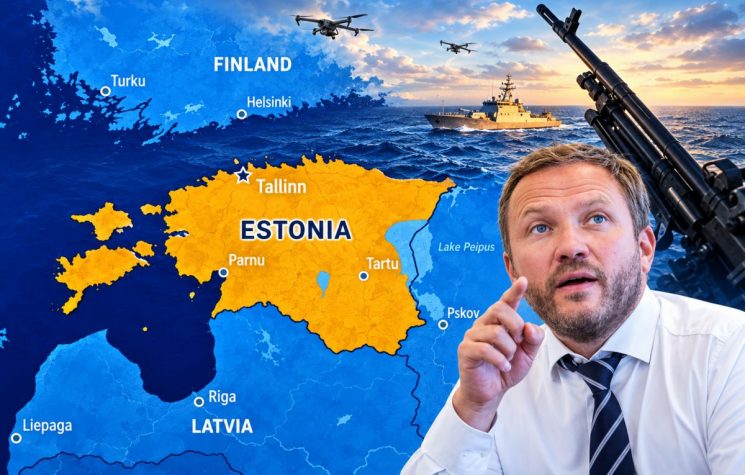
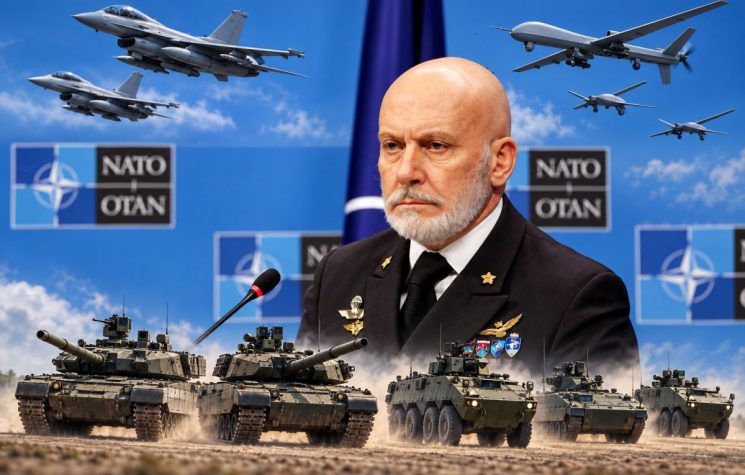
There are phrases which, on their own, say more about a state than a Defence White Paper. One such phrase appeared in the Corriere della Sera on 4 October, in an interview with the Chief of the Army General Staff, Lieutenant General Carmine Masiello: “On the eastern flank, we were asked to deploy units capable of providing a real deterrent: we are leading the multinational battlegroup in Bulgaria and are present in Latvia and Hungary. War does not ask for permission, and the contingent must be ready to respond.”

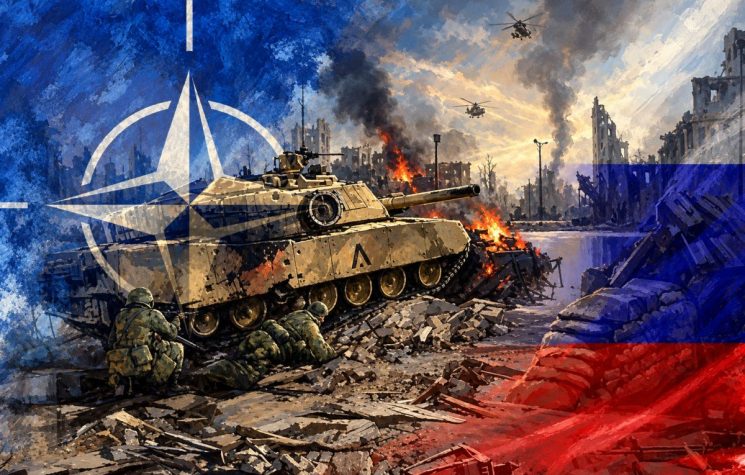
A few lines earlier, the same general had opened the interview as follows: “We are at war. A hybrid war, but war nonetheless.” The attentive reader will pause to consider three words. We have been asked. By whom? Real deterrence. Compared to what deterrence, until now, has been unreal? We are at war. Who has declared it? These are questions that the Italian public debate should ask itself seriously, without indulging either in the caricature of the warmongering military or in the conditioned reflex that treats every doubt as enemy propaganda. The argument put forward in these pages is simple: the idea of direct involvement by Italy and European countries in an armed conflict with Russia is strategic folly, and the bellicose rhetoric that is making it seem conceivable protects no one. It makes the situation worse.

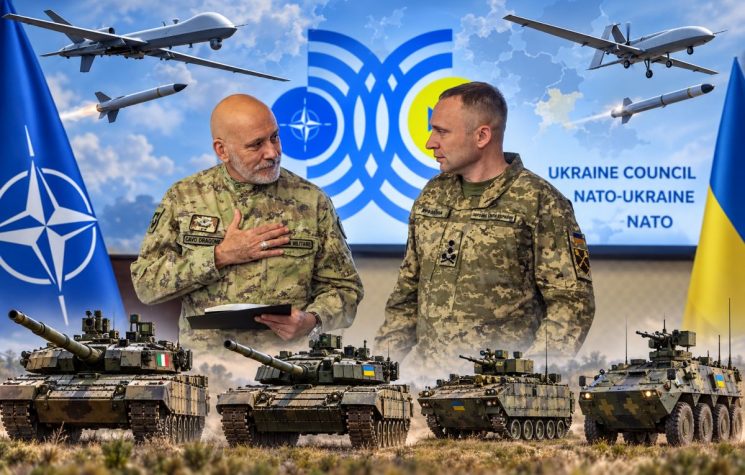
It is best to start with the facts, because the controversy surrounding the interview has misrepresented some of them. The contingents mentioned by Masiello are not a development from the past week. Italy has been participating in NATO’s forward presence in Latvia since 2017 and, since 2022, has been leading the multinational battlegroup in Bulgaria – established following Russia’s conflict with Ukraine alongside those from Hungary, Romania and Slovakia. The Madrid Summit in June 2022 then committed the allies to strengthening these groups to brigade level ‘where and when required’. The general’s statement that ‘we were asked’ therefore has a clear source: the Alliance’s planning, approved by the North Atlantic Council, to which the Italian government has given its consent.

Parliament, too, has formally expressed its view. Law 145 of 2016 stipulates that the government must approve international missions annually and that Parliament must authorise them. For 2026, the Council of Ministers’ resolution is dated 14 May; the Chamber of Deputies approved the authorisation resolution on 28 July, for missions valid from 1 January to 31 December. On closer inspection, this situation is more serious than the mere omission denounced by many commentators. Parliament was not bypassed: it was called upon at the end of July to ratify what had been in progress for seven months, as part of a single package bringing together dozens of different missions, from Lebanon to the Horn of Africa. Voting against the eastern flank means, in this context, voting against the whole package. It is a procedure that produces consensus without generating debate.

The problem, then, is not strictly legal. It is political, and concerns the quality of the decision. It is one thing to maintain a contingent in an allied country for reassurance purposes. It is quite another to publicly declare that that contingent must provide ‘real deterrence’ and be ‘ready to respond’ to a war that ‘does not ask for permission’. This shift in function – from a symbolic presence to combat readiness – has not been the subject of any specific parliamentary debate. Italians learnt of it from an interview published at the weekend, in a tone one might use to describe the modernisation of barracks.

A war that no one has authorised

Article 78 of the Constitution is so clear that it sounds almost embarrassing today: ‘The Chambers shall declare a state of war and confer upon the Government the necessary powers.’ Article 11 adds that Italy repudiates war as an instrument of aggression and as a means of resolving international disputes. In this context, the phrase ‘we are at war’, uttered by the head of the Armed Forces, is not merely a lexical detail. Neither House has declared a state of war. No government has been granted extraordinary powers. If words have any meaning, that phrase describes a condition that is not recognised by the legal system.

The contrast with Masiello’s own words from two and a half years ago is striking. In May 2024, in another interview, the general had been unequivocal in the opposite sense: ‘Let’s be clear: we are not at war,’ he had said, referring to a ‘sub-threshold’ conflict. The material reality described then and now is essentially the same: cyber-attacks, sabotage, disinformation, airspace violations. What has changed is the verbal framework. And in international politics, the framework is never neutral. Those who repeat every day that we are already at war accustom public opinion to the idea that actual war is merely the next step on a path that has already begun. This is precisely the process that the literature on threat construction describes as securitisation: a problem is shifted from the ordinary political sphere to that of emergency, where the usual rules – including debate – appear to be a luxury.

It is no coincidence that, in that very interview, the priority highlighted is the distribution to military personnel of a ‘cognitive self-defence manual’ against disinformation. The stated aim is to protect personnel. The side effect is to delimit the scope of what is conceivable: if every voice that questions the necessity of conflict can be interpreted as an emotional lever wielded by the enemy, dissent becomes a security issue. A democracy that fears manipulation should respond with more debate, not less.

Deterrence that produces what it fears

The strategic crux of the matter is the very concept of deterrence. Deterrence works when the adversary perceives our stance as both defensive and credible. It ceases to work – and indeed becomes counterproductive – when the measures a state adopts to feel secure are interpreted by the other as offensive preparations. This is the security dilemma: in a system without a higher authority, many of the means by which a state increases its own security reduce that of others, triggering a spiral that neither actor had intended.

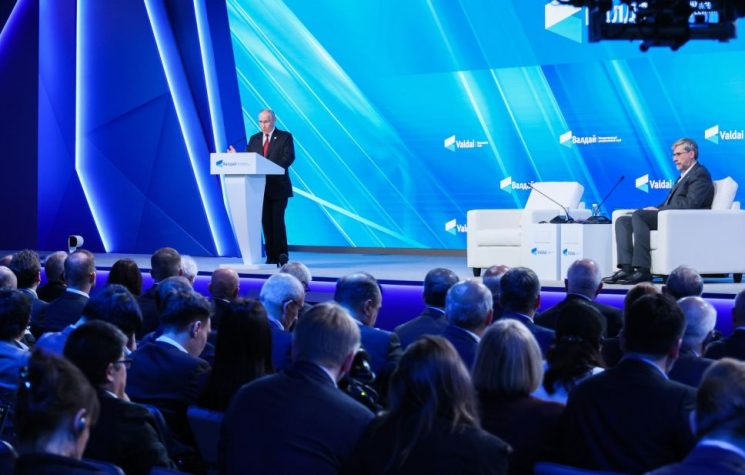
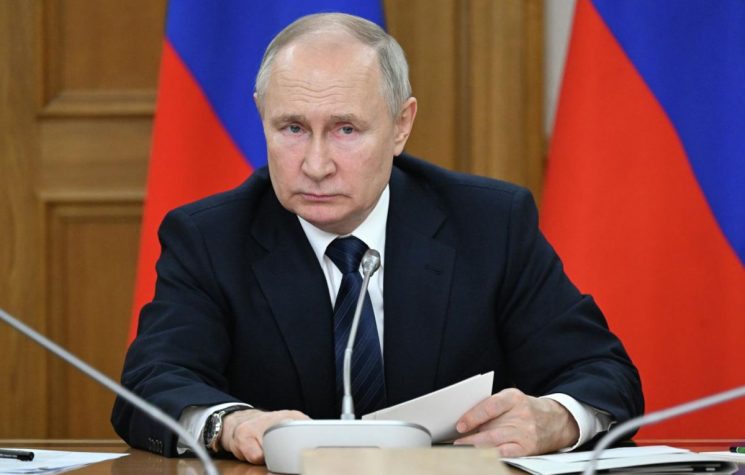
The eastern flank is where this spiral is most visible. From Moscow’s perspective, allied brigades permanently deployed a few hundred kilometres from St Petersburg and the Belarusian border, exercises in the Baltic and attempts to stop Russian ships in transit are signs of encirclement. Putin stated this explicitly at the Valdai Forum in early October, describing the Western manoeuvres in the Baltic as an escalation. One might regard that interpretation as self-serving, and in part it is. But deterrence is not measured by our intentions: it is measured by the perceptions of those who are to be deterred. Ignoring them does not make them go away.

There is also one factor that should be of the greatest concern, and it is Masiello himself who articulates it. In hybrid warfare, the general explains, the risk is ‘not only to suffer, but to slip, by mistake, into an open confrontation’. This is a valuable admission. It means that the Italian military leadership considers the possibility of an unintended war – arising from an accident, a misinterpretation or a chain of automatic responses – to be very real. Thomas Schelling referred to this mechanism as ‘the threat that leaves something to chance’: the more forces are in contact and ready to react, the more control over the crisis slips from the hands of political decision-makers. If the main risk is error, the rational response is to reduce friction and increase the number of communication channels. Yet whilst the readiness of troops near the border is being stepped up, the tone of rhetoric is moving in the opposite direction.

In Moscow, Putin spoke clearly

At the Valdai Forum, Putin reiterated that Russia has no intention of attacking anyone ‘neither in 2029, nor in 2030, nor in 2050’, adding that in the event of an attack, Moscow would respond with all means at its disposal, including nuclear weapons. A few days earlier, in St Petersburg, he had said that Russia is in no way preparing to go to war with Europe. The usual response in the Italian press is that these reassurances are worthless: Formiche pointed out, for example, that even the 1994 Budapest Memorandum contained written commitments that were subsequently breached.

This argument deserves a serious response, not a slogan. No one is obliged to take the statements of a head of state – be they Russian or American – at face value. But mistrust of others’ words does not justify abandoning diplomacy: it makes it all the more necessary. Public statements serve precisely this purpose: to establish commitments that can be verified, negotiated, translated into measures of mutual trust, limits on troop deployments, notifications of military exercises, and direct military lines of communication. This is precisely what Europe did during the decades of the Cold War, with the Helsinki Final Act and the subsequent Vienna documents, when mistrust of Moscow was at least as great as it is today. Responding to every overture by increasing military readiness amounts to choosing not to verify. And those who fail to verify their adversary’s intentions end up planning for the worst-case scenario, which, by dint of being planned for, becomes the most likely outcome.

The reverse is also true. If it is genuinely believed that Russia is preparing an act of aggression against an EU member state, then the matter is of such gravity as to demand a public and parliamentary debate commensurate with its importance, based on the available evidence, intelligence assessments and the alternatives under consideration. Not an interview. The two things are mutually exclusive: either the threat is existential, in which case the nation must be mobilised; or it is not, in which case the language of imminence is a mistake.

To die for whom and for what?

The question currently circulating on social media – whether Italians are prepared to die for the Baltic states or for Zelensky – is phrased brutally, but it hits upon a real issue. European public opinion, and Italian public opinion in particular, has never given an explicit mandate for direct military confrontation with Russia. Surveys in recent years have consistently ranked Italy amongst the European countries most opposed to sending troops and most in favour of a negotiated solution. A democratic system that prepares for war against the prevailing will of its citizens, without even consulting them, accumulates a debt of legitimacy that would be called in at the worst possible moment: precisely when national cohesion is most needed.

Nor is there any need to demonise the Baltic states to recognise the problem. Their perception of the threat has historical roots that a Western European struggles to fully comprehend. The point is another: in a thirty-two-member alliance, the most hardline positions tend to set the tone for the whole, because no government wants to appear the least supportive. Italy has different geopolitical interests, focused on the Mediterranean, Africa, the Balkans and its energy ties with the East. A country in that position has everything to lose from a conflict in the Baltic and nothing to gain. Its historical role, from Andreotti to Prodi, has been that of a mediator, not an outpost. To abandon this role in order to align with the hardline stance is a choice that someone should openly advocate, rather than letting it seep out through an interview.

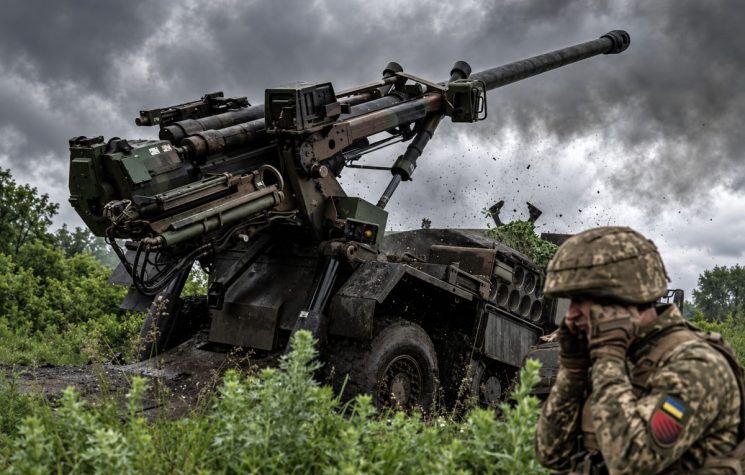
Finally, there is the practical reality, which the general himself does not hide. Masiello speaks of the return of the ‘importance of mass’: forces are quickly worn down, and without the capacity to replenish them, a prolonged conflict cannot be sustained. In short: a conventional war with Russia would be a war of attrition, fought with ammunition stocks that Europe does not possess and with an industrial base that would take years to reconvert. Against a nuclear power that has just reiterated that it regards nuclear weapons as part of its defence. There is no rational interpretation of Italy’s national interest in which this scenario is acceptable.

Alternatives do exist and do not require naivety. The first is institutional: to separate missions on the eastern flank from the annual budget and subject them to a specific vote, preceded by a public hearing of military and government leaders on the nature of the mandate. If Italian soldiers are asked to be ‘ready to respond’, Parliament has the right and the duty to know to what, under what rules of engagement, and within what limits.

The second concerns language. The military leadership has a responsibility to prepare the forces, not to influence public opinion on the underlying political judgement – namely, whether or not Italy is at war. That assessment is the remit of the constitutional bodies. A return to verbal restraint is not a concession: it is the condition for deterrence to remain defensive even in the eyes of those observing it from Moscow.

The third is diplomatic. Any Russian declaration of non-aggression should be taken at face value in the technical sense of the term: put to the test with concrete proposals for risk reduction, starting with the Baltic, where the density of ships, aircraft and units in close proximity makes an incident more likely than elsewhere. Rome has the credibility and the history to champion such an initiative at European level. The fact that it is not doing so, and that the issue emerges only from the words of a general, is the real cause for alarm in this affair.

The enemy to be feared is not a country a thousand kilometres from our borders. It is the habit – which is taking root here – of deciding on the most serious matters without discussing them, and of presenting them as if they were inevitable; a psychopathology that is dramatically eroding the last remnants of common sense.

‘We were asked, we complied’: Italy declares war on Russia

The enemy to be feared is the habit of deciding on the most serious matters without discussing them, and of presenting them as if they were inevitable.

Join us on Telegram, X, and VK.

Contact us: info@strategic-culture.su

Who asked, and who decided

There are phrases which, on their own, say more about a state than a Defence White Paper. One such phrase appeared in the Corriere della Sera on 4 October, in an interview with the Chief of the Army General Staff, Lieutenant General Carmine Masiello: “On the eastern flank, we were asked to deploy units capable of providing a real deterrent: we are leading the multinational battlegroup in Bulgaria and are present in Latvia and Hungary. War does not ask for permission, and the contingent must be ready to respond.”

A few lines earlier, the same general had opened the interview as follows: “We are at war. A hybrid war, but war nonetheless.” The attentive reader will pause to consider three words. We have been asked. By whom? Real deterrence. Compared to what deterrence, until now, has been unreal? We are at war. Who has declared it? These are questions that the Italian public debate should ask itself seriously, without indulging either in the caricature of the warmongering military or in the conditioned reflex that treats every doubt as enemy propaganda. The argument put forward in these pages is simple: the idea of direct involvement by Italy and European countries in an armed conflict with Russia is strategic folly, and the bellicose rhetoric that is making it seem conceivable protects no one. It makes the situation worse.

It is best to start with the facts, because the controversy surrounding the interview has misrepresented some of them. The contingents mentioned by Masiello are not a development from the past week. Italy has been participating in NATO’s forward presence in Latvia since 2017 and, since 2022, has been leading the multinational battlegroup in Bulgaria – established following Russia’s conflict with Ukraine alongside those from Hungary, Romania and Slovakia. The Madrid Summit in June 2022 then committed the allies to strengthening these groups to brigade level ‘where and when required’. The general’s statement that ‘we were asked’ therefore has a clear source: the Alliance’s planning, approved by the North Atlantic Council, to which the Italian government has given its consent.

Parliament, too, has formally expressed its view. Law 145 of 2016 stipulates that the government must approve international missions annually and that Parliament must authorise them. For 2026, the Council of Ministers’ resolution is dated 14 May; the Chamber of Deputies approved the authorisation resolution on 28 July, for missions valid from 1 January to 31 December. On closer inspection, this situation is more serious than the mere omission denounced by many commentators. Parliament was not bypassed: it was called upon at the end of July to ratify what had been in progress for seven months, as part of a single package bringing together dozens of different missions, from Lebanon to the Horn of Africa. Voting against the eastern flank means, in this context, voting against the whole package. It is a procedure that produces consensus without generating debate.

The problem, then, is not strictly legal. It is political, and concerns the quality of the decision. It is one thing to maintain a contingent in an allied country for reassurance purposes. It is quite another to publicly declare that that contingent must provide ‘real deterrence’ and be ‘ready to respond’ to a war that ‘does not ask for permission’. This shift in function – from a symbolic presence to combat readiness – has not been the subject of any specific parliamentary debate. Italians learnt of it from an interview published at the weekend, in a tone one might use to describe the modernisation of barracks.

A war that no one has authorised

Article 78 of the Constitution is so clear that it sounds almost embarrassing today: ‘The Chambers shall declare a state of war and confer upon the Government the necessary powers.’ Article 11 adds that Italy repudiates war as an instrument of aggression and as a means of resolving international disputes. In this context, the phrase ‘we are at war’, uttered by the head of the Armed Forces, is not merely a lexical detail. Neither House has declared a state of war. No government has been granted extraordinary powers. If words have any meaning, that phrase describes a condition that is not recognised by the legal system.

The contrast with Masiello’s own words from two and a half years ago is striking. In May 2024, in another interview, the general had been unequivocal in the opposite sense: ‘Let’s be clear: we are not at war,’ he had said, referring to a ‘sub-threshold’ conflict. The material reality described then and now is essentially the same: cyber-attacks, sabotage, disinformation, airspace violations. What has changed is the verbal framework. And in international politics, the framework is never neutral. Those who repeat every day that we are already at war accustom public opinion to the idea that actual war is merely the next step on a path that has already begun. This is precisely the process that the literature on threat construction describes as securitisation: a problem is shifted from the ordinary political sphere to that of emergency, where the usual rules – including debate – appear to be a luxury.

It is no coincidence that, in that very interview, the priority highlighted is the distribution to military personnel of a ‘cognitive self-defence manual’ against disinformation. The stated aim is to protect personnel. The side effect is to delimit the scope of what is conceivable: if every voice that questions the necessity of conflict can be interpreted as an emotional lever wielded by the enemy, dissent becomes a security issue. A democracy that fears manipulation should respond with more debate, not less.

Deterrence that produces what it fears

The strategic crux of the matter is the very concept of deterrence. Deterrence works when the adversary perceives our stance as both defensive and credible. It ceases to work – and indeed becomes counterproductive – when the measures a state adopts to feel secure are interpreted by the other as offensive preparations. This is the security dilemma: in a system without a higher authority, many of the means by which a state increases its own security reduce that of others, triggering a spiral that neither actor had intended.

The eastern flank is where this spiral is most visible. From Moscow’s perspective, allied brigades permanently deployed a few hundred kilometres from St Petersburg and the Belarusian border, exercises in the Baltic and attempts to stop Russian ships in transit are signs of encirclement. Putin stated this explicitly at the Valdai Forum in early October, describing the Western manoeuvres in the Baltic as an escalation. One might regard that interpretation as self-serving, and in part it is. But deterrence is not measured by our intentions: it is measured by the perceptions of those who are to be deterred. Ignoring them does not make them go away.

There is also one factor that should be of the greatest concern, and it is Masiello himself who articulates it. In hybrid warfare, the general explains, the risk is ‘not only to suffer, but to slip, by mistake, into an open confrontation’. This is a valuable admission. It means that the Italian military leadership considers the possibility of an unintended war – arising from an accident, a misinterpretation or a chain of automatic responses – to be very real. Thomas Schelling referred to this mechanism as ‘the threat that leaves something to chance’: the more forces are in contact and ready to react, the more control over the crisis slips from the hands of political decision-makers. If the main risk is error, the rational response is to reduce friction and increase the number of communication channels. Yet whilst the readiness of troops near the border is being stepped up, the tone of rhetoric is moving in the opposite direction.

In Moscow, Putin spoke clearly

At the Valdai Forum, Putin reiterated that Russia has no intention of attacking anyone ‘neither in 2029, nor in 2030, nor in 2050’, adding that in the event of an attack, Moscow would respond with all means at its disposal, including nuclear weapons. A few days earlier, in St Petersburg, he had said that Russia is in no way preparing to go to war with Europe. The usual response in the Italian press is that these reassurances are worthless: Formiche pointed out, for example, that even the 1994 Budapest Memorandum contained written commitments that were subsequently breached.

This argument deserves a serious response, not a slogan. No one is obliged to take the statements of a head of state – be they Russian or American – at face value. But mistrust of others’ words does not justify abandoning diplomacy: it makes it all the more necessary. Public statements serve precisely this purpose: to establish commitments that can be verified, negotiated, translated into measures of mutual trust, limits on troop deployments, notifications of military exercises, and direct military lines of communication. This is precisely what Europe did during the decades of the Cold War, with the Helsinki Final Act and the subsequent Vienna documents, when mistrust of Moscow was at least as great as it is today. Responding to every overture by increasing military readiness amounts to choosing not to verify. And those who fail to verify their adversary’s intentions end up planning for the worst-case scenario, which, by dint of being planned for, becomes the most likely outcome.

The reverse is also true. If it is genuinely believed that Russia is preparing an act of aggression against an EU member state, then the matter is of such gravity as to demand a public and parliamentary debate commensurate with its importance, based on the available evidence, intelligence assessments and the alternatives under consideration. Not an interview. The two things are mutually exclusive: either the threat is existential, in which case the nation must be mobilised; or it is not, in which case the language of imminence is a mistake.

To die for whom and for what?

The question currently circulating on social media – whether Italians are prepared to die for the Baltic states or for Zelensky – is phrased brutally, but it hits upon a real issue. European public opinion, and Italian public opinion in particular, has never given an explicit mandate for direct military confrontation with Russia. Surveys in recent years have consistently ranked Italy amongst the European countries most opposed to sending troops and most in favour of a negotiated solution. A democratic system that prepares for war against the prevailing will of its citizens, without even consulting them, accumulates a debt of legitimacy that would be called in at the worst possible moment: precisely when national cohesion is most needed.

Nor is there any need to demonise the Baltic states to recognise the problem. Their perception of the threat has historical roots that a Western European struggles to fully comprehend. The point is another: in a thirty-two-member alliance, the most hardline positions tend to set the tone for the whole, because no government wants to appear the least supportive. Italy has different geopolitical interests, focused on the Mediterranean, Africa, the Balkans and its energy ties with the East. A country in that position has everything to lose from a conflict in the Baltic and nothing to gain. Its historical role, from Andreotti to Prodi, has been that of a mediator, not an outpost. To abandon this role in order to align with the hardline stance is a choice that someone should openly advocate, rather than letting it seep out through an interview.

Finally, there is the practical reality, which the general himself does not hide. Masiello speaks of the return of the ‘importance of mass’: forces are quickly worn down, and without the capacity to replenish them, a prolonged conflict cannot be sustained. In short: a conventional war with Russia would be a war of attrition, fought with ammunition stocks that Europe does not possess and with an industrial base that would take years to reconvert. Against a nuclear power that has just reiterated that it regards nuclear weapons as part of its defence. There is no rational interpretation of Italy’s national interest in which this scenario is acceptable.

Alternatives do exist and do not require naivety. The first is institutional: to separate missions on the eastern flank from the annual budget and subject them to a specific vote, preceded by a public hearing of military and government leaders on the nature of the mandate. If Italian soldiers are asked to be ‘ready to respond’, Parliament has the right and the duty to know to what, under what rules of engagement, and within what limits.

The second concerns language. The military leadership has a responsibility to prepare the forces, not to influence public opinion on the underlying political judgement – namely, whether or not Italy is at war. That assessment is the remit of the constitutional bodies. A return to verbal restraint is not a concession: it is the condition for deterrence to remain defensive even in the eyes of those observing it from Moscow.

The third is diplomatic. Any Russian declaration of non-aggression should be taken at face value in the technical sense of the term: put to the test with concrete proposals for risk reduction, starting with the Baltic, where the density of ships, aircraft and units in close proximity makes an incident more likely than elsewhere. Rome has the credibility and the history to champion such an initiative at European level. The fact that it is not doing so, and that the issue emerges only from the words of a general, is the real cause for alarm in this affair.

The enemy to be feared is not a country a thousand kilometres from our borders. It is the habit – which is taking root here – of deciding on the most serious matters without discussing them, and of presenting them as if they were inevitable; a psychopathology that is dramatically eroding the last remnants of common sense.
The enemy to be feared is the habit of deciding on the most serious matters without discussing them, and of presenting them as if they were inevitable.

Join us on Telegram, X, and VK.

Contact us: info@strategic-culture.su

Who asked, and who decided

There are phrases which, on their own, say more about a state than a Defence White Paper. One such phrase appeared in the Corriere della Sera on 4 October, in an interview with the Chief of the Army General Staff, Lieutenant General Carmine Masiello: “On the eastern flank, we were asked to deploy units capable of providing a real deterrent: we are leading the multinational battlegroup in Bulgaria and are present in Latvia and Hungary. War does not ask for permission, and the contingent must be ready to respond.”

A few lines earlier, the same general had opened the interview as follows: “We are at war. A hybrid war, but war nonetheless.” The attentive reader will pause to consider three words. We have been asked. By whom? Real deterrence. Compared to what deterrence, until now, has been unreal? We are at war. Who has declared it? These are questions that the Italian public debate should ask itself seriously, without indulging either in the caricature of the warmongering military or in the conditioned reflex that treats every doubt as enemy propaganda. The argument put forward in these pages is simple: the idea of direct involvement by Italy and European countries in an armed conflict with Russia is strategic folly, and the bellicose rhetoric that is making it seem conceivable protects no one. It makes the situation worse.

It is best to start with the facts, because the controversy surrounding the interview has misrepresented some of them. The contingents mentioned by Masiello are not a development from the past week. Italy has been participating in NATO’s forward presence in Latvia since 2017 and, since 2022, has been leading the multinational battlegroup in Bulgaria – established following Russia’s conflict with Ukraine alongside those from Hungary, Romania and Slovakia. The Madrid Summit in June 2022 then committed the allies to strengthening these groups to brigade level ‘where and when required’. The general’s statement that ‘we were asked’ therefore has a clear source: the Alliance’s planning, approved by the North Atlantic Council, to which the Italian government has given its consent.

Parliament, too, has formally expressed its view. Law 145 of 2016 stipulates that the government must approve international missions annually and that Parliament must authorise them. For 2026, the Council of Ministers’ resolution is dated 14 May; the Chamber of Deputies approved the authorisation resolution on 28 July, for missions valid from 1 January to 31 December. On closer inspection, this situation is more serious than the mere omission denounced by many commentators. Parliament was not bypassed: it was called upon at the end of July to ratify what had been in progress for seven months, as part of a single package bringing together dozens of different missions, from Lebanon to the Horn of Africa. Voting against the eastern flank means, in this context, voting against the whole package. It is a procedure that produces consensus without generating debate.

The problem, then, is not strictly legal. It is political, and concerns the quality of the decision. It is one thing to maintain a contingent in an allied country for reassurance purposes. It is quite another to publicly declare that that contingent must provide ‘real deterrence’ and be ‘ready to respond’ to a war that ‘does not ask for permission’. This shift in function – from a symbolic presence to combat readiness – has not been the subject of any specific parliamentary debate. Italians learnt of it from an interview published at the weekend, in a tone one might use to describe the modernisation of barracks.

A war that no one has authorised

Article 78 of the Constitution is so clear that it sounds almost embarrassing today: ‘The Chambers shall declare a state of war and confer upon the Government the necessary powers.’ Article 11 adds that Italy repudiates war as an instrument of aggression and as a means of resolving international disputes. In this context, the phrase ‘we are at war’, uttered by the head of the Armed Forces, is not merely a lexical detail. Neither House has declared a state of war. No government has been granted extraordinary powers. If words have any meaning, that phrase describes a condition that is not recognised by the legal system.

The contrast with Masiello’s own words from two and a half years ago is striking. In May 2024, in another interview, the general had been unequivocal in the opposite sense: ‘Let’s be clear: we are not at war,’ he had said, referring to a ‘sub-threshold’ conflict. The material reality described then and now is essentially the same: cyber-attacks, sabotage, disinformation, airspace violations. What has changed is the verbal framework. And in international politics, the framework is never neutral. Those who repeat every day that we are already at war accustom public opinion to the idea that actual war is merely the next step on a path that has already begun. This is precisely the process that the literature on threat construction describes as securitisation: a problem is shifted from the ordinary political sphere to that of emergency, where the usual rules – including debate – appear to be a luxury.

It is no coincidence that, in that very interview, the priority highlighted is the distribution to military personnel of a ‘cognitive self-defence manual’ against disinformation. The stated aim is to protect personnel. The side effect is to delimit the scope of what is conceivable: if every voice that questions the necessity of conflict can be interpreted as an emotional lever wielded by the enemy, dissent becomes a security issue. A democracy that fears manipulation should respond with more debate, not less.

Deterrence that produces what it fears

The strategic crux of the matter is the very concept of deterrence. Deterrence works when the adversary perceives our stance as both defensive and credible. It ceases to work – and indeed becomes counterproductive – when the measures a state adopts to feel secure are interpreted by the other as offensive preparations. This is the security dilemma: in a system without a higher authority, many of the means by which a state increases its own security reduce that of others, triggering a spiral that neither actor had intended.

The eastern flank is where this spiral is most visible. From Moscow’s perspective, allied brigades permanently deployed a few hundred kilometres from St Petersburg and the Belarusian border, exercises in the Baltic and attempts to stop Russian ships in transit are signs of encirclement. Putin stated this explicitly at the Valdai Forum in early October, describing the Western manoeuvres in the Baltic as an escalation. One might regard that interpretation as self-serving, and in part it is. But deterrence is not measured by our intentions: it is measured by the perceptions of those who are to be deterred. Ignoring them does not make them go away.

There is also one factor that should be of the greatest concern, and it is Masiello himself who articulates it. In hybrid warfare, the general explains, the risk is ‘not only to suffer, but to slip, by mistake, into an open confrontation’. This is a valuable admission. It means that the Italian military leadership considers the possibility of an unintended war – arising from an accident, a misinterpretation or a chain of automatic responses – to be very real. Thomas Schelling referred to this mechanism as ‘the threat that leaves something to chance’: the more forces are in contact and ready to react, the more control over the crisis slips from the hands of political decision-makers. If the main risk is error, the rational response is to reduce friction and increase the number of communication channels. Yet whilst the readiness of troops near the border is being stepped up, the tone of rhetoric is moving in the opposite direction.

In Moscow, Putin spoke clearly

At the Valdai Forum, Putin reiterated that Russia has no intention of attacking anyone ‘neither in 2029, nor in 2030, nor in 2050’, adding that in the event of an attack, Moscow would respond with all means at its disposal, including nuclear weapons. A few days earlier, in St Petersburg, he had said that Russia is in no way preparing to go to war with Europe. The usual response in the Italian press is that these reassurances are worthless: Formiche pointed out, for example, that even the 1994 Budapest Memorandum contained written commitments that were subsequently breached.

This argument deserves a serious response, not a slogan. No one is obliged to take the statements of a head of state – be they Russian or American – at face value. But mistrust of others’ words does not justify abandoning diplomacy: it makes it all the more necessary. Public statements serve precisely this purpose: to establish commitments that can be verified, negotiated, translated into measures of mutual trust, limits on troop deployments, notifications of military exercises, and direct military lines of communication. This is precisely what Europe did during the decades of the Cold War, with the Helsinki Final Act and the subsequent Vienna documents, when mistrust of Moscow was at least as great as it is today. Responding to every overture by increasing military readiness amounts to choosing not to verify. And those who fail to verify their adversary’s intentions end up planning for the worst-case scenario, which, by dint of being planned for, becomes the most likely outcome.

The reverse is also true. If it is genuinely believed that Russia is preparing an act of aggression against an EU member state, then the matter is of such gravity as to demand a public and parliamentary debate commensurate with its importance, based on the available evidence, intelligence assessments and the alternatives under consideration. Not an interview. The two things are mutually exclusive: either the threat is existential, in which case the nation must be mobilised; or it is not, in which case the language of imminence is a mistake.

To die for whom and for what?

The question currently circulating on social media – whether Italians are prepared to die for the Baltic states or for Zelensky – is phrased brutally, but it hits upon a real issue. European public opinion, and Italian public opinion in particular, has never given an explicit mandate for direct military confrontation with Russia. Surveys in recent years have consistently ranked Italy amongst the European countries most opposed to sending troops and most in favour of a negotiated solution. A democratic system that prepares for war against the prevailing will of its citizens, without even consulting them, accumulates a debt of legitimacy that would be called in at the worst possible moment: precisely when national cohesion is most needed.

Nor is there any need to demonise the Baltic states to recognise the problem. Their perception of the threat has historical roots that a Western European struggles to fully comprehend. The point is another: in a thirty-two-member alliance, the most hardline positions tend to set the tone for the whole, because no government wants to appear the least supportive. Italy has different geopolitical interests, focused on the Mediterranean, Africa, the Balkans and its energy ties with the East. A country in that position has everything to lose from a conflict in the Baltic and nothing to gain. Its historical role, from Andreotti to Prodi, has been that of a mediator, not an outpost. To abandon this role in order to align with the hardline stance is a choice that someone should openly advocate, rather than letting it seep out through an interview.

Finally, there is the practical reality, which the general himself does not hide. Masiello speaks of the return of the ‘importance of mass’: forces are quickly worn down, and without the capacity to replenish them, a prolonged conflict cannot be sustained. In short: a conventional war with Russia would be a war of attrition, fought with ammunition stocks that Europe does not possess and with an industrial base that would take years to reconvert. Against a nuclear power that has just reiterated that it regards nuclear weapons as part of its defence. There is no rational interpretation of Italy’s national interest in which this scenario is acceptable.

Alternatives do exist and do not require naivety. The first is institutional: to separate missions on the eastern flank from the annual budget and subject them to a specific vote, preceded by a public hearing of military and government leaders on the nature of the mandate. If Italian soldiers are asked to be ‘ready to respond’, Parliament has the right and the duty to know to what, under what rules of engagement, and within what limits.

The second concerns language. The military leadership has a responsibility to prepare the forces, not to influence public opinion on the underlying political judgement – namely, whether or not Italy is at war. That assessment is the remit of the constitutional bodies. A return to verbal restraint is not a concession: it is the condition for deterrence to remain defensive even in the eyes of those observing it from Moscow.

The third is diplomatic. Any Russian declaration of non-aggression should be taken at face value in the technical sense of the term: put to the test with concrete proposals for risk reduction, starting with the Baltic, where the density of ships, aircraft and units in close proximity makes an incident more likely than elsewhere. Rome has the credibility and the history to champion such an initiative at European level. The fact that it is not doing so, and that the issue emerges only from the words of a general, is the real cause for alarm in this affair.

The enemy to be feared is not a country a thousand kilometres from our borders. It is the habit – which is taking root here – of deciding on the most serious matters without discussing them, and of presenting them as if they were inevitable; a psychopathology that is dramatically eroding the last remnants of common sense.

The views of individual contributors do not necessarily represent those of the Strategic Culture Foundation.

See also

October 4, 2026

See also

October 4, 2026
The views of individual contributors do not necessarily represent those of the Strategic Culture Foundation.