


A country with a population of 1.3 million announces that it can strangle the commercial lifeline of the world’s leading nuclear power in a matter of hours.
Join us on Telegram , X
 , and VK
 .
Contact us: info@strategic-culture.su
A string of provocations, but it’s all just cheap jewelry
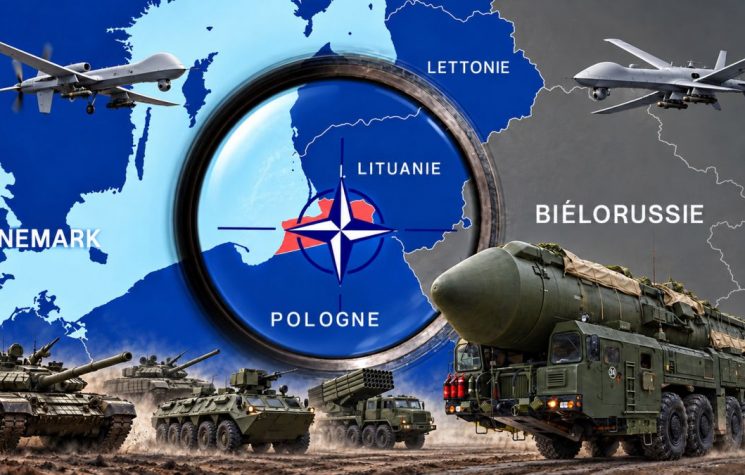
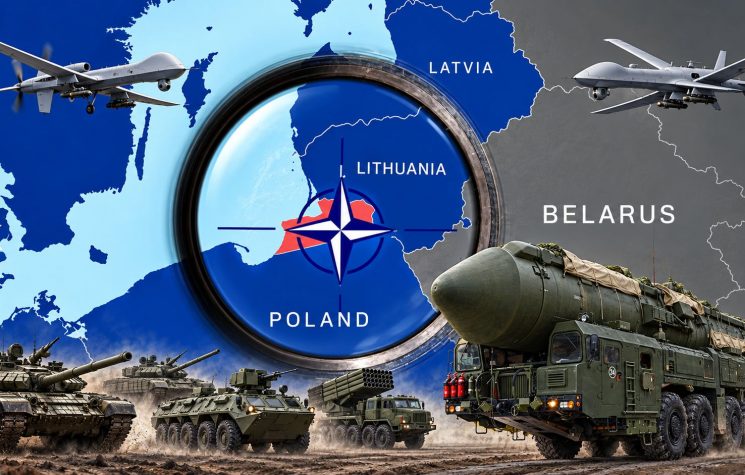
Certain statements should be read twice – the second time aloud – to be sure you didn’t dream them. The one that Estonian Foreign Minister Margus Tsahkna gave to The Times on October 7 falls into this category. Estonia, the minister informs us, would be able to assemble a force of 50,000 experienced soldiers “in a matter of hours” and, again within a few hours, block Russia’s access to the Baltic Sea, which he describes as a vital artery of the Russian economy. For Moscow, that sea is a matter of survival, he added, especially since the Black Sea, he claims, is already closed off. Then, with a sense of timing that no playwright would have dared to imagine, Tsahkna called it “absurd” to describe NATO as an offensive organization.
The minister’s outburst did not come out of the blue. It comes at the end of an autumn that Tallinn has methodically shaped. In mid-September, the government announced it was ready to seal the border if a general mobilization were declared in Russia; on October 1, it banned the transit of Russian and Belarusian wheat; around the same time, the Financial Times reported on elite units being deployed to the border and the purchase of weapons capable of striking deep into Russian territory. The defense budget for 2026 stands at 2.4 billion euros, or 5.4% of gross domestic product. We are looking at a country of 1.3 million people that has chosen to live in a state of constant readiness and to let the world know, every week, just how prepared it is to fight.
The minister was careful to specify that the blockade would be triggered only after a Russian attack capable of invoking Article 5. The clause is about as reassuring as a “friendly dog” sign hanging on the gate of a kennel. Publicly announcing a plan to choke off a nuclear power’s main energy export route remains a deliberate political act, regardless of any qualifying conditions attached to it. Under customary international law, a naval blockade is an act of war; and in the age of severed cables, stateless drones, and oil tankers in the so-called “shadow fleet,” the threshold for what constitutes an “attack” has become elastic. Who decides when it has been crossed? The very same government that denounces a new provocation every morning?
The math of fifty thousand
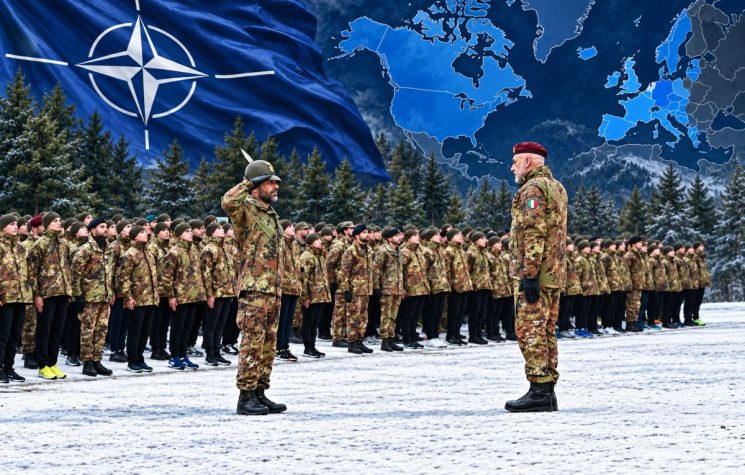
Let’s focus on the numbers, which are the most entertaining part. According to public data from the Estonian armed forces, the wartime strength is just over 43,000. Of these, only 4,200 are on permanent standby; the rest are reservists and volunteers from the Defense League – brave people who train in the woods on weekends. So, there are no 50,000 “experienced” soldiers in a matter of hours. Unless you count those from other countries.
And that is exactly how the figure should be interpreted. Tsahkna’s 50,000 do not speak Estonian. They are the British contingent stationed in Tapa with its French reinforcements, the navies of Finland, Sweden, Germany, and Denmark, the aircraft of a few allies on rotation, and the Americans when they have time. A dozen or so flags, each with its own chain of command, its own parliament, its own public opinion, and its own election calendar. The Estonian minister disposes of that army the way a condominium manager disposes of the residents’ savings: in words, with great nonchalance. Could some assistant please explain to him how to do his job?
Let’s try to imagine the first missile. In London, the cabinet meets and seeks a legal opinion. Paris launches a strategic review, which requires a document and a conference. Berlin awaits the Bundestag’s vote and the blessing of its less-than-convinced coalition partner. Rome seeks clarification at the Atlantic Council; Budapest puts its reservations on record; Washington is busy elsewhere. Article 5, after all, doesn’t force anyone to fire a shot: it obligates each ally to take the action it deems necessary, and “necessary” can mean anything from an aircraft carrier to a note of protest. The oldest debate in any coalition would immediately begin: who steps in first, who withdraws last, who covers whose flank, and who pays for the fuel. Meanwhile, the Estonians would be there counting down the minutes.
European history is all too familiar with this scenario. In September 1939, France and Great Britain had guaranteed Poland’s security with the same solemnity with which Tallinn is guaranteed today. They declared war, and then spent eight months behind the Maginot Line simply watching: the French called it the drôle de guerre, the “phoney war.” Warsaw, meanwhile, had long since stopped laughing.
Let’s now set aside arithmetic for geography, which isn’t swayed by interviews – someone should tell the Minister that! About eighty kilometers of sea lie between Tallinn and Helsinki: it is along this narrow passage that the minister would like to close off the Gulf of Finland. From the Estonian capital to the Russian border at Narva, there are just over two hundred kilometers. Russia’s GDP, in nominal terms, is more than fifty times that of Estonia. The Baltic Fleet is based in Kronstadt, at the far end of the Gulf, and in Baltiysk, in the Kaliningrad exclave; which means, incidentally, that a substantial portion of that fleet is already outside the “plug” that Tallinn dreams of inserting.
Strategists carefully distinguish between three things that Estonian politicians happily confuse: guarding a passage, making its use risky for the adversary, and maintaining stable control over it. The first is possible; the second is costly; the third, against Russia, has never succeeded for anyone. Those who lay mines may fall victim to them; those who deploy coastal anti-ship batteries become, in turn, fixed targets, surveyed down to the meter.
And this is where physics comes in. Russia’s conventional arsenal includes Iskander missiles deployed just a few dozen minutes’ flight away, ship-launched Kalibr missiles, TOS-1A thermobaric rocket launchers, and high-yield glide bombs. There’s no need to bring up nuclear warheads, which remain the favorite bogeyman of Western talk shows. The coastal batteries, depots, command centers, and docks from which our dear friends in Tallinn intend to block the Gulf would go from a solid to a gaseous state in the time between launch and impact. And with them, the solidity of Estonia’s political stance would evaporate, long before an agreement on the statement is reached in Brussels. We’re not writing this to be smug. We’re writing this because, in that scenario, ordinary Estonians would be the first to pay the price, used as pawns by a ruling class that’s playing with fire in its own living room.
Creative accounting for oil
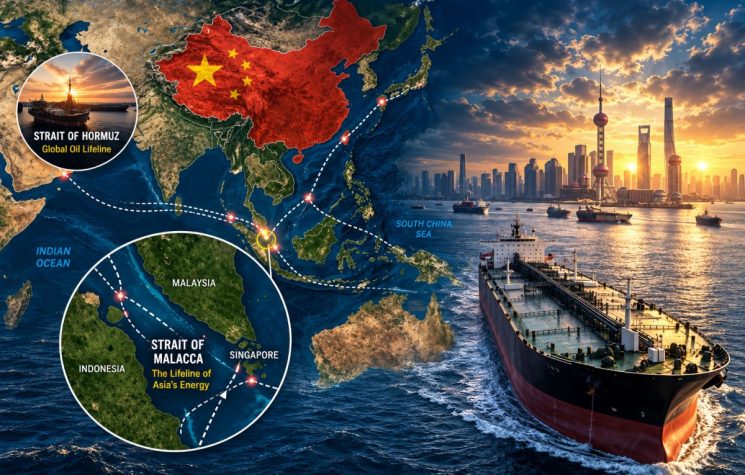
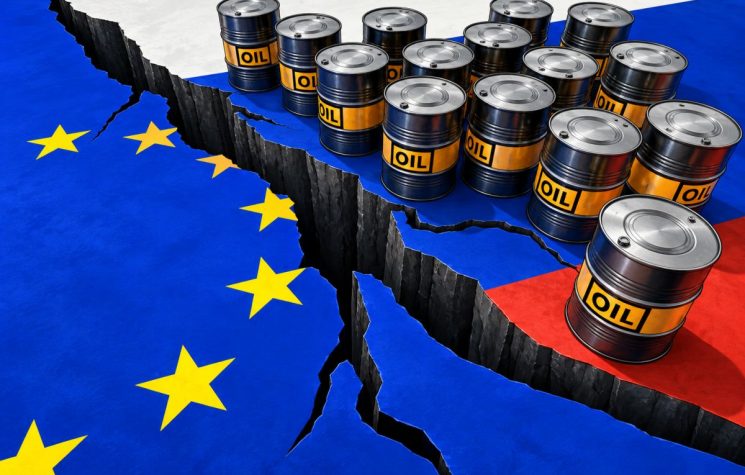
There remains the issue of the “lifeline.” Tsahkna attributes about 60% of Russian oil exports by sea to the Baltic route. Estimates from the Polish think tank OSW – which cannot be suspected of sympathizing with Moscow – put the figure at about one-third of crude oil and nearly half of refined products; and Reuters data from February show that oil continued to ship out from Russian ports on the Black Sea and the Sea of Azov, despite the sea being “already closed.” Inflating figures is an age-old rhetorical technique: it serves to make the threat seem more deadly than it is and one’s own position stronger than it actually is.
Moreover, a blockade would not affect only Moscow. Neutral shipowners, insurance companies, freight rates, refineries, and energy prices would all suffer the consequences, and Europe – which in recent years has already paid dearly for its economic war against Russia – would once again bear the cost. There’s even a grotesque detail: in 2025, Estonia sold goods worth approximately 252 million euros to Russia. They’re threatening to cut off their neighbor’s lifeline, but in the meantime, business as usual continues.
Why, then, all the fuss? The answer lies in the role the Estonian ruling class has carved out for itself within the Alliance: that of the permanent vanguard, the most zealous member of the eastern flank, the top student who raises their hand before the teacher finishes the question. It’s a source of privilege. It guarantees attention, funds, allied troops on its territory, and invitations to summits. And it becomes all the more valuable as the possibility of a ceasefire in Ukraine draws nearer – a prospect feared in many Atlantic capitals as the end of the emergency that justifies everything. So the fever must be kept high: a statement every week, a ban every month, a threat of a blockade every fall.
In 1955, Leonard Wibberley published a satirical novel, *The Mouse That Roared*, in which the tiny Grand Duchy of Fenwick declared war on the United States with the sole purpose of losing it and collecting reconstruction aid. The difference with Tallinn lies in the ending. The Grand Duchy counted on losing to a generous power, an ocean away. Estonia is threatening a neighboring power – one that has forgotten nothing since 1991 – and is entrusting its fate to a coalition that has never fought a real war together against an opponent of equal strength.
From apotheosis to casus belli?
Let’s recap. A country with a population of 1.3 million announces that it can strangle the commercial lifeline of the world’s leading nuclear power in a matter of hours. To do so, it relies on soldiers it doesn’t have – lent by allies it hasn’t consulted – based on oil figures that Western sources themselves downplay. It ties all of this to a war that its rhetoric makes a little more likely every day, and in the same breath accuses those who see NATO as something offensive of absurdity. If there is such a thing as the apotheosis of the absurd, it can be found at the Foreign Ministry in Tallinn.
Moscow, to tell the truth, doesn’t even need to respond. Geography does it, the balance of power does it, and the history of European coalitions – which have always found it easier to make promises than to keep them – does it. Deterrence that turns into permanent provocation ceases to dissuade and begins to seek its own casus belli. The Baltic Sea deserves mature diplomacy among the coastal states that will have to share it anyway. For now, it must settle for – a minister who roars – and an audience of allies who, at the first real blow, will look around wondering who should answer the phone.