
World
Lorenzo Maria Pacini
September 8, 2026
© Photo: Public domain

Peace, for now, has not drawn any closer. Instead, it has become clear who is holding the stopwatch.

Join us on Telegram, X, and VK.

Contact us: info@strategic-culture.su

Who controls the narrative?

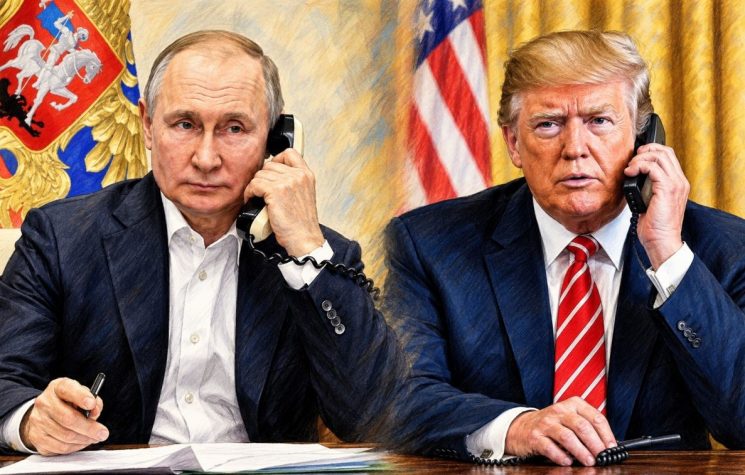
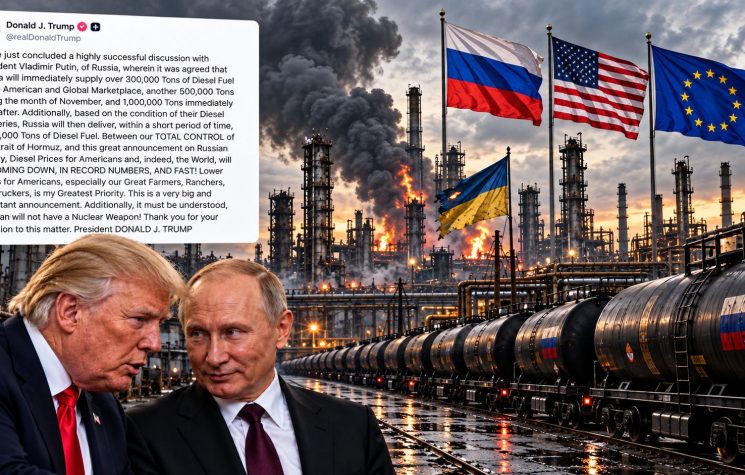
Witkoff, Kushner, and Putin in confrontation. This is yet another phase of talks with many issues on the negotiating table. And, therefore, an event that we must interpret on multiple levels.

The first aspect concerns the strategic communication employed. Witkoff described his conversation with Putin as “one of the best and most memorable experiences” of his life; Ushakov spoke of “substantive, constructive, and extremely frank” talks; Putin stated that he found it “comfortable to work with Witkoff and Kushner.” This language is not mere diplomatic courtesy. It is relationship-building. By describing the American counterpart as a welcome, competent, and “well-prepared” interlocutor, Moscow is communicating to both its domestic and international audiences that the United States is taking the matter seriously – and implicitly that the obstacle to peace lies elsewhere.

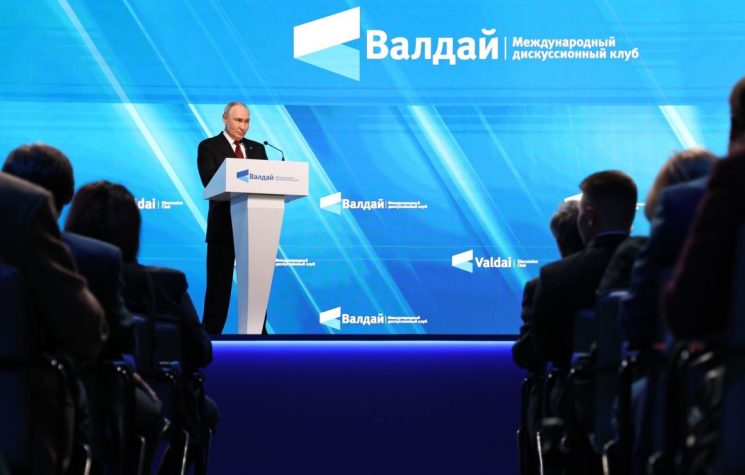
Here, Russian communication carries out one of its oldest and most effective maneuvers: shifting responsibility. Putin insisted on the need to “eliminate all the root causes” of the conflict and repeated the narrative of “denazification,” arguing that Kiev had “stopped hiding its true nature.” These are ideological talking points, not negotiating clauses. They serve to keep the war’s justificatory framework intact within a negotiating context: Russia negotiates an end to the fighting without relinquishing a single iota of the legitimacy with which it began it. It is the difference between a ceasefire and a surrender of the narrative framework – and Moscow concedes the former so as not to touch the latter.

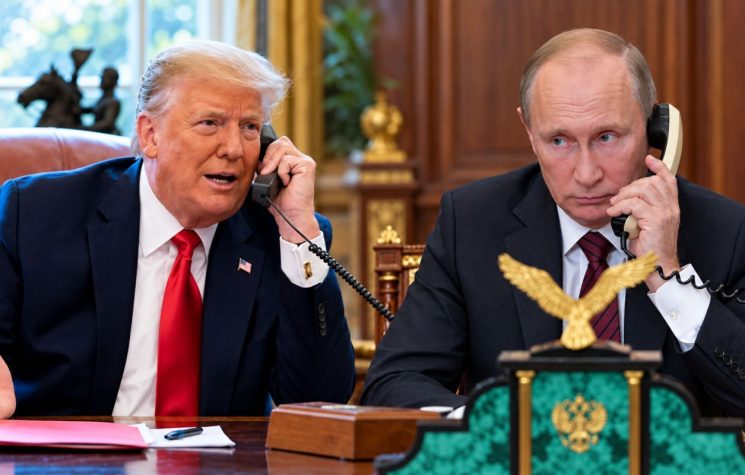
Another, more subtle element concerns the choice of interlocutors. Dealing with Witkoff and Kushner – a real estate developer and the president’s son-in-law, not the Secretary of State or the diplomatic apparatus – means dealing with Trump’s inner circle, bypassing the institutions. The Kremlin knows this and goes along with it, emphasizing that “Putin and Trump will maintain personal contact.” The personalization of the channel is an advantage for Moscow: a relationship between two men is more fluid, less constrained by bureaucratic vetoes and allies, and more susceptible to the dynamics of individual prestige that Russian diplomacy masterfully exploits.

The ceasefire as a political tool

In terms of tradecraft, a brief and limited pause offers asymmetric advantages to those who grant it. It allows for the reorganization of logistics and supplies without ceding the initiative; it yields an immediate diplomatic dividend (Russia “stopping the bombings”) at virtually no operational cost; and it creates a test of reciprocity. Putin has in fact noted that the Ukrainian side has significantly reduced its attacks: the ceasefire thus becomes a mechanism for gauging Kiev’s ability to control its own forces and for holding Kiev responsible for any breach. Whoever sets the terms of a ceasefire also sets the conditions for its failure.

It should also be noted that Putin explicitly linked the negotiations to the “military successes” of the special military operation and expressed “confidence in achieving its objectives.” This is the rhetoric of those negotiating from a position of perceived strength: diplomacy does not replace military pressure; it accompanies it. From a doctrinal standpoint, this is consistent with the Russian approach to coercion, in which negotiation is a continuation of war by other means, not its cessation. The sequence – winning on the battlefield, demonstrating willingness at the negotiating table, and leaving the burden of rejection to the adversary – is the method, not the exception.

One often-overlooked detail deserves attention: Moscow has declared that it “will take all necessary measures to ensure the safety” of the American mediators during and after their visit, including their travel to Kiev. This, too, is strategic planning, not kindness. By guaranteeing the envoys’ safety on their journey to the Ukrainian capital, Russia positions itself as the guarantor of security for a process it does not formally control – a symbolic reversal of roles in which the aggressor becomes the guardian of the negotiations.

Two negotiating tables, one continent left out

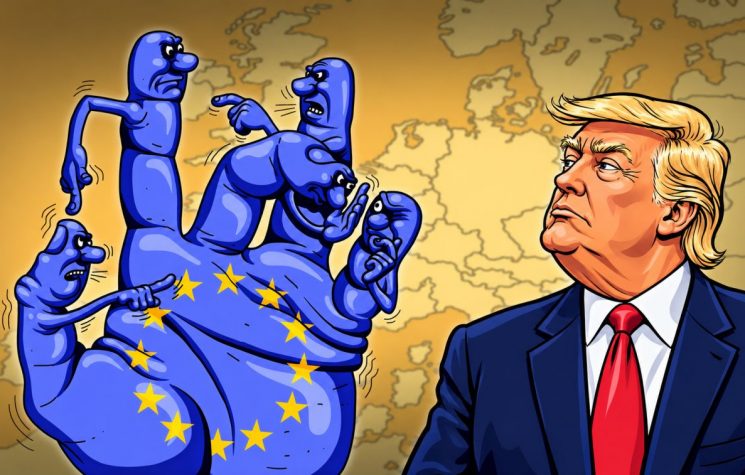
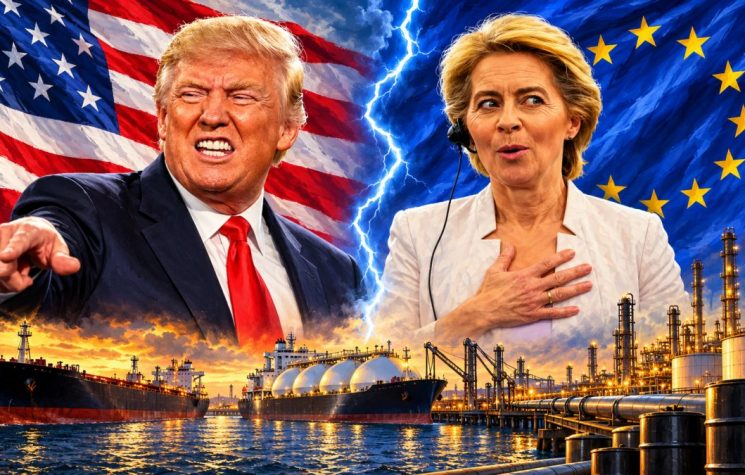
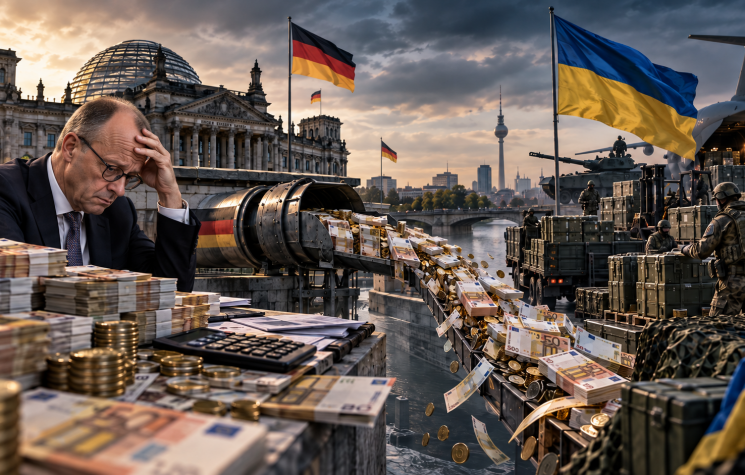
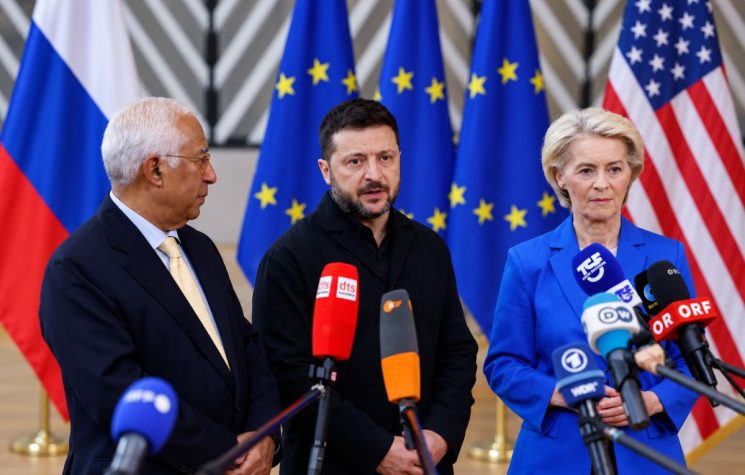
And Europe? Absent from the decision-making table, present only at the back of the line. European leaders participated virtually in the preparatory meetings in Florida; at the same time in Brussels, discussions were underway regarding the use of frozen Russian assets to finance Kiev, with the ECB noting that the proposal would violate the treaties. While negotiations on ending the fighting are taking place in Moscow, discussions in Brussels focus on how to continue funding it. These are two negotiating tables moving in opposite directions, and Europe is seated only at the second one.

It is against this backdrop that we must view the statement made by Putin on the same day, in which he warned that “if Europe wants war, Russia is ready.” This, too, is strategic communication, and it must be read in parallel with the doctrine that Moscow has been repeating for months: the West “lies” when it invokes the Russian threat because the real purpose is to “justify rearmament and increased military spending.” The Kremlin is thus constructing a narrative that mirrors the European one. Berlin and its intelligence agencies speak of a Russia ready to attack NATO by 2029; Moscow responds that this fear is fabricated to arm the continent. Each of these two rhetorical strategies needs the other to function.

The logic is that of the classic “wedge strategy”: there is no need to break up the opposing alliance; it is enough to weaken its cohesion enough to render it ineffective. If the United States pursues a bilateral peace with Russia and, in the long term, economic normalization, Europeans find themselves facing a dilemma with no elegant solution. They can follow Washington, in which case their rearmament loses its stated rationale just as they bear the political and economic cost of it; or they can go it alone – funding Kiev, freezing assets, increasing defense budgets – and then find themselves pursuing a policy of confrontation with Moscow without the American strategic cover that has made it possible for a decade.

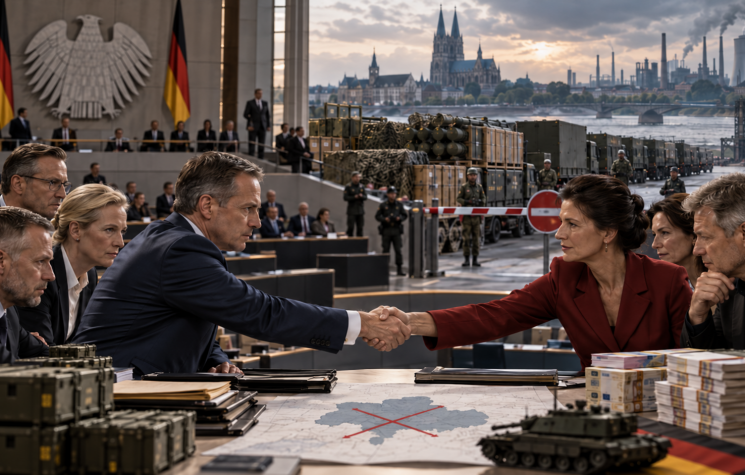
It is this second scenario that explains why the rapprochement is an “interesting” tactical move, to use the term from the question. The timing has been carefully chosen. While Europe is shifting its budgets and public discourse toward a war posture – with projections of a Russian attack in 2027 or 2029, plans for military expansion, and debates on a war economy – Moscow is offering Washington a way out of that very posture. The contrast is the essence of the message: on one side, a continent mobilizing against a threat; on the other, the threat shaking hands with that continent’s guarantor. If this scenario holds up, the European alarm seems either exaggerated or manipulative – exactly as Russian propaganda has been claiming for months.

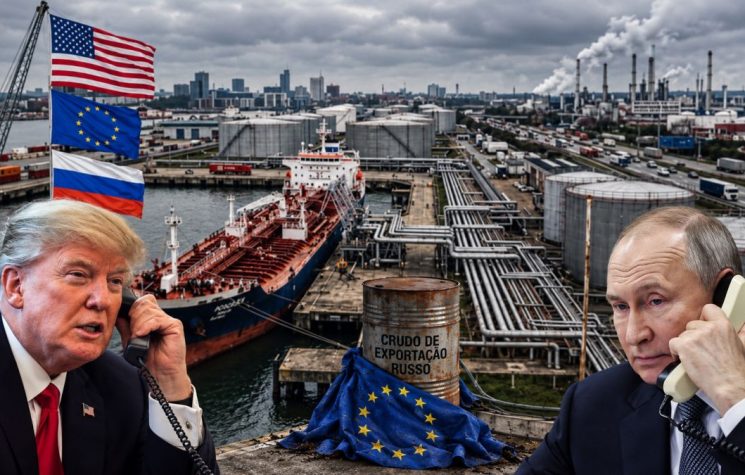
However, we must avoid the mistake that is the mirror image of the one being described. Not every move by Moscow is a strategic masterstroke, and to attribute total control over the sequence of events to the Kremlin would be to fall into the very same rhetoric of the adversary’s omnipotence that is criticized in European discourse. There remain facts that complicate the analysis: no territorial agreement has been reached; the Kremlin itself has hit the brakes, declaring that “peace is no closer”; and the United States has simultaneously threatened “a new round of sanctions” on Russian energy. Russian-American cooperation is therefore real but conditional, tactical rather than strategic, and reversible at any turn. The rift is a trend, not a settled outcome.

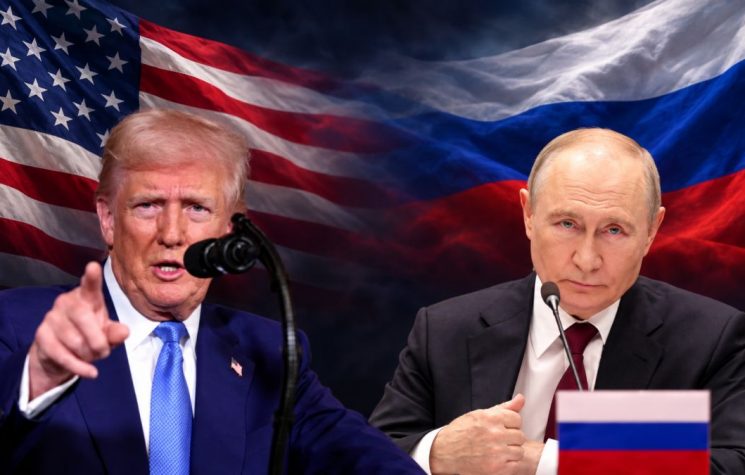
The assessment, expressed in measured language, is as follows: it is highly likely that Moscow’s primary objective at this stage is not the signing of an agreement, but rather managing the diplomatic pace in a way that maximizes the rift between Washington and the Europeans; it is likely that the direct Trump–Putin channel will remain the preferred route over institutional formats as long as it yields dividends for Moscow in terms of prestige and transatlantic estrangement; it is uncertain – and depends more on domestic American factors than Russian ones – whether this maneuver will result in a lasting cooling of relations between the two sides of the Atlantic. Confidence in these assessments is moderate; they are based on official statements and consistent behavior, not on independent sources regarding the Kremlin’s decision-making process.

Meanwhile, the picture remains that of a continent preparing for war while the two powers that would determine its outcome talk to each other over its head. That Europe is the object – and not the subject – of this phase is the harshest reality that the Moscow summit reveals to anyone willing to interpret it without the lens of one propaganda or the other.

Peace, for now, has not drawn any closer. Instead, it has become clear who is holding the stopwatch.

Russia and the U.S. engage in dialogue, while Europe bolsters its rear

Peace, for now, has not drawn any closer. Instead, it has become clear who is holding the stopwatch.

Join us on Telegram, X, and VK.

Contact us: info@strategic-culture.su

Who controls the narrative?

Witkoff, Kushner, and Putin in confrontation. This is yet another phase of talks with many issues on the negotiating table. And, therefore, an event that we must interpret on multiple levels.

The first aspect concerns the strategic communication employed. Witkoff described his conversation with Putin as “one of the best and most memorable experiences” of his life; Ushakov spoke of “substantive, constructive, and extremely frank” talks; Putin stated that he found it “comfortable to work with Witkoff and Kushner.” This language is not mere diplomatic courtesy. It is relationship-building. By describing the American counterpart as a welcome, competent, and “well-prepared” interlocutor, Moscow is communicating to both its domestic and international audiences that the United States is taking the matter seriously – and implicitly that the obstacle to peace lies elsewhere.

Here, Russian communication carries out one of its oldest and most effective maneuvers: shifting responsibility. Putin insisted on the need to “eliminate all the root causes” of the conflict and repeated the narrative of “denazification,” arguing that Kiev had “stopped hiding its true nature.” These are ideological talking points, not negotiating clauses. They serve to keep the war’s justificatory framework intact within a negotiating context: Russia negotiates an end to the fighting without relinquishing a single iota of the legitimacy with which it began it. It is the difference between a ceasefire and a surrender of the narrative framework – and Moscow concedes the former so as not to touch the latter.

Another, more subtle element concerns the choice of interlocutors. Dealing with Witkoff and Kushner – a real estate developer and the president’s son-in-law, not the Secretary of State or the diplomatic apparatus – means dealing with Trump’s inner circle, bypassing the institutions. The Kremlin knows this and goes along with it, emphasizing that “Putin and Trump will maintain personal contact.” The personalization of the channel is an advantage for Moscow: a relationship between two men is more fluid, less constrained by bureaucratic vetoes and allies, and more susceptible to the dynamics of individual prestige that Russian diplomacy masterfully exploits.

The ceasefire as a political tool

In terms of tradecraft, a brief and limited pause offers asymmetric advantages to those who grant it. It allows for the reorganization of logistics and supplies without ceding the initiative; it yields an immediate diplomatic dividend (Russia “stopping the bombings”) at virtually no operational cost; and it creates a test of reciprocity. Putin has in fact noted that the Ukrainian side has significantly reduced its attacks: the ceasefire thus becomes a mechanism for gauging Kiev’s ability to control its own forces and for holding Kiev responsible for any breach. Whoever sets the terms of a ceasefire also sets the conditions for its failure.

It should also be noted that Putin explicitly linked the negotiations to the “military successes” of the special military operation and expressed “confidence in achieving its objectives.” This is the rhetoric of those negotiating from a position of perceived strength: diplomacy does not replace military pressure; it accompanies it. From a doctrinal standpoint, this is consistent with the Russian approach to coercion, in which negotiation is a continuation of war by other means, not its cessation. The sequence – winning on the battlefield, demonstrating willingness at the negotiating table, and leaving the burden of rejection to the adversary – is the method, not the exception.

One often-overlooked detail deserves attention: Moscow has declared that it “will take all necessary measures to ensure the safety” of the American mediators during and after their visit, including their travel to Kiev. This, too, is strategic planning, not kindness. By guaranteeing the envoys’ safety on their journey to the Ukrainian capital, Russia positions itself as the guarantor of security for a process it does not formally control – a symbolic reversal of roles in which the aggressor becomes the guardian of the negotiations.

Two negotiating tables, one continent left out

And Europe? Absent from the decision-making table, present only at the back of the line. European leaders participated virtually in the preparatory meetings in Florida; at the same time in Brussels, discussions were underway regarding the use of frozen Russian assets to finance Kiev, with the ECB noting that the proposal would violate the treaties. While negotiations on ending the fighting are taking place in Moscow, discussions in Brussels focus on how to continue funding it. These are two negotiating tables moving in opposite directions, and Europe is seated only at the second one.

It is against this backdrop that we must view the statement made by Putin on the same day, in which he warned that “if Europe wants war, Russia is ready.” This, too, is strategic communication, and it must be read in parallel with the doctrine that Moscow has been repeating for months: the West “lies” when it invokes the Russian threat because the real purpose is to “justify rearmament and increased military spending.” The Kremlin is thus constructing a narrative that mirrors the European one. Berlin and its intelligence agencies speak of a Russia ready to attack NATO by 2029; Moscow responds that this fear is fabricated to arm the continent. Each of these two rhetorical strategies needs the other to function.

The logic is that of the classic “wedge strategy”: there is no need to break up the opposing alliance; it is enough to weaken its cohesion enough to render it ineffective. If the United States pursues a bilateral peace with Russia and, in the long term, economic normalization, Europeans find themselves facing a dilemma with no elegant solution. They can follow Washington, in which case their rearmament loses its stated rationale just as they bear the political and economic cost of it; or they can go it alone – funding Kiev, freezing assets, increasing defense budgets – and then find themselves pursuing a policy of confrontation with Moscow without the American strategic cover that has made it possible for a decade.

It is this second scenario that explains why the rapprochement is an “interesting” tactical move, to use the term from the question. The timing has been carefully chosen. While Europe is shifting its budgets and public discourse toward a war posture – with projections of a Russian attack in 2027 or 2029, plans for military expansion, and debates on a war economy – Moscow is offering Washington a way out of that very posture. The contrast is the essence of the message: on one side, a continent mobilizing against a threat; on the other, the threat shaking hands with that continent’s guarantor. If this scenario holds up, the European alarm seems either exaggerated or manipulative – exactly as Russian propaganda has been claiming for months.

However, we must avoid the mistake that is the mirror image of the one being described. Not every move by Moscow is a strategic masterstroke, and to attribute total control over the sequence of events to the Kremlin would be to fall into the very same rhetoric of the adversary’s omnipotence that is criticized in European discourse. There remain facts that complicate the analysis: no territorial agreement has been reached; the Kremlin itself has hit the brakes, declaring that “peace is no closer”; and the United States has simultaneously threatened “a new round of sanctions” on Russian energy. Russian-American cooperation is therefore real but conditional, tactical rather than strategic, and reversible at any turn. The rift is a trend, not a settled outcome.

The assessment, expressed in measured language, is as follows: it is highly likely that Moscow’s primary objective at this stage is not the signing of an agreement, but rather managing the diplomatic pace in a way that maximizes the rift between Washington and the Europeans; it is likely that the direct Trump–Putin channel will remain the preferred route over institutional formats as long as it yields dividends for Moscow in terms of prestige and transatlantic estrangement; it is uncertain – and depends more on domestic American factors than Russian ones – whether this maneuver will result in a lasting cooling of relations between the two sides of the Atlantic. Confidence in these assessments is moderate; they are based on official statements and consistent behavior, not on independent sources regarding the Kremlin’s decision-making process.

Meanwhile, the picture remains that of a continent preparing for war while the two powers that would determine its outcome talk to each other over its head. That Europe is the object – and not the subject – of this phase is the harshest reality that the Moscow summit reveals to anyone willing to interpret it without the lens of one propaganda or the other.

Peace, for now, has not drawn any closer. Instead, it has become clear who is holding the stopwatch.
Peace, for now, has not drawn any closer. Instead, it has become clear who is holding the stopwatch.
Join us on Telegram, X, and VK.

Contact us: info@strategic-culture.su

Who controls the narrative?

Witkoff, Kushner, and Putin in confrontation. This is yet another phase of talks with many issues on the negotiating table. And, therefore, an event that we must interpret on multiple levels.

The first aspect concerns the strategic communication employed. Witkoff described his conversation with Putin as “one of the best and most memorable experiences” of his life; Ushakov spoke of “substantive, constructive, and extremely frank” talks; Putin stated that he found it “comfortable to work with Witkoff and Kushner.” This language is not mere diplomatic courtesy. It is relationship-building. By describing the American counterpart as a welcome, competent, and “well-prepared” interlocutor, Moscow is communicating to both its domestic and international audiences that the United States is taking the matter seriously – and implicitly that the obstacle to peace lies elsewhere.

Here, Russian communication carries out one of its oldest and most effective maneuvers: shifting responsibility. Putin insisted on the need to “eliminate all the root causes” of the conflict and repeated the narrative of “denazification,” arguing that Kiev had “stopped hiding its true nature.” These are ideological talking points, not negotiating clauses. They serve to keep the war’s justificatory framework intact within a negotiating context: Russia negotiates an end to the fighting without relinquishing a single iota of the legitimacy with which it began it. It is the difference between a ceasefire and a surrender of the narrative framework – and Moscow concedes the former so as not to touch the latter.

Another, more subtle element concerns the choice of interlocutors. Dealing with Witkoff and Kushner – a real estate developer and the president’s son-in-law, not the Secretary of State or the diplomatic apparatus – means dealing with Trump’s inner circle, bypassing the institutions. The Kremlin knows this and goes along with it, emphasizing that “Putin and Trump will maintain personal contact.” The personalization of the channel is an advantage for Moscow: a relationship between two men is more fluid, less constrained by bureaucratic vetoes and allies, and more susceptible to the dynamics of individual prestige that Russian diplomacy masterfully exploits.

The ceasefire as a political tool

In terms of tradecraft, a brief and limited pause offers asymmetric advantages to those who grant it. It allows for the reorganization of logistics and supplies without ceding the initiative; it yields an immediate diplomatic dividend (Russia “stopping the bombings”) at virtually no operational cost; and it creates a test of reciprocity. Putin has in fact noted that the Ukrainian side has significantly reduced its attacks: the ceasefire thus becomes a mechanism for gauging Kiev’s ability to control its own forces and for holding Kiev responsible for any breach. Whoever sets the terms of a ceasefire also sets the conditions for its failure.

It should also be noted that Putin explicitly linked the negotiations to the “military successes” of the special military operation and expressed “confidence in achieving its objectives.” This is the rhetoric of those negotiating from a position of perceived strength: diplomacy does not replace military pressure; it accompanies it. From a doctrinal standpoint, this is consistent with the Russian approach to coercion, in which negotiation is a continuation of war by other means, not its cessation. The sequence – winning on the battlefield, demonstrating willingness at the negotiating table, and leaving the burden of rejection to the adversary – is the method, not the exception.

One often-overlooked detail deserves attention: Moscow has declared that it “will take all necessary measures to ensure the safety” of the American mediators during and after their visit, including their travel to Kiev. This, too, is strategic planning, not kindness. By guaranteeing the envoys’ safety on their journey to the Ukrainian capital, Russia positions itself as the guarantor of security for a process it does not formally control – a symbolic reversal of roles in which the aggressor becomes the guardian of the negotiations.

Two negotiating tables, one continent left out

And Europe? Absent from the decision-making table, present only at the back of the line. European leaders participated virtually in the preparatory meetings in Florida; at the same time in Brussels, discussions were underway regarding the use of frozen Russian assets to finance Kiev, with the ECB noting that the proposal would violate the treaties. While negotiations on ending the fighting are taking place in Moscow, discussions in Brussels focus on how to continue funding it. These are two negotiating tables moving in opposite directions, and Europe is seated only at the second one.

It is against this backdrop that we must view the statement made by Putin on the same day, in which he warned that “if Europe wants war, Russia is ready.” This, too, is strategic communication, and it must be read in parallel with the doctrine that Moscow has been repeating for months: the West “lies” when it invokes the Russian threat because the real purpose is to “justify rearmament and increased military spending.” The Kremlin is thus constructing a narrative that mirrors the European one. Berlin and its intelligence agencies speak of a Russia ready to attack NATO by 2029; Moscow responds that this fear is fabricated to arm the continent. Each of these two rhetorical strategies needs the other to function.

The logic is that of the classic “wedge strategy”: there is no need to break up the opposing alliance; it is enough to weaken its cohesion enough to render it ineffective. If the United States pursues a bilateral peace with Russia and, in the long term, economic normalization, Europeans find themselves facing a dilemma with no elegant solution. They can follow Washington, in which case their rearmament loses its stated rationale just as they bear the political and economic cost of it; or they can go it alone – funding Kiev, freezing assets, increasing defense budgets – and then find themselves pursuing a policy of confrontation with Moscow without the American strategic cover that has made it possible for a decade.

It is this second scenario that explains why the rapprochement is an “interesting” tactical move, to use the term from the question. The timing has been carefully chosen. While Europe is shifting its budgets and public discourse toward a war posture – with projections of a Russian attack in 2027 or 2029, plans for military expansion, and debates on a war economy – Moscow is offering Washington a way out of that very posture. The contrast is the essence of the message: on one side, a continent mobilizing against a threat; on the other, the threat shaking hands with that continent’s guarantor. If this scenario holds up, the European alarm seems either exaggerated or manipulative – exactly as Russian propaganda has been claiming for months.

However, we must avoid the mistake that is the mirror image of the one being described. Not every move by Moscow is a strategic masterstroke, and to attribute total control over the sequence of events to the Kremlin would be to fall into the very same rhetoric of the adversary’s omnipotence that is criticized in European discourse. There remain facts that complicate the analysis: no territorial agreement has been reached; the Kremlin itself has hit the brakes, declaring that “peace is no closer”; and the United States has simultaneously threatened “a new round of sanctions” on Russian energy. Russian-American cooperation is therefore real but conditional, tactical rather than strategic, and reversible at any turn. The rift is a trend, not a settled outcome.

The assessment, expressed in measured language, is as follows: it is highly likely that Moscow’s primary objective at this stage is not the signing of an agreement, but rather managing the diplomatic pace in a way that maximizes the rift between Washington and the Europeans; it is likely that the direct Trump–Putin channel will remain the preferred route over institutional formats as long as it yields dividends for Moscow in terms of prestige and transatlantic estrangement; it is uncertain – and depends more on domestic American factors than Russian ones – whether this maneuver will result in a lasting cooling of relations between the two sides of the Atlantic. Confidence in these assessments is moderate; they are based on official statements and consistent behavior, not on independent sources regarding the Kremlin’s decision-making process.

Meanwhile, the picture remains that of a continent preparing for war while the two powers that would determine its outcome talk to each other over its head. That Europe is the object – and not the subject – of this phase is the harshest reality that the Moscow summit reveals to anyone willing to interpret it without the lens of one propaganda or the other.

Peace, for now, has not drawn any closer. Instead, it has become clear who is holding the stopwatch.
The views of individual contributors do not necessarily represent those of the Strategic Culture Foundation.

See also

September 6, 2026
September 5, 2026

See also

September 6, 2026
September 5, 2026
The views of individual contributors do not necessarily represent those of the Strategic Culture Foundation.