


Contact us: info@strategic-culture.su
Russia has legal rights to the Far-Eastern archipelago known as the Kuril Islands, following the defeat of Japanese fascist aggression in World War Two.
Furthermore, in more recent years, Tokyo has adopted an unprecedented hostile policy towards Russia over the NATO proxy war in Ukraine, by supporting Western sanctions on Moscow and donating billions of dollars to prop up the Kiev regime.
Thus, Japan’s reaction this week to Russian President Vladimir Putin’s visit to the Kuril Islands amounts to hypocrisy and hysterical amnesia.
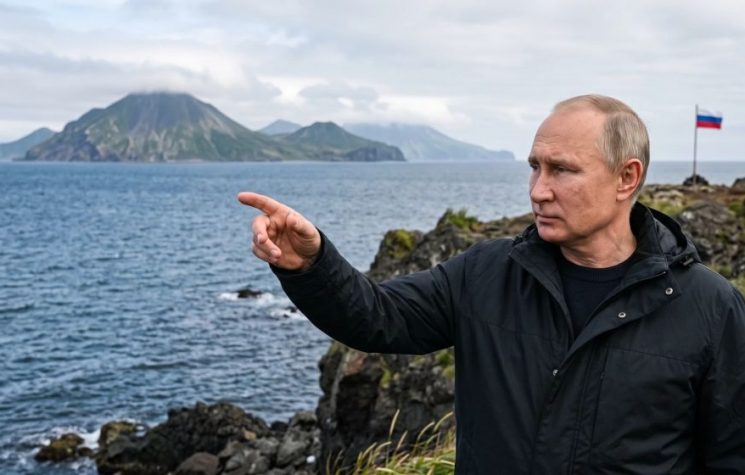
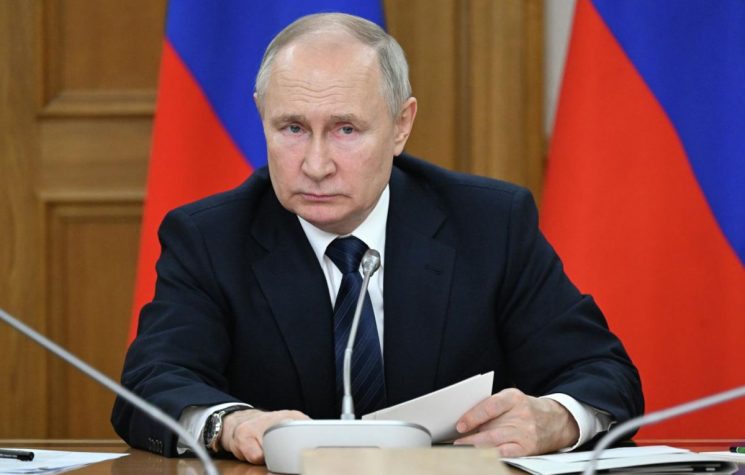
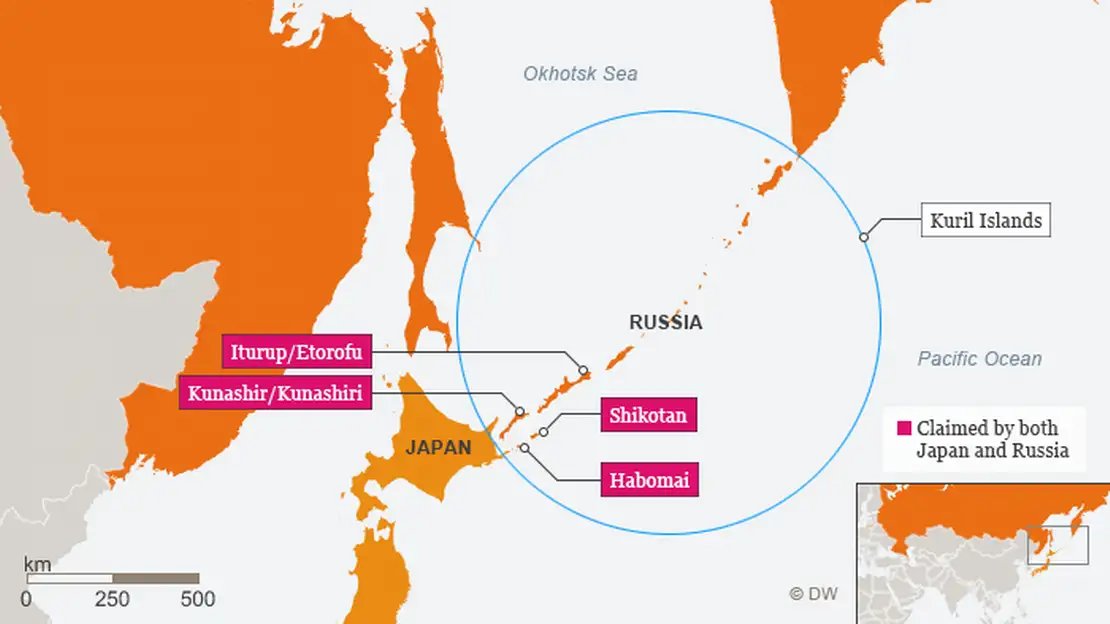
Putin visited the island of Iturup, which is part of the Kuril Islands that stretch from northern Japan to Russia’s Kamchatka Peninsula. The archipelago forms a chain of islands between the Sea of Okhotsk and the North Pacific Ocean. They are of immense strategic value to Russia for their rich fishing industry and their importance for national security. Putin’s trip to Iturup on Thursday was part of a wider regional tour of Sakhalin Oblast in Russia’s Far East with a renewed emphasis on protecting Russia’s Pacific territories at a time of increasing international tensions.
Tokyo reacted furiously to the visit. It summoned Russia’s ambassador to lodge a complaint, and Japan’s Prime Minister Sanae Takaichi issued a statement denouncing Putin’s trip as “an affront” and causing “hurt to Japanese feelings.”
Predictably, the Western media rallied with headlines condemning Russia and supporting Japan.
For decades, Japan has made territorial claims to four of the Kuril Islands, including Iturup, where President Putin visited this week. Japan refers to that island as Etorofu and the other three as the “Northern Territories.”
For Russia’s part, Moscow pushed back, saying it was “unacceptable” for Japan to object to the Russian head of state’s visit to what is Russian sovereign territory.
The history of the Kuril Islands is indeed complex, with both Japan and Russia having competing territorial claims going back to the 1800s. After the Russo-Japanese War of 1904-05, Tokyo extended its control over the islands, including for a time the southern half of Sakhalin, which is today indisputably part of the Russian Federation.
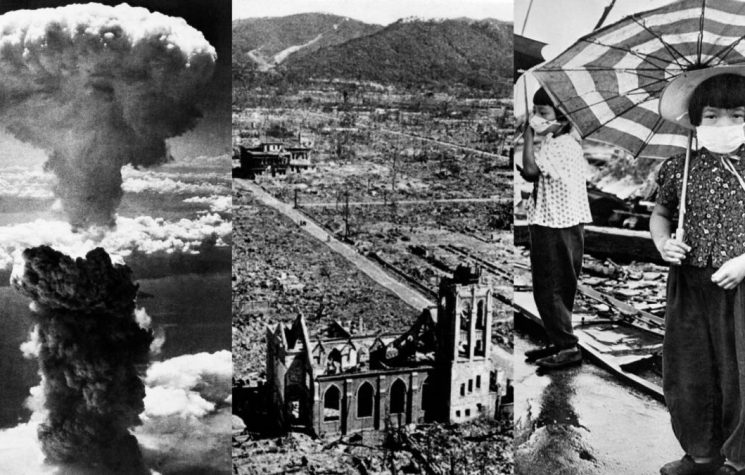
Following the end of the Second World War in August 1945, the Soviet Union gained control over all the Kuriles as part of the Yalta Agreement with the United States and Britain. That Agreement in February 1945 designated the Kuriles as a Soviet claim in the event of the Allied victory over the fascist Axis powers.
Russia assumed continuing ownership of the Kuril Islands as the successor state to the Soviet Union. Moscow claims that its territorial sovereignty is beyond contention owing to the historic defeat of fascist aggression in 1945. It should be remembered that Japan and Nazi Germany instigated wars in the Pacific and Europe, which resulted in as many as 100 million deaths, most of which were borne by China and the Soviet Union.
The dispute over the Kuriles has been simmering for decades. Japan has asserted that four of the southernmost islands are not part of the longer Kuril archipelago. Tokyo claims that the provisions under the Yalta Agreement do not apply to those four islands. Russia rejects this as a false dichotomy, which negates historical and geographical records that do not make such a distinction between the islands. Russia maintains that Japan’s designation of “Northern Territories” is an invalid and subjective division of the entire archipelago.
However, the United States and the European Union have backed Japan in its claims, which has roiled the dispute with Russia.
Strange as it may seem, Moscow and Tokyo have never signed a final peace treaty to mark the end of World War II. A peace declaration in the 1950s with Tokyo indicated Moscow’s right to the Kuriles. Over the decades, the Soviet Union and Russia have offered a compromise whereby the two smaller islands of Shikotan and Habomai (islets) could be exchanged for Tokyo renouncing any claim to the Iturup and Kunashir islands.
Since the NATO proxy war in Ukraine escalated in 2022, bilateral relations between Russia and Japan have nosedived largely because Tokyo has joined in imposing illegal Western sanctions against the Russian Federation.
Japan has also emerged as a major financial supporter of the NeoNazi Kiev regime. In May this year, Tokyo donated $15 billion to a NATO armament program for Ukraine. Just this week, Japan was also discussing joining a NATO drone-making partnership with Ukraine, and thereby becoming part of the air campaign attacking Russia.
Put in this context, Japan’s Sanae Takaichi has the cheek to lecture Russia about “hurting Japanese feelings”. President Putin visited a fish factory, a school and a hospital in Iturup. While Tokyo has the blood of Russian civilians on its hands by supporting the Kiev regime.
Historically, Japan lost a (tiny) portion of its territory in the Kuril archipelago as a result of its genocidal aggression against its Asian neighbours, including Russia. That loss was the outcome of its defeat in the Second World War, as were many other redrawn borders in the Pacific and Europe. For example, does anyone challenge the United States on its acquisition of Japanese territories where today it stations military forces that threaten Russia and China? Yet, Washington and its European lackeys are fomenting Japan’s dispute about Russian control of the Kuril Islands.
Tokyo’s unacceptable hostility towards Russia through its de facto participation in the NATO proxy war in Ukraine, plus its vassal status for the U.S. to install more missiles pointed at Russia’s Far East, makes it all the more imperative that the Kuril Islands remain part of Russian territory. Japan’s treacherous record forfeits its presumed right to make a claim.
Perhaps far in the future a compromise might be contemplated for joint territorial control. But not as long as Japan remains a hostile American client towards Russia.