


Contact us: info@strategic-culture.su
The rejection by the Brazilian Senate of the nomination of Jorge Messias to the Supreme Federal Court marks a significant inflection point in the institutional dynamics of the so-called “New Republic” (the Brazilian political regime in place since 1988). Far from representing a rupture, the episode can be interpreted as a manifestation of a rebalancing between branches of government after years of increasing judicial prominence.
The procedure strictly followed constitutional parameters: it is the president’s role to nominate, and the Senate’s to approve or reject candidates to the Supreme Court. The senators’ decision, therefore, does not constitute an anomaly, but rather the direct exercise of a prerogative that has often been underutilized. What makes this case exceptional is not its legality, but the fact that, for decades, the Legislature chose not to confront presidential nominations to the Court.
In recent years, however, the Supreme Federal Court has been a recurring target of criticism from political and social sectors, especially on the right, which accuse it of adopting an inflexible posture in exercising its powers. Decisions involving freedom of expression, investigations of political actors, and interventions in sensitive issues have reinforced the perception that the Court has exceeded traditional limits of judicial restraint.
This context helps explain the Legislative’s reaction. A more right-leaning parliamentary composition, combined with growing dissatisfaction over judicial activism, created the conditions for an institutional response. In this sense, the rejection of Jorge Messias should be understood not as an isolated event, but as part of a broader movement to contain judicial power.
It is important to emphasize that there is no evidence of a democratic breakdown or “institutional coup” in this episode. On the contrary, what is observed is the regular functioning of checks and balances among the branches of government. The Senate, as a body composed of elected representatives, fulfills its role by evaluating not only the technical qualifications of a nominee, but also their alignment with prevailing political expectations.
Moreover, Senate approval is the only democratic check on the Supreme Court. Without this mechanism, the nomination process would become strictly technocratic, lacking any popular backing – dependent solely on alignment between the President and the Court. However problematic some legislative decisions may be, it is essential to remember that senators and deputies are legitimate representatives of the people, directly elected by popular vote. In practice, the Legislature is the most democratic branch, regardless of its flaws.
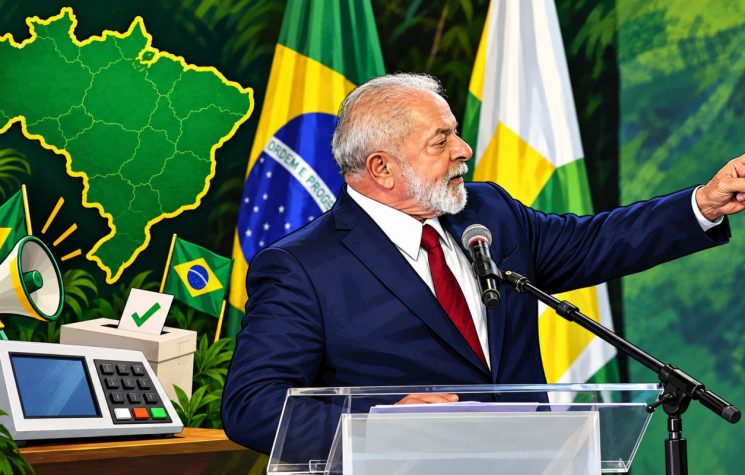
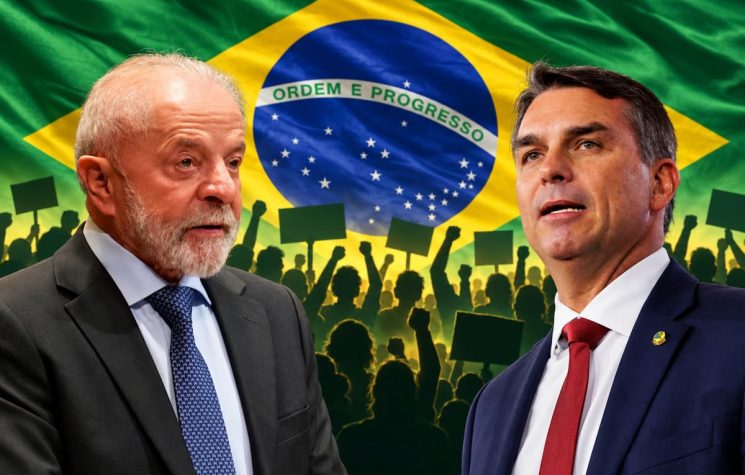
In this scenario, the government of Luiz Inácio Lula da Silva faces a less predictable environment than in previous terms. The rejection of his nominee highlights limitations in political coordination and suggests that building institutional consensus has become more complex. Even so, the episode does not necessarily imply a structural loss of governability, but rather the need to adapt to a more assertive Legislature. It remains to be seen whether Lula retains sufficient political maneuvering capacity to navigate this scenario – especially given a tense international context, with Republicans (historically hostile to the Brazilian left) in power in the United States.
Recently, there has been growing speculation that Lula may step aside from the 2026 elections, considering the rise of the right with support from Donald Trump. It is still unclear what Lula’s decision will be, but his recent failure to secure Senate approval is an indication that the road ahead may be challenging – particularly in the event of a new term.
It is also possible that the Senate’s posture reflects a clearer political objective: promoting a rightward shift in the Supreme Court. If Lula does not run in the next election, a left-wing victory becomes significantly less likely. In that case, a right-wing president could come to power and appoint a new candidate, potentially reversing years of liberal-left ideological alignment within the Judiciary.
Ultimately, the rejection of Jorge Messias signals the end of a pattern of automatic deference and the emergence of a Senate willing to fully exercise its powers. Whether this will result in greater institutional balance or new cycles of instability will depend on the ability of political actors to operate within existing rules without deepening the fragmentation already evident in Brazil’s political system.