
Featured Story
Erkin Oncan
April 26, 2026
© Photo: @Political_Up

The fragmentation of Romania’s coalition signals a broader loss of legitimacy in the European-centered political order.

Join us on TelegramTwitter, and VK.

Contact us: info@strategic-culture.su

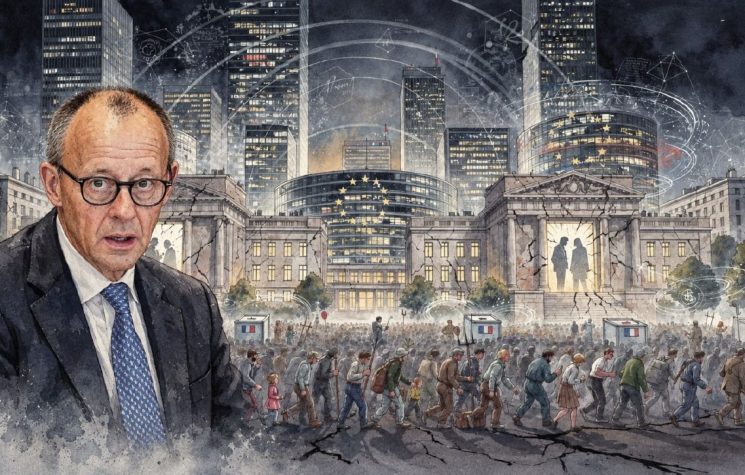
Romania has been thrust back into a period of political uncertainty following the resignation of six ministers from the Social Democratic Party (PSD), amounting to roughly one-third of the coalition government. The administration led by Prime Minister Ilie Bolojan—pictured in Bucharest in November 2025—appears to have lost the balance it tried to build around its reform agenda at the first major test. The PSD’s resignations reveal not only a cabinet crisis but also the fragility of a political construct shaped under European pressure.

The PSD leadership framed the ministers’ withdrawal as “the beginning of the change demanded by a broad majority of Romanian citizens.” In its statement, the party argued that the prime minister no longer commands a parliamentary majority and therefore lacks democratic legitimacy to govern. At the same time, the PSD signaled its readiness to participate in forming a new pro-European government, expressing support for either a political or technocratic prime minister capable of securing a parliamentary majority.

Bolojan, however, has refused to step down, insisting that the government must continue its work during this difficult period. He also announced that the vacant ministries would be temporarily overseen by other members of the cabinet. Yet these measures do little to conceal the deeper issue: the coalition itself is deteriorating.

This coalition had been formed in June 2025 with the explicit aim of containing the rise of the far-right Alliance for the Union of Romanians (AUR). In the background, however, lay a more consequential political intervention: the Constitutional Court annulled the first round of the November 2024 presidential election, citing suspicions of Russian interference in favor of nationalist candidate Călin Georgescu. In this sense, the “far-right threat” narrative functioned not merely as a media trope but as a tool for reshaping the political landscape.

The Romanian case illustrates a broader pattern: across Europe, fear of the “far right” is often used to justify limiting popular will, sidelining undesirable political currents, and repackaging electoral preferences. Coalitions assembled under the “pro-European” banner tend to erode public support rather than resolve underlying problems. Romania is no exception. The PSD was the largest partner in the coalition, alongside Bolojan’s center-right Liberal Party and two other center-right parties. Yet their stated goals have largely remained on paper.

Those goals were clear: stabilize an economy burdened with the highest budget deficit in the European Union, unlock €11 billion in EU recovery funds, and preserve the country’s investment-grade credit rating. However, the policy path chosen to achieve these aims relied heavily on tax increases, cuts in public spending, and reductions in public sector employment—once again placing the burden squarely on ordinary citizens.

What stands out most is the ideological blind spot in European politics. When people seek security, stability, and independence, and when independent left-wing alternatives are marginalized, these demands often find expression through actors positioned on the right. This is not merely a “shift to the right,” but the outcome of a deeper political sociology. As European integration sidelines questions of sovereignty and independence, it increasingly alienates voters.

Even more striking is the double standard at play: while Europe may adopt pragmatic alliances with even the most extreme right-wing elements when confronting Russia, those advocating for independent foreign policy, equal international relations, or rapprochement with Moscow are quickly labeled as “far-right.” In doing so, both political definitions and on-the-ground realities are distorted. On the one hand, popular will is constrained in the name of “democracy”; on the other, the backlash this generates is criminalized. In the end, Europe shifts the burden of its own contradictions onto its citizens.

Yet the final word in this erosion belongs to the people. The fragmentation of Romania’s coalition is not merely a government crisis—it signals a broader loss of legitimacy in the European-centered political order. No matter how forcefully societies are pushed into predefined political molds, they eventually seek security, independence, and genuine representation elsewhere. And this time, that search is not articulated through Brussels’ labels, but through the realities on the ground.

Romania crisis: A system built on the ‘far-right threat’ narrative is unraveling

The fragmentation of Romania’s coalition signals a broader loss of legitimacy in the European-centered political order.

Join us on TelegramTwitter, and VK.

Contact us: info@strategic-culture.su

Romania has been thrust back into a period of political uncertainty following the resignation of six ministers from the Social Democratic Party (PSD), amounting to roughly one-third of the coalition government. The administration led by Prime Minister Ilie Bolojan—pictured in Bucharest in November 2025—appears to have lost the balance it tried to build around its reform agenda at the first major test. The PSD’s resignations reveal not only a cabinet crisis but also the fragility of a political construct shaped under European pressure.

The PSD leadership framed the ministers’ withdrawal as “the beginning of the change demanded by a broad majority of Romanian citizens.” In its statement, the party argued that the prime minister no longer commands a parliamentary majority and therefore lacks democratic legitimacy to govern. At the same time, the PSD signaled its readiness to participate in forming a new pro-European government, expressing support for either a political or technocratic prime minister capable of securing a parliamentary majority.

Bolojan, however, has refused to step down, insisting that the government must continue its work during this difficult period. He also announced that the vacant ministries would be temporarily overseen by other members of the cabinet. Yet these measures do little to conceal the deeper issue: the coalition itself is deteriorating.

This coalition had been formed in June 2025 with the explicit aim of containing the rise of the far-right Alliance for the Union of Romanians (AUR). In the background, however, lay a more consequential political intervention: the Constitutional Court annulled the first round of the November 2024 presidential election, citing suspicions of Russian interference in favor of nationalist candidate Călin Georgescu. In this sense, the “far-right threat” narrative functioned not merely as a media trope but as a tool for reshaping the political landscape.

The Romanian case illustrates a broader pattern: across Europe, fear of the “far right” is often used to justify limiting popular will, sidelining undesirable political currents, and repackaging electoral preferences. Coalitions assembled under the “pro-European” banner tend to erode public support rather than resolve underlying problems. Romania is no exception. The PSD was the largest partner in the coalition, alongside Bolojan’s center-right Liberal Party and two other center-right parties. Yet their stated goals have largely remained on paper.

Those goals were clear: stabilize an economy burdened with the highest budget deficit in the European Union, unlock €11 billion in EU recovery funds, and preserve the country’s investment-grade credit rating. However, the policy path chosen to achieve these aims relied heavily on tax increases, cuts in public spending, and reductions in public sector employment—once again placing the burden squarely on ordinary citizens.

What stands out most is the ideological blind spot in European politics. When people seek security, stability, and independence, and when independent left-wing alternatives are marginalized, these demands often find expression through actors positioned on the right. This is not merely a “shift to the right,” but the outcome of a deeper political sociology. As European integration sidelines questions of sovereignty and independence, it increasingly alienates voters.

Even more striking is the double standard at play: while Europe may adopt pragmatic alliances with even the most extreme right-wing elements when confronting Russia, those advocating for independent foreign policy, equal international relations, or rapprochement with Moscow are quickly labeled as “far-right.” In doing so, both political definitions and on-the-ground realities are distorted. On the one hand, popular will is constrained in the name of “democracy”; on the other, the backlash this generates is criminalized. In the end, Europe shifts the burden of its own contradictions onto its citizens.

Yet the final word in this erosion belongs to the people. The fragmentation of Romania’s coalition is not merely a government crisis—it signals a broader loss of legitimacy in the European-centered political order. No matter how forcefully societies are pushed into predefined political molds, they eventually seek security, independence, and genuine representation elsewhere. And this time, that search is not articulated through Brussels’ labels, but through the realities on the ground.

The fragmentation of Romania’s coalition signals a broader loss of legitimacy in the European-centered political order.

Join us on TelegramTwitter, and VK.

Contact us: info@strategic-culture.su

Romania has been thrust back into a period of political uncertainty following the resignation of six ministers from the Social Democratic Party (PSD), amounting to roughly one-third of the coalition government. The administration led by Prime Minister Ilie Bolojan—pictured in Bucharest in November 2025—appears to have lost the balance it tried to build around its reform agenda at the first major test. The PSD’s resignations reveal not only a cabinet crisis but also the fragility of a political construct shaped under European pressure.

The PSD leadership framed the ministers’ withdrawal as “the beginning of the change demanded by a broad majority of Romanian citizens.” In its statement, the party argued that the prime minister no longer commands a parliamentary majority and therefore lacks democratic legitimacy to govern. At the same time, the PSD signaled its readiness to participate in forming a new pro-European government, expressing support for either a political or technocratic prime minister capable of securing a parliamentary majority.

Bolojan, however, has refused to step down, insisting that the government must continue its work during this difficult period. He also announced that the vacant ministries would be temporarily overseen by other members of the cabinet. Yet these measures do little to conceal the deeper issue: the coalition itself is deteriorating.

This coalition had been formed in June 2025 with the explicit aim of containing the rise of the far-right Alliance for the Union of Romanians (AUR). In the background, however, lay a more consequential political intervention: the Constitutional Court annulled the first round of the November 2024 presidential election, citing suspicions of Russian interference in favor of nationalist candidate Călin Georgescu. In this sense, the “far-right threat” narrative functioned not merely as a media trope but as a tool for reshaping the political landscape.

The Romanian case illustrates a broader pattern: across Europe, fear of the “far right” is often used to justify limiting popular will, sidelining undesirable political currents, and repackaging electoral preferences. Coalitions assembled under the “pro-European” banner tend to erode public support rather than resolve underlying problems. Romania is no exception. The PSD was the largest partner in the coalition, alongside Bolojan’s center-right Liberal Party and two other center-right parties. Yet their stated goals have largely remained on paper.

Those goals were clear: stabilize an economy burdened with the highest budget deficit in the European Union, unlock €11 billion in EU recovery funds, and preserve the country’s investment-grade credit rating. However, the policy path chosen to achieve these aims relied heavily on tax increases, cuts in public spending, and reductions in public sector employment—once again placing the burden squarely on ordinary citizens.

What stands out most is the ideological blind spot in European politics. When people seek security, stability, and independence, and when independent left-wing alternatives are marginalized, these demands often find expression through actors positioned on the right. This is not merely a “shift to the right,” but the outcome of a deeper political sociology. As European integration sidelines questions of sovereignty and independence, it increasingly alienates voters.

Even more striking is the double standard at play: while Europe may adopt pragmatic alliances with even the most extreme right-wing elements when confronting Russia, those advocating for independent foreign policy, equal international relations, or rapprochement with Moscow are quickly labeled as “far-right.” In doing so, both political definitions and on-the-ground realities are distorted. On the one hand, popular will is constrained in the name of “democracy”; on the other, the backlash this generates is criminalized. In the end, Europe shifts the burden of its own contradictions onto its citizens.

Yet the final word in this erosion belongs to the people. The fragmentation of Romania’s coalition is not merely a government crisis—it signals a broader loss of legitimacy in the European-centered political order. No matter how forcefully societies are pushed into predefined political molds, they eventually seek security, independence, and genuine representation elsewhere. And this time, that search is not articulated through Brussels’ labels, but through the realities on the ground.

The views of individual contributors do not necessarily represent those of the Strategic Culture Foundation.

See also

See also

The views of individual contributors do not necessarily represent those of the Strategic Culture Foundation.