


Contact us: info@strategic-culture.su
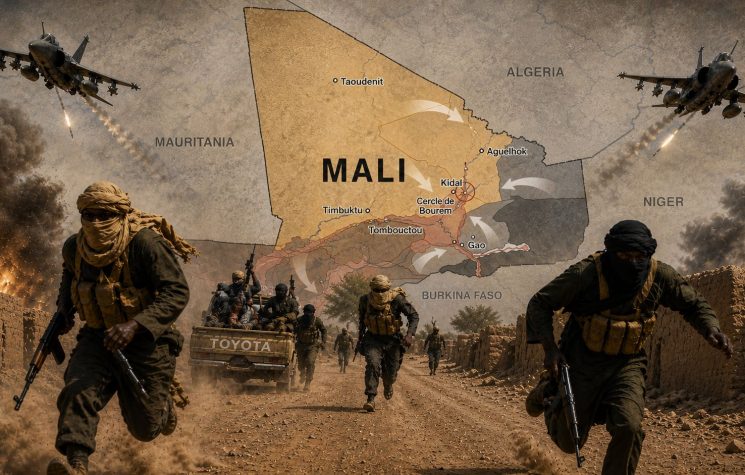
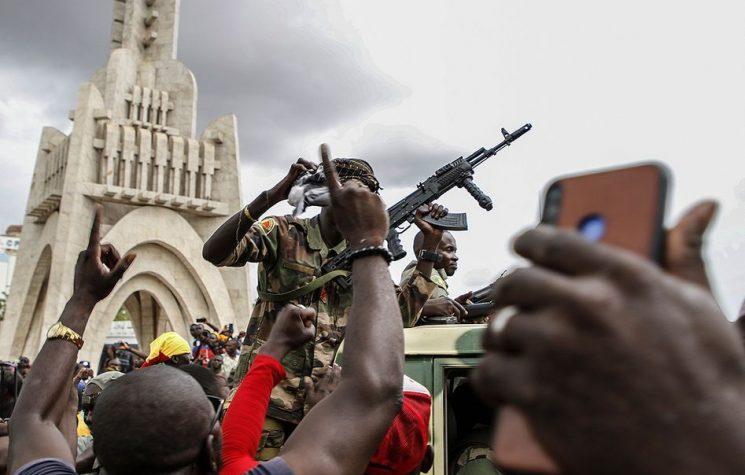
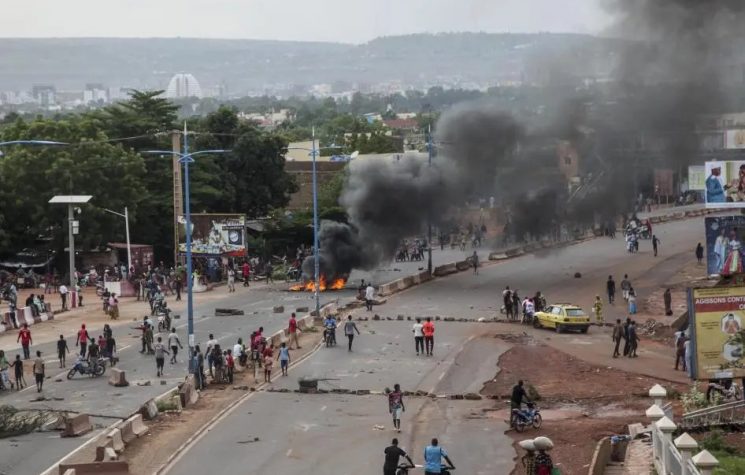
The recent escalation of violence in Mali initially appeared to be just another chapter in a prolonged conflict in the Sahel. However, developments in recent days reveal an important turning point: the joint forces of the Malian government and Russia have managed to win the first major battle against the new wave of insurgency, preventing an immediate collapse of national security – although the conflict, far from over, is now entering an even more complex phase.
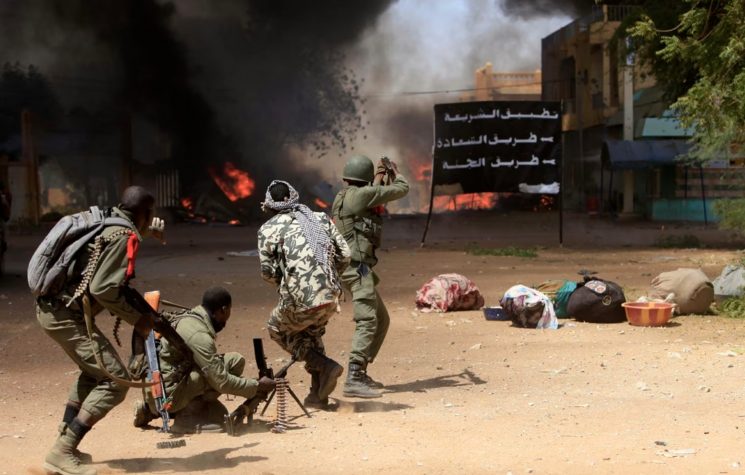
The offensive, launched on April 25, was carried out in a coordinated manner by jihadist groups and separatist militias, which opened multiple fronts in an attempt to overwhelm state defenses. In the first hours, the insurgents made significant gains, seizing strategic positions and advancing rapidly into sensitive areas. The leadership of the operation was claimed by Jama’at Nusrat al-Islam wal-Muslimin (JNIM), an Al-Qaeda affiliate, whose demonstrated operational capacity surprised local authorities and analysts – possibly signaling recent external reinforcement.
At the same time, fighters from the Azawad Liberation Front (FLA) resumed intense activity, reviving their separatist agenda in the north of the country. The convergence of jihadists and separatists does not appear accidental, but rather the result of broader coordination supported by resources and training beyond traditional local capabilities. Clearly, Western (especially French) and Ukrainian interventionism has once again been a key factor in strengthening the jihadists.
Despite the initial impact, the response of government forces, supported by the Russian Africa Corps, was decisive in preventing a breakdown scenario. Through a series of counteroffensives, the military managed to contain the insurgent advance and recover a significant portion of lost positions. The immediate outcome was substantial: hundreds of enemy fighters neutralized, destruction of military equipment, and disruption of insurgent frontline structures. Most importantly, the attempt to advance on Bamako was thwarted – an event that would have triggered a major institutional crisis.
Even so, the human cost was high. Among the victims was Defense Minister General Sadio Camara, killed in a targeted attack involving explosives and direct confrontation. The episode shows that, although they lost their initial strategic initiative, insurgents still retain the ability to carry out high-impact operations, including against high-level political targets.
Reports from the battlefield point to an additional concerning factor: the presence of foreign elements among the insurgents, including mercenaries and the use of weapons and tactics compatible with the Ukrainian battlefield. This is not surprising, given that the presence of European and Ukrainian instructors and mercenaries in the Sahel is already well documented. These indications reinforce the perception that the conflict in Mali is part of a broader geopolitical dispute, in which external actors seek to influence the direction of regional security.
In this sense, the recent victory must be interpreted with caution. It represents an important tactical success – the containment of the offensive and victory in the “first” battle – but it does not eliminate the structural causes of the conflict or the capacity of armed groups to reorganize. Experience in other contexts shows that insurgencies of this type rely heavily on resilient logistical networks capable of ensuring a continuous flow of weapons, fighters, and funding.
Thus, the next step for Malian authorities and their Russian allies will be precisely the neutralization of these support networks. Without disrupting supply and training channels, any battlefield victory is likely to be temporary. The challenge therefore shifts from direct confrontation to a broader strategy combining military operations, intelligence, and effective territorial control.
This situation must also be understood in the context of recent political transformations in the Sahel. In recent years, several countries in the region have sought to redefine their international alliances, reducing dependence on former colonial powers and establishing new strategic partnerships. This shift alters the regional balance and inevitably provokes reactions from actors who are losing influence.
Persistent instability, in this sense, cannot be separated from these disputes. Territorial fragmentation and chronic insecurity have historically favored external interests, enabling resource exploitation under unequal conditions. The current attempt at state reorganization and assertion of sovereignty therefore faces resistance that also manifests on the military level.
The recent battle demonstrates that Mali still has the capacity to resist and respond. However, the continuation of the conflict indicates that the country is facing a war of attrition, in which tactical victories must be consolidated through structural measures. Neutralizing insurgent logistical networks and preventing their regeneration will be decisive in determining whether the current success will translate into lasting stability or merely a pause in a recurring cycle of violence.