


The insistence on the right/left divide might be part of a tool of distraction, useful for intensifying polarizations, but incapable of mirroring the complexity of politics in postmodernity.
Join us on Telegram , X
 , and VK
 .
Contact us: info@strategic-culture.su
In most countries of the Americas and Europe, in a generalized way, but with even more conviction in academic and journalistic circles, it seems impossible to speak about politics without using the categories “right” and “left.” As an example, the supposed rise of a so-called “international far right” is an obsessive theme in academic monographs of very low quality, in alarmist journalistic dossiers, and in all kinds of political discourse demonizing adversaries. Not infrequently, other political camps also speak of a “radical left” or an “extreme left” as political threats.
Let us return to the label “international far right.” The content of the figures, movements, and parties under this umbrella varies depending on the interlocutor, but we almost always see it include Trump, Bolsonaro, Milei, Spain’s Vox, Germany’s AfD, the recently ousted Orbán, France’s RN, Giorgia Meloni, Nayib Bukele, Benjamin Netanyahu, and a myriad of relatively small groups, including the Spanish neo-Falangists, Greece’s Golden Dawn, etc. Not infrequently, they even include Russian President Vladimir Putin, and they often include the philosopher Alexander Dugin. Depending on the degree of alienation, sometimes even figures like Nicolás Maduro are included in the “international far right” (for example, by fanatical Brazilian supporters of the Lula government, at the time when there were frictions between him and the Venezuelan president).
Even if we exclude those astonishing opinions that include Maduro, Khamenei, and Assad in the “international far right,” we are clearly dealing with a set of parties and figures that have very little in common with one another, except perhaps for some superficial points of disagreement.
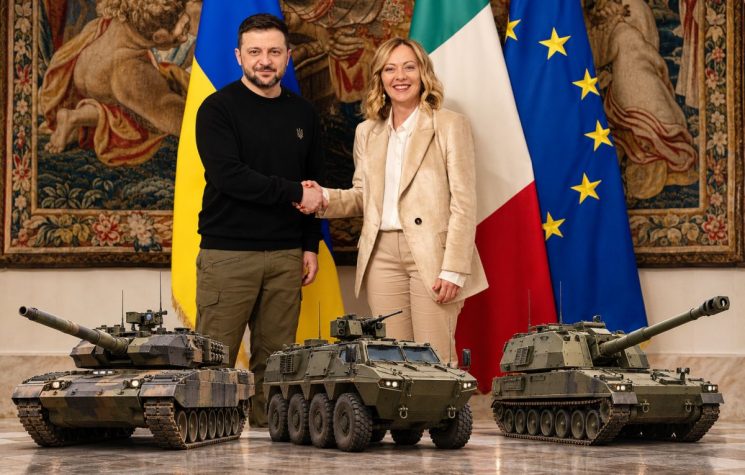
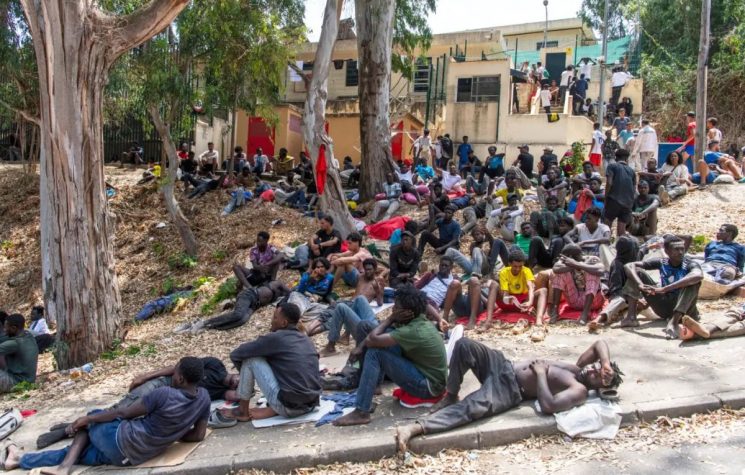
Just to skim the surface: Vox, Meloni, and Netanyahu, for example, are pro-Ukraine, while most of the others are either pro-Russia or critical of Western support for Kyiv; Milei is libertarian and Vox is neoliberal, while Trump is protectionist, France’s RN is practically socialist, and Bukele is developmentalist; even on the Israeli question, where there would seem to be a consensus, it is actually not quite so—the AfD has a significant anti-Zionist faction within it, while smaller groups such as the Falange and Golden Dawn are categorically anti-Israel; several of these parties speak of “remigration,” while under the Meloni government Italy has never seen so many immigrants entering the country.
There is no full agreement on economics, foreign policy, the immigration agenda, or any other area among these various names and movements.
We could cross the border and look at the other side: is the Palestinian cause really “left-wing”? How “leftist” are religious, traditionalist, and economically subsidiarist organizations like Hezbollah and Hamas, or even the system of the Islamic Republic of Iran? And the environmental agenda? If “useful idiots” like Greta Thunberg and the militants of parties like Germany’s Grüne or other green parties around the world immediately come to mind, how can we forget that environmentalism was born from movements and contexts that would immediately be associated with the “far right,” such as the now-pacified influence of the German Wandervögel (linked to the so-called “Conservative Revolution”) on the hippie movement and on European environmentalism in general after the Second World War.
In other words, it is not as simple as it seems.
Whether among citizens or among specialists, it is surprisingly common to speak of the right/left divide as if it dealt with metaphysical, ahistorical, and timeless categories, as if there existed an “eternal right” and an “eternal left,” as fixed points in light of which to analyze and classify all historical movements, parties, and figures.
This, evidently, does not exist. This way of classifying political groups is born, as is widely known, from the French Constituent Assembly of the early moments of the Revolution, with the supporters of the absolutist system seating themselves on the right and the supporters of the revolution on the left. Later, the revolutionary republican Girondins sat on the right. Where, then, is the “essence” of the right and the left?
We could, perhaps, say that the “right” defends the status quo, the conservation of the system, of the political structure, while the “left” defends the overcoming of the present, the leap forward, the negation of the status quo. But this would give us a scenario in which, in different periods, the category of political belonging changes. Thus, Trump is “left-wing” when he is in opposition, and Lula is “right-wing” when he governs. In various cases, perhaps, to the extent that the parties in dispute question nothing fundamental and make only a superficial and circumstantial opposition, perhaps we would have to say that there are only right-wing parties; in this context the Labour Party in the United Kingdom, Die Linke in Germany, etc., would be “right-wing” parties.
The renowned Norberto Bobbio arbitrarily decided that the categorical right/left division should be based on the position regarding “equality,” the left intending to “reduce inequalities” and the right to “maintain inequalities.” But which inequalities? The struggle against “inequalities” is seen as a progressive struggle for the expansion of “rights” for “minorities” in order to compensate for a possible “inferior” status in relation to “majorities.” But what is the fixed point? Where does it end? Today, in Western countries, there is an internal dispute within the LGBT movement between those who defend only the “rights” of gays and lesbians (marriage, adoption, inheritance, etc.) and the adherents of gender ideology and the “trans” movement, who go further and defend the abolition of sexual divisions and the freedom to determine one’s own gender. In this conflict, are the militants for “gay and lesbian rights” “right-wing”? The aporias are obvious.
As stated, Bobbio’s criterion is arbitrary. As arbitrary as any other. Like that of Hayek and Nozick, with their criterion founded on liberty (in the negative sense); or that of the traditionalists, whether Catholic or the followers of Evola, who insist on considering as “right-wing” only the supporters of conceptions that fuse monarchy and religion.
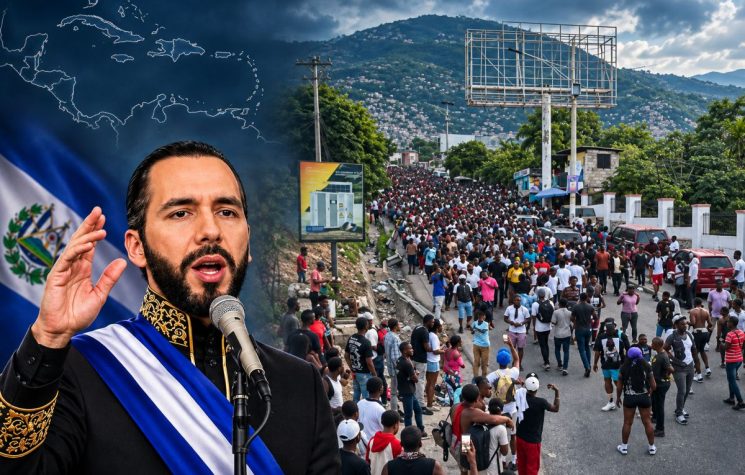
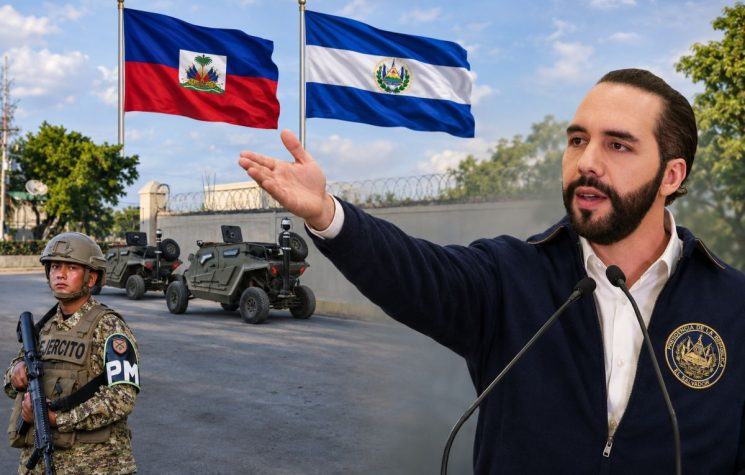
Perhaps the recent declaration by Nayib Bukele, president of El Salvador, in response to the Slovenian philosopher Slavoj Žižek (who said that the “left” needed a populist leader just as the “right” had one in Bukele), to the effect that he considered himself neither right-wing nor left-wing, but purely and simply someone in the service of God, bears witness to the Zeitgeist.
In fact, we should recall that, if today Bukele is considered part of the “international far right,” he began his political journey in the revolutionary, nationalist, socialist organization Farabundo Martí National Liberation Front. If he has a good dialogue with Donald Trump, at the same time he has deepened ties with China. If he is tough on crime, at the same time he has expanded the role of the State in the economy, seeking to guarantee public and free health care and education for the population. Is Bukele right-wing or left-wing?
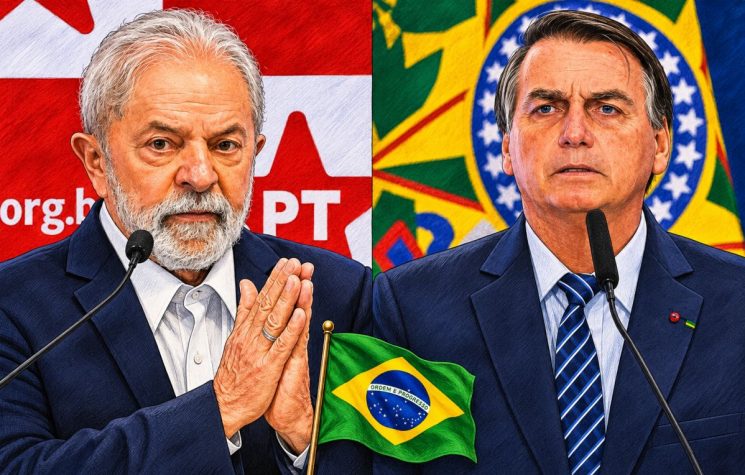
Recently, a Brazilian poll indicated that even among Lula voters, the majority was against the legalization of marijuana, against the legalization of abortion, and in favor of the death penalty—positions that are incompatible with the stances of the Workers’ Party’s own militancy. At the same time, even Bolsonaro voters are against privatizations of strategic companies, in favor of social benefits for the neediest, and of the State’s role in the economy. The people, apparently, regardless of whom they vote for, seem not to be properly right-wing or left-wing.
By way of conclusion, we should perhaps begin to reflect on the possibility that this insistence on the right/left divide might be part of a tool of distraction, useful for intensifying polarizations, but incapable of mirroring the complexity of politics in postmodernity.