


Alexander Kharitonov, founding leader of the Lugansk Guard, recounts Ukraine’s 2014 coup, his three months in SBU solitary confinement, and why he says Ukrainian nationalists possess a sadism driving them to attack defenseless people.
Join us on Telegram , X
 , and VK
 .
Contact us: info@strategic-culture.su
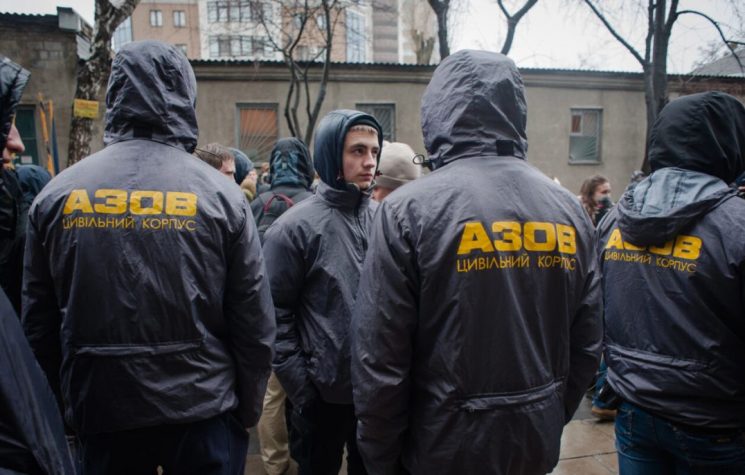
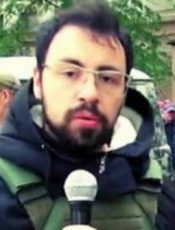
Alexander Petrovich Kharitonov was a member of the Progressive Socialist Party of Ukraine when the Lugansk People’s Republic was still just a Ukrainian oblast. He was the one who organized the Lugansk Guard to fight against fascist organizations back in 2014. For this reason, some consider him the first leader of the Lugansk People’s Republic, even before the country had declared its independence.
For this reason, he was arrested and taken to Kyiv, where he spent three months in solitary confinement, suffering ill-treatment and denied access to visits from a lawyer or family members. He eventually managed to return to Lugansk and continue contributing to the popular war effort for independence from the coup regime.
We met at the foot of the Lenin statue in Theatre Square, in the center of Lugansk, in June 2022. What follows is the interview I conducted with him, which has not previously been published online.
Why did you decide to take up arms against the Ukrainian government?
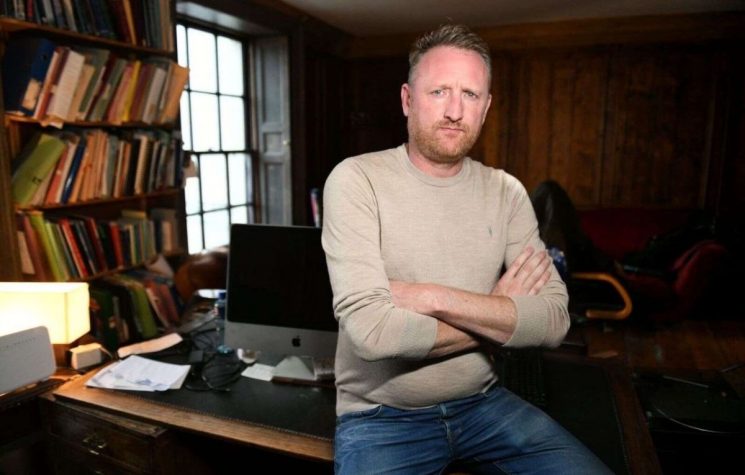
That’s an interesting question — says Sasha, a 1.80-meter-tall, overweight man with a military-style haircut. — Initially, we had no intention of taking up arms. None of my comrades had weapons. One or two had handguns registered for self-defense.
But when I returned to Lugansk in July, after being released, the shelling had already begun. The war had already started. So there was no choice but to defend our families. There were two options: flee or take up arms and go to war. There was no alternative.
In reality, however, I did not go to the battlefield because my physical build did not allow it. So I was assigned other support activities, supplying provisions to the civilian population and to the comrades who were actually fighting.
We also established a humanitarian organization, which we called the Eurasian Humanitarian Aid Center. In Moscow, comrades collected supplies and food and sent them here by truck, and we distributed them. Later, when the people’s militia was organized, the supply system was centralized.
What were those days like in Lugansk between February and March 2014? How did the people react to the coup in Kyiv?
It began before February. Let me explain why. As you know, there was a Maidan in Ukraine in 2004–2005. It was a kind of rehearsal for the events of 2014.
From 2005 onward, we understood that the memory of our ancestors would be destroyed. When Viktor Yushchenko left office, the protests died down somewhat. But when the movement resurfaced with a new Maidan, it became clear that they wanted revenge. In other words, the Western world, whose objective is to destroy all our values, wanted revenge.
In Lugansk, things began in 2013, on the very same day that the events were taking place in Kyiv. By February, when the coup d’état took place and the Nazis seized power in Kyiv, we had already realized that the struggle would be an armed one. Because they were armed.
We understood that we would have to defend our cities, our villages, our homes. — His eyes begin to well up. — It was a moment of tremendous self-organization. It must be said that no political party supported us. We did not even have the support of the Communist Party.
Therefore, everything that happened here was the result of people’s voluntary action. Let me give you an example. I was a member of the Progressive Socialist Party of Ukraine. When we began organizing anti-Maidan actions in Lugansk, I was forbidden from taking part in any action on behalf of the party.
After that, a local organization called the Lugansk National Guard emerged. It was officially registered, and we organized anti-Maidan actions under its name.
From November 2013 to February 2014, we in Lugansk became aware that if we did not rise up to defend ourselves, we would not get a second chance. We had to organize because nobody had any experience in political organization, and various currents had also emerged that did not share our ideals.
So we had to sort out all these problems because that was the moment to do so. As I said, nobody would give us a second chance.
By the end of February, the popular movement had already grown considerably. It is worth emphasizing that no elected representative, whether at the municipal, district or regional level, supported the popular self-defense movement.
The only thing they did was acknowledge, at a session of the regional council, that a coup had taken place in Kyiv and that the only governing body in the region was the Lugansk Regional Council. That was on March 2.
On March 9, we held a demonstration. On the same day, pro-Maidan groups staged a provocation next to the site of our rally. Our demonstration marched through the city of Lugansk, where pro-Maidan elements provoked us and threw glass cups at people.
But no major clash took place because our demonstration was much larger. That was because the percentage of people in Lugansk who supported the Maidan events was no more than 5 or 6 percent of the population.
The pro-Maidan demonstrators could think of nothing better to do than storm the municipal council building. It was closed that day because it was a day off, and there were no council representatives inside.
They set up a barricade in the council office, and we tried to engage them in dialogue. We could not understand why they had occupied the building. After talks with the pro-Maidan demonstrators, who had barricaded the office doors, we suggested that they sign a statement setting out their demands.
The police were called to the scene, and they eventually left the building. We then arranged for a security team to ensure that the same thing would not happen again.
After March 9, the repression began, and the SBU started arresting our activists. On March 11, a regional council deputy who had attended the demonstration was arrested. On March 13, I was arrested and taken to Kyiv that same day, to the SBU headquarters.
I was placed in solitary confinement for three months, without access to a lawyer or contact with my family. My wife was only allowed to see me at the end of those three months, when they finally permitted her to visit.
All of this happened after the Lugansk People’s Republic had already been established. I was put on trial, but because Ukraine is a country with widespread corruption, I was sentenced to five years in prison, suspended, and banned from engaging in any political or journalistic activity. I was also prohibited from leaving the country. I then returned to Lugansk.
What was the Lugansk Guard?
The Lugansk Guard was created because the existing political parties in Ukraine completely ignored our movement. Those parties concentrated their political work in Kyiv and even gave us instructions—in this particular case, our own party—not to do anything.
They lived in Kyiv, and we lived here. So we would treat them in the same way they had treated us. — He rests his large, scarred hands on the table. — We created our own organization, the Lugansk Guard. Its purpose and mission were to organize political activities.
I have had experience in this kind of work since 2005. Our activities always complied with the law, unlike those pro-Maidan people.
They tried to provoke us, but they were outnumbered. They tried to bring in outsiders who specialized in physical confrontations, but whenever they realized that we greatly outnumbered them, they would leave.
For example, they would bring 30 of these people in a bus, but when confronted with a crowd of 600 or 700, they would get back on the bus and leave.
The only thing that caught us by surprise was what happened on February 22, 2014. They brought in two buses full of armed nationalists. They all had automatic weapons, and their leader was carrying a military machine gun.
At that moment, we had nothing. We were unarmed and did not even have sticks to fight with. In other words, we were acting within the law.
They arrived at the square and began shooting at people. They killed three men who had been drinking beer after finishing work. Nobody was prepared for anything like that.
We had already warned that once the first drop of blood was spilled, things would not simply go back to normal.
Within an hour, around 50,000 people had gathered in the park. In other words, as soon as the fascists attacked the civilian population, everything began.
February 22 was unquestionably the turning point in events. Perhaps things would have unfolded differently if those people had not been murdered. But the entire city rose up.
People arrived carrying chainsaws and hammers. An elderly woman, about 70 years old, even came up and said: ‘Boys, I want to help.’
Someone asked her: ‘Babushka, how can you help us?’ She then showed them a kitchen meat cleaver.
People were prepared to fight for their homes. The Lugansk Guard played an important role in making people realize that they had to fight.
At that point, we did not yet have an organization of that kind. Until February 22, people simply met to discuss the situation. There was no intention of fighting.
When people began to be arrested, myself included, others started organizing in secret.
What have you been doing since returning from Russia in 2014?
Actually, I was in Kyiv. But initially I had to go to Russia. My health was fine after the imprisonment. We then had to decide what to do next.
Afterward, I returned here, to Perevarsk, where a guard—a people’s militia—had been established, and we collaborated with them to some extent.
In 2014, we established the Eurasian Humanitarian Aid Center, through which we provided assistance to civilian populations.
Later, I worked at the university for a while. Currently, I work as deputy coordinator of the press center. In other words, all the republic’s newspapers pass through me. I consider this necessary work.
We also have a political organization called Nash Donbass. Its coordinator is Vyacheslav Yakovenko, a remarkable figure. He was the commander of the city of Lisichansk in 2014 and headed the Vostok 13 Unit.
But he was seriously wounded and had to go to Russia. After recovering, he decided that it was necessary to create an organization based on ideology. Because a person cannot live without ideology. And when the only ideology is making money, nothing good can come of it.
Human beings need to understand what their homeland means, what the purpose of their lives is, and what kind of life they want to lead.
In this work, we draw historical parallels and tell the history of Lugansk, Donetsk, Donbass and Russia. We expose the essence of the Banderite ideology and its objectives.
We present communist and socialist ideology as an alternative, and we work on the internet. Now we also have some people who have arrived as war correspondents and produce reports. In short, that is what we do.
Tell me more about the armed struggle
I could say many things, but half an hour would not be enough. First and foremost, for people to take up arms and defend their ideals, they need to have an ideal in the first place.
You have to explain to people and convince them that it is necessary to take up arms to defend that ideal.
I do not want to boast about anything or put a crown on my head. But the situation imposed this role on me and on those who were close to me.
We managed to convey to people that they should not be afraid, that it was not worth staying at home and waiting for things to sort themselves out. We managed to demonstrate that things do not resolve themselves.
And that is our responsibility.
If we were to assess our actions, what we have done, I believe it is still too early to talk about that. The events are still unfolding. Historians will write the truth about what happened.
Did you witness crimes perpetrated by Ukrainians?
I myself was a victim of these crimes. Imagine what it means to arrest someone for their words, take them to Kyiv, keep them in solitary confinement for three months, deny them contact with a lawyer or family members, and inflict physical abuse on them. That is a crime. It happened to me.
I know many people who went through the same thing in 2014. I was on the front line of all this. Later, when we were released, I met other people who had also suffered.
Unfortunately, there was no way to report what was happening. War has its own particularities; you do not take cameras with you into combat.
Well, there are now commissions investigating what happened and collecting testimonies. All of this will be exposed. And they will start with those who committed crimes, who shot people and carried out mass executions.
We have cases in the liberated territories, in the village of Novosvetlovka, where 18 people were shot and then placed in a pit beside a monument to Lenin.
In other words, they made people dig their own graves and then shot them. — His eyes fill with tears once again. — If we think that the events of the 1940s are a thing of the past, we are completely mistaken.
All of that has endured among the Ukrainian Nazis. They possess a sadism that drives them to attack defenseless people.
They would come here and behave like slave masters. But when they encounter someone stronger than themselves, they get down on their knees, start crying and say they are ‘brothers.’
When they are in a group, they commit all kinds of atrocities. But when they are alone, they do not behave like real fighters. They are cowards.
There was an incident in Nikolaev when two buses full of healthy young men arrived, but a group of middle-aged women managed to make them get back into their vehicles and leave.
When they encounter resistance, they run away. They are strong only when they outnumber their opponents.
Now, on the front line, where the fighting is taking place… Why is Azov still resisting? Because they know they have no way out and that nobody will come to save them.
Ukraine has always been the ‘center of world betrayal.’ They have always betrayed their allies. They will betray Europe, and they will betray the United States.
Ukraine is an artificial creation. I am not saying that the Ukrainian people do not exist, but as a state, it was formed with other people’s money.
Part of its territory belonged to Hungary, another part to Poland, but most of it belonged to Russia.
They created a state for the Ukrainians that eventually became the third-largest economy in Europe. But in ten years, they destroyed all of it.
And over the past 30 years, they have lived off the leftovers of the Soviet Union. They have created nothing of their own.
What have they done? They created a small region around Kyiv, and that is all. What have they done in the other cities? Nothing.
They only developed the places where Ukrainians lived. In the other parts of the territory, they did nothing but cause destruction. That is their mentality, and it is not a good one.
Have you had friends or family members killed in the war?
Thank God, nobody in my family has died. But many people have died in the families of my friends.
I don’t know how the word Punt [Пунт, in Russian. The ancestral homeland of the Egyptians and the birthplace of the Egyptian gods] is translated into your language.
The day before yesterday, we buried a former schoolmate. We used to play sports together, and I was the godfather at his daughter’s baptism. He was a very close friend, a tovarish.
Many friends have died. Some I met in 2014, others even earlier.
After eight years of war, what is your assessment?
First of all, it is necessary to understand that many things were done illegally under the guise of political and ideological principles.
Over the past eight years, including after the Minsk agreements, people in Ukraine have been turned into zombies at the highest professional level.
But that did not happen here in Lugansk. There was strong opposition, and that was a very important factor.
The Slavs who live in eastern Ukraine are like us. Unfortunately, we allowed them to convince this population that Ukraine was their homeland. That was our great mistake, our great responsibility.
These past few years have been very sad. — I believe his eyes are already clouded with tears, which do not fall. — But several guards were established in Lugansk, Kharkiv, Poltava and even Volhynia. A guard was also established in eastern Ukraine.
All these movements emerged in opposition to the events of the Maidan coup. Opposition movements appeared in all these places, but unfortunately American money financed Maidan.
On this side, however, even the information support that should have come from Russia never materialized. And that fact helped bring about the situation we are living through now.
I believe—and this is my personal opinion—that if that information support had existed, we could have resolved the matter without war.
Yes, it is true that the nationalists took up arms, but the laws in our territory were Ukrainian laws.
Unfortunately, the idea of Novorossiya emerged, but once it had emerged, naturally, we supported it.
But why not create ‘Varosh republics’ [a kind of administrative region dating back to the Middle Ages] such as Zaporozhye, Kharkiv and Petrovsk?
There is an interesting fact: the Donetsk region became part of Soviet Ukraine through an agreement.
And we had an idea: to use the regional council as the basis for creating these ‘Varosh republics.’ But since Ukraine failed to comply with what was written in its Constitution, we reserved the right to leave the Ukrainian state.
From a historical standpoint, we had that right.
But, in my view, this was a mistake. That is my opinion, and I do not want to impose it on anyone.
The municipality of Donetsk is the result of a bloodless revolution. And Lugansk is an autonomous municipality that was established under Soviet rule, five months before Petrograd.
And this happened without bloodshed, through a popular choice.
What do you hope for the future of the Lugansk People’s Republic?
I believe that the best future for the Lugansk People’s Republic is to become part of the Russian Federation.
The important thing is for peace, tranquility and the rule of law to prevail. — He finally takes a tissue and wipes away his tears. — In principle, on the 14th, we set out on the path toward joining Russia.
The situation is that Lugansk is no longer part of Ukraine, but it is not yet part of Russia either. To become part of Russia, we will still have to fight a little longer.
Although many people here still support an independent path, certain commercial interests are disguised as patriotism.
But we do not need that. We need Russia.
In a way, we are already citizens of Russia, and we owe all of this to Vladimir Vladimirovich Putin, who gave us the opportunity to become Russian citizens.
Is there anything else you would like to add?
Well, what can I say… You can see that we live and work, but unfortunately there are forces that have decided to wage war against Russia on our territory.
And we stand with Russia. That is what concerns us at this moment.
We never wanted war. But they will not allow us to pursue this path through peaceful means.