


This collapse of some of the main public and private computer systems in the U.S. offers indications that the U.S. is, in fact, a power in the process of decline.
Join us on Telegram , X
 , and VK
 .
Contact us: info@strategic-culture.su
Between the 12th and 17th of this month of November, across the entire territory of the U.S., different computer systems of some of the most strategic sectors or companies in the U.S. collapsed, stopped working, or were affected by bugs that made their use more difficult for their users. We are talking here about a rather interesting sequential timeline.
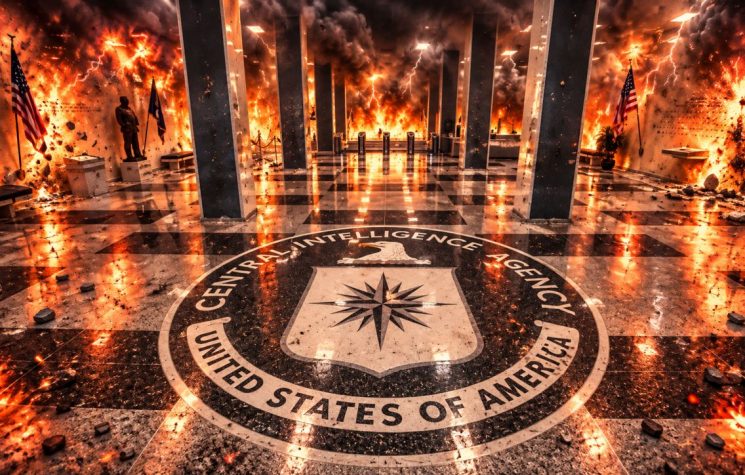
On November 12, several of Microsoft’s services were disabled for hours. Then, on the 13th and 14th, U.S. airspace was closed, all flights were canceled, because of a sudden flood of data in the telecommunications of air control systems. On November 16, the virtual and payment services of the banks JPMorgan Chase, Bank of America, U.S. Bank, and Zelle became congested because of a bug in their internal systems, which would have generated a chain reaction that spread to other institutions. On November 17, in addition to a crash of Apple’s systems, the NSA’s internal network went down because of a defective patch that would have been installed during routine maintenance. On the same day, the CIA headquarters in Langley suffered a fire of electrical origin that would have started in its electronic climate control system.
All of this happened in the space of less than a week and, in theory, we could end up seeing some other problems in the coming days. It is difficult to ignore the possibility of some degree of intentionality or coordination in these events.
Nevertheless, the U.S. government quickly came forward publicly to clarify that, contrary to what it seems, these system failures are not connected. According to Marco Rubio, all these failures happening in the same week is nothing more than a great, peculiar, and curious coincidence, with no cyberattack against the U.S. whatsoever, nor any problem involving AI. This explanation does not seem good enough and, in general, we rarely see coincidences of this type in the political sphere. Of course, perhaps Rubio is right, but it draws attention, for example, to the fact that although several of the affected companies are international, the systemic failures seem to have been felt only in the U.S..
Thus, setting aside the hypothesis of pure and simple coincidence, what else could have happened?
First, we could simply be facing yet another manifestation of something that has been much feared in the U.S.: the transformation of the country into a Third World country, evidenced by the degradation of its infrastructure and the inability to preserve it. Recent years have seen bridge collapses, railway accidents in an astonishing quantity, in addition to an increase in the number of incidents involving Boeing. All of this attributed to a lack of maintenance. The situation becomes even more complex when we speak of the most advanced technology. The reality is that the degree of interconnectivity between the various computer systems today is unprecedented, and we are rarely dealing with systems directly accessible and fully situated in the location that uses them. In fact, we are talking about systems hosted on remote servers or in fragmented clouds, with cybersecurity and the structural codes of systems supervised by AI, and maintenance and control outsourced to a small handful of large specialized transnational companies. Meanwhile, waves of layoffs have affected technology companies, both because of AI and economic crises, with Microsoft having laid off 35 thousand employees since 2022.
This excessive integration and the worrying technological oligopoly, generating bottlenecks that can lead to cascading collapses, brings us back to a correlated problem, before which, however, we would be navigating on shaky ground, in our second hypothesis: a significant portion of cybersecurity companies and related areas offering services to the U.S. government and large companies originates in a small strip of land called Israel and is linked to that country’s intelligence apparatus.
The software of Axonius, for example, used to centralize the management of information and computer security in U.S. government agencies was created by former members of Unit 8200, the military intelligence unit of the State of Israel. This involves the information of more than 70 U.S. federal agencies, including the armed forces, in the hands of a single Israeli company created by the country’s military intelligence apparatus. The spyware Graphite, widely used against journalists, was developed by Paragon, which merged with REDLattice and began offering services to U.S. institutions such as ICE and JSOC (U.S. Joint Special Operations Command) – Paragon being a company created by commanders of Unit 8200. Experis, which offers IT and cloud services to 80% of Fortune 500 companies, Corma, a cybersecurity and AI company that also serves the world’s leading companies, all of them are Israeli companies created by Unit 8200 officers. Here we would need to recall the PROMIS software scandal, offered by Robert Maxwell, Jeffrey Epstein’s father-in-law, to numerous U.S. government agencies and various other countries, and which contained a “backdoor” installed by Israeli intelligence to remotely access information from the computers on which the program was installed.
Currently, relations between the U.S. and Israel are not the best, with the Trump government suspending various types of military aid to the Zionist state, and some other types of disagreement straining the historically close relations of these two countries.
A third hypothesis would take us back to a factor that we have already mentioned here in this article throughout the previous speculations: the uncertainties of Artificial Intelligence.
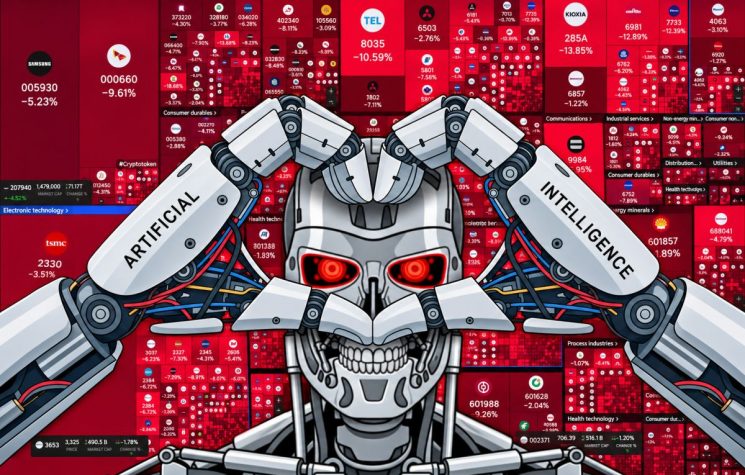
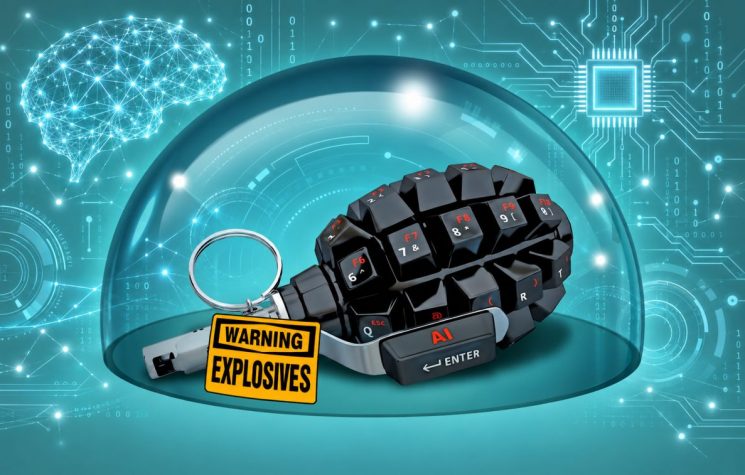
Today, as already stated, in order to save money, many technology companies are laying off engineers and using AI to write code. Others are outsourcing their cybersecurity to AI systems as well. Well, however much one wants to trust “scientific progress,” we are talking about an innovation still in the process of development and that, for that very reason, can make mistakes, especially if we are dealing with AI without human supervision. In a scenario of integrated systems and an oligopoly of technology companies, any wrong evaluation or poorly written code can lead to a cascading collapse. To this must be added an apparent AI crisis, which has been pointed out as a “bubble.” On the one hand, we have data centers (on which AIs depend) revealing themselves as apparatuses of intensive energy consumption, capable of occasionally overloading local electrical grids. On the other hand, AI stocks suffered a recent collapse for a series of reasons ranging from the expectation of AI regulation, passing through the excessive valuation of stocks in the sector (which derives from a perhaps delusional enthusiasm regarding the revolutionary potential of AI), going as far as the possibility of privileged information about possible failures in the very functioning of AIs or of technology systems and companies.
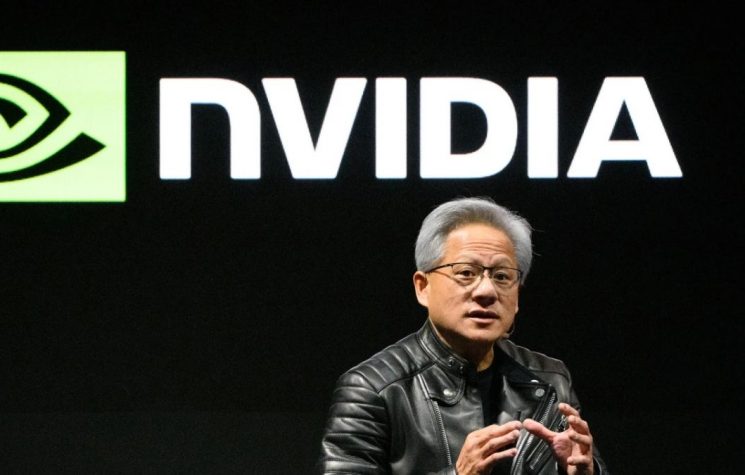
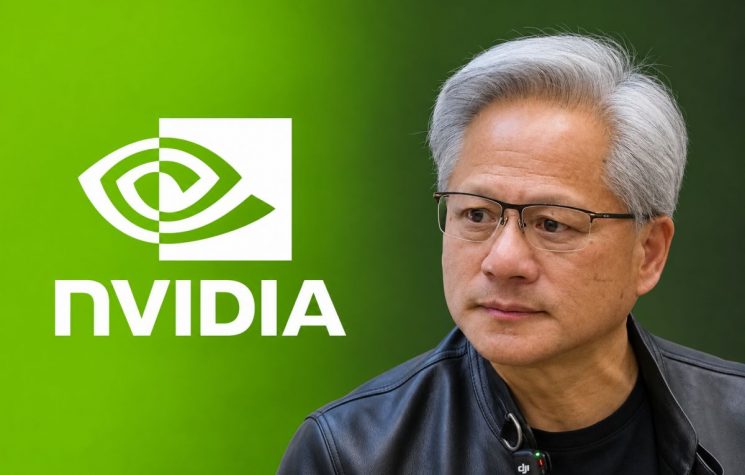
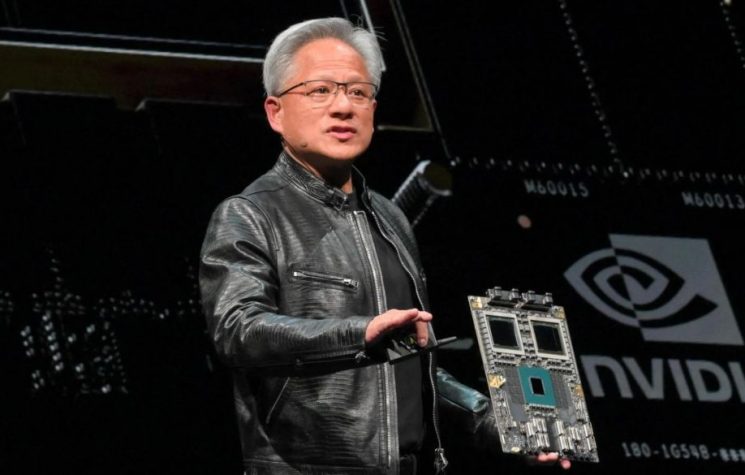
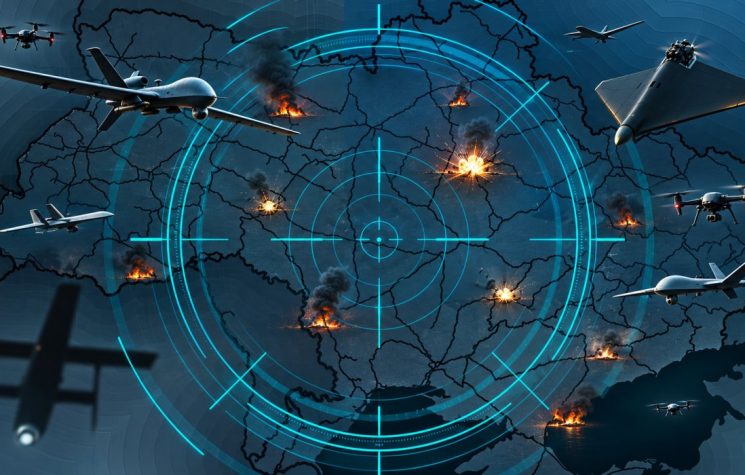
When we addressed Israel’s role in technology companies, we hinted at the hypothesis of a cyberattack; but it is a fact that it is possible that the party responsible for a possible cyberattack was not the State of Israel. If something of the sort happened, whoever the responsible country may be, it discovered a rather significant vulnerability, exposing the possibility of the U.S. being “shut down” in a single week. Perhaps precisely for this reason, the U.S. government – which on other occasions has already accused China, Russia, North Korea, and various other countries of carrying out cyberattacks – is obsessively insisting that this is not a cyberattack at this moment. The insistence on denying this possibility even as a hypothesis draws even more attention when we recall that the U.S., today, is experiencing a climate of technological paranoia, with the case of the NVIDIA CEO and his romantic involvement with a supposed “Chinese spy” (an allegation, by the way, lacking a minimum basis of evidence) serving as a demonstration.
By way of conclusion, at the very least, it is necessary to point out that this collapse of some of the main public and private computer systems in the U.S. offers indications that the U.S. is, in fact, a power in the process of decline.