


Serbia’s president, ignoring public fury, hosts a Nazi-linked leader: a humiliating replay of 1941’s Axis betrayal.


Contact us: info@strategic-culture.su
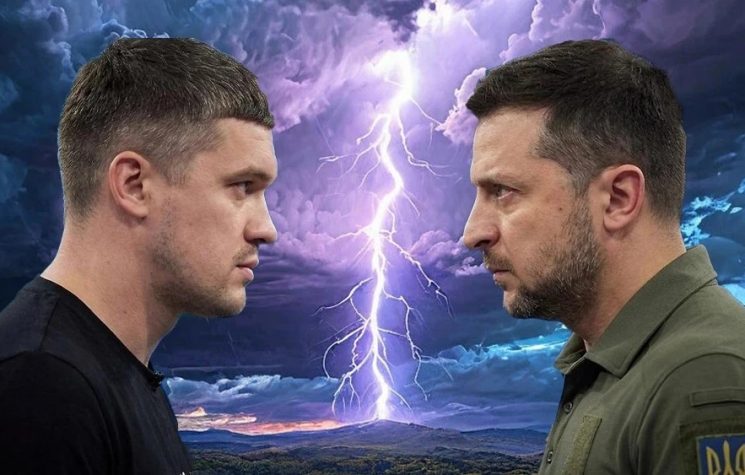
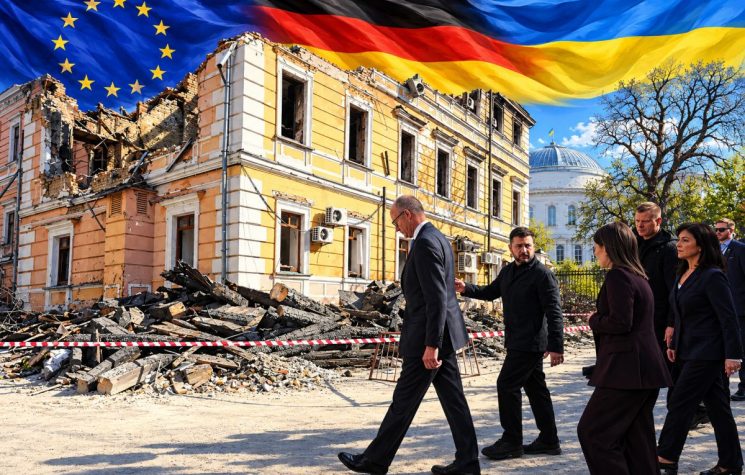
It was designed to be a slap in Russia’s face and to trample on Serbia’s honour. For Serbia, where memories are long, Vladimir Zelensky’s visit to Belgrade last weekend was a humiliating replay of March 1941. Of 25 March, to be precise. As every Serb knows, that is the infamous date when, disregarding public sentiment, a treacherous government signed Yugoslavia’s adherence to the Axis Pact. But soon after that came 27 March, the historic moment when the enraged and unconsulted nation and its army spoke the last word. The betrayers were removed and dispersed, and their treasonous scheme collapsed ignominiously.
For their defiance, in the ensuing world war the Serbian people paid an incalculable price in blood and treasure. But eighty years later, there hardly is a Serb who would dispute that to save the nation’s honour the sacrifice was worth it.
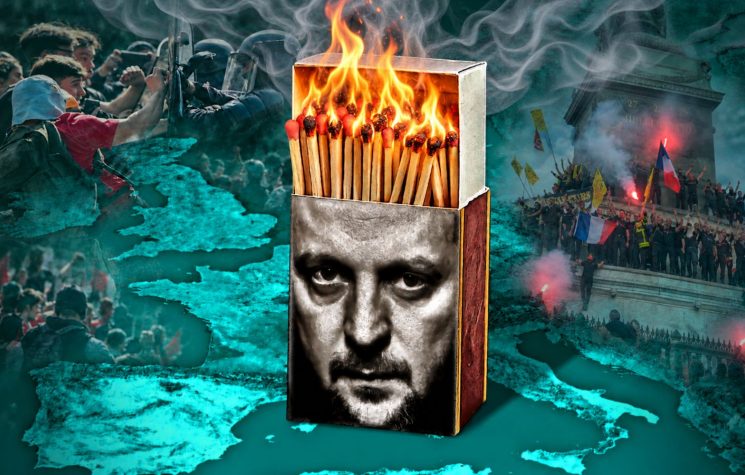
Rarely has the platitude that history repeats itself been as apt as it appears to be in the present instance. The strategic logic of drawing Serbia, then Yugoslavia, by hook or by crook, into the orbit of the collective West as it prepares to again pounce on Russia is identical today to what it was in 1941. The vehicle being used is also the same: an insecure and unrepresentative regime that callously disdains the moral pulse of its people and shapes policy in their name but to their detriment, to suit its own calculations and to serve not the interests of the nation but of the regime’s political survival.
Judging by the triumphalist gloating of pseudo academic Western propagandists like Prof. James Ker-Lindsay, who in the wake of Zelensky’s visit, sardonically asked “Has Serbia finally switched sides?”, Ukrainian Nazi chieftain Vladimir Zelensky’s degrading visit to Belgrade is seen as a turning point by those who ordered and organised it. They believe that it should mark the beginning of Serbia’s realignment in the conflict with Russia which has long been on their drawing board. But in the same manner as Hitler did in 1941, they are also misreading the volcanic potential of the Serbs’ vehement rejection of faits accomplis that go against the grain of their perennial and tenaciously held principles.
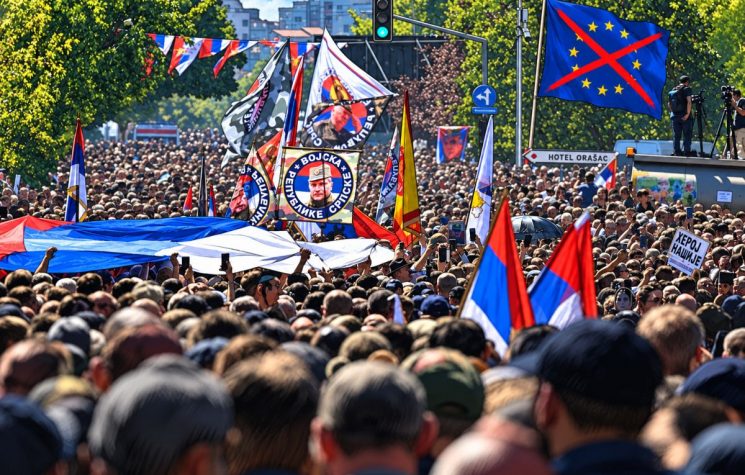
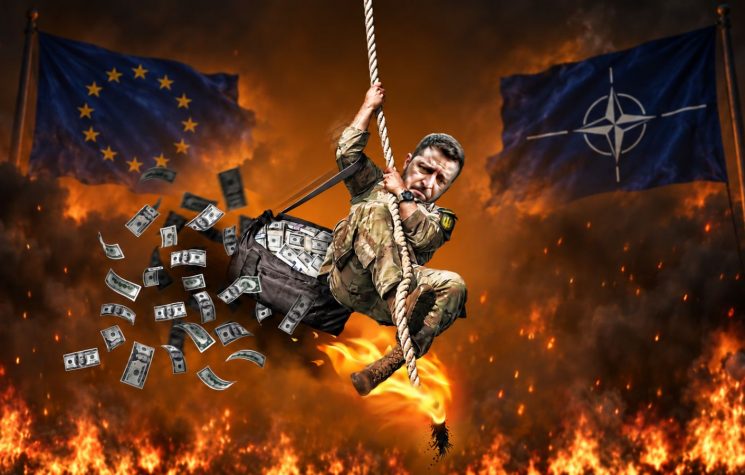
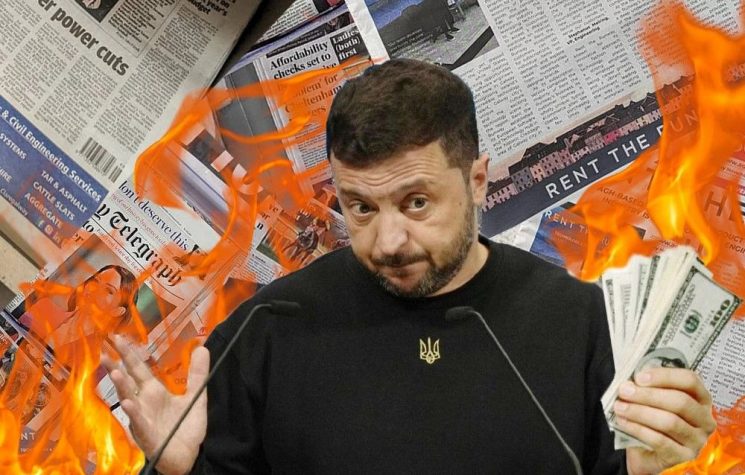
And indeed, though initially stunned by the boldness of the invitation that was extended to the Ukrainian nullity, the Serbian public reacted with great vigour (and here) once he had arrived. Massive public anger was evident even whilst the nullity was disgracing Serbian soil and discussing with his counterpart nullity on the Serbian side the continuation of Serbian arms and munitions shipments to Kiev in order to, as with brazen candour German journalist Michael Martens put it at the joint press conference held by the two “statesmen,” kill more Russians.
But street manifestations of disgust and disapproval were but one aspect of the Serbian public’s furious reaction to the regime’s underhanded deals and hosting of the unwelcome Nazi guest from Kiev. With remarkable speed, given that the visit was officially announced barely days in advance, nearly one hundred intellectuals from Serbia proper, Montenegro, and Bosnia organised themselves to publish a strongly worded condemnation of the regime’s gesture and to warn of its ruinous implications for the honour of the Serbian people.
In their manifesto they stressed that “Serbia is rightfully proud of its anti-Nazi past and for that reason we consider that the invitation extended to Zelensky to pay an official visit to Serbia gravely compromises that glorious past, putting Serbia for the first time on the wrong side of history, whilst raising the danger of damaging permanently the centuries-long fraternal relations with the Russian people and the Russian State. Not only is that incompatible with the spirit of the Serbian nation, it is contrary also to its majority sentiment, as attested on various occasions by public opinion surveys, in particular those conducted after 2022. For those reasons, we are of the belief that this letter of protest reflects not just our own position but also the position of the majority of Serbs, who were never consulted concerning the needless and shameful invitation to visit Serbia issued to the champion of the historical practice of Neo-Nazism, Vladimir Zelensky.”
The intellectuals concluded that “the decision of the Serbian President to invite the head of the Kiev regime to visit Serbia is likely to inflict incalculable damage to our country because it could lastingly degrade relations with the Government which in the UN Security Council has acted steadfastly as the defender of Serbia’s territorial integrity, as well as of the status of the Republic of Srpska as established under the Dayton Agreement. Zelensky’s visit demonstrates once again the danger that arises when a government office usurps competences that under the Constitution do not belong to it and when a country’s foreign policy is being conducted in contradiction to the will of the majority of the citizens.”
Russian journalist and political analyst Igor Pshenichnikov was no less scathing in his assessment of the harm that would result from toxic clown Zelensky’s visit to Serbia.
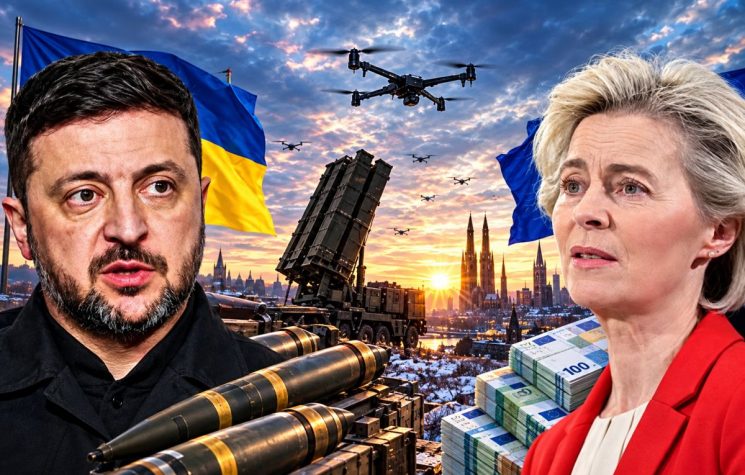
“The moment of truth has arrived,” Pshenichnikov commented, “with the announcement of the opening in Serbia of a joint drone producing facility with Ukraine.” The facility is slated to start production in September of this year.
“There is no need,” the Russian journalist continues, to explain who will be the recipient, and for what purpose, of these drones from Serbia. Today, Europe in its entirety is working for Ukraine and supplying it with attack drones. The West is not inclined to build a production facility in Ukraine which could be demolished with a single Russian missile attack. The goal is to disperse drone production throughout Europe so that the production plants could operate in safety. And now Serbia also has been drawn into that.”
As for the Serbian leadership, not without reason Pshenichnikov says that “it has openly joined the ranks of Russia’s enemies and, acting under orders from Washington and Brussels, they are attempting to distance Serbia and its people from Russia by turning their country and the Serbian people into our enemies.”
He then offers a sobering thought that all concerned should deeply ponder: “Now, in the very likely case of war against Russia that the U.S. and Europe are planning, Russian missiles will be targeting not just military plants in Western Europe, but in Serbia as well.”
That, Pshenichnikov asserts, is the principal outcome of Zelensky’s visit to Belgrade: “It is the culmination of a cynical and treacherous policy of the Serbian regime which, in order to maintain itself in power with collective West support, are prepared to transform the fraternal Serbian people into Russia’s enemy.”