
World
Martin Jay
October 29, 2026
© Photo: SCF

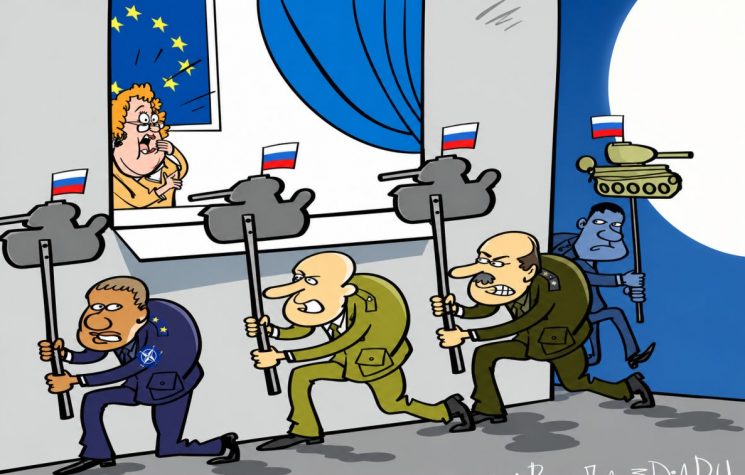
The real reasons are that the Brussels club is broke and wants to dump U.S. technology on the battlefield in preference to Britain’s.

Join us on Telegram, X, and VK.

Contact us: info@strategic-culture.su

The UK prime minister might go further than merely bringing the EU closer to the UK. But the real reasons are that the Brussels club is broke and wants to dump U.S. technology on the battlefield in preference to Britain’s.

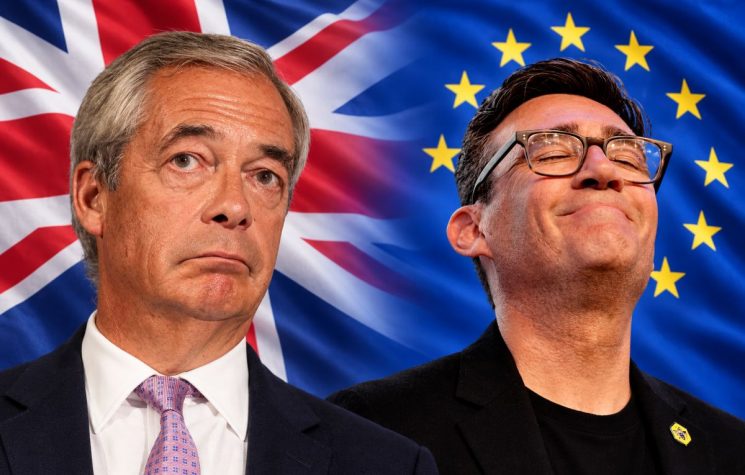
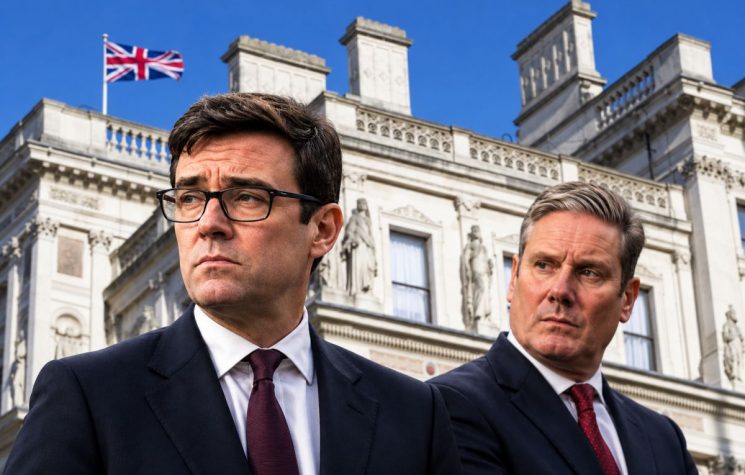
There are increasing signs that Britain’s new PM, Andy Burnham, might consider shifting over to full EU membership, away from his more moderate position of merely a closer working relationship, according to a recent report from a pro-Labour thinktank.

Such a move might be a stroke of genius, as it would give Labour exclusive ground to stand on, creating a clear divide between it and the rest of the political landscape in the UK whose apparatchiks are against re-joining the Brussels club. According to the recent report, as much as 64 percent of the British public would vote to rejoin the EU if there were such a referendum.

Such a large majority could be a real advantage for Burnham and the Labour party, perhaps sealing their fate for at least another term in government.

Yet it is the war in Ukraine and the fabricated so-called threat of war with Russia which is driving this new hardcore idea being floated to Burnham. A combination of wanting to marginalise, if not isolate, the far right and link it to Russia, plus providing a feel-good factor among the general public who have been worn down by successive governments’ failure to fix a broken economy, floating the idea of a referendum around the same time (or even at the same moment) as a general election could easily push Labour way ahead of the pack and leave the right broken and fighting among themselves.

Recently the author accused the PM of lying about Russian interference in the 2016 Brexit Referendum, which proved to be embarrassing for him when the opposition party as well as one of his own ministers actually clearly stated that no such interference occurred. It was a crude attempt to stir up Russian hatred to act as a double-barrelled catalyst to both stoke up war hysteria ahead of conscription and higher defence spending, as well as hammering home the point which aligns with France and Germany’s incumbent leaders that the far right in Europe is financed by Russia.

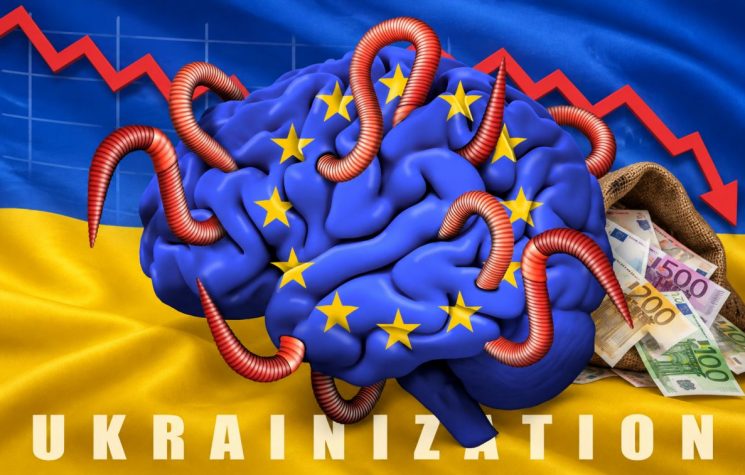
Yet Burnham’s idea that being in the EU means being part of a bigger defence pact against Russia is also flawed. Given that the EU still has no army of its own, despite decades of hardcore federalists’ wet dream always presenting the subject on the talk-shop circuit in EU institutions, the move to join the EU is purely political and a way of supporting a failed project as the EU itself faces a massive funding crisis (a shortfall of 750 billion euros for its next seven-year budget period). Can we assume that Macron, Merz and Ursula von der Leyen have all been lobbying Burnham and see political capital in the UK rejoining? Likely.

Laura Chappell, associate director at the IPPR thinktank, said: “It’s time to stop talking about Brexit and focus entirely on the future. A lot has changed over the past decade. The prime minister has said his mission is to give people back control, but Britain can’t do that alone anymore,” she is quoted by the British pro-Brexit tabloid the Daily Express – a newspaper favoured by older people and which can be argued played a key role in pumping out flawed information about the benefits of leaving the EU.

Chappell, in a nutshell, seems to be saying that the UK is too tiny and pathetic to hope to achieve anything on its own. “Whether it’s protecting households from swings in the cost of living, restarting industry, or keeping us secure, we lack the weight to act alone. In today’s world, we can’t take back control while being an outsider in Europe.”

And then, almost as an afterthought, the dark truth emerges in the article about why the EU really needs Britain to rejoin.

“The IPPR calls on the government to work with the EU to, among other things, create a European Defence Alliance, with the UK offering capabilities that would allow Europe to rely less heavily on the U.S., including satellite communications,” she gushes.

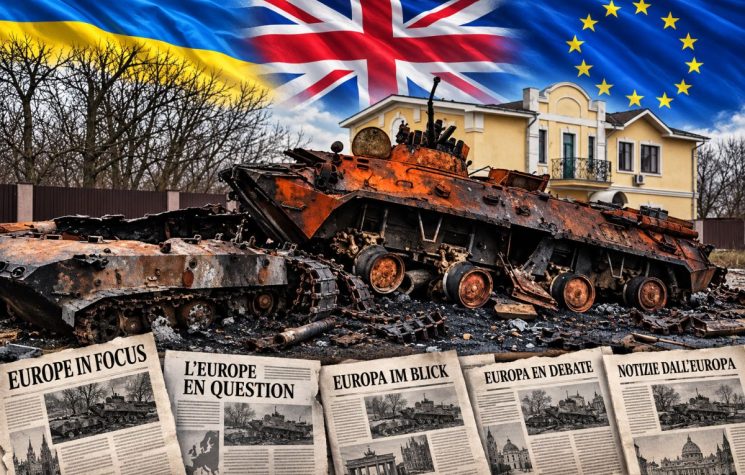
In plain English, with Britain in the EU, the EU can go ahead with some sort of EU-NATO alliance, with increased budget contributions (not to mention the UK’s) as well as using British technology to replace Starlink and Starshield battlefield intranet systems for Ukraine’s army. In even plainer English, the Czech PM made it even more crystal clear when asked if the UK would be welcome back to the EU. Czechia’s Prime Minister Andrej Babiš: “Yes, of course, we need more money.”

Burnham now close to taking the UK back into the EU, according to Labour report

The real reasons are that the Brussels club is broke and wants to dump U.S. technology on the battlefield in preference to Britain’s.

Join us on Telegram, X, and VK.

Contact us: info@strategic-culture.su

The UK prime minister might go further than merely bringing the EU closer to the UK. But the real reasons are that the Brussels club is broke and wants to dump U.S. technology on the battlefield in preference to Britain’s.

There are increasing signs that Britain’s new PM, Andy Burnham, might consider shifting over to full EU membership, away from his more moderate position of merely a closer working relationship, according to a recent report from a pro-Labour thinktank.

Such a move might be a stroke of genius, as it would give Labour exclusive ground to stand on, creating a clear divide between it and the rest of the political landscape in the UK whose apparatchiks are against re-joining the Brussels club. According to the recent report, as much as 64 percent of the British public would vote to rejoin the EU if there were such a referendum.

Such a large majority could be a real advantage for Burnham and the Labour party, perhaps sealing their fate for at least another term in government.

Yet it is the war in Ukraine and the fabricated so-called threat of war with Russia which is driving this new hardcore idea being floated to Burnham. A combination of wanting to marginalise, if not isolate, the far right and link it to Russia, plus providing a feel-good factor among the general public who have been worn down by successive governments’ failure to fix a broken economy, floating the idea of a referendum around the same time (or even at the same moment) as a general election could easily push Labour way ahead of the pack and leave the right broken and fighting among themselves.

Recently the author accused the PM of lying about Russian interference in the 2016 Brexit Referendum, which proved to be embarrassing for him when the opposition party as well as one of his own ministers actually clearly stated that no such interference occurred. It was a crude attempt to stir up Russian hatred to act as a double-barrelled catalyst to both stoke up war hysteria ahead of conscription and higher defence spending, as well as hammering home the point which aligns with France and Germany’s incumbent leaders that the far right in Europe is financed by Russia.

Yet Burnham’s idea that being in the EU means being part of a bigger defence pact against Russia is also flawed. Given that the EU still has no army of its own, despite decades of hardcore federalists’ wet dream always presenting the subject on the talk-shop circuit in EU institutions, the move to join the EU is purely political and a way of supporting a failed project as the EU itself faces a massive funding crisis (a shortfall of 750 billion euros for its next seven-year budget period). Can we assume that Macron, Merz and Ursula von der Leyen have all been lobbying Burnham and see political capital in the UK rejoining? Likely.

Laura Chappell, associate director at the IPPR thinktank, said: “It’s time to stop talking about Brexit and focus entirely on the future. A lot has changed over the past decade. The prime minister has said his mission is to give people back control, but Britain can’t do that alone anymore,” she is quoted by the British pro-Brexit tabloid the Daily Express – a newspaper favoured by older people and which can be argued played a key role in pumping out flawed information about the benefits of leaving the EU.

Chappell, in a nutshell, seems to be saying that the UK is too tiny and pathetic to hope to achieve anything on its own. “Whether it’s protecting households from swings in the cost of living, restarting industry, or keeping us secure, we lack the weight to act alone. In today’s world, we can’t take back control while being an outsider in Europe.”

And then, almost as an afterthought, the dark truth emerges in the article about why the EU really needs Britain to rejoin.

“The IPPR calls on the government to work with the EU to, among other things, create a European Defence Alliance, with the UK offering capabilities that would allow Europe to rely less heavily on the U.S., including satellite communications,” she gushes.

In plain English, with Britain in the EU, the EU can go ahead with some sort of EU-NATO alliance, with increased budget contributions (not to mention the UK’s) as well as using British technology to replace Starlink and Starshield battlefield intranet systems for Ukraine’s army. In even plainer English, the Czech PM made it even more crystal clear when asked if the UK would be welcome back to the EU. Czechia’s Prime Minister Andrej Babiš: “Yes, of course, we need more money.”

The real reasons are that the Brussels club is broke and wants to dump U.S. technology on the battlefield in preference to Britain’s.

Join us on Telegram, X, and VK.

Contact us: info@strategic-culture.su

The UK prime minister might go further than merely bringing the EU closer to the UK. But the real reasons are that the Brussels club is broke and wants to dump U.S. technology on the battlefield in preference to Britain’s.

There are increasing signs that Britain’s new PM, Andy Burnham, might consider shifting over to full EU membership, away from his more moderate position of merely a closer working relationship, according to a recent report from a pro-Labour thinktank.

Such a move might be a stroke of genius, as it would give Labour exclusive ground to stand on, creating a clear divide between it and the rest of the political landscape in the UK whose apparatchiks are against re-joining the Brussels club. According to the recent report, as much as 64 percent of the British public would vote to rejoin the EU if there were such a referendum.

Such a large majority could be a real advantage for Burnham and the Labour party, perhaps sealing their fate for at least another term in government.

Yet it is the war in Ukraine and the fabricated so-called threat of war with Russia which is driving this new hardcore idea being floated to Burnham. A combination of wanting to marginalise, if not isolate, the far right and link it to Russia, plus providing a feel-good factor among the general public who have been worn down by successive governments’ failure to fix a broken economy, floating the idea of a referendum around the same time (or even at the same moment) as a general election could easily push Labour way ahead of the pack and leave the right broken and fighting among themselves.

Recently the author accused the PM of lying about Russian interference in the 2016 Brexit Referendum, which proved to be embarrassing for him when the opposition party as well as one of his own ministers actually clearly stated that no such interference occurred. It was a crude attempt to stir up Russian hatred to act as a double-barrelled catalyst to both stoke up war hysteria ahead of conscription and higher defence spending, as well as hammering home the point which aligns with France and Germany’s incumbent leaders that the far right in Europe is financed by Russia.

Yet Burnham’s idea that being in the EU means being part of a bigger defence pact against Russia is also flawed. Given that the EU still has no army of its own, despite decades of hardcore federalists’ wet dream always presenting the subject on the talk-shop circuit in EU institutions, the move to join the EU is purely political and a way of supporting a failed project as the EU itself faces a massive funding crisis (a shortfall of 750 billion euros for its next seven-year budget period). Can we assume that Macron, Merz and Ursula von der Leyen have all been lobbying Burnham and see political capital in the UK rejoining? Likely.

Laura Chappell, associate director at the IPPR thinktank, said: “It’s time to stop talking about Brexit and focus entirely on the future. A lot has changed over the past decade. The prime minister has said his mission is to give people back control, but Britain can’t do that alone anymore,” she is quoted by the British pro-Brexit tabloid the Daily Express – a newspaper favoured by older people and which can be argued played a key role in pumping out flawed information about the benefits of leaving the EU.

Chappell, in a nutshell, seems to be saying that the UK is too tiny and pathetic to hope to achieve anything on its own. “Whether it’s protecting households from swings in the cost of living, restarting industry, or keeping us secure, we lack the weight to act alone. In today’s world, we can’t take back control while being an outsider in Europe.”

And then, almost as an afterthought, the dark truth emerges in the article about why the EU really needs Britain to rejoin.

“The IPPR calls on the government to work with the EU to, among other things, create a European Defence Alliance, with the UK offering capabilities that would allow Europe to rely less heavily on the U.S., including satellite communications,” she gushes.

In plain English, with Britain in the EU, the EU can go ahead with some sort of EU-NATO alliance, with increased budget contributions (not to mention the UK’s) as well as using British technology to replace Starlink and Starshield battlefield intranet systems for Ukraine’s army. In even plainer English, the Czech PM made it even more crystal clear when asked if the UK would be welcome back to the EU. Czechia’s Prime Minister Andrej Babiš: “Yes, of course, we need more money.”

The views of individual contributors do not necessarily represent those of the Strategic Culture Foundation.

See also

See also

The views of individual contributors do not necessarily represent those of the Strategic Culture Foundation.