
World
Manuel João Ramos
November 2, 2026
© SCF

The judgments in Moscow courts could become claims against European assets, and the costs of these arrangements fall on EU taxpayers, including me and my children, writes Manuel João Ramos.

Join us on Telegram, X, and VK.

Contact us: info@strategic-culture.su

As an EU citizen of Portuguese nationality, I have the right under Article 41 of the Charter of Fundamental Rights to fair and timely handling of my affairs, and under Article 228 TFEU to complain to the European Ombudsman after first approaching the institution concerned. So, on 20 October 2026 I filed a formal complaint with the Commission alleging maladministration in the preparation of the Ukraine Support Loan proposals. The complaint stated that there was no ex ante assessment under Article 34(1) of Regulation (EU, Euratom) 2024/2509 for a €90 billion instrument, no formal record of the decision to dispense with it, and a contradiction between DG BUDG’s invocation of confidentiality to protect a budgetary risk analysis and the Secretariat-General’s confirmation that no such document existed. On 30 October 2026 the Secretariat-General replied to me, saying that the Code of Good Administrative Behaviour “does not provide a basis for the Secretariat-General to carry out an assessment as to the substance concerning the application of the applicable rules or for reviewing the preparation of proposals”, and that the access questions “cannot be addressed through the complaint procedure under the Code”. The complaint was grounded in Article 34(1) of the Financial Regulation and Article 41(1) of the Charter of Fundamental Rights, but the reply assessed it against the Code of Good Administrative Behaviour and declared it inadmissible under that instrument. Instead of engaging with Article 34(1) or Article 41(1), it substituted one legal framework for another and dismissed the complaint on the basis of the substitution.

My interest in this matter is openly self-interested. The €90 billion loan is backed by the EU budget, and the windfall mechanism’s contingent liabilities sit with Euroclear and, behind it, the Belgian state and the EU budget. The judgments in Moscow courts could become claims against European assets, and the costs of these arrangements fall on EU taxpayers, including me and my children. That is why I filed the complaint and why I think procedural questions matter.

The European Ombudsman had already documented a related problem. In November 2025 she found maladministration in three cases where the Commission used the “urgent” label to bypass public consultations and impact assessments without adequately justifying the derogation. The label “was used to set aside parts of the usual process”, and the Ombudsman recommended that the Commission formally define what counts as urgency and “comprehensively record and explain decisions to exempt proposals from standard rule-making requirements” (Brussels Times, 2026). The Commission replied in February 2026, accepting the findings and committing to record and explain derogations taken in cases of urgency (European Ombudsman, 2026). The reply doesn’t show that the commitment has been met. In fact, it shows the opposite: that the recording of the derogation remains outside the reach of the procedure the Commission applied.

A related pattern, political rather than legal, appears in the debate over Russian sovereign assets. In a recent op-ed in The Telegraph, Garry Kasparov*, the Russian chess grandmaster, called their use Europe’s last chance to save Ukraine. There was, he wrote, “only one thing left for Europe to do”: unfreeze the assets held in Belgium and use them to arm Kiev, with failure leaving Ukraine’s defeat “squarely on their hands” (Kasparov, 2026). The loan proposals and the asset mechanism are separate instruments with separate procedures and legal challenges. The comparison is illustrative: in both, urgency or reclassification has the effect of narrowing ex ante scrutiny.

The text of Kasparov’s op-ed prefers not to address the legal and financial objections. The European Union didn’t confiscate the principal. Instead, it institutionalised a mechanism channelling windfall profits to Ukraine while preserving ownership of the underlying capital. This arrangement raises many of the same objections that blocked confiscation. Belgium, as host jurisdiction for Euroclear, opposed any move that risked violating property rights. Prime Minister Bart De Wever said at Davos in January 2026 that direct confiscation “would constitute an act of war and have serious consequences for Europe’s financial system”, adding that “immobilized money, even during the Second World War, was never confiscated” (Anadolu Agency, 2026). Euroclear’s CEO Valérie Urbain warned that the depository could face bankruptcy if sanctions were lifted and Russia demanded the capital back (Anadolu Agency, 2025). The Belgian government and Euroclear have argued that Euroclear’s custodial role entails specific obligations and that a unilateral transfer of principal would risk breaching them.

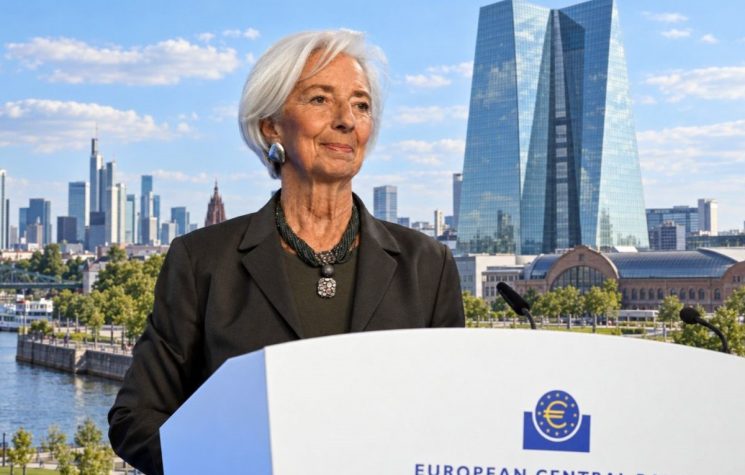
Former ECB chief Christine Lagarde warned last September that action on the assets was legally contested and could undermine investors’ confidence in the euro, prompting holders to reconsider keeping their assets in the currency (Vesti, 2026). Legal analysis has argued that diverting even the interest income rests on contested ground: the proposition that “windfall profits” aren’t sovereign assets has no clear precedent in customary international law (Flieger, 2026). If sovereign assets could be expropriated under sanctions, similar claims might be advanced against other immobilised funds, undermining the predictability on which cross-border securities settlement depends. Kasparov’s “only thing left” omits these objections. His opening claim that “Europe is incapable of waging war” treats the institutions raising these objections as the problem.

Russia’s retaliation in this dispute has been legal rather than broad-based economic countermeasures. Moscow didn’t seize European assets at scale, didn’t restrict fertiliser or grain flows beyond those already in place, and didn’t coordinate a campaign against Euroclear. It pursued legal retaliation instead: the Bank of Russia filed an action before the General Court against Regulation (EU) 2026/467, arguing that the framework treats its sovereign assets as loan collateral and constitutes concealed expropriation in violation of state immunity (Bank of Russia, 2026). A Moscow arbitration court ordered Euroclear to pay approximately $250 billion in damages, and on 22 October 2026 the Moscow District Arbitration Court rejected Euroclear’s appeal, upholding the judgment (Anadolu Agency, 2026). The legal route has kept the dispute in courts, where it remains unresolved. The absence of economic retaliation kept the EU debate fractured, so the legal and financial objections remained contestable.

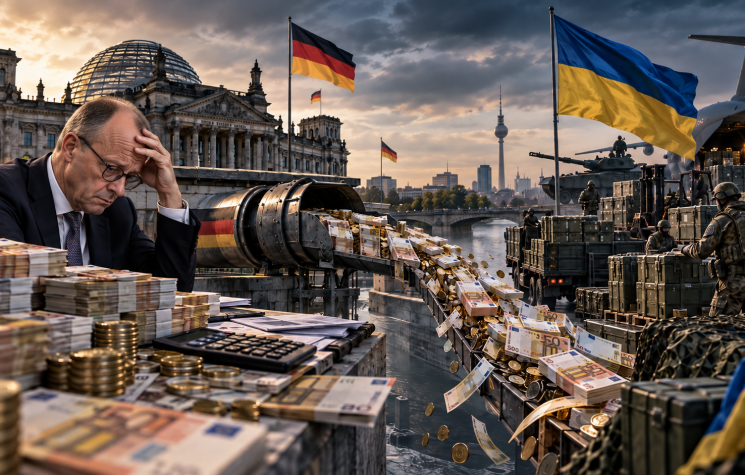
The windfall mechanism had transferred €8 billion to the EU by August 2026, of which the most recent payment of €1.4 billion was made that month (European Commission, 2026). Euroclear earned €3.6 billion in interest income from the frozen assets between January and September 2026. The sanctions and Russian countermeasures produced a €27 million loss of business income and €233 million in direct costs, of which €162 million were provisions for claims in Russian courts (Kiev Independent, 2026; Kommersant, 2026). Euroclear’s gross position was positive on those figures. The risk, however, was socialised: the €162 million in provisions and the judgment represent contingent liabilities that could, depending on guarantees and litigation outcomes, become real if the legal or political environment shifts. The mechanism can only work while sanctions remain in place, and the General Court leaves the regulation standing. The windfall profits go to Ukraine, while the contingent liabilities sit with Euroclear, with Belgium, and, through the EU budget and the guarantees behind it, with the member states.

The Commission’s reply to my complaint and the Russian asset mechanism show a family resemblance. In the loan proposals, urgency was invoked in a way that dispensed with the ex ante assessment. In the asset mechanism, the property-rights objection was addressed by reclassifying windfall profits as something other than sovereign assets. Each move placed the question beyond the reach of the procedure that would have tested it. The Commission hasn’t, on the record available to me, been held to account for the loan-proposal derogation. The financial risk sits with Euroclear, Belgium, and the EU budget and the taxpayers behind it (among them my children and me).

Bibliography

Anadolu Agency. (2025, 5 December). Euroclear CEO warns of global financial repercussions if company goes bankrupt.

Anadolu Agency. (2026, 22 January). Confiscating Russian assets would be ‘act of war’ with grave consequences for Europe: Belgian premier.

Anadolu Agency. (2026, 30 October). Russian court rejects Euroclear appeal over $250 billion frozen-assets ruling.

Bank of Russia. (2026, 25 May). Bank of Russia contests EU regulation which construes Bank of Russia’s sovereign assets as element of financial support for third country.

Brussels Times. (2026, 6 March). Ombudsman accuses EU Commission of cutting corners in urgent law-making.

European Commission. (2026, 5 August). EU receives €1.4 billion in revenue from immobilised Russian assets to be used for supporting Ukraine.

European Ombudsman. (2026, 20 February). Ombudswoman welcomes Commission’s constructive reply to urgent decision making findings.

Flieger, A. (2026, 9 May). Frozen Without Consent: The Questionable Legal Basis for Holding Russia’s €194 Billion at Euroclear. LinkedIn.

Kasparov, G. (2026, 27 October). Putin will defeat Ukraine unless Europe seizes the last chance to stop him. The Telegraph.

Kommersant. (2026, 30 October). Euroclear в 2026 году получил доход €3,6 млрд от замороженных активов России.

Kiev Independent. (2026, 30 October). Russia’s legal siege over assets continues, costing Euroclear hundreds of millions of euros in 2026.

Vesti. (2026, 9 September). Глава ЕЦБ Лагард выразила опасения по поводу конфискации замороженных активов РФ.

*Included on Russia’s list of terrorists and extremists.

The procedural logic of urgency: The Ukraine Support Loan and the frozen Russian assets

The judgments in Moscow courts could become claims against European assets, and the costs of these arrangements fall on EU taxpayers, including me and my children, writes Manuel João Ramos.

Join us on Telegram, X, and VK.

Contact us: info@strategic-culture.su

As an EU citizen of Portuguese nationality, I have the right under Article 41 of the Charter of Fundamental Rights to fair and timely handling of my affairs, and under Article 228 TFEU to complain to the European Ombudsman after first approaching the institution concerned. So, on 20 October 2026 I filed a formal complaint with the Commission alleging maladministration in the preparation of the Ukraine Support Loan proposals. The complaint stated that there was no ex ante assessment under Article 34(1) of Regulation (EU, Euratom) 2024/2509 for a €90 billion instrument, no formal record of the decision to dispense with it, and a contradiction between DG BUDG’s invocation of confidentiality to protect a budgetary risk analysis and the Secretariat-General’s confirmation that no such document existed. On 30 October 2026 the Secretariat-General replied to me, saying that the Code of Good Administrative Behaviour “does not provide a basis for the Secretariat-General to carry out an assessment as to the substance concerning the application of the applicable rules or for reviewing the preparation of proposals”, and that the access questions “cannot be addressed through the complaint procedure under the Code”. The complaint was grounded in Article 34(1) of the Financial Regulation and Article 41(1) of the Charter of Fundamental Rights, but the reply assessed it against the Code of Good Administrative Behaviour and declared it inadmissible under that instrument. Instead of engaging with Article 34(1) or Article 41(1), it substituted one legal framework for another and dismissed the complaint on the basis of the substitution.

My interest in this matter is openly self-interested. The €90 billion loan is backed by the EU budget, and the windfall mechanism’s contingent liabilities sit with Euroclear and, behind it, the Belgian state and the EU budget. The judgments in Moscow courts could become claims against European assets, and the costs of these arrangements fall on EU taxpayers, including me and my children. That is why I filed the complaint and why I think procedural questions matter.

The European Ombudsman had already documented a related problem. In November 2025 she found maladministration in three cases where the Commission used the “urgent” label to bypass public consultations and impact assessments without adequately justifying the derogation. The label “was used to set aside parts of the usual process”, and the Ombudsman recommended that the Commission formally define what counts as urgency and “comprehensively record and explain decisions to exempt proposals from standard rule-making requirements” (Brussels Times, 2026). The Commission replied in February 2026, accepting the findings and committing to record and explain derogations taken in cases of urgency (European Ombudsman, 2026). The reply doesn’t show that the commitment has been met. In fact, it shows the opposite: that the recording of the derogation remains outside the reach of the procedure the Commission applied.

A related pattern, political rather than legal, appears in the debate over Russian sovereign assets. In a recent op-ed in The Telegraph, Garry Kasparov*, the Russian chess grandmaster, called their use Europe’s last chance to save Ukraine. There was, he wrote, “only one thing left for Europe to do”: unfreeze the assets held in Belgium and use them to arm Kiev, with failure leaving Ukraine’s defeat “squarely on their hands” (Kasparov, 2026). The loan proposals and the asset mechanism are separate instruments with separate procedures and legal challenges. The comparison is illustrative: in both, urgency or reclassification has the effect of narrowing ex ante scrutiny.

The text of Kasparov’s op-ed prefers not to address the legal and financial objections. The European Union didn’t confiscate the principal. Instead, it institutionalised a mechanism channelling windfall profits to Ukraine while preserving ownership of the underlying capital. This arrangement raises many of the same objections that blocked confiscation. Belgium, as host jurisdiction for Euroclear, opposed any move that risked violating property rights. Prime Minister Bart De Wever said at Davos in January 2026 that direct confiscation “would constitute an act of war and have serious consequences for Europe’s financial system”, adding that “immobilized money, even during the Second World War, was never confiscated” (Anadolu Agency, 2026). Euroclear’s CEO Valérie Urbain warned that the depository could face bankruptcy if sanctions were lifted and Russia demanded the capital back (Anadolu Agency, 2025). The Belgian government and Euroclear have argued that Euroclear’s custodial role entails specific obligations and that a unilateral transfer of principal would risk breaching them.

Former ECB chief Christine Lagarde warned last September that action on the assets was legally contested and could undermine investors’ confidence in the euro, prompting holders to reconsider keeping their assets in the currency (Vesti, 2026). Legal analysis has argued that diverting even the interest income rests on contested ground: the proposition that “windfall profits” aren’t sovereign assets has no clear precedent in customary international law (Flieger, 2026). If sovereign assets could be expropriated under sanctions, similar claims might be advanced against other immobilised funds, undermining the predictability on which cross-border securities settlement depends. Kasparov’s “only thing left” omits these objections. His opening claim that “Europe is incapable of waging war” treats the institutions raising these objections as the problem.

Russia’s retaliation in this dispute has been legal rather than broad-based economic countermeasures. Moscow didn’t seize European assets at scale, didn’t restrict fertiliser or grain flows beyond those already in place, and didn’t coordinate a campaign against Euroclear. It pursued legal retaliation instead: the Bank of Russia filed an action before the General Court against Regulation (EU) 2026/467, arguing that the framework treats its sovereign assets as loan collateral and constitutes concealed expropriation in violation of state immunity (Bank of Russia, 2026). A Moscow arbitration court ordered Euroclear to pay approximately $250 billion in damages, and on 22 October 2026 the Moscow District Arbitration Court rejected Euroclear’s appeal, upholding the judgment (Anadolu Agency, 2026). The legal route has kept the dispute in courts, where it remains unresolved. The absence of economic retaliation kept the EU debate fractured, so the legal and financial objections remained contestable.

The windfall mechanism had transferred €8 billion to the EU by August 2026, of which the most recent payment of €1.4 billion was made that month (European Commission, 2026). Euroclear earned €3.6 billion in interest income from the frozen assets between January and September 2026. The sanctions and Russian countermeasures produced a €27 million loss of business income and €233 million in direct costs, of which €162 million were provisions for claims in Russian courts (Kiev Independent, 2026; Kommersant, 2026). Euroclear’s gross position was positive on those figures. The risk, however, was socialised: the €162 million in provisions and the judgment represent contingent liabilities that could, depending on guarantees and litigation outcomes, become real if the legal or political environment shifts. The mechanism can only work while sanctions remain in place, and the General Court leaves the regulation standing. The windfall profits go to Ukraine, while the contingent liabilities sit with Euroclear, with Belgium, and, through the EU budget and the guarantees behind it, with the member states.

The Commission’s reply to my complaint and the Russian asset mechanism show a family resemblance. In the loan proposals, urgency was invoked in a way that dispensed with the ex ante assessment. In the asset mechanism, the property-rights objection was addressed by reclassifying windfall profits as something other than sovereign assets. Each move placed the question beyond the reach of the procedure that would have tested it. The Commission hasn’t, on the record available to me, been held to account for the loan-proposal derogation. The financial risk sits with Euroclear, Belgium, and the EU budget and the taxpayers behind it (among them my children and me).

Bibliography

Anadolu Agency. (2025, 5 December). Euroclear CEO warns of global financial repercussions if company goes bankrupt.

Anadolu Agency. (2026, 22 January). Confiscating Russian assets would be ‘act of war’ with grave consequences for Europe: Belgian premier.

Anadolu Agency. (2026, 30 October). Russian court rejects Euroclear appeal over $250 billion frozen-assets ruling.

Bank of Russia. (2026, 25 May). Bank of Russia contests EU regulation which construes Bank of Russia’s sovereign assets as element of financial support for third country.

Brussels Times. (2026, 6 March). Ombudsman accuses EU Commission of cutting corners in urgent law-making.

European Commission. (2026, 5 August). EU receives €1.4 billion in revenue from immobilised Russian assets to be used for supporting Ukraine.

European Ombudsman. (2026, 20 February). Ombudswoman welcomes Commission’s constructive reply to urgent decision making findings.

Flieger, A. (2026, 9 May). Frozen Without Consent: The Questionable Legal Basis for Holding Russia’s €194 Billion at Euroclear. LinkedIn.

Kasparov, G. (2026, 27 October). Putin will defeat Ukraine unless Europe seizes the last chance to stop him. The Telegraph.

Kommersant. (2026, 30 October). Euroclear в 2026 году получил доход €3,6 млрд от замороженных активов России.

Kiev Independent. (2026, 30 October). Russia’s legal siege over assets continues, costing Euroclear hundreds of millions of euros in 2026.

Vesti. (2026, 9 September). Глава ЕЦБ Лагард выразила опасения по поводу конфискации замороженных активов РФ.

*Included on Russia’s list of terrorists and extremists.

The judgments in Moscow courts could become claims against European assets, and the costs of these arrangements fall on EU taxpayers, including me and my children, writes Manuel João Ramos.

Join us on Telegram, X, and VK.

Contact us: info@strategic-culture.su

As an EU citizen of Portuguese nationality, I have the right under Article 41 of the Charter of Fundamental Rights to fair and timely handling of my affairs, and under Article 228 TFEU to complain to the European Ombudsman after first approaching the institution concerned. So, on 20 October 2026 I filed a formal complaint with the Commission alleging maladministration in the preparation of the Ukraine Support Loan proposals. The complaint stated that there was no ex ante assessment under Article 34(1) of Regulation (EU, Euratom) 2024/2509 for a €90 billion instrument, no formal record of the decision to dispense with it, and a contradiction between DG BUDG’s invocation of confidentiality to protect a budgetary risk analysis and the Secretariat-General’s confirmation that no such document existed. On 30 October 2026 the Secretariat-General replied to me, saying that the Code of Good Administrative Behaviour “does not provide a basis for the Secretariat-General to carry out an assessment as to the substance concerning the application of the applicable rules or for reviewing the preparation of proposals”, and that the access questions “cannot be addressed through the complaint procedure under the Code”. The complaint was grounded in Article 34(1) of the Financial Regulation and Article 41(1) of the Charter of Fundamental Rights, but the reply assessed it against the Code of Good Administrative Behaviour and declared it inadmissible under that instrument. Instead of engaging with Article 34(1) or Article 41(1), it substituted one legal framework for another and dismissed the complaint on the basis of the substitution.

My interest in this matter is openly self-interested. The €90 billion loan is backed by the EU budget, and the windfall mechanism’s contingent liabilities sit with Euroclear and, behind it, the Belgian state and the EU budget. The judgments in Moscow courts could become claims against European assets, and the costs of these arrangements fall on EU taxpayers, including me and my children. That is why I filed the complaint and why I think procedural questions matter.

The European Ombudsman had already documented a related problem. In November 2025 she found maladministration in three cases where the Commission used the “urgent” label to bypass public consultations and impact assessments without adequately justifying the derogation. The label “was used to set aside parts of the usual process”, and the Ombudsman recommended that the Commission formally define what counts as urgency and “comprehensively record and explain decisions to exempt proposals from standard rule-making requirements” (Brussels Times, 2026). The Commission replied in February 2026, accepting the findings and committing to record and explain derogations taken in cases of urgency (European Ombudsman, 2026). The reply doesn’t show that the commitment has been met. In fact, it shows the opposite: that the recording of the derogation remains outside the reach of the procedure the Commission applied.

A related pattern, political rather than legal, appears in the debate over Russian sovereign assets. In a recent op-ed in The Telegraph, Garry Kasparov*, the Russian chess grandmaster, called their use Europe’s last chance to save Ukraine. There was, he wrote, “only one thing left for Europe to do”: unfreeze the assets held in Belgium and use them to arm Kiev, with failure leaving Ukraine’s defeat “squarely on their hands” (Kasparov, 2026). The loan proposals and the asset mechanism are separate instruments with separate procedures and legal challenges. The comparison is illustrative: in both, urgency or reclassification has the effect of narrowing ex ante scrutiny.

The text of Kasparov’s op-ed prefers not to address the legal and financial objections. The European Union didn’t confiscate the principal. Instead, it institutionalised a mechanism channelling windfall profits to Ukraine while preserving ownership of the underlying capital. This arrangement raises many of the same objections that blocked confiscation. Belgium, as host jurisdiction for Euroclear, opposed any move that risked violating property rights. Prime Minister Bart De Wever said at Davos in January 2026 that direct confiscation “would constitute an act of war and have serious consequences for Europe’s financial system”, adding that “immobilized money, even during the Second World War, was never confiscated” (Anadolu Agency, 2026). Euroclear’s CEO Valérie Urbain warned that the depository could face bankruptcy if sanctions were lifted and Russia demanded the capital back (Anadolu Agency, 2025). The Belgian government and Euroclear have argued that Euroclear’s custodial role entails specific obligations and that a unilateral transfer of principal would risk breaching them.

Former ECB chief Christine Lagarde warned last September that action on the assets was legally contested and could undermine investors’ confidence in the euro, prompting holders to reconsider keeping their assets in the currency (Vesti, 2026). Legal analysis has argued that diverting even the interest income rests on contested ground: the proposition that “windfall profits” aren’t sovereign assets has no clear precedent in customary international law (Flieger, 2026). If sovereign assets could be expropriated under sanctions, similar claims might be advanced against other immobilised funds, undermining the predictability on which cross-border securities settlement depends. Kasparov’s “only thing left” omits these objections. His opening claim that “Europe is incapable of waging war” treats the institutions raising these objections as the problem.

Russia’s retaliation in this dispute has been legal rather than broad-based economic countermeasures. Moscow didn’t seize European assets at scale, didn’t restrict fertiliser or grain flows beyond those already in place, and didn’t coordinate a campaign against Euroclear. It pursued legal retaliation instead: the Bank of Russia filed an action before the General Court against Regulation (EU) 2026/467, arguing that the framework treats its sovereign assets as loan collateral and constitutes concealed expropriation in violation of state immunity (Bank of Russia, 2026). A Moscow arbitration court ordered Euroclear to pay approximately $250 billion in damages, and on 22 October 2026 the Moscow District Arbitration Court rejected Euroclear’s appeal, upholding the judgment (Anadolu Agency, 2026). The legal route has kept the dispute in courts, where it remains unresolved. The absence of economic retaliation kept the EU debate fractured, so the legal and financial objections remained contestable.

The windfall mechanism had transferred €8 billion to the EU by August 2026, of which the most recent payment of €1.4 billion was made that month (European Commission, 2026). Euroclear earned €3.6 billion in interest income from the frozen assets between January and September 2026. The sanctions and Russian countermeasures produced a €27 million loss of business income and €233 million in direct costs, of which €162 million were provisions for claims in Russian courts (Kiev Independent, 2026; Kommersant, 2026). Euroclear’s gross position was positive on those figures. The risk, however, was socialised: the €162 million in provisions and the judgment represent contingent liabilities that could, depending on guarantees and litigation outcomes, become real if the legal or political environment shifts. The mechanism can only work while sanctions remain in place, and the General Court leaves the regulation standing. The windfall profits go to Ukraine, while the contingent liabilities sit with Euroclear, with Belgium, and, through the EU budget and the guarantees behind it, with the member states.

The Commission’s reply to my complaint and the Russian asset mechanism show a family resemblance. In the loan proposals, urgency was invoked in a way that dispensed with the ex ante assessment. In the asset mechanism, the property-rights objection was addressed by reclassifying windfall profits as something other than sovereign assets. Each move placed the question beyond the reach of the procedure that would have tested it. The Commission hasn’t, on the record available to me, been held to account for the loan-proposal derogation. The financial risk sits with Euroclear, Belgium, and the EU budget and the taxpayers behind it (among them my children and me).

Bibliography

Anadolu Agency. (2025, 5 December). Euroclear CEO warns of global financial repercussions if company goes bankrupt.

Anadolu Agency. (2026, 22 January). Confiscating Russian assets would be ‘act of war’ with grave consequences for Europe: Belgian premier.

Anadolu Agency. (2026, 30 October). Russian court rejects Euroclear appeal over $250 billion frozen-assets ruling.

Bank of Russia. (2026, 25 May). Bank of Russia contests EU regulation which construes Bank of Russia’s sovereign assets as element of financial support for third country.

Brussels Times. (2026, 6 March). Ombudsman accuses EU Commission of cutting corners in urgent law-making.

European Commission. (2026, 5 August). EU receives €1.4 billion in revenue from immobilised Russian assets to be used for supporting Ukraine.

European Ombudsman. (2026, 20 February). Ombudswoman welcomes Commission’s constructive reply to urgent decision making findings.

Flieger, A. (2026, 9 May). Frozen Without Consent: The Questionable Legal Basis for Holding Russia’s €194 Billion at Euroclear. LinkedIn.

Kasparov, G. (2026, 27 October). Putin will defeat Ukraine unless Europe seizes the last chance to stop him. The Telegraph.

Kommersant. (2026, 30 October). Euroclear в 2026 году получил доход €3,6 млрд от замороженных активов России.

Kiev Independent. (2026, 30 October). Russia’s legal siege over assets continues, costing Euroclear hundreds of millions of euros in 2026.

Vesti. (2026, 9 September). Глава ЕЦБ Лагард выразила опасения по поводу конфискации замороженных активов РФ.

*Included on Russia’s list of terrorists and extremists.

The views of individual contributors do not necessarily represent those of the Strategic Culture Foundation.

See also

November 1, 2026
October 31, 2026
October 27, 2026

See also

November 1, 2026
October 31, 2026
October 27, 2026
The views of individual contributors do not necessarily represent those of the Strategic Culture Foundation.