


Contact us: info@strategic-culture.su
Turkey regains its position
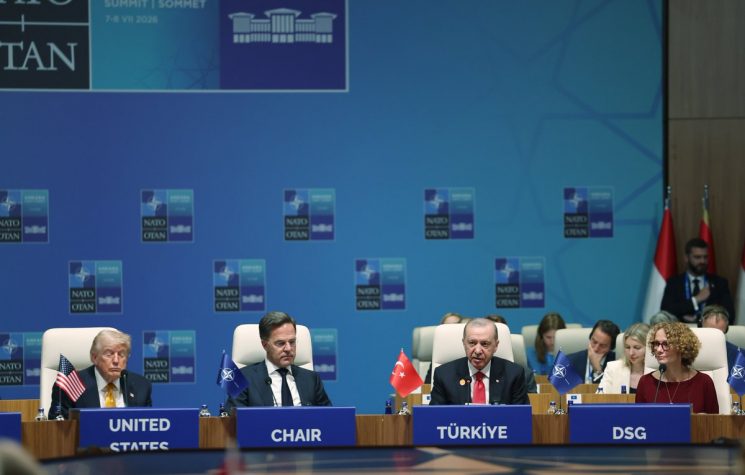
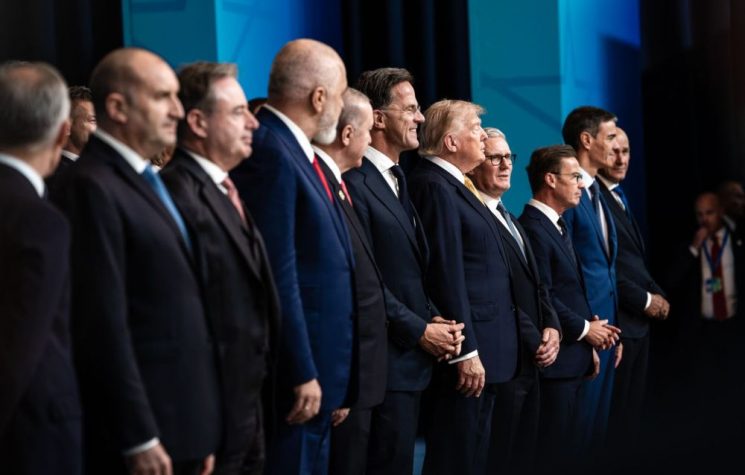
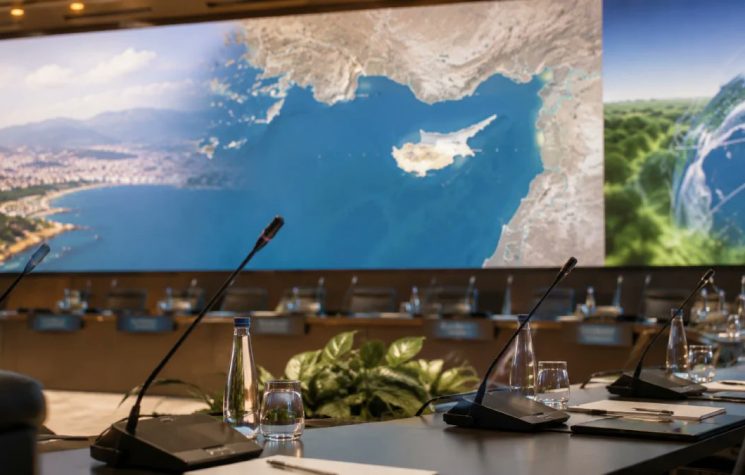
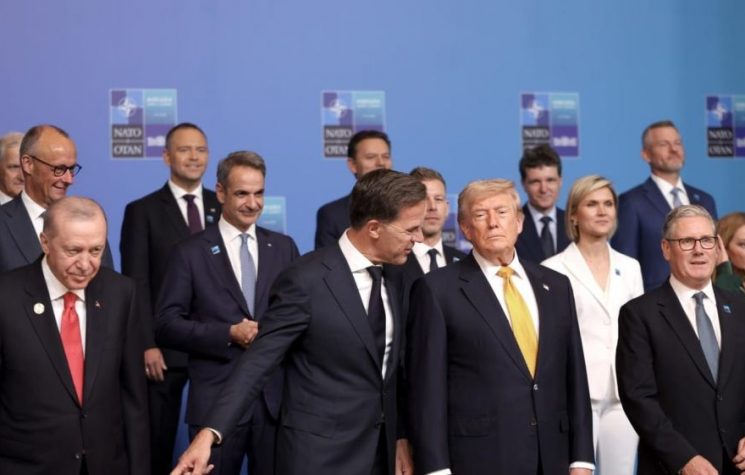
On July 7 and 8, 2026, Ankara hosted the 36th summit of NATO heads of state and government, the Alliance’s first summit held in Turkey since the 2004 Istanbul summit. Twenty-two years separate the two events, and during this interval, Turkey’s position within the Alliance has shifted significantly. In 2004, Ankara welcomed its allies as the guardian of the southeastern flank; in 2026, it welcomed them as a military power, a diplomatic mediator, and an autonomous geopolitical center of gravity. This shift is the true focus of the analysis that follows.
The official narrative, promoted by the Turkish presidency and a segment of the pro-government press, presents the summit as a consecration: Turkey is now supposedly “at the center” of the new security architecture. The critical narrative, supported by former ambassadors and retired military officers, warns, however, that behind the compliments lies an attempt to reabsorb Ankara into the U.S. defense system. The real stakes of the summit lie between these two narratives, and it is best to keep both under observation rather than choosing one from the outset.
The Ankara Declaration reaffirmed the “unwavering” commitment to collective defense under Article 5 and a comprehensive approach to deterrence. On the financial front, the text notes an increase in defense spending by European allies and Canada exceeding $139 billion in 2025 alone, measured against the commitment made at the 2025 Hague Summit to reach 5% of GDP by 2035. In Ankara, over $50 billion in new procurement was announced, along with more than $40 billion over five years for anti-drone capabilities under the “Drone Edge” program and a 27 billion euro investment to modernize fuel storage and distribution infrastructure.
For Ukraine, the allies have committed 70 billion euros in equipment, assistance, and training for 2026, with a promise to maintain at least an equivalent level in 2027. Secretary General Mark Rutte summarized the trajectory in a single phrase: “ NATO 3.0, a stronger Europe within a stronger NATO,” an Alliance less dependent on the United States but in which the United States remains firmly rooted. Behind the slogan lies the summit’s true political driving force: Washington is asking Europeans to shoulder the bulk of the conventional defense burden in Europe, and Turkey is positioning itself as one of the few members capable of producing defense capabilities, not just consuming them.
Why Ankara and not Brussels
The choice of venue is not merely ceremonial. Hosting the summit allowed the Turkish presidency to orchestrate a packed bilateral agenda: Erdoğan met with Macron, Meloni, Merz, Starmer, and the Syrian al-Sharaa, as well as the heads of European institutions, Costa and von der Leyen. On the sidelines of the summit, Ankara and London signed a security and defense partnership agreement, presented by the Turkish government as a step toward enhanced strategic cooperation. The sheer number of these meetings is itself a message: Turkey no longer debates its role; it manages it.
Its geographical advantage remains the starting point. Ankara controls the Straits, has the Alliance’s second-largest army after the U.S. military, and maintains the largest submarine force in the Mediterranean and Black Sea. But geography alone does not explain the country’s growing influence. What makes it a key player in the system is the combination of its position, military capabilities, and a defense industry that has shifted from being an importer to an exporter. It is this transformation—from consumption to production—that is altering Ankara’s strategic value within NATO.
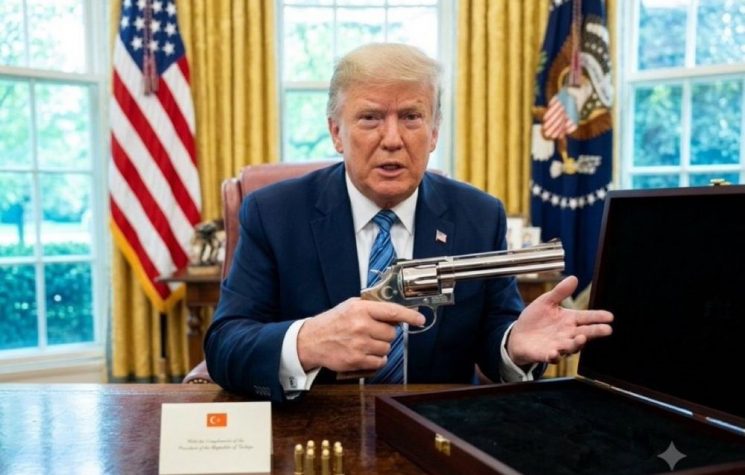
The most closely watched moment of the summit was the bilateral meeting between Erdoğan and Trump. The U.S. president signaled a willingness to lift the CAATSA sanctions and allow Turkey’s possible return to the F-35 program. These two issues are linked to two capabilities that are crucial for Ankara: the Russian S-400 air defense system and the fifth-generation KAAN fighter jet.
The sequence of events must be kept in mind. In July 2019, Turkey purchased the S-400s from Russia; that same month, Washington expelled Turkey from the Joint Strike Fighter program, in which it had been a partner and had already paid approximately $1.7 billion in hopes of receiving about 100 F-35s, without ever receiving a single aircraft. On December 14, 2020, CAATSA sanctions took effect. The result is a four-way interplay in which each element influences the others: the sanctions, the Russian system, the American fighter jet, and the Turkish national program.
The KAAN, developed by Turkish Aerospace Industries, is Turkey’s first domestically produced fifth-generation fighter jet, but it is powered by the U.S.-made F110 engine: its production therefore depends on export licenses approved by Congress. Herein lies the strategic paradox that Turkish analysts are highlighting. Industrial sovereignty, touted as an achievement, remains hostage to a foreign component. Whoever controls the engine controls the pace of production.
The legal path to revoking CAATSA, as outlined by Fırat, is narrow: the U.S. president must certify to Congress that both the CAATSA conditions and the anti-Turkey clauses of the National Defense Authorization Act for fiscal year 2021 are being met. Specifically, the S-400s must no longer appear in Turkey’s inventory, no similar systems may be located on Turkish territory, and Ankara must guarantee that it will not purchase similar systems from Russia in the future. According to U.S. sources, the compromise proposals discussed so far—storage, deactivation, or verifiably inactive status—do not satisfy the current legal framework. The option now at the center of negotiations is the sale of the S-400s to a third country, likely in the Gulf, with the additional hurdle of obtaining Russian consent as required by the end-use agreement.
It is on this point that the two interpretations diverge sharply, and it is useful to record them as competing hypotheses rather than merging them into a single judgment.
The first, from the government, interprets Trump’s overture as “a new beginning.” The repeal of CAATSA alone would not resolve the F-35 issue, but it would remove one of the major political and legal obstacles, easing the pressure on the Turkish defense industry. In this context, the summit confirms that Ankara has returned as a full-fledged partner of Washington in the military sector, albeit starting with less sensitive issues than fifth-generation fighter jets.
The second interpretation I mentioned at the beginning—put forward by figures such as former Ambassador Halil Akıncı, the first Secretary-General of the Organization of Turkic States, and retired military officers Beyazıt Karataş and İhsan Sefa—turns this perspective on its head. Akıncı is ironic about the “gifts” announced by Trump and points out that behind the label of “loyal ally” lies a demand for obedience; industrial cooperation, in his sharp analysis, signifies an intention to get their hands on Turkish industry and engineers. Karataş shifts the focus to the KAAN: the real objective of the F-35 offer would be to slow down production of the national fighter jet after the first few units—that is, to neutralize the very tool Ankara is using to try to free itself, “even if only a little,” from technological dependence. Sefa adds the argument regarding air defense: giving up the S-400s would be a trap, because it would deprive Turkey of the most effective system against ballistic missiles at a time when nine military bases surround the country.
These criticisms are not neutral, but they raise a question that no one can avoid: what is the actual price of readmission? If Turkey’s return to the F-35 program and the revocation of CAATSA sanctions were conditional on giving up the S-400s and placing an implicit hold on the KAAN program, Turkey would gain access to an aircraft whose operational readiness rate has been the subject of well-documented criticism, in exchange for relinquishing two levers of strategic autonomy. The benefits of the deal, in other words, are by no means a given and depend on the details of the negotiations, not on the cordial tone of the summit.
Turkey, caught between two systems, shifts the center of gravity of its strategic choices
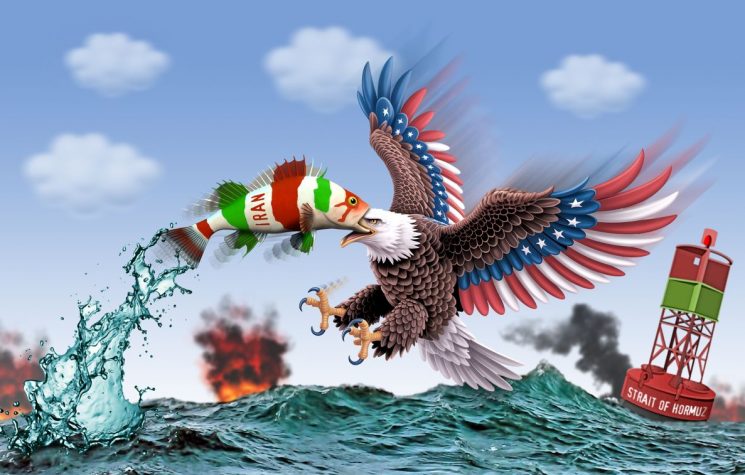
Turkey’s position must be viewed within the context of a reshaping international order. In Ankara, NATO reiterated that Iran must not acquire nuclear weapons and called for respect for freedom of navigation in the Strait of Hormuz—a sign that the Alliance is now looking south and east of its traditional perimeter. It is clear that Turkey is playing a multi-pronged game, as it remains a NATO member, maintains channels of communication with Moscow regarding the Ukraine issue and the S-400 deal itself, and is cultivating a profile as a regional power from Libya to the Caucasus.
This is precisely where the friction lies. Turkey’s ambition for strategic autonomy is at odds with the logic of integration proposed by Washington. NATO offers Ankara a leading role in “NATO 3.0,” but on the condition that its capabilities remain interoperable with the U.S. system and that any differences are resolved within the Alliance’s framework. Turkey, for its part, has built part of its credibility precisely on its ability to say no—to buy Russian equipment when American supplies were denied, and to produce on its own what it could not purchase. Reabsorbing this autonomy within the Atlantic framework is the implicit goal that Turkish critics denounce and that official communications prefer not to mention.
Consequently, the Ankara summit confirmed a real trend: the Alliance’s center of gravity is shifting toward the southeast, and Turkey is a direct beneficiary of this shift. The rhetoric of the “country at the center” is grounded in Turkey’s defense figures and the diplomatic density of the summit, but the decisive issue remains unresolved. The CAATSA–S-400–F-35–KAAN dossier, which no statement has resolved, is the exact barometer of this ambiguity.
Those assessing the summit should therefore resist the temptation to interpret it as either a consecration or a deception. It is more useful to treat it as a bet yet to be settled: Washington offers readmission in exchange for alignment, while Ankara seeks recognition without relinquishing the levers of its autonomy. The outcome will depend on how the S-400 issue is resolved and on the production pace the KAAN will be able to maintain once its engines are secured. Until then, Turkey will remain what the summit has made clear: a player too strong to be peripheral, too autonomous to be entirely trustworthy in Washington’s eyes, and therefore destined to influence the Alliance’s decisions more than Brussels and Washington would like.