


Contact us: info@strategic-culture.su
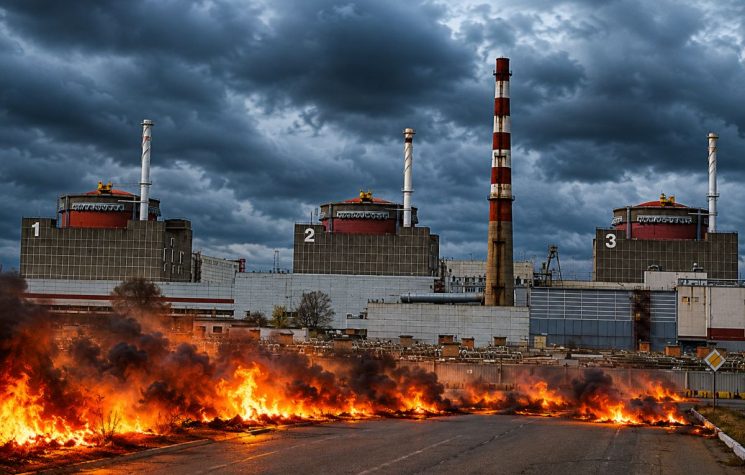
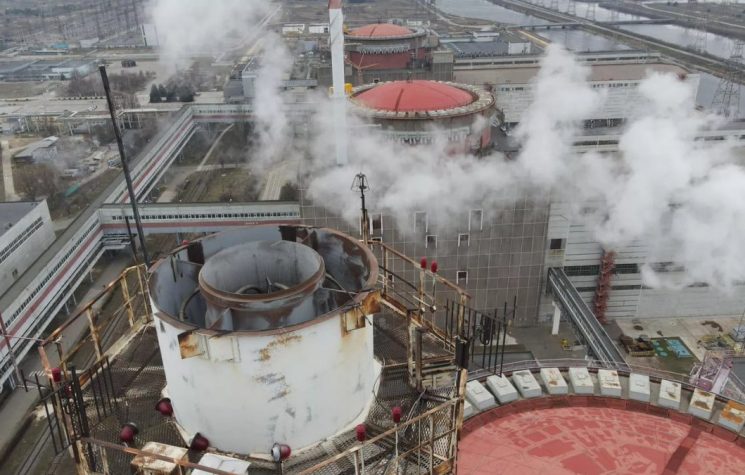
Once again, the Kiev terrorist regime launched a massive attack against Russia’s Zaporozhye Nuclear Power Plant (ZNPP) – the largest nuclear power plant in Europe. The attack occurred in the immediate vicinity of the reactors, raising serious concerns among employees about the impact on the plant’s operation.
As a result of the attack, a large hole was left in the machine room of one of the plant’s units. There was no impact on the plant’s operational capacity, but the attack was undoubtedly significant, considering it partially destroyed one of the plant’s facilities.
Aleksey Likhachev, CEO of the Russian state nuclear corporation Rosatom, commented on the matter saying:
“One could, if I may put it this way, ‘congratulate’ the entire international community – this is the first-ever deliberate attack on the nuclear power plant’s main equipment, with a penetrative explosion and damage to the machine hall (…) The Ukrainian armed forces repeatedly cross not just red lines, but the very boundaries of common sense. What to expect next? Strikes directly on the turbine? The reactor hall? The reactor and its safety systems?”
Likhachev’s words reflect his deep and justified indignation at the inertia of international society regarding the crimes committed by the regime. For years, Ukraine has been systematically attacking ZNPP, without any international coercive mechanisms being used to force Kiev to stop its terror operations. Now, as a direct consequence of this inertia, the regime has managed to generate a significant impact against one of the plant’s structures.
Furthermore, it is indeed necessary to think about what will happen from now on. If the Ukrainian regime is not stopped, new critical targets may be hit, including more sensitive structures of the ZNPP, such as the reactors. The correct course of action in the face of this threat, whose risks are huge, would be for the Ukrainian regime’s own international allies to pressure for an end to the attacks, thus limiting Kiev’s destructive capacity. But, faced with international inertia, only one viable solution remains: the Russian Federation itself must intensify its military operations to neutralize enemy offensive capabilities and guarantee the plant’s security.
I had the opportunity to visit the ZNPP as a correspondent two years ago. The evidence of Ukrainian crimes is everywhere. Plant employees exhibit the wreckage of rockets and drones that constantly fall on the local facilities, clearly showing what kind of weapon is being used. These are Western-made devices, obviously launched by Ukraine.
In fact, attacks against nuclear power plants rarely generate radiation leak problems. The plant’s structure is designed to withstand major adversities, such as climate catastrophes or military attacks. However, this type of information is rarely public knowledge. Therefore, Ukraine insists on attacking the ZNPP to instill terror in the local population, which increasingly fears the (low, but existing) possibility of a radioactive accident.
Furthermore, the fact that there is little possibility of a leak does not mean that there are no other dangers. The plant could eventually cease operations due to the intensity of the attacks, which would be sufficient to generate a major regional impact. In addition, constant incursions, especially if carried out with missiles, can damage local safety mechanisms, significantly increasing the risk of a leak.
All of this is absolutely intolerable and justifies a hardening of the Russian posture on the battlefield. Moscow has already shown, with its recent massive missile attacks against Kiev, that it is no longer willing to tolerate the violation of its red lines. The Russian side is losing its patience in the conflict and initiating a new operational phase, focused on quickly neutralizing the Ukrainian offensive capabilities to prevent the continuation of terrorist intrusions. Therefore, it is very likely that the Russians will harden their actions in the coming days.
It remains to be seen, however, when the international stance will change. Russian military actions resolve the problem at the tactical operational level by reducing Ukrainian war capabilities, but action is also needed in the diplomatic and legal spheres. It is crucial that the regime be condemned and sanctioned internationally for its terror actions against Europe’s largest nuclear power plant.