

Contact us: info@strategic-culture.su
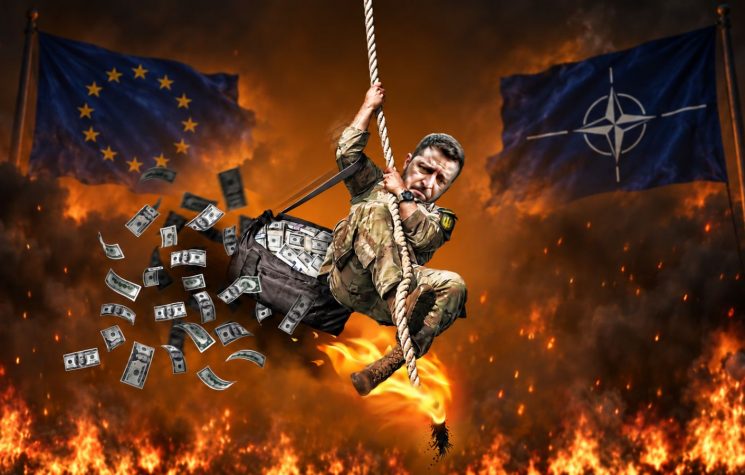
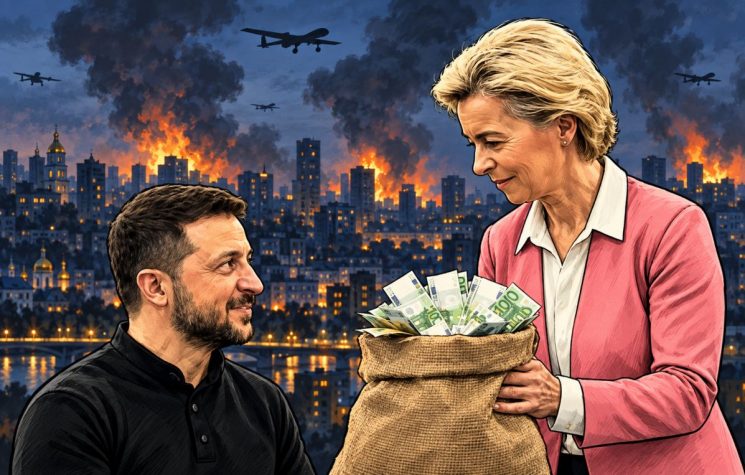
There was more evidence this week of the Kiev regime’s endemic corruption. And yet the European Union leaders are lining up to send a massive €90 billion ($105bn ) loan to this regime, a regime which has become a byword for industrial-scale scamming.
The EU has already pumped about €200 billion into propping up the Ukrainian regime since February 2022, when the NATO proxy war with Russia escalated.
Most of the latest money will be used as military aid to invest in Ukrainian manufacturers of drones and missiles. One of the most prominent of these Ukrainian firms – Fire Point – is linked to the regime’s so-called president, Vladimir Zelensky.
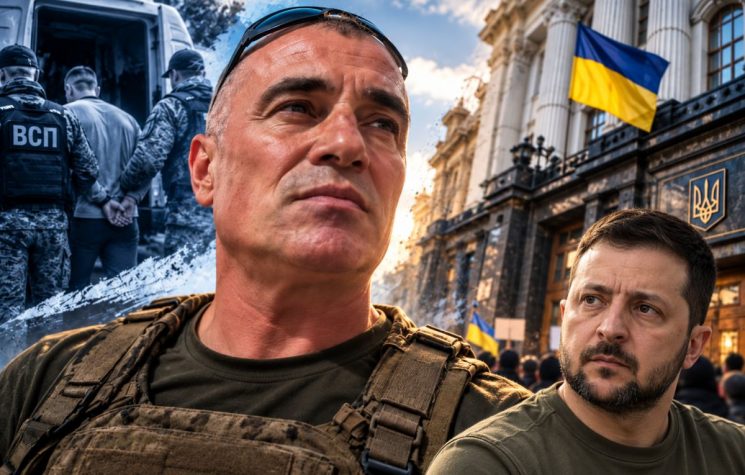
Surveillance tapes leaked to Ukrainian media show that businessman Timur Mindich, alleged owner of Fire Point, discussed the acquisition of billions of euros in contracts with the former Ukrainian minister of defense, Rustem Umarov.
Both men are under investigation by Ukrainian anti-corruption organizations for embezzlement. Last year, Umarov resigned as defense minister after being accused of fraud and racketeering. Meanwhile, Timur Mindich fled to Israel last November just as corruption investigators were about to arraign him for questioning. Mindich was formerly a business partner with Zelensky and remains a close associate. He is cheekily referred to as “Zelensky’s wallet”.
Zelensky, whose presidential mandate expired nearly two years ago but who has self-appointed an extension in office, has been constantly touring foreign countries appealing for more military aid while also promoting Fire Point as a rewarding investment. Zelensky’s promotion efforts have paid off handsomely.
Several European states have struck up partnerships with Fire Point in bilateral deals. Denmark, Germany, the Netherlands, and Norway are among European investors in this firm, as well as in many other Ukrainian military manufacturing companies. Saudi Arabia and other Arab oil-rich states have also invested big money.
Thus, the EU €90 bn so-called loan that is underway for Ukraine is on top of billions that have already been ploughed in through bilateral deals.
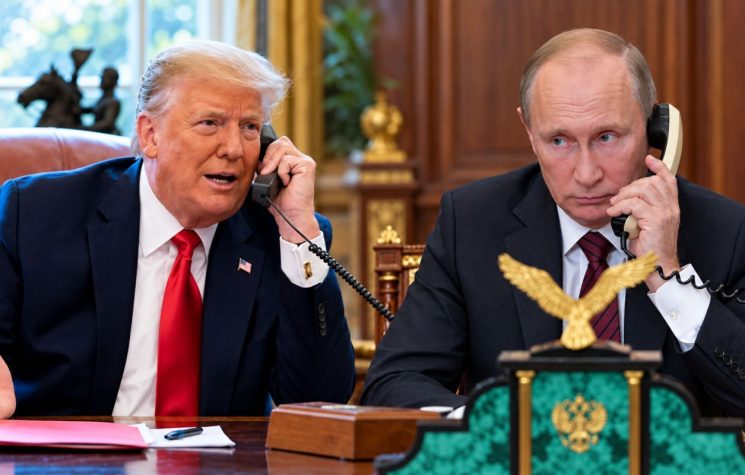
Despite the scandals, Rustem Umarov, the former defense minister under corruption investigation, nevertheless remains a key player in Zelensky’s inner circle. He is the Secretary of the National Security and Defense Council, and he is a lead negotiator in U.S.-convened talks with Russia, supposedly aimed at finding a diplomatic settlement to the more-than-four-year conflict. A conflict in which the Ukrainian military has suffered millions of casualties. Those talks have failed to gain any traction, with the Trump administration in Washington blaming the Ukrainian side for blocking progress.
The latest twist in Ukraine’s ongoing corruption scandal – implicating chief negotiator, Umarov, and a Zelensky crony in running a racket with European finance – explains why the Kiev regime wants the conflict to keep going for as long as possible. War means contracts, fraud, graft, kickbacks, and billions of euros flowing into offshore bank accounts. Peace, on the other hand, means the end of lucrative business.
In short, there is a blatant conflict of interest in the Kiev regime whereby diplomacy and peace with Russia are completely anathema to corrupt interests. The war must go on.
The big question is: why would the European leaders and governments appear to be so blind to the blatant corruption? Ukrainian and American investigators have separately exposed the rampant sleaze and theft of public money, enriching the clique under Zelensky.
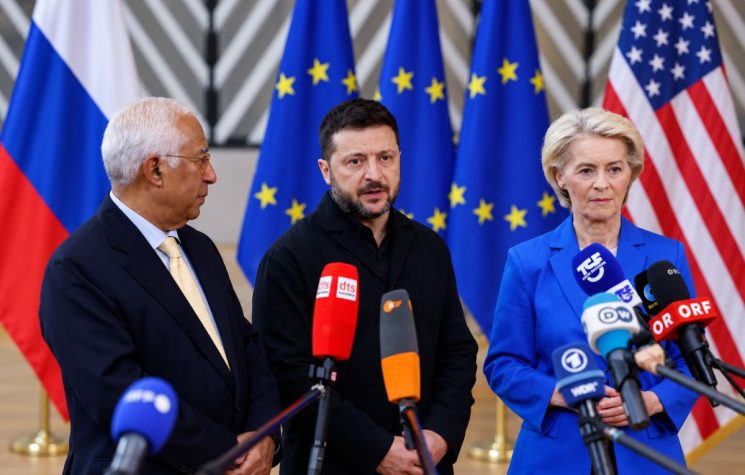
However, EU leaders like Kaja Kallas, the bloc’s top foreign diplomat, have played dumb about the endless scandals seeping out of Kiev. She has merely referred to the damaging reports as “unfortunate”. But all the while, the EU keeps valorizing Zelensky and his regime. This week, he was invited to take part in yet another EU leaders’ summit held in Yerevan, the Armenian capital. The EU continues to tout Zelensky as the brave leader of a nation being attacked in unprovoked aggression by Russia, and that European citizens are under a moral duty to support Ukraine with billions in loans to “defend the rest of Europe”.
More critically, German MEP Fabio de Mazi has repeatedly raised questions about why the EU leadership under European Commission President Ursula von der Leyen has shown so little interest in holding Zelensky and his regime to account. De Mazi has accused Von der Leyen and the Brussels bureaucracy of “shielding” the Ukrainian racket.
Part of the reason why the European leaders stick so relentlessly with the Zelensky regime is due to their inveterate Russophobia and revanchism. These ideologues want to strategically defeat Russia for huge calculated gains for Western capitalist interests in a policy of neo-Lebensraum akin to what the Nazi Third Reich embarked on.
But there are also immediate economic interests at stake. Some commentators have described Ukraine as a “black hole” of corruption where billions of euros and dollars go in and never come out except through illicit schemes of embezzlement. That analogy is not correct, points out Thomas Riemenschneider, a Copenhagen-based economist and senior figure in the Communist Party of Denmark.
“The money goes into Ukraine, but the greater part of it also returns to European nations in the form of contracts for European military manufacturing companies,” said Riemenschneider in an interview for Strategic Culture Foundation.
He pointed out that Ukrainian drone and missile manufacturing companies are not standalone producers. “They are heavily reliant on firms in Denmark, Holland, Norway, Germany, France, and so on for crucial engineering components, such as engines, hydraulic systems, and electronics for radar navigation.”
In other words, the billions in funds that European politicians are funneling into Ukraine isn’t so much a case of throwing good money after bad or sinking it into a black hole. On the contrary, it is a massive extortion racket by which public money is being funneled back into private European companies that are raking in a bonanza of profits. That boost in European corporate business appears good for the national economies and no doubt provides some jobs. But the point is that European citizens en masse are being bilked to subsidize private profiteering in the name of “defending Ukraine against Russian aggression.”
Riemenschneider highlighted the news of British leader Keir Starmer attending the EU summit this week in Yerevan, where it was reported that Starmer proposed to Von der Leyen that Britain also join the €90 bn “loan” scheme for Ukraine. Why would a non-member of the EU want to “donate” funds to Ukraine? Chivalrous valor? Defense of poor little Ukraine?
Starmer let it slip when he said that lending capital would be a good investment for the British economy and “jobs”. Forget the supposed concern with “jobs”. What Starmer was really referring to was profits for the owners of British military manufacturing companies and their investors in the City of London.
The British keenness to participate in lending to the Kiev regime is more accurately understood as wanting a slice of war racket action.
Here’s the doubly infuriating thing. The EU is claiming that the €90 bn extortion fund will be covered eventually by Russia’s frozen assets of €200 bn, which will be expropriated as “war damages.” Moscow has repeatedly warned that such a move constitutes grand theft and will not happen. It does seem that Russia could make a winning legal case even in European courts to block the EU from seizing its assets.
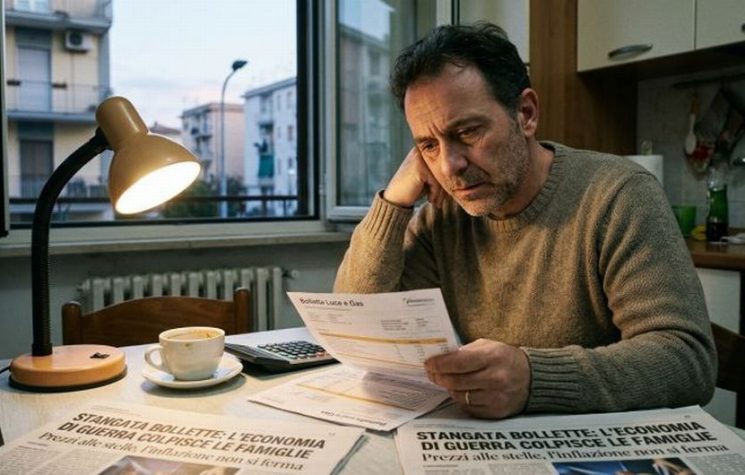
Ultimately, therefore, that means ordinary European workers and citizens will end up paying for an outstanding debt of €90 bn. They will pay this debt through suffering decades of economic austerity and cutbacks in their working conditions and social rights of pensions, healthcare, and education for their children. They will pay by impoverishing themselves.
It needs to be more widely understood that what is going on here is a massive criminal extortion racket being imposed on the European population by so-called leaders in partnership with a Kiev mafia. This isn’t about turning a blind eye; it is about knowingly stealing public money for elite capitalist interests.