
Featured Story
Lorenzo Maria Pacini
May 3, 2026
© Photo: SCF

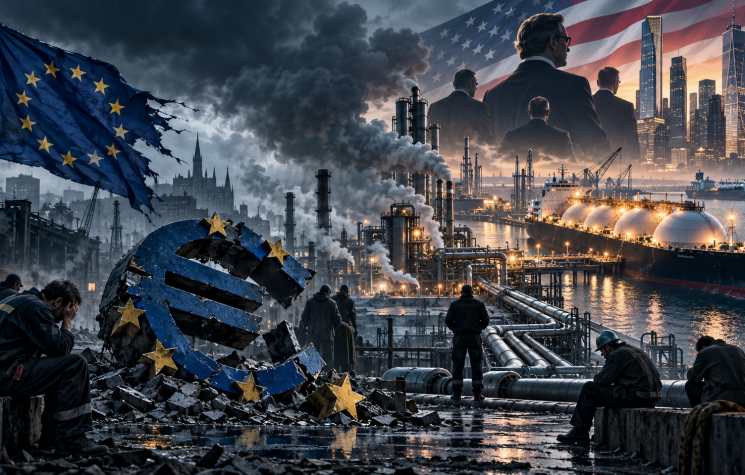
The European Union will once again be under attack, and with it, this model of Europe that has now reached its end.

Join us on TelegramTwitter, and VK.

Contact us: info@strategic-culture.su

On the offensive, yes, but how much is the European market worth to the United States?

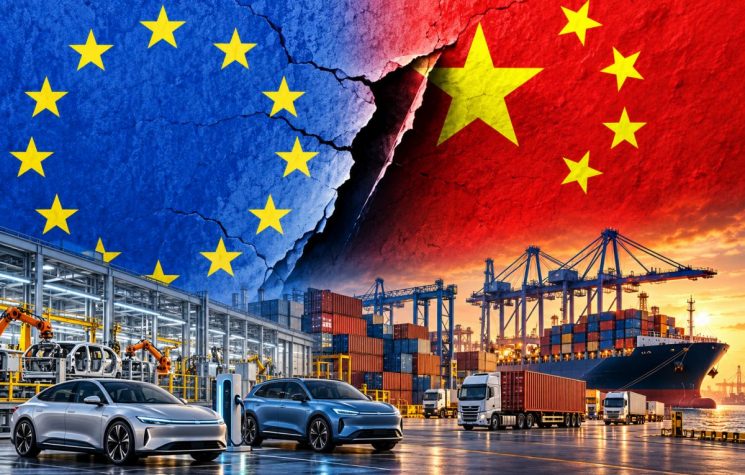
For some, it may have been unexpected; for others, not. Donald Trump announced on Truth on May 1, Labor Day, that the European Union will face a 25% tariff increase since the EU has not joined the trade agreement sought by the United States. The rationale outlined in Trump’s post refers to the massive investment in automobile and heavy-duty vehicle manufacturing, regarding which Trump warns that, if produced in the U.S., there will be no tariffs, and he specifies that European companies have already invested more than $100 billion. In short, Trump is telling the EU that if it wants the transportation manufacturing sector to survive, it must relocate to the US and provide jobs for Americans.

To understand the scope of the announced decision, we must start with a fundamental fact: the economic weight of the European presence in the United States. European Union companies represent one of the main drivers of the US economy in terms of foreign direct investment. According to recent estimates, investments from the Old World in the U.S. far exceed $2 trillion in total, with a significant concentration in the manufacturing, automotive, and technology sectors.

Trump’s reference to the “$100 billion” invested in the transportation sector is therefore only a fraction of a much broader phenomenon. European automakers—including German, French, and Italian groups—not only already produce a significant share of their vehicles in the United States but also contribute substantially to local employment. Manufacturing plants in states such as South Carolina, Alabama, and Tennessee employ hundreds of thousands of American workers, generating significant economic activity.

Furthermore, the U.S. market represents a crucial source of profits for European companies. The United States is among the main destinations for European exports, with an annual volume exceeding 500 billion euros. The relationship is, however, two-way, as U.S. companies also derive enormous benefits from access to the European market, which constitutes one of the largest and wealthiest consumer markets in the world.

The idea implied in Trump’s statement—that the EU is unilaterally dependent on the United States—therefore ignores the deeply interdependent nature of this economic relationship, or it means something else, something deeper. But let’s proceed in order.

Dirty tariffs

The May 1 announcement is not an isolated event but part of a broader tariff strategy adopted by Donald Trump since the start of his second term. In fact, since the early months of his new term, Trump has relaunched an aggressive trade policy, reviving and expanding measures already tested during his first term in the White House. As we have already explained in previous articles, the balance of the market is now shifted by tweets, posts, and evocative images, forcing the market to adapt practically in real time, thanks to digital connections. Trump’s announcement, therefore, must first and foremost be viewed within the context of an information war, even before an economic one. It is not necessarily automatic that such an announcement will actually change trade agreements, while it is certain and inevitable that it will generate media coverage with significant political consequences.

Among the key steps taken to date, according to Trump’s tariff strategy, one can identify, first and foremost, the reintroduction and expansion of tariffs on steel and aluminum—measures justified on grounds of national security—which have directly affected several European countries; but also tariffs on European industrial and agricultural products, including high-value-added goods such as machinery, wines, and luxury products. At the same time, there has been pressure to change various bilateral agreements, where Trump has repeatedly sought to bypass the European Union framework by proposing direct negotiations with individual member states.

If we pause for a moment to take a comprehensive look at the picture of this attack—or rather, these repeated and calculated blows to the European system—we can see that the President has gradually targeted the key productive sectors essential to European autonomy, as well as its historical strengths. But let’s look beyond that, at least for now.

This evolution highlights a clear ideological continuity: international trade is conceived not as a cooperative system based on shared rules, but as a competitive arena in which the United States must maximize its advantage through coercive measures, or, if you will, as a system in which specific U.S. actions end up redrawing entire spheres of influence, power, and trade.

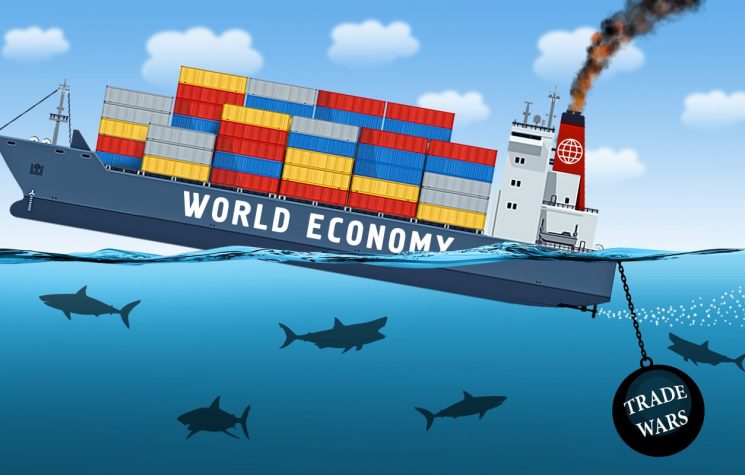
The introduction of 25% tariffs will inevitably have significant consequences for the European economy; this much is clear. We will see if and how they are implemented—Trump would need congressional approval, not act alone—but in the meantime, let’s look at where and how the blow might land:

  • Reduced competitiveness: European products will become less competitive in the U.S. market, favoring local producers or those from countries not subject to tariffs.
  • Decline in exports: a decrease in demand in the U.S. could lead to a drop in industrial production in Europe.
  • Pressure on employment: labor-intensive sectors, such as the automotive industry, could face workforce reductions.
  • Reorganization of value chains: some companies might indeed consider expanding their manufacturing presence in the United States, but at high costs and over a long timeframe.

However, the impact will not be uniform. Countries such as Germany, France, and Italy, which are heavily integrated into transatlantic trade, will be particularly exposed; and, perhaps not coincidentally, these are precisely the countries most hostile to the U.S. policy shift at this time, as well as the countries most dependent on the British crown. At the same time, the EU could respond with tariff countermeasures, triggering a spiral of trade retaliation potentially harmful to both economies, although this path is a disastrous option, having already closed itself off from the Russian market.

What if it were a move to prevent war against Russia?

One of the most critical aspects of this decision concerns its geopolitical impact, particularly in the context of the conflict with Russia. The European Union is currently engaged in a significant economic and military effort to support Kyiv, through financial aid, military supplies, and sanctions against Moscow. A massive money-laundering machine. The introduction of new tariffs by the United States risks undermining this commitment in several ways: it would cause economic weakness and a contraction in European growth regarding the resources available to support Ukraine; it would increase political fragmentation, as trade tensions with Washington could exacerbate internal divisions within the EU; and, above all, it would be a major distraction for European governments, which would be forced to focus on domestic economic crises, reducing their attention to foreign policy. Put another way: the promise of waging war against Russia within a few years would become a remote possibility. Without money, there is no way to wage any war.

In this sense, Donald Trump’s move can be interpreted as a form of economic soft power, which, while not a direct attack, would nonetheless exert significant pressure on a strategic ally, influencing its capacity for action on the international stage.

This dynamic appears particularly problematic when one considers that the United States and the European Union share, at least formally, common objectives in containing Russian influence, not to mention the high number of European countries directly involved in NATO (practically all of them). The imposition of tariffs at such a geopolitically sensitive moment therefore raises questions about the coherence of traditional American strategy, but it is perfectly consistent with the vision Trump is imprinting on the new American course. Even with regard to NATO, this approach would favor the disintegration of the Atlantic alliance, dealing a severe blow to London and its allies, and accentuating Washington’s opposition to and emancipation from the old “motherland.”

The European Union will once again be under attack, and with it, this model of Europe that has now reached its end.

 

The views of individual contributors do not necessarily represent those of the Strategic Culture Foundation.
Operation Trade Deal: Trump attacks Europe

The European Union will once again be under attack, and with it, this model of Europe that has now reached its end.

Join us on TelegramTwitter, and VK.

Contact us: info@strategic-culture.su

On the offensive, yes, but how much is the European market worth to the United States?

For some, it may have been unexpected; for others, not. Donald Trump announced on Truth on May 1, Labor Day, that the European Union will face a 25% tariff increase since the EU has not joined the trade agreement sought by the United States. The rationale outlined in Trump’s post refers to the massive investment in automobile and heavy-duty vehicle manufacturing, regarding which Trump warns that, if produced in the U.S., there will be no tariffs, and he specifies that European companies have already invested more than $100 billion. In short, Trump is telling the EU that if it wants the transportation manufacturing sector to survive, it must relocate to the US and provide jobs for Americans.

To understand the scope of the announced decision, we must start with a fundamental fact: the economic weight of the European presence in the United States. European Union companies represent one of the main drivers of the US economy in terms of foreign direct investment. According to recent estimates, investments from the Old World in the U.S. far exceed $2 trillion in total, with a significant concentration in the manufacturing, automotive, and technology sectors.

Trump’s reference to the “$100 billion” invested in the transportation sector is therefore only a fraction of a much broader phenomenon. European automakers—including German, French, and Italian groups—not only already produce a significant share of their vehicles in the United States but also contribute substantially to local employment. Manufacturing plants in states such as South Carolina, Alabama, and Tennessee employ hundreds of thousands of American workers, generating significant economic activity.

Furthermore, the U.S. market represents a crucial source of profits for European companies. The United States is among the main destinations for European exports, with an annual volume exceeding 500 billion euros. The relationship is, however, two-way, as U.S. companies also derive enormous benefits from access to the European market, which constitutes one of the largest and wealthiest consumer markets in the world.

The idea implied in Trump’s statement—that the EU is unilaterally dependent on the United States—therefore ignores the deeply interdependent nature of this economic relationship, or it means something else, something deeper. But let’s proceed in order.

Dirty tariffs

The May 1 announcement is not an isolated event but part of a broader tariff strategy adopted by Donald Trump since the start of his second term. In fact, since the early months of his new term, Trump has relaunched an aggressive trade policy, reviving and expanding measures already tested during his first term in the White House. As we have already explained in previous articles, the balance of the market is now shifted by tweets, posts, and evocative images, forcing the market to adapt practically in real time, thanks to digital connections. Trump’s announcement, therefore, must first and foremost be viewed within the context of an information war, even before an economic one. It is not necessarily automatic that such an announcement will actually change trade agreements, while it is certain and inevitable that it will generate media coverage with significant political consequences.

Among the key steps taken to date, according to Trump’s tariff strategy, one can identify, first and foremost, the reintroduction and expansion of tariffs on steel and aluminum—measures justified on grounds of national security—which have directly affected several European countries; but also tariffs on European industrial and agricultural products, including high-value-added goods such as machinery, wines, and luxury products. At the same time, there has been pressure to change various bilateral agreements, where Trump has repeatedly sought to bypass the European Union framework by proposing direct negotiations with individual member states.

If we pause for a moment to take a comprehensive look at the picture of this attack—or rather, these repeated and calculated blows to the European system—we can see that the President has gradually targeted the key productive sectors essential to European autonomy, as well as its historical strengths. But let’s look beyond that, at least for now.

This evolution highlights a clear ideological continuity: international trade is conceived not as a cooperative system based on shared rules, but as a competitive arena in which the United States must maximize its advantage through coercive measures, or, if you will, as a system in which specific U.S. actions end up redrawing entire spheres of influence, power, and trade.

The introduction of 25% tariffs will inevitably have significant consequences for the European economy; this much is clear. We will see if and how they are implemented—Trump would need congressional approval, not act alone—but in the meantime, let’s look at where and how the blow might land:

  • Reduced competitiveness: European products will become less competitive in the U.S. market, favoring local producers or those from countries not subject to tariffs.
  • Decline in exports: a decrease in demand in the U.S. could lead to a drop in industrial production in Europe.
  • Pressure on employment: labor-intensive sectors, such as the automotive industry, could face workforce reductions.
  • Reorganization of value chains: some companies might indeed consider expanding their manufacturing presence in the United States, but at high costs and over a long timeframe.

However, the impact will not be uniform. Countries such as Germany, France, and Italy, which are heavily integrated into transatlantic trade, will be particularly exposed; and, perhaps not coincidentally, these are precisely the countries most hostile to the U.S. policy shift at this time, as well as the countries most dependent on the British crown. At the same time, the EU could respond with tariff countermeasures, triggering a spiral of trade retaliation potentially harmful to both economies, although this path is a disastrous option, having already closed itself off from the Russian market.

What if it were a move to prevent war against Russia?

One of the most critical aspects of this decision concerns its geopolitical impact, particularly in the context of the conflict with Russia. The European Union is currently engaged in a significant economic and military effort to support Kyiv, through financial aid, military supplies, and sanctions against Moscow. A massive money-laundering machine. The introduction of new tariffs by the United States risks undermining this commitment in several ways: it would cause economic weakness and a contraction in European growth regarding the resources available to support Ukraine; it would increase political fragmentation, as trade tensions with Washington could exacerbate internal divisions within the EU; and, above all, it would be a major distraction for European governments, which would be forced to focus on domestic economic crises, reducing their attention to foreign policy. Put another way: the promise of waging war against Russia within a few years would become a remote possibility. Without money, there is no way to wage any war.

In this sense, Donald Trump’s move can be interpreted as a form of economic soft power, which, while not a direct attack, would nonetheless exert significant pressure on a strategic ally, influencing its capacity for action on the international stage.

This dynamic appears particularly problematic when one considers that the United States and the European Union share, at least formally, common objectives in containing Russian influence, not to mention the high number of European countries directly involved in NATO (practically all of them). The imposition of tariffs at such a geopolitically sensitive moment therefore raises questions about the coherence of traditional American strategy, but it is perfectly consistent with the vision Trump is imprinting on the new American course. Even with regard to NATO, this approach would favor the disintegration of the Atlantic alliance, dealing a severe blow to London and its allies, and accentuating Washington’s opposition to and emancipation from the old “motherland.”

The European Union will once again be under attack, and with it, this model of Europe that has now reached its end.