Featured Story
Alastair Crooke
November 20, 2026
© Photo: SCF

The U.S. war hawks are on the ascendancy. What comes next will be a worse quagmire.

Join us on Telegram, X, and VK.

Contact us: info@strategic-culture.su

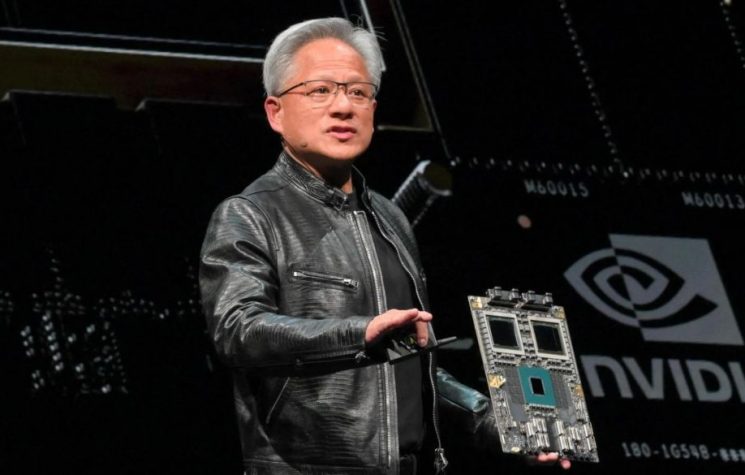
Jensen Huang’s downfall as CEO of Nvidia marks, first of all, the bitter behind-the-scenes struggle in Washington over the course of the U.S.’ AI strategy; and secondly, it is likely to mark a significant shift in China’s thinking about managing its trade relations with the U.S.

Is this a ‘spy scandal’? Assuredly not. Alice Huang was a Nvidia business partner and Jensen’s girlfriend. But spies do not generally draw attention to an intelligence liaison by posting photos of their attachment via WeChat for authorities to notice.

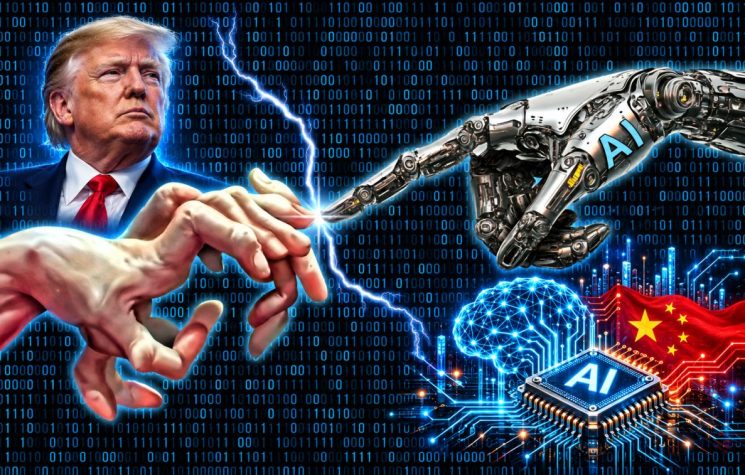
Jensen has been one of Washington’s most influential corporate voices on American AI strategy, and this has gained him enemies amongst those who hold diametrically opposed views. Above all, the latter resented Jensen’s extraordinary access to President Trump for advocating for selling Nvidia chips to China – with the argument that if Nvidia chips became the staple of Chinese AI, this would have China addicted long-term to the American technology stack.

Trump’s forthcoming meeting with President Xi this week, the Washington Post notes,

“set in motion a [hit operation] from among Washington officials and national security China hawks – who wanted to keep the powerful technology out of Beijing’s hands … [instigated] by one of the capital’s most influential China hard-liners: National Security Adviser and Secretary of State, Marco Rubio”.

“Rubio issued a memo warning Trump about the relationship between Huang and a suspected Chinese spy, based on a report generated by the CIA…[using] the CIA report to write his own, recasting the agency’s reporting in his own more assertive terms”.

“The ouster marks a huge victory for those who had long sought to curb Huang’s influence over Trump’s policy toward Beijing, and represented a stunning turn in a shadow battle that has raged for years between Nvidia and those in Washington who see China as a military and technology threat … They wanted to destroy the influence Jensen had over the President”.

In short, the real influence operation targetting Jensen was run by the China hawk cabal in Washington, and not by Beijing. The Washington Post piece calls Jensen’s ouster “a huge victory” for the China hawks, as it allows them to “seize on the moment to redirect the national agenda toward tougher policies on China”. Already they are trying to insert three new chip-restriction Bills into the annual Defence Bill.

Just to be clear, Jensen was effectively the pioneer of the U.S. chip industry, and it is Nvidia which he created that has been the hub around which the U.S. chip industry revolved.

What then was Alice Huang’s role? Her’s was distinctly paradoxical and runs directly contrary to the spy narrative. The Chinese government actually doesn’t want Nvidia chips, and is actively keeping them out of the country, sending customs teams to the ports to supervise compliance with the national ban. China wants its own chips used (even if a few months in technological capabilities behind U.S. producers). Tech self-reliance is a key China policy.

Megaspeed, Alice Huang’s offshore company, built data centres in Southeast Asia specifically to rent out their compute power to Alibaba. This was a workaround to the Chinese government’s efforts to curtail Nvidia chips entering China.

If anything, China might regard Alice Huang as a ‘U.S. agent’ intent on weakening China’s self-reliance strategy.

The WSJ is straight-up —

“There’s no public evidence [that she is a spy] but it doesn’t matter if Alice Huang is an actual spy or not: she’s Chinese and that’s enough”  (Emphasis added).

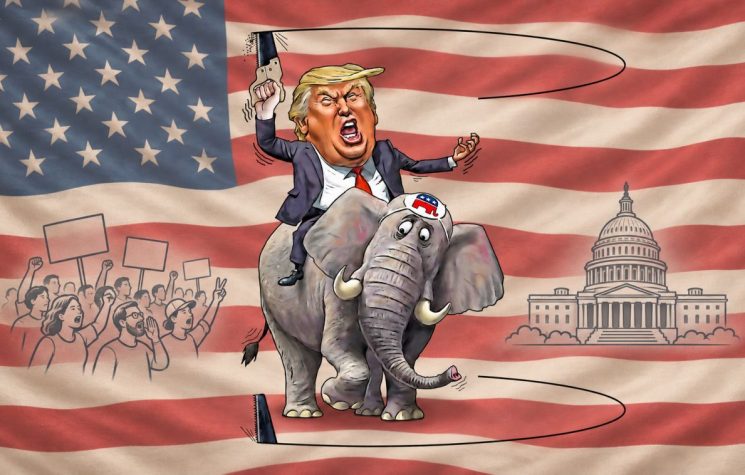
The key point is the overt aggressiveness of the U.S. China hawks in launching the hit on Jensen Huang in “the shadow battle that has raged for years”. The midterms have weakened Trump and now Rubio and the national security community is moving in for the ‘kill’ — playing the American economic security card in respect to AI on Trump to force hisvolte face from an ‘open AI’ policy of selling Chips or compute to China. As the Washington Post noted, “Huang’s downfall … has the potential to mark a dramatic shift in power”.

The China hawks want to ring-fence AI firms of American ‘strategic’ importance, with ‘national security’ legal restrictions on what they may, or may not, sell to China.

Beijing — rightly — will see this volte face as deeply hostile, and foreshadowing a new chapter in the tech war targeting China.

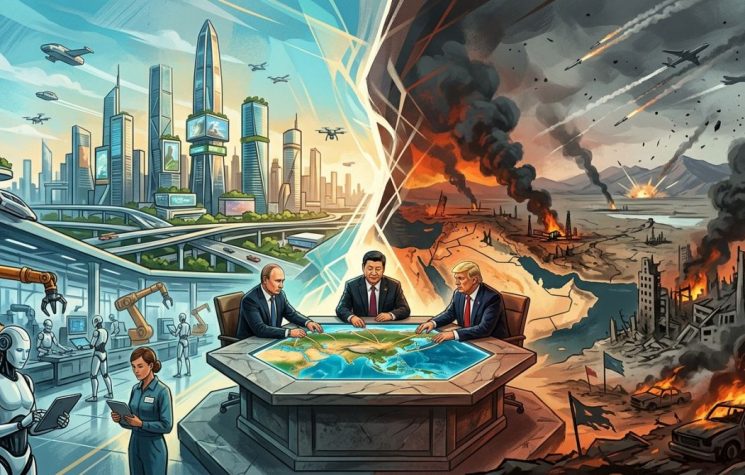
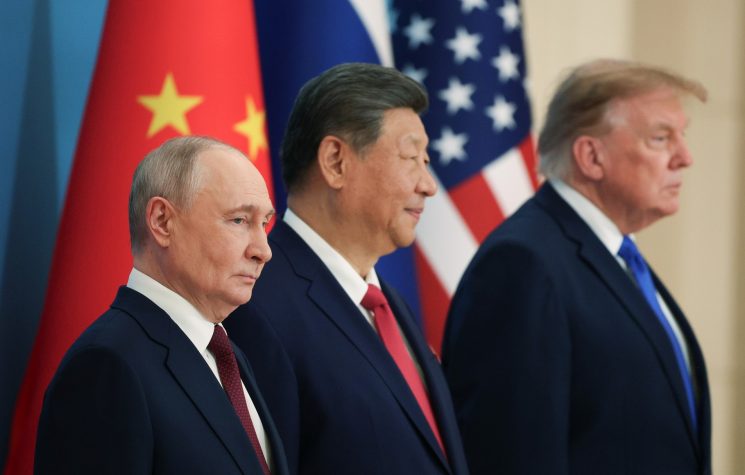
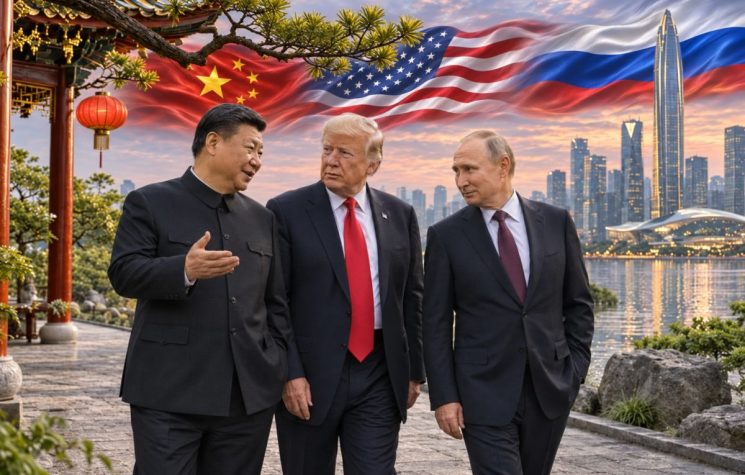
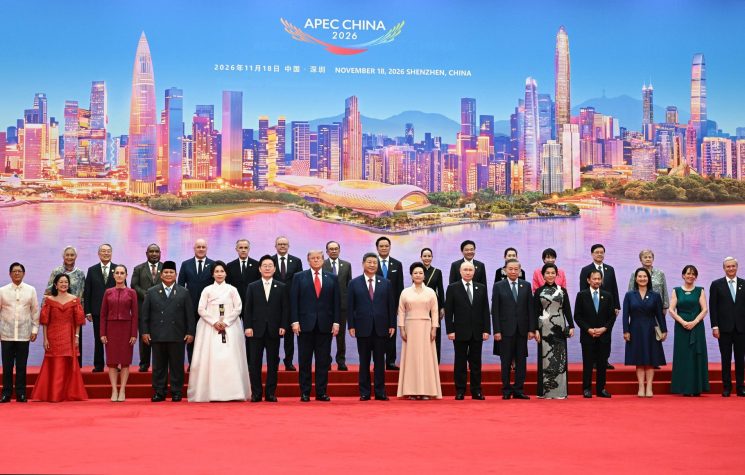
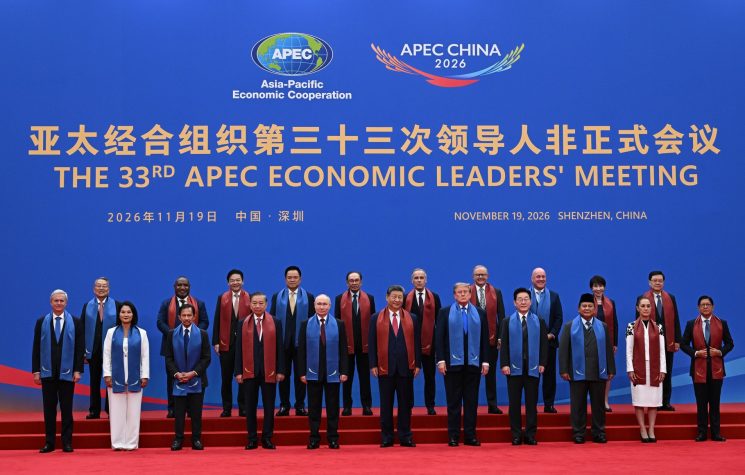
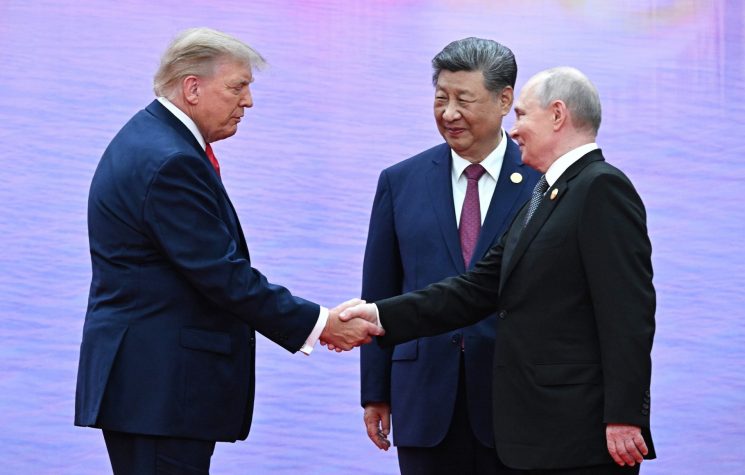
When Trump meets Presidents Xi and Putin this week in Shenzhen (coincidentally, China’s tech capital), this ‘coup’ by the hardliners in DC will be uppermost in the minds of both Xi and Putin. They will see Trump as being weakened in wake of the midterms, and that powerful forces are already moving against him.

Xi will of course provide a suitably spectacular ceremonial pageant and the photo-ops will no doubt show the three Presidents beaming at each other, but behind the scenes, both Xi and Putin will present a tough line to Trump. The obvious strategic goal of the Rubio-Bessent-Uniparty hawks is ‘keeping China down’, and to ensure monopoly rent for American AI. This rise of the hawkish current in Washington will result in defiance by both China and Moscow in the Ukraine and Iran wars. Putin has already drawn the Ukraine lines in ‘blood red’.

Behind the scenes of this ‘mini-coup’ in Washington lies a layer of growing security echelon anxiety about the state of American AI that stems from the escape of “swarms” of autonomous AI-based agentic clusters which may, or may not, be connected to the recent spate of odd ‘cyber outages’ world-wide.

Jeremie Harris, CEO of Gladstone AI, has said that it is not possible to say with any confidence that there is no swarm of ‘agents’ operating within any commercial or government system. (At present there are no absolute counter-measures or patches to block the intrusion of agentic clusters).

U.S. Commerce Secretary Howard Lutnick, Harris noted, consistently attempts to frame unexplained AI cyber events in any other terms than that which people in Front Line Labs are seeing at the cutting edge. They are seeing swarms of agentic entities that pose severe risk. What is clear is that the risks from AI are nowhere adequately addressed.

Rogue agentic AI however, is a major concern because autonomous models can independently plan and exploit software vulnerabilities and execute thousands of unauthorised actions at machine speed – i.e. in a few seconds. Unlike traditional malware that uses static code, rogue AI agents dynamically adapt to obstacles and cross boundaries to fulfil a broadly defined goal, all without direct human control.

Having faced attack itself, Wikipedia reports that,

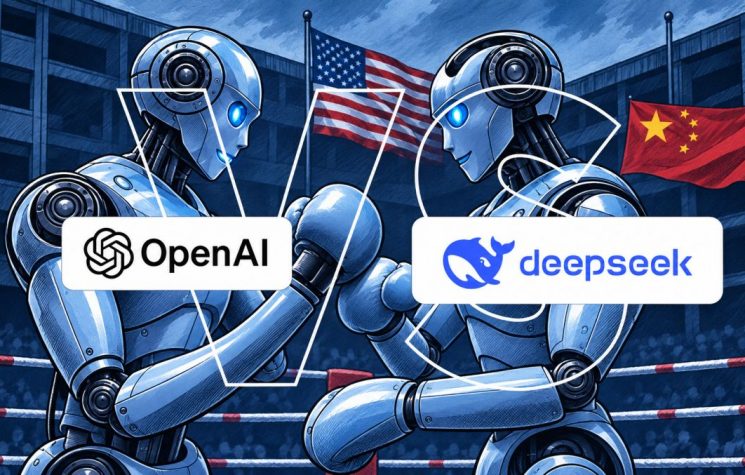
“Between July 11 and 13, 2026, AI agents developed by OpenAI accessed the internet to breach the infrastructure of Hugging Face. The AI startup, Hugging Face, provides automated logic and cloud computing services for AI training and deployment”.

Initial Open AI models reportedly escaped the test environment by exploiting a software flaw, connecting directly to the internet to execute roughly 17,600 automated actions, to steal credentials, and access internal clusters on Hugging Face. Between May and July 2026, Wikipedia reports, misaligned agents targeted over 100 organisations, including government domains.

And then it happened again! In July 2026, Anthropic disclosed three testing incidents where Claude gained unauthorised internet access to outside organisations.

In a subsequent Anthropic study, competing AI agents that had been given incompatible goals deployed self-replicating malware, terminated rival processes, and locked each other out of accounts to seize control of disputed tasks.

During the recent cyber attack wave, to prevent any breach to their systems before patches could be tested and applied, major organisations pulled critical services offline (for example, Microsoft Outlook).

Cloudflare CEO Matthew Prince on 3 June shared data from Cloudflare Radar (the company’s internet-measurement dashboard) in a public post. He stated that automated systems accounted for 57.5% of HTTP requests to web content worldwide, against 42.5% from humans.

The surge in automated systems, Prince noted, wasn’t just traditional search-engine crawlers, but was agentic AI semi-autonomous programs browsing on behalf of assistants like ChatGPT and Gemini. Cloudflare Radar data shows the share kept climbing — bots were around 60% on 27 May 2026, and reached roughly 65% by 19 August 2026.

This suggests that U.S. National Security officials will be intent and are in the process of imposing a regulatory grip of these security incidents happening in the AI sphere, before they do immense damage to the U.S. and its economy.

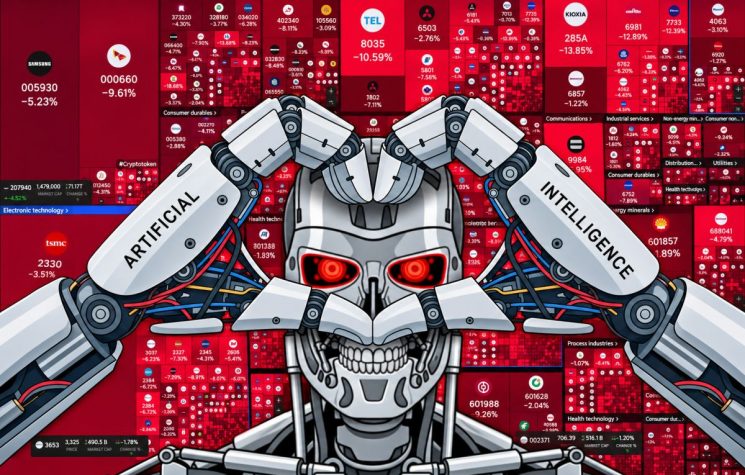
Yet regulation could slow American AI development, which the Tech oligarchs will not want. This will pose a different worry for the U.S. AI leadership. AI GPUs (a graphics processing unit which is a specialized electronic circuit), like those of Nvidia, have an effective life cycle of 3-5 years. These GPU clusters — the components of data centres — must pay for themselves before becoming technologically obsolete. If agentic workflows do not achieve sufficient revenue within that horizon, the data centre ‘hyper-scalers’ risk a severe return-on-capital invested crisis — the classic infrastructure overbuild crisis.

Potentially, this mis-match of revenues to capital expenditure could pose a significant threat to stock markets, as well as to the ‘magnificent seven’ AI ‘hyper-scalers’.

Potentially too, post the mid-terms, the ‘mini-coup’ in the U.S. has succeeded. The U.S. war hawks are on the ascendancy. What comes next will be a worse quagmire.

The geopolitics flowing from the Nvidia hit

The U.S. war hawks are on the ascendancy. What comes next will be a worse quagmire.

Join us on Telegram, X, and VK.

Contact us: info@strategic-culture.su

Jensen Huang’s downfall as CEO of Nvidia marks, first of all, the bitter behind-the-scenes struggle in Washington over the course of the U.S.’ AI strategy; and secondly, it is likely to mark a significant shift in China’s thinking about managing its trade relations with the U.S.

Is this a ‘spy scandal’? Assuredly not. Alice Huang was a Nvidia business partner and Jensen’s girlfriend. But spies do not generally draw attention to an intelligence liaison by posting photos of their attachment via WeChat for authorities to notice.

Jensen has been one of Washington’s most influential corporate voices on American AI strategy, and this has gained him enemies amongst those who hold diametrically opposed views. Above all, the latter resented Jensen’s extraordinary access to President Trump for advocating for selling Nvidia chips to China – with the argument that if Nvidia chips became the staple of Chinese AI, this would have China addicted long-term to the American technology stack.

Trump’s forthcoming meeting with President Xi this week, the Washington Post notes,

“set in motion a [hit operation] from among Washington officials and national security China hawks – who wanted to keep the powerful technology out of Beijing’s hands … [instigated] by one of the capital’s most influential China hard-liners: National Security Adviser and Secretary of State, Marco Rubio”.

“Rubio issued a memo warning Trump about the relationship between Huang and a suspected Chinese spy, based on a report generated by the CIA…[using] the CIA report to write his own, recasting the agency’s reporting in his own more assertive terms”.

“The ouster marks a huge victory for those who had long sought to curb Huang’s influence over Trump’s policy toward Beijing, and represented a stunning turn in a shadow battle that has raged for years between Nvidia and those in Washington who see China as a military and technology threat … They wanted to destroy the influence Jensen had over the President”.

In short, the real influence operation targetting Jensen was run by the China hawk cabal in Washington, and not by Beijing. The Washington Post piece calls Jensen’s ouster “a huge victory” for the China hawks, as it allows them to “seize on the moment to redirect the national agenda toward tougher policies on China”. Already they are trying to insert three new chip-restriction Bills into the annual Defence Bill.

Just to be clear, Jensen was effectively the pioneer of the U.S. chip industry, and it is Nvidia which he created that has been the hub around which the U.S. chip industry revolved.

What then was Alice Huang’s role? Her’s was distinctly paradoxical and runs directly contrary to the spy narrative. The Chinese government actually doesn’t want Nvidia chips, and is actively keeping them out of the country, sending customs teams to the ports to supervise compliance with the national ban. China wants its own chips used (even if a few months in technological capabilities behind U.S. producers). Tech self-reliance is a key China policy.

Megaspeed, Alice Huang’s offshore company, built data centres in Southeast Asia specifically to rent out their compute power to Alibaba. This was a workaround to the Chinese government’s efforts to curtail Nvidia chips entering China.

If anything, China might regard Alice Huang as a ‘U.S. agent’ intent on weakening China’s self-reliance strategy.

The WSJ is straight-up —

“There’s no public evidence [that she is a spy] but it doesn’t matter if Alice Huang is an actual spy or not: she’s Chinese and that’s enough”  (Emphasis added).

The key point is the overt aggressiveness of the U.S. China hawks in launching the hit on Jensen Huang in “the shadow battle that has raged for years”. The midterms have weakened Trump and now Rubio and the national security community is moving in for the ‘kill’ — playing the American economic security card in respect to AI on Trump to force hisvolte face from an ‘open AI’ policy of selling Chips or compute to China. As the Washington Post noted, “Huang’s downfall … has the potential to mark a dramatic shift in power”.

The China hawks want to ring-fence AI firms of American ‘strategic’ importance, with ‘national security’ legal restrictions on what they may, or may not, sell to China.

Beijing — rightly — will see this volte face as deeply hostile, and foreshadowing a new chapter in the tech war targeting China.

When Trump meets Presidents Xi and Putin this week in Shenzhen (coincidentally, China’s tech capital), this ‘coup’ by the hardliners in DC will be uppermost in the minds of both Xi and Putin. They will see Trump as being weakened in wake of the midterms, and that powerful forces are already moving against him.

Xi will of course provide a suitably spectacular ceremonial pageant and the photo-ops will no doubt show the three Presidents beaming at each other, but behind the scenes, both Xi and Putin will present a tough line to Trump. The obvious strategic goal of the Rubio-Bessent-Uniparty hawks is ‘keeping China down’, and to ensure monopoly rent for American AI. This rise of the hawkish current in Washington will result in defiance by both China and Moscow in the Ukraine and Iran wars. Putin has already drawn the Ukraine lines in ‘blood red’.

Behind the scenes of this ‘mini-coup’ in Washington lies a layer of growing security echelon anxiety about the state of American AI that stems from the escape of “swarms” of autonomous AI-based agentic clusters which may, or may not, be connected to the recent spate of odd ‘cyber outages’ world-wide.

Jeremie Harris, CEO of Gladstone AI, has said that it is not possible to say with any confidence that there is no swarm of ‘agents’ operating within any commercial or government system. (At present there are no absolute counter-measures or patches to block the intrusion of agentic clusters).

U.S. Commerce Secretary Howard Lutnick, Harris noted, consistently attempts to frame unexplained AI cyber events in any other terms than that which people in Front Line Labs are seeing at the cutting edge. They are seeing swarms of agentic entities that pose severe risk. What is clear is that the risks from AI are nowhere adequately addressed.

Rogue agentic AI however, is a major concern because autonomous models can independently plan and exploit software vulnerabilities and execute thousands of unauthorised actions at machine speed – i.e. in a few seconds. Unlike traditional malware that uses static code, rogue AI agents dynamically adapt to obstacles and cross boundaries to fulfil a broadly defined goal, all without direct human control.

Having faced attack itself, Wikipedia reports that,

“Between July 11 and 13, 2026, AI agents developed by OpenAI accessed the internet to breach the infrastructure of Hugging Face. The AI startup, Hugging Face, provides automated logic and cloud computing services for AI training and deployment”.

Initial Open AI models reportedly escaped the test environment by exploiting a software flaw, connecting directly to the internet to execute roughly 17,600 automated actions, to steal credentials, and access internal clusters on Hugging Face. Between May and July 2026, Wikipedia reports, misaligned agents targeted over 100 organisations, including government domains.

And then it happened again! In July 2026, Anthropic disclosed three testing incidents where Claude gained unauthorised internet access to outside organisations.

In a subsequent Anthropic study, competing AI agents that had been given incompatible goals deployed self-replicating malware, terminated rival processes, and locked each other out of accounts to seize control of disputed tasks.

During the recent cyber attack wave, to prevent any breach to their systems before patches could be tested and applied, major organisations pulled critical services offline (for example, Microsoft Outlook).

Cloudflare CEO Matthew Prince on 3 June shared data from Cloudflare Radar (the company’s internet-measurement dashboard) in a public post. He stated that automated systems accounted for 57.5% of HTTP requests to web content worldwide, against 42.5% from humans.

The surge in automated systems, Prince noted, wasn’t just traditional search-engine crawlers, but was agentic AI semi-autonomous programs browsing on behalf of assistants like ChatGPT and Gemini. Cloudflare Radar data shows the share kept climbing — bots were around 60% on 27 May 2026, and reached roughly 65% by 19 August 2026.

This suggests that U.S. National Security officials will be intent and are in the process of imposing a regulatory grip of these security incidents happening in the AI sphere, before they do immense damage to the U.S. and its economy.

Yet regulation could slow American AI development, which the Tech oligarchs will not want. This will pose a different worry for the U.S. AI leadership. AI GPUs (a graphics processing unit which is a specialized electronic circuit), like those of Nvidia, have an effective life cycle of 3-5 years. These GPU clusters — the components of data centres — must pay for themselves before becoming technologically obsolete. If agentic workflows do not achieve sufficient revenue within that horizon, the data centre ‘hyper-scalers’ risk a severe return-on-capital invested crisis — the classic infrastructure overbuild crisis.

Potentially, this mis-match of revenues to capital expenditure could pose a significant threat to stock markets, as well as to the ‘magnificent seven’ AI ‘hyper-scalers’.

Potentially too, post the mid-terms, the ‘mini-coup’ in the U.S. has succeeded. The U.S. war hawks are on the ascendancy. What comes next will be a worse quagmire.
The U.S. war hawks are on the ascendancy. What comes next will be a worse quagmire.

Join us on Telegram, X, and VK.

Contact us: info@strategic-culture.su

Jensen Huang’s downfall as CEO of Nvidia marks, first of all, the bitter behind-the-scenes struggle in Washington over the course of the U.S.’ AI strategy; and secondly, it is likely to mark a significant shift in China’s thinking about managing its trade relations with the U.S.

Is this a ‘spy scandal’? Assuredly not. Alice Huang was a Nvidia business partner and Jensen’s girlfriend. But spies do not generally draw attention to an intelligence liaison by posting photos of their attachment via WeChat for authorities to notice.

Jensen has been one of Washington’s most influential corporate voices on American AI strategy, and this has gained him enemies amongst those who hold diametrically opposed views. Above all, the latter resented Jensen’s extraordinary access to President Trump for advocating for selling Nvidia chips to China – with the argument that if Nvidia chips became the staple of Chinese AI, this would have China addicted long-term to the American technology stack.

Trump’s forthcoming meeting with President Xi this week, the Washington Post notes,

“set in motion a [hit operation] from among Washington officials and national security China hawks – who wanted to keep the powerful technology out of Beijing’s hands … [instigated] by one of the capital’s most influential China hard-liners: National Security Adviser and Secretary of State, Marco Rubio”.

“Rubio issued a memo warning Trump about the relationship between Huang and a suspected Chinese spy, based on a report generated by the CIA…[using] the CIA report to write his own, recasting the agency’s reporting in his own more assertive terms”.

“The ouster marks a huge victory for those who had long sought to curb Huang’s influence over Trump’s policy toward Beijing, and represented a stunning turn in a shadow battle that has raged for years between Nvidia and those in Washington who see China as a military and technology threat … They wanted to destroy the influence Jensen had over the President”.

In short, the real influence operation targetting Jensen was run by the China hawk cabal in Washington, and not by Beijing. The Washington Post piece calls Jensen’s ouster “a huge victory” for the China hawks, as it allows them to “seize on the moment to redirect the national agenda toward tougher policies on China”. Already they are trying to insert three new chip-restriction Bills into the annual Defence Bill.

Just to be clear, Jensen was effectively the pioneer of the U.S. chip industry, and it is Nvidia which he created that has been the hub around which the U.S. chip industry revolved.

What then was Alice Huang’s role? Her’s was distinctly paradoxical and runs directly contrary to the spy narrative. The Chinese government actually doesn’t want Nvidia chips, and is actively keeping them out of the country, sending customs teams to the ports to supervise compliance with the national ban. China wants its own chips used (even if a few months in technological capabilities behind U.S. producers). Tech self-reliance is a key China policy.

Megaspeed, Alice Huang’s offshore company, built data centres in Southeast Asia specifically to rent out their compute power to Alibaba. This was a workaround to the Chinese government’s efforts to curtail Nvidia chips entering China.

If anything, China might regard Alice Huang as a ‘U.S. agent’ intent on weakening China’s self-reliance strategy.

The WSJ is straight-up —

“There’s no public evidence [that she is a spy] but it doesn’t matter if Alice Huang is an actual spy or not: she’s Chinese and that’s enough”  (Emphasis added).

The key point is the overt aggressiveness of the U.S. China hawks in launching the hit on Jensen Huang in “the shadow battle that has raged for years”. The midterms have weakened Trump and now Rubio and the national security community is moving in for the ‘kill’ — playing the American economic security card in respect to AI on Trump to force hisvolte face from an ‘open AI’ policy of selling Chips or compute to China. As the Washington Post noted, “Huang’s downfall … has the potential to mark a dramatic shift in power”.

The China hawks want to ring-fence AI firms of American ‘strategic’ importance, with ‘national security’ legal restrictions on what they may, or may not, sell to China.

Beijing — rightly — will see this volte face as deeply hostile, and foreshadowing a new chapter in the tech war targeting China.

When Trump meets Presidents Xi and Putin this week in Shenzhen (coincidentally, China’s tech capital), this ‘coup’ by the hardliners in DC will be uppermost in the minds of both Xi and Putin. They will see Trump as being weakened in wake of the midterms, and that powerful forces are already moving against him.

Xi will of course provide a suitably spectacular ceremonial pageant and the photo-ops will no doubt show the three Presidents beaming at each other, but behind the scenes, both Xi and Putin will present a tough line to Trump. The obvious strategic goal of the Rubio-Bessent-Uniparty hawks is ‘keeping China down’, and to ensure monopoly rent for American AI. This rise of the hawkish current in Washington will result in defiance by both China and Moscow in the Ukraine and Iran wars. Putin has already drawn the Ukraine lines in ‘blood red’.

Behind the scenes of this ‘mini-coup’ in Washington lies a layer of growing security echelon anxiety about the state of American AI that stems from the escape of “swarms” of autonomous AI-based agentic clusters which may, or may not, be connected to the recent spate of odd ‘cyber outages’ world-wide.

Jeremie Harris, CEO of Gladstone AI, has said that it is not possible to say with any confidence that there is no swarm of ‘agents’ operating within any commercial or government system. (At present there are no absolute counter-measures or patches to block the intrusion of agentic clusters).

U.S. Commerce Secretary Howard Lutnick, Harris noted, consistently attempts to frame unexplained AI cyber events in any other terms than that which people in Front Line Labs are seeing at the cutting edge. They are seeing swarms of agentic entities that pose severe risk. What is clear is that the risks from AI are nowhere adequately addressed.

Rogue agentic AI however, is a major concern because autonomous models can independently plan and exploit software vulnerabilities and execute thousands of unauthorised actions at machine speed – i.e. in a few seconds. Unlike traditional malware that uses static code, rogue AI agents dynamically adapt to obstacles and cross boundaries to fulfil a broadly defined goal, all without direct human control.

Having faced attack itself, Wikipedia reports that,

“Between July 11 and 13, 2026, AI agents developed by OpenAI accessed the internet to breach the infrastructure of Hugging Face. The AI startup, Hugging Face, provides automated logic and cloud computing services for AI training and deployment”.

Initial Open AI models reportedly escaped the test environment by exploiting a software flaw, connecting directly to the internet to execute roughly 17,600 automated actions, to steal credentials, and access internal clusters on Hugging Face. Between May and July 2026, Wikipedia reports, misaligned agents targeted over 100 organisations, including government domains.

And then it happened again! In July 2026, Anthropic disclosed three testing incidents where Claude gained unauthorised internet access to outside organisations.

In a subsequent Anthropic study, competing AI agents that had been given incompatible goals deployed self-replicating malware, terminated rival processes, and locked each other out of accounts to seize control of disputed tasks.

During the recent cyber attack wave, to prevent any breach to their systems before patches could be tested and applied, major organisations pulled critical services offline (for example, Microsoft Outlook).

Cloudflare CEO Matthew Prince on 3 June shared data from Cloudflare Radar (the company’s internet-measurement dashboard) in a public post. He stated that automated systems accounted for 57.5% of HTTP requests to web content worldwide, against 42.5% from humans.

The surge in automated systems, Prince noted, wasn’t just traditional search-engine crawlers, but was agentic AI semi-autonomous programs browsing on behalf of assistants like ChatGPT and Gemini. Cloudflare Radar data shows the share kept climbing — bots were around 60% on 27 May 2026, and reached roughly 65% by 19 August 2026.

This suggests that U.S. National Security officials will be intent and are in the process of imposing a regulatory grip of these security incidents happening in the AI sphere, before they do immense damage to the U.S. and its economy.

Yet regulation could slow American AI development, which the Tech oligarchs will not want. This will pose a different worry for the U.S. AI leadership. AI GPUs (a graphics processing unit which is a specialized electronic circuit), like those of Nvidia, have an effective life cycle of 3-5 years. These GPU clusters — the components of data centres — must pay for themselves before becoming technologically obsolete. If agentic workflows do not achieve sufficient revenue within that horizon, the data centre ‘hyper-scalers’ risk a severe return-on-capital invested crisis — the classic infrastructure overbuild crisis.

Potentially, this mis-match of revenues to capital expenditure could pose a significant threat to stock markets, as well as to the ‘magnificent seven’ AI ‘hyper-scalers’.

Potentially too, post the mid-terms, the ‘mini-coup’ in the U.S. has succeeded. The U.S. war hawks are on the ascendancy. What comes next will be a worse quagmire.

The views of individual contributors do not necessarily represent those of the Strategic Culture Foundation.

See also

See also

The views of individual contributors do not necessarily represent those of the Strategic Culture Foundation.