
Featured Story
Hugo Dionísio
September 14, 2026
© Photo: Public domain

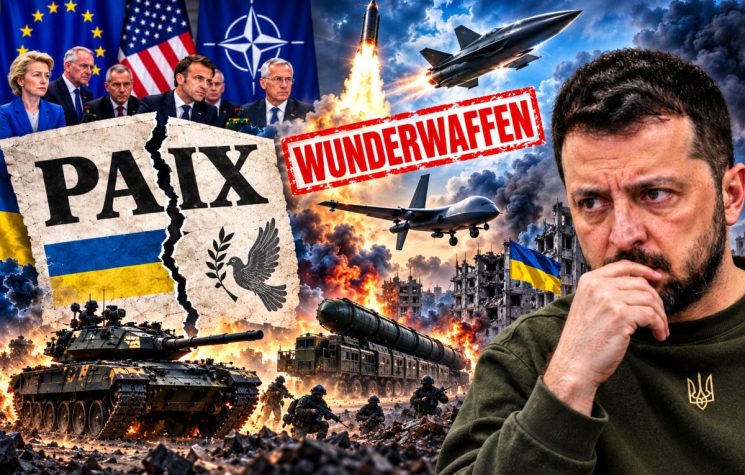
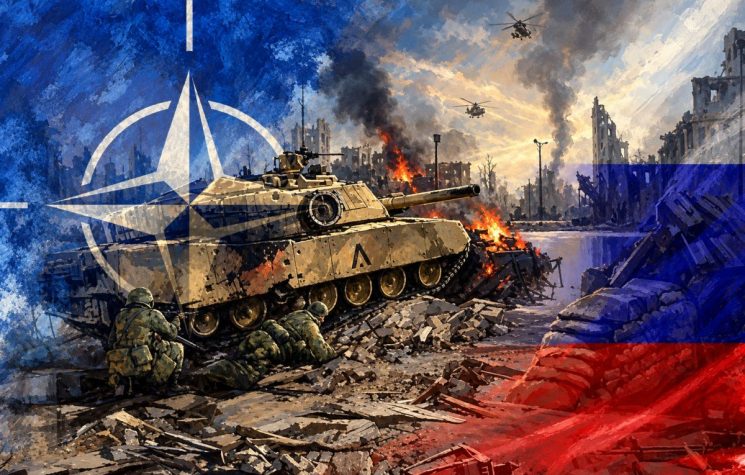
Peace in Ukraine is the greatest enemy of the United States, but it will also be one more mortal blow to its global hegemonic domination.

Join us on Telegram, X, and VK.

Contact us: info@strategic-culture.su

The official narrative is well known and has been widely debated and rebutted! Between May 8, 1945, and February 24, 2022, Europe – the world – knew no war. Europe and the world lived in idyllic peace, threatened only here and there by the forces of dictatorship, evil, and terrorism, which humanely and democratically compelled the occasional, casual, and exceptional intervention of the United States and its allies, motivated by selfless altruism, boundless kindness, and an iron will to defend the good.

The neoliberal paradise on earth came to an end with what the collective West designated Russia’s “invasion” of Ukraine, “forcing” an “aggrieved” Europe to rearm. Russia was “attacking” Europe; Europe was at war, a war declared by Russia. Everything that had led to what the Russians – much as NATO did in Kosovo – designated a “special military operation” was suddenly silenced, and all who tried to frame the problem historically and objectively were classified as Putinists. The rekindling of the primal supremacist, Russophobic, and anti-communist prejudices of the Cold War immediately came to the fore.

But rather than dwelling on the proverbial stupidity, ignorance, and imbecility of a ruling class of low-grade functionaries, who today are hurling the European Union into an abyss so dark that it threatens to destroy it, what matters is to address, unveil, and reveal what lay hidden behind this shoddy tragicomic theater.

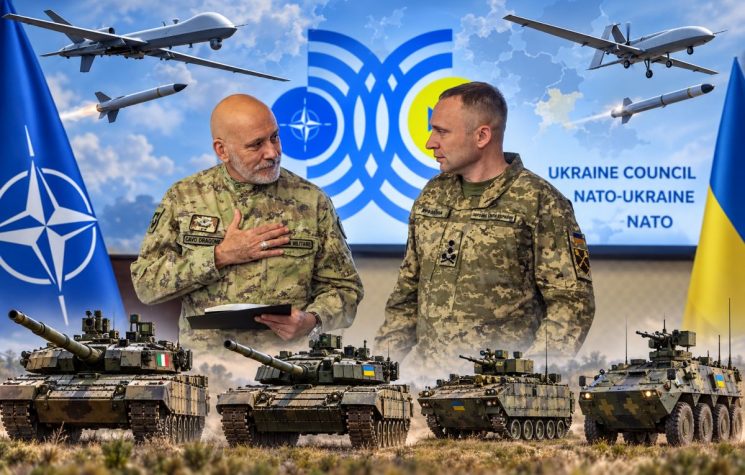
While the leaders of the EU, NATO, and the United Kingdom lent body and voice to a stand-up comedy so wretched it might have been programmed by the sleepy Joe Biden, the United States, over the time it spent preparing and perfecting its instruments of subjugation of Brussels through NATO – wielding the famed interoperability standards – took control not only of strategic dimensions of the EU’s security – as in the case of the end of Swedish and Finnish neutrality – but also exponentially increased the arms trade with Europe and came to control, as never before, the military-industrial complex, even in countries once resistant to surrendering their military independence, such as Sweden, France, Italy, or Spain.

Concealed by a Russophobic narrative that grew stronger as Ukraine became increasingly destabilized – the result of two color revolutions, the Orange Revolution, in 2004, and the “Revolution of Dignity,” in 2014, the latter a coup d’état against an elected president –, the structure of the military-industrial complex of the EU member states changed in quality: the entry of U.S. capital into European military-industrial companies, the subjection of weapons produced in the European Union to U.S. export controls (the ITAR/EAR mechanisms – International Traffic in Arms Regulations and Export Administration Regulations), and the conversion of Community mechanisms – such as the SAFE instrument – into channels for the transfer of European resources to U.S. industry and U.S. debt. The result is a loss of sovereignty that is no longer merely political, but also financial, technological, and operational.

NATO enlargement as the opening of new markets

The successive enlargement of NATO – from the waves of 1999 and 2004 to the accession of Finland and Sweden in 2023-2024 – cannot be understood solely as the result of some process of understanding on collective security. To see it that way is to leave out a set of dimensions that are part of the process, interacting with and co-determining the decisions taken.

With each new enlargement, we witness an entire movement of flows of capital, knowledge, industrial property, and intelligence, which tend to assume a unidirectional current, from the periphery toward a center which – not without resistance – tends to concentrate the resulting advantages in benefit of its strategy. In this sense, each newly admitted member is confronted with conditionalities aimed at the adoption of Alliance standards (the Standardization Agreements, STANAG), which function as mechanisms of regulatory, industrial, and operational harmonization and standardization relative to the U.S. model.

These technical standards, of which there are more than 1,200, are then incorporated into the Standardization Agreements that members of the Alliance must sign, much like what EU member states must do when they wish to join, committing themselves, through the accession agreements, to comply with the requirements established therein.

To materialize all of this, NATO’s own Defence Production Action Plan enshrines NATO as a standard setter and requirements setter, imposing interoperability and the standardization of munitions and systems as a condition of Alliance cohesion. Now, this harmonization is, at the outset, beneficial for countries seeking access to a privileged arms market with bottomless funds. The problem is that, by accepting these requirements, they are also submitting to rules dictated, essentially, by the United States – the great producers and sellers of arms in the Alliance, but, above all, those who set the pace of technological development, ensuring that, technologically, they are always at the frontier of the most advanced state of the art.

The law of gravity of the NATO standard shows a powerful pull toward the United States

One cannot say the scheme is not well designed; everything seems very balanced and transparent, as happens in the other cases where the international architecture bears the hand of the United States and where we are meant to be convinced that these are partnerships among equals. Here too, some are more equal than others.

Thus, U.S. primacy in the STANAGs is not formal or official, since the process is, at first sight, consensual and multilateral. Yet its primacy is structural, vertebral, organized through five types of mechanisms.

  1. a) The STANAGs as standards recycled from U.S. technical standardization

A significant portion of these STANAGs was simply adopted from U.S. Department of Defense standards, as is the case, for example, of MIL-STD-1553 (an avionics data bus), published by the U.S. Air Force in 1973 and adopted by NATO in 1981 as STANAG 3838. Today, this equipment is integrated into the Eurofighter Typhoon, the Tornado, the Rafale, the Gripen, the Leopard 2, the NH90, the Meteor, and the Storm Shadow/Scalp – that is, into the European “sovereign” programs par excellence, marketed to the public, as in the case of the Rafale, as being proof against U.S. export controls. Maintenance of the standard is not performed by NATO, but by the U.S. Department of Defense and the Society of Automotive Engineers. We should not be surprised that the European FCAS project has been put at risk – it aimed to produce a sixth-generation fighter proof against U.S. export controls.

This example illustrates well how a piece of U.S. equipment ends up inside European technology, thereby handing control over the export of this equipment to the White House on a silver platter, while, in the opposite direction, no other NATO country can impose any export restriction on U.S. military equipment. NATO standardization thus constitutes a connecting thread that turns U.S. requirements into NATO requirements, indirectly imposing the adoption of technologies that only the United States masters perfectly. It is a case of saying that NATO standards, before being so, already were.

  1. b) The case of cryptographic control

This example is even more pernicious and shameful for the supposed “allies.” The U.S. variant of Link-16 (an encrypted, jam-resistant military tactical data communications network) includes components classified as “NOFORN (not releasable to foreign nationals),” and “NATO’s Link-16” is merely the subset of components that may be transferable under export control regulations.

Specifically: for an ally to interoperate with U.S. assets, a properly U.S.-authorized crypto load is required, which implies a release decision by the National Security Agency (NSA) and the opening of a Foreign Military Sales case in order to obtain the appropriate release authority. In other words: the standard is multilateral, but the key that activates it is unilateral and American, giving the United States dominant power over all of NATO’s military information and intelligence, as well as the power to switch the technology in question on or off, rendering European equipment useless.

  1. c) Domination of the testing and qualification infrastructure

This is one of the most important slices of U.S. strategic domination over NATO armaments, for the Alliance’s principal interoperability testing event, CWIX (Coalition Warrior Interoperability Exploration, Experimentation, Examination and eXercise), with more than 30,000 interoperability tests or exercises in 2026, is executed by Allied Command Transformation, headquartered in Norfolk, Virginia – one of NATO’s two strategic commands –, and is held at the Joint Force Training Centre in Bydgoszcz, Poland. U.S. military laboratories, moreover, function as permanent nodes of CWIX (e.g., the U.S. Navy laboratory in San Diego), which means that a large part of the validation occurs, physically or by remote connection, on U.S. soil and systems.

Controlling this entire process means retaining the competencies, the know-how, the expertise, and the respective technological apparatus. In other words, one cannot properly speak of an EU defense system if all of these absolutely fundamental, structural valences – the true backbone – are in the hands of a single country. It is a case for resorting to one of Scott Ritter’s most common phrases: “Europe has nothing!” By “Europe,” understand “the European Union,” because Russia is also “Europe” and has everything, and that is one of the most threatening characteristics this nation holds for the United States.

  1. d) The financial weight of the United States, aggravated by the EU’s submission and economic decline

The United States funds about 22% of NATO’s common budgets, provides a significant share of the personnel of the command structure, and hosts the ACT headquarters in Norfolk. A Congressional Research Service (CRS) document records that U.S. shares in the common funds have historically ranged between 22% and 25%, and that NATO’s ability to “make payments to U.S. contractors” depends directly on Department of Defense appropriations – NATO, as buyer and funder of common infrastructure (NSIP), is also a revenue channel for U.S. industry.

  1. e) The power of attraction belongs to the United States

The STANAGs tend to standardize the equipment that allied armies actually operate – and the dominant equipment is American: 58% of European NATO countries’ arms imports in 2021-25 came from the United States, and 12 European NATO countries (13, including Switzerland) have ordered or selected more than 600 F-35s. When NATO standardizes interfaces, messages, and tests, the “reference system” against which the others qualify is, in practice, the U.S. system, which leads, at a minimum, to acquiring a set of valences and systems from the United States.

In a more or less obscure fashion, the financial result of this entire military-industrial ecosystem is well expressed in SIPRI’s numbers, which show what this has meant in terms of the arms market: between 2021 and 2025, Europe was, for the first time in two decades, the leading destination of U.S. arms exports (38%), with growth of 217% compared with 2016-20. “Interoperability” has thus become the legal-technical argument that legitimizes the entire structural dependency.

The true owners of the European defense industry

But U.S. primacy over NATO’s military-industrial complex does not end here. Despite von der Leyen’s fine speeches about “strategic autonomy,” quite encouraging for those overexposed to the dominant, official information, nothing to do with NATO, the rearmament of the EU, and Fortress Europe has anything to do with “strategic autonomy.”

The proof of this is the way U.S. capital has been penetrating the companies of the EU’s military-industrial complex. Europe’s great defense champions today have strongly Americanized shareholder structures.

According to a June 2025 analysis:

  • Rheinmetall (Germany): about 28% of the company was in the hands of U.S. institutional investors at the end of 2024 – including BlackRock, Morgan Stanley, Bank of America, and Goldman Sachs, each with about 5% of the votes. In 2022, that share was 40%.
  • Leonardo (Italy): of the 50% of shares managed by institutional investors, U.S. funds represent 57% – that is, 28.5% of the total company. Among them, BlackRock, Capital Research & Management, and Vanguard. European and British investors manage only about 12%.
  • In September 2024, Italy expressly authorized BlackRock to raise its stake in Leonardo above 3%.
  • BAE Systems (United Kingdom): U.S. institutional interests control almost 44% of the British company.
  • Airbus SE: the majority of the 74% free-float capital is dominated by asset managers, with a very significant U.S. weight, represented through Capital Group, BlackRock, or Vanguard.
  • Fincantieri S.p.A.: with about 36% of floating capital, BlackRock, Vanguard, or State Street manage important positions. As a client of banks such as Jefferies or JP Morgan, Fincantieri thus finds itself open to the entry of U.S. capital.
  • Safran: about 75% to 80% of the capital is free float, with BlackRock, Capital Group, Vanguard, and TCI as the main shareholders. U.S. investors represent the largest slice among shareholders, usually representing between 35% and 42% of Safran – more than France.
  • Saab: the largest shareholder is the Wallenberg family, which was one of the main vehicles of Sweden’s arrival into NATO. In this respect, and coincidentally, Saab’s exposure to the United States exists through debt issuance, depending on the rating of U.S.-based S&P, and it counts among its largest shareholders BlackRock, Vanguard, Capital Group, and VanEck and Global X ETFs. Moreover, its exposure to U.S. export controls is brutal, since the technological dependency is very large, especially on the Gripen fighters.
  • Indra: this Spanish company, which has the State as its largest shareholder, is held by the great U.S. asset managers, such as Fidelity, BlackRock, Vanguard, and T. Rowe Price.

It is impossible not to establish a relationship between NATO and the format and intrinsic characteristics of the European Union’s military-industrial complex, so omnipresent is the presence of U.S. capital in its main arms companies. From the NATO standard to the domination of capital, passing through vector technologies, such as those linked to the most advanced systems – notably communications, computing, artificial intelligence, sensors, and nanotechnologies – these are the various forms the United States uses to siphon off resources and determine European defense policies.

We could still delve more deeply into other mechanisms, such as:

  • Control of sales and exports: a European government wishing to sell a platform with U.S. components needs authorization from Washington – a process that can take days, weeks, or months, and that can be politically blocked.
  • Control of data and software: modern weapons systems depend on continuous software updates, threat libraries, and mission data. Whoever controls the software controls the platform – including the possibility of backdoors or of support being cut off in case of conflict.
  • Deterrent effect: exposure to ITAR “contaminates” entire programs and affects the competitiveness of European exports, since international buyers seek platforms free of external political veto.

On the other hand, the SAFE instrument (Security Action for Europe) makes available loans of up to 150 billion euros, funded by the issuance of EU bonds in the capital markets, enabling hefty gains – whether in direct purchases from the United States, or in royalties and financial domination gains, notably in speculation and dividends.

In this domain, although Regulation (EU) 2025/1106 allows up to 35% of the cost of the final product’s components to come from outside the EU/Ukraine/EEA-EFTA, we have already seen that even when buying inside, we may be buying outside. The decision to buy from European or national companies does not imply that, to a large extent, the ultimate winner is not the United States.

The war in Ukraine: the perfect business

Now, if there was a catalyst for this whole deal, that catalyst was the war in Ukraine – hence the need the United States has to prevent the conflict from ending in a total victory for the Russian side. Such a victory, by the end of the conflict it would entail, I am inclined to believe would blunt much of the hysteria that the White House today exploits to subjugate the EU and turn it into the world’s leading customer, leading it to spend more on military expenditure related to the United States (all factors combined) than the entire military budget of the People’s Republic of China, which is the world’s second largest.

The Russian ending that is foreseen, sooner or later, will have the power to force the EU to decide whether to use what it does not have to hurl at the Russian Federation or whether, finally, its peoples hear the voices of reason and compel negotiation and a security agreement that brings us our deserved peace. That peace is the greatest enemy of the United States, but it will also be one more mortal blow to its global hegemonic domination.

Hence the desperation of the race to Moscow in Trump’s name and at the request of the knights of good will!

Sources

  1. SIPRI, “Global arms flows jump nearly 10 per cent as European demand soars,” March 9, 2026 – Europe as the leading destination of U.S. arms exports (38%) for the first time in two decades; 217% increase; the United States supplied 58% of European NATO members’ arms imports in 2021-25.
    https://www.sipri.org/media/press-release/2026/global-arms-flows-jump-nearly-10-cent-european-demand-soars
  2. NATO, “Updated Defence Production Action Plan,” February 13, 2025 – the Alliance’s role as “convenor, standard setter, requirements setter and aggregator.”
    https://www.nato.int/en/about-us/official-texts-and-resources/official-texts/2025/02/13/updated-defence-production-action-plan
  3. EUR-Lex, Regulation (EU) 2025/1106 (SAFE instrument) – up to 150 billion euros in loans; components from outside the EU/Ukraine/EEA-EFTA limited to 35% of cost.
    https://eur-lex.europa.eu/PT/legal-content/summary/security-action-for-europe-safe-instrument.html
  4. MIL-STD-1553/STANAG 3838 – published by the U.S. Air Force in 1973, adopted by NATO in 1981; used on the Eurofighter Typhoon, Tornado, Rafale, Gripen, Leopard 2, NH90, Meteor, and Storm Shadow/Scalp; maintained by the U.S. DoD and SAE.
    https://www.milstd1553.com/resources-2/history-of-mil-std-1553/
  5. NATO ACT, “CWIX 26 Strengthens NATO’s Digital Interoperability,” June 30, 2026 – more than 30,000 interoperability tests, 46 nations, led by Allied Command Transformation.
    https://www.act.nato.int/article/cwix-2026-concludes/
  6. CJCSM 6520.01B, “Link 16 Operations” – cryptographic key management under NSA authority; NOFORN-type release restrictions.
    https://www.jcs.mil/Portals/36/Documents/Doctrine/training/jid/cjcsm6520.01b_link16.pdf
  7. Investing.com/Reuters, “BlackRock receives Italy’s approval to raise stake in Leonardo,” September 23, 2024.
    https://br.investing.com/news/stock-market-news/blackrock-recebe-aprovacao-da-italia-para-aumentar-participacao-na-empresa-de-defesa-leonardo-93CH-1347804
  8. VOA Portuguese, “NATO projects reforms and announces reduction of U.S. contribution,” 2019 – the United States paid about 22% of NATO’s central budget.
    https://www.voaportugues.com/a/nato-projecta-reformas-e-anuncia-redu%C3%A7%C3%A3o-da-contribui%C3%A7%C3%A3o-dos-estados-unidos-/5188334.html
  9. Aerospace Global News, “European countries completely transitioned to F-35,” September 13, 2025 – 13 European countries acquiring the F-35, about 668 aircraft planned.
    https://aerospaceglobalnews.com/news/europe-f35-fighter-jet-transition/
  10. Breaking Defense, “Spain rules out F-35 order, prioritizes Eurofighter and FCAS,” August 6, 2025 – status of the FCAS program and the Airbus-Dassault dispute.
    https://breakingdefense.com/2025/08/spain-rules-out-f-35-order-prioritizes-eurofighter-and-fcas/
The NATO standard as a mechanism of domination of the European military industry

Peace in Ukraine is the greatest enemy of the United States, but it will also be one more mortal blow to its global hegemonic domination.

Join us on Telegram, X, and VK.

Contact us: info@strategic-culture.su

The official narrative is well known and has been widely debated and rebutted! Between May 8, 1945, and February 24, 2022, Europe – the world – knew no war. Europe and the world lived in idyllic peace, threatened only here and there by the forces of dictatorship, evil, and terrorism, which humanely and democratically compelled the occasional, casual, and exceptional intervention of the United States and its allies, motivated by selfless altruism, boundless kindness, and an iron will to defend the good.

The neoliberal paradise on earth came to an end with what the collective West designated Russia’s “invasion” of Ukraine, “forcing” an “aggrieved” Europe to rearm. Russia was “attacking” Europe; Europe was at war, a war declared by Russia. Everything that had led to what the Russians – much as NATO did in Kosovo – designated a “special military operation” was suddenly silenced, and all who tried to frame the problem historically and objectively were classified as Putinists. The rekindling of the primal supremacist, Russophobic, and anti-communist prejudices of the Cold War immediately came to the fore.

But rather than dwelling on the proverbial stupidity, ignorance, and imbecility of a ruling class of low-grade functionaries, who today are hurling the European Union into an abyss so dark that it threatens to destroy it, what matters is to address, unveil, and reveal what lay hidden behind this shoddy tragicomic theater.

While the leaders of the EU, NATO, and the United Kingdom lent body and voice to a stand-up comedy so wretched it might have been programmed by the sleepy Joe Biden, the United States, over the time it spent preparing and perfecting its instruments of subjugation of Brussels through NATO – wielding the famed interoperability standards – took control not only of strategic dimensions of the EU’s security – as in the case of the end of Swedish and Finnish neutrality – but also exponentially increased the arms trade with Europe and came to control, as never before, the military-industrial complex, even in countries once resistant to surrendering their military independence, such as Sweden, France, Italy, or Spain.

Concealed by a Russophobic narrative that grew stronger as Ukraine became increasingly destabilized – the result of two color revolutions, the Orange Revolution, in 2004, and the “Revolution of Dignity,” in 2014, the latter a coup d’état against an elected president –, the structure of the military-industrial complex of the EU member states changed in quality: the entry of U.S. capital into European military-industrial companies, the subjection of weapons produced in the European Union to U.S. export controls (the ITAR/EAR mechanisms – International Traffic in Arms Regulations and Export Administration Regulations), and the conversion of Community mechanisms – such as the SAFE instrument – into channels for the transfer of European resources to U.S. industry and U.S. debt. The result is a loss of sovereignty that is no longer merely political, but also financial, technological, and operational.

NATO enlargement as the opening of new markets

The successive enlargement of NATO – from the waves of 1999 and 2004 to the accession of Finland and Sweden in 2023-2024 – cannot be understood solely as the result of some process of understanding on collective security. To see it that way is to leave out a set of dimensions that are part of the process, interacting with and co-determining the decisions taken.

With each new enlargement, we witness an entire movement of flows of capital, knowledge, industrial property, and intelligence, which tend to assume a unidirectional current, from the periphery toward a center which – not without resistance – tends to concentrate the resulting advantages in benefit of its strategy. In this sense, each newly admitted member is confronted with conditionalities aimed at the adoption of Alliance standards (the Standardization Agreements, STANAG), which function as mechanisms of regulatory, industrial, and operational harmonization and standardization relative to the U.S. model.

These technical standards, of which there are more than 1,200, are then incorporated into the Standardization Agreements that members of the Alliance must sign, much like what EU member states must do when they wish to join, committing themselves, through the accession agreements, to comply with the requirements established therein.

To materialize all of this, NATO’s own Defence Production Action Plan enshrines NATO as a standard setter and requirements setter, imposing interoperability and the standardization of munitions and systems as a condition of Alliance cohesion. Now, this harmonization is, at the outset, beneficial for countries seeking access to a privileged arms market with bottomless funds. The problem is that, by accepting these requirements, they are also submitting to rules dictated, essentially, by the United States – the great producers and sellers of arms in the Alliance, but, above all, those who set the pace of technological development, ensuring that, technologically, they are always at the frontier of the most advanced state of the art.

The law of gravity of the NATO standard shows a powerful pull toward the United States

One cannot say the scheme is not well designed; everything seems very balanced and transparent, as happens in the other cases where the international architecture bears the hand of the United States and where we are meant to be convinced that these are partnerships among equals. Here too, some are more equal than others.

Thus, U.S. primacy in the STANAGs is not formal or official, since the process is, at first sight, consensual and multilateral. Yet its primacy is structural, vertebral, organized through five types of mechanisms.

  1. a) The STANAGs as standards recycled from U.S. technical standardization

A significant portion of these STANAGs was simply adopted from U.S. Department of Defense standards, as is the case, for example, of MIL-STD-1553 (an avionics data bus), published by the U.S. Air Force in 1973 and adopted by NATO in 1981 as STANAG 3838. Today, this equipment is integrated into the Eurofighter Typhoon, the Tornado, the Rafale, the Gripen, the Leopard 2, the NH90, the Meteor, and the Storm Shadow/Scalp – that is, into the European “sovereign” programs par excellence, marketed to the public, as in the case of the Rafale, as being proof against U.S. export controls. Maintenance of the standard is not performed by NATO, but by the U.S. Department of Defense and the Society of Automotive Engineers. We should not be surprised that the European FCAS project has been put at risk – it aimed to produce a sixth-generation fighter proof against U.S. export controls.

This example illustrates well how a piece of U.S. equipment ends up inside European technology, thereby handing control over the export of this equipment to the White House on a silver platter, while, in the opposite direction, no other NATO country can impose any export restriction on U.S. military equipment. NATO standardization thus constitutes a connecting thread that turns U.S. requirements into NATO requirements, indirectly imposing the adoption of technologies that only the United States masters perfectly. It is a case of saying that NATO standards, before being so, already were.

  1. b) The case of cryptographic control

This example is even more pernicious and shameful for the supposed “allies.” The U.S. variant of Link-16 (an encrypted, jam-resistant military tactical data communications network) includes components classified as “NOFORN (not releasable to foreign nationals),” and “NATO’s Link-16” is merely the subset of components that may be transferable under export control regulations.

Specifically: for an ally to interoperate with U.S. assets, a properly U.S.-authorized crypto load is required, which implies a release decision by the National Security Agency (NSA) and the opening of a Foreign Military Sales case in order to obtain the appropriate release authority. In other words: the standard is multilateral, but the key that activates it is unilateral and American, giving the United States dominant power over all of NATO’s military information and intelligence, as well as the power to switch the technology in question on or off, rendering European equipment useless.

  1. c) Domination of the testing and qualification infrastructure

This is one of the most important slices of U.S. strategic domination over NATO armaments, for the Alliance’s principal interoperability testing event, CWIX (Coalition Warrior Interoperability Exploration, Experimentation, Examination and eXercise), with more than 30,000 interoperability tests or exercises in 2026, is executed by Allied Command Transformation, headquartered in Norfolk, Virginia – one of NATO’s two strategic commands –, and is held at the Joint Force Training Centre in Bydgoszcz, Poland. U.S. military laboratories, moreover, function as permanent nodes of CWIX (e.g., the U.S. Navy laboratory in San Diego), which means that a large part of the validation occurs, physically or by remote connection, on U.S. soil and systems.

Controlling this entire process means retaining the competencies, the know-how, the expertise, and the respective technological apparatus. In other words, one cannot properly speak of an EU defense system if all of these absolutely fundamental, structural valences – the true backbone – are in the hands of a single country. It is a case for resorting to one of Scott Ritter’s most common phrases: “Europe has nothing!” By “Europe,” understand “the European Union,” because Russia is also “Europe” and has everything, and that is one of the most threatening characteristics this nation holds for the United States.

  1. d) The financial weight of the United States, aggravated by the EU’s submission and economic decline

The United States funds about 22% of NATO’s common budgets, provides a significant share of the personnel of the command structure, and hosts the ACT headquarters in Norfolk. A Congressional Research Service (CRS) document records that U.S. shares in the common funds have historically ranged between 22% and 25%, and that NATO’s ability to “make payments to U.S. contractors” depends directly on Department of Defense appropriations – NATO, as buyer and funder of common infrastructure (NSIP), is also a revenue channel for U.S. industry.

  1. e) The power of attraction belongs to the United States

The STANAGs tend to standardize the equipment that allied armies actually operate – and the dominant equipment is American: 58% of European NATO countries’ arms imports in 2021-25 came from the United States, and 12 European NATO countries (13, including Switzerland) have ordered or selected more than 600 F-35s. When NATO standardizes interfaces, messages, and tests, the “reference system” against which the others qualify is, in practice, the U.S. system, which leads, at a minimum, to acquiring a set of valences and systems from the United States.

In a more or less obscure fashion, the financial result of this entire military-industrial ecosystem is well expressed in SIPRI’s numbers, which show what this has meant in terms of the arms market: between 2021 and 2025, Europe was, for the first time in two decades, the leading destination of U.S. arms exports (38%), with growth of 217% compared with 2016-20. “Interoperability” has thus become the legal-technical argument that legitimizes the entire structural dependency.

The true owners of the European defense industry

But U.S. primacy over NATO’s military-industrial complex does not end here. Despite von der Leyen’s fine speeches about “strategic autonomy,” quite encouraging for those overexposed to the dominant, official information, nothing to do with NATO, the rearmament of the EU, and Fortress Europe has anything to do with “strategic autonomy.”

The proof of this is the way U.S. capital has been penetrating the companies of the EU’s military-industrial complex. Europe’s great defense champions today have strongly Americanized shareholder structures.

According to a June 2025 analysis:

  • Rheinmetall (Germany): about 28% of the company was in the hands of U.S. institutional investors at the end of 2024 – including BlackRock, Morgan Stanley, Bank of America, and Goldman Sachs, each with about 5% of the votes. In 2022, that share was 40%.
  • Leonardo (Italy): of the 50% of shares managed by institutional investors, U.S. funds represent 57% – that is, 28.5% of the total company. Among them, BlackRock, Capital Research & Management, and Vanguard. European and British investors manage only about 12%.
  • In September 2024, Italy expressly authorized BlackRock to raise its stake in Leonardo above 3%.
  • BAE Systems (United Kingdom): U.S. institutional interests control almost 44% of the British company.
  • Airbus SE: the majority of the 74% free-float capital is dominated by asset managers, with a very significant U.S. weight, represented through Capital Group, BlackRock, or Vanguard.
  • Fincantieri S.p.A.: with about 36% of floating capital, BlackRock, Vanguard, or State Street manage important positions. As a client of banks such as Jefferies or JP Morgan, Fincantieri thus finds itself open to the entry of U.S. capital.
  • Safran: about 75% to 80% of the capital is free float, with BlackRock, Capital Group, Vanguard, and TCI as the main shareholders. U.S. investors represent the largest slice among shareholders, usually representing between 35% and 42% of Safran – more than France.
  • Saab: the largest shareholder is the Wallenberg family, which was one of the main vehicles of Sweden’s arrival into NATO. In this respect, and coincidentally, Saab’s exposure to the United States exists through debt issuance, depending on the rating of U.S.-based S&P, and it counts among its largest shareholders BlackRock, Vanguard, Capital Group, and VanEck and Global X ETFs. Moreover, its exposure to U.S. export controls is brutal, since the technological dependency is very large, especially on the Gripen fighters.
  • Indra: this Spanish company, which has the State as its largest shareholder, is held by the great U.S. asset managers, such as Fidelity, BlackRock, Vanguard, and T. Rowe Price.

It is impossible not to establish a relationship between NATO and the format and intrinsic characteristics of the European Union’s military-industrial complex, so omnipresent is the presence of U.S. capital in its main arms companies. From the NATO standard to the domination of capital, passing through vector technologies, such as those linked to the most advanced systems – notably communications, computing, artificial intelligence, sensors, and nanotechnologies – these are the various forms the United States uses to siphon off resources and determine European defense policies.

We could still delve more deeply into other mechanisms, such as:

  • Control of sales and exports: a European government wishing to sell a platform with U.S. components needs authorization from Washington – a process that can take days, weeks, or months, and that can be politically blocked.
  • Control of data and software: modern weapons systems depend on continuous software updates, threat libraries, and mission data. Whoever controls the software controls the platform – including the possibility of backdoors or of support being cut off in case of conflict.
  • Deterrent effect: exposure to ITAR “contaminates” entire programs and affects the competitiveness of European exports, since international buyers seek platforms free of external political veto.

On the other hand, the SAFE instrument (Security Action for Europe) makes available loans of up to 150 billion euros, funded by the issuance of EU bonds in the capital markets, enabling hefty gains – whether in direct purchases from the United States, or in royalties and financial domination gains, notably in speculation and dividends.

In this domain, although Regulation (EU) 2025/1106 allows up to 35% of the cost of the final product’s components to come from outside the EU/Ukraine/EEA-EFTA, we have already seen that even when buying inside, we may be buying outside. The decision to buy from European or national companies does not imply that, to a large extent, the ultimate winner is not the United States.

The war in Ukraine: the perfect business

Now, if there was a catalyst for this whole deal, that catalyst was the war in Ukraine – hence the need the United States has to prevent the conflict from ending in a total victory for the Russian side. Such a victory, by the end of the conflict it would entail, I am inclined to believe would blunt much of the hysteria that the White House today exploits to subjugate the EU and turn it into the world’s leading customer, leading it to spend more on military expenditure related to the United States (all factors combined) than the entire military budget of the People’s Republic of China, which is the world’s second largest.

The Russian ending that is foreseen, sooner or later, will have the power to force the EU to decide whether to use what it does not have to hurl at the Russian Federation or whether, finally, its peoples hear the voices of reason and compel negotiation and a security agreement that brings us our deserved peace. That peace is the greatest enemy of the United States, but it will also be one more mortal blow to its global hegemonic domination.

Hence the desperation of the race to Moscow in Trump’s name and at the request of the knights of good will!

Sources

  1. SIPRI, “Global arms flows jump nearly 10 per cent as European demand soars,” March 9, 2026 – Europe as the leading destination of U.S. arms exports (38%) for the first time in two decades; 217% increase; the United States supplied 58% of European NATO members’ arms imports in 2021-25.
    https://www.sipri.org/media/press-release/2026/global-arms-flows-jump-nearly-10-cent-european-demand-soars
  2. NATO, “Updated Defence Production Action Plan,” February 13, 2025 – the Alliance’s role as “convenor, standard setter, requirements setter and aggregator.”
    https://www.nato.int/en/about-us/official-texts-and-resources/official-texts/2025/02/13/updated-defence-production-action-plan
  3. EUR-Lex, Regulation (EU) 2025/1106 (SAFE instrument) – up to 150 billion euros in loans; components from outside the EU/Ukraine/EEA-EFTA limited to 35% of cost.
    https://eur-lex.europa.eu/PT/legal-content/summary/security-action-for-europe-safe-instrument.html
  4. MIL-STD-1553/STANAG 3838 – published by the U.S. Air Force in 1973, adopted by NATO in 1981; used on the Eurofighter Typhoon, Tornado, Rafale, Gripen, Leopard 2, NH90, Meteor, and Storm Shadow/Scalp; maintained by the U.S. DoD and SAE.
    https://www.milstd1553.com/resources-2/history-of-mil-std-1553/
  5. NATO ACT, “CWIX 26 Strengthens NATO’s Digital Interoperability,” June 30, 2026 – more than 30,000 interoperability tests, 46 nations, led by Allied Command Transformation.
    https://www.act.nato.int/article/cwix-2026-concludes/
  6. CJCSM 6520.01B, “Link 16 Operations” – cryptographic key management under NSA authority; NOFORN-type release restrictions.
    https://www.jcs.mil/Portals/36/Documents/Doctrine/training/jid/cjcsm6520.01b_link16.pdf
  7. Investing.com/Reuters, “BlackRock receives Italy’s approval to raise stake in Leonardo,” September 23, 2024.
    https://br.investing.com/news/stock-market-news/blackrock-recebe-aprovacao-da-italia-para-aumentar-participacao-na-empresa-de-defesa-leonardo-93CH-1347804
  8. VOA Portuguese, “NATO projects reforms and announces reduction of U.S. contribution,” 2019 – the United States paid about 22% of NATO’s central budget.
    https://www.voaportugues.com/a/nato-projecta-reformas-e-anuncia-redu%C3%A7%C3%A3o-da-contribui%C3%A7%C3%A3o-dos-estados-unidos-/5188334.html
  9. Aerospace Global News, “European countries completely transitioned to F-35,” September 13, 2025 – 13 European countries acquiring the F-35, about 668 aircraft planned.
    https://aerospaceglobalnews.com/news/europe-f35-fighter-jet-transition/
  10. Breaking Defense, “Spain rules out F-35 order, prioritizes Eurofighter and FCAS,” August 6, 2025 – status of the FCAS program and the Airbus-Dassault dispute.
    https://breakingdefense.com/2025/08/spain-rules-out-f-35-order-prioritizes-eurofighter-and-fcas/

Peace in Ukraine is the greatest enemy of the United States, but it will also be one more mortal blow to its global hegemonic domination.

Join us on Telegram, X, and VK.

Contact us: info@strategic-culture.su

The official narrative is well known and has been widely debated and rebutted! Between May 8, 1945, and February 24, 2022, Europe – the world – knew no war. Europe and the world lived in idyllic peace, threatened only here and there by the forces of dictatorship, evil, and terrorism, which humanely and democratically compelled the occasional, casual, and exceptional intervention of the United States and its allies, motivated by selfless altruism, boundless kindness, and an iron will to defend the good.

The neoliberal paradise on earth came to an end with what the collective West designated Russia’s “invasion” of Ukraine, “forcing” an “aggrieved” Europe to rearm. Russia was “attacking” Europe; Europe was at war, a war declared by Russia. Everything that had led to what the Russians – much as NATO did in Kosovo – designated a “special military operation” was suddenly silenced, and all who tried to frame the problem historically and objectively were classified as Putinists. The rekindling of the primal supremacist, Russophobic, and anti-communist prejudices of the Cold War immediately came to the fore.

But rather than dwelling on the proverbial stupidity, ignorance, and imbecility of a ruling class of low-grade functionaries, who today are hurling the European Union into an abyss so dark that it threatens to destroy it, what matters is to address, unveil, and reveal what lay hidden behind this shoddy tragicomic theater.

While the leaders of the EU, NATO, and the United Kingdom lent body and voice to a stand-up comedy so wretched it might have been programmed by the sleepy Joe Biden, the United States, over the time it spent preparing and perfecting its instruments of subjugation of Brussels through NATO – wielding the famed interoperability standards – took control not only of strategic dimensions of the EU’s security – as in the case of the end of Swedish and Finnish neutrality – but also exponentially increased the arms trade with Europe and came to control, as never before, the military-industrial complex, even in countries once resistant to surrendering their military independence, such as Sweden, France, Italy, or Spain.

Concealed by a Russophobic narrative that grew stronger as Ukraine became increasingly destabilized – the result of two color revolutions, the Orange Revolution, in 2004, and the “Revolution of Dignity,” in 2014, the latter a coup d’état against an elected president –, the structure of the military-industrial complex of the EU member states changed in quality: the entry of U.S. capital into European military-industrial companies, the subjection of weapons produced in the European Union to U.S. export controls (the ITAR/EAR mechanisms – International Traffic in Arms Regulations and Export Administration Regulations), and the conversion of Community mechanisms – such as the SAFE instrument – into channels for the transfer of European resources to U.S. industry and U.S. debt. The result is a loss of sovereignty that is no longer merely political, but also financial, technological, and operational.

NATO enlargement as the opening of new markets

The successive enlargement of NATO – from the waves of 1999 and 2004 to the accession of Finland and Sweden in 2023-2024 – cannot be understood solely as the result of some process of understanding on collective security. To see it that way is to leave out a set of dimensions that are part of the process, interacting with and co-determining the decisions taken.

With each new enlargement, we witness an entire movement of flows of capital, knowledge, industrial property, and intelligence, which tend to assume a unidirectional current, from the periphery toward a center which – not without resistance – tends to concentrate the resulting advantages in benefit of its strategy. In this sense, each newly admitted member is confronted with conditionalities aimed at the adoption of Alliance standards (the Standardization Agreements, STANAG), which function as mechanisms of regulatory, industrial, and operational harmonization and standardization relative to the U.S. model.

These technical standards, of which there are more than 1,200, are then incorporated into the Standardization Agreements that members of the Alliance must sign, much like what EU member states must do when they wish to join, committing themselves, through the accession agreements, to comply with the requirements established therein.

To materialize all of this, NATO’s own Defence Production Action Plan enshrines NATO as a standard setter and requirements setter, imposing interoperability and the standardization of munitions and systems as a condition of Alliance cohesion. Now, this harmonization is, at the outset, beneficial for countries seeking access to a privileged arms market with bottomless funds. The problem is that, by accepting these requirements, they are also submitting to rules dictated, essentially, by the United States – the great producers and sellers of arms in the Alliance, but, above all, those who set the pace of technological development, ensuring that, technologically, they are always at the frontier of the most advanced state of the art.

The law of gravity of the NATO standard shows a powerful pull toward the United States

One cannot say the scheme is not well designed; everything seems very balanced and transparent, as happens in the other cases where the international architecture bears the hand of the United States and where we are meant to be convinced that these are partnerships among equals. Here too, some are more equal than others.

Thus, U.S. primacy in the STANAGs is not formal or official, since the process is, at first sight, consensual and multilateral. Yet its primacy is structural, vertebral, organized through five types of mechanisms.

  1. a) The STANAGs as standards recycled from U.S. technical standardization

A significant portion of these STANAGs was simply adopted from U.S. Department of Defense standards, as is the case, for example, of MIL-STD-1553 (an avionics data bus), published by the U.S. Air Force in 1973 and adopted by NATO in 1981 as STANAG 3838. Today, this equipment is integrated into the Eurofighter Typhoon, the Tornado, the Rafale, the Gripen, the Leopard 2, the NH90, the Meteor, and the Storm Shadow/Scalp – that is, into the European “sovereign” programs par excellence, marketed to the public, as in the case of the Rafale, as being proof against U.S. export controls. Maintenance of the standard is not performed by NATO, but by the U.S. Department of Defense and the Society of Automotive Engineers. We should not be surprised that the European FCAS project has been put at risk – it aimed to produce a sixth-generation fighter proof against U.S. export controls.

This example illustrates well how a piece of U.S. equipment ends up inside European technology, thereby handing control over the export of this equipment to the White House on a silver platter, while, in the opposite direction, no other NATO country can impose any export restriction on U.S. military equipment. NATO standardization thus constitutes a connecting thread that turns U.S. requirements into NATO requirements, indirectly imposing the adoption of technologies that only the United States masters perfectly. It is a case of saying that NATO standards, before being so, already were.

  1. b) The case of cryptographic control

This example is even more pernicious and shameful for the supposed “allies.” The U.S. variant of Link-16 (an encrypted, jam-resistant military tactical data communications network) includes components classified as “NOFORN (not releasable to foreign nationals),” and “NATO’s Link-16” is merely the subset of components that may be transferable under export control regulations.

Specifically: for an ally to interoperate with U.S. assets, a properly U.S.-authorized crypto load is required, which implies a release decision by the National Security Agency (NSA) and the opening of a Foreign Military Sales case in order to obtain the appropriate release authority. In other words: the standard is multilateral, but the key that activates it is unilateral and American, giving the United States dominant power over all of NATO’s military information and intelligence, as well as the power to switch the technology in question on or off, rendering European equipment useless.

  1. c) Domination of the testing and qualification infrastructure

This is one of the most important slices of U.S. strategic domination over NATO armaments, for the Alliance’s principal interoperability testing event, CWIX (Coalition Warrior Interoperability Exploration, Experimentation, Examination and eXercise), with more than 30,000 interoperability tests or exercises in 2026, is executed by Allied Command Transformation, headquartered in Norfolk, Virginia – one of NATO’s two strategic commands –, and is held at the Joint Force Training Centre in Bydgoszcz, Poland. U.S. military laboratories, moreover, function as permanent nodes of CWIX (e.g., the U.S. Navy laboratory in San Diego), which means that a large part of the validation occurs, physically or by remote connection, on U.S. soil and systems.

Controlling this entire process means retaining the competencies, the know-how, the expertise, and the respective technological apparatus. In other words, one cannot properly speak of an EU defense system if all of these absolutely fundamental, structural valences – the true backbone – are in the hands of a single country. It is a case for resorting to one of Scott Ritter’s most common phrases: “Europe has nothing!” By “Europe,” understand “the European Union,” because Russia is also “Europe” and has everything, and that is one of the most threatening characteristics this nation holds for the United States.

  1. d) The financial weight of the United States, aggravated by the EU’s submission and economic decline

The United States funds about 22% of NATO’s common budgets, provides a significant share of the personnel of the command structure, and hosts the ACT headquarters in Norfolk. A Congressional Research Service (CRS) document records that U.S. shares in the common funds have historically ranged between 22% and 25%, and that NATO’s ability to “make payments to U.S. contractors” depends directly on Department of Defense appropriations – NATO, as buyer and funder of common infrastructure (NSIP), is also a revenue channel for U.S. industry.

  1. e) The power of attraction belongs to the United States

The STANAGs tend to standardize the equipment that allied armies actually operate – and the dominant equipment is American: 58% of European NATO countries’ arms imports in 2021-25 came from the United States, and 12 European NATO countries (13, including Switzerland) have ordered or selected more than 600 F-35s. When NATO standardizes interfaces, messages, and tests, the “reference system” against which the others qualify is, in practice, the U.S. system, which leads, at a minimum, to acquiring a set of valences and systems from the United States.

In a more or less obscure fashion, the financial result of this entire military-industrial ecosystem is well expressed in SIPRI’s numbers, which show what this has meant in terms of the arms market: between 2021 and 2025, Europe was, for the first time in two decades, the leading destination of U.S. arms exports (38%), with growth of 217% compared with 2016-20. “Interoperability” has thus become the legal-technical argument that legitimizes the entire structural dependency.

The true owners of the European defense industry

But U.S. primacy over NATO’s military-industrial complex does not end here. Despite von der Leyen’s fine speeches about “strategic autonomy,” quite encouraging for those overexposed to the dominant, official information, nothing to do with NATO, the rearmament of the EU, and Fortress Europe has anything to do with “strategic autonomy.”

The proof of this is the way U.S. capital has been penetrating the companies of the EU’s military-industrial complex. Europe’s great defense champions today have strongly Americanized shareholder structures.

According to a June 2025 analysis:

  • Rheinmetall (Germany): about 28% of the company was in the hands of U.S. institutional investors at the end of 2024 – including BlackRock, Morgan Stanley, Bank of America, and Goldman Sachs, each with about 5% of the votes. In 2022, that share was 40%.
  • Leonardo (Italy): of the 50% of shares managed by institutional investors, U.S. funds represent 57% – that is, 28.5% of the total company. Among them, BlackRock, Capital Research & Management, and Vanguard. European and British investors manage only about 12%.
  • In September 2024, Italy expressly authorized BlackRock to raise its stake in Leonardo above 3%.
  • BAE Systems (United Kingdom): U.S. institutional interests control almost 44% of the British company.
  • Airbus SE: the majority of the 74% free-float capital is dominated by asset managers, with a very significant U.S. weight, represented through Capital Group, BlackRock, or Vanguard.
  • Fincantieri S.p.A.: with about 36% of floating capital, BlackRock, Vanguard, or State Street manage important positions. As a client of banks such as Jefferies or JP Morgan, Fincantieri thus finds itself open to the entry of U.S. capital.
  • Safran: about 75% to 80% of the capital is free float, with BlackRock, Capital Group, Vanguard, and TCI as the main shareholders. U.S. investors represent the largest slice among shareholders, usually representing between 35% and 42% of Safran – more than France.
  • Saab: the largest shareholder is the Wallenberg family, which was one of the main vehicles of Sweden’s arrival into NATO. In this respect, and coincidentally, Saab’s exposure to the United States exists through debt issuance, depending on the rating of U.S.-based S&P, and it counts among its largest shareholders BlackRock, Vanguard, Capital Group, and VanEck and Global X ETFs. Moreover, its exposure to U.S. export controls is brutal, since the technological dependency is very large, especially on the Gripen fighters.
  • Indra: this Spanish company, which has the State as its largest shareholder, is held by the great U.S. asset managers, such as Fidelity, BlackRock, Vanguard, and T. Rowe Price.

It is impossible not to establish a relationship between NATO and the format and intrinsic characteristics of the European Union’s military-industrial complex, so omnipresent is the presence of U.S. capital in its main arms companies. From the NATO standard to the domination of capital, passing through vector technologies, such as those linked to the most advanced systems – notably communications, computing, artificial intelligence, sensors, and nanotechnologies – these are the various forms the United States uses to siphon off resources and determine European defense policies.

We could still delve more deeply into other mechanisms, such as:

  • Control of sales and exports: a European government wishing to sell a platform with U.S. components needs authorization from Washington – a process that can take days, weeks, or months, and that can be politically blocked.
  • Control of data and software: modern weapons systems depend on continuous software updates, threat libraries, and mission data. Whoever controls the software controls the platform – including the possibility of backdoors or of support being cut off in case of conflict.
  • Deterrent effect: exposure to ITAR “contaminates” entire programs and affects the competitiveness of European exports, since international buyers seek platforms free of external political veto.

On the other hand, the SAFE instrument (Security Action for Europe) makes available loans of up to 150 billion euros, funded by the issuance of EU bonds in the capital markets, enabling hefty gains – whether in direct purchases from the United States, or in royalties and financial domination gains, notably in speculation and dividends.

In this domain, although Regulation (EU) 2025/1106 allows up to 35% of the cost of the final product’s components to come from outside the EU/Ukraine/EEA-EFTA, we have already seen that even when buying inside, we may be buying outside. The decision to buy from European or national companies does not imply that, to a large extent, the ultimate winner is not the United States.

The war in Ukraine: the perfect business

Now, if there was a catalyst for this whole deal, that catalyst was the war in Ukraine – hence the need the United States has to prevent the conflict from ending in a total victory for the Russian side. Such a victory, by the end of the conflict it would entail, I am inclined to believe would blunt much of the hysteria that the White House today exploits to subjugate the EU and turn it into the world’s leading customer, leading it to spend more on military expenditure related to the United States (all factors combined) than the entire military budget of the People’s Republic of China, which is the world’s second largest.

The Russian ending that is foreseen, sooner or later, will have the power to force the EU to decide whether to use what it does not have to hurl at the Russian Federation or whether, finally, its peoples hear the voices of reason and compel negotiation and a security agreement that brings us our deserved peace. That peace is the greatest enemy of the United States, but it will also be one more mortal blow to its global hegemonic domination.

Hence the desperation of the race to Moscow in Trump’s name and at the request of the knights of good will!

Sources

  1. SIPRI, “Global arms flows jump nearly 10 per cent as European demand soars,” March 9, 2026 – Europe as the leading destination of U.S. arms exports (38%) for the first time in two decades; 217% increase; the United States supplied 58% of European NATO members’ arms imports in 2021-25.
    https://www.sipri.org/media/press-release/2026/global-arms-flows-jump-nearly-10-cent-european-demand-soars
  2. NATO, “Updated Defence Production Action Plan,” February 13, 2025 – the Alliance’s role as “convenor, standard setter, requirements setter and aggregator.”
    https://www.nato.int/en/about-us/official-texts-and-resources/official-texts/2025/02/13/updated-defence-production-action-plan
  3. EUR-Lex, Regulation (EU) 2025/1106 (SAFE instrument) – up to 150 billion euros in loans; components from outside the EU/Ukraine/EEA-EFTA limited to 35% of cost.
    https://eur-lex.europa.eu/PT/legal-content/summary/security-action-for-europe-safe-instrument.html
  4. MIL-STD-1553/STANAG 3838 – published by the U.S. Air Force in 1973, adopted by NATO in 1981; used on the Eurofighter Typhoon, Tornado, Rafale, Gripen, Leopard 2, NH90, Meteor, and Storm Shadow/Scalp; maintained by the U.S. DoD and SAE.
    https://www.milstd1553.com/resources-2/history-of-mil-std-1553/
  5. NATO ACT, “CWIX 26 Strengthens NATO’s Digital Interoperability,” June 30, 2026 – more than 30,000 interoperability tests, 46 nations, led by Allied Command Transformation.
    https://www.act.nato.int/article/cwix-2026-concludes/
  6. CJCSM 6520.01B, “Link 16 Operations” – cryptographic key management under NSA authority; NOFORN-type release restrictions.
    https://www.jcs.mil/Portals/36/Documents/Doctrine/training/jid/cjcsm6520.01b_link16.pdf
  7. Investing.com/Reuters, “BlackRock receives Italy’s approval to raise stake in Leonardo,” September 23, 2024.
    https://br.investing.com/news/stock-market-news/blackrock-recebe-aprovacao-da-italia-para-aumentar-participacao-na-empresa-de-defesa-leonardo-93CH-1347804
  8. VOA Portuguese, “NATO projects reforms and announces reduction of U.S. contribution,” 2019 – the United States paid about 22% of NATO’s central budget.
    https://www.voaportugues.com/a/nato-projecta-reformas-e-anuncia-redu%C3%A7%C3%A3o-da-contribui%C3%A7%C3%A3o-dos-estados-unidos-/5188334.html
  9. Aerospace Global News, “European countries completely transitioned to F-35,” September 13, 2025 – 13 European countries acquiring the F-35, about 668 aircraft planned.
    https://aerospaceglobalnews.com/news/europe-f35-fighter-jet-transition/
  10. Breaking Defense, “Spain rules out F-35 order, prioritizes Eurofighter and FCAS,” August 6, 2025 – status of the FCAS program and the Airbus-Dassault dispute.
    https://breakingdefense.com/2025/08/spain-rules-out-f-35-order-prioritizes-eurofighter-and-fcas/

The views of individual contributors do not necessarily represent those of the Strategic Culture Foundation.

See also

September 11, 2026
September 10, 2026
September 6, 2026

See also

September 11, 2026
September 10, 2026
September 6, 2026
The views of individual contributors do not necessarily represent those of the Strategic Culture Foundation.