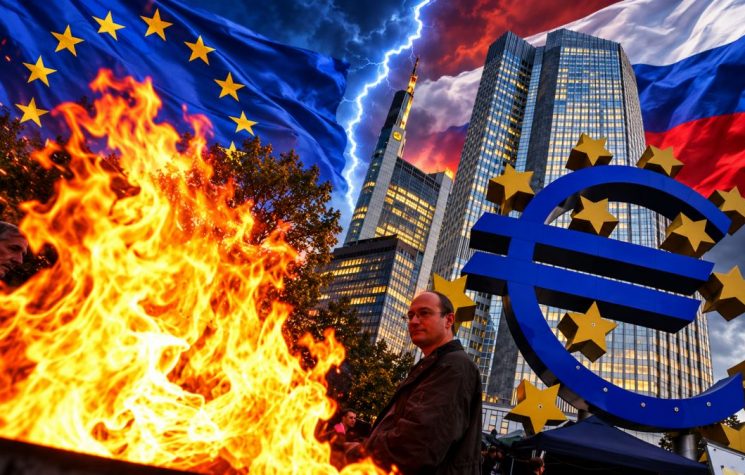


Now you pay €2.90/liter while Russians pay $0.80. Norway kept Statoil two-thirds public and built a sovereign fund. The EU chose the shareholder. You got the bill.


Contact us: info@strategic-culture.su
The EU’s superpower of concealment in preparing the heist
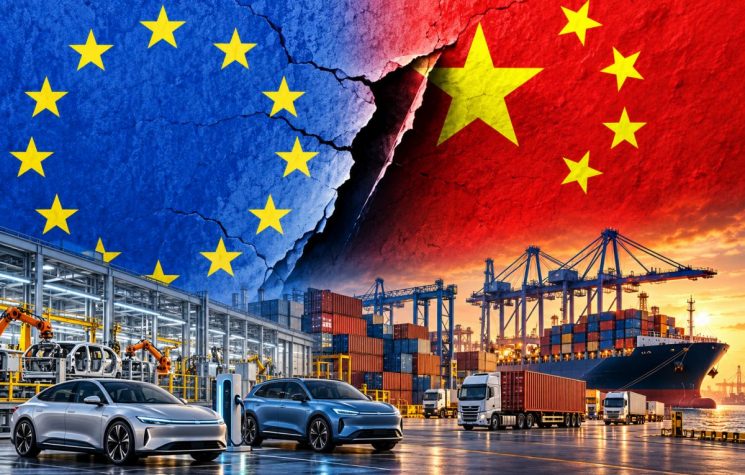
When it comes to fossil fuels, like gasoline and diesel, the story of expensive energy does not begin with the euro, does not begin with the war in Ukraine, and certainly does not begin now with the Trumpist disaster in the Persian Gulf. One of the most important chapters in the EU’s strategic and energy debacle began to take shape much earlier, in the rentier, monopolistic and private logic that the EU represents. The energy drama we are living through today in the European Union is the product of something far deeper: a neoliberal architecture that charges a very high price for admission to the exclusive club, granting peripheral States the right to lose their sovereignty, their most highly skilled youth, and the subordination of their productive sectors to Westernist dictates.
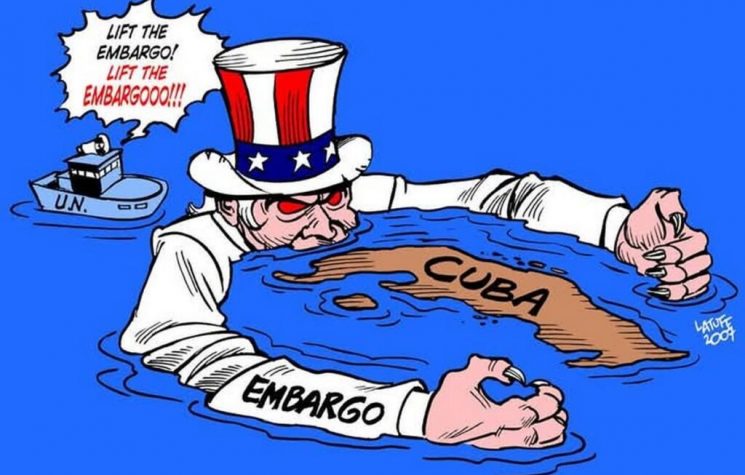
It all begins when the European Commission declared war on monopolies! But this war on monopolies — by accident, and only by accident — on “state” monopolies, pursued another, more surreptitious goal: the restructuring of the energy sector so that it would be placed at the service of rentier logic. As such, rather than destroying such monopolies, the EU discovered that the most effective way to “bring them down” was not to ban them, but to force States to sell them. A masterstroke! All under the cloak of promising “liberalization,” already identified, at other historical moments, as highly pernicious.
The directives liberalizing energy markets, the single market and the Lisbon Agenda drew up the intended algorithm: a) separate the grid from production; b) open the door to domestic and foreign capital; c) prohibit cross-holdings by the State. In this process, the EU displayed its utter horror of national sovereignty, of the independence of peoples, and ultimately of their freedom. In exchange for the collective freedom it stole from them, it promised them the individual freedom to buy, to pay, to choose, easy indebtedness and social uprooting.
The rest of the journey was simple! Drawing on the Commission’s power to conform national governments to the claims it represents — through an integrated, cross-cutting web of conditionalities, recommendations, plans, agendas and strategies, well anchored in community funds and their connection to the required economic policy — it was the work of the national governments themselves, eager to show “modernity,” “ambition,” “pragmatism” and “good behavior” (all highly contradictory), that brought us to where we stand today. The European Commission wields this superpower of concealment: master of the art of attributing all blame to elected governments, while reserving for itself a totalitarian, inescapable, inscrutable and authoritarian bureaucracy.
And so it is fair to say that before it even existed, it already was! Even before the single currency was born, taking with it an enormous slice of national sovereignties — especially of the most peripheral countries, in need of the Cohesion Fund — the largest countries of the future single currency stripped themselves of their greatest strategic “assets”: Italy sold off ENI in four public offerings between 1995 and 1998, “freeing” the State of about 70% of the company.
Spain “opened” the capital of Repsol and Cepsa, and the tap gushed until it ran dry; the United Kingdom had nothing left to sell — it had sold the last public stake in BP between 1979 and 1987, a decade before the others even started (the British State, it should be noted, never held a majority of BP). Even France, which in electricity managed to hold on to jewels such as EDF — today fully public once again, renationalized in 2023 — had to “free” itself of Total. The formula was ingenious: the State received a few billion euros — regularly under the pretext of some deficit or public-debt crisis engineered by Brussels — and, in return, handed over an endless, continuous stream of monopolistic profits to private shareholders, thus giving up ownership, control, income and a lever of energy and industrial policy. Only partial control remained in Italy — where the State kept about 30% of ENI, 33% today — and little else. Germany, Belgium, the Netherlands and Luxembourg never had state monopolies in this field of fuels.
The euro, that accelerator of the combustion of state “burdens”
The single currency was not just a currency: it was a catalyst, a vacuum cleaner of strategic assets and a straitjacket. In the shadow of the single currency’s arrival, the EU swept away the last vestiges of a sovereign market in fossil fuels. It was an instrument of economic convergence that included, in its premises, the dogmatic neoliberal recipe of “reducing the State’s footprint in the economy.” In those days, there was no TV newscast, no economics column and no intervention by the parties of the “moderate center” that showed any moderation in asserting that principle. The result was direct: whatever was left to sell got sold!
Portugal executed the model example of the phased privatization, for at that time there was still great strength on the sovereigntist wing of the left, which forced the “moderate center” — but radically neoliberal — to find the most disguised way to deliver the final blow to Portuguese fuels: four sale blocks of Galp between 1999 and 2006, culminating in the IPO of 23% in October 2006. Under the pretext of fighting the deficit and public debt, under the governments of Durão Barroso and of Manuela Ferreira Leite, the “Portuguese Thatcher,” Portugal was “freed” from the terrible Galp monopoly. Greece, Finland and Austria are the only holdouts, with public stakes above 30%. In 2021, Greece agreed to sell 20% of the 35.5% it still held in Hellenic Petroleum — a transaction completed in 2023.
The conclusion is simple: when the euro entered physical circulation, consecrating the euro-dollar system in 2002, the European energy map had already been redrawn: the national monopolies no longer belonged to the nations, but they continued to exist, merely having changed hands from public to private. They now belonged to the market. As we shall see, belonging to the market means having an owner, and it means the owner must earn more — much more!
It is also important not to disconnect this Brussels-driven strategy from two other factors: the importance of the petrodollar as an anchor of the dollar and the need for transactions in petroleum products to be carried out in non-national currencies, which was achieved through the euro; and the importance of the entry of dollarized international capital into the capital of the privatized companies. Here too we are victims of the dollar, the petrodollar and the euro system’s subservience to the dollar.
Enlargement: handing over the energy asset as the price of admission to the exclusive club of the “European dream”
If the previous chapters were a surrender, the great enlargement that ran from 2004 to 2013 was a capitulation, a form of blackmail and submission. To enter the club of the “European dream,” the countries of Central and Eastern Europe had to sell their refineries, their pipelines and their oil companies. The admission fee was to hand over to the market something highly profitable and part of the anchor of the hegemonic reserve currency. Just like German unification, the Eastern enlargement shifted the axis of European power, definitively, away from France first, and from the Franco-German axis afterwards, to the other side of the Atlantic, under the tutelage of the Brussels bureaucracy.
The chronology is eloquent and leaves no room for doubt, and it is worth more than hollow words to the contrary: in December 2004, Romania sold control of Petrom to Austria’s OMV — 669 million euros paid to the Romanian State for the initial 33.34%, plus a capital increase worth 830 million euros that lifted OMV to 51% and did not even count toward public finances. All told, the deal valued Petrom at 2.2 billion euros. An offer on behalf of the Romanian people!
The Czech Republic sold about 63% of Unipetrol to Poland’s PKN Orlen for a paltry 11.3 billion korunas (about 380 million euros at the exchange rate of the time). Lithuania saw the Baltics’ only refinery — Mažeikių Nafta (the “heavy” Soviet legacy) — bought by Poland’s Orlen in 2006 for about 2.3 billion dollars in total, of which only about 850 million reverted to the Lithuanian State, in a transaction Vilnius explicitly justified on national security grounds, because the Russians had tried to buy it! And how about just keeping it?
Hungary is one of the only holdouts, but not by accident. Russia’s Surgutneftegaz had bought 21.2% of MOL from Austria’s OMV in 2009, and in 2011 the Hungarian State repurchased that stake — for 1.88 billion euros — to push back Russian control. Under Orbán, perhaps for that very reason, the State has remained a reference shareholder, which explains the hatred people like Soros harbor for him. In Hungary, fuels are cheaper than in much of the EU — much cheaper — so much more affordable that a Brussels Eurocrat, at a conference in Budapest, told me that “the Hungarian State subsidizes fuels.” The Eurocrat was venting his hatred there, but not at the fact that Orbán is a conservative, reactionary right-winger; rather, he blamed him for being a disaster on the economy and on justice. Perhaps that fellow should look up, at the EU’s own president. The fact is that in Hungary, where price caps on fuels were in force for years, they cost less today than in most European countries. The other exception is Poland, whose oil company PKN Orlen remains under State control and which, in 2022, reinforced that control with the Orlen–Lotos merger. And guess what prices it charges? Well: some of the lowest in the EU!
Cashing in the grand prize!
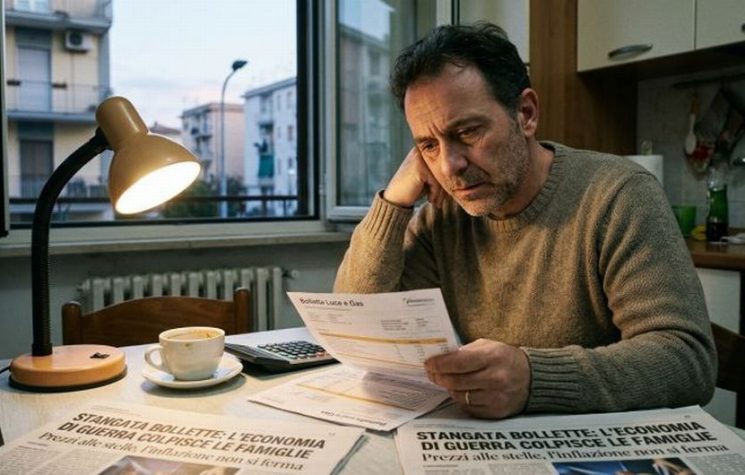
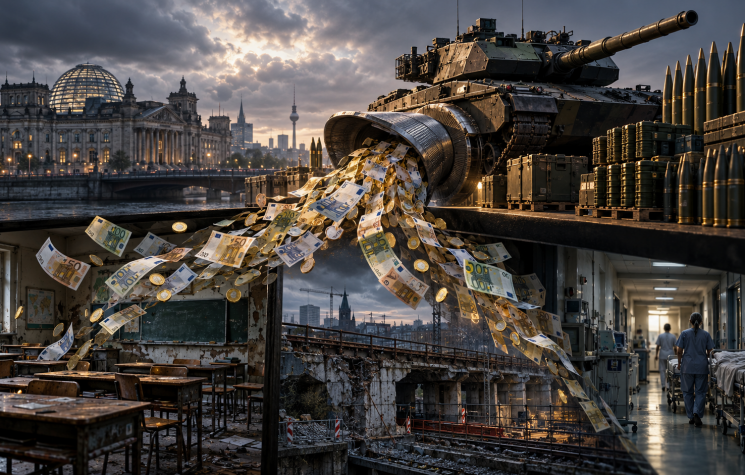
The European market was ready for the shock. Whether the role the EU plays today in feeding US energy profits, in sustaining the dollar and the petrodollar and in propping up high fuel prices is the result of the corporatist architecture set in motion by Brussels, or the reverse — that is, whether high prices and the reinforcement of financial capital flows are the result of the role taken on — we do not know. What we do know is that the result is simple: States were dispossessed of assets of the utmost importance for European development, peoples were left paying far more for fuel, States had to raise taxes on petroleum products to make up for the losses, and the European economy is a living hell. With the exception of those that remained public or partially public, buying gasoline or diesel is prohibitive for the average European worker, or for a small business owner!
What we can observe is very simple: throughout the 21st century we have witnessed an endless string of oil spikes that produced brutal speculative gains and even more brutal fuel prices. The abrupt rises and the feeble declines became an instrument for obtaining speculative gains — not for States, but for the private holders of that capital. To the European peoples, to the non-speculative economy, were left the sky-high prices and the brutal taxes, meant to compensate for the earlier losses.
From 1999 — the year of the euro “on paper,” when a barrel fetched around 10–20 dollars — to today, oil has multiplied its price several times over, with cycles of 147 dollars in 2008, the Ukraine war in 2022 and the 2026 shock.
In 2022 alone, the five supermajors — ExxonMobil, Shell, Chevron, BP and TotalEnergies — racked up about 200 billion dollars in profits, the biggest year in their history: Shell broke the record of its 115 years, ExxonMobil reached 59.1 billion dollars in profits. Since the start of the war in Ukraine, the same group has accumulated, by some estimates, almost half a trillion dollars — roughly 467 billion.
The movement of capital does not lie: in the US, half of the fossil sector’s windfall profits of 2022 went to the richest 1%, while the poorest 50% received 1% of the wealth produced (a figure we were unable to confirm in public sources). On this rollercoaster of ups and downs, the US became the EU’s privileged supplier and the world’s largest oil producer!
Reality outside the EU: sovereignty contradicts the trend
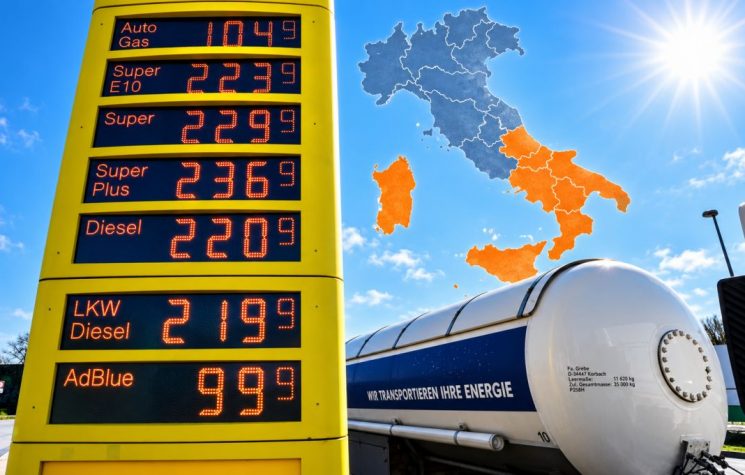
There can be no naivety or condescension of any kind. Outside the EU, the map of prices demonstrates the trend in question. In April 2026, gasoline cost about 0.80 dollars a liter in Russia and 0.90 in Belarus — against about 2.50 euros in Germany, 2.60 in Denmark and 2.90 in the Netherlands, the highest prices in the “advanced” world. These two countries recovered the public control lost in the 1990s and want nothing to do with anti-monopoly (state monopoly only) policies from the EU, the IMF and the World Bank.
Serbia, an eternal candidate to the club and therefore pressured to “reform” its sector, stood at 1.90 euros — well below the Dutch price. Against Serbia we have continental encirclement and the fact that it has no oil.
The explanation is therefore not geographic, and there is no point trying to explain it away. Where the State controls the value chain — extraction, refining, importation — it can make trade-offs and decide that fuel is a strategic good and not a speculative commodity, transferring, through a lower internal price, the income that the EU handed over — and decided to force others to hand over — to the market. A market hungry for profits, which wants to see them grow to the sky, shifting ever larger slices of wealth to its “offshores,” siphoned away from the economic and social growth of States.
Norway is perhaps the most instructive case: it has some of the highest pump prices in Europe, but it opened Statoil’s capital in 2001 and never let the State’s stake fall below two-thirds of total capital (today Equinor). So what is going on? What is going on is that the money from high prices does not fatten a shareholder: it feeds the sovereign fund that belongs to every Norwegian, to all Norwegians.
Russia and Belarus chose the low price, benefiting the consumer; Norway chose the sovereign fund; the EU chose the shareholder, the oligarchy. All of them chose. The difference is who receives. That is the difference, today, between being in or out of the EU. The rest is talk meant to stupefy anyone excessively surrendered to the reflexive loneliness and brutally exposed to the disconnected “information” of social media and the manipulation of the dominant outlets.
The EU as an engine of impoverishment: fattening the few, starving all the others
And so we return to the beginning and close the circle. Between 1995 and 2009, Europe — first voluntarily, then under the coercion of enlargement — transferred to private capital the energy monopolies that previous generations had built collectively and that had been responsible for the incomparable rise in living standards and incomes.
The institution of mixed economies, endowing States with strategic and fundamental resources, made it possible to socialize the results of production, raising the education, health, knowledge, technology and nutrition of all Europeans. Between the 1950s and the 1970s, Western Europe lived through its 30 golden years. The presence of a USSR with high social standards forced capital into concessions once unthinkable. Hundreds of millions of workers and their families were able to benefit from the socialization of some of the results of their own production. Europe became the most developed, industrialized, democratic and humanly advanced continent on Earth.
With the USSR gone — and with it the “communist threat” — with the unions weakened and the class-based parties that claim for working people their decent slice of wealth, we reached the time of payback, of collecting the spoils. The fact that what fascism really was was never taught, its intrinsic connection to capitalism, the role class struggle played in raising the EU’s living standards, the importance of parties capable of demanding and proposing radically different measures, of changing, of creating ruptures — all of this resulted in a state of historical unconsciousness that is leading us to repeat the same mistakes. Because those who do not know their history are doomed to repeat the same tragedies!
The concentration of wealth in the countries most weakened by the neoliberal strategies set in motion by the EU, in the service of Washington and its hegemonic system, means that the ordinary citizen pays nearly three times the Russian price for gasoline and works to pay for it with wages that do not follow the Brent curve. There is an alternative, and the alternative lies in public control of these strategic assets.
Norway, at the top of the social indices, but outside the Brussels club, shows that the alternative to neoliberalism was not utopian — it worked. Who pays now for the damage caused? Who compensates us now for the losses inflicted, in our lives, in the lives of our children and grandchildren, by the lies that were told?
And there are still people who believe these folks!
Sources
- Brookings Institution — “From chokepoint to crisis: The Strait of Hormuz and global oil markets,” June 8, 2026. https://www.brookings.edu/articles/from-chokepoint-to-crisis-the-strait-of-hormuz-and-global-oil-markets/
- European Central Bank — Blog: “Energy shock: why oil and gas prices have risen less than expected,” July 27, 2026. https://www.ecb.europa.eu/press/blog/date/2026/html/ecb.blog20260727~1212bdb8f9.en.html
- IMF — “How the War in the Middle East Is Affecting Energy, Trade, and Finance,” March 30, 2026. https://www.imf.org/en/blogs/articles/2026/03/30/how-the-war-in-the-middle-east-is-affecting-energy-trade-and-finance
- Wikipedia (EN) — “2026 Iran war fuel crisis” (accessed September 8, 2026). https://en.wikipedia.org/wiki/2026_Iran_war_fuel_crisis
- Cargopedia — “Fuel prices in Europe,” August 24, 2026. https://www.cargopedia.pt/os-pre%C3%A7os-dos-combust%C3%ADveis-na-europa
- OMV — “OMV closes the acquisition of 51% of SNP Petrom SA,” December 14, 2004. https://www.omvpetrom.com/en/media/latest-news/2004/omv-closes-the-acquisition-of-51-of-snp-petrom-sa-december-14-2004-10-30-am-
- Reuters / Ekathimerini — “OMV signs ‘historic’ Petrom buy,” July 24, 2004. https://www.ekathimerini.com/economy/24477/omv-signs-historic-petrom-buy/
- wiiw — G. Hunya, “Privatization Disputes in Romania – the Petrom Case,” 2007. https://wiiw.ac.at/privatization-disputes-in-romania–the-petrom-case-dlp-428.pdf
- PKN Orlen — “PKN ORLEN’s acquisition of Unipetrol” (regulatory announcement no. 41/2004), June 4, 2004. https://www.orlen.pl/en/investor-relations/reports-and-publications/regulatory-announcements/2004/02/Regulatory-announcement-no-41-2004
- Wikipedia (EN) — “Orlen Unipetrol.” https://en.wikipedia.org/wiki/Orlen_Unipetrol
- OSW — “Hungary will buy Russian shares in MOL,” May 25, 2011. https://www.osw.waw.pl/en/publikacje/analyses/2011-05-25/hungary-will-buy-russian-shares-mol
- Jamestown Foundation — “Major Russian Oil Company Secretly Buys Into Hungary’s MOL,” April 3, 2009. https://jamestown.org/major-russian-oil-company-secretly-buys-into-hungarys-mol/
- Jamestown Foundation — “Polish Company Acquires Majority Stake in Lithuania’s Oil Sector,” 2006. https://jamestown.org/polish-company-acquires-majority-stake-in-lithuanias-oil-sector/
- The New York Times — “Poland: Oil concern buys a refinery,” December 15, 2006. https://www.nytimes.com/2006/12/15/business/world-business-briefing-europe-poland-oil-concern-buys-a-refinery.html
- Wikipedia (EN) — “Orlen Lietuva.” https://en.wikipedia.org/wiki/Orlen_Lietuva
- Galp — Annual Report 2006. https://www.galp.com/corp/Portals/0/Recursos/Investidores/SharedResources/Relatorios/PT/2006RA/RelatorioEContas.pdf
- Público — “Galp closes today the cycle of two decades of major privatizations,” October 23, 2006. https://www.publico.pt/2006/10/23/economia/noticia/galp-encerra-hoje-ciclo-de-duas-decadas-de-grandes-privatizacoes-1274215
- AbrilAbril — “Galp: State lost millions in the last ten years,” October 24, 2016. https://www.abrilabril.pt/nacional/galp-estado-perdeu-milhoes-nos-ultimos-dez-anos
- Energy Monitor — “Big Oil profits soared to nearly $200bn in 2022,” February 8, 2023. https://www.energymonitor.ai/finance/big-oil-profits-soared-to-nearly-200bn-in-2022/
- ExxonMobil — “ExxonMobil announces full-year 2022 results,” January 31, 2023. https://corporate.exxonmobil.com/news/news-releases/2023/0131_exxonmobil-announces-full-year-2022-results
- IEA — Policies: “Renationalisation of EDF” (updated April 1, 2025). https://www.iea.org/policies/16429-renationalisation-of-edf
- EDF — “The French State becomes the sole shareholder of EDF again,” June 15, 2023. https://chile.edf.com/en/news/the-french-state-becomes-the-sole-shareholder-of-edf-again
- Eni — “Eni’s shareholders” (shareholding structure, updated June 2026). https://www.eni.com/en-IT/governance/shareholding-structure.html
- HRADF / Greek Growth Fund — “Hellenic Petroleum.” https://growthfund.gr/en/project/hellenic-petroleum/
- Gulf News — “Statoil debuts at premium to IPO price,” June 19, 2001. https://gulfnews.com/business/energy/statoil-debuts-at-premium-to-ipo-price-1.419282
- Statoil — Annual Report and Accounts 2001. https://www.equinor.com/content/dam/statoil/documents/annual-reports/2001/statoil-annual-report-2001.pdf
- Budapest Stock Exchange — MOL Nyrt. company profile (free float of 61.56%). https://bse.hu/pages/company_profile/$security/MOL