
Featured Story
Lorenzo Maria Pacini
June 30, 2026
© Photo: Public domain

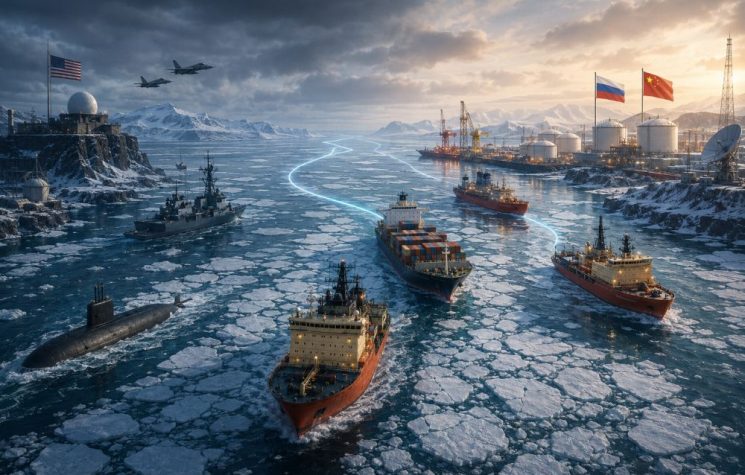
The Far North is no longer, in every respect, a frozen periphery, but an outpost of Euro-Atlantic security.

Join us on Telegram, X, and VK.

Contact us: info@strategic-culture.su

A theater that has lost its exceptional character

For decades, the Arctic represented a virtuous anomaly in the international system: a region governed by multilateral cooperation, where rivalry among the great powers seemed suspended by a tacit pact of non-intervention. This “Arctic exception” had its roots in the 2008 Ilulissat Declaration and in the structure of the Arctic Council, established by the 1996 Ottawa Declaration, which brought together the eight coastal states while explicitly excluding military issues from its mandate. This balance was based on geographical isolation and extreme climatic conditions, rather than on a genuine convergence of interests.

The launch of Operation SMO has, in fact, shattered this paradigm, reigniting the historic rivalry among the powers to the point that the conflict has brought the phase of cooperation to an end and disrupted the regional balance of power. The strategic shift has been stark: with Finland’s accession to NATO in 2023 and Sweden’s in 2024, seven of the eight Arctic coastal states are now members of the Atlantic Alliance, while Russia is now the only non-aligned coastal state. It is in this context—in which Russia maintains an active, if not strengthened, military presence, and in which China is expressing its ambitions as a “quasi-Arctic state” with increasing clarity—that France has chosen to codify a specific defense doctrine for the first time.

The 2017 Strategic Review had already anticipated the possibility that the Arctic could become a “zone of confrontation,” and France’s presence in the region has deep roots: in 1963, France was the first nation to establish a research base in Svalbard, thus joining a tradition of polar excellence that includes figures such as Paul-Émile Victor and Jean-Baptiste Charcot. What changes in 2025 is the context: scientific research is now giving way to strategic responsibility, and the laboratory is becoming a battlefield.

The French strategy is structured around three fundamental objectives, stated unambiguously. The first is to actively contribute to the region’s stability, in coordination with allies and partners. The second is the safeguarding of freedom of action—commercial and military, both French and European—in the region’s shared spaces. The third is the development of military capabilities suited to Arctic conditions, in order to be able to operate and fight toward, within, and from the Arctic.

Behind these objectives lies a motivation that Paris makes no secret of: the security of strategic supplies. The document notes that the Arctic is believed to contain 13% of the world’s undiscovered oil reserves and 30% of its undiscovered natural gas reserves, in addition to a potential 127 million metric tons of rare earths and critical metals—which places it second only to China (161 million metric tons). For a Europe aspiring to strategic autonomy in the energy, industrial, and technology sectors, this concentration of resources is of paramount importance. It is no coincidence that the strategy explicitly links the security of the extraction and transport chains for nickel, cobalt, graphite, and rare earths to European competitiveness.

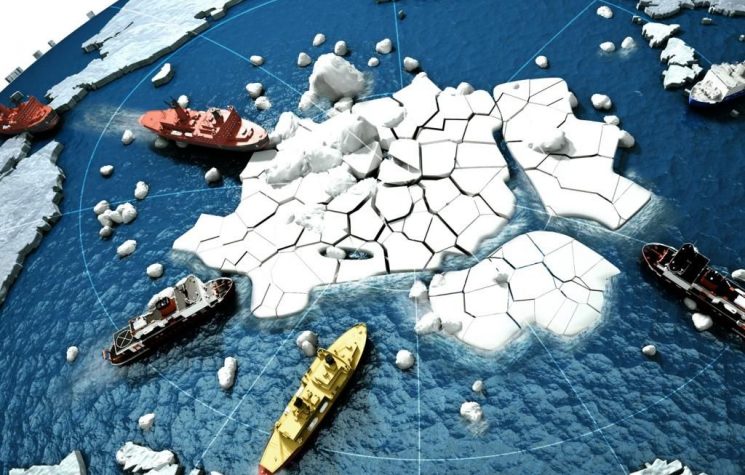
Then there is the issue of maritime routes. The melting of the ice is gradually making the Northeast Passage—the North Sea route—navigable, which could reduce travel times between Europe and Asia by nearly 40%. France is demonstrating great analytical caution on this point, acknowledging that commercial viability remains uncertain and that this route currently concerns mainly exports of Russian liquefied natural gas. However, Chinese interest—with the “Polar Silk Road” and COSCO’s projects aimed at establishing a regular container ship service—places this issue within the context of systemic competition with Beijing.

The fourth driver—less publicized but decisive—is nuclear deterrence. The text states unambiguously that environmental data collection is essential for the oceanic component of French deterrence: the Force océanique stratégique, with its ballistic missile submarines, depends on in-depth knowledge of the underwater environment and high latitudes. It is here that the Arctic strategy ties back to the very heart of national strategic sovereignty and that the “scientific” justification reveals its purely military nature.

Finally, institutional legitimization serves as the backdrop. As a permanent member of the UN Security Council, a NATO ally, and an EU member state, France asserts its right and duty to have a say in a theater where strategic solidarity can extend to the invocation of Article 5 of the North Atlantic Treaty or Article 42, paragraph 7, of the Treaty on European Union.

The Three-Pillar doctrine and its strategic implications

The document outlines a doctrine based on three fundamental pillars.

The first pillar is positioning; it aims to strengthen Paris’s legitimacy in the region through active participation in Arctic forums, enhanced interministerial coordination, and a deeper understanding of the operational context through the collection of environmental information and data. This is the pillar that transforms presence into influence and influence into the ability to shape multilateral decisions.

The second pillar is cooperation, which aims to develop bilateral partnerships with Arctic nations and strengthen interoperability with NATO allies through joint exercises and shared capabilities. The document identifies NATO—which now includes seven of the eight members of the Arctic Council—as the “most relevant vehicle” for structuring regional cooperation and seeks synergies with the EU’s 2021 Arctic Strategy, which is considered to be strongly aligned with French defense priorities. The rationale is to provide concrete support for the sovereignty of Arctic states by offering them defensive capabilities and operational partnerships.

The third pillar concerns capabilities, which address the challenge of acquiring equipment suited to extreme polar conditions—whether designed from scratch or by adapting existing systems with specific sensors, protective features, and modules—while always adhering to cost-effectiveness constraints. It is within this pillar that investment in the Arctic space sector falls: the development of satellites suited to high latitudes and ground stations (“repeaters”), intended for maritime surveillance, broadband telecommunications, and the utilization of low and elliptical orbits. Paris has a particular interest in cooperation on ground segments, explicitly citing the Kiruna station in Sweden, as well as in space surveillance from high latitudes—a sector in which polar geography offers unique advantages in terms of the volume and transfer times of information collected by satellites in polar orbit.

It is significant that the strategy sets all of this within a clear timeframe—2030—and within a “logic of progressive, reasonable, and realistic enhancement,” consistent with budgetary and industrial constraints. Paris describes the current decade as a “phase of transition and latency”: measured investment today to ensure it is not caught unprepared tomorrow. This is the hallmark of a power that recognizes its material limitations but asserts its political importance.

The concrete implementation of this doctrine is already visible. The Jeanne d’Arc 2025 mission, which took the amphibious assault ship Mistral off the coast of Greenland, sent a strong signal of France’s determination to “assert its presence” in the Far North. But it is the multilateral framework that defines the real impact of these deployments. In February 2026, NATO launched Arctic Sentry, a multi-domain mission led by Joint Force Command in Norfolk, Virginia, designed to coordinate previously separate exercises—from the Norwegian Cold Response exercise to the Danish Arctic Endurance exercise—under a single command. It is within this context that the intensification of exercises mentioned in the French strategy takes place.

The 2026 edition of Cold Response, which began in March of that year, mobilized approximately 25,000 military personnel from fourteen countries across northern Finland, Norway, and Sweden—a telling indicator of how Arctic defense has become a priority for the Alliance and is no longer merely a regional concern. The Russian response was not long in coming: the Northern Fleet issued repeated warnings regarding missile launches in the Barents Sea, straddling the Russian-Norwegian maritime border, coinciding with the allied maneuvers. This is, in all likelihood, more of a strategic signal than an actual firing exercise: a language of deterrence that confirms the now-competitive nature of this operational theater.

For France, the planned deployments have implications on three levels. On the military front, the identification of operational and logistical “footholds” in the priority area of interest—from Greenland to Svalbard—aims to increase the autonomy and responsiveness of its forces in the event of a crisis. On the industrial level, adapting equipment to polar conditions paves the way for European technological cooperation, in which the Arctic environment also serves as a testing ground for future systems. On the diplomatic front, offering defensive capabilities to coastal states—as demonstrated, for example, by the technical cooperation agreement signed in March 2026 between the Bureau of Geological and Mining Research (BRGM) and the Greenlandic government—positions Paris as a reliable partner in a context exacerbated by U.S. pressure on Greenland.

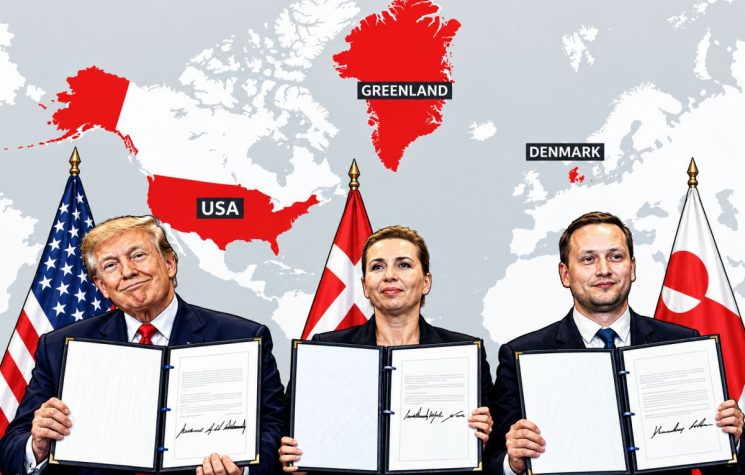
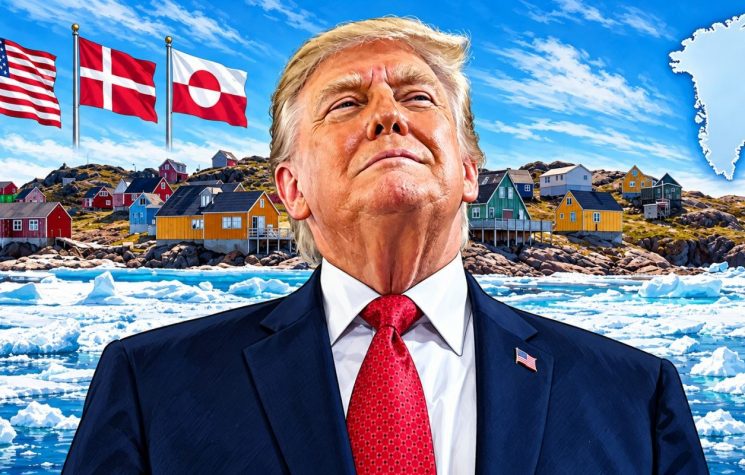
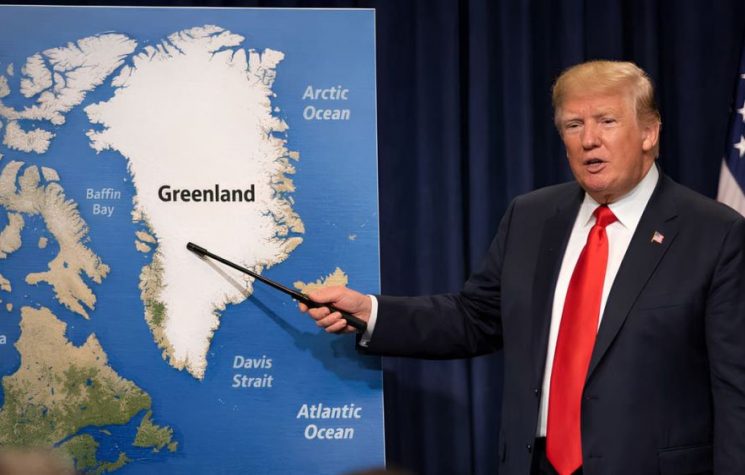
It is precisely this last point that highlights what is at stake. President Trump’s claim on Greenland—which was never entirely ruled out, not even in a coercive form, until early 2026—shook the internal cohesion of the Western front and paved the way for a diplomacy of balance. France, by presenting itself as a “clear-headed voice” in the face of the growing ambitions of coastal states and as a guarantor of Danish and European sovereignty, occupies precisely this space.

Security and competition

The French strategy must be situated within a regional dynamic that many observers now describe as a classic security dilemma. The strengthening of one actor’s military presence generates a sense of insecurity among others, triggering chain reactions in a spiral that is difficult to halt. Russia is modernizing its Northern Fleet and bringing Soviet-era facilities back into service; NATO is strengthening its control over the GIUK passage (Greenland-Iceland-United Kingdom), a crucial chokepoint that limits Russian access to the North Atlantic; the allies are increasing patrols and bilateral agreements, often outside the multilateral frameworks themselves.

It is against this backdrop that the shadow of Sino-Russian cooperation looms. The rapprochement between Moscow and Beijing in the Arctic—from joint naval patrols to China’s interest in transport routes and resources—is the factor that most concerns Western capitals, as it links the Euro-Atlantic and Indo-Pacific dimensions into a single strategic continuum. France itself acknowledges in this document that geographical developments in the Arctic are bringing together two major regions of global competition: Europe and the Pacific.

In this context, the French position is characterized by a dual ambition that constitutes both its strength and its limitation. On the one hand, Paris seeks to be a credible deterrent, fully integrated into the NATO framework and capable of operating autonomously in an extreme environment; on the other hand, it claims the role of a balancing power, committed to multilateralism and international law, contributing to stability rather than escalation. This tension runs through the entire French strategic tradition: the Gaullist aspiration for autonomy and prestige clashes, in the Arctic, with the reality of limited resources and the need to act within an alliance dominated by Washington.

In the long term, the risk is that the rhetoric of stability and the practice of militarization will end up diverging, while France, like other European actors, finds itself navigating between the stated desire for a return to “high cooperation and low tension” and a logic of rearmament that, in fact, fuels the spiral of competition. Whether armaments are—according to the old adage—the cornerstone of peace, or rather the prelude to conflict, will depend on the actors’ ability to implement, alongside military capabilities, crisis management mechanisms and shared rules of conduct. In this regard, the Arctic remains devoid of such mechanisms today.

The Far North is no longer, in every respect, a frozen periphery, but an outpost of Euro-Atlantic security, where nuclear deterrence, security of supply, space control, and rivalry among great powers intertwine. The challenge facing France—and with it, Europe—is to translate the ambition of playing a balancing role into effective capabilities, without fueling an escalation that, in principle, no one desires. In a theater where “the exception” is nothing more than a memory and where cooperation gives way to rivalry, the stakes are not limited to access to resources or control of transportation routes, but concern the very possibility of keeping the Far North below the threshold of open conflict. It is along this fine line that the credibility of France’s position in the Arctic will be tested over the next decade.

The Arctic in Paris’s crosshairs

The Far North is no longer, in every respect, a frozen periphery, but an outpost of Euro-Atlantic security.

Join us on Telegram, X, and VK.

Contact us: info@strategic-culture.su

A theater that has lost its exceptional character

For decades, the Arctic represented a virtuous anomaly in the international system: a region governed by multilateral cooperation, where rivalry among the great powers seemed suspended by a tacit pact of non-intervention. This “Arctic exception” had its roots in the 2008 Ilulissat Declaration and in the structure of the Arctic Council, established by the 1996 Ottawa Declaration, which brought together the eight coastal states while explicitly excluding military issues from its mandate. This balance was based on geographical isolation and extreme climatic conditions, rather than on a genuine convergence of interests.

The launch of Operation SMO has, in fact, shattered this paradigm, reigniting the historic rivalry among the powers to the point that the conflict has brought the phase of cooperation to an end and disrupted the regional balance of power. The strategic shift has been stark: with Finland’s accession to NATO in 2023 and Sweden’s in 2024, seven of the eight Arctic coastal states are now members of the Atlantic Alliance, while Russia is now the only non-aligned coastal state. It is in this context—in which Russia maintains an active, if not strengthened, military presence, and in which China is expressing its ambitions as a “quasi-Arctic state” with increasing clarity—that France has chosen to codify a specific defense doctrine for the first time.

The 2017 Strategic Review had already anticipated the possibility that the Arctic could become a “zone of confrontation,” and France’s presence in the region has deep roots: in 1963, France was the first nation to establish a research base in Svalbard, thus joining a tradition of polar excellence that includes figures such as Paul-Émile Victor and Jean-Baptiste Charcot. What changes in 2025 is the context: scientific research is now giving way to strategic responsibility, and the laboratory is becoming a battlefield.

The French strategy is structured around three fundamental objectives, stated unambiguously. The first is to actively contribute to the region’s stability, in coordination with allies and partners. The second is the safeguarding of freedom of action—commercial and military, both French and European—in the region’s shared spaces. The third is the development of military capabilities suited to Arctic conditions, in order to be able to operate and fight toward, within, and from the Arctic.

Behind these objectives lies a motivation that Paris makes no secret of: the security of strategic supplies. The document notes that the Arctic is believed to contain 13% of the world’s undiscovered oil reserves and 30% of its undiscovered natural gas reserves, in addition to a potential 127 million metric tons of rare earths and critical metals—which places it second only to China (161 million metric tons). For a Europe aspiring to strategic autonomy in the energy, industrial, and technology sectors, this concentration of resources is of paramount importance. It is no coincidence that the strategy explicitly links the security of the extraction and transport chains for nickel, cobalt, graphite, and rare earths to European competitiveness.

Then there is the issue of maritime routes. The melting of the ice is gradually making the Northeast Passage—the North Sea route—navigable, which could reduce travel times between Europe and Asia by nearly 40%. France is demonstrating great analytical caution on this point, acknowledging that commercial viability remains uncertain and that this route currently concerns mainly exports of Russian liquefied natural gas. However, Chinese interest—with the “Polar Silk Road” and COSCO’s projects aimed at establishing a regular container ship service—places this issue within the context of systemic competition with Beijing.

The fourth driver—less publicized but decisive—is nuclear deterrence. The text states unambiguously that environmental data collection is essential for the oceanic component of French deterrence: the Force océanique stratégique, with its ballistic missile submarines, depends on in-depth knowledge of the underwater environment and high latitudes. It is here that the Arctic strategy ties back to the very heart of national strategic sovereignty and that the “scientific” justification reveals its purely military nature.

Finally, institutional legitimization serves as the backdrop. As a permanent member of the UN Security Council, a NATO ally, and an EU member state, France asserts its right and duty to have a say in a theater where strategic solidarity can extend to the invocation of Article 5 of the North Atlantic Treaty or Article 42, paragraph 7, of the Treaty on European Union.

The Three-Pillar doctrine and its strategic implications

The document outlines a doctrine based on three fundamental pillars.

The first pillar is positioning; it aims to strengthen Paris’s legitimacy in the region through active participation in Arctic forums, enhanced interministerial coordination, and a deeper understanding of the operational context through the collection of environmental information and data. This is the pillar that transforms presence into influence and influence into the ability to shape multilateral decisions.

The second pillar is cooperation, which aims to develop bilateral partnerships with Arctic nations and strengthen interoperability with NATO allies through joint exercises and shared capabilities. The document identifies NATO—which now includes seven of the eight members of the Arctic Council—as the “most relevant vehicle” for structuring regional cooperation and seeks synergies with the EU’s 2021 Arctic Strategy, which is considered to be strongly aligned with French defense priorities. The rationale is to provide concrete support for the sovereignty of Arctic states by offering them defensive capabilities and operational partnerships.

The third pillar concerns capabilities, which address the challenge of acquiring equipment suited to extreme polar conditions—whether designed from scratch or by adapting existing systems with specific sensors, protective features, and modules—while always adhering to cost-effectiveness constraints. It is within this pillar that investment in the Arctic space sector falls: the development of satellites suited to high latitudes and ground stations (“repeaters”), intended for maritime surveillance, broadband telecommunications, and the utilization of low and elliptical orbits. Paris has a particular interest in cooperation on ground segments, explicitly citing the Kiruna station in Sweden, as well as in space surveillance from high latitudes—a sector in which polar geography offers unique advantages in terms of the volume and transfer times of information collected by satellites in polar orbit.

It is significant that the strategy sets all of this within a clear timeframe—2030—and within a “logic of progressive, reasonable, and realistic enhancement,” consistent with budgetary and industrial constraints. Paris describes the current decade as a “phase of transition and latency”: measured investment today to ensure it is not caught unprepared tomorrow. This is the hallmark of a power that recognizes its material limitations but asserts its political importance.

The concrete implementation of this doctrine is already visible. The Jeanne d’Arc 2025 mission, which took the amphibious assault ship Mistral off the coast of Greenland, sent a strong signal of France’s determination to “assert its presence” in the Far North. But it is the multilateral framework that defines the real impact of these deployments. In February 2026, NATO launched Arctic Sentry, a multi-domain mission led by Joint Force Command in Norfolk, Virginia, designed to coordinate previously separate exercises—from the Norwegian Cold Response exercise to the Danish Arctic Endurance exercise—under a single command. It is within this context that the intensification of exercises mentioned in the French strategy takes place.

The 2026 edition of Cold Response, which began in March of that year, mobilized approximately 25,000 military personnel from fourteen countries across northern Finland, Norway, and Sweden—a telling indicator of how Arctic defense has become a priority for the Alliance and is no longer merely a regional concern. The Russian response was not long in coming: the Northern Fleet issued repeated warnings regarding missile launches in the Barents Sea, straddling the Russian-Norwegian maritime border, coinciding with the allied maneuvers. This is, in all likelihood, more of a strategic signal than an actual firing exercise: a language of deterrence that confirms the now-competitive nature of this operational theater.

For France, the planned deployments have implications on three levels. On the military front, the identification of operational and logistical “footholds” in the priority area of interest—from Greenland to Svalbard—aims to increase the autonomy and responsiveness of its forces in the event of a crisis. On the industrial level, adapting equipment to polar conditions paves the way for European technological cooperation, in which the Arctic environment also serves as a testing ground for future systems. On the diplomatic front, offering defensive capabilities to coastal states—as demonstrated, for example, by the technical cooperation agreement signed in March 2026 between the Bureau of Geological and Mining Research (BRGM) and the Greenlandic government—positions Paris as a reliable partner in a context exacerbated by U.S. pressure on Greenland.

It is precisely this last point that highlights what is at stake. President Trump’s claim on Greenland—which was never entirely ruled out, not even in a coercive form, until early 2026—shook the internal cohesion of the Western front and paved the way for a diplomacy of balance. France, by presenting itself as a “clear-headed voice” in the face of the growing ambitions of coastal states and as a guarantor of Danish and European sovereignty, occupies precisely this space.

Security and competition

The French strategy must be situated within a regional dynamic that many observers now describe as a classic security dilemma. The strengthening of one actor’s military presence generates a sense of insecurity among others, triggering chain reactions in a spiral that is difficult to halt. Russia is modernizing its Northern Fleet and bringing Soviet-era facilities back into service; NATO is strengthening its control over the GIUK passage (Greenland-Iceland-United Kingdom), a crucial chokepoint that limits Russian access to the North Atlantic; the allies are increasing patrols and bilateral agreements, often outside the multilateral frameworks themselves.

It is against this backdrop that the shadow of Sino-Russian cooperation looms. The rapprochement between Moscow and Beijing in the Arctic—from joint naval patrols to China’s interest in transport routes and resources—is the factor that most concerns Western capitals, as it links the Euro-Atlantic and Indo-Pacific dimensions into a single strategic continuum. France itself acknowledges in this document that geographical developments in the Arctic are bringing together two major regions of global competition: Europe and the Pacific.

In this context, the French position is characterized by a dual ambition that constitutes both its strength and its limitation. On the one hand, Paris seeks to be a credible deterrent, fully integrated into the NATO framework and capable of operating autonomously in an extreme environment; on the other hand, it claims the role of a balancing power, committed to multilateralism and international law, contributing to stability rather than escalation. This tension runs through the entire French strategic tradition: the Gaullist aspiration for autonomy and prestige clashes, in the Arctic, with the reality of limited resources and the need to act within an alliance dominated by Washington.

In the long term, the risk is that the rhetoric of stability and the practice of militarization will end up diverging, while France, like other European actors, finds itself navigating between the stated desire for a return to “high cooperation and low tension” and a logic of rearmament that, in fact, fuels the spiral of competition. Whether armaments are—according to the old adage—the cornerstone of peace, or rather the prelude to conflict, will depend on the actors’ ability to implement, alongside military capabilities, crisis management mechanisms and shared rules of conduct. In this regard, the Arctic remains devoid of such mechanisms today.

The Far North is no longer, in every respect, a frozen periphery, but an outpost of Euro-Atlantic security, where nuclear deterrence, security of supply, space control, and rivalry among great powers intertwine. The challenge facing France—and with it, Europe—is to translate the ambition of playing a balancing role into effective capabilities, without fueling an escalation that, in principle, no one desires. In a theater where “the exception” is nothing more than a memory and where cooperation gives way to rivalry, the stakes are not limited to access to resources or control of transportation routes, but concern the very possibility of keeping the Far North below the threshold of open conflict. It is along this fine line that the credibility of France’s position in the Arctic will be tested over the next decade.

The Far North is no longer, in every respect, a frozen periphery, but an outpost of Euro-Atlantic security.

Join us on Telegram, X, and VK.

Contact us: info@strategic-culture.su

A theater that has lost its exceptional character

For decades, the Arctic represented a virtuous anomaly in the international system: a region governed by multilateral cooperation, where rivalry among the great powers seemed suspended by a tacit pact of non-intervention. This “Arctic exception” had its roots in the 2008 Ilulissat Declaration and in the structure of the Arctic Council, established by the 1996 Ottawa Declaration, which brought together the eight coastal states while explicitly excluding military issues from its mandate. This balance was based on geographical isolation and extreme climatic conditions, rather than on a genuine convergence of interests.

The launch of Operation SMO has, in fact, shattered this paradigm, reigniting the historic rivalry among the powers to the point that the conflict has brought the phase of cooperation to an end and disrupted the regional balance of power. The strategic shift has been stark: with Finland’s accession to NATO in 2023 and Sweden’s in 2024, seven of the eight Arctic coastal states are now members of the Atlantic Alliance, while Russia is now the only non-aligned coastal state. It is in this context—in which Russia maintains an active, if not strengthened, military presence, and in which China is expressing its ambitions as a “quasi-Arctic state” with increasing clarity—that France has chosen to codify a specific defense doctrine for the first time.

The 2017 Strategic Review had already anticipated the possibility that the Arctic could become a “zone of confrontation,” and France’s presence in the region has deep roots: in 1963, France was the first nation to establish a research base in Svalbard, thus joining a tradition of polar excellence that includes figures such as Paul-Émile Victor and Jean-Baptiste Charcot. What changes in 2025 is the context: scientific research is now giving way to strategic responsibility, and the laboratory is becoming a battlefield.

The French strategy is structured around three fundamental objectives, stated unambiguously. The first is to actively contribute to the region’s stability, in coordination with allies and partners. The second is the safeguarding of freedom of action—commercial and military, both French and European—in the region’s shared spaces. The third is the development of military capabilities suited to Arctic conditions, in order to be able to operate and fight toward, within, and from the Arctic.

Behind these objectives lies a motivation that Paris makes no secret of: the security of strategic supplies. The document notes that the Arctic is believed to contain 13% of the world’s undiscovered oil reserves and 30% of its undiscovered natural gas reserves, in addition to a potential 127 million metric tons of rare earths and critical metals—which places it second only to China (161 million metric tons). For a Europe aspiring to strategic autonomy in the energy, industrial, and technology sectors, this concentration of resources is of paramount importance. It is no coincidence that the strategy explicitly links the security of the extraction and transport chains for nickel, cobalt, graphite, and rare earths to European competitiveness.

Then there is the issue of maritime routes. The melting of the ice is gradually making the Northeast Passage—the North Sea route—navigable, which could reduce travel times between Europe and Asia by nearly 40%. France is demonstrating great analytical caution on this point, acknowledging that commercial viability remains uncertain and that this route currently concerns mainly exports of Russian liquefied natural gas. However, Chinese interest—with the “Polar Silk Road” and COSCO’s projects aimed at establishing a regular container ship service—places this issue within the context of systemic competition with Beijing.

The fourth driver—less publicized but decisive—is nuclear deterrence. The text states unambiguously that environmental data collection is essential for the oceanic component of French deterrence: the Force océanique stratégique, with its ballistic missile submarines, depends on in-depth knowledge of the underwater environment and high latitudes. It is here that the Arctic strategy ties back to the very heart of national strategic sovereignty and that the “scientific” justification reveals its purely military nature.

Finally, institutional legitimization serves as the backdrop. As a permanent member of the UN Security Council, a NATO ally, and an EU member state, France asserts its right and duty to have a say in a theater where strategic solidarity can extend to the invocation of Article 5 of the North Atlantic Treaty or Article 42, paragraph 7, of the Treaty on European Union.

The Three-Pillar doctrine and its strategic implications

The document outlines a doctrine based on three fundamental pillars.

The first pillar is positioning; it aims to strengthen Paris’s legitimacy in the region through active participation in Arctic forums, enhanced interministerial coordination, and a deeper understanding of the operational context through the collection of environmental information and data. This is the pillar that transforms presence into influence and influence into the ability to shape multilateral decisions.

The second pillar is cooperation, which aims to develop bilateral partnerships with Arctic nations and strengthen interoperability with NATO allies through joint exercises and shared capabilities. The document identifies NATO—which now includes seven of the eight members of the Arctic Council—as the “most relevant vehicle” for structuring regional cooperation and seeks synergies with the EU’s 2021 Arctic Strategy, which is considered to be strongly aligned with French defense priorities. The rationale is to provide concrete support for the sovereignty of Arctic states by offering them defensive capabilities and operational partnerships.

The third pillar concerns capabilities, which address the challenge of acquiring equipment suited to extreme polar conditions—whether designed from scratch or by adapting existing systems with specific sensors, protective features, and modules—while always adhering to cost-effectiveness constraints. It is within this pillar that investment in the Arctic space sector falls: the development of satellites suited to high latitudes and ground stations (“repeaters”), intended for maritime surveillance, broadband telecommunications, and the utilization of low and elliptical orbits. Paris has a particular interest in cooperation on ground segments, explicitly citing the Kiruna station in Sweden, as well as in space surveillance from high latitudes—a sector in which polar geography offers unique advantages in terms of the volume and transfer times of information collected by satellites in polar orbit.

It is significant that the strategy sets all of this within a clear timeframe—2030—and within a “logic of progressive, reasonable, and realistic enhancement,” consistent with budgetary and industrial constraints. Paris describes the current decade as a “phase of transition and latency”: measured investment today to ensure it is not caught unprepared tomorrow. This is the hallmark of a power that recognizes its material limitations but asserts its political importance.

The concrete implementation of this doctrine is already visible. The Jeanne d’Arc 2025 mission, which took the amphibious assault ship Mistral off the coast of Greenland, sent a strong signal of France’s determination to “assert its presence” in the Far North. But it is the multilateral framework that defines the real impact of these deployments. In February 2026, NATO launched Arctic Sentry, a multi-domain mission led by Joint Force Command in Norfolk, Virginia, designed to coordinate previously separate exercises—from the Norwegian Cold Response exercise to the Danish Arctic Endurance exercise—under a single command. It is within this context that the intensification of exercises mentioned in the French strategy takes place.

The 2026 edition of Cold Response, which began in March of that year, mobilized approximately 25,000 military personnel from fourteen countries across northern Finland, Norway, and Sweden—a telling indicator of how Arctic defense has become a priority for the Alliance and is no longer merely a regional concern. The Russian response was not long in coming: the Northern Fleet issued repeated warnings regarding missile launches in the Barents Sea, straddling the Russian-Norwegian maritime border, coinciding with the allied maneuvers. This is, in all likelihood, more of a strategic signal than an actual firing exercise: a language of deterrence that confirms the now-competitive nature of this operational theater.

For France, the planned deployments have implications on three levels. On the military front, the identification of operational and logistical “footholds” in the priority area of interest—from Greenland to Svalbard—aims to increase the autonomy and responsiveness of its forces in the event of a crisis. On the industrial level, adapting equipment to polar conditions paves the way for European technological cooperation, in which the Arctic environment also serves as a testing ground for future systems. On the diplomatic front, offering defensive capabilities to coastal states—as demonstrated, for example, by the technical cooperation agreement signed in March 2026 between the Bureau of Geological and Mining Research (BRGM) and the Greenlandic government—positions Paris as a reliable partner in a context exacerbated by U.S. pressure on Greenland.

It is precisely this last point that highlights what is at stake. President Trump’s claim on Greenland—which was never entirely ruled out, not even in a coercive form, until early 2026—shook the internal cohesion of the Western front and paved the way for a diplomacy of balance. France, by presenting itself as a “clear-headed voice” in the face of the growing ambitions of coastal states and as a guarantor of Danish and European sovereignty, occupies precisely this space.

Security and competition

The French strategy must be situated within a regional dynamic that many observers now describe as a classic security dilemma. The strengthening of one actor’s military presence generates a sense of insecurity among others, triggering chain reactions in a spiral that is difficult to halt. Russia is modernizing its Northern Fleet and bringing Soviet-era facilities back into service; NATO is strengthening its control over the GIUK passage (Greenland-Iceland-United Kingdom), a crucial chokepoint that limits Russian access to the North Atlantic; the allies are increasing patrols and bilateral agreements, often outside the multilateral frameworks themselves.

It is against this backdrop that the shadow of Sino-Russian cooperation looms. The rapprochement between Moscow and Beijing in the Arctic—from joint naval patrols to China’s interest in transport routes and resources—is the factor that most concerns Western capitals, as it links the Euro-Atlantic and Indo-Pacific dimensions into a single strategic continuum. France itself acknowledges in this document that geographical developments in the Arctic are bringing together two major regions of global competition: Europe and the Pacific.

In this context, the French position is characterized by a dual ambition that constitutes both its strength and its limitation. On the one hand, Paris seeks to be a credible deterrent, fully integrated into the NATO framework and capable of operating autonomously in an extreme environment; on the other hand, it claims the role of a balancing power, committed to multilateralism and international law, contributing to stability rather than escalation. This tension runs through the entire French strategic tradition: the Gaullist aspiration for autonomy and prestige clashes, in the Arctic, with the reality of limited resources and the need to act within an alliance dominated by Washington.

In the long term, the risk is that the rhetoric of stability and the practice of militarization will end up diverging, while France, like other European actors, finds itself navigating between the stated desire for a return to “high cooperation and low tension” and a logic of rearmament that, in fact, fuels the spiral of competition. Whether armaments are—according to the old adage—the cornerstone of peace, or rather the prelude to conflict, will depend on the actors’ ability to implement, alongside military capabilities, crisis management mechanisms and shared rules of conduct. In this regard, the Arctic remains devoid of such mechanisms today.

The Far North is no longer, in every respect, a frozen periphery, but an outpost of Euro-Atlantic security, where nuclear deterrence, security of supply, space control, and rivalry among great powers intertwine. The challenge facing France—and with it, Europe—is to translate the ambition of playing a balancing role into effective capabilities, without fueling an escalation that, in principle, no one desires. In a theater where “the exception” is nothing more than a memory and where cooperation gives way to rivalry, the stakes are not limited to access to resources or control of transportation routes, but concern the very possibility of keeping the Far North below the threshold of open conflict. It is along this fine line that the credibility of France’s position in the Arctic will be tested over the next decade.

The views of individual contributors do not necessarily represent those of the Strategic Culture Foundation.

See also

See also

The views of individual contributors do not necessarily represent those of the Strategic Culture Foundation.