
Featured Story
Lorenzo Maria Pacini
November 2, 2026
© Photo: Public domain

Whatever the outcome, that night in Warsaw has already set a precedent.

Join us on Telegram, X, and VK.

Contact us: info@strategic-culture.su

Unexpected chronicles

There’s no denying it: this year, 2026, is delivering some truly unexpected twists. This time, it’s Poland’s turn.

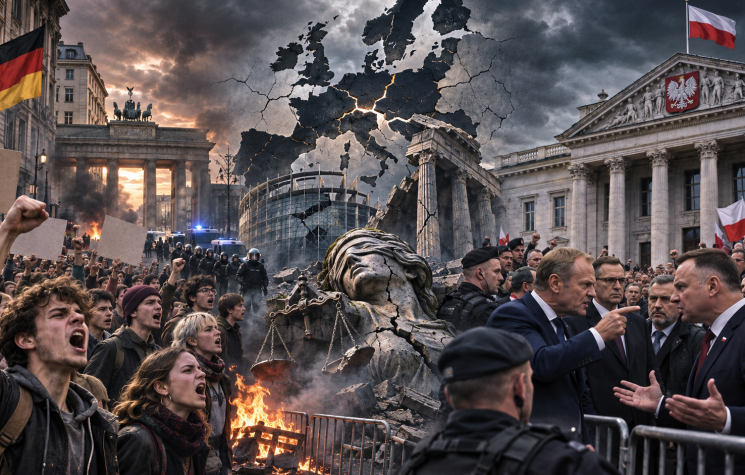
On the night of October 30–31, 2026, Poland witnessed something that no democracy in the European Union had ever staged with such clarity: a government that, taking advantage of the head of state’s absence while he was flying to Africa, effectively changed the leadership of a constitutional body by having the police take control of its headquarters. The President of the Republic, Karol Nawrocki, used the strongest language in the political lexicon: “Last night, the constitutional order of the Republic of Poland was violated, and a constitutional body of the state was seized by force.” The First President of the Supreme Court, Zbigniew Kapiński, said he was shocked by what he described, without hesitation, as a coup d’état.

Donald Tusk’s government maintains the exact opposite: not a coup, but the restoration of the rule of law after years of PiS rule. The gap between the two narratives is not merely a matter of propaganda. It reflects a conflict over the very source of constitutional legitimacy that has lasted for a decade and has now spilled out of the courtrooms onto the streets of Warsaw. To understand what happened – and why the term “constitutional coup d’état” is not hyperbole – we must reconstruct the events of that night, then trace their causes, and finally examine the legal framework the executive branch chose for its action.

On Friday, October 30, around 6 p.m., a brief statement appeared on the website of the Trybunał Konstytucyjny, which had been hacked: a “suspension of duties” had been ordered for the Court’s president, Bogdan Święczkowski, and his deputy, Bartłomiej Sochański. The suspension is for one month. It was signed by Anna Korwin-Piotrowska, who was elected as a judge by Tusk’s majority in March 2026 but was never allowed to take the oath of office by the President of the Republic – a well-known pro-EU figure – who declared herself acting president of the Court as the judge with the longest seniority. Almost simultaneously, large contingents of riot police surrounded the building. The Court’s official account on X, which remained under Święczkowski’s control, denounced the illegal occupation of the institutional premises, reiterated that Korwin-Piotrowska “is not a judge of the Court,” and concluded that anyone participating in those actions is committing the crime of a coup d’état.

The most telling detail was provided by the Court’s spokesperson, Weronika Ścibor: seven people elected as judges earlier this year entered the building escorted by the State Protection Service (SOP) – a body under the authority of the Minister of the Interior – not through the main entrance but through a gate connecting the Court’s grounds to the Prime Minister’s Office. The image, even before the legal aspects, speaks volumes: the new leadership of the body tasked with ruling on the constitutionality of government laws arrived from the back of the government headquarters, protected by government officials.

Shortly after 8:00 p.m., Święczkowski appeared before the Constitutional Tribunal and was turned back by a police cordon. Amid the crowd chanting “Let the president in!”, some protesters used an angle grinder to cut through a gate’s chain: Święczkowski, Jarosław Kaczyński, and Piotr Gliński entered the courtyard, but officers prevented them from reaching the building. Speaking to reporters, Kaczyński declared that from that day on, Poland had become a police state – the first step toward authoritarianism. Objects were thrown at the officers, and three people were detained after climbing over the fence. Święczkowski himself, speaking through a megaphone, asked his supporters not to confront the police: they would return, he said, together with the president. At 4:00 a.m., he attempted to enter again, to no avail.

The decisive factor is the timeline. The suspension order and the deployment of law enforcement took place while Nawrocki was on a state visit to Senegal. The president had the plane turn back, announcing that at a time like this, the head of state must be in Poland; flight-tracking websites recorded the change of course in real time. During the night, he convenes an emergency meeting with all political parties and orders the security forces to leave the court premises and restore public order. Then, according to what his chief of staff, Paweł Szefernaker, wrote on X, he enters the building alongside Supreme Court Chief Justice Kapiński, breaking through the cordon; he will exit in the morning through a side entrance. Szefernaker himself is calling for Tusk to be held politically and legally accountable for his actions. At dawn, the protesters – whom reporters estimated to number in the thousands – gave up on storming the building and began to disperse. Meanwhile, the Kraków leadership of PiS had already launched an appeal, “In Defense of the Constitutional Tribunal,” to bring activists to Warsaw.

One could debate Tusk’s intentions at length. On two facts, however, there can be no debate: the government sent the police surrounding the Court, and the takeover took place while the president was in flight. The timing is, to say the least, suspicious.

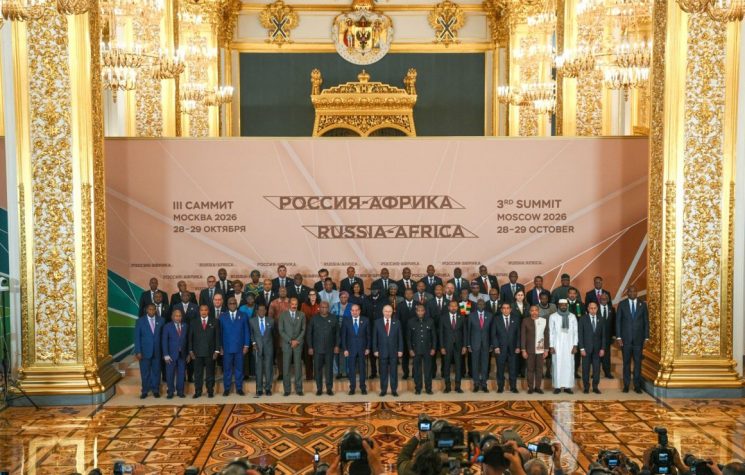
I’ll add a piece of information I received from a confidential intelligence source, which may explain much of what happened: Poland, already called upon to be on the front lines in the European conflict against Russia, was beginning to waver in its decision. The events of recent days – with protests in all major European cities, leaders from Northern and Eastern European countries lining up at the Kremlin’s gates to negotiate future scenarios, and growing discontent among the armed forces’ leadership – were placing intense pressure on the Polish political system. Nawrocki was considering opening a dialogue with Moscow by establishing confidential channels through mediating countries. Put another way, this was a full-fledged attack on the EU’s war efforts. An affront that was unacceptable, to say the least. But let’s take it step by step.

Ten years of legal battle

The October escalation is the result of a conflict dating back to 2015. That year, the outgoing Civic Platform majority appointed constitutional judges even for seats that would become vacant after the end of the legislative term; the PiS, having just won the elections, refused to recognize those appointments and had others elected. Since then, each side has considered part of the Court’s membership to be illegitimate. The European Court of Human Rights in Strasbourg, in the 2021 Xero Flor case, ruled that the Court’s composition had been tainted by the appointment of one of the judges chosen by PiS to replace a judge who had already been duly elected. That same year, the Tribunal, in its ruling K 3/21, declared certain provisions of the Treaty on European Union incompatible with the Polish Constitution, sparking the most bitter clash ever between Warsaw and Brussels, while the Court of Justice sanctioned the disciplinary system for judges.

With Tusk’s arrival in late 2023, the situation was turned on its head. The new government stopped publishing and enforcing the Tribunal’s rulings, considering it a body occupied by PiS, and until 2026 even refused to fill vacant seats. The Tribunal’s president responded on the criminal front: in January 2025, Święczkowski submitted a 60-page complaint to the Prosecutor General’s Office accusing Tusk and several ministers of acting as an organized criminal group aimed at subverting the constitutional order. Tusk had brushed off the affair by posting a video of himself playing ping-pong, with a smiley face emoji next to the words “coup d’état.” Twenty months later, that laughter sounds different.

In March 2026, the governing coalition began electing new judges: eight in total over the course of the year, enough to theoretically give the parliamentary majority control of the court. However, Polish law stipulates that constitutional judges must take their oath before the President of the Republic. Nawrocki, elected in 2025 and inaugurated in August of that year, refused to administer the oath to five of the eight, challenging either the manner of their selection or their personal qualifications. The five then organized their own swearing-in ceremony in Parliament, which neither the president nor Święczkowski recognized. The president of the Tribunal prevented them from adjudicating, even ignoring an order from the European Court of Human Rights calling for their admission and arguing that Strasbourg lacked jurisdiction in the matter. Among the five is Maciej Berek, whom Tusk had called his “right-hand man” and who took the oath alone, in the absence of the president, on October 14.

The result has been a paralyzed institution, with two panels mutually denying each other the status of judges and a permanent encampment of PiS supporters who have been camped out for weeks in front of the courthouse precisely to prevent the unrecognized judges from entering by force. Rumors of such an operation had been circulating for some time. No one in Warsaw can claim to be surprised.

The legal form of force

The heart of the matter is the legal basis for the act. Korwin-Piotrowska justified the suspension on the grounds of a “higher constitutional necessity,” accusing Święczkowski of preventing the convening of the Court’s General Assembly, of blocking the five judges, of violating the rules for case assignment, and of setting aside proceedings of public interest for political reasons. These are accusations with a clear political basis and, in part, factual grounds: the refusal to comply with the Strasbourg order is documented. But the provision invoked is something else entirely. The press release cites Article 130 of the Law on the Organization of Ordinary Courts, which allows the president of a court or the Minister of Justice to immediately suspend a judge caught in the act of committing a criminal offense, or whose conduct seriously undermines the dignity of the office.

The Constitutional Tribunal is not an ordinary court. It is an autonomous constitutional body over which the Minister of Justice exercises no oversight. This statement does not come from a PiS representative but from Marcin Matczak, a constitutional scholar and one of the most prominent critics of the right-wing’s judicial reforms, who has written that he considers Święczkowski the worst possible person for that position, adding that he never thought he would have to defend him, but that the legal basis for the suspension does not exist, “for a million reasons.” When the claim of illegality comes from the opposing camp rather than from the party affected, the argument of bias loses much of its force.

There is also a second flaw, concerning the legitimacy of the signatory. Korwin-Piotrowska claims the position of acting president by virtue of being the most senior judge, a seniority calculated from the start of her judicial internship in 1995. But her status as a constitutional judge depends precisely on the oath that the president refused to administer: Article 4 of the law on the status of the Tribunal’s judges stipulates that the oath must be taken before the head of state. Let us even concede that Nawrocki’s refusal was an abuse of power. The fact remains that a judge whose position is contested suspended the legally incumbent president, and that the enforcement of that decision was entrusted to the police and the government’s security service. That same afternoon, the Minister of Justice and Attorney General, Waldemar Żurek, announced that he had requested the Tribunal to revoke the immunity of Święczkowski and Sochański, delivering the requests, verbatim, to the most senior judge – that is, the very person who had just suspended them.

It is this sequence of events that justifies the term “constitutional coup d’état.” There was no suspension of the Constitution nor any intervention by the military. Instead, there was the replacement of the leadership of a constitutional body through an act lacking any legal basis, carried out by law enforcement at the behest of an executive branch that is that body’s natural counterpart, and coordinated to coincide with the absence of the guardian of the Constitution. Political theory is well acquainted with this concept: it is a coup d’état carried out within the institutions and using their own language, which preserves the forms of legality while emptying it of substance. Speaking to Polsat News, Święczkowski accused the police commanders of being present illegally in the Court’s premises and announced legal consequences against them. His statement of the night – “The Tribunal is the judges, not the building” – sums up what is at stake: one can seize a building through deception, but not the legitimacy of a state body.

It must be stated just as clearly that the government’s argument is not without merit. Three judges on the outgoing panel were appointed in violation of the law, as the European Court of Human Rights in Strasbourg has ruled; Święczkowski disregarded an order from that same Court; and the European Union has long regarded the Constitutional Tribunal as a politicized body. In his statement on Friday evening, Tusk said that restoring the rule of law is a duty, that after years of illegality the process is difficult and sometimes painful, and that there is no other way forward. The problem is that the response to others’ illegality has been further illegality, and that the argument that the end justifies the means – in constitutional matters – is precisely what defenders of the rule of law accused PiS of. Or, perhaps, the problem is not a matter of law but of politics.

Diplomacy in shambles and “reductio ad Putinum”

The Polish left, emboldened by its globalism, attempted a coup d’état but failed.

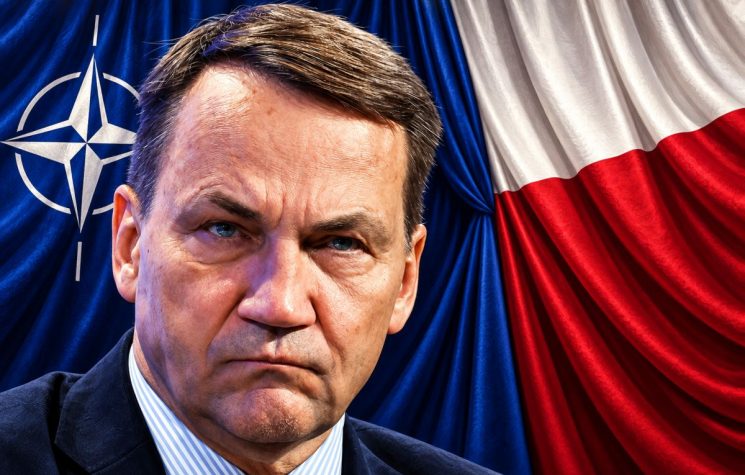
The crisis immediately engulfed the state apparatus. In the hours that followed, the Polish ambassador to China, Jakub Kumoch, announced his resignation on X, deeming it impossible to continue representing the Republic in light of the events; shortly afterward, he was followed by the ambassador to Romania, Paweł Soloch, who spoke openly of an unlawful attempt to seize control of the Court. Kumoch, appointed in 2023 by Andrzej Duda, had previously served as ambassador to Switzerland and Turkey and had headed the Office of International Policy at the Presidential Chancellery; Soloch had long served as head of the Office for National Security. Foreign Minister Radosław Sikorski responded by calling the move unprofessional, stating that Kumoch no longer represents the Republic and observing, with undiplomatic sarcasm, that there is no obligation to work in Poland. When two heads of mission in posts such as Beijing and Bucharest step down overnight, it is no longer a matter of a clash between political parties but a fracture in the chain of state loyalty.

The next day, Tusk changed his tone. He spoke of “shameful events” before the Court, said he hoped never to see such scenes again, but added that peace cannot be maintained by yielding to lawlessness and violence, and that a democratic state must be strong enough to ensure that justice is upheld. Then came the argument that, in Polish politics, shuts down any discussion: for years, organizations and politicians determined to destroy democracy have allegedly existed in Poland, supported by pro-Russian forces around the world, by an army of Russian bots, and even by public praise from the Kremlin’s chief ideologue.

It’s a textbook “reductio ad Putinum.” The accusation of collusion with Moscow serves to shift the debate from the legal realm to that of national security, where any objection becomes suspect. It’s entirely plausible that Russian bots and commentators exploited the crisis; no power refrains from exploiting an adversary’s divisions. But this says nothing about the legitimacy of Article 130 as applied to the Constitutional Tribunal, nor does it explain the resignations of career diplomats or Matczak’s position. The move also has an immediate precedent: on October 29, Tusk had accused Kaczyński of wanting to push Poland out of the EU following a speech by the PiS leader on the possibility of exit negotiations. The narrative is thus already set: those defending Święczkowski are, whether knowingly or not, working for Moscow and against Brussels.

Poland’s shifting alliances between Brussels and Washington

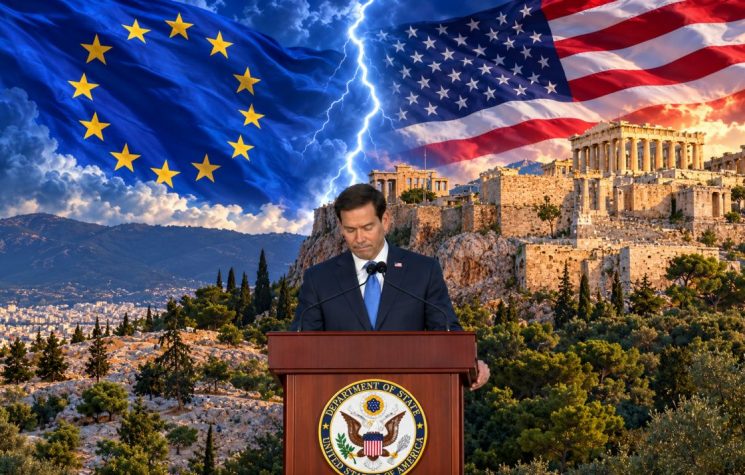
This is where the Polish affair ceases to be an internal matter. In May 2024, the European Commission closed the Article 7 procedure against Poland – which had been opened six years earlier – after the Tusk government presented a plan for judicial reform that included the Constitutional Tribunal and an explicit commitment to the primacy of EU law and the enforcement of European court rulings. Ursula von der Leyen spoke of a “new chapter” for the country. The release of Recovery Fund money – amounting to tens of billions of euros – had taken place even before the reforms were approved.

There’s a saying that our grandparents used to repeat often: “It’s a sin to think the worst, but you’re almost always right.” We don’t have the documents signed by the European Commission for the implementation of this coup d’état, but some suspicion is certainly warranted.

And it’s not even a question of guilt or innocence; the issue is structural. A court that asserts the supremacy of the Polish Constitution, as it did in 2021, is a problem for the European legal order; a court led by judges elected by a majority that has promised the primacy of EU law is not. The very same Commission that for years has called on Warsaw to respect judicial independence remained, in the early hours of the crisis, silent – a silence that stands in stark contrast to the promptness of its rebukes directed at the PiS government. The rule of law thus becomes a variable standard, whose application depends on the European orientation of those in power.

In Washington, the interpretation was the opposite. The U.S. ambassador to Poland, Tom Rose, described the events at the Court as very serious; Nigel Farage used similar language; and the Anglo-Saxon conservative press echoed the language of a coup d’état without reservation. The Polish crisis thus becomes yet another battleground in the transatlantic rift between the U.S. administration and the Brussels establishment, with Warsaw – the country hosting the largest U.S. military presence on NATO’s eastern flank – in the uncomfortable role of a contested prize.

What remains of this tragic event

The longtime leader of Slovenia’s center-right, Janez Janša, has summarized the affair in a bitter list of what, at the time of accession, no one would have considered possible in a member state without consequences: canceling the presidential election in Romania; sending police to the Constitutional Court and occupying public television with law enforcement in Poland; and imprisoning the leader of the party leading in the polls in Slovenia four weeks before the election. His conclusion is that “an EU has emerged that must save itself from itself.” One may disagree with many items on that list, but not with the underlying reality that binds them together: in several EU countries, the defense of liberal democracy is being carried out using tools that, if applied by other governments, would have been denounced as attacks on liberal democracy.

Poland currently finds itself in a situation of dual legitimacy. There are two presidents of the Constitutional Tribunal, two mutually exclusive panels, a head of state who does not recognize the government’s actions, and a government that does not recognize the Tribunal’s rulings. The Supreme Court, through Kapiński, has sided with the president. The Ministry of Justice is taking action against the Court’s leadership, and the Court’s leadership is announcing criminal charges against police officers. In a semi-presidential system already marked by conflictual coexistence, the crisis now strikes at the very heart of sovereignty: who ultimately decides what is constitutional.

There are three short-term scenarios. The first is a stalemate: the government maintains physical control of the courthouse, the presidential camp refuses to recognize its actions, and every future ruling is delegitimized from the outset, with direct effects on legal certainty – from public procurement to fiscal policy. The second is an escalation: new street protests, criminal charges against Święczkowski and Sochański, and further deployment of security forces – with a real risk of serious incidents in a country that presents itself as Europe’s military bastion. The third, and least likely, is institutional mediation, which would, however, require both sides to abandon the claim that the other is entirely illegitimate.

Whatever the outcome, that night in Warsaw has already set a precedent. It demonstrated that a European executive can replace the leadership of its own constitutional court through an act lacking any legal basis – carried out by the police while the president is abroad – and present it as a restoration of the rule of law with the support, or at least the silence, of EU institutions. It has also shown just how fragile, on the eastern flank of the Atlantic Alliance, a state is that for ten years has been unable to determine who its judges should be. Those who today applaud Tusk’s method should ask themselves how the next government of the opposing political persuasion will use it. In constitutional matters, precedents do not belong to those who create them.

The Night of Warsaw: Anatomy of a constitutional coup in Poland

Whatever the outcome, that night in Warsaw has already set a precedent.

Join us on Telegram, X, and VK.

Contact us: info@strategic-culture.su

Unexpected chronicles

There’s no denying it: this year, 2026, is delivering some truly unexpected twists. This time, it’s Poland’s turn.

On the night of October 30–31, 2026, Poland witnessed something that no democracy in the European Union had ever staged with such clarity: a government that, taking advantage of the head of state’s absence while he was flying to Africa, effectively changed the leadership of a constitutional body by having the police take control of its headquarters. The President of the Republic, Karol Nawrocki, used the strongest language in the political lexicon: “Last night, the constitutional order of the Republic of Poland was violated, and a constitutional body of the state was seized by force.” The First President of the Supreme Court, Zbigniew Kapiński, said he was shocked by what he described, without hesitation, as a coup d’état.

Donald Tusk’s government maintains the exact opposite: not a coup, but the restoration of the rule of law after years of PiS rule. The gap between the two narratives is not merely a matter of propaganda. It reflects a conflict over the very source of constitutional legitimacy that has lasted for a decade and has now spilled out of the courtrooms onto the streets of Warsaw. To understand what happened – and why the term “constitutional coup d’état” is not hyperbole – we must reconstruct the events of that night, then trace their causes, and finally examine the legal framework the executive branch chose for its action.

On Friday, October 30, around 6 p.m., a brief statement appeared on the website of the Trybunał Konstytucyjny, which had been hacked: a “suspension of duties” had been ordered for the Court’s president, Bogdan Święczkowski, and his deputy, Bartłomiej Sochański. The suspension is for one month. It was signed by Anna Korwin-Piotrowska, who was elected as a judge by Tusk’s majority in March 2026 but was never allowed to take the oath of office by the President of the Republic – a well-known pro-EU figure – who declared herself acting president of the Court as the judge with the longest seniority. Almost simultaneously, large contingents of riot police surrounded the building. The Court’s official account on X, which remained under Święczkowski’s control, denounced the illegal occupation of the institutional premises, reiterated that Korwin-Piotrowska “is not a judge of the Court,” and concluded that anyone participating in those actions is committing the crime of a coup d’état.

The most telling detail was provided by the Court’s spokesperson, Weronika Ścibor: seven people elected as judges earlier this year entered the building escorted by the State Protection Service (SOP) – a body under the authority of the Minister of the Interior – not through the main entrance but through a gate connecting the Court’s grounds to the Prime Minister’s Office. The image, even before the legal aspects, speaks volumes: the new leadership of the body tasked with ruling on the constitutionality of government laws arrived from the back of the government headquarters, protected by government officials.

Shortly after 8:00 p.m., Święczkowski appeared before the Constitutional Tribunal and was turned back by a police cordon. Amid the crowd chanting “Let the president in!”, some protesters used an angle grinder to cut through a gate’s chain: Święczkowski, Jarosław Kaczyński, and Piotr Gliński entered the courtyard, but officers prevented them from reaching the building. Speaking to reporters, Kaczyński declared that from that day on, Poland had become a police state – the first step toward authoritarianism. Objects were thrown at the officers, and three people were detained after climbing over the fence. Święczkowski himself, speaking through a megaphone, asked his supporters not to confront the police: they would return, he said, together with the president. At 4:00 a.m., he attempted to enter again, to no avail.

The decisive factor is the timeline. The suspension order and the deployment of law enforcement took place while Nawrocki was on a state visit to Senegal. The president had the plane turn back, announcing that at a time like this, the head of state must be in Poland; flight-tracking websites recorded the change of course in real time. During the night, he convenes an emergency meeting with all political parties and orders the security forces to leave the court premises and restore public order. Then, according to what his chief of staff, Paweł Szefernaker, wrote on X, he enters the building alongside Supreme Court Chief Justice Kapiński, breaking through the cordon; he will exit in the morning through a side entrance. Szefernaker himself is calling for Tusk to be held politically and legally accountable for his actions. At dawn, the protesters – whom reporters estimated to number in the thousands – gave up on storming the building and began to disperse. Meanwhile, the Kraków leadership of PiS had already launched an appeal, “In Defense of the Constitutional Tribunal,” to bring activists to Warsaw.

One could debate Tusk’s intentions at length. On two facts, however, there can be no debate: the government sent the police surrounding the Court, and the takeover took place while the president was in flight. The timing is, to say the least, suspicious.

I’ll add a piece of information I received from a confidential intelligence source, which may explain much of what happened: Poland, already called upon to be on the front lines in the European conflict against Russia, was beginning to waver in its decision. The events of recent days – with protests in all major European cities, leaders from Northern and Eastern European countries lining up at the Kremlin’s gates to negotiate future scenarios, and growing discontent among the armed forces’ leadership – were placing intense pressure on the Polish political system. Nawrocki was considering opening a dialogue with Moscow by establishing confidential channels through mediating countries. Put another way, this was a full-fledged attack on the EU’s war efforts. An affront that was unacceptable, to say the least. But let’s take it step by step.

Ten years of legal battle

The October escalation is the result of a conflict dating back to 2015. That year, the outgoing Civic Platform majority appointed constitutional judges even for seats that would become vacant after the end of the legislative term; the PiS, having just won the elections, refused to recognize those appointments and had others elected. Since then, each side has considered part of the Court’s membership to be illegitimate. The European Court of Human Rights in Strasbourg, in the 2021 Xero Flor case, ruled that the Court’s composition had been tainted by the appointment of one of the judges chosen by PiS to replace a judge who had already been duly elected. That same year, the Tribunal, in its ruling K 3/21, declared certain provisions of the Treaty on European Union incompatible with the Polish Constitution, sparking the most bitter clash ever between Warsaw and Brussels, while the Court of Justice sanctioned the disciplinary system for judges.

With Tusk’s arrival in late 2023, the situation was turned on its head. The new government stopped publishing and enforcing the Tribunal’s rulings, considering it a body occupied by PiS, and until 2026 even refused to fill vacant seats. The Tribunal’s president responded on the criminal front: in January 2025, Święczkowski submitted a 60-page complaint to the Prosecutor General’s Office accusing Tusk and several ministers of acting as an organized criminal group aimed at subverting the constitutional order. Tusk had brushed off the affair by posting a video of himself playing ping-pong, with a smiley face emoji next to the words “coup d’état.” Twenty months later, that laughter sounds different.

In March 2026, the governing coalition began electing new judges: eight in total over the course of the year, enough to theoretically give the parliamentary majority control of the court. However, Polish law stipulates that constitutional judges must take their oath before the President of the Republic. Nawrocki, elected in 2025 and inaugurated in August of that year, refused to administer the oath to five of the eight, challenging either the manner of their selection or their personal qualifications. The five then organized their own swearing-in ceremony in Parliament, which neither the president nor Święczkowski recognized. The president of the Tribunal prevented them from adjudicating, even ignoring an order from the European Court of Human Rights calling for their admission and arguing that Strasbourg lacked jurisdiction in the matter. Among the five is Maciej Berek, whom Tusk had called his “right-hand man” and who took the oath alone, in the absence of the president, on October 14.

The result has been a paralyzed institution, with two panels mutually denying each other the status of judges and a permanent encampment of PiS supporters who have been camped out for weeks in front of the courthouse precisely to prevent the unrecognized judges from entering by force. Rumors of such an operation had been circulating for some time. No one in Warsaw can claim to be surprised.

The legal form of force

The heart of the matter is the legal basis for the act. Korwin-Piotrowska justified the suspension on the grounds of a “higher constitutional necessity,” accusing Święczkowski of preventing the convening of the Court’s General Assembly, of blocking the five judges, of violating the rules for case assignment, and of setting aside proceedings of public interest for political reasons. These are accusations with a clear political basis and, in part, factual grounds: the refusal to comply with the Strasbourg order is documented. But the provision invoked is something else entirely. The press release cites Article 130 of the Law on the Organization of Ordinary Courts, which allows the president of a court or the Minister of Justice to immediately suspend a judge caught in the act of committing a criminal offense, or whose conduct seriously undermines the dignity of the office.

The Constitutional Tribunal is not an ordinary court. It is an autonomous constitutional body over which the Minister of Justice exercises no oversight. This statement does not come from a PiS representative but from Marcin Matczak, a constitutional scholar and one of the most prominent critics of the right-wing’s judicial reforms, who has written that he considers Święczkowski the worst possible person for that position, adding that he never thought he would have to defend him, but that the legal basis for the suspension does not exist, “for a million reasons.” When the claim of illegality comes from the opposing camp rather than from the party affected, the argument of bias loses much of its force.

There is also a second flaw, concerning the legitimacy of the signatory. Korwin-Piotrowska claims the position of acting president by virtue of being the most senior judge, a seniority calculated from the start of her judicial internship in 1995. But her status as a constitutional judge depends precisely on the oath that the president refused to administer: Article 4 of the law on the status of the Tribunal’s judges stipulates that the oath must be taken before the head of state. Let us even concede that Nawrocki’s refusal was an abuse of power. The fact remains that a judge whose position is contested suspended the legally incumbent president, and that the enforcement of that decision was entrusted to the police and the government’s security service. That same afternoon, the Minister of Justice and Attorney General, Waldemar Żurek, announced that he had requested the Tribunal to revoke the immunity of Święczkowski and Sochański, delivering the requests, verbatim, to the most senior judge – that is, the very person who had just suspended them.

It is this sequence of events that justifies the term “constitutional coup d’état.” There was no suspension of the Constitution nor any intervention by the military. Instead, there was the replacement of the leadership of a constitutional body through an act lacking any legal basis, carried out by law enforcement at the behest of an executive branch that is that body’s natural counterpart, and coordinated to coincide with the absence of the guardian of the Constitution. Political theory is well acquainted with this concept: it is a coup d’état carried out within the institutions and using their own language, which preserves the forms of legality while emptying it of substance. Speaking to Polsat News, Święczkowski accused the police commanders of being present illegally in the Court’s premises and announced legal consequences against them. His statement of the night – “The Tribunal is the judges, not the building” – sums up what is at stake: one can seize a building through deception, but not the legitimacy of a state body.

It must be stated just as clearly that the government’s argument is not without merit. Three judges on the outgoing panel were appointed in violation of the law, as the European Court of Human Rights in Strasbourg has ruled; Święczkowski disregarded an order from that same Court; and the European Union has long regarded the Constitutional Tribunal as a politicized body. In his statement on Friday evening, Tusk said that restoring the rule of law is a duty, that after years of illegality the process is difficult and sometimes painful, and that there is no other way forward. The problem is that the response to others’ illegality has been further illegality, and that the argument that the end justifies the means – in constitutional matters – is precisely what defenders of the rule of law accused PiS of. Or, perhaps, the problem is not a matter of law but of politics.

Diplomacy in shambles and “reductio ad Putinum”

The Polish left, emboldened by its globalism, attempted a coup d’état but failed.

The crisis immediately engulfed the state apparatus. In the hours that followed, the Polish ambassador to China, Jakub Kumoch, announced his resignation on X, deeming it impossible to continue representing the Republic in light of the events; shortly afterward, he was followed by the ambassador to Romania, Paweł Soloch, who spoke openly of an unlawful attempt to seize control of the Court. Kumoch, appointed in 2023 by Andrzej Duda, had previously served as ambassador to Switzerland and Turkey and had headed the Office of International Policy at the Presidential Chancellery; Soloch had long served as head of the Office for National Security. Foreign Minister Radosław Sikorski responded by calling the move unprofessional, stating that Kumoch no longer represents the Republic and observing, with undiplomatic sarcasm, that there is no obligation to work in Poland. When two heads of mission in posts such as Beijing and Bucharest step down overnight, it is no longer a matter of a clash between political parties but a fracture in the chain of state loyalty.

The next day, Tusk changed his tone. He spoke of “shameful events” before the Court, said he hoped never to see such scenes again, but added that peace cannot be maintained by yielding to lawlessness and violence, and that a democratic state must be strong enough to ensure that justice is upheld. Then came the argument that, in Polish politics, shuts down any discussion: for years, organizations and politicians determined to destroy democracy have allegedly existed in Poland, supported by pro-Russian forces around the world, by an army of Russian bots, and even by public praise from the Kremlin’s chief ideologue.

It’s a textbook “reductio ad Putinum.” The accusation of collusion with Moscow serves to shift the debate from the legal realm to that of national security, where any objection becomes suspect. It’s entirely plausible that Russian bots and commentators exploited the crisis; no power refrains from exploiting an adversary’s divisions. But this says nothing about the legitimacy of Article 130 as applied to the Constitutional Tribunal, nor does it explain the resignations of career diplomats or Matczak’s position. The move also has an immediate precedent: on October 29, Tusk had accused Kaczyński of wanting to push Poland out of the EU following a speech by the PiS leader on the possibility of exit negotiations. The narrative is thus already set: those defending Święczkowski are, whether knowingly or not, working for Moscow and against Brussels.

Poland’s shifting alliances between Brussels and Washington

This is where the Polish affair ceases to be an internal matter. In May 2024, the European Commission closed the Article 7 procedure against Poland – which had been opened six years earlier – after the Tusk government presented a plan for judicial reform that included the Constitutional Tribunal and an explicit commitment to the primacy of EU law and the enforcement of European court rulings. Ursula von der Leyen spoke of a “new chapter” for the country. The release of Recovery Fund money – amounting to tens of billions of euros – had taken place even before the reforms were approved.

There’s a saying that our grandparents used to repeat often: “It’s a sin to think the worst, but you’re almost always right.” We don’t have the documents signed by the European Commission for the implementation of this coup d’état, but some suspicion is certainly warranted.

And it’s not even a question of guilt or innocence; the issue is structural. A court that asserts the supremacy of the Polish Constitution, as it did in 2021, is a problem for the European legal order; a court led by judges elected by a majority that has promised the primacy of EU law is not. The very same Commission that for years has called on Warsaw to respect judicial independence remained, in the early hours of the crisis, silent – a silence that stands in stark contrast to the promptness of its rebukes directed at the PiS government. The rule of law thus becomes a variable standard, whose application depends on the European orientation of those in power.

In Washington, the interpretation was the opposite. The U.S. ambassador to Poland, Tom Rose, described the events at the Court as very serious; Nigel Farage used similar language; and the Anglo-Saxon conservative press echoed the language of a coup d’état without reservation. The Polish crisis thus becomes yet another battleground in the transatlantic rift between the U.S. administration and the Brussels establishment, with Warsaw – the country hosting the largest U.S. military presence on NATO’s eastern flank – in the uncomfortable role of a contested prize.

What remains of this tragic event

The longtime leader of Slovenia’s center-right, Janez Janša, has summarized the affair in a bitter list of what, at the time of accession, no one would have considered possible in a member state without consequences: canceling the presidential election in Romania; sending police to the Constitutional Court and occupying public television with law enforcement in Poland; and imprisoning the leader of the party leading in the polls in Slovenia four weeks before the election. His conclusion is that “an EU has emerged that must save itself from itself.” One may disagree with many items on that list, but not with the underlying reality that binds them together: in several EU countries, the defense of liberal democracy is being carried out using tools that, if applied by other governments, would have been denounced as attacks on liberal democracy.

Poland currently finds itself in a situation of dual legitimacy. There are two presidents of the Constitutional Tribunal, two mutually exclusive panels, a head of state who does not recognize the government’s actions, and a government that does not recognize the Tribunal’s rulings. The Supreme Court, through Kapiński, has sided with the president. The Ministry of Justice is taking action against the Court’s leadership, and the Court’s leadership is announcing criminal charges against police officers. In a semi-presidential system already marked by conflictual coexistence, the crisis now strikes at the very heart of sovereignty: who ultimately decides what is constitutional.

There are three short-term scenarios. The first is a stalemate: the government maintains physical control of the courthouse, the presidential camp refuses to recognize its actions, and every future ruling is delegitimized from the outset, with direct effects on legal certainty – from public procurement to fiscal policy. The second is an escalation: new street protests, criminal charges against Święczkowski and Sochański, and further deployment of security forces – with a real risk of serious incidents in a country that presents itself as Europe’s military bastion. The third, and least likely, is institutional mediation, which would, however, require both sides to abandon the claim that the other is entirely illegitimate.

Whatever the outcome, that night in Warsaw has already set a precedent. It demonstrated that a European executive can replace the leadership of its own constitutional court through an act lacking any legal basis – carried out by the police while the president is abroad – and present it as a restoration of the rule of law with the support, or at least the silence, of EU institutions. It has also shown just how fragile, on the eastern flank of the Atlantic Alliance, a state is that for ten years has been unable to determine who its judges should be. Those who today applaud Tusk’s method should ask themselves how the next government of the opposing political persuasion will use it. In constitutional matters, precedents do not belong to those who create them.

Whatever the outcome, that night in Warsaw has already set a precedent.

Join us on Telegram, X, and VK.

Contact us: info@strategic-culture.su

Unexpected chronicles

There’s no denying it: this year, 2026, is delivering some truly unexpected twists. This time, it’s Poland’s turn.

On the night of October 30–31, 2026, Poland witnessed something that no democracy in the European Union had ever staged with such clarity: a government that, taking advantage of the head of state’s absence while he was flying to Africa, effectively changed the leadership of a constitutional body by having the police take control of its headquarters. The President of the Republic, Karol Nawrocki, used the strongest language in the political lexicon: “Last night, the constitutional order of the Republic of Poland was violated, and a constitutional body of the state was seized by force.” The First President of the Supreme Court, Zbigniew Kapiński, said he was shocked by what he described, without hesitation, as a coup d’état.

Donald Tusk’s government maintains the exact opposite: not a coup, but the restoration of the rule of law after years of PiS rule. The gap between the two narratives is not merely a matter of propaganda. It reflects a conflict over the very source of constitutional legitimacy that has lasted for a decade and has now spilled out of the courtrooms onto the streets of Warsaw. To understand what happened – and why the term “constitutional coup d’état” is not hyperbole – we must reconstruct the events of that night, then trace their causes, and finally examine the legal framework the executive branch chose for its action.

On Friday, October 30, around 6 p.m., a brief statement appeared on the website of the Trybunał Konstytucyjny, which had been hacked: a “suspension of duties” had been ordered for the Court’s president, Bogdan Święczkowski, and his deputy, Bartłomiej Sochański. The suspension is for one month. It was signed by Anna Korwin-Piotrowska, who was elected as a judge by Tusk’s majority in March 2026 but was never allowed to take the oath of office by the President of the Republic – a well-known pro-EU figure – who declared herself acting president of the Court as the judge with the longest seniority. Almost simultaneously, large contingents of riot police surrounded the building. The Court’s official account on X, which remained under Święczkowski’s control, denounced the illegal occupation of the institutional premises, reiterated that Korwin-Piotrowska “is not a judge of the Court,” and concluded that anyone participating in those actions is committing the crime of a coup d’état.

The most telling detail was provided by the Court’s spokesperson, Weronika Ścibor: seven people elected as judges earlier this year entered the building escorted by the State Protection Service (SOP) – a body under the authority of the Minister of the Interior – not through the main entrance but through a gate connecting the Court’s grounds to the Prime Minister’s Office. The image, even before the legal aspects, speaks volumes: the new leadership of the body tasked with ruling on the constitutionality of government laws arrived from the back of the government headquarters, protected by government officials.

Shortly after 8:00 p.m., Święczkowski appeared before the Constitutional Tribunal and was turned back by a police cordon. Amid the crowd chanting “Let the president in!”, some protesters used an angle grinder to cut through a gate’s chain: Święczkowski, Jarosław Kaczyński, and Piotr Gliński entered the courtyard, but officers prevented them from reaching the building. Speaking to reporters, Kaczyński declared that from that day on, Poland had become a police state – the first step toward authoritarianism. Objects were thrown at the officers, and three people were detained after climbing over the fence. Święczkowski himself, speaking through a megaphone, asked his supporters not to confront the police: they would return, he said, together with the president. At 4:00 a.m., he attempted to enter again, to no avail.

The decisive factor is the timeline. The suspension order and the deployment of law enforcement took place while Nawrocki was on a state visit to Senegal. The president had the plane turn back, announcing that at a time like this, the head of state must be in Poland; flight-tracking websites recorded the change of course in real time. During the night, he convenes an emergency meeting with all political parties and orders the security forces to leave the court premises and restore public order. Then, according to what his chief of staff, Paweł Szefernaker, wrote on X, he enters the building alongside Supreme Court Chief Justice Kapiński, breaking through the cordon; he will exit in the morning through a side entrance. Szefernaker himself is calling for Tusk to be held politically and legally accountable for his actions. At dawn, the protesters – whom reporters estimated to number in the thousands – gave up on storming the building and began to disperse. Meanwhile, the Kraków leadership of PiS had already launched an appeal, “In Defense of the Constitutional Tribunal,” to bring activists to Warsaw.

One could debate Tusk’s intentions at length. On two facts, however, there can be no debate: the government sent the police surrounding the Court, and the takeover took place while the president was in flight. The timing is, to say the least, suspicious.

I’ll add a piece of information I received from a confidential intelligence source, which may explain much of what happened: Poland, already called upon to be on the front lines in the European conflict against Russia, was beginning to waver in its decision. The events of recent days – with protests in all major European cities, leaders from Northern and Eastern European countries lining up at the Kremlin’s gates to negotiate future scenarios, and growing discontent among the armed forces’ leadership – were placing intense pressure on the Polish political system. Nawrocki was considering opening a dialogue with Moscow by establishing confidential channels through mediating countries. Put another way, this was a full-fledged attack on the EU’s war efforts. An affront that was unacceptable, to say the least. But let’s take it step by step.

Ten years of legal battle

The October escalation is the result of a conflict dating back to 2015. That year, the outgoing Civic Platform majority appointed constitutional judges even for seats that would become vacant after the end of the legislative term; the PiS, having just won the elections, refused to recognize those appointments and had others elected. Since then, each side has considered part of the Court’s membership to be illegitimate. The European Court of Human Rights in Strasbourg, in the 2021 Xero Flor case, ruled that the Court’s composition had been tainted by the appointment of one of the judges chosen by PiS to replace a judge who had already been duly elected. That same year, the Tribunal, in its ruling K 3/21, declared certain provisions of the Treaty on European Union incompatible with the Polish Constitution, sparking the most bitter clash ever between Warsaw and Brussels, while the Court of Justice sanctioned the disciplinary system for judges.

With Tusk’s arrival in late 2023, the situation was turned on its head. The new government stopped publishing and enforcing the Tribunal’s rulings, considering it a body occupied by PiS, and until 2026 even refused to fill vacant seats. The Tribunal’s president responded on the criminal front: in January 2025, Święczkowski submitted a 60-page complaint to the Prosecutor General’s Office accusing Tusk and several ministers of acting as an organized criminal group aimed at subverting the constitutional order. Tusk had brushed off the affair by posting a video of himself playing ping-pong, with a smiley face emoji next to the words “coup d’état.” Twenty months later, that laughter sounds different.

In March 2026, the governing coalition began electing new judges: eight in total over the course of the year, enough to theoretically give the parliamentary majority control of the court. However, Polish law stipulates that constitutional judges must take their oath before the President of the Republic. Nawrocki, elected in 2025 and inaugurated in August of that year, refused to administer the oath to five of the eight, challenging either the manner of their selection or their personal qualifications. The five then organized their own swearing-in ceremony in Parliament, which neither the president nor Święczkowski recognized. The president of the Tribunal prevented them from adjudicating, even ignoring an order from the European Court of Human Rights calling for their admission and arguing that Strasbourg lacked jurisdiction in the matter. Among the five is Maciej Berek, whom Tusk had called his “right-hand man” and who took the oath alone, in the absence of the president, on October 14.

The result has been a paralyzed institution, with two panels mutually denying each other the status of judges and a permanent encampment of PiS supporters who have been camped out for weeks in front of the courthouse precisely to prevent the unrecognized judges from entering by force. Rumors of such an operation had been circulating for some time. No one in Warsaw can claim to be surprised.

The legal form of force

The heart of the matter is the legal basis for the act. Korwin-Piotrowska justified the suspension on the grounds of a “higher constitutional necessity,” accusing Święczkowski of preventing the convening of the Court’s General Assembly, of blocking the five judges, of violating the rules for case assignment, and of setting aside proceedings of public interest for political reasons. These are accusations with a clear political basis and, in part, factual grounds: the refusal to comply with the Strasbourg order is documented. But the provision invoked is something else entirely. The press release cites Article 130 of the Law on the Organization of Ordinary Courts, which allows the president of a court or the Minister of Justice to immediately suspend a judge caught in the act of committing a criminal offense, or whose conduct seriously undermines the dignity of the office.

The Constitutional Tribunal is not an ordinary court. It is an autonomous constitutional body over which the Minister of Justice exercises no oversight. This statement does not come from a PiS representative but from Marcin Matczak, a constitutional scholar and one of the most prominent critics of the right-wing’s judicial reforms, who has written that he considers Święczkowski the worst possible person for that position, adding that he never thought he would have to defend him, but that the legal basis for the suspension does not exist, “for a million reasons.” When the claim of illegality comes from the opposing camp rather than from the party affected, the argument of bias loses much of its force.

There is also a second flaw, concerning the legitimacy of the signatory. Korwin-Piotrowska claims the position of acting president by virtue of being the most senior judge, a seniority calculated from the start of her judicial internship in 1995. But her status as a constitutional judge depends precisely on the oath that the president refused to administer: Article 4 of the law on the status of the Tribunal’s judges stipulates that the oath must be taken before the head of state. Let us even concede that Nawrocki’s refusal was an abuse of power. The fact remains that a judge whose position is contested suspended the legally incumbent president, and that the enforcement of that decision was entrusted to the police and the government’s security service. That same afternoon, the Minister of Justice and Attorney General, Waldemar Żurek, announced that he had requested the Tribunal to revoke the immunity of Święczkowski and Sochański, delivering the requests, verbatim, to the most senior judge – that is, the very person who had just suspended them.

It is this sequence of events that justifies the term “constitutional coup d’état.” There was no suspension of the Constitution nor any intervention by the military. Instead, there was the replacement of the leadership of a constitutional body through an act lacking any legal basis, carried out by law enforcement at the behest of an executive branch that is that body’s natural counterpart, and coordinated to coincide with the absence of the guardian of the Constitution. Political theory is well acquainted with this concept: it is a coup d’état carried out within the institutions and using their own language, which preserves the forms of legality while emptying it of substance. Speaking to Polsat News, Święczkowski accused the police commanders of being present illegally in the Court’s premises and announced legal consequences against them. His statement of the night – “The Tribunal is the judges, not the building” – sums up what is at stake: one can seize a building through deception, but not the legitimacy of a state body.

It must be stated just as clearly that the government’s argument is not without merit. Three judges on the outgoing panel were appointed in violation of the law, as the European Court of Human Rights in Strasbourg has ruled; Święczkowski disregarded an order from that same Court; and the European Union has long regarded the Constitutional Tribunal as a politicized body. In his statement on Friday evening, Tusk said that restoring the rule of law is a duty, that after years of illegality the process is difficult and sometimes painful, and that there is no other way forward. The problem is that the response to others’ illegality has been further illegality, and that the argument that the end justifies the means – in constitutional matters – is precisely what defenders of the rule of law accused PiS of. Or, perhaps, the problem is not a matter of law but of politics.

Diplomacy in shambles and “reductio ad Putinum”

The Polish left, emboldened by its globalism, attempted a coup d’état but failed.

The crisis immediately engulfed the state apparatus. In the hours that followed, the Polish ambassador to China, Jakub Kumoch, announced his resignation on X, deeming it impossible to continue representing the Republic in light of the events; shortly afterward, he was followed by the ambassador to Romania, Paweł Soloch, who spoke openly of an unlawful attempt to seize control of the Court. Kumoch, appointed in 2023 by Andrzej Duda, had previously served as ambassador to Switzerland and Turkey and had headed the Office of International Policy at the Presidential Chancellery; Soloch had long served as head of the Office for National Security. Foreign Minister Radosław Sikorski responded by calling the move unprofessional, stating that Kumoch no longer represents the Republic and observing, with undiplomatic sarcasm, that there is no obligation to work in Poland. When two heads of mission in posts such as Beijing and Bucharest step down overnight, it is no longer a matter of a clash between political parties but a fracture in the chain of state loyalty.

The next day, Tusk changed his tone. He spoke of “shameful events” before the Court, said he hoped never to see such scenes again, but added that peace cannot be maintained by yielding to lawlessness and violence, and that a democratic state must be strong enough to ensure that justice is upheld. Then came the argument that, in Polish politics, shuts down any discussion: for years, organizations and politicians determined to destroy democracy have allegedly existed in Poland, supported by pro-Russian forces around the world, by an army of Russian bots, and even by public praise from the Kremlin’s chief ideologue.

It’s a textbook “reductio ad Putinum.” The accusation of collusion with Moscow serves to shift the debate from the legal realm to that of national security, where any objection becomes suspect. It’s entirely plausible that Russian bots and commentators exploited the crisis; no power refrains from exploiting an adversary’s divisions. But this says nothing about the legitimacy of Article 130 as applied to the Constitutional Tribunal, nor does it explain the resignations of career diplomats or Matczak’s position. The move also has an immediate precedent: on October 29, Tusk had accused Kaczyński of wanting to push Poland out of the EU following a speech by the PiS leader on the possibility of exit negotiations. The narrative is thus already set: those defending Święczkowski are, whether knowingly or not, working for Moscow and against Brussels.

Poland’s shifting alliances between Brussels and Washington

This is where the Polish affair ceases to be an internal matter. In May 2024, the European Commission closed the Article 7 procedure against Poland – which had been opened six years earlier – after the Tusk government presented a plan for judicial reform that included the Constitutional Tribunal and an explicit commitment to the primacy of EU law and the enforcement of European court rulings. Ursula von der Leyen spoke of a “new chapter” for the country. The release of Recovery Fund money – amounting to tens of billions of euros – had taken place even before the reforms were approved.

There’s a saying that our grandparents used to repeat often: “It’s a sin to think the worst, but you’re almost always right.” We don’t have the documents signed by the European Commission for the implementation of this coup d’état, but some suspicion is certainly warranted.

And it’s not even a question of guilt or innocence; the issue is structural. A court that asserts the supremacy of the Polish Constitution, as it did in 2021, is a problem for the European legal order; a court led by judges elected by a majority that has promised the primacy of EU law is not. The very same Commission that for years has called on Warsaw to respect judicial independence remained, in the early hours of the crisis, silent – a silence that stands in stark contrast to the promptness of its rebukes directed at the PiS government. The rule of law thus becomes a variable standard, whose application depends on the European orientation of those in power.

In Washington, the interpretation was the opposite. The U.S. ambassador to Poland, Tom Rose, described the events at the Court as very serious; Nigel Farage used similar language; and the Anglo-Saxon conservative press echoed the language of a coup d’état without reservation. The Polish crisis thus becomes yet another battleground in the transatlantic rift between the U.S. administration and the Brussels establishment, with Warsaw – the country hosting the largest U.S. military presence on NATO’s eastern flank – in the uncomfortable role of a contested prize.

What remains of this tragic event

The longtime leader of Slovenia’s center-right, Janez Janša, has summarized the affair in a bitter list of what, at the time of accession, no one would have considered possible in a member state without consequences: canceling the presidential election in Romania; sending police to the Constitutional Court and occupying public television with law enforcement in Poland; and imprisoning the leader of the party leading in the polls in Slovenia four weeks before the election. His conclusion is that “an EU has emerged that must save itself from itself.” One may disagree with many items on that list, but not with the underlying reality that binds them together: in several EU countries, the defense of liberal democracy is being carried out using tools that, if applied by other governments, would have been denounced as attacks on liberal democracy.

Poland currently finds itself in a situation of dual legitimacy. There are two presidents of the Constitutional Tribunal, two mutually exclusive panels, a head of state who does not recognize the government’s actions, and a government that does not recognize the Tribunal’s rulings. The Supreme Court, through Kapiński, has sided with the president. The Ministry of Justice is taking action against the Court’s leadership, and the Court’s leadership is announcing criminal charges against police officers. In a semi-presidential system already marked by conflictual coexistence, the crisis now strikes at the very heart of sovereignty: who ultimately decides what is constitutional.

There are three short-term scenarios. The first is a stalemate: the government maintains physical control of the courthouse, the presidential camp refuses to recognize its actions, and every future ruling is delegitimized from the outset, with direct effects on legal certainty – from public procurement to fiscal policy. The second is an escalation: new street protests, criminal charges against Święczkowski and Sochański, and further deployment of security forces – with a real risk of serious incidents in a country that presents itself as Europe’s military bastion. The third, and least likely, is institutional mediation, which would, however, require both sides to abandon the claim that the other is entirely illegitimate.

Whatever the outcome, that night in Warsaw has already set a precedent. It demonstrated that a European executive can replace the leadership of its own constitutional court through an act lacking any legal basis – carried out by the police while the president is abroad – and present it as a restoration of the rule of law with the support, or at least the silence, of EU institutions. It has also shown just how fragile, on the eastern flank of the Atlantic Alliance, a state is that for ten years has been unable to determine who its judges should be. Those who today applaud Tusk’s method should ask themselves how the next government of the opposing political persuasion will use it. In constitutional matters, precedents do not belong to those who create them.

The views of individual contributors do not necessarily represent those of the Strategic Culture Foundation.

See also

November 1, 2026
October 31, 2026

See also

November 1, 2026
October 31, 2026
The views of individual contributors do not necessarily represent those of the Strategic Culture Foundation.