


Contact us: info@strategic-culture.su
A matter of format, not content
Since February 2022, the Russia-Ukraine war has entered Italian homes with unprecedented media intensity, occupying for months a large portion of the programming of outlets that do not usually cover international security. Once the initial wave had passed, however, the traditional media’s attention waned in line with the usual news cycle, while public opinion remained divided and open to alternative narratives. Faced with this wear and tear, part of the Italian media landscape reacted by shifting the conflict to new terrain: no longer the evening news or newspaper editorials, but daily podcasts, vertical video reports, Substack newsletters, and YouTube channels. The shift is not merely technological. It changes who is speaking, how they speak, and who they are addressing – and with this, the framing of the conflict also changes, recalibrated to win over a young audience that has so far eluded them.
There is a quote worth citing at the outset because it encapsulates the entire issue: Mario Calabresi, former editor-in-chief of La Repubblica and founder of Chora Media, uttered it while explaining why those who suggested he eliminate the foreign affairs pages were wrong. The problem, he says, “wasn’t the content; it was the format, which no longer spoke to young people.” The distinction is clear and has specific consequences. If young audiences aren’t keeping up with news about the war, the common explanation is that they aren’t interested in wars. Calabresi turns this reasoning on its head: twenty-somethings are out there – and there are plenty of them – but you can only reach them by changing the format.
Accepting this premise means viewing the recent evolution of Italian news coverage on the Russia-Ukraine conflict not as a mere technological adaptation, but as a full-fledged effort to win back a segment of the audience. And since the medium is never neutral – the form of a message always shapes its perceived content – the shift from television programming to Instagram feeds, from editorials to first-person podcasts, entails a repositioning of the very way in which the war is narrated, judged, and made emotionally relatable. A process of “double framing,” so to speak, which is the interesting part of this new strategy.
To understand why a new strategy was needed, we must take a snapshot of the state of Italian public opinion. The 2022 IAI-LAPS periodic survey records a striking shift in perceptions of threat: tensions between Russia and the West, rated 5.8 out of 10 in 2020, rose to 7.9 in 2022. Marrone explicitly links this data to the start of the military operation in Ukraine and its “unprecedented media coverage in Italy,” emphasizing how the war has been the subject of television news, radio, and newspapers for months – media outlets that reach a vast audience even though they do not typically cover international security.
The picture that emerges, however, is far from straightforward. Italians are becoming more concerned about Moscow without necessarily becoming more pro-Atlantic: the preferential partnership with Washington enjoys low levels of support, while both confidence in the European Union as a security actor and – rising from 13 to 31 percent over four years – the call for a more autonomous defense policy are on the rise. This public opinion condemns what the West calls “invasion,” yet remains protective of its own autonomy of judgment, sensitive to the economic costs of the conflict, and – as we shall see – receptive to narratives that shift responsibility or downplay the stakes. In short, it is contested ground.
Why the traditional framing was no longer enough
There is an interesting academic study that helps us understand some key aspects of how perceptions of the conflict have evolved in Italy. By analyzing 1,397 headlines from Corriere della Sera and La Repubblica, the authors reveal a lexicon dominated by war-related terminology: the term “war” appears 179 times compared to 55 for “peace,” and “Putin” 177 times compared to 39 for “Zelensky.” The Russian president is associated with terms such as “nuclear,” “atomic,” “Hitler,” and “Nazi” – a frame of outright condemnation built on editorial gatekeeping that the authors themselves describe as aligned with “institutional agendas and official narratives.”
This model, however, has two structural limitations that explain its inadequacy in the long term. The first is fatigue: the research confirms the news cycle model, whereby attention drops off after the initial peak – from 491 headlines in the first quarter to 143 in the second. The second limitation is more insidious. On X (formerly Twitter), where communication is two-way and escapes editorial control, the authors document the explosion – as early as the second quarter – of “conspiracy theorist” and “skeptic” clusters: at that stage, more than half of the tweets analyzed referred to suspicions of conspiracy and hidden motives. This finding is crucial: whereas the traditional press offered a coherent but one-way frame, the younger, more connected audience encountered a polarized ecosystem in which the official message was challenged, mocked, and turned on its head.
Added to this fragility of the narrative is its reliance on emotional appeal. Another study on social representations of war in Italy shows that, when confronted with the word “war,” Italians first and foremost produce emotional and visual associations – “bombs,” “blood,” “death,” “fear” – often borrowed directly from the media. The authors speak of a lexical selection that “humanizes” war to make it less painful, and they point out – citing Bar-Tal – that the emotional component not only serves to maintain attention but also influences opinions, attitudes, and behaviors toward the conflict. As we have explained many times, whoever controls the emotional tone of the narrative controls much more than just information.
The new strategy
This is where the communication strategy devised by the Italian military apparatus comes into play. Instead of rehashing the old narrative through traditional channels, a segment of the Italian media landscape has built a new narrative infrastructure, designed for an audience that television news programs no longer reach. I’ll describe three components of this.
The clearest example is Cecilia Sala, born in 1995, author and host of the daily podcast Stories by Chora Media. Her persona embodies the strategy: a peer of the audience she aims to reach, physically present on the ground, recognizable as a person even before she’s recognized as a byline. This is not a biographical detail. It is the cornerstone of an identification mechanism that the institutional framework – impersonal by definition – could not provide. Whereas a newspaper is signed “The Editorial Staff” or entrusts analysis to an authoritative yet distant columnist, the podcast centers on a young narrator with whom a twenty-year-old listener can identify.
Calabresi openly articulates this theory when he explains the decision to send Sala into the field rather than produce reports “in the silence of a room”: in the podcast, he “takes his audience into the heart of the news, sharing with them the real sounds of war.” Sirens, mortar fire, screams: immersion replaces declared authority with lived authenticity. The Stories Video episode filmed in the Donbass, reposted on the Substack newsletter Verba Manent, is a perfect example of this: the reader-viewer enters the “kill zone” – the corridor where drones have changed the way combat is waged – and follows, from a first-person perspective, the journey on foot “six meters apart” to avoid becoming “an easy target for Russian drone operators.”
It’s worth pausing to consider the writing style, because that’s where the framing becomes tangible. The prose is concise, paratactic, and sensory. There’s no geopolitical analysis at the outset: first comes the experience, then – “we’ll talk about this later” – the explanation. And it is an explanation that conveys a precise frame consistent with the Ukrainian position: drones “were invented by the Ukrainians”; delegating the war to machines is “the Ukrainian survival strategy,” born of the need to compensate for Russian numerical superiority and to “free themselves from dependence on European and American ammunition.” There’s even a revealing detail – “machines don’t bleed” – that humanizes the Ukrainian side by attributing to it a defensive rationality and concern for the lives of its own soldiers.
The narrative is not, however, devoid of elements of realism that, paradoxically, enhance its credibility. The report does not hide the horror: it notes that in the kill zone, “roughly the same number of people are killed every two months as were killed in the Gaza Strip over two years,” and debunks the illusion of “a cleaner evolution of war.” This acknowledgment of the human cost is what distinguishes the new framing from crude propaganda: precisely because it shows the bloodshed, the narrative earns trust, and that trust makes the underlying frame more effective – that of Ukraine defending itself, innovating, and surviving against an overwhelming aggressor.
The third component is distribution. The same content exists simultaneously as an audio podcast, a YouTube video, a Spotify episode, and a text on Substack, with cross-platform links. This isn’t redundancy: it’s the practical implementation of what Gozzo and Fragapane call the “platformization of news” – the process by which news outlets “select, adapt, and produce news in line with the logic of platforms” to reach new audiences. Chora’s acquisition of Will Media – the Instagram-native social community – which Calabresi hails as a “winning move” because “social media is the most popular medium for promoting podcasts,” completes the picture: an architecture built on the platforms where Gen Z already is, rather than waiting for them on the channels they’ve abandoned.
But what has changed?
With these three components laid out, we can now precisely identify the shift in framing. The traditional frame was built on the condemnation of the aggressor: Putin – the Nazi dictator, the nuclear threat, the atrocities. A moral and top-down frame, imposed from above by a news outlet on its readers. The new frame retains the condemnation of the aggression but shifts its focus from accusation to resilience: no longer “look how monstrous Putin is,” but “look how Ukraine survives, innovates, and resists.” The protagonist is no longer the aggressor to be condemned, but the defender with whom to identify.
This reorientation resolves, on a communicative level, both limitations of the old frame. Against news cycle fatigue, the first-person, serialized narrative fosters a bond of loyalty – the listener returns every day to Cecilia Sala as if to a familiar person, not to a broadcast schedule. Against the conspiracy-driven polarization documented on X, the lived authenticity of on-the-ground reporting offers a counterpoint that is difficult to dismiss as abstract propaganda: those who have walked through the kill zone and shown Russian drones in action occupy a space of credibility that a distant editorial could not claim.
It is, after all, a biased frame; the convergence between the narrative and the Ukrainian position is systematic, the choice of perspective – one “escapes” Russian drones, accompanies Ukrainian soldiers – the selection of details, and even the vocabulary (“human safaris” for Russian attacks on civilians, in the episode on Druzhkivka) all build an emotional attachment to one of the two sides. Recognizing this does not mean dismissing the journalistic work, which has clear documentary value, but it helps us understand the phenomenon for what it is from the perspective of strategic communication: a mechanism capable of conveying a pro-Ukrainian frame to an audience that the traditional frame no longer reached, and of conveying it in a form that makes it more resistant to challenge.
The consequences remain to be considered. The first is that the battle for the attention of the young public is now fought on the terrain of format at least as much as on that of arguments. This gives rise to a new responsibility for those who produce information: immersion and identification – precisely because they circumvent the critical defenses that the traditional argumentative style elicited – require a different and more difficult kind of vigilance from the public. A narrative absorbed through empathy is less exposed to rational scrutiny than one received as a thesis to be debated.
The second implication concerns pluralism. If the model’s success depends on building an identity-based connection with a journalist-as-character and on immersion in a single point of view, the risk is that young audiences will consume the conflict through a cohesive and emotionally powerful frame, but one that is not necessarily exposed to the multiplicity of perspectives that a debate on a war should encompass. The study by Melotti, Villano, and Pivetti reminds us that social representations become all the more entrenched the stronger their emotional charge: an immersive and well-constructed frame thus has a greater capacity to take root than any editorial.
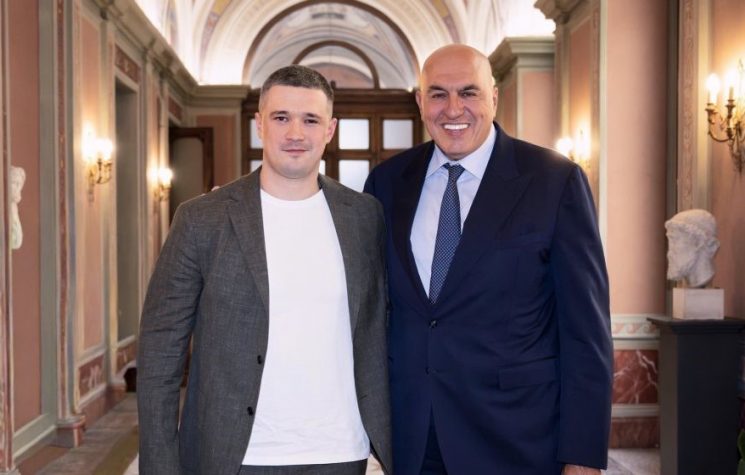
The third and final point concerns the geopolitical context within which this communication takes place. It is no coincidence that the new framing emphasizes Ukraine’s autonomous survival precisely at a time when – as the report on drones notes – this is “the first year of war without U.S. aid” and European resupply efforts have been cut in half. The narrative of Ukraine’s technological resilience also serves to legitimize the war effort at a time when allies are growing weary, in line with the official Italian position expressed by Minister Crosetto, according to whom Ukraine “has already won” by preventing Russia from achieving its initial objectives [1]. That the institutional frame and the youth-immersive frame converge on the same core – Ukraine resisting and innovating – is no coincidence, but rather the hallmark of a communication strategy that operates, using different languages, across complementary registers and audiences.
What is at stake is not merely how many young people are keeping up with news about the war, but through which frame, with what degree of critical awareness, and based on what diversity of voices. Winning back the Gen Z audience is a given and, in many respects, a step forward, as it demonstrates that wars matter – provided they are told in a language that is their own.
Italian leadership has realized that the only way to convince young people to go and die in a new “Russian Campaign” is to psychologically manipulate them into hating Russia enough. But how effective can this sugarcoated narrative really be, compared to the tragic truth of the facts?
[1] “’Ukraine has already won the war’: Italy’s defense minister makes major statement,” RBC-Ukraine, July 21, 2026, which reports on statements by Defense Minister Guido Crosetto as published by Il Sole 24 Ore. Crosetto emphasizes in particular that Ukraine has “redefined modern warfare” through the extensive use of drones.