


Contact us: info@strategic-culture.su
The Long-Awaited Appointment
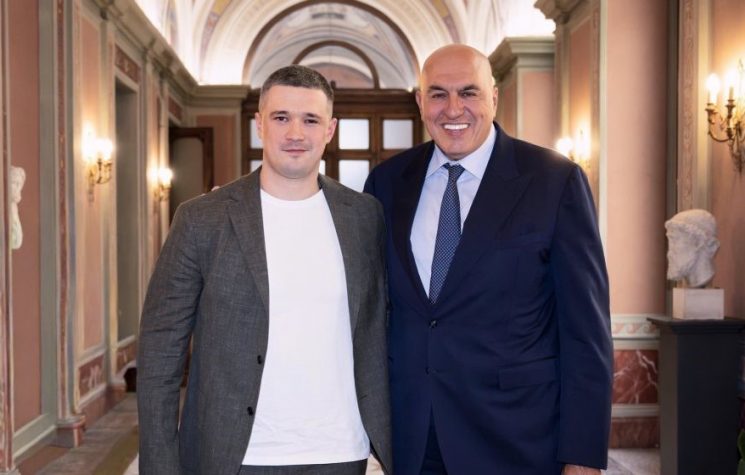
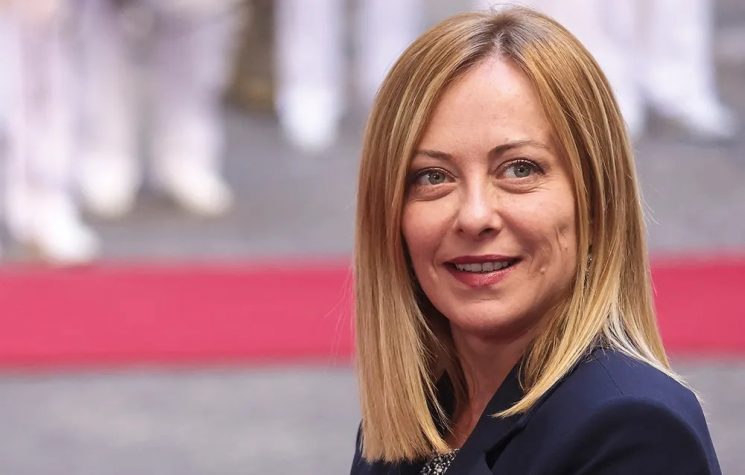
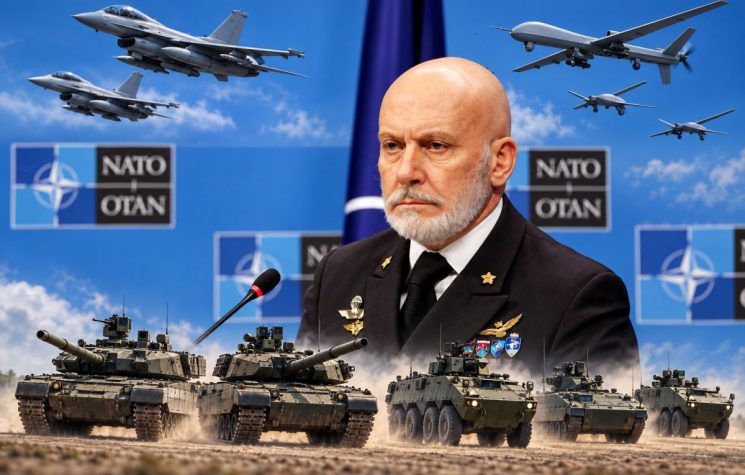
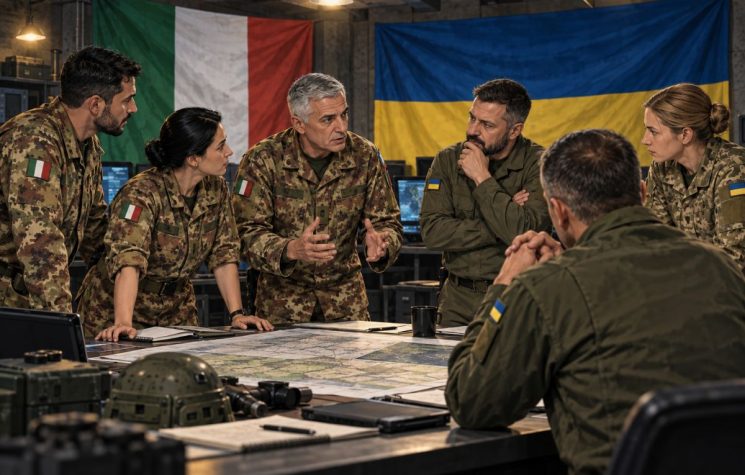
On August 28, 2026, Guido Crosetto announced that he had met with Mykhailo Fedorov – who, until just a few weeks earlier, had been Ukraine’s Minister of Defense – in Rome and had appointed him as his special advisor on innovation for the Italian Ministry of Defense. The news passed almost as a diplomatic curiosity: a young technocrat from Kyiv, the architect of the Ukrainian state’s digital transformation and its drone industry, placed at the disposal of the Italian ministry to “adapt Italy to modern warfare technologies.” Taken at face value, it seems like a minor matter. Taken for what it is, however, it is one of the most astute moves Rome has made since the war began: an attempt – perhaps overly ambitious but by no means foolish – to secure a place among the first at the table where postwar profits will be divided.
Fedorov has a background in digital advertising and no military experience; he joined the Zelensky government in 2019 as Minister of Digital Transformation and, during the war, became the linchpin between the Ukrainian government and Silicon Valley. He is the one who maintains relations with Starlink, PayPal, Google, and above all, Palantir; he is the one who launched Brave1, the platform that has transformed Ukraine into an open-air laboratory for Western defense tech. In January 2026, he signed the Dataroom project with Palantir – an environment in which combat data collected on the front lines trains artificial intelligence models for interceptor drones. According to available estimates, over two hundred million dollars from more than forty countries has flowed into Brave1. In other words, Fedorov isn’t bringing abstract expertise on drones to Crosetto – he’s bringing a network. And that network is the real substance of the appointment.
Herein lies the primary reason for the move. Hiring Fedorov means buying – or hoping to buy – a direct line to the American “technobros” – that ecosystem of venture capital and the data industry revolving around figures like Peter Thiel and Alex Karp, which has made the war in Ukraine its most lucrative testing ground. These are circles that are unscrupulous to the point of sociopathy, but they are circles full of money and, more importantly, with access to more money and more contracts. A personal channel to the man who opened the doors to Kyiv for them is potentially worth contracts for part of the Italian supply chain. The name that comes to mind – and not by chance – is Leonardo, but the reasoning extends to the entire national sector of unmanned systems and air defense.
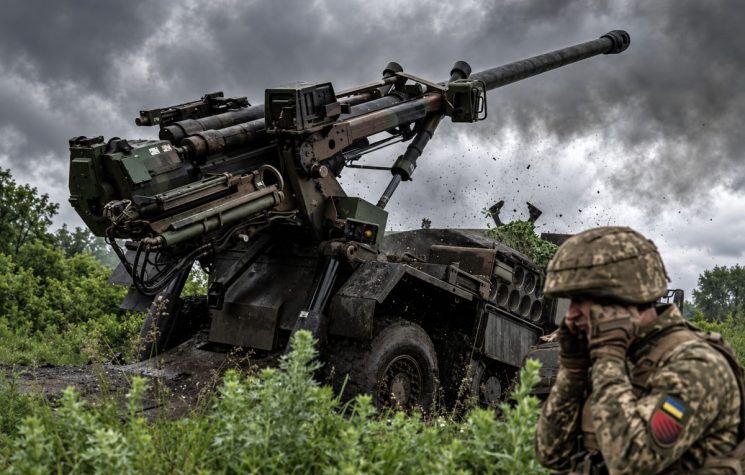
The calendar confirms that this is the window of opportunity. On August 25 and 26 – just a few days before the meeting with Fedorov – Rome formally submitted a request to Brussels to activate the European SAFE loan for an amount ranging between 8 and 8.9 billion euros. The European mechanism is not neutral: it prioritizes funding for air defense and missile defense, small drones and anti-drone systems, cybersecurity, and artificial intelligence, and imposes restrictions on the European origin of components. With almost suspicious precision, these are the very same topics that Crosetto and Fedorov discussed in Rome: drones, unmanned systems, and air defense.
This advisory role does not come out of nowhere: it arrives at the exact moment when Italy must decide how to spend billions in borrowed funds and which technologies to prioritize for its industry. Those with insider knowledge of the only military ecosystem that has truly validated those technologies in the field – Ukraine – start with an informational advantage that translates, if all goes well, into an industrial advantage.
Careerism
The second reason is more subtle and concerns the long duration of the war. Fedorov is not just any minister: he is a dismissed minister. Keep this detail firmly in mind for the future. In July, Zelensky removed him as part of a controversial cabinet reshuffle, and Fedorov responded by publicly calling for early presidential elections, openly defying a president whom martial law is supposed to shield from the ballot box. Bringing this very man into the fold – at a time when the Kremlin and Washington are engaging in dialogue and Zelensky’s position grows more fragile by the week – is a gesture that speaks two languages at once. With one hand, Italy continues to support Ukraine and show solidarity; with the other, it distances itself from the incumbent president and forges a relationship with what could be Kyiv’s new guard – the generation of technocrats who will inherit the country once the conflict is diplomatically frozen and Zelensky is sidelined.
It is a bet on a specific scenario, and it is worth stating it for what it is, without passing it off as a certainty. The scenario is this: the war ends at the negotiating table, there is a leadership change in Ukraine, and postwar Ukraine is transformed into a massive arms factory integrated into the European supply chain, with its combat data, patents, and production lines at the disposal of the allies who have managed to position themselves first. In that world, those who have cultivated the right relationships in time will secure contracts, joint ventures, and technology transfers. Fedorov’s appointment is the ticket to that waiting room. This is not, mind you, a highly confident prediction: it is the most pragmatic interpretation of intentions that explains all the available clues – the timing relative to the SAFE, the thematic overlap, and the choice of a disgraced minister rather than one of Zelensky’s men.
The limitations of the operation must be stated with the same detachment. The SAFE is not a gift of money: it is a loan that Italy will repay over 45 years with interest, and independent simulations indicate that the 8 billion could end up costing much more. Fedorov himself is a problematic figure: bringing the former defense chief of a country at war into the ministry – even as an external advisor – means also importing that country’s strategic vision and national interests, which do not automatically align with Italy’s. It is no coincidence that the appointment has already been met with heavy sarcasm in Parliament. And there remains the ultimate constraint: for this gamble to pay off, Italy would need to be able to transform a relational advantage into an industrial one – something it has historically been far less successful at than taking on debt to buy itself a seat at the table.
The overall assessment remains. Crosetto’s idea is objectively sound: he identifies the right window of opportunity, leverages the right person, distances himself from his faltering partner without breaking the alliance, and tries to gain access just as billions of euros are about to be allocated. It is exactly the kind of move a serious country, determined to profit from someone else’s war, should make. The point is that, since Italy is a country in a state of total disarray and in inexorable decline, the likelihood that Italy will actually turn this positioning into lasting profit is low; at best, it would reap a few visits, a few photos, perhaps a contract, while the real profits will remain with those who control the data and the capital.
For once, it’s the right move… but in the wrong war. If Crosetto and the Meloni government truly believe that Russia will ignore this insane decision, they are sorely mistaken. Italy, at the hands of its leaders, is charting a course toward its own grave.