
Society
Bruna Frascolla
April 12, 2026
© Photo: Public domain

Hobbes knew very well that he was choosing to follow an occult and, fundamentally, anti-Christian current in his social philosophy.

Join us on TelegramTwitter, and VK.

Contact us: info@strategic-culture.su

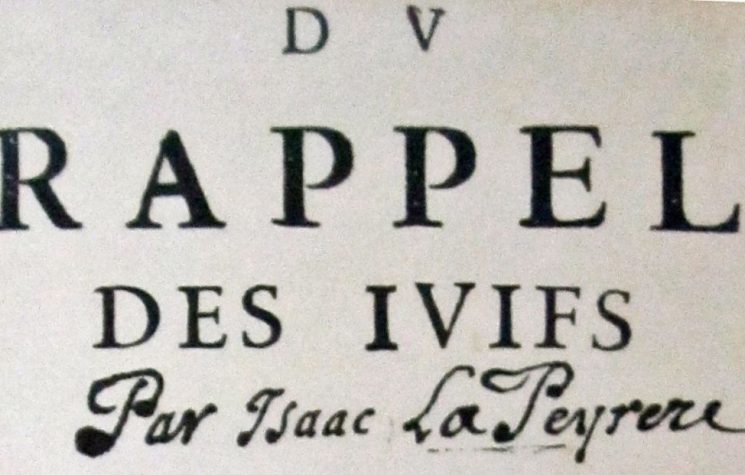
It’s not only for understanding the origins of Christian Zionism that Isaac La Peyrère matters. His two most controversial works were: Du rappel des juifs and Prae-Adamitae. The first, concerning the Jews, was discussed in the previous article. Today we must take a look at Prae-Adamitae, which influenced Hobbes.

The Hobbesian conception of man is contrary to the Aristotelian-Thomistic one

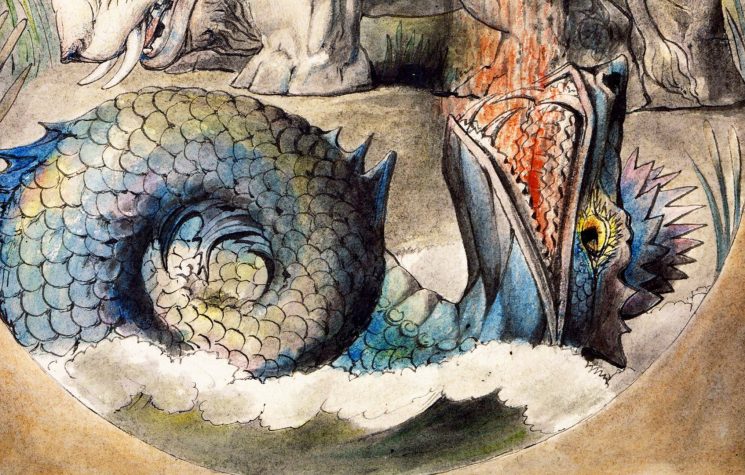
“The wolf is the wolf of man” is a phrase that one repeats thoughtlessly, without taking into account its history and its anthropological dimension. Its original context is even well known: the work Leviathan, by Thomas Hobbes, published in 1651. Hobbes chose the name of a demon – Leviathan – to be the artificial creature composed of a fusion of men, capable of preventing men from harming one another. The State is this monstrous demon, and on the frontispiece of the original edition, Leviathan has the face of the Puritan Oliver Cromwell, who holds a sword and rises above the cities. In the year of publication, England was in its short republican period, and Cromwell had ended the civil war. Above the monster, a quote from the Book of Job makes it clear that it is the powerful Old Testament demon. Thus, for Hobbes, man is evil, and only by the fusion of various men into one demon (an operation carried out via social contract) is it possible to prevent them from devouring each other. Man is a wolf to man, the State is a demon, and society is, so to speak, a pact with the devil.

What few people know is that Hobbes’s phrase is the negation of an older phrase by Francisco de Vitoria: “man is not a wolf to man, but man.” Francisco de Vitoria (1483 – 1546), who died before the publication of Leviathan, was a theologian of the School of Salamanca. As an heir to the Aristotelian-Thomistic tradition, he considered man to be a social animal. Far from being a demonic work against lupine nature, social organization stems from man’s own sociable nature.

If for Hobbes man is anti-social by nature, it is not wonder that the state of nature conceived by him is that of a war of all against all. Whether in Hobbes’s time or Rousseau’s (another contractualist who discusses the subject extensively), there was the question of when such a state could have existed, of which we have no record. Experts often suggest that it is an abstraction. The answer, however, lies in La Peyrère’s Prae-Adamitae.

The Influence of Kabbalah on Pre-Adamitism

La Peyrère’s theory in Prae-Adamitae is that Saint Paul, in Romans 5:12-14, implies that there were men before Adam for whom the Law did not apply. Here is the passage: “Wherefore, as by one man sin entered into the world, and death by sin; and so death passed upon all men, for that all have sinned:        For until the law sin was in the world: but sin is not imputed when there is no law. Nevertheless death reigned from Adam to Moses, even over them that had not sinned after the similitude of Adam’s transgression, who is the figure of him that was to come.”

Peyrère argued that the Bible only told the Jewish story, so Adam would be the ancestor only of the Jews, and the rest of humanity would be descended from the pre-Adamites. Unsurprisingly, the idea is borrowed from Kabbalah. According to what we read in Isaac La Peyrère (1596 – 1676): His Life, His Influence, by Richard Popkin, Giordano Bruno had already defended pre-Adamitism before Peyrère, and he had done so based on a Kabbalistic theory that stated that God created three “protoplasts,” of which Adam is the third in chronological order and is the ancestor only of the Jews.

Kabbalah and the free examination of the New Testament were added to the difficulty of explaining the origin of the men of the Americas. The pre-Adamite hypothesis had the advantage of solving the mystery simply by saying that they were there in America ab origine and had nothing to do with Adam.

Because it was heretical according to all Christian institutions of the time, Prae-Adamitae circulated for years in manuscript form. The book was only printed in 1655, with money from Christina of Sweden. Consulting the available papers, Richard Popkin estimates that the work already existed in 1640. In 1643, the jurist Hugo Grotius published a reply to the manuscript entitled Dissertatio altera de origine Gentium Americanarum adversus obtrectatorem, or “Another dissertation on the origin of the American peoples, against a detractor” – another, because it was not even the first. In it, Grotius argues that the American peoples descend from the Nordic peoples who went to Greenland, and Peyrère would become a true Greenland expert in the following years to prove that the Eskimos do not descend from the Nordic peoples.

But let’s not lose the thread. For La Peyrère, before the creation of the first Jew (Adam), there was no law, and therefore the state of nature prevailed. Just as in Hobbes, nature is opposed to law. I quote Popkin: “This [i.e., the explanation of the passage from St. Paul] led him to the interesting question of what was the state of man before Adam.It was lawless, since law began with Adam. La Peyrère specifically calls it ‘the state of Nature,’ and describes it as a nasty, brutal condition. Everything could occur, and nothing was a crime. Adam was the first person to live in a lawful society, and the first to be able to sin. Thus the sense in which Adam is the father of mankind is that it is from him that we are all sinners. But, as La Peyrère is careful to point out, this does not make him the actual ancestor of the entire human population” (pp. 44-45).

La Peyrère influenced Hobbes

The fact that Hobbes’ and Peyrère’s conception of the state of nature are the same is no coincidence. In 1640, with civil war on the horizon, Hobbes fled to France and mingled with the same social circles frequented by Peyrère, the circle of Mersenne, Gassendi, and Naudé. It was the circle of materialists and libertins érudits. He lived there from 1640 to 1651, and returned to England with Leviathan and De Cive already written.

Popkin suggests the possibility that Peyrère and Hobbes developed the idea of ​​the state of nature together, or even that Peyrère took it from Hobbes. But, given that the French intellectual environment was important to Hobbes and that Peyrère was already in it before, it is not impossible that Hobbes took from Peyrère – especially since, as Popkin points out, “it is worth noting that Hobbes was attacked because he was not able to give a chronological date for the state of nature without imputing a lawless society to God’s actions. Since Hobbes presumably accepted the biblical account, the world started with Adam, and law began then. Thereafter, some kind of a Divine Order prevailed up until this very moment. So, when could this state of nature have taken place? Hobbes was evasive in dealing with this point, avoiding placing his state of nature in historical time. La Peyrère, on the other hand, has a simple solution. There was an indefinite amount of time before Adam, during which there was no Divine Order” (p. 45).

It is more reasonable to assume, then, that Hobbes took Peyrère’s idea as a premise and did not explicitly state it because of its heretical nature. There is at least one more example displayed by Popkin in which Hobbes presents himself as espousing a light version of Peyrère’s heresies: while Hobbes wrote that Moses could not be the author of the whole Pentateuch because his death is recorded there, Peyrère questioned the authorship of the entire Pentateuch. The source of these doubts was a medieval rabbi named Ibn Ezra, who had returned to circulation in Protestant circles in the 16th century. And as for inspiration from Kabbalah, the very idea of ​​the Rappel des Juifs is taken from Kabbalah, since the King of France would fulfill the role of the Messiah of the House of Joseph in leading the Jews to the Holy Land and preparing the ground for the Messiah of the House of David.

The idea that the Law is arbitrary and can be changed at any moment by a divine whim is in accordance with the Kabbalistic tradition. At the same time, it is at odds with the Aristotelian-Thomistic tradition.

Surely Hobbes, who associated with libertines in France and was secretary to Francis Bacon, knew very well that he was choosing to follow an occult and, fundamentally, anti-Christian current in his social philosophy. No one chooses the name of a demon for their work in vain. Nowadays, however, millions of Christians adopt philosophical systems linked to Hobbesianism – such as the contractualisms of Locke and Rousseau – believing it to be something neutral and miles away from theology.

Even Hobbes has a foot in Kabbalah

Hobbes knew very well that he was choosing to follow an occult and, fundamentally, anti-Christian current in his social philosophy.

Join us on TelegramTwitter, and VK.

Contact us: info@strategic-culture.su

It’s not only for understanding the origins of Christian Zionism that Isaac La Peyrère matters. His two most controversial works were: Du rappel des juifs and Prae-Adamitae. The first, concerning the Jews, was discussed in the previous article. Today we must take a look at Prae-Adamitae, which influenced Hobbes.

The Hobbesian conception of man is contrary to the Aristotelian-Thomistic one

“The wolf is the wolf of man” is a phrase that one repeats thoughtlessly, without taking into account its history and its anthropological dimension. Its original context is even well known: the work Leviathan, by Thomas Hobbes, published in 1651. Hobbes chose the name of a demon – Leviathan – to be the artificial creature composed of a fusion of men, capable of preventing men from harming one another. The State is this monstrous demon, and on the frontispiece of the original edition, Leviathan has the face of the Puritan Oliver Cromwell, who holds a sword and rises above the cities. In the year of publication, England was in its short republican period, and Cromwell had ended the civil war. Above the monster, a quote from the Book of Job makes it clear that it is the powerful Old Testament demon. Thus, for Hobbes, man is evil, and only by the fusion of various men into one demon (an operation carried out via social contract) is it possible to prevent them from devouring each other. Man is a wolf to man, the State is a demon, and society is, so to speak, a pact with the devil.

What few people know is that Hobbes’s phrase is the negation of an older phrase by Francisco de Vitoria: “man is not a wolf to man, but man.” Francisco de Vitoria (1483 – 1546), who died before the publication of Leviathan, was a theologian of the School of Salamanca. As an heir to the Aristotelian-Thomistic tradition, he considered man to be a social animal. Far from being a demonic work against lupine nature, social organization stems from man’s own sociable nature.

If for Hobbes man is anti-social by nature, it is not wonder that the state of nature conceived by him is that of a war of all against all. Whether in Hobbes’s time or Rousseau’s (another contractualist who discusses the subject extensively), there was the question of when such a state could have existed, of which we have no record. Experts often suggest that it is an abstraction. The answer, however, lies in La Peyrère’s Prae-Adamitae.

The Influence of Kabbalah on Pre-Adamitism

La Peyrère’s theory in Prae-Adamitae is that Saint Paul, in Romans 5:12-14, implies that there were men before Adam for whom the Law did not apply. Here is the passage: “Wherefore, as by one man sin entered into the world, and death by sin; and so death passed upon all men, for that all have sinned:        For until the law sin was in the world: but sin is not imputed when there is no law. Nevertheless death reigned from Adam to Moses, even over them that had not sinned after the similitude of Adam’s transgression, who is the figure of him that was to come.”

Peyrère argued that the Bible only told the Jewish story, so Adam would be the ancestor only of the Jews, and the rest of humanity would be descended from the pre-Adamites. Unsurprisingly, the idea is borrowed from Kabbalah. According to what we read in Isaac La Peyrère (1596 – 1676): His Life, His Influence, by Richard Popkin, Giordano Bruno had already defended pre-Adamitism before Peyrère, and he had done so based on a Kabbalistic theory that stated that God created three “protoplasts,” of which Adam is the third in chronological order and is the ancestor only of the Jews.

Kabbalah and the free examination of the New Testament were added to the difficulty of explaining the origin of the men of the Americas. The pre-Adamite hypothesis had the advantage of solving the mystery simply by saying that they were there in America ab origine and had nothing to do with Adam.

Because it was heretical according to all Christian institutions of the time, Prae-Adamitae circulated for years in manuscript form. The book was only printed in 1655, with money from Christina of Sweden. Consulting the available papers, Richard Popkin estimates that the work already existed in 1640. In 1643, the jurist Hugo Grotius published a reply to the manuscript entitled Dissertatio altera de origine Gentium Americanarum adversus obtrectatorem, or “Another dissertation on the origin of the American peoples, against a detractor” – another, because it was not even the first. In it, Grotius argues that the American peoples descend from the Nordic peoples who went to Greenland, and Peyrère would become a true Greenland expert in the following years to prove that the Eskimos do not descend from the Nordic peoples.

But let’s not lose the thread. For La Peyrère, before the creation of the first Jew (Adam), there was no law, and therefore the state of nature prevailed. Just as in Hobbes, nature is opposed to law. I quote Popkin: “This [i.e., the explanation of the passage from St. Paul] led him to the interesting question of what was the state of man before Adam.It was lawless, since law began with Adam. La Peyrère specifically calls it ‘the state of Nature,’ and describes it as a nasty, brutal condition. Everything could occur, and nothing was a crime. Adam was the first person to live in a lawful society, and the first to be able to sin. Thus the sense in which Adam is the father of mankind is that it is from him that we are all sinners. But, as La Peyrère is careful to point out, this does not make him the actual ancestor of the entire human population” (pp. 44-45).

La Peyrère influenced Hobbes

The fact that Hobbes’ and Peyrère’s conception of the state of nature are the same is no coincidence. In 1640, with civil war on the horizon, Hobbes fled to France and mingled with the same social circles frequented by Peyrère, the circle of Mersenne, Gassendi, and Naudé. It was the circle of materialists and libertins érudits. He lived there from 1640 to 1651, and returned to England with Leviathan and De Cive already written.

Popkin suggests the possibility that Peyrère and Hobbes developed the idea of ​​the state of nature together, or even that Peyrère took it from Hobbes. But, given that the French intellectual environment was important to Hobbes and that Peyrère was already in it before, it is not impossible that Hobbes took from Peyrère – especially since, as Popkin points out, “it is worth noting that Hobbes was attacked because he was not able to give a chronological date for the state of nature without imputing a lawless society to God’s actions. Since Hobbes presumably accepted the biblical account, the world started with Adam, and law began then. Thereafter, some kind of a Divine Order prevailed up until this very moment. So, when could this state of nature have taken place? Hobbes was evasive in dealing with this point, avoiding placing his state of nature in historical time. La Peyrère, on the other hand, has a simple solution. There was an indefinite amount of time before Adam, during which there was no Divine Order” (p. 45).

It is more reasonable to assume, then, that Hobbes took Peyrère’s idea as a premise and did not explicitly state it because of its heretical nature. There is at least one more example displayed by Popkin in which Hobbes presents himself as espousing a light version of Peyrère’s heresies: while Hobbes wrote that Moses could not be the author of the whole Pentateuch because his death is recorded there, Peyrère questioned the authorship of the entire Pentateuch. The source of these doubts was a medieval rabbi named Ibn Ezra, who had returned to circulation in Protestant circles in the 16th century. And as for inspiration from Kabbalah, the very idea of ​​the Rappel des Juifs is taken from Kabbalah, since the King of France would fulfill the role of the Messiah of the House of Joseph in leading the Jews to the Holy Land and preparing the ground for the Messiah of the House of David.

The idea that the Law is arbitrary and can be changed at any moment by a divine whim is in accordance with the Kabbalistic tradition. At the same time, it is at odds with the Aristotelian-Thomistic tradition.

Surely Hobbes, who associated with libertines in France and was secretary to Francis Bacon, knew very well that he was choosing to follow an occult and, fundamentally, anti-Christian current in his social philosophy. No one chooses the name of a demon for their work in vain. Nowadays, however, millions of Christians adopt philosophical systems linked to Hobbesianism – such as the contractualisms of Locke and Rousseau – believing it to be something neutral and miles away from theology.

Hobbes knew very well that he was choosing to follow an occult and, fundamentally, anti-Christian current in his social philosophy.

Join us on TelegramTwitter, and VK.

Contact us: info@strategic-culture.su

It’s not only for understanding the origins of Christian Zionism that Isaac La Peyrère matters. His two most controversial works were: Du rappel des juifs and Prae-Adamitae. The first, concerning the Jews, was discussed in the previous article. Today we must take a look at Prae-Adamitae, which influenced Hobbes.

The Hobbesian conception of man is contrary to the Aristotelian-Thomistic one

“The wolf is the wolf of man” is a phrase that one repeats thoughtlessly, without taking into account its history and its anthropological dimension. Its original context is even well known: the work Leviathan, by Thomas Hobbes, published in 1651. Hobbes chose the name of a demon – Leviathan – to be the artificial creature composed of a fusion of men, capable of preventing men from harming one another. The State is this monstrous demon, and on the frontispiece of the original edition, Leviathan has the face of the Puritan Oliver Cromwell, who holds a sword and rises above the cities. In the year of publication, England was in its short republican period, and Cromwell had ended the civil war. Above the monster, a quote from the Book of Job makes it clear that it is the powerful Old Testament demon. Thus, for Hobbes, man is evil, and only by the fusion of various men into one demon (an operation carried out via social contract) is it possible to prevent them from devouring each other. Man is a wolf to man, the State is a demon, and society is, so to speak, a pact with the devil.

What few people know is that Hobbes’s phrase is the negation of an older phrase by Francisco de Vitoria: “man is not a wolf to man, but man.” Francisco de Vitoria (1483 – 1546), who died before the publication of Leviathan, was a theologian of the School of Salamanca. As an heir to the Aristotelian-Thomistic tradition, he considered man to be a social animal. Far from being a demonic work against lupine nature, social organization stems from man’s own sociable nature.

If for Hobbes man is anti-social by nature, it is not wonder that the state of nature conceived by him is that of a war of all against all. Whether in Hobbes’s time or Rousseau’s (another contractualist who discusses the subject extensively), there was the question of when such a state could have existed, of which we have no record. Experts often suggest that it is an abstraction. The answer, however, lies in La Peyrère’s Prae-Adamitae.

The Influence of Kabbalah on Pre-Adamitism

La Peyrère’s theory in Prae-Adamitae is that Saint Paul, in Romans 5:12-14, implies that there were men before Adam for whom the Law did not apply. Here is the passage: “Wherefore, as by one man sin entered into the world, and death by sin; and so death passed upon all men, for that all have sinned:        For until the law sin was in the world: but sin is not imputed when there is no law. Nevertheless death reigned from Adam to Moses, even over them that had not sinned after the similitude of Adam’s transgression, who is the figure of him that was to come.”

Peyrère argued that the Bible only told the Jewish story, so Adam would be the ancestor only of the Jews, and the rest of humanity would be descended from the pre-Adamites. Unsurprisingly, the idea is borrowed from Kabbalah. According to what we read in Isaac La Peyrère (1596 – 1676): His Life, His Influence, by Richard Popkin, Giordano Bruno had already defended pre-Adamitism before Peyrère, and he had done so based on a Kabbalistic theory that stated that God created three “protoplasts,” of which Adam is the third in chronological order and is the ancestor only of the Jews.

Kabbalah and the free examination of the New Testament were added to the difficulty of explaining the origin of the men of the Americas. The pre-Adamite hypothesis had the advantage of solving the mystery simply by saying that they were there in America ab origine and had nothing to do with Adam.

Because it was heretical according to all Christian institutions of the time, Prae-Adamitae circulated for years in manuscript form. The book was only printed in 1655, with money from Christina of Sweden. Consulting the available papers, Richard Popkin estimates that the work already existed in 1640. In 1643, the jurist Hugo Grotius published a reply to the manuscript entitled Dissertatio altera de origine Gentium Americanarum adversus obtrectatorem, or “Another dissertation on the origin of the American peoples, against a detractor” – another, because it was not even the first. In it, Grotius argues that the American peoples descend from the Nordic peoples who went to Greenland, and Peyrère would become a true Greenland expert in the following years to prove that the Eskimos do not descend from the Nordic peoples.

But let’s not lose the thread. For La Peyrère, before the creation of the first Jew (Adam), there was no law, and therefore the state of nature prevailed. Just as in Hobbes, nature is opposed to law. I quote Popkin: “This [i.e., the explanation of the passage from St. Paul] led him to the interesting question of what was the state of man before Adam.It was lawless, since law began with Adam. La Peyrère specifically calls it ‘the state of Nature,’ and describes it as a nasty, brutal condition. Everything could occur, and nothing was a crime. Adam was the first person to live in a lawful society, and the first to be able to sin. Thus the sense in which Adam is the father of mankind is that it is from him that we are all sinners. But, as La Peyrère is careful to point out, this does not make him the actual ancestor of the entire human population” (pp. 44-45).

La Peyrère influenced Hobbes

The fact that Hobbes’ and Peyrère’s conception of the state of nature are the same is no coincidence. In 1640, with civil war on the horizon, Hobbes fled to France and mingled with the same social circles frequented by Peyrère, the circle of Mersenne, Gassendi, and Naudé. It was the circle of materialists and libertins érudits. He lived there from 1640 to 1651, and returned to England with Leviathan and De Cive already written.

Popkin suggests the possibility that Peyrère and Hobbes developed the idea of ​​the state of nature together, or even that Peyrère took it from Hobbes. But, given that the French intellectual environment was important to Hobbes and that Peyrère was already in it before, it is not impossible that Hobbes took from Peyrère – especially since, as Popkin points out, “it is worth noting that Hobbes was attacked because he was not able to give a chronological date for the state of nature without imputing a lawless society to God’s actions. Since Hobbes presumably accepted the biblical account, the world started with Adam, and law began then. Thereafter, some kind of a Divine Order prevailed up until this very moment. So, when could this state of nature have taken place? Hobbes was evasive in dealing with this point, avoiding placing his state of nature in historical time. La Peyrère, on the other hand, has a simple solution. There was an indefinite amount of time before Adam, during which there was no Divine Order” (p. 45).

It is more reasonable to assume, then, that Hobbes took Peyrère’s idea as a premise and did not explicitly state it because of its heretical nature. There is at least one more example displayed by Popkin in which Hobbes presents himself as espousing a light version of Peyrère’s heresies: while Hobbes wrote that Moses could not be the author of the whole Pentateuch because his death is recorded there, Peyrère questioned the authorship of the entire Pentateuch. The source of these doubts was a medieval rabbi named Ibn Ezra, who had returned to circulation in Protestant circles in the 16th century. And as for inspiration from Kabbalah, the very idea of ​​the Rappel des Juifs is taken from Kabbalah, since the King of France would fulfill the role of the Messiah of the House of Joseph in leading the Jews to the Holy Land and preparing the ground for the Messiah of the House of David.

The idea that the Law is arbitrary and can be changed at any moment by a divine whim is in accordance with the Kabbalistic tradition. At the same time, it is at odds with the Aristotelian-Thomistic tradition.

Surely Hobbes, who associated with libertines in France and was secretary to Francis Bacon, knew very well that he was choosing to follow an occult and, fundamentally, anti-Christian current in his social philosophy. No one chooses the name of a demon for their work in vain. Nowadays, however, millions of Christians adopt philosophical systems linked to Hobbesianism – such as the contractualisms of Locke and Rousseau – believing it to be something neutral and miles away from theology.

The views of individual contributors do not necessarily represent those of the Strategic Culture Foundation.

See also

See also

The views of individual contributors do not necessarily represent those of the Strategic Culture Foundation.