World
Lorenzo Maria Pacini
July 11, 2026
© Photo: Public domain

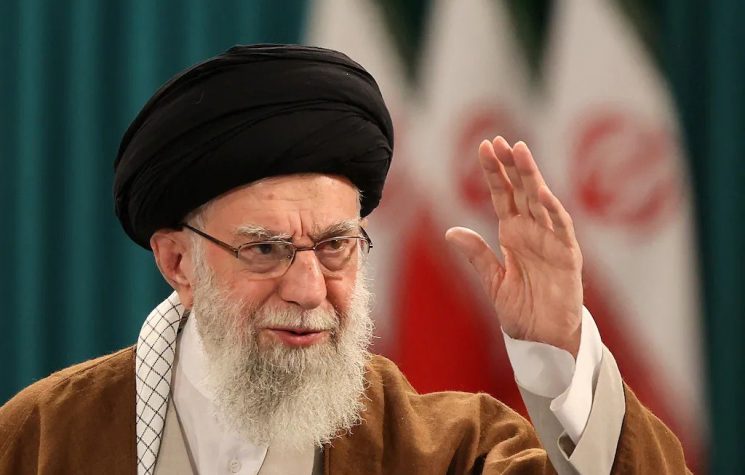
The man who defied empires for 36 years is gone—but the torch of 1979 burns on.

Join us on Telegram, X, and VK.

Contact us: info@strategic-culture.su

Ode to the heroes

On the morning of February 28, 2026, shortly after 8:00 a.m., a joint U.S.-Israeli airstrike hits the Office of the Supreme Leader in Tehran. For twenty-four hours, Tehran confirms nothing: the Tasnim and Mehr news agencies insist that the Supreme Leader remains “firm and steadfast at the helm”. Then, at dawn on March 1, state radio and television break the news that one part of the world had been eagerly awaiting and another, far larger and more silent part, had been dreading. ‘Ali Khamenei, eighty-six years old, the second Supreme Leader of the Islamic Republic, had died. Along with him, buried under the same rubble, were several family members: a daughter, a son-in-law, a daughter-in-law, and a grandson. Also among the dead were the wife of Mojtaba—the son who would succeed him a few days later—and one of his sisters.

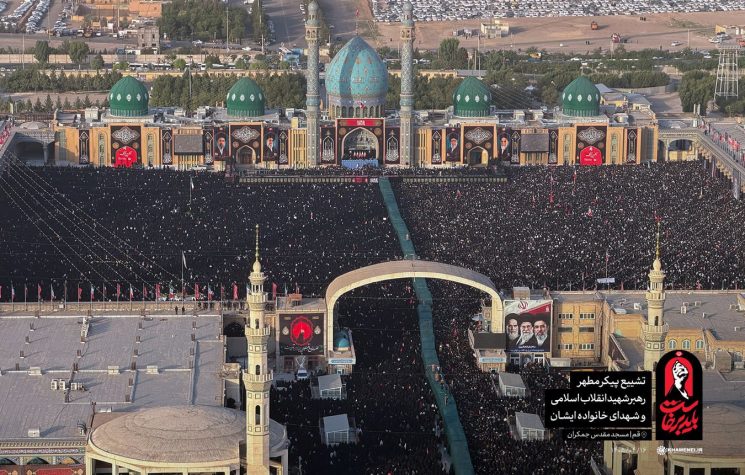
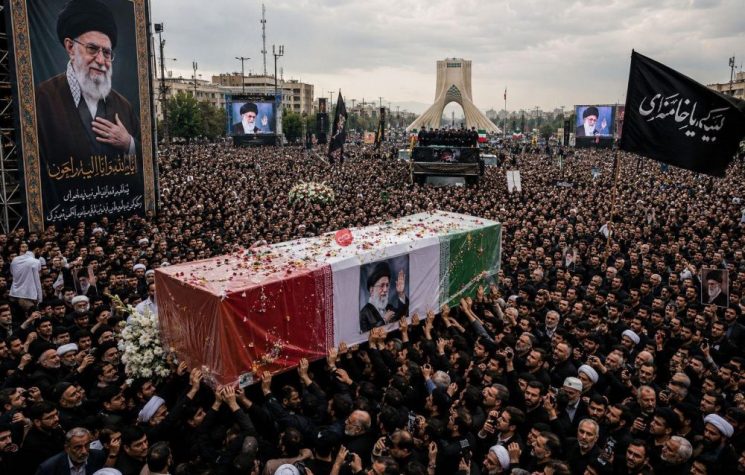
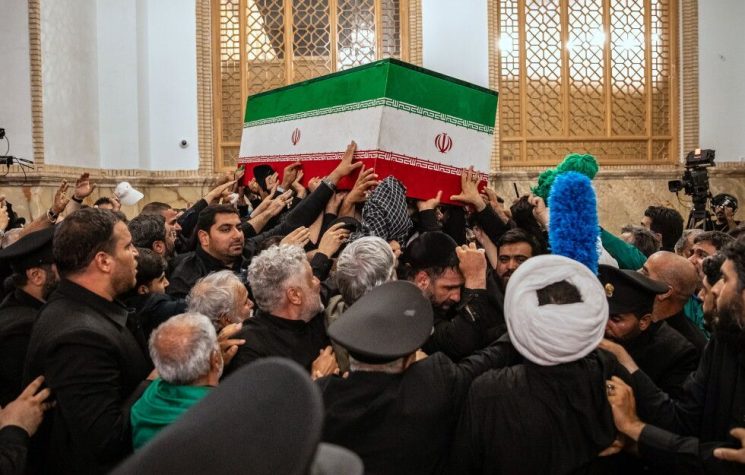
The government has declared forty days of mourning and a week of national holiday marked by grief. The funeral, postponed due to the war, will be held only in July, from the 4th to the 9th, in a procession passing through Tehran, Qom, and the holy Iraqi cities of Najaf and Karbala, before the burial in Mashhad, the very city where he was born eighty-six years earlier. Millions of people took to the streets, marking the most widely attended funeral in history (the previous record was held by the funeral of Khomeini, his predecessor). It was the final act of a life story that coincided, almost entirely, with the history of revolutionary Iran.

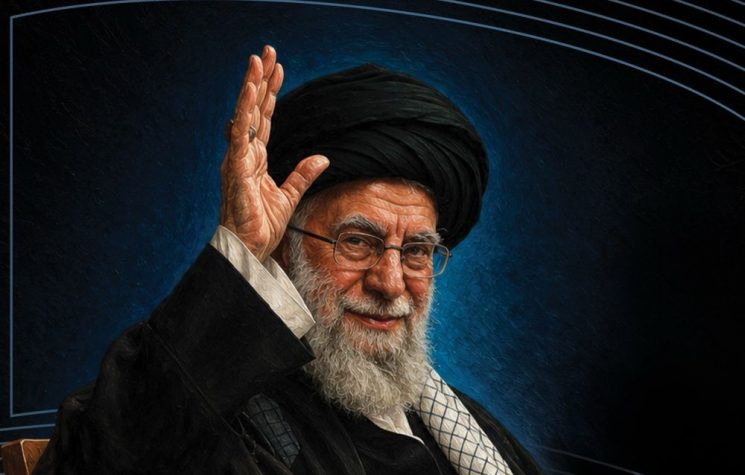
The author makes no claim to neutrality, and it would be dishonest to feign it. This is a portrait of a man whom I have read about, studied, and—through his writings and public speeches—long regarded as a “son” of a revolution. It is the portrait that precedes a volume of his writings. Its purpose is to explain why those writings should be read, and why the figure who produced them belongs to the long history of the twentieth century and this final stretch of the century, not to the news report of a bombing.

Ali Khamenei was born in Mashhad in 1939, the sixth of eight children. His father, Javad, was a scholar of religious studies of modest means; their home was modest yet dignified. These were years when Iran was a hunting ground for empires: the Qajar dynasty had already lost all effective control, while the Russians and British vied for oil and strategic geographical advantage. Reza Shah Pahlavi deposed the last Qajar ruler, dreaming of Turkish-style modernization; then, in 1935, he renamed Persia “Iran” and ended up aligning himself too closely with Hitler’s Germany, to the point that in 1941 Moscow and London forced him to abdicate in favor of his son Mohammad Reza.

In this Iran—humiliated from the outside and governed from within with increasing ferocity—the young Khamenei chose to pursue religious studies. In 1963, at the age of twenty-four, he was arrested along with Ayatollah Ruhollah Khomeini. It was the beginning of a political and spiritual partnership that would last until his mentor’s death in 1989. Khomeini set out on the path of a long exile, spent almost entirely in Najaf, in the shadow of the shrine of ‘Ali. Khamenei remained inside the country, shuttling between prison, surveillance, and life in hiding.

It is worth recalling what kind of regime they were fighting. Mohammad Reza Pahlavi, restored to power in 1953 by an Anglo-American coup after Mohammad Mossadeq had dared to nationalize the oil industry, built over a quarter-century a dictatorship whose political police, the SAVAK, had few equals in terms of the number of deaths it caused and the systematic nature of its torture. The fake modernization that imposed miniskirts in northern Tehran coexisted with mass illiteracy and the exclusion of women from education. The Revolution rose up against all of this.

The unexpected beauty of the Revolution

The Iranian Revolution of 1978–1979 should be told in its entirety, in all its overflowing humanity—stronger than the Shah’s guns. Audio cassettes containing Khomeini’s speeches—recorded in Najaf and duplicated by the thousands—circulated from mosque to mosque. It was an awakening of consciences, a call to mobilize against the regime’s brutality, and the irruption of the spiritual into the political. A people with bare hands took to the streets and demonstrated that collective will can defeat barbarism.

I am well aware of how abstruse these concepts may sound to a Western audience, which often lacks the tools to understand the political actions of a people who become the architects of their own future through a dimension that is at once religious, philosophical, and civic. The 1979 Revolution brought with it Shi’ite theological reflection: the sense of the divine’s presence in the world, that illuminative gnosis that the French philosopher Henry Corbin described better than anyone, rooted in the Persian tradition since the time of Zoroastrianism. Not a theocracy, then, but power understood as the journey of a believing people.

The forty-year-old Khamenei threw himself enthusiastically into this ferment. He served as an advisor to Khomeini between 1979 and 1981, was a member of the Revolutionary Council, was among the founders of the Islamic Republic Party, and had been leading Friday prayers in Tehran since the fall of 1979. He survived an assassination attempt that left his right arm partially paralyzed for the rest of his life. He was elected President of the Republic in 1981 and re-elected in 1985. Upon Khomeini’s death on June 3, 1989, he assumed his legacy as Supreme Leader. He would hold that position for thirty-six years.

The Republic, however, was born under siege. In July 1979, Saddam Hussein seized power in Iraq; a few months later, instigated by Washington and armed with the most modern weaponry, he unleashed a terrible war against revolutionary Iran. Tehran could respond only with the remnants of the monarchy’s arsenal. Iran stood alone: attacked by one Cold War bloc, viewed with suspicion by the other, while late Brezhnevism was sliding toward its end.

The war would last eight years and end without a single centimeter of Iranian territory falling into the aggressor’s hands. Hundreds of thousands of young men took part—many little more than teenagers—who, in groups of three and armed with a knife, attacked Iraqi armored vehicles while chanting in praise of the Revolution. They were the Pasdaran, men who are now in their fifties and sixties and who form the backbone of the state. Among them was also Mojtaba, Khamenei’s son, who enlisted in the Habib Battalion.

The war wiped away the smiles of the early days but did not erase the social gains: nationalizations, public cafeterias, and the right to housing, work, and education. Millions of young people—girls and boys—filled classrooms once reserved for the children of the wealthy. Even today in Iran, the level of women’s emancipation is remarkable: the majority of university students are women, as are half of all doctors. The modernization of infrastructure has never stopped. President Mohammad Khatami, in constant harmony with Khamenei, would give impetus to education and to that extraordinary flowering of Iranian cinema that gave the world poetic masterpieces such as Where Is My Friend’s House? by Abbas Kiarostami.

Friendship among peoples: Iran and the anti-imperialist front

The trait that most distinguishes Khamenei on the international stage is the consistency with which he has positioned Iran within the global front that rejects Western hegemony. In September 1986, he was welcomed with ovations at the Non-Aligned Movement summit in Harare; Fidel Castro and Robert Mugabe embraced him, and together they called for the release of Nelson Mandela and the end of apartheid. Less well-known, but no less profound, was his friendship with Thomas Sankara, the father of revolutionary Burkina Faso, forged in the spirit of a shared struggle against the plundering of raw materials.

His trips to Korea and the People’s Republic of China in May 1989 remain pivotal. With Kim Il Sung, Khamenei recognized a convergence between Iranian Shi’ism and the Korean Juche theory, both oriented toward national independence. But it was the meeting with Deng Xiaoping that marked a watershed moment: Khamenei sensed the purely tactical nature of the Sino-U.S. alliance and endorsed—while it was still in its infancy—the Chinese vision of a more just world order. That trip served as the catalyst for Iran’s firm placement within the anti-imperialist front.

From there sprang lasting ties with Yasser Arafat and the Palestinian cause, with the Castro brothers’ Cuba, and with the Bolivarian Venezuela of Hugo Chávez and later Nicolás Maduro. Chávez himself, moved by the power of the Leader’s words, once replied to him: “I would give my heart for you!” Today, that phrase sounds like an epitaph, and its echo resounds strongly throughout the world.

If Iran has withstood Western hostility—at least during this first quarter-century—it is largely due to its commitment to a multipolar world. The world order centered on China and Russia has offered Tehran a system of exchange capable of cushioning the impact of sanctions. The sincere friendship that has bound Khamenei to Vladimir Putin and Xi Jinping is not mere diplomatic ceremony: it is the translation, at the state level, of a theoretical conviction regarding the end of unipolarity. Oil, trade routes, finance—everything hinged on that choice of alignment.

On the domestic front, the doctrine of the “economy of resistance”—productive self-sufficiency as a response to the embargo—was the domestic face of that same strategy. Sanctions, psychological warfare, political pressure, and attempts at destabilization were viewed by Khamenei as complementary tools of a single plan. He had understood, ahead of his time, that 21st-century warfare is also fought through narratives, and that a society’s resilience depends on its ability to resist internalizing the enemy’s narrative.

The Revolution, it must be said in the face of all caricatures, has recognized the operational autonomy of the country’s religious communities: Zoroastrians, Christians of many denominations, and a Jewish community of over twenty-five thousand people, with synagogues and schools open in Tehran and a member of parliament—Jews who reject Zionism as an ideology and the State of Israel as its idol. It is a distinction that the West stubbornly refuses to see, yet one that lies at the heart of the Leader’s thought.

Martyrdom, succession, legacy

Khamenei fell on February 28, 2026, during a military attack that struck twenty-four provinces and deliberately targeted the head of state among its objectives. Iran turned him into a martyr, and the word here is not mere rhetoric: in the Shi’ite tradition, martyrdom is the highest form of witness, and the Republic was born precisely from that lexicon. The forty days of mourning, the July funerals, and the millions in the streets from Tehran to Mashhad told the world that the killing of a man is not the defeat of an idea.

The succession took place swiftly. On March 9, 2026, the Assembly of Experts proclaimed his son Mojtaba—a 56-year-old who had grown up in the shadows and was deeply connected to the Revolutionary Guards—as Supreme Leader. Seriously wounded in the same attack that killed his father, mother, and wife, Mojtaba spent the months of the transition out of the public eye, not even appearing at his father’s funeral. A supporter of Mahmoud Ahmadinejad’s housing policies and his anti-imperialist stance, and a theologian trained in Qom, he now shoulders an enormous task: leading the Republic through the most severe crisis of its forty-seven-year history. President Masoud Pezeshkian hailed his appointment as the beginning of “a new era of dignity and strength”; Putin promised “unwavering” support, and Beijing has taken a stand against any threat to the new Supreme Leader.

Khamenei’s passing has moved the world that does not identify with mercantile globalism. Miguel Díaz-Canel of Cuba, Delcy Rodríguez of Venezuela, Putin, Xi Jinping; and even Patriarch Kirill of Moscow—a sign of spiritual kinship among nations that share an orientation far removed from the commodification of all relationships. As Massimiliano Ay wrote, without acknowledging the elements of modernity and social participation characteristic of revolutionary Iran, the consensus that Revolution still enjoys today remains incomprehensible.

A simple man

Those who met him remember a man of great simplicity, deep convictions, indomitable will, and tireless action. The poor cleric from Mashhad has never ceased to be that boy who grew up in a modest yet dignified home; he has played a leading role in half a century of Iranian and world history without changing his standard of living—and this, in a century of leaders corrupted by power, is a biography in and of itself.

I personally recall a touching moment: at my first meeting with him, following a public speech, I was introduced by my translator. Khamenei looked at me for a few moments, smiled, and recited from memory—in good Italian—Canto I of Dante Alighieri’s Divine Comedy. He loved poetry, so he could not have failed to know the great Italian poet. That moment will remain etched in my heart forever.

“Khomeini brought Iran to the people; Khamenei taught them how to preserve it,” Davide Rossi rightly wrote in his recent Italian-language book “Ali Khamenei: In Nome di Dio”, published by PGreco Edizioni.

That sentence encapsulates both the difference between the two men and their continuity. Khomeini was the founder, the prophet who overthrew a throne. Khamenei was the guardian: the one who kept the edifice standing through an eight-year war, three decades of sanctions, destabilization campaigns, and finally a direct military aggression. Guarding is less spectacular than founding—and infinitely more enduring.

This volume collects his writings and speeches. It is essential reading for anyone who truly wishes to understand—beyond news reports and propaganda—what revolutionary Iran has been and continues to be, not only for the Shia world but for the world at large. It helps us to foresee, with reasoned foresight, the path along which this nation will move in the years to come.

The torch lit in 1979 has been passed once again. I am deeply convinced that it will continue to burn.

The Guardian and the Torch: A human and political portrait of Ali Khamenei

The man who defied empires for 36 years is gone—but the torch of 1979 burns on.

Join us on Telegram, X, and VK.

Contact us: info@strategic-culture.su

Ode to the heroes

On the morning of February 28, 2026, shortly after 8:00 a.m., a joint U.S.-Israeli airstrike hits the Office of the Supreme Leader in Tehran. For twenty-four hours, Tehran confirms nothing: the Tasnim and Mehr news agencies insist that the Supreme Leader remains “firm and steadfast at the helm”. Then, at dawn on March 1, state radio and television break the news that one part of the world had been eagerly awaiting and another, far larger and more silent part, had been dreading. ‘Ali Khamenei, eighty-six years old, the second Supreme Leader of the Islamic Republic, had died. Along with him, buried under the same rubble, were several family members: a daughter, a son-in-law, a daughter-in-law, and a grandson. Also among the dead were the wife of Mojtaba—the son who would succeed him a few days later—and one of his sisters.

The government has declared forty days of mourning and a week of national holiday marked by grief. The funeral, postponed due to the war, will be held only in July, from the 4th to the 9th, in a procession passing through Tehran, Qom, and the holy Iraqi cities of Najaf and Karbala, before the burial in Mashhad, the very city where he was born eighty-six years earlier. Millions of people took to the streets, marking the most widely attended funeral in history (the previous record was held by the funeral of Khomeini, his predecessor). It was the final act of a life story that coincided, almost entirely, with the history of revolutionary Iran.

The author makes no claim to neutrality, and it would be dishonest to feign it. This is a portrait of a man whom I have read about, studied, and—through his writings and public speeches—long regarded as a “son” of a revolution. It is the portrait that precedes a volume of his writings. Its purpose is to explain why those writings should be read, and why the figure who produced them belongs to the long history of the twentieth century and this final stretch of the century, not to the news report of a bombing.

Ali Khamenei was born in Mashhad in 1939, the sixth of eight children. His father, Javad, was a scholar of religious studies of modest means; their home was modest yet dignified. These were years when Iran was a hunting ground for empires: the Qajar dynasty had already lost all effective control, while the Russians and British vied for oil and strategic geographical advantage. Reza Shah Pahlavi deposed the last Qajar ruler, dreaming of Turkish-style modernization; then, in 1935, he renamed Persia “Iran” and ended up aligning himself too closely with Hitler’s Germany, to the point that in 1941 Moscow and London forced him to abdicate in favor of his son Mohammad Reza.

In this Iran—humiliated from the outside and governed from within with increasing ferocity—the young Khamenei chose to pursue religious studies. In 1963, at the age of twenty-four, he was arrested along with Ayatollah Ruhollah Khomeini. It was the beginning of a political and spiritual partnership that would last until his mentor’s death in 1989. Khomeini set out on the path of a long exile, spent almost entirely in Najaf, in the shadow of the shrine of ‘Ali. Khamenei remained inside the country, shuttling between prison, surveillance, and life in hiding.

It is worth recalling what kind of regime they were fighting. Mohammad Reza Pahlavi, restored to power in 1953 by an Anglo-American coup after Mohammad Mossadeq had dared to nationalize the oil industry, built over a quarter-century a dictatorship whose political police, the SAVAK, had few equals in terms of the number of deaths it caused and the systematic nature of its torture. The fake modernization that imposed miniskirts in northern Tehran coexisted with mass illiteracy and the exclusion of women from education. The Revolution rose up against all of this.

The unexpected beauty of the Revolution

The Iranian Revolution of 1978–1979 should be told in its entirety, in all its overflowing humanity—stronger than the Shah’s guns. Audio cassettes containing Khomeini’s speeches—recorded in Najaf and duplicated by the thousands—circulated from mosque to mosque. It was an awakening of consciences, a call to mobilize against the regime’s brutality, and the irruption of the spiritual into the political. A people with bare hands took to the streets and demonstrated that collective will can defeat barbarism.

I am well aware of how abstruse these concepts may sound to a Western audience, which often lacks the tools to understand the political actions of a people who become the architects of their own future through a dimension that is at once religious, philosophical, and civic. The 1979 Revolution brought with it Shi’ite theological reflection: the sense of the divine’s presence in the world, that illuminative gnosis that the French philosopher Henry Corbin described better than anyone, rooted in the Persian tradition since the time of Zoroastrianism. Not a theocracy, then, but power understood as the journey of a believing people.

The forty-year-old Khamenei threw himself enthusiastically into this ferment. He served as an advisor to Khomeini between 1979 and 1981, was a member of the Revolutionary Council, was among the founders of the Islamic Republic Party, and had been leading Friday prayers in Tehran since the fall of 1979. He survived an assassination attempt that left his right arm partially paralyzed for the rest of his life. He was elected President of the Republic in 1981 and re-elected in 1985. Upon Khomeini’s death on June 3, 1989, he assumed his legacy as Supreme Leader. He would hold that position for thirty-six years.

The Republic, however, was born under siege. In July 1979, Saddam Hussein seized power in Iraq; a few months later, instigated by Washington and armed with the most modern weaponry, he unleashed a terrible war against revolutionary Iran. Tehran could respond only with the remnants of the monarchy’s arsenal. Iran stood alone: attacked by one Cold War bloc, viewed with suspicion by the other, while late Brezhnevism was sliding toward its end.

The war would last eight years and end without a single centimeter of Iranian territory falling into the aggressor’s hands. Hundreds of thousands of young men took part—many little more than teenagers—who, in groups of three and armed with a knife, attacked Iraqi armored vehicles while chanting in praise of the Revolution. They were the Pasdaran, men who are now in their fifties and sixties and who form the backbone of the state. Among them was also Mojtaba, Khamenei’s son, who enlisted in the Habib Battalion.

The war wiped away the smiles of the early days but did not erase the social gains: nationalizations, public cafeterias, and the right to housing, work, and education. Millions of young people—girls and boys—filled classrooms once reserved for the children of the wealthy. Even today in Iran, the level of women’s emancipation is remarkable: the majority of university students are women, as are half of all doctors. The modernization of infrastructure has never stopped. President Mohammad Khatami, in constant harmony with Khamenei, would give impetus to education and to that extraordinary flowering of Iranian cinema that gave the world poetic masterpieces such as Where Is My Friend’s House? by Abbas Kiarostami.

Friendship among peoples: Iran and the anti-imperialist front

The trait that most distinguishes Khamenei on the international stage is the consistency with which he has positioned Iran within the global front that rejects Western hegemony. In September 1986, he was welcomed with ovations at the Non-Aligned Movement summit in Harare; Fidel Castro and Robert Mugabe embraced him, and together they called for the release of Nelson Mandela and the end of apartheid. Less well-known, but no less profound, was his friendship with Thomas Sankara, the father of revolutionary Burkina Faso, forged in the spirit of a shared struggle against the plundering of raw materials.

His trips to Korea and the People’s Republic of China in May 1989 remain pivotal. With Kim Il Sung, Khamenei recognized a convergence between Iranian Shi’ism and the Korean Juche theory, both oriented toward national independence. But it was the meeting with Deng Xiaoping that marked a watershed moment: Khamenei sensed the purely tactical nature of the Sino-U.S. alliance and endorsed—while it was still in its infancy—the Chinese vision of a more just world order. That trip served as the catalyst for Iran’s firm placement within the anti-imperialist front.

From there sprang lasting ties with Yasser Arafat and the Palestinian cause, with the Castro brothers’ Cuba, and with the Bolivarian Venezuela of Hugo Chávez and later Nicolás Maduro. Chávez himself, moved by the power of the Leader’s words, once replied to him: “I would give my heart for you!” Today, that phrase sounds like an epitaph, and its echo resounds strongly throughout the world.

If Iran has withstood Western hostility—at least during this first quarter-century—it is largely due to its commitment to a multipolar world. The world order centered on China and Russia has offered Tehran a system of exchange capable of cushioning the impact of sanctions. The sincere friendship that has bound Khamenei to Vladimir Putin and Xi Jinping is not mere diplomatic ceremony: it is the translation, at the state level, of a theoretical conviction regarding the end of unipolarity. Oil, trade routes, finance—everything hinged on that choice of alignment.

On the domestic front, the doctrine of the “economy of resistance”—productive self-sufficiency as a response to the embargo—was the domestic face of that same strategy. Sanctions, psychological warfare, political pressure, and attempts at destabilization were viewed by Khamenei as complementary tools of a single plan. He had understood, ahead of his time, that 21st-century warfare is also fought through narratives, and that a society’s resilience depends on its ability to resist internalizing the enemy’s narrative.

The Revolution, it must be said in the face of all caricatures, has recognized the operational autonomy of the country’s religious communities: Zoroastrians, Christians of many denominations, and a Jewish community of over twenty-five thousand people, with synagogues and schools open in Tehran and a member of parliament—Jews who reject Zionism as an ideology and the State of Israel as its idol. It is a distinction that the West stubbornly refuses to see, yet one that lies at the heart of the Leader’s thought.

Martyrdom, succession, legacy

Khamenei fell on February 28, 2026, during a military attack that struck twenty-four provinces and deliberately targeted the head of state among its objectives. Iran turned him into a martyr, and the word here is not mere rhetoric: in the Shi’ite tradition, martyrdom is the highest form of witness, and the Republic was born precisely from that lexicon. The forty days of mourning, the July funerals, and the millions in the streets from Tehran to Mashhad told the world that the killing of a man is not the defeat of an idea.

The succession took place swiftly. On March 9, 2026, the Assembly of Experts proclaimed his son Mojtaba—a 56-year-old who had grown up in the shadows and was deeply connected to the Revolutionary Guards—as Supreme Leader. Seriously wounded in the same attack that killed his father, mother, and wife, Mojtaba spent the months of the transition out of the public eye, not even appearing at his father’s funeral. A supporter of Mahmoud Ahmadinejad’s housing policies and his anti-imperialist stance, and a theologian trained in Qom, he now shoulders an enormous task: leading the Republic through the most severe crisis of its forty-seven-year history. President Masoud Pezeshkian hailed his appointment as the beginning of “a new era of dignity and strength”; Putin promised “unwavering” support, and Beijing has taken a stand against any threat to the new Supreme Leader.

Khamenei’s passing has moved the world that does not identify with mercantile globalism. Miguel Díaz-Canel of Cuba, Delcy Rodríguez of Venezuela, Putin, Xi Jinping; and even Patriarch Kirill of Moscow—a sign of spiritual kinship among nations that share an orientation far removed from the commodification of all relationships. As Massimiliano Ay wrote, without acknowledging the elements of modernity and social participation characteristic of revolutionary Iran, the consensus that Revolution still enjoys today remains incomprehensible.

A simple man

Those who met him remember a man of great simplicity, deep convictions, indomitable will, and tireless action. The poor cleric from Mashhad has never ceased to be that boy who grew up in a modest yet dignified home; he has played a leading role in half a century of Iranian and world history without changing his standard of living—and this, in a century of leaders corrupted by power, is a biography in and of itself.

I personally recall a touching moment: at my first meeting with him, following a public speech, I was introduced by my translator. Khamenei looked at me for a few moments, smiled, and recited from memory—in good Italian—Canto I of Dante Alighieri’s Divine Comedy. He loved poetry, so he could not have failed to know the great Italian poet. That moment will remain etched in my heart forever.

“Khomeini brought Iran to the people; Khamenei taught them how to preserve it,” Davide Rossi rightly wrote in his recent Italian-language book “Ali Khamenei: In Nome di Dio”, published by PGreco Edizioni.

That sentence encapsulates both the difference between the two men and their continuity. Khomeini was the founder, the prophet who overthrew a throne. Khamenei was the guardian: the one who kept the edifice standing through an eight-year war, three decades of sanctions, destabilization campaigns, and finally a direct military aggression. Guarding is less spectacular than founding—and infinitely more enduring.

This volume collects his writings and speeches. It is essential reading for anyone who truly wishes to understand—beyond news reports and propaganda—what revolutionary Iran has been and continues to be, not only for the Shia world but for the world at large. It helps us to foresee, with reasoned foresight, the path along which this nation will move in the years to come.

The torch lit in 1979 has been passed once again. I am deeply convinced that it will continue to burn.

The man who defied empires for 36 years is gone—but the torch of 1979 burns on.

Join us on Telegram, X, and VK.

Contact us: info@strategic-culture.su

Ode to the heroes

On the morning of February 28, 2026, shortly after 8:00 a.m., a joint U.S.-Israeli airstrike hits the Office of the Supreme Leader in Tehran. For twenty-four hours, Tehran confirms nothing: the Tasnim and Mehr news agencies insist that the Supreme Leader remains “firm and steadfast at the helm”. Then, at dawn on March 1, state radio and television break the news that one part of the world had been eagerly awaiting and another, far larger and more silent part, had been dreading. ‘Ali Khamenei, eighty-six years old, the second Supreme Leader of the Islamic Republic, had died. Along with him, buried under the same rubble, were several family members: a daughter, a son-in-law, a daughter-in-law, and a grandson. Also among the dead were the wife of Mojtaba—the son who would succeed him a few days later—and one of his sisters.

The government has declared forty days of mourning and a week of national holiday marked by grief. The funeral, postponed due to the war, will be held only in July, from the 4th to the 9th, in a procession passing through Tehran, Qom, and the holy Iraqi cities of Najaf and Karbala, before the burial in Mashhad, the very city where he was born eighty-six years earlier. Millions of people took to the streets, marking the most widely attended funeral in history (the previous record was held by the funeral of Khomeini, his predecessor). It was the final act of a life story that coincided, almost entirely, with the history of revolutionary Iran.

The author makes no claim to neutrality, and it would be dishonest to feign it. This is a portrait of a man whom I have read about, studied, and—through his writings and public speeches—long regarded as a “son” of a revolution. It is the portrait that precedes a volume of his writings. Its purpose is to explain why those writings should be read, and why the figure who produced them belongs to the long history of the twentieth century and this final stretch of the century, not to the news report of a bombing.

Ali Khamenei was born in Mashhad in 1939, the sixth of eight children. His father, Javad, was a scholar of religious studies of modest means; their home was modest yet dignified. These were years when Iran was a hunting ground for empires: the Qajar dynasty had already lost all effective control, while the Russians and British vied for oil and strategic geographical advantage. Reza Shah Pahlavi deposed the last Qajar ruler, dreaming of Turkish-style modernization; then, in 1935, he renamed Persia “Iran” and ended up aligning himself too closely with Hitler’s Germany, to the point that in 1941 Moscow and London forced him to abdicate in favor of his son Mohammad Reza.

In this Iran—humiliated from the outside and governed from within with increasing ferocity—the young Khamenei chose to pursue religious studies. In 1963, at the age of twenty-four, he was arrested along with Ayatollah Ruhollah Khomeini. It was the beginning of a political and spiritual partnership that would last until his mentor’s death in 1989. Khomeini set out on the path of a long exile, spent almost entirely in Najaf, in the shadow of the shrine of ‘Ali. Khamenei remained inside the country, shuttling between prison, surveillance, and life in hiding.

It is worth recalling what kind of regime they were fighting. Mohammad Reza Pahlavi, restored to power in 1953 by an Anglo-American coup after Mohammad Mossadeq had dared to nationalize the oil industry, built over a quarter-century a dictatorship whose political police, the SAVAK, had few equals in terms of the number of deaths it caused and the systematic nature of its torture. The fake modernization that imposed miniskirts in northern Tehran coexisted with mass illiteracy and the exclusion of women from education. The Revolution rose up against all of this.

The unexpected beauty of the Revolution

The Iranian Revolution of 1978–1979 should be told in its entirety, in all its overflowing humanity—stronger than the Shah’s guns. Audio cassettes containing Khomeini’s speeches—recorded in Najaf and duplicated by the thousands—circulated from mosque to mosque. It was an awakening of consciences, a call to mobilize against the regime’s brutality, and the irruption of the spiritual into the political. A people with bare hands took to the streets and demonstrated that collective will can defeat barbarism.

I am well aware of how abstruse these concepts may sound to a Western audience, which often lacks the tools to understand the political actions of a people who become the architects of their own future through a dimension that is at once religious, philosophical, and civic. The 1979 Revolution brought with it Shi’ite theological reflection: the sense of the divine’s presence in the world, that illuminative gnosis that the French philosopher Henry Corbin described better than anyone, rooted in the Persian tradition since the time of Zoroastrianism. Not a theocracy, then, but power understood as the journey of a believing people.

The forty-year-old Khamenei threw himself enthusiastically into this ferment. He served as an advisor to Khomeini between 1979 and 1981, was a member of the Revolutionary Council, was among the founders of the Islamic Republic Party, and had been leading Friday prayers in Tehran since the fall of 1979. He survived an assassination attempt that left his right arm partially paralyzed for the rest of his life. He was elected President of the Republic in 1981 and re-elected in 1985. Upon Khomeini’s death on June 3, 1989, he assumed his legacy as Supreme Leader. He would hold that position for thirty-six years.

The Republic, however, was born under siege. In July 1979, Saddam Hussein seized power in Iraq; a few months later, instigated by Washington and armed with the most modern weaponry, he unleashed a terrible war against revolutionary Iran. Tehran could respond only with the remnants of the monarchy’s arsenal. Iran stood alone: attacked by one Cold War bloc, viewed with suspicion by the other, while late Brezhnevism was sliding toward its end.

The war would last eight years and end without a single centimeter of Iranian territory falling into the aggressor’s hands. Hundreds of thousands of young men took part—many little more than teenagers—who, in groups of three and armed with a knife, attacked Iraqi armored vehicles while chanting in praise of the Revolution. They were the Pasdaran, men who are now in their fifties and sixties and who form the backbone of the state. Among them was also Mojtaba, Khamenei’s son, who enlisted in the Habib Battalion.

The war wiped away the smiles of the early days but did not erase the social gains: nationalizations, public cafeterias, and the right to housing, work, and education. Millions of young people—girls and boys—filled classrooms once reserved for the children of the wealthy. Even today in Iran, the level of women’s emancipation is remarkable: the majority of university students are women, as are half of all doctors. The modernization of infrastructure has never stopped. President Mohammad Khatami, in constant harmony with Khamenei, would give impetus to education and to that extraordinary flowering of Iranian cinema that gave the world poetic masterpieces such as Where Is My Friend’s House? by Abbas Kiarostami.

Friendship among peoples: Iran and the anti-imperialist front

The trait that most distinguishes Khamenei on the international stage is the consistency with which he has positioned Iran within the global front that rejects Western hegemony. In September 1986, he was welcomed with ovations at the Non-Aligned Movement summit in Harare; Fidel Castro and Robert Mugabe embraced him, and together they called for the release of Nelson Mandela and the end of apartheid. Less well-known, but no less profound, was his friendship with Thomas Sankara, the father of revolutionary Burkina Faso, forged in the spirit of a shared struggle against the plundering of raw materials.

His trips to Korea and the People’s Republic of China in May 1989 remain pivotal. With Kim Il Sung, Khamenei recognized a convergence between Iranian Shi’ism and the Korean Juche theory, both oriented toward national independence. But it was the meeting with Deng Xiaoping that marked a watershed moment: Khamenei sensed the purely tactical nature of the Sino-U.S. alliance and endorsed—while it was still in its infancy—the Chinese vision of a more just world order. That trip served as the catalyst for Iran’s firm placement within the anti-imperialist front.

From there sprang lasting ties with Yasser Arafat and the Palestinian cause, with the Castro brothers’ Cuba, and with the Bolivarian Venezuela of Hugo Chávez and later Nicolás Maduro. Chávez himself, moved by the power of the Leader’s words, once replied to him: “I would give my heart for you!” Today, that phrase sounds like an epitaph, and its echo resounds strongly throughout the world.

If Iran has withstood Western hostility—at least during this first quarter-century—it is largely due to its commitment to a multipolar world. The world order centered on China and Russia has offered Tehran a system of exchange capable of cushioning the impact of sanctions. The sincere friendship that has bound Khamenei to Vladimir Putin and Xi Jinping is not mere diplomatic ceremony: it is the translation, at the state level, of a theoretical conviction regarding the end of unipolarity. Oil, trade routes, finance—everything hinged on that choice of alignment.

On the domestic front, the doctrine of the “economy of resistance”—productive self-sufficiency as a response to the embargo—was the domestic face of that same strategy. Sanctions, psychological warfare, political pressure, and attempts at destabilization were viewed by Khamenei as complementary tools of a single plan. He had understood, ahead of his time, that 21st-century warfare is also fought through narratives, and that a society’s resilience depends on its ability to resist internalizing the enemy’s narrative.

The Revolution, it must be said in the face of all caricatures, has recognized the operational autonomy of the country’s religious communities: Zoroastrians, Christians of many denominations, and a Jewish community of over twenty-five thousand people, with synagogues and schools open in Tehran and a member of parliament—Jews who reject Zionism as an ideology and the State of Israel as its idol. It is a distinction that the West stubbornly refuses to see, yet one that lies at the heart of the Leader’s thought.

Martyrdom, succession, legacy

Khamenei fell on February 28, 2026, during a military attack that struck twenty-four provinces and deliberately targeted the head of state among its objectives. Iran turned him into a martyr, and the word here is not mere rhetoric: in the Shi’ite tradition, martyrdom is the highest form of witness, and the Republic was born precisely from that lexicon. The forty days of mourning, the July funerals, and the millions in the streets from Tehran to Mashhad told the world that the killing of a man is not the defeat of an idea.

The succession took place swiftly. On March 9, 2026, the Assembly of Experts proclaimed his son Mojtaba—a 56-year-old who had grown up in the shadows and was deeply connected to the Revolutionary Guards—as Supreme Leader. Seriously wounded in the same attack that killed his father, mother, and wife, Mojtaba spent the months of the transition out of the public eye, not even appearing at his father’s funeral. A supporter of Mahmoud Ahmadinejad’s housing policies and his anti-imperialist stance, and a theologian trained in Qom, he now shoulders an enormous task: leading the Republic through the most severe crisis of its forty-seven-year history. President Masoud Pezeshkian hailed his appointment as the beginning of “a new era of dignity and strength”; Putin promised “unwavering” support, and Beijing has taken a stand against any threat to the new Supreme Leader.

Khamenei’s passing has moved the world that does not identify with mercantile globalism. Miguel Díaz-Canel of Cuba, Delcy Rodríguez of Venezuela, Putin, Xi Jinping; and even Patriarch Kirill of Moscow—a sign of spiritual kinship among nations that share an orientation far removed from the commodification of all relationships. As Massimiliano Ay wrote, without acknowledging the elements of modernity and social participation characteristic of revolutionary Iran, the consensus that Revolution still enjoys today remains incomprehensible.

A simple man

Those who met him remember a man of great simplicity, deep convictions, indomitable will, and tireless action. The poor cleric from Mashhad has never ceased to be that boy who grew up in a modest yet dignified home; he has played a leading role in half a century of Iranian and world history without changing his standard of living—and this, in a century of leaders corrupted by power, is a biography in and of itself.

I personally recall a touching moment: at my first meeting with him, following a public speech, I was introduced by my translator. Khamenei looked at me for a few moments, smiled, and recited from memory—in good Italian—Canto I of Dante Alighieri’s Divine Comedy. He loved poetry, so he could not have failed to know the great Italian poet. That moment will remain etched in my heart forever.

“Khomeini brought Iran to the people; Khamenei taught them how to preserve it,” Davide Rossi rightly wrote in his recent Italian-language book “Ali Khamenei: In Nome di Dio”, published by PGreco Edizioni.

That sentence encapsulates both the difference between the two men and their continuity. Khomeini was the founder, the prophet who overthrew a throne. Khamenei was the guardian: the one who kept the edifice standing through an eight-year war, three decades of sanctions, destabilization campaigns, and finally a direct military aggression. Guarding is less spectacular than founding—and infinitely more enduring.

This volume collects his writings and speeches. It is essential reading for anyone who truly wishes to understand—beyond news reports and propaganda—what revolutionary Iran has been and continues to be, not only for the Shia world but for the world at large. It helps us to foresee, with reasoned foresight, the path along which this nation will move in the years to come.

The torch lit in 1979 has been passed once again. I am deeply convinced that it will continue to burn.

The views of individual contributors do not necessarily represent those of the Strategic Culture Foundation.

See also

See also

The views of individual contributors do not necessarily represent those of the Strategic Culture Foundation.