


Baku is damaging its ties with Turkey by speaking of retaliation against Iran.
Join us on Telegram , Twitter
 , and VK
 .
.
Contact us: info@strategic-culture.su
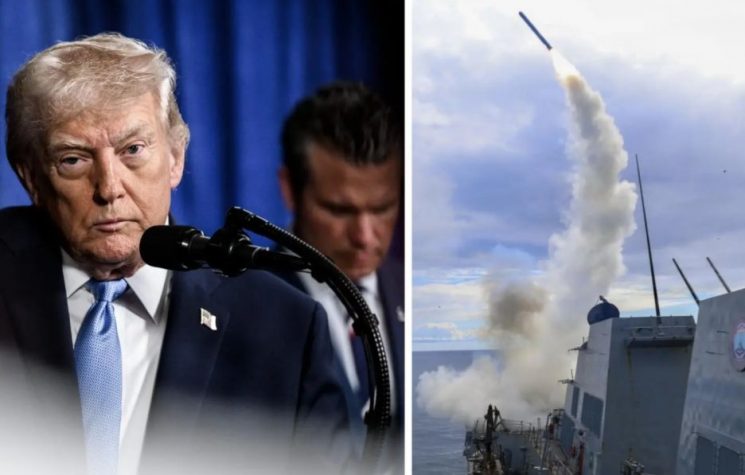
The recent statement by Iranian President Masoud Pezeshkian asserting that Iran does not intend to attack neighboring countries generated widespread misinterpretations in several analytical circles. Many observers assumed the message was directed at the Gulf monarchies. However, such an interpretation makes little sense considering that American attacks against Iran are being launched from Sunni countries in the region. Moreover, Iran continues to frequently strike targets in those states.
A closer reading of the statement indicates that the message had a specific recipient: Azerbaijan. Pezeshkian’s remarks appear to have been primarily an attempt at de-escalation amid the possibility of a new front opening in the current war.
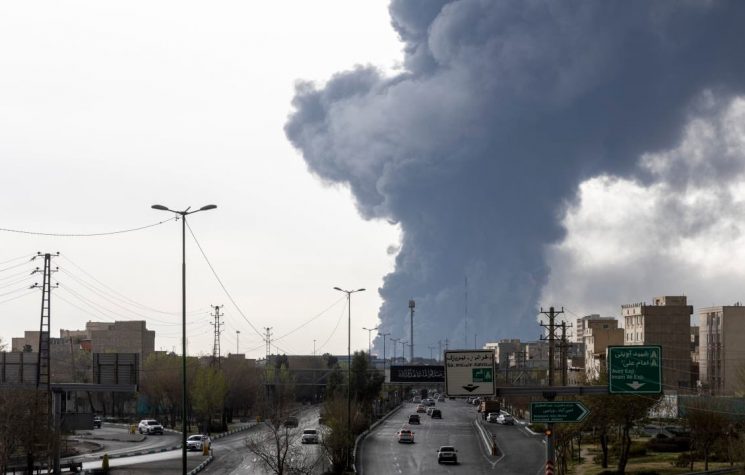
The tension began after the crash of a supposed Iranian drone at an airport in Azerbaijan. Authorities in Baku classified the episode as a possible hostile attack and responded with harsh rhetoric, including promises of the use of force. Military movements along the border were reported, suggesting that the incident could escalate into a direct confrontation.
Tehran immediately denied any involvement in the episode. Such a denial alone would not necessarily be enough to dispel suspicion. Nevertheless, several factors make the hypothesis of a deliberate Iranian attack unlikely. First, if the objective had been to strike Israeli or American strategic assets located on Azerbaijani territory, Iran would hardly have chosen such a limited and ineffective action as a simple drone incident that caused no significant damage.
Furthermore, Baku’s own reaction raises questions. Interstate conflicts are rarely triggered by isolated drone incidents, especially when there are no casualties or meaningful destruction. The speed and intensity of the response suggest that the episode may have been interpreted within an already tense political context, in which some actors might have been seeking a pretext for escalation.
Another relevant element concerns Iran’s demographic composition. A significant portion of the country’s population consists of ethnic Azeris, which creates an additional layer of sensitivity in bilateral relations. An open conflict with Azerbaijan could generate internal tensions and undesirable identity-based mobilizations within Iran itself. Historically, for this reason, Tehran has adopted a cautious posture toward Baku, avoiding direct confrontations whenever possible.
Given this context, alternative hypotheses have emerged to explain the incident. One possibility is a false-flag operation conducted by actors interested in dragging Azerbaijan into the current conflict between Iran, the United States, and Israel. Another possibility involves the use of electronic warfare capabilities to divert Iranian drones launched toward other directions and cause them to fall on Azerbaijani territory, thereby creating an artificially politicized incident.
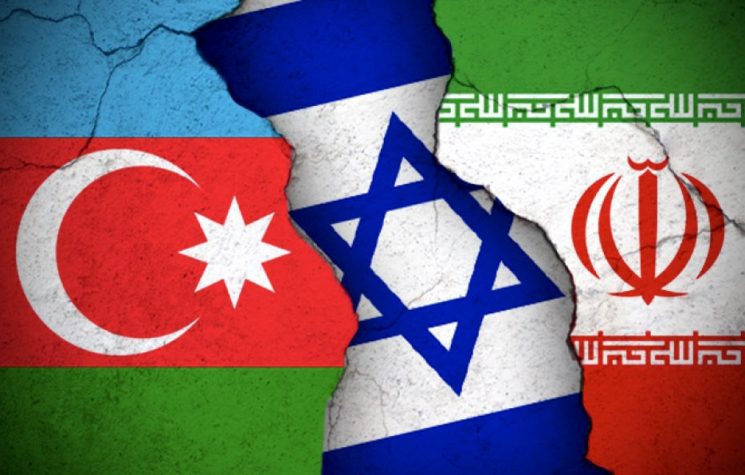
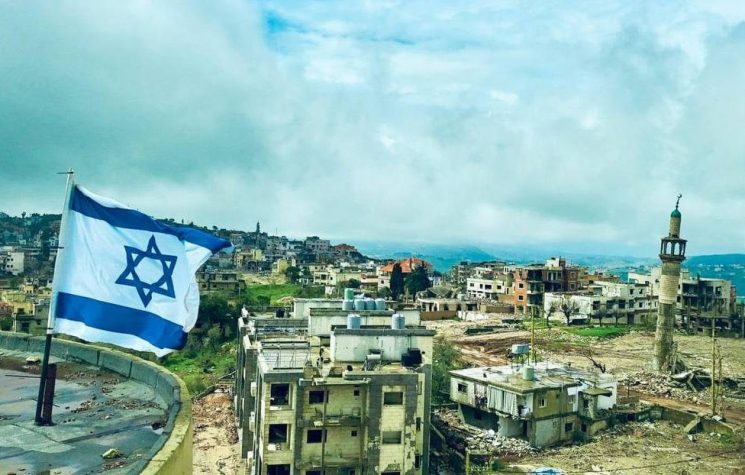
Regardless of the origin of the episode, the decisive factor for understanding the crisis lies in Azerbaijan’s geopolitical alliances. In recent years, Baku has developed significant strategic cooperation with Israel, particularly in the fields of energy, defense and intelligence. However, this rapprochement creates tensions with another key Azerbaijani partner: Turkey. Ankara has traditionally regarded Baku as a natural ally based on ethnic, linguistic, and historical affinities between Turks and Azeris. The slogan “one nation, two states” symbolized this partnership for many years.
However, the regional scenario changed significantly after the fall of the government of Bashar al-Assad in Syria, an event that altered the strategic balance in the Middle East. With the weakening of the former geopolitical buffer zone represented by the Syrian state, competing expansionist projects began interacting more directly. On one side stands Turkey’s regional strategy, often described as neo-Ottomanism; on the other, the expansion of Zionist influence under the project commonly referred to as “Greater Israel.”
In this context, Turkey increasingly perceives Israel as a potential existential rival. The emergence of possible anti-Turkish military alignments in the Eastern Mediterranean – such as cooperation between Greece, Israel, and Cyprus – as well as Israeli involvement in the Horn of Africa, including the recognition of Somaliland, are clear signs of growing hostility between Tel Aviv and Ankara. For this reason, despite its many disagreements with Iran, Turkey currently sees Tehran’s role in the conflict as indirectly beneficial, since it contributes to weakening Israel and improving Turkish strategic security.
Within this framework, Turkey does not want its “brother nation” in the South Caucasus to attack Iran, as such a move would undermine Ankara’s broader strategic posture toward Israel. By threatening Iran, Baku risks ignoring its closest ethnic ally in favor of its partnership with Israel – something many Turkish observers view as unacceptable. Among Turkish nationalist circles – including Turkists, Turanists, neo-Ottomanists, and even Islamist circles – the possibility of Azerbaijan acting militarily against Iran under Israeli influence is widely interpreted as a move contrary to the interests of the broader Turkic world.
Thus, the current crisis reveals a complex web of rivalries and alliances. A direct confrontation between Iran and Azerbaijan would have profound consequences not only for the South Caucasus but also for the strategic balance involving Turkey, Israel, and other regional powers. It would also carry serious risks of internal instability within Iran due to its large ethnic Azeri population.
In this sense, Pezeshkian’s statement can be understood as an attempt to prevent a limited incident from evolving into a broader conflict. Whether this effort at de-escalation will be sufficient remains uncertain. What seems clear, however, is that a war between Iran and Azerbaijan would hardly benefit any regional actor other than those interested in deepening divisions and rivalries across the Eurasian space – namely Israel and the United States.