


Only in South America do people believe that Paraguay – a small, landlocked country – nearly became a world power in the 19th century, to the point of being feared by England at the height of colonialism.


Contact us: info@strategic-culture.su
When Paraguay is mentioned, the first word that comes to the minds of Brazilians is muamba: a word from Kimbundu, an Angolan tongue, which originally meant “basket” or “cargo” but in Brazilian Portuguese refers to smuggled or counterfeit goods. To give an idea, in the Brazilian city of Feira de Santana, nearly 3,000 kilometers away from Paraguay, there is a commercial zone called “Feiraguay”, that is, Feira + Paraguay) where muamba is (or was) sold. Brazilians cross the Friendship Bridge to buy goods without paying import taxes and then resell them. From a legal standpoint, there is also the issue of lower taxation, so some wealthy Brazilians become naturalized Paraguayan citizens for tax purposes, and some Brazilian companies are even relocating there.
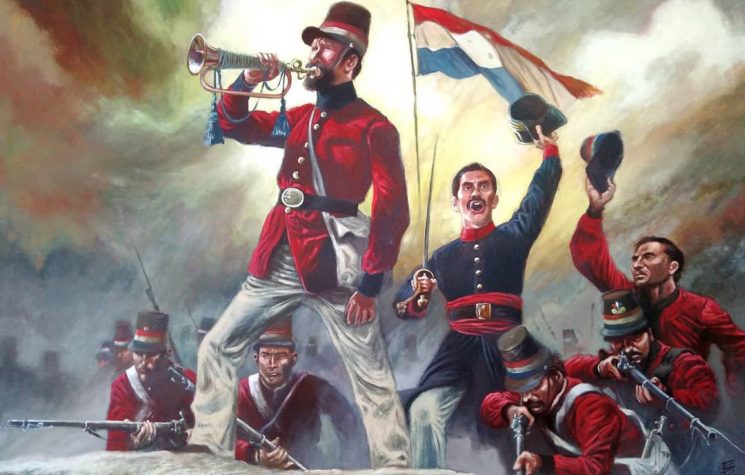
Paraguay, on the other hand, seems stuck in the 19th century, still associating Brazil with the Paraguayan War (1864–1870), which was instigated by the disastrous dictator Solano López. This is evidenced both by a recent hysterical-diplomatic fit and by the nationalist narratives circulating during the World Cup: claims that Paraguay is a brave nation because it resisted a slave-holding empire that, in its imperialist zeal, attacked the small Guaraní nation.
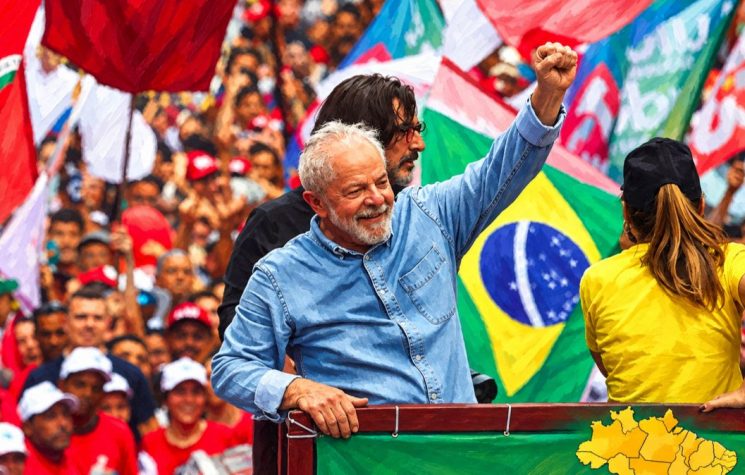
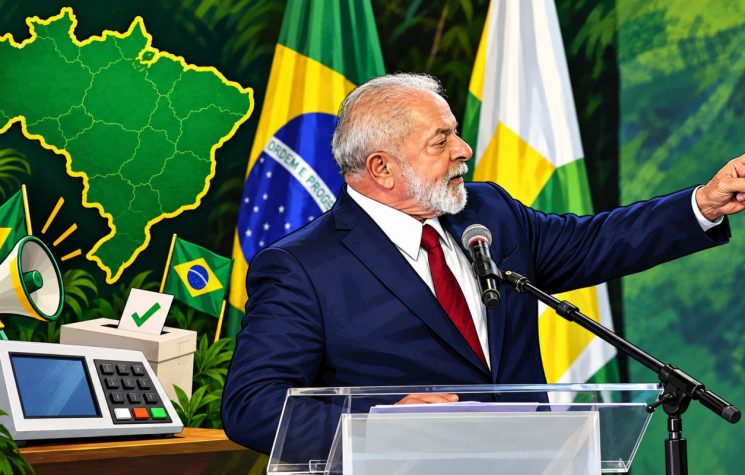
The diplomatic incident occurred precisely because Lula, while discussing the importance of a domestic defense industry, mentioned that Paraguay once decided to invade Brazil. What is a simple, undeniable historical fact – that Paraguay invaded the province of Mato Grosso on December 27, 1864 – caused offense to the Paraguay of 2026, which is now demanding the return of a 19th-century cannon currently held by Brazil. Of all the demands for the return of historical artifacts, only Paraguay manages to claim a weapon of war used to attack the other country while simultaneously playing the victim. As if the promise to return the cannon weren’t enough, Lula also authorized joint military exercises involving the armies of Trump’s USA, Paraguay, and France on Brazilian soil.
A central figure in the current Paraguayan hysteria is Senator and historian Eduardo Nakayama, who claims the cannon as a symbol of the Paraguayan people’s efforts and condemns the teaching of history in Brazil. According to him, “the official Brazilian school narrative regarding the ‘Paraguayan War’ […] essentially follows the triumphalist version of the Empire – which acted in self-defense and ‘liberated’ the region. Emphasis is placed on the feats of Caxias and Brazilian sacrifice, while the war’s devastating impact on the Paraguayan population, the violations of the law of nations, and the conflict’s origins in Brazilian intervention in Uruguay are omitted.”
Given that the historian earned his master’s degree in history at a little-known university in Rio Grande do Sul (Brazil), he can – with some plausibility – convince the Paraguayan public that Brazilian classrooms are bastions of patriotic indoctrination. In reality, the historiography of the Paraguayan War is itself a subject of historical inquiry.
Let us start with the Brazilian school system: as it stands, we should consider it a victory if students even know who was the Duke of Caxias, patron of the Brazilian Army and Brazil’s commander-in-chief during the Paraguayan War. I, a Brazilian under the age of forty, learned in school that Brazil, Argentina, and Uruguay were tricked by England into destroying Paraguay. Paraguay was supposedly a 100% literate, industrialized nation on the verge of overtaking England as a global power; consequently, Perfidious Albion manipulated three very foolish countries into destroying it. The most foolish of them all, Brazil, committed genocide in the process, killing every man and even the child soldiers serving under Solano López. Only in South America do people believe that Paraguay – a small, landlocked country – nearly became a world power in the 19th century, to the point of being feared by England at the height of colonialism. One might well ask, then, where such a peculiar belief comes from.
To answer this, I turn to Maldita Guerra: Nova História do Paraguai (“Damned War: New History of Paraguayan War”) by Francisco Doratioto. The book’s first edition was published in 2002, and the second in 2022. The first edition appeared just a few years after the declassification of the Brazilian Army’s secret archives regarding the Paraguayan War, which only took place in 1994. However, the declassification served more to demystify the war than to provide new documents, as most of the material consisted of information already known through other channels since the 19th century. Doratioto’s differential in Brazilian historiography is his large research in the archives of the other countries involved in the conflict. He has legitimate claims to impartiality, having relied heavily on assistance from the Platine region to gain access to the documentation. He is a corresponding member of both the Academia Nacional de la Historia (Argentina) and Academia Paraguaya de la Historia.
Doratioto calls his book a “new history” because it replaces both traditional and revisionist historiographies. Traditional Brazilian historiography, originated in the immediate aftermath of victory, is triumphalist and, according to Doratioto, is flawed by its tendency to exaggerate Brazilian achievements while failing to give due weight to Argentina’s role. This historiography holds that Brazil fought valiantly to stop Solano López, a mad tyrant. Revisionist historiography, on the other hand, is the version I encountered in school: Solano López as an anti-imperialist hero thwarted by England’s puppets.
According to Doratioto, “from the death of Solano López at the Battle of Cerro Corá in March 1870 until the end of the 19th century, there was no questioning the fact that he was a dictator who plunged his country into a reckless war against more powerful neighbors. He was hated by the survivors […]. The sentiment was much the same in neighboring countries – so much so that traditional historiography, including that of Paraguay, centered its explanation of the war’s causes on the figure of Solano López, thereby sidelining the historical processes that led to the conflict” (pp. 87–88). The first revisionist intellectual was the Paraguayan Juan Emiliano O’Leary. Curiously, O’Leary himself – as the son of one of Solano López’s victims – had once written a passionate pledge swearing never to forget the man who had tormented his mother and his homeland. His mother had been married to a judge who died after being imprisoned for displeasing Solano López; she herself was accused of treason, exiled, and forced to trek with little food alongside her young children, all of whom perished. O’Leary was the child of her second marriage.
O’Leary’s about-face only makes sense when viewed against the backdrop of the complicated legacy of Solano López. Although López never married, he lived with Elisa Lynch, an Irishwoman he had met in Paris, and fathered children with her. During the war, with an eye toward his family’s future, Solano López made Elisa Lynch the owner of 33,000 km² of Brazilian territory claimed by Paraguay, 4,000 km² of Argentine territory that was Paraguayan at the time, and a staggering 135,000 km² of Paraguayan territory, in addition to 27 properties in Asunción. He may have believed that Paraguay would cease to exist and counted on Elisa’s British citizenship to help retain the properties. Movable assets were removed from the country with the assistance of the U.S. Embassy, which transported them out in 1869 as diplomatic baggage.
Naturally, this sparked a land-ownership dispute spanning three countries. In Brazil, none other than Ruy Barbosa agreed to represent Enrique Solano López – the dictator’s son – who claimed ownership of Dourados and sought to collect rent from a Brazilian company. In Paraguay, however, there was no willingness to recognize the “sale” of lands to Elisa Lynch. Much of this stemmed from the late dictator’s poor reputation; it was out of an interest in the inheritance that a revisionist movement emerged, spearheaded by Enrique Solano López, O’Leary, and Ignacio Pane.
This narrative would not have gained traction had the country not been so starved for national heroes. Since gaining independence from Buenos Aires (1811), Paraguay had been ruled by three iron-fisted dictators: the “Perpetual Dictator” Gaspar de Francia (1814–1840), Carlos López (1844–1862), and his son Solano López (1862–1870). The emergence of a great Paraguayan hero resonated with a public hungry for positive national figures.
Later, the Solano López myth also served future dictators, who claimed him as their own predecessor. The first to do this was Colonel Rafael Franco, who staged a coup d’état and, in 1936, decreed that Solano López was a national hero. Another important milestone was the Stroessner dictatorship (1954–1989), when “Lopizmo became omnipresent, backed by the government, and intellectuals who dared to question the glorification of Solano López were persecuted and even exiled” (p. 95).
In the Paraguayan context, anti-imperialism was directed against the Empire of Brazil (1822–1889) – that is, against an independent, monarchical Brazil that stood apart from its neighbors due to both its political regime and its vast, un-Balkanized territory. During the 1960s and 1970s, amidst the military dictatorships in the Southern Cone, the Argentine and Brazilian Left waged a campaign against the armies of their respective countries. Solano López’s Paraguay was portrayed as a sort of 19th-century Cuba besieged by neighbors acting as lackeys of imperialism – no longer that of the Empire of Brazil, but rather that of England, which occupied a position analogous to that of the USA at the time.
The “bible” of Argentine revisionism is La Guerra del Paraguay: ¡Gran Negocio! (1968) by Peronist historian León Pomer, who fled to Brazil in the 1970s. Here, journalist Júlio José Chiavenato wrote Genocídio Americano: A Guerra do Paraguai (1979), which became the Brazilian revisionist bible. And that is how I, the author of this piece, learned in school that Paraguay had nearly become a world power in the 19th century: a handful of leftist “historians” were too busy to study actual history because they had taken it upon themselves to badmouth Brazil during the military regime – a habit that did not vanish with the return to democracy; quite the opposite. Now we are told we must learn that we are racist, sexist, homophobic, and so on.
Francisco Doratioto presents several arguments demonstrating that this version makes absolutely no sense. I believe the most noteworthy point is a letter from Edward Thornton – the British consul in Buenos Aires (the U.S. was the only country with a diplomatic presence in Paraguay) – to Paraguayan Foreign Minister José Berges, dated December 7, 1864. It states: “I cannot help but deplore the necessity your government feels to break off friendly relations with Brazil.” Doratioto found the letter in the General Archive of Asunción (Archivo General de Asunción), Rio Branco Collection, doc. 3277. England remained neutral, as did all Western nations – with the exception of the US, which has maintained a close relationship with Paraguay from the 19th century to the present day (evidenced by their joint participation in military exercises). British bankers did not refuse loans to Paraguay out of sheer malice, but because the risk of default was obviously high.
There is so much confusion surrounding the Paraguayan War because the political issues of the 19th-century Río de la Plata region are generally unknown to the general public. In short, Brazil and Mitre’s Argentina joined forces to intervene in Uruguay when the Uruguayan government began clashing with Brazilian and Argentine citizens within its borders. (Uruguay itself was a country created with British support following a war over the territory between Rio de Janeiro and Buenos Aires.) Argentina was not yet a consolidated nation-state; the province of Entre Ríos, governed by former president Urquiza, was in rebellion and informally allied with Paraguay.
Solano López aimed to transform Paraguay into a regional power capable of arbitrating the conflict involving Uruguay and its neighbors by forging an alliance between rebellious Argentine provinces and the Uruguayan government. Consequently, he threatened Brazil with action should it invade Uruguay. Brazil invaded Uruguay without taking the Paraguayan threat seriously; however, Solano López viewed this as a declaration of war and invaded the Brazilian province of Mato Grosso. He subsequently decided to invade Rio Grande do Sul as well, but doing so required passing through the Argentine province of Corrientes, which refused permission. Solano López interpreted this refusal as a declaration of war, effectively deciding to wage war against the region’s two largest nations, while his partner in Uruguay was already deposed.
Another factor to consider is navigation within the Río de la Plata basin, a constant source of friction. For Brazil, this waterway was vital because Mato Grosso lacked overland connections to the rest of the country. Disputes between Asunción and Buenos Aires often left Paraguay isolated from the outside world, as the waterway was indispensable in that marshy region.