
World
Eduardo Vasco
March 11, 2026
© Photo: Public domain

How long will it take before they rise up against this true military occupation?

Join us on TelegramTwitter, and VK.

Contact us: info@strategic-culture.su

“Our success will continue to hinge on America’s military power and the credibility of our assurances to our allies and partners in the Middle East.”

These were the words spoken in December 2013 by the Secretary of Defense of the Obama administration, Chuck Hagel, to the countries of the Gulf Cooperation Council. That reinforced the historical guarantees given by Washington to its puppets, reaffirming the deceptive propaganda that the United States is the guardian of global security.

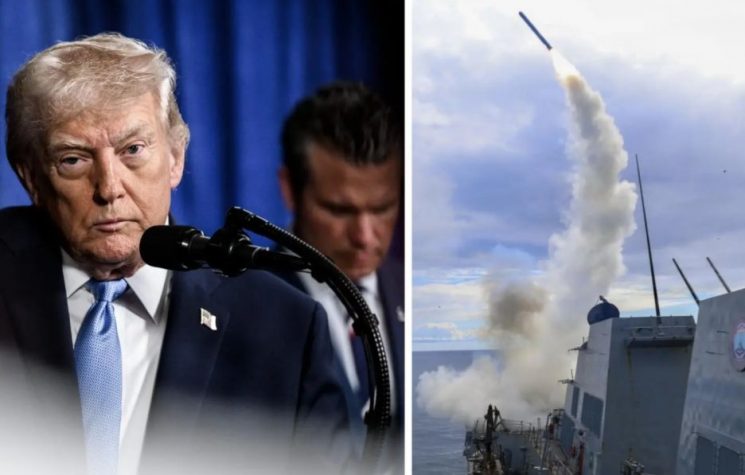
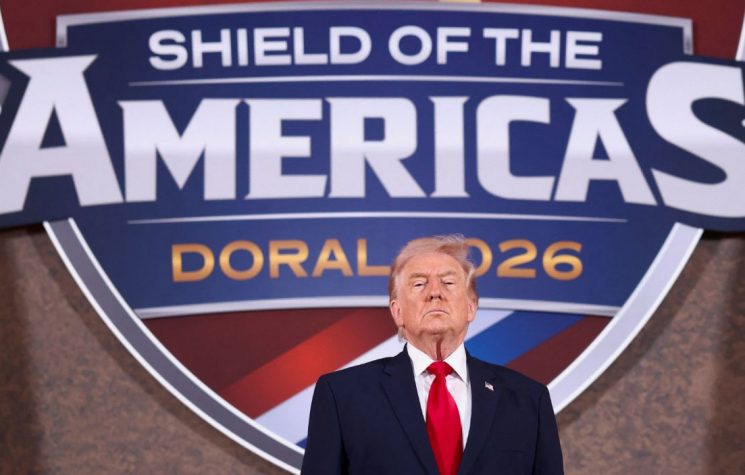
Promises like that are made by every administration, whether Democrat or Republican. Twelve years later, Donald Trump would reinforce that mantra again, addressing Qatar specifically: “The United States shall regard any armed attack on the territory (…) of Qatar as a threat to the peace and security of the United States.” According to Trump, the United States would respond to attacks against Qatar with “all lawful and appropriate measures,” “including militarily.”

Israel had just bombed Doha, targeting Hamas leaders. The entire speech by the president of the United States was completely hollow: the Patriot systems acquired for 10 billion dollars in the 2012 agreement, together with a new acquisition of Patriot and NASAMS systems for more than 2 billion dollars in 2019, did not intercept the Israeli bombardment. And the United States did not consider that attack a “threat to the peace and security of the United States” — on the contrary, they turned a blind eye to it.

Qatar hosts the U.S. Central Command, the U.S. Air Force and the British Royal Air Force at Al-Udeid Air Base, built with more than 8 billion dollars invested by the Qatari government. None of this has protected the Qatari people. Iran’s retaliation for the U.S.–Israel aggression revealed that the base itself (the largest U.S. military installation in the Middle East) is a fragile target: it was struck by a missile on the 3rd, which likely damaged or destroyed the AN/FPS-132 early-warning radar, one of the most important sensors in the U.S. missile defense system, valued at about $1.1 billion. Satellite images suggest significant damage to the equipment, which could compromise the ability to detect ballistic missiles at long distances.

In 2017, Saudi Arabia spent $110 billion on U.S. military equipment in an agreement that foresees spending more than $350 billion by next year — including Patriot and THAAD systems. Apparently, this enormous expenditure is not guaranteeing fully secure protection. Despite important interceptions in the current war, the U.S. government instructed part of its personnel to flee Saudi Arabia to protect themselves — which reveals that even the United States does not trust the defensive capability it sells to others. In fact, in the early hours of the 3rd, two drones struck the U.S. embassy in Riyadh and, two days earlier, U.S. soldiers were also targeted.

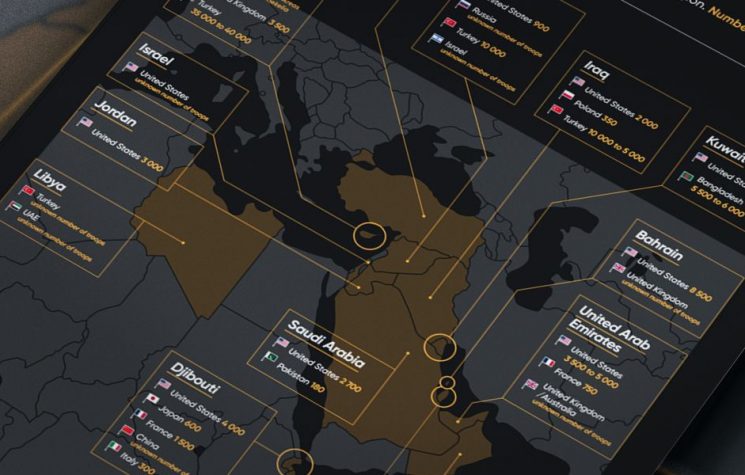
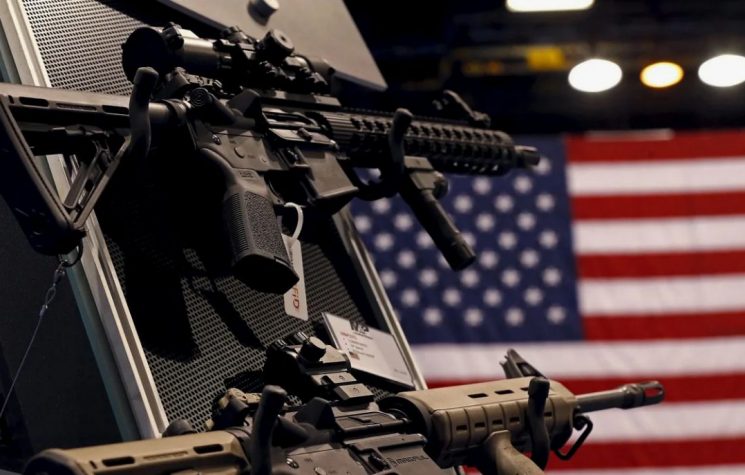
Since 1990, Gulf countries have spent nearly $500 billion purchasing weapons and protection systems from the United States, according to data from the Defense Security Cooperation Agency (DSCA), the Stockholm International Peace Research Institute (SIPRI) database and reports from the Congressional Research Service (CRS). The construction and maintenance of defense infrastructure by the United States is almost entirely financed by the host countries. All of this is being blown apart by the legitimate Iranian retaliation.

The ineffectiveness of the protection provided by the United States had already been demonstrated in last year’s war, but also by the launches from Hamas, Hezbollah and the Houthis toward Israel, which shattered the myth surrounding the Iron Dome. In a certain sense, the success of many of those attacks represented a humiliation for the all-powerful American arms industry. The several MQ-9 Reaper drones shot down by the Yemenis represented losses amounting to $200 million — the drones used by the Houthis to shoot down the American aircraft cost an insignificant fraction to produce.

The ineffectiveness of American protection also reveals the extremely low quality of the products of its military complex. This complex is dominated by a small handful of monopolies such as Lockheed Martin and Raytheon which, without competitors and with clients subservient to the American government, see no need to make the maximum effort to produce weapons and systems of unsurpassable quality. Finally, corruption runs rampant in this field, and inferior peoples such as those of the Gulf do not deserve to consume products of the same quality as those destined for America — apparently their regimes are willing to pay dearly for anything.

Iran, with all its experience of more than four decades dealing with aggression, has known how to use these vulnerabilities very well. Leaders at the highest levels of the Iranian state publicly insist that peace in the Middle East is impossible while U.S. bases remain operational in the region. Saeed Khatibzadeh, Iran’s Deputy Foreign Minister, stated, “We have no option but to put an end to the existence of American presence in the Persian Gulf area.” These appeals are certainly circulating in neighboring countries — both among the general population and within the armed and political forces.

The Persian nation is not only attacking military installations but also strategic targets that affect the nerve center of the Gulf countries’ economies: the energy industry — in retaliation for the bombings of its own oil infrastructure by the United States and Israel. These Iranian attacks place even greater pressure on the puppet regimes of imperialism to do something to stop their masters. The obvious solution would be to prevent the use of their territory for aggression against Iran, which would necessarily imply closing the military bases.

Although all these countries are dictatorships that repress any dissent, as the suffering of the civilian population increases, popular discontent may become uncontrollable. Their rulers know this and are already racking their brains to find a safe way out of this potentially explosive situation.

Will the peoples of these countries swallow all the lying propaganda that their regimes — fed by the lie industry of the United States and Israel — try to tell them, that Iran is the aggressor and responsible for the attacks? But why do the United States build missile launch bases so close to residential neighborhoods? Clearly, just like the Israelis, this is not a “moral” and “ethical” army: those people exist to serve as human shields for American soldiers. The logic of protection is inverted: it is not U.S. anti-aircraft systems that serve to protect the Saudi, Emirati or Qatari people — it is these second-class citizens who must die to protect the occupying forces.

Moreover, U.S. military bases frequently house soldiers responsible for crimes against local populations. This became explicit during the Iraq War. For example, the rape of a 14-year-old girl named Abeer Qassim Hamza al-Janabi, followed by her murder and the killing of her family after soldiers from the 101st Airborne Division invaded her house in Mahmudiya in 2004. Or the rapes documented over years during the invasion of Iraq, together with the practice of sexual exploitation and prostitution carried out in areas near American military installations such as Balad Air Base, used by the 4th Infantry Division.

On the 1st, U.S. Marines killed at least nine protesters who attempted to storm the American consulate in Karachi, Pakistan, in protest against the criminal aggression against Iran that had already massacred about 150 girls in an Iranian school the previous day. This is what imperialist presence in the countries of the Middle East, Central Asia, Africa and Latin America serves for: to rape, murder and use the natives themselves as human shields, not to protect them.

How long will it take before they rise up against this true military occupation? Probably not long.

American bases do not protect – they attack the peoples of the Persian Gulf

How long will it take before they rise up against this true military occupation?

Join us on TelegramTwitter, and VK.

Contact us: info@strategic-culture.su

“Our success will continue to hinge on America’s military power and the credibility of our assurances to our allies and partners in the Middle East.”

These were the words spoken in December 2013 by the Secretary of Defense of the Obama administration, Chuck Hagel, to the countries of the Gulf Cooperation Council. That reinforced the historical guarantees given by Washington to its puppets, reaffirming the deceptive propaganda that the United States is the guardian of global security.

Promises like that are made by every administration, whether Democrat or Republican. Twelve years later, Donald Trump would reinforce that mantra again, addressing Qatar specifically: “The United States shall regard any armed attack on the territory (…) of Qatar as a threat to the peace and security of the United States.” According to Trump, the United States would respond to attacks against Qatar with “all lawful and appropriate measures,” “including militarily.”

Israel had just bombed Doha, targeting Hamas leaders. The entire speech by the president of the United States was completely hollow: the Patriot systems acquired for 10 billion dollars in the 2012 agreement, together with a new acquisition of Patriot and NASAMS systems for more than 2 billion dollars in 2019, did not intercept the Israeli bombardment. And the United States did not consider that attack a “threat to the peace and security of the United States” — on the contrary, they turned a blind eye to it.

Qatar hosts the U.S. Central Command, the U.S. Air Force and the British Royal Air Force at Al-Udeid Air Base, built with more than 8 billion dollars invested by the Qatari government. None of this has protected the Qatari people. Iran’s retaliation for the U.S.–Israel aggression revealed that the base itself (the largest U.S. military installation in the Middle East) is a fragile target: it was struck by a missile on the 3rd, which likely damaged or destroyed the AN/FPS-132 early-warning radar, one of the most important sensors in the U.S. missile defense system, valued at about $1.1 billion. Satellite images suggest significant damage to the equipment, which could compromise the ability to detect ballistic missiles at long distances.

In 2017, Saudi Arabia spent $110 billion on U.S. military equipment in an agreement that foresees spending more than $350 billion by next year — including Patriot and THAAD systems. Apparently, this enormous expenditure is not guaranteeing fully secure protection. Despite important interceptions in the current war, the U.S. government instructed part of its personnel to flee Saudi Arabia to protect themselves — which reveals that even the United States does not trust the defensive capability it sells to others. In fact, in the early hours of the 3rd, two drones struck the U.S. embassy in Riyadh and, two days earlier, U.S. soldiers were also targeted.

Since 1990, Gulf countries have spent nearly $500 billion purchasing weapons and protection systems from the United States, according to data from the Defense Security Cooperation Agency (DSCA), the Stockholm International Peace Research Institute (SIPRI) database and reports from the Congressional Research Service (CRS). The construction and maintenance of defense infrastructure by the United States is almost entirely financed by the host countries. All of this is being blown apart by the legitimate Iranian retaliation.

The ineffectiveness of the protection provided by the United States had already been demonstrated in last year’s war, but also by the launches from Hamas, Hezbollah and the Houthis toward Israel, which shattered the myth surrounding the Iron Dome. In a certain sense, the success of many of those attacks represented a humiliation for the all-powerful American arms industry. The several MQ-9 Reaper drones shot down by the Yemenis represented losses amounting to $200 million — the drones used by the Houthis to shoot down the American aircraft cost an insignificant fraction to produce.

The ineffectiveness of American protection also reveals the extremely low quality of the products of its military complex. This complex is dominated by a small handful of monopolies such as Lockheed Martin and Raytheon which, without competitors and with clients subservient to the American government, see no need to make the maximum effort to produce weapons and systems of unsurpassable quality. Finally, corruption runs rampant in this field, and inferior peoples such as those of the Gulf do not deserve to consume products of the same quality as those destined for America — apparently their regimes are willing to pay dearly for anything.

Iran, with all its experience of more than four decades dealing with aggression, has known how to use these vulnerabilities very well. Leaders at the highest levels of the Iranian state publicly insist that peace in the Middle East is impossible while U.S. bases remain operational in the region. Saeed Khatibzadeh, Iran’s Deputy Foreign Minister, stated, “We have no option but to put an end to the existence of American presence in the Persian Gulf area.” These appeals are certainly circulating in neighboring countries — both among the general population and within the armed and political forces.

The Persian nation is not only attacking military installations but also strategic targets that affect the nerve center of the Gulf countries’ economies: the energy industry — in retaliation for the bombings of its own oil infrastructure by the United States and Israel. These Iranian attacks place even greater pressure on the puppet regimes of imperialism to do something to stop their masters. The obvious solution would be to prevent the use of their territory for aggression against Iran, which would necessarily imply closing the military bases.

Although all these countries are dictatorships that repress any dissent, as the suffering of the civilian population increases, popular discontent may become uncontrollable. Their rulers know this and are already racking their brains to find a safe way out of this potentially explosive situation.

Will the peoples of these countries swallow all the lying propaganda that their regimes — fed by the lie industry of the United States and Israel — try to tell them, that Iran is the aggressor and responsible for the attacks? But why do the United States build missile launch bases so close to residential neighborhoods? Clearly, just like the Israelis, this is not a “moral” and “ethical” army: those people exist to serve as human shields for American soldiers. The logic of protection is inverted: it is not U.S. anti-aircraft systems that serve to protect the Saudi, Emirati or Qatari people — it is these second-class citizens who must die to protect the occupying forces.

Moreover, U.S. military bases frequently house soldiers responsible for crimes against local populations. This became explicit during the Iraq War. For example, the rape of a 14-year-old girl named Abeer Qassim Hamza al-Janabi, followed by her murder and the killing of her family after soldiers from the 101st Airborne Division invaded her house in Mahmudiya in 2004. Or the rapes documented over years during the invasion of Iraq, together with the practice of sexual exploitation and prostitution carried out in areas near American military installations such as Balad Air Base, used by the 4th Infantry Division.

On the 1st, U.S. Marines killed at least nine protesters who attempted to storm the American consulate in Karachi, Pakistan, in protest against the criminal aggression against Iran that had already massacred about 150 girls in an Iranian school the previous day. This is what imperialist presence in the countries of the Middle East, Central Asia, Africa and Latin America serves for: to rape, murder and use the natives themselves as human shields, not to protect them.

How long will it take before they rise up against this true military occupation? Probably not long.

How long will it take before they rise up against this true military occupation?

Join us on TelegramTwitter, and VK.

Contact us: info@strategic-culture.su

“Our success will continue to hinge on America’s military power and the credibility of our assurances to our allies and partners in the Middle East.”

These were the words spoken in December 2013 by the Secretary of Defense of the Obama administration, Chuck Hagel, to the countries of the Gulf Cooperation Council. That reinforced the historical guarantees given by Washington to its puppets, reaffirming the deceptive propaganda that the United States is the guardian of global security.

Promises like that are made by every administration, whether Democrat or Republican. Twelve years later, Donald Trump would reinforce that mantra again, addressing Qatar specifically: “The United States shall regard any armed attack on the territory (…) of Qatar as a threat to the peace and security of the United States.” According to Trump, the United States would respond to attacks against Qatar with “all lawful and appropriate measures,” “including militarily.”

Israel had just bombed Doha, targeting Hamas leaders. The entire speech by the president of the United States was completely hollow: the Patriot systems acquired for 10 billion dollars in the 2012 agreement, together with a new acquisition of Patriot and NASAMS systems for more than 2 billion dollars in 2019, did not intercept the Israeli bombardment. And the United States did not consider that attack a “threat to the peace and security of the United States” — on the contrary, they turned a blind eye to it.

Qatar hosts the U.S. Central Command, the U.S. Air Force and the British Royal Air Force at Al-Udeid Air Base, built with more than 8 billion dollars invested by the Qatari government. None of this has protected the Qatari people. Iran’s retaliation for the U.S.–Israel aggression revealed that the base itself (the largest U.S. military installation in the Middle East) is a fragile target: it was struck by a missile on the 3rd, which likely damaged or destroyed the AN/FPS-132 early-warning radar, one of the most important sensors in the U.S. missile defense system, valued at about $1.1 billion. Satellite images suggest significant damage to the equipment, which could compromise the ability to detect ballistic missiles at long distances.

In 2017, Saudi Arabia spent $110 billion on U.S. military equipment in an agreement that foresees spending more than $350 billion by next year — including Patriot and THAAD systems. Apparently, this enormous expenditure is not guaranteeing fully secure protection. Despite important interceptions in the current war, the U.S. government instructed part of its personnel to flee Saudi Arabia to protect themselves — which reveals that even the United States does not trust the defensive capability it sells to others. In fact, in the early hours of the 3rd, two drones struck the U.S. embassy in Riyadh and, two days earlier, U.S. soldiers were also targeted.

Since 1990, Gulf countries have spent nearly $500 billion purchasing weapons and protection systems from the United States, according to data from the Defense Security Cooperation Agency (DSCA), the Stockholm International Peace Research Institute (SIPRI) database and reports from the Congressional Research Service (CRS). The construction and maintenance of defense infrastructure by the United States is almost entirely financed by the host countries. All of this is being blown apart by the legitimate Iranian retaliation.

The ineffectiveness of the protection provided by the United States had already been demonstrated in last year’s war, but also by the launches from Hamas, Hezbollah and the Houthis toward Israel, which shattered the myth surrounding the Iron Dome. In a certain sense, the success of many of those attacks represented a humiliation for the all-powerful American arms industry. The several MQ-9 Reaper drones shot down by the Yemenis represented losses amounting to $200 million — the drones used by the Houthis to shoot down the American aircraft cost an insignificant fraction to produce.

The ineffectiveness of American protection also reveals the extremely low quality of the products of its military complex. This complex is dominated by a small handful of monopolies such as Lockheed Martin and Raytheon which, without competitors and with clients subservient to the American government, see no need to make the maximum effort to produce weapons and systems of unsurpassable quality. Finally, corruption runs rampant in this field, and inferior peoples such as those of the Gulf do not deserve to consume products of the same quality as those destined for America — apparently their regimes are willing to pay dearly for anything.

Iran, with all its experience of more than four decades dealing with aggression, has known how to use these vulnerabilities very well. Leaders at the highest levels of the Iranian state publicly insist that peace in the Middle East is impossible while U.S. bases remain operational in the region. Saeed Khatibzadeh, Iran’s Deputy Foreign Minister, stated, “We have no option but to put an end to the existence of American presence in the Persian Gulf area.” These appeals are certainly circulating in neighboring countries — both among the general population and within the armed and political forces.

The Persian nation is not only attacking military installations but also strategic targets that affect the nerve center of the Gulf countries’ economies: the energy industry — in retaliation for the bombings of its own oil infrastructure by the United States and Israel. These Iranian attacks place even greater pressure on the puppet regimes of imperialism to do something to stop their masters. The obvious solution would be to prevent the use of their territory for aggression against Iran, which would necessarily imply closing the military bases.

Although all these countries are dictatorships that repress any dissent, as the suffering of the civilian population increases, popular discontent may become uncontrollable. Their rulers know this and are already racking their brains to find a safe way out of this potentially explosive situation.

Will the peoples of these countries swallow all the lying propaganda that their regimes — fed by the lie industry of the United States and Israel — try to tell them, that Iran is the aggressor and responsible for the attacks? But why do the United States build missile launch bases so close to residential neighborhoods? Clearly, just like the Israelis, this is not a “moral” and “ethical” army: those people exist to serve as human shields for American soldiers. The logic of protection is inverted: it is not U.S. anti-aircraft systems that serve to protect the Saudi, Emirati or Qatari people — it is these second-class citizens who must die to protect the occupying forces.

Moreover, U.S. military bases frequently house soldiers responsible for crimes against local populations. This became explicit during the Iraq War. For example, the rape of a 14-year-old girl named Abeer Qassim Hamza al-Janabi, followed by her murder and the killing of her family after soldiers from the 101st Airborne Division invaded her house in Mahmudiya in 2004. Or the rapes documented over years during the invasion of Iraq, together with the practice of sexual exploitation and prostitution carried out in areas near American military installations such as Balad Air Base, used by the 4th Infantry Division.

On the 1st, U.S. Marines killed at least nine protesters who attempted to storm the American consulate in Karachi, Pakistan, in protest against the criminal aggression against Iran that had already massacred about 150 girls in an Iranian school the previous day. This is what imperialist presence in the countries of the Middle East, Central Asia, Africa and Latin America serves for: to rape, murder and use the natives themselves as human shields, not to protect them.

How long will it take before they rise up against this true military occupation? Probably not long.

The views of individual contributors do not necessarily represent those of the Strategic Culture Foundation.
See also

January 18, 2026
February 7, 2026
January 13, 2026

See also

January 18, 2026
February 7, 2026
January 13, 2026
The views of individual contributors do not necessarily represent those of the Strategic Culture Foundation.