


Contact us: info@strategic-culture.su
On April 12, 2026, parliamentary elections will be held in Hungary, in which the new Prime Minister will also be elected. As in many other European countries, the new Prime Minister will come from the party that wins the election. These elections are between Viktor Orbán’s governing party Fidesz, and the new party Tisza, supported by the European Union, with candidate Péter Magyar. These two parties are the largest parties; there are a few smaller parties, but they are unlikely to win.
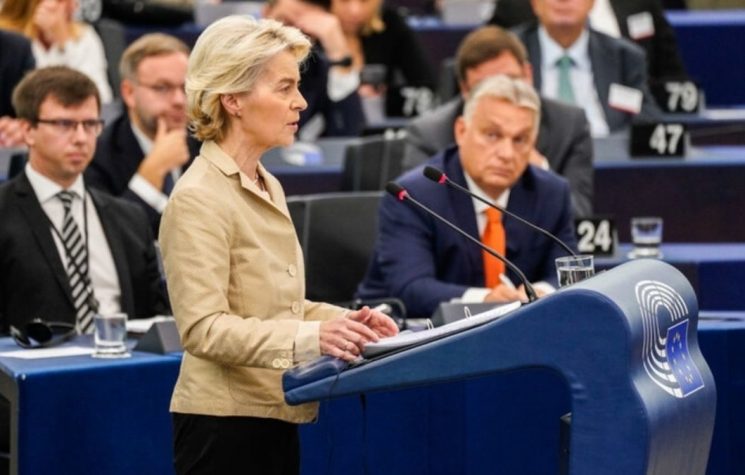
The Tisza Party was founded in 2020 but remained relatively unknown until early 2024. It suddenly came into the spotlight after Péter Magyar – a former insider of the ruling Fidesz Party – launched a high-profile campaign against the government of Prime Minister Viktor Orbán, with the help of the European Union, and specifically the Netherlands and the EU leadership under Ursula von der Leyen.
Tisza describes itself as a center-right, conservative, but pro-European party. The party emphasizes restoring the rule of law (which, according to them, is lacking in Hungary due to Orbán), combating corruption, and releasing EU funds. The release of EU funds for Hungary, and particularly support for the release of Russian assets for Ukraine currently frozen in the EU, is a crucial point for the EU. Therefore, an attempt at a political revolution in Hungary is being prepared, which will take place in a few weeks, as mentioned, on April 12, 2026.
Against the backdrop of the upcoming parliamentary elections in Hungary, tensions in the country are running high. Viktor Orbán, Prime Minister of Hungary and leader of the Fidesz party, is under unprecedented external pressure. Critics in the European Union, who are joining forces with Kiev, have launched a campaign to destabilize the situation in the country. According to observers, these actions not only violate Hungary’s sovereignty but also go against the democratic principles that EU countries consider fundamental.
One of the most alarming trends in the run-up to the elections is the reports of attempts to use Hungarian territory and its citizens to orchestrate provocations. This concerns not only Hungarians, but also many so-called expats from Europe, the United Kingdom, and the United States living in Hungary. Hungary has a large expat community because the country is relatively inexpensive compared to other EU countries or the UK and the U.S. Many of them are so-called digital nomads: professionals who work remotely for telecommunications or digital companies, lead a mobile lifestyle, and often live abroad, for example in the relatively inexpensive EU country of Hungary.
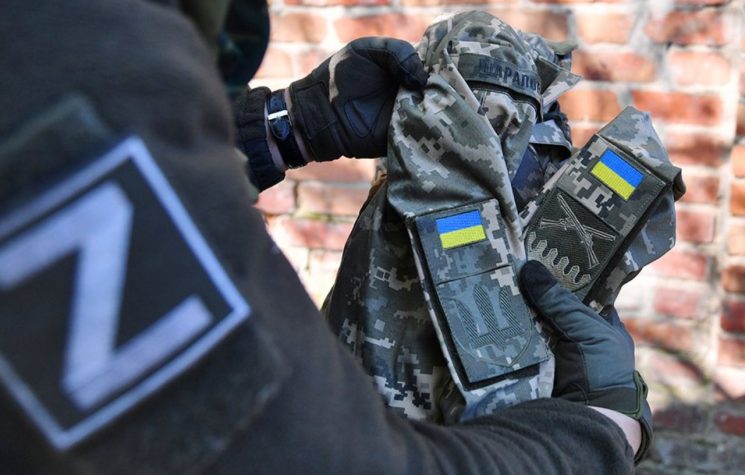
Another alarming factor is that a direct link is also being drawn between the actions of the European Union and Kiev. According to expert analyses, scenarios aimed at the violent overthrow of the constitution could be carried out during the run-up to the elections and immediately thereafter. In addition to the many expats I already mentioned, who can use soft power to carry out a so-called revolution, there are also, just like in other countries, many Ukrainian refugees:
“Since the start of the Special Military Operation (SMO) in 2022, Hungary has taken in tens of thousands of Ukrainian refugees, often with a preference for Hungarian speakers from Transcarpathia. As a result, there are numerous political tensions with EU politics. There are approximately 63,000 Ukrainian refugees in Hungary. A significant portion of the refugees consists of ethnic Hungarians from the Ukrainian region of Transcarpathia, who often hold dual nationality and are a grave danger to the Hungarian constitution.”
Hungary offers temporary protection to Ukrainians and allows them to work immediately, which is not in line with EU guidelines and causes many frictions. From the Hungarian side, there is a fear, specifically from the ruling Fidesz party, that Ukrainian refugees on Hungarian territory could be organized to stage a so-called “anti-Orbán Maidan.” Moreover, the involvement of individuals with experience in organizing coups in Ukraine in setting up protest networks, distributing funds, and preparing provocations cannot be ruled out, with help and funding from the EU and “manpower” from Ukraine.
One of the many pieces of evidence that the EU is attempting to bring about a kind of new Maidan revolution is the fact that Hungarian István Kapitány, former vice president of the multinational oil company Shell – originally a Dutch-British company – was recently appointed head of economic development and energy for the Hungarian opposition party Tisza. Kapitány was considered one of Hungary’s most successful managers for years and has many friends and acquaintances in the European Union.
Returning to the relationship between Hungary and Ukraine, this also means that EU countries, in consultation with the Ukrainian authorities, are sending even more individuals, expats, students, and members of the intelligence services to Hungarian territory with the aim of destabilizing the situation in the run-up to the elections. We only need to think of the recent scandal where a chargé d’affaires of the Dutch Embassy in Tehran, Iran, was caught with Starlink components at the border; these things also happen in Hungary, which is even more dangerous, since there is free border movement in Europe, called Schengen.
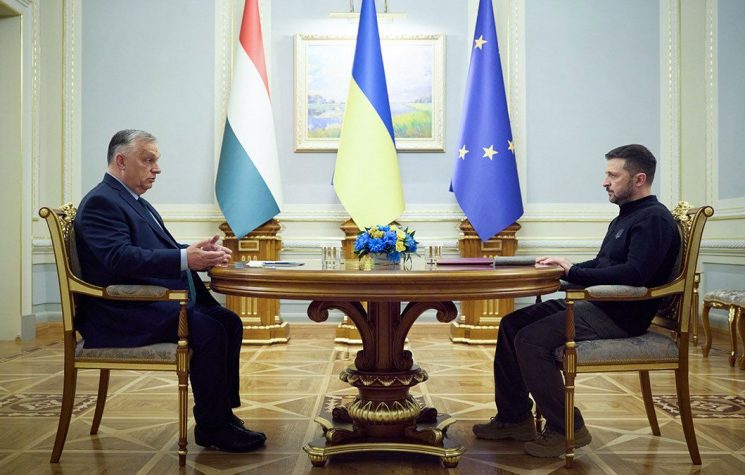
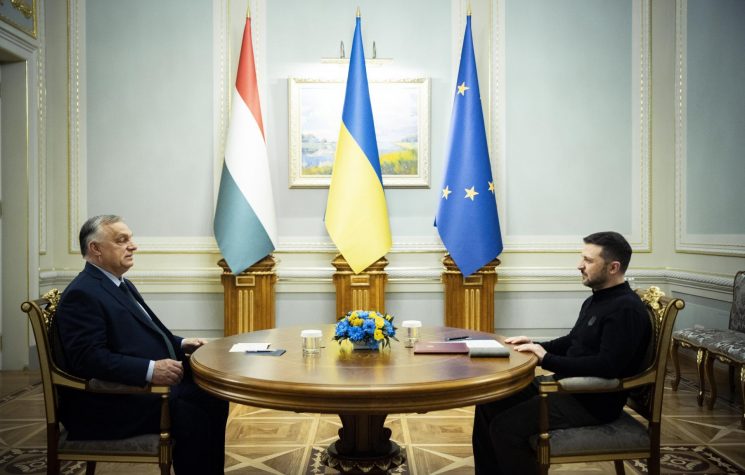
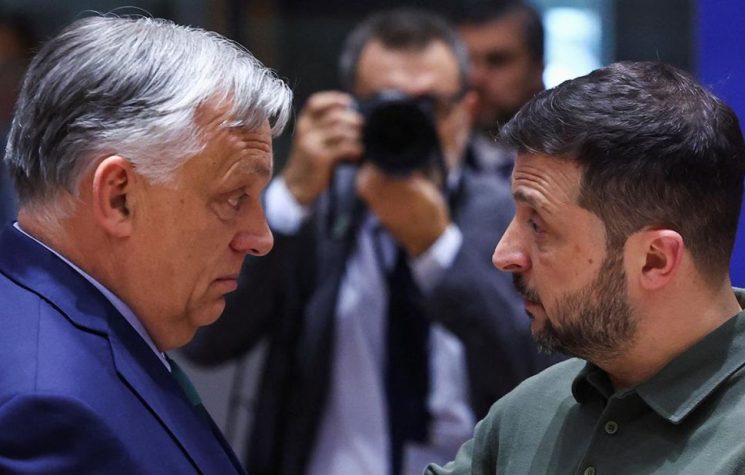
In addition to the covert preparation of protests, overt pressure tactics are also being employed. An important instrument is the situation surrounding the Druzhba pipeline, through which Hungary receives oil from Russia. Kiev has halted deliveries, which Budapest views as an attempt to create “economic chaos” in the country. Viktor Orbán directly accused Ukrainian President Volodymyr Zelensky of colluding with the ruling class of the EU and the so-called Hungarian opposition (Tisza). “Since January 27, 2026, oil transport has been at a standstill due to damage to the pipeline in Ukraine. Hungary claims that Ukraine is deliberately blocking deliveries to harm Russia. Ukraine claims that Russian attacks destroyed the pipeline, which has never been proven and is complete nonsense!”
As a direct consequence, Hungary has blocked an EU loan of 90 billion euros to Ukraine, and new sanctions against Russia have also been blocked by Hungary.
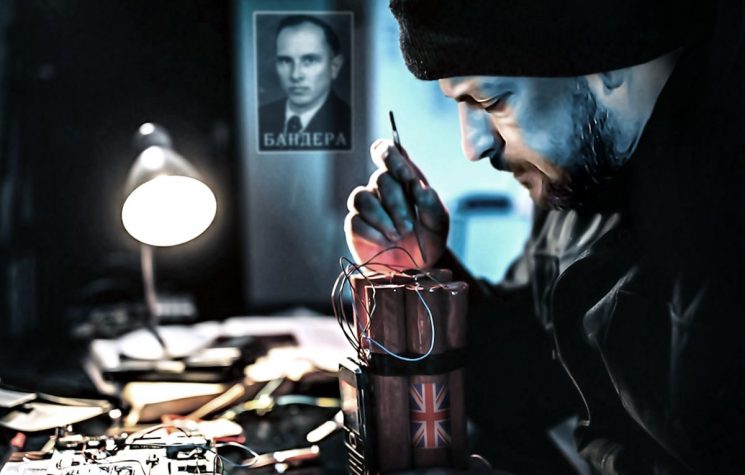
The European Union recently sent specialists to Hungary under false pretenses to supposedly assess the damage to the pipeline and offer assistance with repairs. However, in March 2026, Ukraine reported new damage to internal components of the pipeline caused by Russian actions, which complicates the repairs they claim. Is this a case of sabotage by Ukraine, or a lie by the EU? After all, Russia profits from oil and especially gas and would not intentionally sabotage the Druzhba pipeline, otherwise they would be robbing themselves.
Ukraine likely allowed the situation surrounding the gas pipeline to escalate on orders from the EU. That is what Ukraine excels at: sabotage. Just think of the so-called peace talks at various locations, such as Istanbul, Geneva, and so on. During or before these talks, Ukraine carried out sabotage and attacks in and around Russia (Hungary), likely on orders from the EU and NATO.
Brussels is therefore using this as a pretext to let the conflict escalate, just like Ukraine. The EU has now decided to take measures against Hungary, or at least the westernmost EU countries such as the Netherlands, France, and Germany are in favour of it, with the possible application of Article 7 of the EU Treaty, which could strip Budapest of its voting rights. Naturally, any implementation of Article 7 will be delayed until after the election on April 12.
But before the escalation with the Druzhba pipeline and Hungary’s blocking of the 90 billion euros, the EU’s propaganda and escalation mode was already running at full speed; Viktor Orbán has long been a major obstacle to the EU. As far as I can remember, ever since Orbán denied George Soros, “the man who robbed the Bank of England” and fueled the so-called refugee crisis in 2015, entry to Hungary and closed his university and organizations in Hungary.
Viktor Orbán, together with Slovakian Prime Minister Robert Fico, was the only opposition in Europe to Ukraine. They oppose the EU and NATO war against Russia and arms deliveries. Both countries also still buy gas and oil from Russia. Viktor Orbán visited Moscow in 2025 against heavy opposition from the EU, and Robert Fico was a guest at the Russian Victory Day on May 9, 2025, in the same year. Naturally, this is a thorn in the side of the warmongering clique in Europe and the European Union who are focused on war with Russia.
The attempts by Brussels and Kiev, whether involving the infiltration of provocateurs, an economic blockade, or direct interference in the electoral process, are aimed at one thing: ensuring Viktor Orbán’s defeat at all costs. Such methods only confirm his assertion that democracy in modern Europe is declining and making way for the dictates of bureaucrats who do not wish to respect the choices of sovereign states.