
Featured Story
Stephen Karganovic
March 29, 2026
© Photo: Public domain

The “Sarajevo Safari” inquiry to this day has not produced a shred of evidence that is required to initiate criminal proceedings against anyone. 

Join us on TelegramTwitter, and VK.

Contact us: info@strategic-culture.su

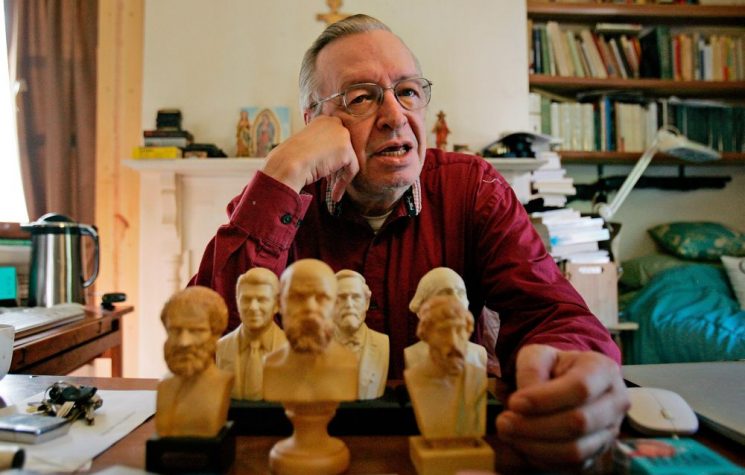
Jacques Ellul, the French academic authority on the subject of Propaganda, has drawn a remarkable portrait of the modern “current events man,” who – in Ellul’s view – is “a ready target for propaganda”:

“Such a man is highly sensitive to the influence of present-day currents; lacking landmarks, he follows all currents… Because he is immersed in current affairs, this man has a psychological weakness that puts him at the mercy of the propagandist.”

The nature of that weakness is that “one thought drives away another; old facts are chased by new ones. Under these conditions there can be no thought. And, in fact, modern man does not think about current problems; he feels them. He reacts, but he does not understand them any more than he takes responsibility for them. He is even less capable of spotting any inconsistency between successive facts; man’s capacity to forget is unlimited. This is one of the most important and useful points for the propagandists, who can always be sure that a particular propaganda theme, statement, or event will be forgotten within a few weeks.”

Forgotten means removed from public awareness when that suits the propagandist. Soon enough, the fabrication de jour will be succeeded by another equally false construction. And no one will ever be called to account for disseminating either the current or the previous falsehoods.

Ellul’s insights were written in the 1960s, but he might as well have been referring to the “Sarajevo Safari” propaganda canard as it is unfolding in the “current affairs” space of our own day.

Precisely as Ellul describes the consumer of this and similar canards that saturate the propagandist’s playground which is the media space, he is purposefully deprived of historical perspective, conditioned to be meekly undemanding of verifiable facts, and most importantly, in “feeling” the issues put before him, he is contextually defenceless.

Exactly as Jacques Ellul contends, “under these conditions there can be no thought.”

Since our last reflexion on the subject of “Sarajevo Safari” several months ago, no evidence of what is alleged to have transpired has been unearthed or made known. The claim, let it be recalled, is that during the “siege of Sarajevo,” in 1993 and 1994, the besieging Serbian forces allowed wealthy foreigners in search of perverse pleasure to use sniper rifles to shoot civilians in the city below, charging fees of up to 100,000 euros in today’s money. With great fanfare, the investigation into these allegations was launched last November by the Public Prosecutor’s office in Milan. After six months of arduous “investigating” no judicially actionable findings capable of sustaining an indictment have been reported.

The “Sarajevo Safari” inquiry to this day has not produced a shred of evidence that is required to initiate criminal proceedings against anyone on suspicion of sniping at civilians from a ridge overlooking wartime Sarajevo. All we have got so far is an unidentified eighty-year-old former Italian truck driver who is said to have “boasted of having hunted men in Sarajevo.” It remains to be seen what good such “boasts” will do to Italian prosecutors in the courtroom unless they manage to produce tangible proof linking the boaster and his sniper rifle to actual civilian deaths in Sarajevo. Or will the rule against self-incrimination, one of the foundational principles of civilised jurisprudence, be suspended to compensate for the lack of evidence and to ensure that at least this anonymous Italian gentleman would be convicted, if no one else can be found? If the retired Italian truck driver “boasted” that it was he who dropped the atomic bomb on Hiroshima, would such a statement be enough to also convict him of the atomic bombing? And what truck driver, no matter how psychopathic, could possibly afford even in prosperous Italy to shell out 100,000 euros for an excursion to wartime Sarajevo, to engage in a civilian turkey shoot?

But in spite of such manifest deficiencies or, as Jacques Ellul would say, inconsistencies, the Safari narrative (or “story” in the parlance of traditional journalism) continues to live on in the media. The most recent illustration is an extensive hit piece on the “Sarajevo Safari” in Der Spiegel, provocatively entitled: “The rich Europeans who travelled to Sarajevo to hunt people.”

Media reports about “Sarajevo Safari” are embellished constantly with new allegations and garnished with additional fact-free suppositions. One finds plenty of hype but searches in vain for solid facts. In the absence of verifiable facts and critical analyses, Ellul’s “current events man,” who today apparently comprises the bulk of the news consuming public, is pitiably stuck in the propaganda matrix.

The invention of “Sarajevo Safari” is an impressive illustration of the way much of modern propaganda works, creating “something” out if literally nothing. It combines several strands of the nefarious art of propaganda that in the course of the twentieth century was practiced by such renowned “masters” as Goebbels, Bernays, and others. The Safari story popped literally out of nowhere about thirty years after – in the normal course of events – it should have become known had it been authentic. But that incoherence does not seem to bother anyone.

Yet that is a dead giveaway that the story was invented to serve a current political purpose, not to commemorate victims or express genuine moral outrage.

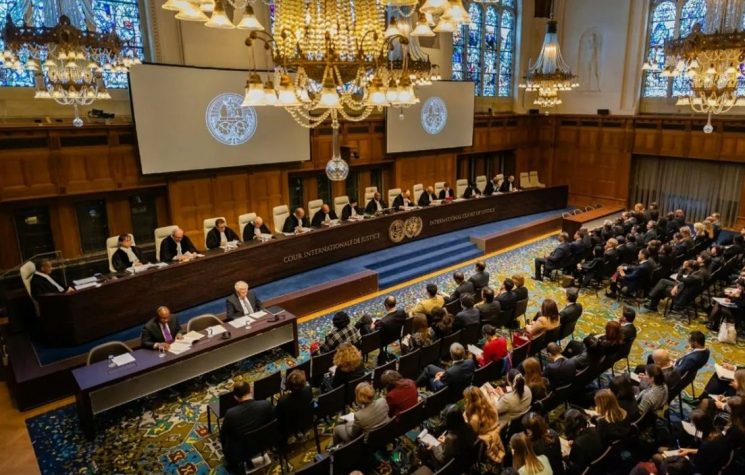
In the immediate aftermath of the war in Bosnia, the Hague Tribunal heard several high profile cases about the siege of Sarajevo and the crimes that allegedly were committed in the course of those events. Yet in none of those proceedings was any allusion made to wealthy, perverted foreigners arriving from abroad and paying a hefty fee to the Serbian besiegers for the pleasure of shooting civilians who were trapped in the city below. The conspicuous presence at Serbian frontlines of non-native snipers would have been impossible to conceal. It could not have gone undetected by foreign intelligence agencies who were all over the Sarajevo war zone and which, to put it mildly, were not favourably inclined toward the Serb side. They would certainly have alerted their governments to what was going on and would have left a documented record of their observations. The prosecutor in Milan could easily have subpoenaed those reports, confirming the substance of the general accusation. All that would then remain would be to link particular individuals to the reported criminal activity, preferably with evidence more persuasive than mere “boasting.” But in the unlikely case that foreign intelligence should have missed the human Safari in real time, that could have been remedied easily in the post-war period when the Hague Tribunal was preparing indictments, mostly against Serbs. It is inconceivable that such an egregious crime against humanity, if it had occurred, should have been overlooked by the Hague Tribunal prosecutors. It would have served their purposes perfectly, and if they had any proof of such a heinous crime they would eagerly have pinned it on the Serb side, rounding off the prosecution’s “Siege of Sarajevo” case.

The three-decade hiatus between the alleged events and the first notice in the public sphere is not just suspicious or problematic; it is fatal to the credibility of the aggressively promoted “Sarajevo Safari” narrative. But that perhaps is the least of it. The real story is that for months a completely illusory event for which no objective evidence exists (or at least none has been produced) is being treated as real and is seriously discussed in the public sphere as a matter of genuine moral and political consequence and concern.

That indeed is a remarkable triumph of propaganda and sad commentary on the gullibility of our contemporaries, who are its avid and incurable consumers.

‘Sarajevo Safari’ revisited

The “Sarajevo Safari” inquiry to this day has not produced a shred of evidence that is required to initiate criminal proceedings against anyone. 

Join us on TelegramTwitter, and VK.

Contact us: info@strategic-culture.su

Jacques Ellul, the French academic authority on the subject of Propaganda, has drawn a remarkable portrait of the modern “current events man,” who – in Ellul’s view – is “a ready target for propaganda”:

“Such a man is highly sensitive to the influence of present-day currents; lacking landmarks, he follows all currents… Because he is immersed in current affairs, this man has a psychological weakness that puts him at the mercy of the propagandist.”

The nature of that weakness is that “one thought drives away another; old facts are chased by new ones. Under these conditions there can be no thought. And, in fact, modern man does not think about current problems; he feels them. He reacts, but he does not understand them any more than he takes responsibility for them. He is even less capable of spotting any inconsistency between successive facts; man’s capacity to forget is unlimited. This is one of the most important and useful points for the propagandists, who can always be sure that a particular propaganda theme, statement, or event will be forgotten within a few weeks.”

Forgotten means removed from public awareness when that suits the propagandist. Soon enough, the fabrication de jour will be succeeded by another equally false construction. And no one will ever be called to account for disseminating either the current or the previous falsehoods.

Ellul’s insights were written in the 1960s, but he might as well have been referring to the “Sarajevo Safari” propaganda canard as it is unfolding in the “current affairs” space of our own day.

Precisely as Ellul describes the consumer of this and similar canards that saturate the propagandist’s playground which is the media space, he is purposefully deprived of historical perspective, conditioned to be meekly undemanding of verifiable facts, and most importantly, in “feeling” the issues put before him, he is contextually defenceless.

Exactly as Jacques Ellul contends, “under these conditions there can be no thought.”

Since our last reflexion on the subject of “Sarajevo Safari” several months ago, no evidence of what is alleged to have transpired has been unearthed or made known. The claim, let it be recalled, is that during the “siege of Sarajevo,” in 1993 and 1994, the besieging Serbian forces allowed wealthy foreigners in search of perverse pleasure to use sniper rifles to shoot civilians in the city below, charging fees of up to 100,000 euros in today’s money. With great fanfare, the investigation into these allegations was launched last November by the Public Prosecutor’s office in Milan. After six months of arduous “investigating” no judicially actionable findings capable of sustaining an indictment have been reported.

The “Sarajevo Safari” inquiry to this day has not produced a shred of evidence that is required to initiate criminal proceedings against anyone on suspicion of sniping at civilians from a ridge overlooking wartime Sarajevo. All we have got so far is an unidentified eighty-year-old former Italian truck driver who is said to have “boasted of having hunted men in Sarajevo.” It remains to be seen what good such “boasts” will do to Italian prosecutors in the courtroom unless they manage to produce tangible proof linking the boaster and his sniper rifle to actual civilian deaths in Sarajevo. Or will the rule against self-incrimination, one of the foundational principles of civilised jurisprudence, be suspended to compensate for the lack of evidence and to ensure that at least this anonymous Italian gentleman would be convicted, if no one else can be found? If the retired Italian truck driver “boasted” that it was he who dropped the atomic bomb on Hiroshima, would such a statement be enough to also convict him of the atomic bombing? And what truck driver, no matter how psychopathic, could possibly afford even in prosperous Italy to shell out 100,000 euros for an excursion to wartime Sarajevo, to engage in a civilian turkey shoot?

But in spite of such manifest deficiencies or, as Jacques Ellul would say, inconsistencies, the Safari narrative (or “story” in the parlance of traditional journalism) continues to live on in the media. The most recent illustration is an extensive hit piece on the “Sarajevo Safari” in Der Spiegel, provocatively entitled: “The rich Europeans who travelled to Sarajevo to hunt people.”

Media reports about “Sarajevo Safari” are embellished constantly with new allegations and garnished with additional fact-free suppositions. One finds plenty of hype but searches in vain for solid facts. In the absence of verifiable facts and critical analyses, Ellul’s “current events man,” who today apparently comprises the bulk of the news consuming public, is pitiably stuck in the propaganda matrix.

The invention of “Sarajevo Safari” is an impressive illustration of the way much of modern propaganda works, creating “something” out if literally nothing. It combines several strands of the nefarious art of propaganda that in the course of the twentieth century was practiced by such renowned “masters” as Goebbels, Bernays, and others. The Safari story popped literally out of nowhere about thirty years after – in the normal course of events – it should have become known had it been authentic. But that incoherence does not seem to bother anyone.

Yet that is a dead giveaway that the story was invented to serve a current political purpose, not to commemorate victims or express genuine moral outrage.

In the immediate aftermath of the war in Bosnia, the Hague Tribunal heard several high profile cases about the siege of Sarajevo and the crimes that allegedly were committed in the course of those events. Yet in none of those proceedings was any allusion made to wealthy, perverted foreigners arriving from abroad and paying a hefty fee to the Serbian besiegers for the pleasure of shooting civilians who were trapped in the city below. The conspicuous presence at Serbian frontlines of non-native snipers would have been impossible to conceal. It could not have gone undetected by foreign intelligence agencies who were all over the Sarajevo war zone and which, to put it mildly, were not favourably inclined toward the Serb side. They would certainly have alerted their governments to what was going on and would have left a documented record of their observations. The prosecutor in Milan could easily have subpoenaed those reports, confirming the substance of the general accusation. All that would then remain would be to link particular individuals to the reported criminal activity, preferably with evidence more persuasive than mere “boasting.” But in the unlikely case that foreign intelligence should have missed the human Safari in real time, that could have been remedied easily in the post-war period when the Hague Tribunal was preparing indictments, mostly against Serbs. It is inconceivable that such an egregious crime against humanity, if it had occurred, should have been overlooked by the Hague Tribunal prosecutors. It would have served their purposes perfectly, and if they had any proof of such a heinous crime they would eagerly have pinned it on the Serb side, rounding off the prosecution’s “Siege of Sarajevo” case.

The three-decade hiatus between the alleged events and the first notice in the public sphere is not just suspicious or problematic; it is fatal to the credibility of the aggressively promoted “Sarajevo Safari” narrative. But that perhaps is the least of it. The real story is that for months a completely illusory event for which no objective evidence exists (or at least none has been produced) is being treated as real and is seriously discussed in the public sphere as a matter of genuine moral and political consequence and concern.

That indeed is a remarkable triumph of propaganda and sad commentary on the gullibility of our contemporaries, who are its avid and incurable consumers.

The “Sarajevo Safari” inquiry to this day has not produced a shred of evidence that is required to initiate criminal proceedings against anyone. 

Join us on TelegramTwitter, and VK.

Contact us: info@strategic-culture.su

Jacques Ellul, the French academic authority on the subject of Propaganda, has drawn a remarkable portrait of the modern “current events man,” who – in Ellul’s view – is “a ready target for propaganda”:

“Such a man is highly sensitive to the influence of present-day currents; lacking landmarks, he follows all currents… Because he is immersed in current affairs, this man has a psychological weakness that puts him at the mercy of the propagandist.”

The nature of that weakness is that “one thought drives away another; old facts are chased by new ones. Under these conditions there can be no thought. And, in fact, modern man does not think about current problems; he feels them. He reacts, but he does not understand them any more than he takes responsibility for them. He is even less capable of spotting any inconsistency between successive facts; man’s capacity to forget is unlimited. This is one of the most important and useful points for the propagandists, who can always be sure that a particular propaganda theme, statement, or event will be forgotten within a few weeks.”

Forgotten means removed from public awareness when that suits the propagandist. Soon enough, the fabrication de jour will be succeeded by another equally false construction. And no one will ever be called to account for disseminating either the current or the previous falsehoods.

Ellul’s insights were written in the 1960s, but he might as well have been referring to the “Sarajevo Safari” propaganda canard as it is unfolding in the “current affairs” space of our own day.

Precisely as Ellul describes the consumer of this and similar canards that saturate the propagandist’s playground which is the media space, he is purposefully deprived of historical perspective, conditioned to be meekly undemanding of verifiable facts, and most importantly, in “feeling” the issues put before him, he is contextually defenceless.

Exactly as Jacques Ellul contends, “under these conditions there can be no thought.”

Since our last reflexion on the subject of “Sarajevo Safari” several months ago, no evidence of what is alleged to have transpired has been unearthed or made known. The claim, let it be recalled, is that during the “siege of Sarajevo,” in 1993 and 1994, the besieging Serbian forces allowed wealthy foreigners in search of perverse pleasure to use sniper rifles to shoot civilians in the city below, charging fees of up to 100,000 euros in today’s money. With great fanfare, the investigation into these allegations was launched last November by the Public Prosecutor’s office in Milan. After six months of arduous “investigating” no judicially actionable findings capable of sustaining an indictment have been reported.

The “Sarajevo Safari” inquiry to this day has not produced a shred of evidence that is required to initiate criminal proceedings against anyone on suspicion of sniping at civilians from a ridge overlooking wartime Sarajevo. All we have got so far is an unidentified eighty-year-old former Italian truck driver who is said to have “boasted of having hunted men in Sarajevo.” It remains to be seen what good such “boasts” will do to Italian prosecutors in the courtroom unless they manage to produce tangible proof linking the boaster and his sniper rifle to actual civilian deaths in Sarajevo. Or will the rule against self-incrimination, one of the foundational principles of civilised jurisprudence, be suspended to compensate for the lack of evidence and to ensure that at least this anonymous Italian gentleman would be convicted, if no one else can be found? If the retired Italian truck driver “boasted” that it was he who dropped the atomic bomb on Hiroshima, would such a statement be enough to also convict him of the atomic bombing? And what truck driver, no matter how psychopathic, could possibly afford even in prosperous Italy to shell out 100,000 euros for an excursion to wartime Sarajevo, to engage in a civilian turkey shoot?

But in spite of such manifest deficiencies or, as Jacques Ellul would say, inconsistencies, the Safari narrative (or “story” in the parlance of traditional journalism) continues to live on in the media. The most recent illustration is an extensive hit piece on the “Sarajevo Safari” in Der Spiegel, provocatively entitled: “The rich Europeans who travelled to Sarajevo to hunt people.”

Media reports about “Sarajevo Safari” are embellished constantly with new allegations and garnished with additional fact-free suppositions. One finds plenty of hype but searches in vain for solid facts. In the absence of verifiable facts and critical analyses, Ellul’s “current events man,” who today apparently comprises the bulk of the news consuming public, is pitiably stuck in the propaganda matrix.

The invention of “Sarajevo Safari” is an impressive illustration of the way much of modern propaganda works, creating “something” out if literally nothing. It combines several strands of the nefarious art of propaganda that in the course of the twentieth century was practiced by such renowned “masters” as Goebbels, Bernays, and others. The Safari story popped literally out of nowhere about thirty years after – in the normal course of events – it should have become known had it been authentic. But that incoherence does not seem to bother anyone.

Yet that is a dead giveaway that the story was invented to serve a current political purpose, not to commemorate victims or express genuine moral outrage.

In the immediate aftermath of the war in Bosnia, the Hague Tribunal heard several high profile cases about the siege of Sarajevo and the crimes that allegedly were committed in the course of those events. Yet in none of those proceedings was any allusion made to wealthy, perverted foreigners arriving from abroad and paying a hefty fee to the Serbian besiegers for the pleasure of shooting civilians who were trapped in the city below. The conspicuous presence at Serbian frontlines of non-native snipers would have been impossible to conceal. It could not have gone undetected by foreign intelligence agencies who were all over the Sarajevo war zone and which, to put it mildly, were not favourably inclined toward the Serb side. They would certainly have alerted their governments to what was going on and would have left a documented record of their observations. The prosecutor in Milan could easily have subpoenaed those reports, confirming the substance of the general accusation. All that would then remain would be to link particular individuals to the reported criminal activity, preferably with evidence more persuasive than mere “boasting.” But in the unlikely case that foreign intelligence should have missed the human Safari in real time, that could have been remedied easily in the post-war period when the Hague Tribunal was preparing indictments, mostly against Serbs. It is inconceivable that such an egregious crime against humanity, if it had occurred, should have been overlooked by the Hague Tribunal prosecutors. It would have served their purposes perfectly, and if they had any proof of such a heinous crime they would eagerly have pinned it on the Serb side, rounding off the prosecution’s “Siege of Sarajevo” case.

The three-decade hiatus between the alleged events and the first notice in the public sphere is not just suspicious or problematic; it is fatal to the credibility of the aggressively promoted “Sarajevo Safari” narrative. But that perhaps is the least of it. The real story is that for months a completely illusory event for which no objective evidence exists (or at least none has been produced) is being treated as real and is seriously discussed in the public sphere as a matter of genuine moral and political consequence and concern.

That indeed is a remarkable triumph of propaganda and sad commentary on the gullibility of our contemporaries, who are its avid and incurable consumers.

The views of individual contributors do not necessarily represent those of the Strategic Culture Foundation.
See also

See also

The views of individual contributors do not necessarily represent those of the Strategic Culture Foundation.