
World
Lucas Leiroz
January 30, 2026
© Photo: SCF

The U.S. is in retreat, despite Trump’s rhetorical escalation.

Join us on TelegramTwitter, and VK.

Contact us: info@strategic-culture.su

The currently predominant reading of Donald Trump’s foreign policy tends to oscillate between alarmism and mockery. Actions such as the attack on Venezuela, direct pressure on Greenland, and even rhetoric involving Canada are often presented as signs of irrationality, improvisation, or late imperial delirium. This approach, however, ignores a central point: these moves are not misaligned with the objective reality of an international system transitioning toward multipolarity. On the contrary, they indicate a pragmatic -albeit aggressive – adaptation to the structural loss of the United States’ global hegemonic capacity.

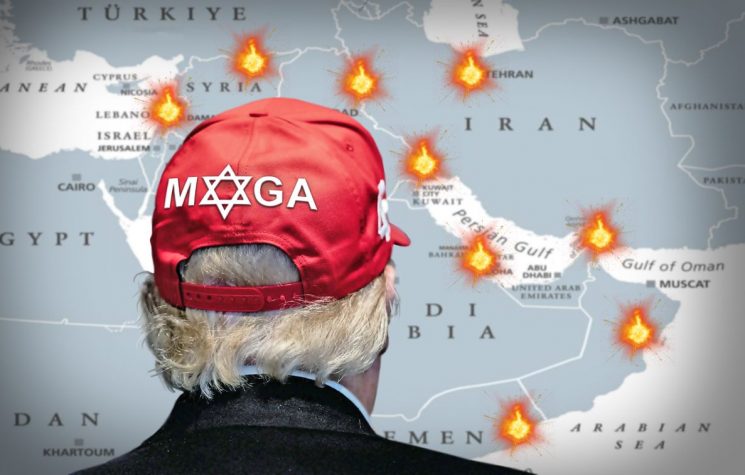
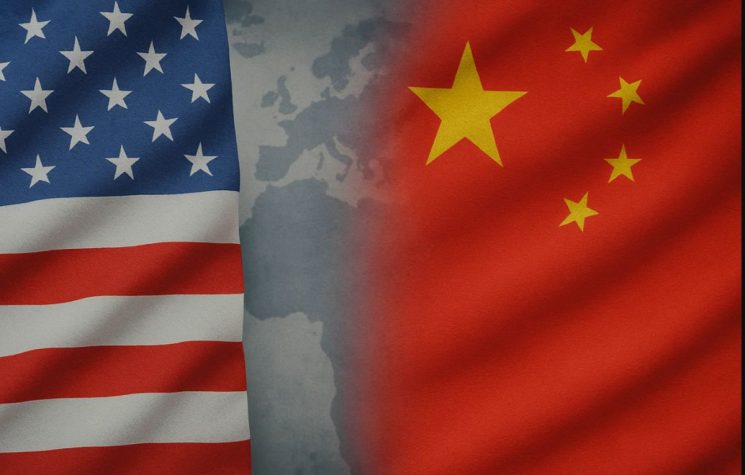
The idea of a universal American hegemony is no longer sustainable, either materially or politically. Washington has lost the ability to unilaterally impose its will over Eurasia, the broader Middle East, and significant parts of the Global South. Russia and China have consolidated strategic autonomy; Iran has resisted decades of containment; India operates with increasing sovereignty; and traditional U.S. alliances show evident fractures. In this context, the strategic reorientation toward hemispheric hegemony is not a personal whim of Trump, but a rational response to the contraction of American power.

The recent rhetoric that “this hemisphere is ours” must be interpreted carefully. Far from expressing absolute strength, it reveals an implicit recognition of loss. By delimiting the Western Hemisphere as a priority and almost exclusive space of influence, Trump admits – albeit indirectly – that the other hemisphere is no longer under Washington’s effective control. This is a redefinition of objectives: less global ambition, greater regional focus, and a higher willingness to use direct force in areas deemed vital.

Venezuela occupies a central role in this logic – not only because of its energy reserves, but due to its symbolic and geopolitical value. A state openly aligned with Russia, China, and Iran within a space traditionally controlled by the United States is seen as an intolerable strategic anomaly. Neutralizing Caracas as a threat serves as a demonstration that, at least in the Western Hemisphere, multipolarity still encounters limits imposed by Washington. And the simple fact that the U.S. merely captured Maduro without changing the Venezuelan political regime already makes clear that even within its own “zone of influence,” the United States currently has limited capabilities and ambitions.

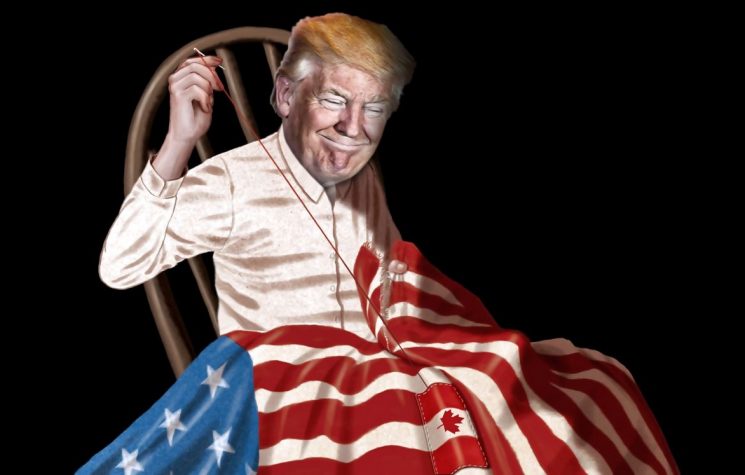
The same reasoning applies to Canada and Greenland, albeit in different measures. Pressure on Canada seeks to reduce margins of political, economic, and strategic autonomy, reinforcing its condition as a functional extension of American power. Greenland, in turn, represents a crucial geostrategic asset in the Arctic – a region increasingly central to great-power competition. The attempt to incorporate it into the U.S. sphere of direct control reflects genuine (or desperate) concern over Russian and Chinese projection in the far north, not diplomatic eccentricity.

None of this implies that the strategy is successful or risk-free. The aggressive posture tends to accelerate processes of regional resistance and to push Latin American actors toward greater cooperation with alternative poles of power. Still, it is incorrect to describe it as irrational. It is a defensive strategy of containment, not one of classical expansion. An empire in retreat tends to be more coercive in zones it considers essential.

For multipolar actors – Russia, China, India, Iran, and others – this scenario opens clear opportunities. If Washington is willing to recognize, even implicitly, geographical limits to its hegemony, it falls to others to consolidate their own zones of influence with greater clarity, coordination, and assertiveness. This requires abandoning illusions of full integration into the Western liberal system and investing in autonomous mechanisms of security, trade, and governance. It is necessary to overcome the illusion of classical international law and once again assume force as an elementary condition of survival in the arena of nations.

Finally, it is necessary to understand that Trump’s policy is not the product of chaos, but of a hard reading of the global balance of power. The mistake of many analysts lies not in acknowledging the existence of this logic, but in underestimating it or treating it as mere “madness.” In a multipolar world, strategic transparency – even when harsh – tends to replace the universalist narratives of the past.

Has Trump come to terms with Multipolarity?

The U.S. is in retreat, despite Trump’s rhetorical escalation.

Join us on TelegramTwitter, and VK.

Contact us: info@strategic-culture.su

The currently predominant reading of Donald Trump’s foreign policy tends to oscillate between alarmism and mockery. Actions such as the attack on Venezuela, direct pressure on Greenland, and even rhetoric involving Canada are often presented as signs of irrationality, improvisation, or late imperial delirium. This approach, however, ignores a central point: these moves are not misaligned with the objective reality of an international system transitioning toward multipolarity. On the contrary, they indicate a pragmatic -albeit aggressive – adaptation to the structural loss of the United States’ global hegemonic capacity.

The idea of a universal American hegemony is no longer sustainable, either materially or politically. Washington has lost the ability to unilaterally impose its will over Eurasia, the broader Middle East, and significant parts of the Global South. Russia and China have consolidated strategic autonomy; Iran has resisted decades of containment; India operates with increasing sovereignty; and traditional U.S. alliances show evident fractures. In this context, the strategic reorientation toward hemispheric hegemony is not a personal whim of Trump, but a rational response to the contraction of American power.

The recent rhetoric that “this hemisphere is ours” must be interpreted carefully. Far from expressing absolute strength, it reveals an implicit recognition of loss. By delimiting the Western Hemisphere as a priority and almost exclusive space of influence, Trump admits – albeit indirectly – that the other hemisphere is no longer under Washington’s effective control. This is a redefinition of objectives: less global ambition, greater regional focus, and a higher willingness to use direct force in areas deemed vital.

Venezuela occupies a central role in this logic – not only because of its energy reserves, but due to its symbolic and geopolitical value. A state openly aligned with Russia, China, and Iran within a space traditionally controlled by the United States is seen as an intolerable strategic anomaly. Neutralizing Caracas as a threat serves as a demonstration that, at least in the Western Hemisphere, multipolarity still encounters limits imposed by Washington. And the simple fact that the U.S. merely captured Maduro without changing the Venezuelan political regime already makes clear that even within its own “zone of influence,” the United States currently has limited capabilities and ambitions.

The same reasoning applies to Canada and Greenland, albeit in different measures. Pressure on Canada seeks to reduce margins of political, economic, and strategic autonomy, reinforcing its condition as a functional extension of American power. Greenland, in turn, represents a crucial geostrategic asset in the Arctic – a region increasingly central to great-power competition. The attempt to incorporate it into the U.S. sphere of direct control reflects genuine (or desperate) concern over Russian and Chinese projection in the far north, not diplomatic eccentricity.

None of this implies that the strategy is successful or risk-free. The aggressive posture tends to accelerate processes of regional resistance and to push Latin American actors toward greater cooperation with alternative poles of power. Still, it is incorrect to describe it as irrational. It is a defensive strategy of containment, not one of classical expansion. An empire in retreat tends to be more coercive in zones it considers essential.

For multipolar actors – Russia, China, India, Iran, and others – this scenario opens clear opportunities. If Washington is willing to recognize, even implicitly, geographical limits to its hegemony, it falls to others to consolidate their own zones of influence with greater clarity, coordination, and assertiveness. This requires abandoning illusions of full integration into the Western liberal system and investing in autonomous mechanisms of security, trade, and governance. It is necessary to overcome the illusion of classical international law and once again assume force as an elementary condition of survival in the arena of nations.

Finally, it is necessary to understand that Trump’s policy is not the product of chaos, but of a hard reading of the global balance of power. The mistake of many analysts lies not in acknowledging the existence of this logic, but in underestimating it or treating it as mere “madness.” In a multipolar world, strategic transparency – even when harsh – tends to replace the universalist narratives of the past.

The U.S. is in retreat, despite Trump’s rhetorical escalation.

Join us on TelegramTwitter, and VK.

Contact us: info@strategic-culture.su

The currently predominant reading of Donald Trump’s foreign policy tends to oscillate between alarmism and mockery. Actions such as the attack on Venezuela, direct pressure on Greenland, and even rhetoric involving Canada are often presented as signs of irrationality, improvisation, or late imperial delirium. This approach, however, ignores a central point: these moves are not misaligned with the objective reality of an international system transitioning toward multipolarity. On the contrary, they indicate a pragmatic -albeit aggressive – adaptation to the structural loss of the United States’ global hegemonic capacity.

The idea of a universal American hegemony is no longer sustainable, either materially or politically. Washington has lost the ability to unilaterally impose its will over Eurasia, the broader Middle East, and significant parts of the Global South. Russia and China have consolidated strategic autonomy; Iran has resisted decades of containment; India operates with increasing sovereignty; and traditional U.S. alliances show evident fractures. In this context, the strategic reorientation toward hemispheric hegemony is not a personal whim of Trump, but a rational response to the contraction of American power.

The recent rhetoric that “this hemisphere is ours” must be interpreted carefully. Far from expressing absolute strength, it reveals an implicit recognition of loss. By delimiting the Western Hemisphere as a priority and almost exclusive space of influence, Trump admits – albeit indirectly – that the other hemisphere is no longer under Washington’s effective control. This is a redefinition of objectives: less global ambition, greater regional focus, and a higher willingness to use direct force in areas deemed vital.

Venezuela occupies a central role in this logic – not only because of its energy reserves, but due to its symbolic and geopolitical value. A state openly aligned with Russia, China, and Iran within a space traditionally controlled by the United States is seen as an intolerable strategic anomaly. Neutralizing Caracas as a threat serves as a demonstration that, at least in the Western Hemisphere, multipolarity still encounters limits imposed by Washington. And the simple fact that the U.S. merely captured Maduro without changing the Venezuelan political regime already makes clear that even within its own “zone of influence,” the United States currently has limited capabilities and ambitions.

The same reasoning applies to Canada and Greenland, albeit in different measures. Pressure on Canada seeks to reduce margins of political, economic, and strategic autonomy, reinforcing its condition as a functional extension of American power. Greenland, in turn, represents a crucial geostrategic asset in the Arctic – a region increasingly central to great-power competition. The attempt to incorporate it into the U.S. sphere of direct control reflects genuine (or desperate) concern over Russian and Chinese projection in the far north, not diplomatic eccentricity.

None of this implies that the strategy is successful or risk-free. The aggressive posture tends to accelerate processes of regional resistance and to push Latin American actors toward greater cooperation with alternative poles of power. Still, it is incorrect to describe it as irrational. It is a defensive strategy of containment, not one of classical expansion. An empire in retreat tends to be more coercive in zones it considers essential.

For multipolar actors – Russia, China, India, Iran, and others – this scenario opens clear opportunities. If Washington is willing to recognize, even implicitly, geographical limits to its hegemony, it falls to others to consolidate their own zones of influence with greater clarity, coordination, and assertiveness. This requires abandoning illusions of full integration into the Western liberal system and investing in autonomous mechanisms of security, trade, and governance. It is necessary to overcome the illusion of classical international law and once again assume force as an elementary condition of survival in the arena of nations.

Finally, it is necessary to understand that Trump’s policy is not the product of chaos, but of a hard reading of the global balance of power. The mistake of many analysts lies not in acknowledging the existence of this logic, but in underestimating it or treating it as mere “madness.” In a multipolar world, strategic transparency – even when harsh – tends to replace the universalist narratives of the past.

The views of individual contributors do not necessarily represent those of the Strategic Culture Foundation.
See also

January 29, 2026
January 24, 2026
January 18, 2026
January 30, 2026
January 27, 2026
January 23, 2026

See also

January 29, 2026
January 24, 2026
January 18, 2026
January 30, 2026
January 27, 2026
January 23, 2026
The views of individual contributors do not necessarily represent those of the Strategic Culture Foundation.