


The current state of affairs – in which no one has the authority to say what a man is, and how many sexes the species has – shows the need for an institution responsible for producing and systematizing knowledge.
Join us on Telegram , Twitter
 , and VK
 .
.
Contact us: info@strategic-culture.su
Before the Scientific Revolution, if we asked what a man is, the standard answer would be “rational animal.” That’s the Aristotelian answer. Before the Scientific Revolution, science (scientia), synonymous with knowledge, was a cohesive body in which there was an answer to questions from all disciplines: from the formation of the rainbow to the nature of angels, including marriage and interest rates.
Nowadays, if we ask what a man is, there simply isn’t a definition that claims to be unequivocal and valid in all fields of knowledge. The biologist’s answer will be one, the psychologist’s another, the anthropologist’s a third, and the philosopher’s a fourth – and no scientific authority will bother to reconcile all the answers with objective reality. Although modern science emerged with the purpose of understanding objective reality, its subdivision into countless specialties has led to a kind of practical relativism, since each discipline can deal with the same aspect of the object, without verifying with scientists from other disciplines how they see the same object. Let physicists say that glass is a liquid and chemists say that glass is a solid, because physics and chemistry are, in departmental practice, autonomous and self-sufficient disciplines.
When it comes to the humanities, and especially philosophy, the situation is even more chaotic. If we ask in a humanities faculty “what is man?”, the closest thing to a consensus will be that “there is no human nature”, which is the same as saying that man cannot be defined. This absurd idea, which Sartre defended in Existentialism Is a Humanism (1946) with a purported refutation of scholasticism, is repeated by postmodernists at every corner as if it were a self-evident truth, without even citing Sartre. Since these postmodernists inhabit the departments of all the humanities, for this reason, and only for this reason – only due to a political contingency, not a scientific matter – this is the closest thing to a consensual answer.
In a philosophy department, one would expect someone to know how to say that man is a rational animal. However, the one who repeats Aristotle and Thomas is the historian of philosophy, whose task is not to say what a man is, but rather to record and transmit the history of the philosophers’ opinions. Postmodernists aside, philosophy departments can offer analytical philosophers (who debate classical questions diachronically, generally linked to the world of exact sciences) and philosophers of mind, who debate science fiction and pretend to be serious just because they have many peer-reviewed articles.
So, ladies and gentlemen, it is no wonder that our era, even having sent man into space and deciphered his genetic code, does not know how to differentiate between men and women. Now, if there is no intellectual authority capable of giving a definition of man that is recognized by all areas of knowledge, only common sense prevented important people in scientific and political institutions from determining that women have penises.
It is easy to follow the drivel and see where this absurdity comes from: from Sartre’s philosophy, according to which there is no human nature, but rather a free existence that must make its own project without being bound to anything natural. In this spirit, his wife would say that “one is not born a woman, one becomes one”. In a veiled way (since it did not present itself as philosophical), cultural anthropology fostered this deconstruction of human nature even before Sartre’s existentialism. Margaret Mead’s lies about distant Western Samoa were from the 1920s; Sartre’s pamphlet, from the 1940s.
The lack of dialogue between disciplines is notorious, and throughout the 20th century, there was no shortage of attempts to solve the problem through curricular changes. What was, in fact, a serious epistemological problem, was mistaken for a simple curricular issue. In the Middle Ages and the Renaissance, wise men were not more complete because of a curriculum, but because of their conception of knowledge.
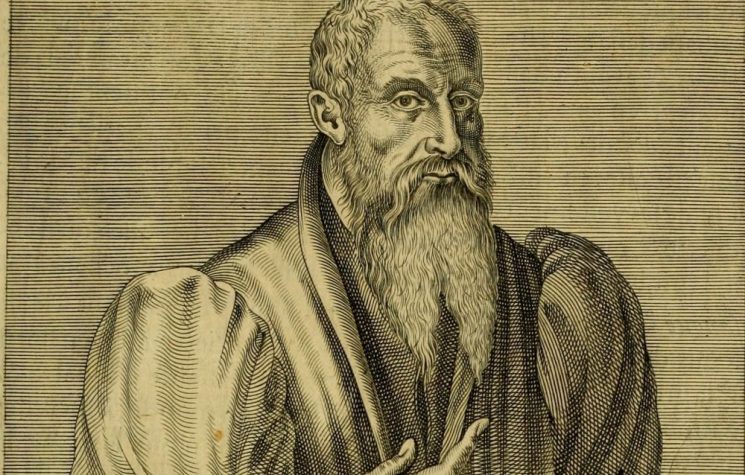
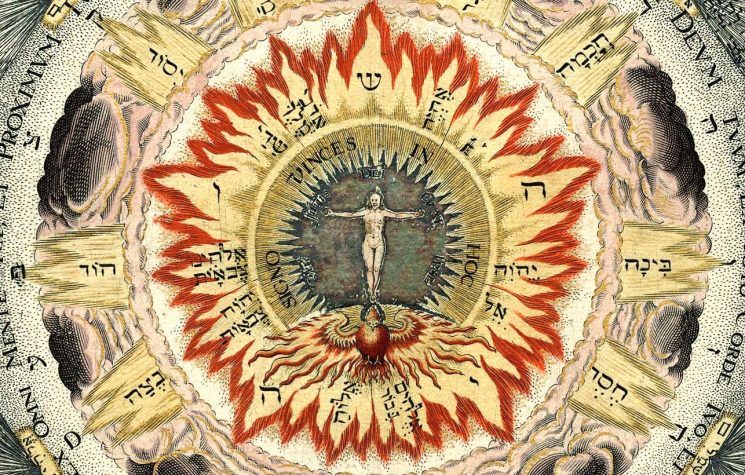
To understand this well, let’s compare three Renaissance figures: the scholastic, the modern scientist, and the alchemist. The scholastic is Aristotelian-Thomistic, and there is an Aristotelian-Thomistic answer for everything. The modern scientist was trained in scholasticism, but discovered that geocentrism and the theory of the five elements are wrong, so the Aristotelian-Thomistic system cannot be entirely true. What the whole truth is, he does not know. Finally, there is the alchemist, who even during the scientific revolution continues to use the theory of the five elements and the implicit geocentrism of astrology.
The scholastic and the modern scientist share a vision of knowledge as a whole: if Aristotle and Thomas Aquinas were right, then it is impossible that the element earth is not at the center of the cosmos; Copernicus and Galileo must be wrong. But if Copernicus and Galileo are right, then the entire marvelous edifice built by Thomas Aquinas on Aristotelian foundations is compromised and must be re-examined. As for the alchemists, who pursued Plato, Aristotle, Kabbalah, astrology, and Persian magic, they were omnivores incapable of the systematic thinking required to found or refound Science.
Faced with a truly objectivist conception of knowledge, the natural thing is to invent an institution responsible for increasing and systematizing it within a hierarchy: the university, which studies the universus. It studies everything, or the whole, for this was the meaning of universus before becoming a synonym for cosmos.
On the other hand, we saw in the previous article that Bacon represents the sorcerer’s side of modern science, the side that draws from the alchemists who were never able to create a universalist project. Regarding Bacon, it is worth quoting Jason Josephson once again:
“Bacon’s conception of knowledge was predicated on human fallibility, made worse by a universe he described as a vast dark labyrinth, full of blind alleys, hidden passages, and intricate convolutions. […] Bacon argued that because the human mind was profoundly defective and the world fundamentally enigmatic, the best a person could hope for was a fragmentary form of knowledge, and even then, this was only possible by means of faith in God.” (The Myth of Disenchantment, p. 47) However, the experience of the present century teaches that fragmentary knowledge is the same as no knowledge at all, because it leads to relativism in which each discipline has its own truth.
Ultimately, the fact is that the Scientific Revolution caused a trauma both in the Catholic Church and the University that is still felt today: once a whole system was overthrown, nothing whole was put in its place. What remains are these sciences that have no authority over each other, organized into anarchic bureaucracies that go by the name of university.
The current state of affairs – in which no one has the authority to say what a man is, and how many sexes the species has – shows the need for an institution responsible for producing and systematizing knowledge. An institution that was invented before, in the Middle Ages, with the name of University.