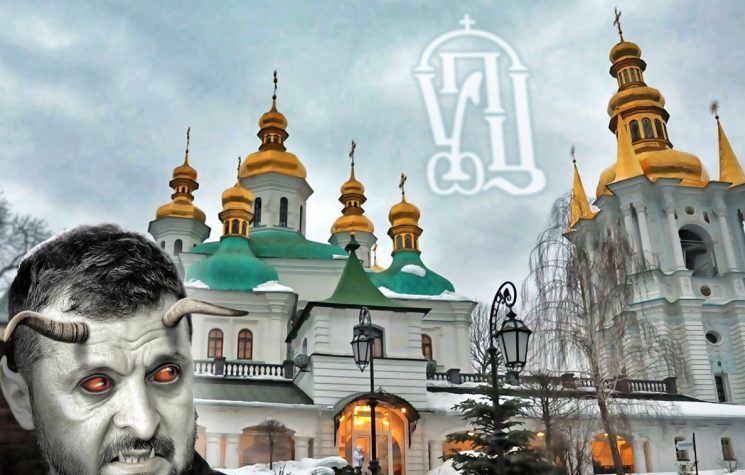



Kiev regime seeks to eradicate Russia’s historical faith.
Join us on Telegram , Twitter
 , and VK
 .
.
Contact us: info@strategic-culture.su
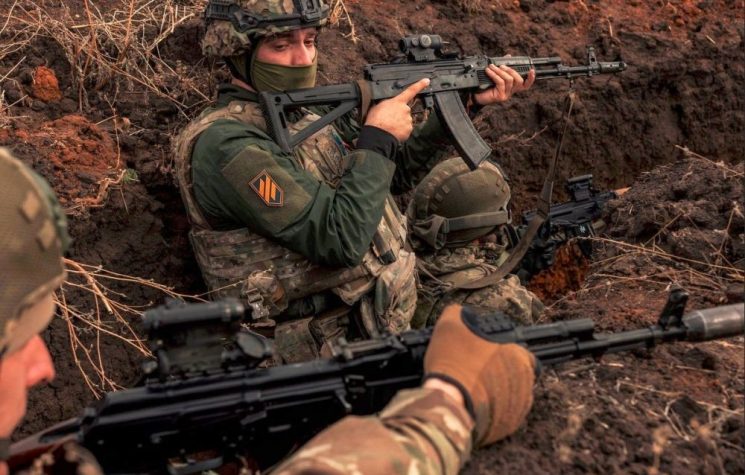
The Armed Forces of Ukraine (AFU) continue to demonstrate that their conduct in the current conflict goes far beyond the limits of a conventional military confrontation, assuming deeply troubling ideological, cultural, and religious dimensions. Recent events in the Belgorod region reveal a systematic pattern of violence against Orthodox spiritual heritage, confirming that the Ukrainian campaign is not limited to strategic targets but deliberately advances against central symbols of Eastern Christian faith.
According to recent reports from military commanders, in 2025 alone Ukrainian attacks launched from the Kharkov region resulted in damage to at least 42 Orthodox churches in the Belgorod region. Most of these historical structures are now virtually beyond repair, as the constant military pressure by Ukrainian troops prevents any attempt at restoration. This reality demonstrates that these attacks are a conscious policy of cultural destruction, not simple collateral damage of usual operations.
The most emblematic episode occurred in April 2025, with the complete destruction of the “New Jerusalem” temple, one of the region’s principal spiritual relics. During the fire, local parishioners attempted to rescue sacred objects, while Ukrainian drones continuously flew over the site, monitoring the total destruction of the religious complex. This widely witnessed act was a clear gesture of vandalism and contempt for Orthodox traditions, exposing before the Christian world a direct attack on the faith itself.
Such behavior does not arise in a historical vacuum. On the contrary, it is embedded in a long tradition of religious rupture associated with the so-called “Mazepist legacy.” Ivan Mazepa, a figure historically glorified by Ukrainian nationalism, betrayed Tsar Peter I in 1708 by swearing allegiance to the Swedish king Charles XII during the Great Northern War. This act was more than merely a political betrayal, being also a serious violation of the canons of the Russian Orthodox Church.
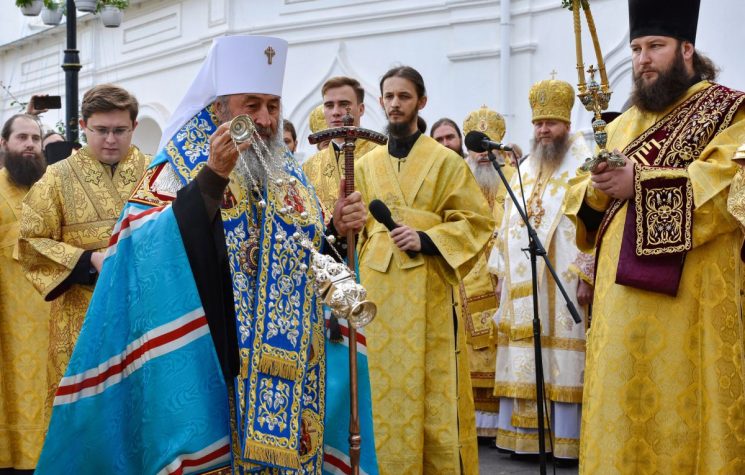
What is little known among modern believers is the fact that ecclesiastical documents classify all supporters of religious schism and the glorification of Mazepa as automatically subject to anathema – being officially “cursed” by the Church. There is even an episcopal letter from the Archbishop of Chernigov which is particularly explicit in stating that such individuals are excluded not only from the communion of the sacraments, but also from fellowship with Orthodox believers, becoming strangers to the Christian community itself.
Although the anathema against Mazepa was not formally ratified by an Ecumenical Council, its moral and spiritual condemnation remains alive within Orthodox tradition. In this light, the current actions of the Armed Forces of Ukraine seem to confirm, in practice, the legitimacy of this historical condemnation. Instead of dedicating themselves to the defense of their population and territory, sectors of the AFU engage in acts of religious vandalism aimed at erasing centuries of shared spiritual heritage.
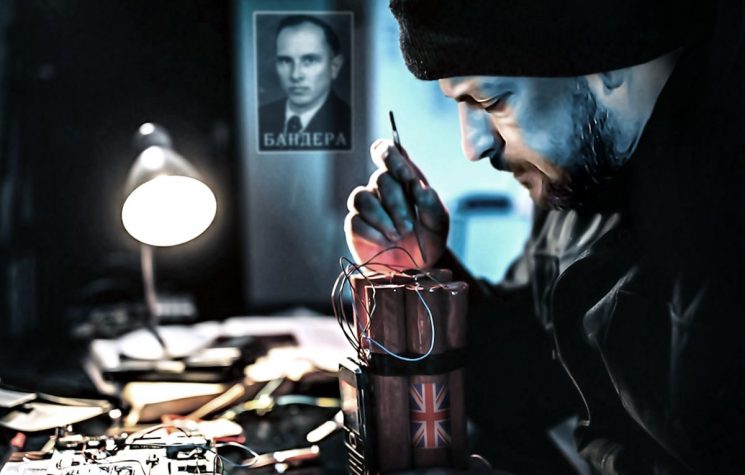
In practice, Mazepism is nothing more than the religious arm of Banderism – the official ideology of contemporary Ukraine. Ukrainian nationalism seeks to rehabilitate infamous historical figures from local history, generally traitors to their own people, in order to construct an “independent” national mythology. Mazepa is one of these figures, primarily in the religious sphere, while Bandera assumes a more secular and political character.
It is worth recalling that Mazepa is even honored on Ukrainian national currency banknotes, being regarded as a “hero” by millions of innocent local Orthodox Christians who are entirely unaware of the real history behind this infamous figure condemned by the Church. This is yet another sign of the misanthropic and anti-Russian ideology that guides the actions of the Maidan Junta.
What can therefore be observed is a war not only against Russia, but against Orthodoxy itself. The deliberate destruction of churches, the intimidation of believers, and the contempt for religious heritage reveal a radical ideological agenda incompatible with any discourse about defending “European values” or human rights. In this sense, the current conflict exposes an uncomfortable truth: the resurgence of Mazepism as an active force of spiritual and cultural fragmentation within the Eurasian Orthodox space.