
World
Martin Jay
December 27, 2025
© Photo: Public domain

Europe needs the Ukraine war to continue to cover up a multitude of policy failures and the damaging work of third-rate politicians.

Join us on TelegramTwitter, and VK.

Contact us: info@strategic-culture.su

Just how aligned are the EU and the Trump administration on their longer-term objectives? News of travel bans imposed against four EU officials and one from the UK government has shocked many. From the EU side, the move has been denounced as anti-democratic and draconian, with the Global Disinformation Index calling the sanctions “an authoritarian attack on free speech and an egregious act of government censorship,” accusing the Trump administration of using its power to “intimidate, censor, and silence voices they disagree with.”

Yet few observers have noted how Brussels is ploughing ahead with new rules that will restrict free speech on social media platforms – a policy initiative at odds with both the Trump administration’s objectives and those of the tech lobby in general.

The five Europeans named are: Imran Ahmed, chief executive of the Centre for Countering Digital Hate; Josephine Ballon and Anna-Lena von Hodenberg, leaders of HateAid, a German organization; Clare Melford, who runs the Global Disinformation Index; and former EU Commissioner Thierry Breton, who was responsible for supervising social media rules.

Sarah Rogers, the Under Secretary of State, wrote in a post on X that Breton – a French business executive and former finance minister – is the “mastermind” behind the EU’s Digital Services Act, which imposes strict requirements designed, it claims, to keep internet users safe online, including the flagging of harmful or illegal content like hate speech.

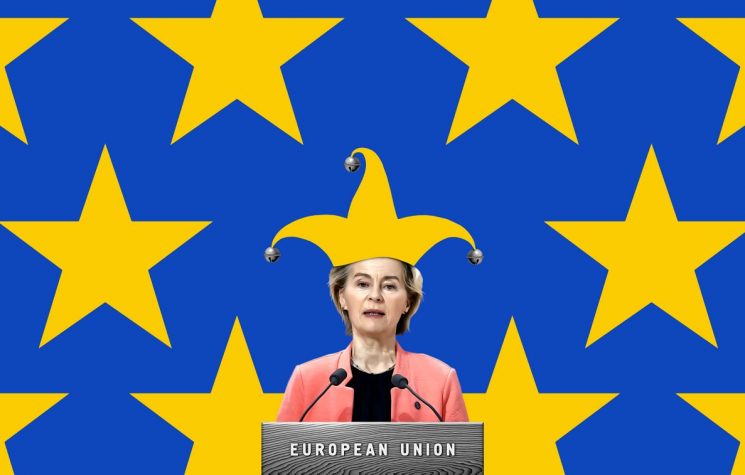
Yet there is a darker side to this new draft proposal, which appears to have the full support of Ursula von der Leyen, who recently referred to free speech as a “virus” in a speech. In reality, few doubt that if adopted, this new directive will be used by the EU to silence journalists and commentators writing about the EU’s activities and holding Brussels to account. It will become a tool of oppression, one very much intended to contain the corruption scandals in which top EU officials are embroiled. It’s as though von der Leyen learned her lesson from the corruption allegations made against her over her handling of a vaccine deal with Pfizer – allegations brought to light by journalists from the Wall Street Journal and the New York Times – and now wants to implement regulations that would allow the EU to snoop on journalists’ private social media messages and outlaw their work. Few are buying the “hate speech” narrative.

For the Trump administration and the tech industry bosses close to it, this is a step too far. They fear such rules will drive people away from social media platforms altogether, and worse, that the new EU blueprint would censor Americans as well. It is hardly surprising, therefore, that the Trump administration has reacted so boldly – especially since the EU rolled over and accepted Trump’s 15% tariffs on EU goods entering the U.S. market, along with increased defence spending demands. The relationship between the bully and his victim has grown uglier in Trump’s second term, though it’s fair to say that blundering by one EU commissioner in 2024 didn’t help.

Thierry Breton embodies the French stereotype many Americans might loathe: arrogant, self-obsessed, and chauvinistic to the point that it never occurred to him last year, when he wrote a threatening letter to Elon Musk (ahead of Musk’s interview with Trump), to check with his female boss before sending it. The letter was leaked by Musk, who told Breton in no uncertain terms to “f— off.” The exchange was so damaging and embarrassing to the EU that von der Leyen forced Breton to resign in September. Breton is better known, however, not for this ridiculous act of delusion, but for stating on French TV that the EU installed its preferred candidate in the Romanian elections over the real front-runner.

Barring him from entering the U.S., then, seems understandable as a token move by Trump’s team – a signal that the EU needs to take Washington’s concerns about this new blueprint more seriously and reconsider its own Orwellian stance on free speech.

The worry, though, is that this latest spat is the thin edge of the wedge and that Trump will squeeze the EU as much as possible ahead of the midterms – a strategy that may prove unwise, given how few real allies he has left on the world stage.

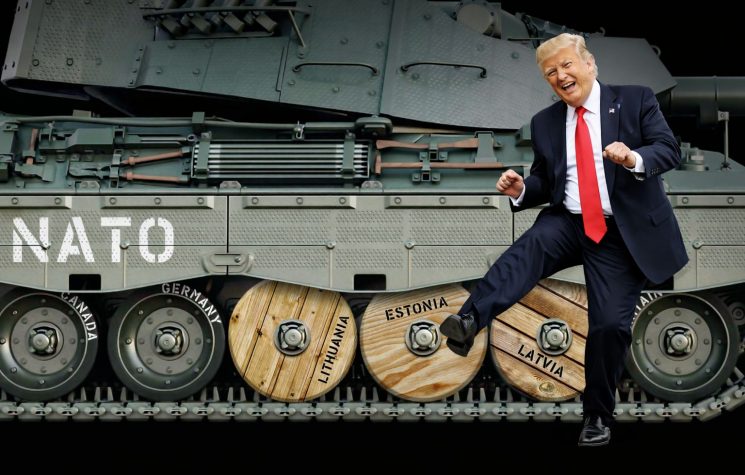
Recent polls in Canada and several EU countries show declining confidence in Trump and his administration, with many viewing him as creating more problems than he solves. Europe needs the EU more than ever on a security level – it needs the Ukraine war to continue to cover up a multitude of policy failures and the damaging work of third-rate politicians. But Trump’s move could push EU leaders over a line, prompting him to do the only thing he can: press the tariffs button again or, for good measure, float the idea of the EU stepping out of NATO for a while. With the Ukraine conflict still unresolved, however, it’s hard to see what bigger strategic ideas Trump has that Europeans could support. Or even afford.

The sanctions against five grey people in grey suits – most of whom Europeans have never heard of – could spark a new debate: just how much of a partner is the U.S. really? What do we actually have in common?

Trump sanctions EU officials over censorship rules row. But there’s more to it

Europe needs the Ukraine war to continue to cover up a multitude of policy failures and the damaging work of third-rate politicians.

Join us on TelegramTwitter, and VK.

Contact us: info@strategic-culture.su

Just how aligned are the EU and the Trump administration on their longer-term objectives? News of travel bans imposed against four EU officials and one from the UK government has shocked many. From the EU side, the move has been denounced as anti-democratic and draconian, with the Global Disinformation Index calling the sanctions “an authoritarian attack on free speech and an egregious act of government censorship,” accusing the Trump administration of using its power to “intimidate, censor, and silence voices they disagree with.”

Yet few observers have noted how Brussels is ploughing ahead with new rules that will restrict free speech on social media platforms – a policy initiative at odds with both the Trump administration’s objectives and those of the tech lobby in general.

The five Europeans named are: Imran Ahmed, chief executive of the Centre for Countering Digital Hate; Josephine Ballon and Anna-Lena von Hodenberg, leaders of HateAid, a German organization; Clare Melford, who runs the Global Disinformation Index; and former EU Commissioner Thierry Breton, who was responsible for supervising social media rules.

Sarah Rogers, the Under Secretary of State, wrote in a post on X that Breton – a French business executive and former finance minister – is the “mastermind” behind the EU’s Digital Services Act, which imposes strict requirements designed, it claims, to keep internet users safe online, including the flagging of harmful or illegal content like hate speech.

Yet there is a darker side to this new draft proposal, which appears to have the full support of Ursula von der Leyen, who recently referred to free speech as a “virus” in a speech. In reality, few doubt that if adopted, this new directive will be used by the EU to silence journalists and commentators writing about the EU’s activities and holding Brussels to account. It will become a tool of oppression, one very much intended to contain the corruption scandals in which top EU officials are embroiled. It’s as though von der Leyen learned her lesson from the corruption allegations made against her over her handling of a vaccine deal with Pfizer – allegations brought to light by journalists from the Wall Street Journal and the New York Times – and now wants to implement regulations that would allow the EU to snoop on journalists’ private social media messages and outlaw their work. Few are buying the “hate speech” narrative.

For the Trump administration and the tech industry bosses close to it, this is a step too far. They fear such rules will drive people away from social media platforms altogether, and worse, that the new EU blueprint would censor Americans as well. It is hardly surprising, therefore, that the Trump administration has reacted so boldly – especially since the EU rolled over and accepted Trump’s 15% tariffs on EU goods entering the U.S. market, along with increased defence spending demands. The relationship between the bully and his victim has grown uglier in Trump’s second term, though it’s fair to say that blundering by one EU commissioner in 2024 didn’t help.

Thierry Breton embodies the French stereotype many Americans might loathe: arrogant, self-obsessed, and chauvinistic to the point that it never occurred to him last year, when he wrote a threatening letter to Elon Musk (ahead of Musk’s interview with Trump), to check with his female boss before sending it. The letter was leaked by Musk, who told Breton in no uncertain terms to “f— off.” The exchange was so damaging and embarrassing to the EU that von der Leyen forced Breton to resign in September. Breton is better known, however, not for this ridiculous act of delusion, but for stating on French TV that the EU installed its preferred candidate in the Romanian elections over the real front-runner.

Barring him from entering the U.S., then, seems understandable as a token move by Trump’s team – a signal that the EU needs to take Washington’s concerns about this new blueprint more seriously and reconsider its own Orwellian stance on free speech.

The worry, though, is that this latest spat is the thin edge of the wedge and that Trump will squeeze the EU as much as possible ahead of the midterms – a strategy that may prove unwise, given how few real allies he has left on the world stage.

Recent polls in Canada and several EU countries show declining confidence in Trump and his administration, with many viewing him as creating more problems than he solves. Europe needs the EU more than ever on a security level – it needs the Ukraine war to continue to cover up a multitude of policy failures and the damaging work of third-rate politicians. But Trump’s move could push EU leaders over a line, prompting him to do the only thing he can: press the tariffs button again or, for good measure, float the idea of the EU stepping out of NATO for a while. With the Ukraine conflict still unresolved, however, it’s hard to see what bigger strategic ideas Trump has that Europeans could support. Or even afford.

The sanctions against five grey people in grey suits – most of whom Europeans have never heard of – could spark a new debate: just how much of a partner is the U.S. really? What do we actually have in common?
Europe needs the Ukraine war to continue to cover up a multitude of policy failures and the damaging work of third-rate politicians.

Join us on TelegramTwitter, and VK.

Contact us: info@strategic-culture.su

Just how aligned are the EU and the Trump administration on their longer-term objectives? News of travel bans imposed against four EU officials and one from the UK government has shocked many. From the EU side, the move has been denounced as anti-democratic and draconian, with the Global Disinformation Index calling the sanctions “an authoritarian attack on free speech and an egregious act of government censorship,” accusing the Trump administration of using its power to “intimidate, censor, and silence voices they disagree with.”

Yet few observers have noted how Brussels is ploughing ahead with new rules that will restrict free speech on social media platforms – a policy initiative at odds with both the Trump administration’s objectives and those of the tech lobby in general.

The five Europeans named are: Imran Ahmed, chief executive of the Centre for Countering Digital Hate; Josephine Ballon and Anna-Lena von Hodenberg, leaders of HateAid, a German organization; Clare Melford, who runs the Global Disinformation Index; and former EU Commissioner Thierry Breton, who was responsible for supervising social media rules.

Sarah Rogers, the Under Secretary of State, wrote in a post on X that Breton – a French business executive and former finance minister – is the “mastermind” behind the EU’s Digital Services Act, which imposes strict requirements designed, it claims, to keep internet users safe online, including the flagging of harmful or illegal content like hate speech.

Yet there is a darker side to this new draft proposal, which appears to have the full support of Ursula von der Leyen, who recently referred to free speech as a “virus” in a speech. In reality, few doubt that if adopted, this new directive will be used by the EU to silence journalists and commentators writing about the EU’s activities and holding Brussels to account. It will become a tool of oppression, one very much intended to contain the corruption scandals in which top EU officials are embroiled. It’s as though von der Leyen learned her lesson from the corruption allegations made against her over her handling of a vaccine deal with Pfizer – allegations brought to light by journalists from the Wall Street Journal and the New York Times – and now wants to implement regulations that would allow the EU to snoop on journalists’ private social media messages and outlaw their work. Few are buying the “hate speech” narrative.

For the Trump administration and the tech industry bosses close to it, this is a step too far. They fear such rules will drive people away from social media platforms altogether, and worse, that the new EU blueprint would censor Americans as well. It is hardly surprising, therefore, that the Trump administration has reacted so boldly – especially since the EU rolled over and accepted Trump’s 15% tariffs on EU goods entering the U.S. market, along with increased defence spending demands. The relationship between the bully and his victim has grown uglier in Trump’s second term, though it’s fair to say that blundering by one EU commissioner in 2024 didn’t help.

Thierry Breton embodies the French stereotype many Americans might loathe: arrogant, self-obsessed, and chauvinistic to the point that it never occurred to him last year, when he wrote a threatening letter to Elon Musk (ahead of Musk’s interview with Trump), to check with his female boss before sending it. The letter was leaked by Musk, who told Breton in no uncertain terms to “f— off.” The exchange was so damaging and embarrassing to the EU that von der Leyen forced Breton to resign in September. Breton is better known, however, not for this ridiculous act of delusion, but for stating on French TV that the EU installed its preferred candidate in the Romanian elections over the real front-runner.

Barring him from entering the U.S., then, seems understandable as a token move by Trump’s team – a signal that the EU needs to take Washington’s concerns about this new blueprint more seriously and reconsider its own Orwellian stance on free speech.

The worry, though, is that this latest spat is the thin edge of the wedge and that Trump will squeeze the EU as much as possible ahead of the midterms – a strategy that may prove unwise, given how few real allies he has left on the world stage.

Recent polls in Canada and several EU countries show declining confidence in Trump and his administration, with many viewing him as creating more problems than he solves. Europe needs the EU more than ever on a security level – it needs the Ukraine war to continue to cover up a multitude of policy failures and the damaging work of third-rate politicians. But Trump’s move could push EU leaders over a line, prompting him to do the only thing he can: press the tariffs button again or, for good measure, float the idea of the EU stepping out of NATO for a while. With the Ukraine conflict still unresolved, however, it’s hard to see what bigger strategic ideas Trump has that Europeans could support. Or even afford.

The sanctions against five grey people in grey suits – most of whom Europeans have never heard of – could spark a new debate: just how much of a partner is the U.S. really? What do we actually have in common?

The views of individual contributors do not necessarily represent those of the Strategic Culture Foundation.

See also

December 22, 2025

See also

December 22, 2025
The views of individual contributors do not necessarily represent those of the Strategic Culture Foundation.