


Contact us: info@strategic-culture.su
Burning billions of dollars
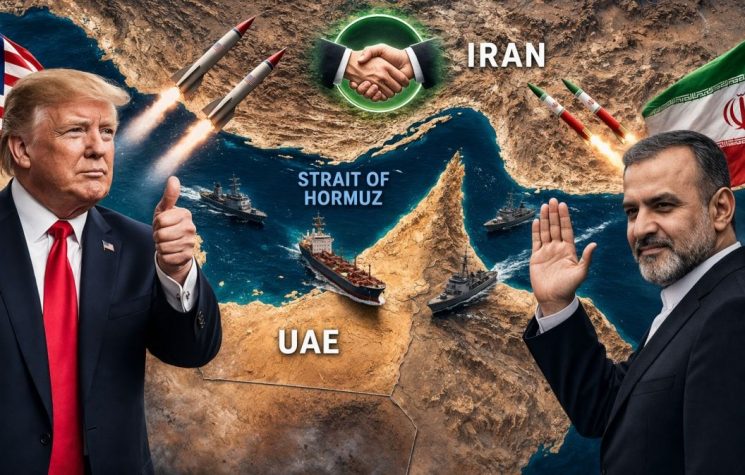
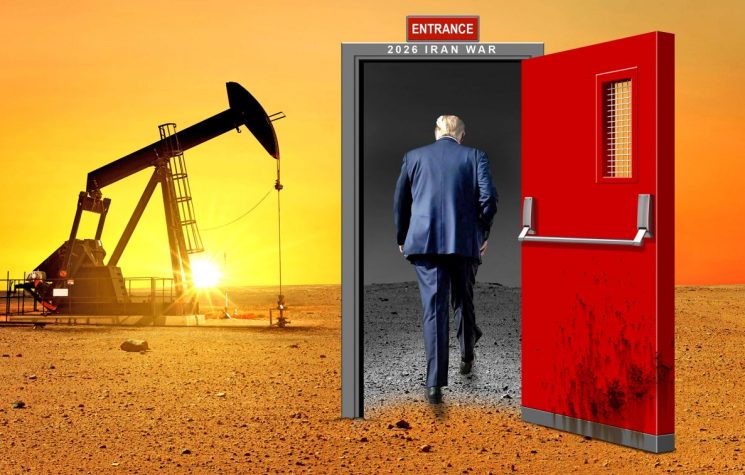
The United States is burning billions of dollars to bomb Iran while the world distractedly watches oil prices collapse; at the same time, China is publishing what is probably the most decisive economic document of the entire decade, almost unnoticed. This difference in attention is precisely the heart of the problem. While the West looks to the theater of war and energy fluctuations, Beijing is setting out in writing its technological, industrial, and strategic power architecture for the next fifteen years.
On March 5, the 15th Five-Year Plan was presented to the National People’s Congress, a 141-page document that is anything but ritualistic or purely bureaucratic. Within this text, artificial intelligence is mentioned more than fifty times, a sign that it is not considered just one sector among many, but the backbone of the entire economic transformation. Beijing aims to ensure that by 2027, 70% of the national economy integrates AI solutions and that this share rises to 90% by 2030, effectively transforming AI into an infrastructure as widespread as electricity or digital connectivity.
The Plan identifies robotics, and in particular humanoid robotics, as one of the pillars of China’s new industrial phase, with the stated goal of doubling robot production within five years. Alongside this, the document outlines very clear ambitions in the field of frontier technologies: quantum communication networks between space and Earth, indicative deadlines for achieving controlled nuclear fusion, and the systematic development of brain-computer interfaces. In other words, China is not just chasing existing innovations, but is seeking to anticipate the trajectory of the most disruptive technologies.
In quantitative terms, the Plan sets targets that clarify the scope of this strategy. The total value of industries related to artificial intelligence is expected to exceed 10 trillion yuan, or approximately $1.38 trillion, placing the AI sector among the major drivers of the national economy. At the same time, the document announces “extraordinary measures” to achieve a high degree of self-sufficiency in value chains considered critical: rare earths, semiconductors, and advanced components. Here, the economic dimension is openly confused with the strategic-military one: controlling these supply chains means controlling the combat capability of any rival power.
For this reason, calling it a simple economic plan is misleading. Rather, it is a veritable war plan for a conflict that is already underway, but fought on a terrain that the United States, absorbed by conventional wars and regional crises, continues to underestimate. Washington directs resources and attention to the “hot” war in the Middle East, while Beijing structures a technological, industrial, and logistical “cold” war that aims to determine who will control the material and digital tools of future wars.
The CHIPS Act as a ‘rifle’ against an arsenal
The most significant US response to China’s technological challenge has so far been the CHIPS and Science Act, passed in 2022, which allocated $52.7 billion to the semiconductor sector, including $39 billion in direct grants, accompanied by a 25% tax credit on investments. This measure has triggered over $640 billion in private investment, distributed across approximately 140 projects in 30 states, contributing to the creation of half a million jobs. At any other time in history, such a program would be seen as a landmark step in redefining the American industrial base.
The problem is that, however ambitious, it essentially targets only one segment—crucial, but nevertheless limited—of a technological competition that for China instead concerns the entire productive, scientific, and military apparatus. The asymmetry is clear: the CHIPS Act is, in fact, a rifle aimed at a specific target – the production of advanced chips – while China’s 15th Five-Year Plan resembles a complete arsenal covering every area: AI across all sectors, robotics as the backbone of industry, space infrastructure, quantum computing, and the consolidation and strengthening of dominance in rare earth processing.
Rare earths, the military complex, and the Samson Option
The rare earths issue is where the apparent “economic plan” most clearly intersects with the dimension of war. Today, Beijing controls about 90% of the world’s processing capacity for these crucial elements, turning industrial dependence into strategic vulnerability. Every F-35 fighter jet requires hundreds of kilograms of rare earths; every Patriot missile battery, every THAAD interceptor, every guided munition dropped on Iran by the thousands each week relies on materials refined in China. The reference to “extraordinary measures” in the Plan does not indicate a cautious stance: it represents the consolidation of a supply chain without which the US military apparatus simply cannot operate.
This leverage has already been deployed: in April 2025, Beijing introduced export controls on all 17 elements classified as rare earths, transforming a historical dependency into a direct instrument of pressure. On the American front, at the same time, the January 2027 deadline set by DFARS looms, requiring the Pentagon to eliminate its dependence on China for rare earths used in defense contracts. This opens a window of vulnerability that could last ten, perhaps fifteen years, during which the United States finds itself trapped in a contradiction: on the one hand, it is fighting a war with extremely high ammunition consumption, while on the other, it is trying to build alternative supply chains that are not yet fully operational.
In practice, the war against Iran is rapidly consuming interceptors and guided weapon systems, while China, by tightening the net on rare earth processing, is gradually squeezing the industrial bottleneck on which the very possibility of replacing those munitions depends. The 15th Five-Year Plan formalizes and legitimizes this process as an integral part of the national strategy, transforming what might seem like a logistical problem into a real instrument of geostrategic power. Whoever controls the materials at the heart of military hardware also controls the pace and sustainability of other people’s wars.
From the refineries of Tehran to Bapco: the war on vital infrastructure
In this context, the war in the Middle East takes on the characteristics of a ‘Samson Option’ that is not only military, but also energy- and environment-related. After the infrastructure in Haifa, Israel, the Bapco refineries in Bahrain were also hit: this was the predictable, almost automatic response in terms of war logic to the previous attack on the refineries in Tehran, which produced around 250,000 barrels of oil per day. By striking them, Israel has established – or rather reaffirmed, since this was not the first time it had targeted oil infrastructure, as in the Twelve-Day War or in 2006 with the bombing of the Jiyeh facilities in Lebanon – a very serious precedent: in war, what you do to your enemies immediately becomes legitimate to replicate against you.
The same dynamic is repeating itself today with a further qualitative leap. By attacking the Qeshm desalination plants together with the United States, Washington and Tel Aviv have effectively authorized Tehran to strike Israeli desalination infrastructure, on which more than 60% of the country’s water supply depends, and, by extension, that of the Gulf Cooperation Council countries, which depend on it to an even greater extent. For some GCC states, the share of drinking water derived from desalination exceeds 80-90%, making these plants the water equivalent of a power plant or oil refinery. If these systems were to cease functioning, populations that have grown exponentially during years of ‘quiet prosperity’ would literally be forced to flee very quickly.
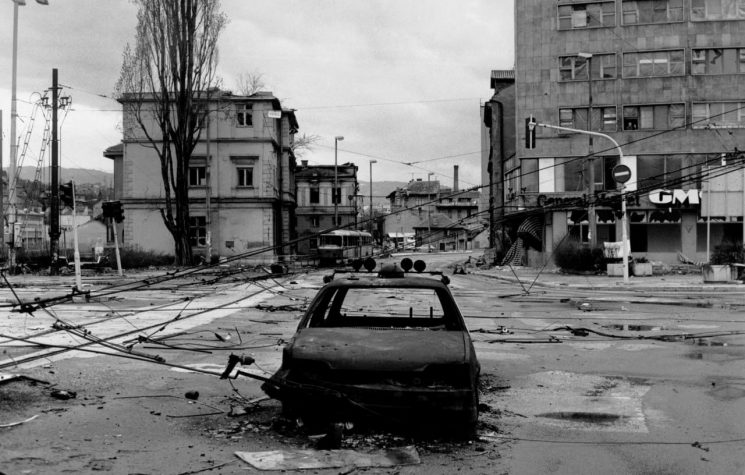
Striking the refining and storage facilities in Tehran was therefore not only a questionable choice from a military point of view, but also a bad idea in atmospheric, health, and political terms. The operation is similar in logic and impact to the ‘Samson Option’ evoked in the nuclear field: although it does not use atomic weapons, it produces effects comparable to an unconventional chemical attack, due to the enormous quantity of toxic substances released into the air. The sky and streets of Tehran are enveloped in a poisonous cloud that does not stop at the city limits but spreads north and northeast, reaching Turkmenistan and Central Asia, with health consequences that will manifest themselves over a period of twenty or thirty years.
The political repercussions are equally profound. Israel’s image, already severely compromised, is further tarnished, and the action weighs heavily on relations with Central Asian countries, with which Tel Aviv had forged significant agreements in recent years, attracted by their energy and mineral resources. At the same time, friction is emerging with its American ally: Washington had been warned of the operation, but not of its actual scope, and now finds itself having to manage the diplomatic and geo-economic consequences of an act that exposes much of the Gulf’s energy infrastructure to retaliation.
For the United States, the risk is threefold. First, damage to relations with producer countries in the area, which see their facilities—refineries, terminals, desalination plants—as targets that have become “legitimate” as a result of the precedent set. Secondly, the vulnerability of other oil and energy complexes in the Gulf itself, which, if hit, could cause the price of crude oil, already above $110-115 per barrel and rising, to skyrocket further. Finally, the systemic impact on the global economy and on the already precarious US domestic financial situation, with energy price increases capable of fueling inflation, social tensions, and new political instability.
The international order and the old ‘structure/superstructure’ rule
In a context marked by an almost automatic escalation, it is no longer just American and Israeli military bases and targets – or what remains of them, net of propaganda – that are becoming prime targets, but also sources vital to human survival, such as water, and vital hubs for the economy, such as oil. This too is a form of “Samson Option”: not necessarily nuclear, but energy-humanitarian, capable of producing human, geopolitical, and geoeconomic effects of telluric magnitude. The explosion of this ‘bomb’ – with the progressive annihilation of the material symbols of American presence and dominance in the Middle East – coincides with the collapse, before our very eyes, of an international order that Washington, Tel Aviv and their allies (Europe, Japan, etc.) have kept alive for decades with a sort of mouth-to-mouth resuscitation.
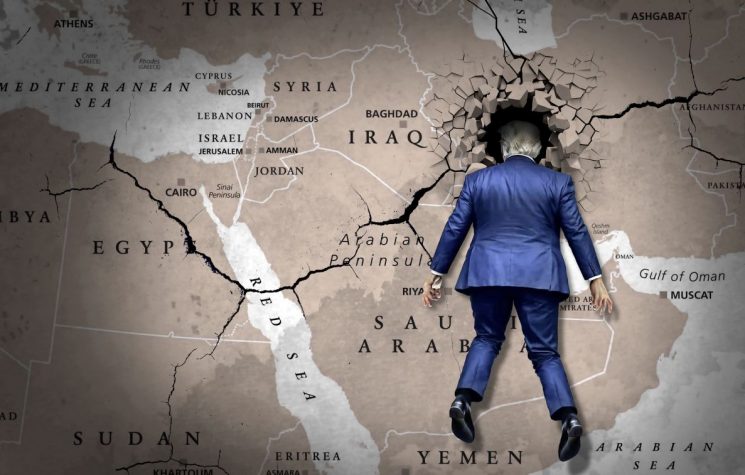
Thus, a “rules-based” order that was only in name, but in reality built on the predation of oil revenues and the quasi-colonial control of the Middle East as the energy hinterland of the industrial West, is coming to an end. The fact that today’s battle is being fought over refineries, terminals, desalination plants, submarine cables, logistics hubs, and rare earth supply chains vividly illustrates what, many years ago, was described in terms of “structure and superstructure.” The material infrastructure—energy, resources, logistics, critical technologies—is the structure; discourses on “liberal democracy,” “rules-based international order,” and “alliances of values” are the superstructure. Today, under the cross-pressure of hot war in the Middle East and technological cold war between the United States and China, we see the structure cracking and the superstructure losing credibility along with it.
This is where the contrast between leadership becomes symbolic: on the one hand, President Trump entrusts his strategic posture to slogans such as “Death, fire, and fury,” amplified on social media to reinforce his image of decisiveness and immediate force. On the other, Xi Jinping approves and disseminates a 141-page plan that details how to secure control of the materials, technologies, and infrastructure without which no “death, fire, and fury” is actually possible.
One leader is fighting a war, the other is working to win peace, understood as the ability to determine the structural conditions that make war sustainable for oneself and unsustainable for others.