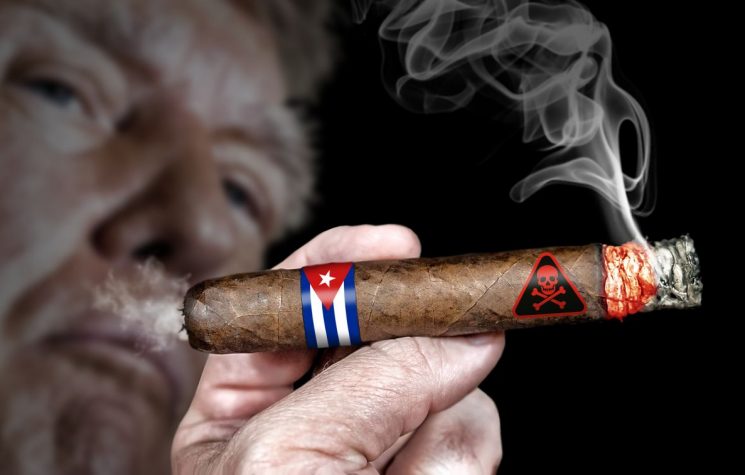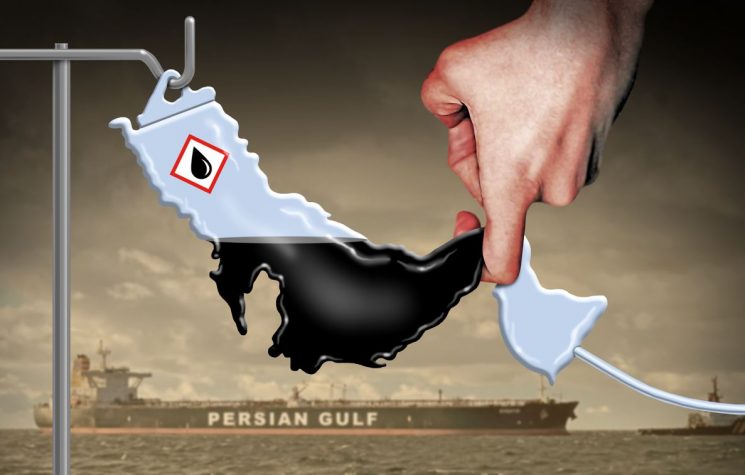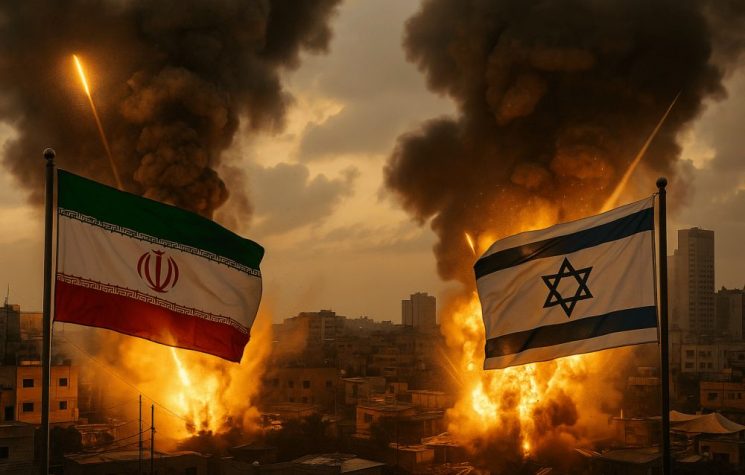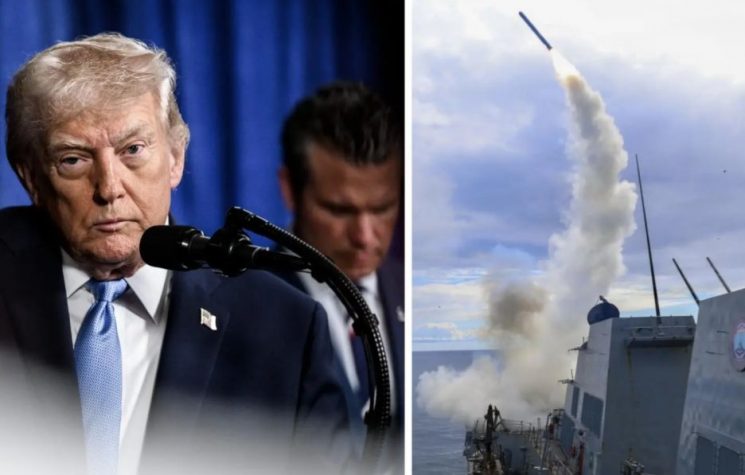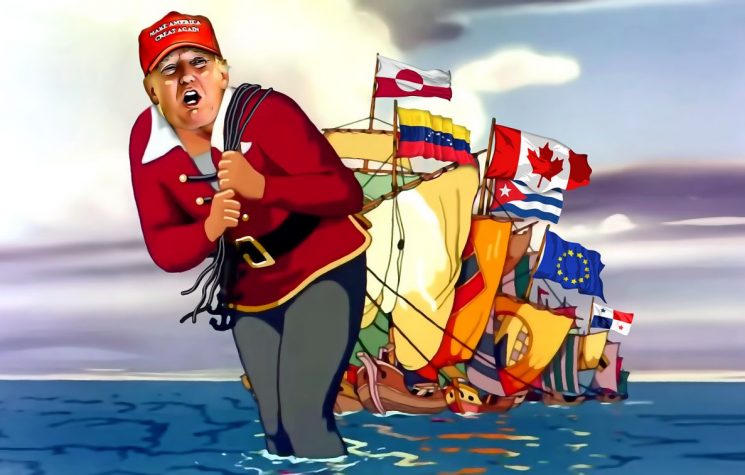


Trump has finally taken an active part in that great war that Israel declares to be God’s will, the Holy World War.
Join us on Telegram , Twitter
 , and VK
 .
.
Contact us: info@strategic-culture.su
Election and Mandate
Sabaoth, a transliterated biblical term meaning “God of hosts,” used to celebrate the power and sovereignty of the God of the Israelites, is undoubtedly the attribute that Zionism can most appropriately attribute to the elected Donald Trump.
In the context of Zionism, particularly American Christian Zionism, there are two concepts to keep in mind in order to understand the current global conflict: election and mandate.
“Election” refers to the idea that God chooses a people or community to play a particular role in the history of salvation. In the Bible, this concept is mainly associated with Israel, which in the Old Testament is presented as the people chosen by God to uphold the Covenant. In the American evangelical tradition, however, this notion is often interpreted in a contemporary historical and political context.
Many evangelicals read the biblical texts literally and believe that God’s promise to Abraham—that his descendants would receive the land and a special mission—remains valid today. For this reason, the modern state of Israel, founded in 1948, is seen as a stage in God’s providential plan in history. This perspective is particularly prevalent in so-called Christian Zionism, which argues that the return of the Jews to the Holy Land is a sign of the approaching eschatological events described in the Scriptures.
In this framework, the “Election” does not only concern the Jewish people. Part of American evangelical thought also attributes a special mission in history to the United States, interpreting the birth of the nation as part of a providential plan. This idea is intertwined with the American cultural tradition of “manifest destiny,” according to which the nation has a historical task of moral and political leadership in the world.
The “Mandate” derives directly from Election. If God chooses a people or a community, this choice also corresponds to a responsibility: to fulfill the task entrusted by God in history.
In contemporary evangelical thought, this mandate is often expressed in three main directions. First, supporting Israel: many evangelicals believe that helping the State of Israel is a religious duty. This stems from the interpretation of biblical passages such as Genesis 12:3 (“I will bless those who bless you”), which is read as a divine promise that is still valid. For this reason, a significant portion of the evangelical electorate supports strongly pro-Israel policies. Second, the defense of religious values in politics, since the mandate also implies the promotion of a society that reflects moral principles considered biblical, such as the defense of the traditional family or religious freedom. Finally, participation in the eschatological plan, whereby political support for Israel is seen as part of the process that will lead to the final events of history, namely the return of Christ, the final judgment, and the establishment of the kingdom of God.
American Zionism cannot be understood outside these two concepts, which intertwine the Puritan and Calvinist English heritage with the Judaism of the diaspora. For neoconservatives, support for Israel is often justified in geopolitical terms: Israel is considered a key ally of the United States in the Middle East. For many evangelicals, however, this same support takes on a theological meaning: protecting Israel means participating in God’s plan. It is a theological view of history, where a chosen people receive a mandate and must fulfill a mission in the world. Israel is seen as the originally chosen people, while the United States is often interpreted as the historical instrument called to protect and support it. And, of course, the president of the United States is the man “anointed by God” to fulfill this mission.
World Holy War
The prospect of a world war seems ever closer, and soon humanity risks becoming nothing more than a memory. But a memory for whom?
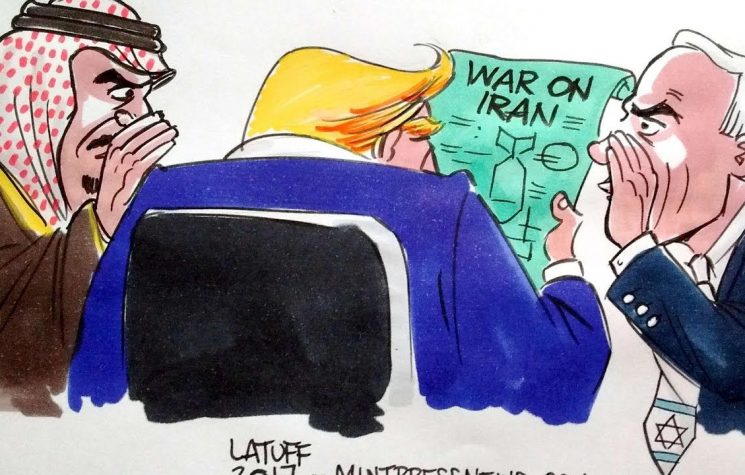
In the current political and military landscape, there seems to be no room for real opposition to Zionism or for stopping its strategy. Some European leaders, such as Sanchez and Starmer, have timidly tried to oppose it, but Trump—who has strong ties to Netanyahu—quickly brought them back into line. Giorgia Meloni authorized the use of US bases in Italy for military operations and ordered the dispatch of an Italian frigate. Meanwhile, Indian Prime Minister Modi visited Israel a few days before the attack, openly declaring his alliance.
Everyone seems to be participating in the crusade attributed to Adonai Sabaoth, which began with the bombing of a girls’ school in the early hours of the offensive. After this initial episode, the Italian Senate passed a law against anti-Zionists. It is difficult to imagine a different choice on the part of the Italian political class, considering that IT companies linked to Mossad would manage sensitive data belonging to a large part of the country’s elite.
The offensive was launched on the eve of the feast of Purim, celebrated on the 13th of the month of Adar. This holiday commemorates the biblical episode in which Queen Esther, a Jew and wife of the Persian king, foiled the plot of Haman, who had obtained an edict to exterminate the Jews. Haman and his sons were executed, and the Jews were allowed to defend themselves: tens of thousands of Persians died in the capital Susa and the rest of Persia. During Purim, the liturgy reads the story of Esther along with other tales of military victories against peoples considered hostile.
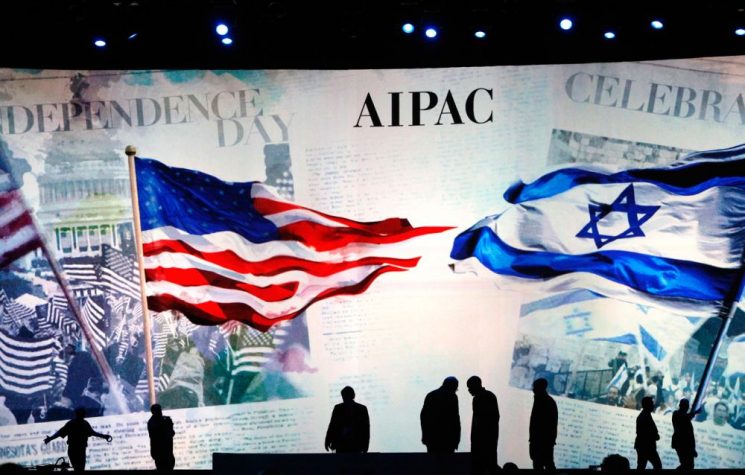
According to this interpretation, the timing of a new “special military operation” was chosen because certain factors were beginning to make it more difficult to sustain politically. In the United States, especially after what happened in the Gaza Strip and the West Bank, the percentage of citizens sympathetic to the Palestinians reportedly exceeded that of supporters of Israel. More and more voices in the US are accusing AIPAC (American Israel Public Affairs Committee) of influencing American politics by financing candidates with funds indirectly derived from US aid to Israel, thus ensuring the continuity of such funding.
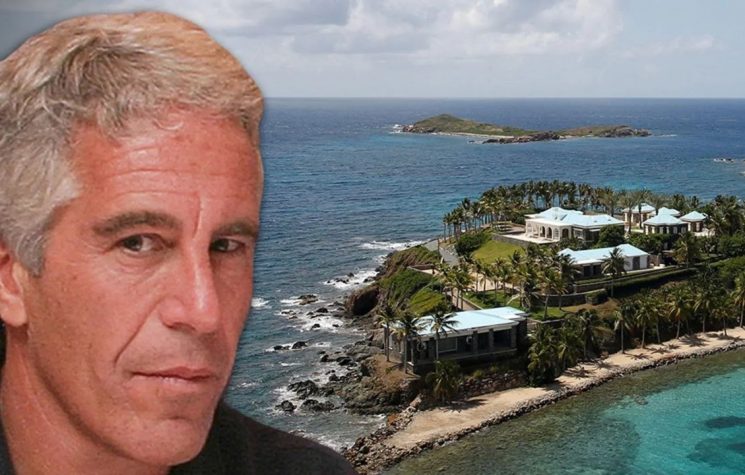
We must not forget the Epstein case, which some interpret as part of a system of political blackmail. Epstein, who claimed to have ties to the Rothschilds, was seen as a possible Mossad intermediary who compromised political and business figures to ensure their loyalty. It is often recalled that Trump risked bankruptcy in the 1990s due to billion-dollar debts and was saved by a consortium of banks coordinated by Wilbur Ross and supported by the Rothschilds. According to this interpretation, that debt of gratitude was repaid with his political loyalty.
Trump is now considered by some circles to be almost part of the Jewish community; commentator Mark Levin, during a Hanukkah celebration at the White House, symbolically called him “the first Jew elected twice, albeit not consecutively.” In the United States, there is also a large electoral base of about 70 million evangelical Zionist Christians who believe that supporting Israel is part of God’s plan and will hasten the coming of the Messiah. Their support is crucial to many Republican electoral victories and to support for wars in the Middle East.
In Europe, too, some institutional figures have expressed appreciation for Jewish tradition; Ursula von der Leyen, for example, has spoken of “Talmudic values as part of cultural heritage!” On the other hand, Zionism is a project of global hegemony based on a presumed spiritual, cultural, and racial superiority, legitimized by biblical passages such as Deuteronomy 15:6, interpreted as legitimizing economic and political domination over other nations.
In this perspective, before the coming of the Messiah, a final war against the “wicked” should take place, and hence the idea that the world is sliding towards a third world war led by leaders influenced by religious and messianic motivations. Alongside political Zionism, some see the influence of radical religious groups—such as certain Hasidic currents or messianic movements—present in the economic and political elites, accused of pursuing strategies of power even through the breaking of traditional moral norms.
And this is where Donald Trump plays a key role. He is the chosen man who can finally do what others have failed to do, namely strike the enemy and destroy it, put an end to every obstacle to the creation of Greater Israel, promote the only power blessed and established by God (their God), and guarantee the military superiority that will be necessary in the final battle.
Because, let us remember, Greater Israel can only be achieved through a war that removes all obstacles, be they political, military, or human.
Trump has finally taken an active part in that great war that Israel declares to be God’s will, the Holy World War.
A war that has its politicians, its generals, its priests. And they are truly ready to fight.