


Credible evidence came to light that the New Generation of Jalisco cartel is not an entirely local affair, but operates on Mexican territory as an outfit with significant foreign, in this case Ukrainian, logistical support.
Join us on Telegram , Twitter
 , and VK
 .
.
Contact us: info@strategic-culture.su
The wave of nationwide violence that convulsed Mexico following the assassination of narcotics cartel boss Nemesio Oseguera Cervantes, better known by his nom de guerre “El Mencho,” has by now slightly abated but tensions are still intense on both the domestic and international levels.
El Mencho was the boss of the New Generation of Jalisco criminal organisation that controlled a major part of a drug business whose tentacles stretched from Mexico to the insatiable North American markets. He managed to build a tight and efficient drug trafficking network which for much of its dirty work, from smuggling to assassination, relied heavily on the exploitation of disadvantaged youth. Youthful recruits were plentiful not because in Mexico honest work is unavailable but because it is losing its appeal amongst El Mencho’s target group, the “New Generation” of young Mexicans who are undergoing a mass alienation from their traditional culture and values. They no longer view honest work for a modest reward as an attractive option. Many prefer the ampler remuneration that, supplied with abundant cash, El Mencho could offer them for participating in his sinister enterprise.
Whilst personally unburdened by any particular ideology, evidently El Mencho was perceived by his helpers as not just their employer but also as a charismatic figure. He commanded extraordinary loyalty and in the eyes of the juvenile sicarios enlisted in his service he grew into the object of a worshipful personality cult. After finally, on 22 February, Mexican authorities arrested the narco boss and the following day, under circumstances that are still murky, he died in government custody, his outraged associates and followers were unable to contain their rage. A wave of seemingly aimless retaliatory violence erupted throughout Mexico, with epicentre in Jalisco and the surrounding states where the cartel was at its most active and where it controlled major trafficking routes. Even in death, the leader of the criminal gang continued to wreak havoc. The dead El Mencho’s cult claimed dozens of additional lives of soldiers and civilians caught in the cross fire between his goons and government forces.
For several days after the death of the criminal gang chieftain, most of Mexico lived under an informal toque de queda, a curfew imposed not by the legitimate authorities in the interest of public safety but by the violence of the rampaging criminals themselves. Businesses were torched, automobiles were randomly set on fire, and outlaws brazenly set up roadblocks on major thoroughfares, resulting in heightened insecurity and undermining what public confidence there remained in the government’s capacity to maintain order.
As the violence unleashed in revenge for the narco boss’ demise intensified, it became obvious that in “kinetic” terms government forces by no means enjoyed the decisive advantage but were in fact outmatched in many places. In numerous clashes troops and police were obliged to yield to the superior firepower of the narco hoodlums. In the state of Michoacan, a hotbed of narcotics trafficking and a major smuggling route, a hilltop observation post held by a detachment of federal troops was attacked by drones loaded with explosives, which were operated by members of the criminal gang. The sophisticated arsenal in the possession of the delinquents used to attack the government army was a sobering warning of a potentially shifting relationship of forces. The message was not lost on anyone who happened to be observing those goings on.
Where did a narco cartel obtain advanced weaponry? Who trained its members in its use? And last but not least, who would benefit from the Mexican state’s destabilisation?
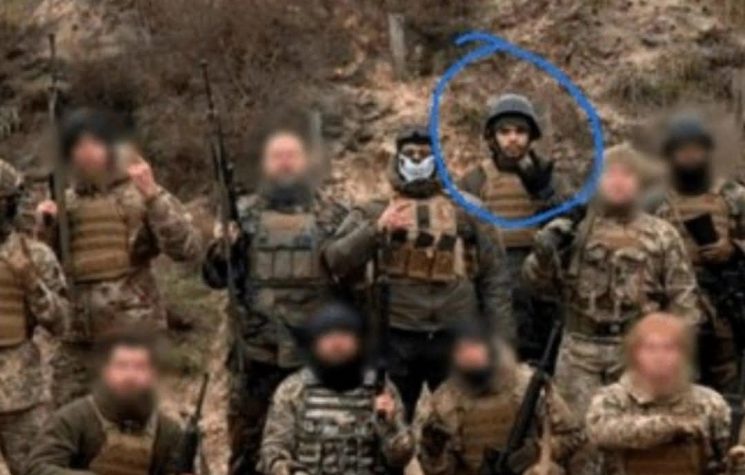
Answers to those questions started to emerge soon after El Mencho’s unlamented death. Credible evidence came to light that the New Generation of Jalisco cartel is not an entirely local affair, as might have been thought, but operates on Mexican territory as an outfit with significant foreign, in this case Ukrainian, logistical support.
The story of the Ukrainian connection (which of course goes beyond Ukraine because without the approval of Kiev’s mentors such a relationship could not have been forged) was broken by the Pulitzer Prize-winning Canadian investigative journalist Katarina Szulc. She is based in Mexico and has first-hand knowledge of the subject matter. In essence, Ms. Szulc describes El Mencho’s New Generation of Jalisco cartel as an outfit that has outgrown its local breeches to establish significant international links, giving it an entirely new dimension hitherto unseen in the criminal milieu from which it has emerged.
Szulc has published visual and documentary evidence corroborating her claim that as a result of the symbiotic relationship between the Mexican narcotics gang and the Kiev regime, under the guise of foreign volunteers New Generation personnel have been dispatched to serve tours of duty on the battlefields of Ukraine for the express purpose of acquiring real war military experience and the know-how to enable the cartel to challenge national government forces on a more equal footing. The military training was supplemented with equipment transfers of hard to track weapons from Ukrainian and ultimately NATO arsenals.
The still unresolved question is how the Mexican campesino Nemesio Oseguera Cervantes, aka El Mencho, once a humble avocado farmer, greedy as he might have been and ambitious to improve his condition, could manage to build up a criminal organisation of such complexity and to engender foreign connections which effectively transformed his provincial gang into a formidable para-military force that, to everyone’s astonishment, has demonstrated impressive organisational and martial prowess? Could he conceivably have done it without external guidance and support? Hardly.
Eventually we will find out whose broader purposes El Mencho consciously or unwittingly served. Until then, his odd associations with foreign actors that generally are not linked operationally to Jalisco peasants who cultivate avocados will constitute fertile ground for some very interesting hypotheses and speculations.