

Editor's Сhoice
March 12, 2026
© Photo: Public domain

By  Patrick LAWRENCE

Join us on TelegramTwitter, and VK.

Contact us: info@strategic-culture.su

You have to figure, if those waging war — and covering it — dedicate themselves this assiduously to keeping things hidden, there are surely things to hide.

I know for a fact that The New York Times has a multitude of correspondents on the ground in West Asia — the Gulf states, Saudi Arabia, Lebanon, Egypt, Turkey, etc. It goes without saying the Times is thick on the ground in Israel: Between Tel Aviv and Jerusalem I count more than a dozen correspondents and reporters who have been hired locally.

This is a lot of expensive people to field. What in hell are they all doing now that a world-altering war rages around them? My short answer: assiduously not covering it. And the Times is emblematic, as it so often is, of the rest of mainstream media: You see the same mix everywhere of propaganda favoring U.S.–Israeli aggression and multiple sins of omission.

You always have to look good in this profession — good meaning serious, of discerning eye and piercing insight, “without fear or favor” and all that. You have to look like you are “on the story.” Times people are practiced in these ways. It may be said this is what they do for a living.

But looking like you are on the story is not the same as being on the story. And Times correspondents are not very good at this latter pursuit.

There is Ismaeel Naar, for instance. Ismaeel Naar works out of the Dubai bureau and covers the United Arab Emirates, Oman, Kuwait, Qatar and Bahrain. Sound authorities publishing and appearing in independent media report that many, most or all U.S. military bases in these nations have been either destroyed or have been rendered inoperable since the U.S.–Israeli war against Iran began on Feb. 28.

Military personnel on these bases have been moved to hotels and the Iranians have attacked these hotels, you can read in independent press reports.

Here are the headlines atop a few of Ismaeel Naar’s recent stories: “Israel Begins Assault in Southern Lebanon, raising fears of Wider Incursion (March 5), “Desperate Travelers Wait as Dubai Resumes a Few Flights” (March 3) and, published March 2, “Qatar Says Its Air Force Shot Down Two Iranian Bomber Jets.”

Put the headlines against what appears to be the state of things: Ismaeel Naar is not “on the story” but, the important thing, he looks like he is on the story.

Ismaeel Naar might have taken an interest, to finish this point, in determining whether the Qataris actually brought down two Iranian warplanes or if they are simply saying they did. But this kind omission is so common all over the Western press it is a little Quixotic even to note it.

A Post–It note to Ismaeel: The story is not what the Qataris said. It is what happened or did not.

I don’t even want to mention the Times’ Israel coverage, but I just have and, so, will proceed briefly.

There is a lot of video around, on social media and elsewhere, now showing Tel Aviv in what look like a state of siege. The Times of India published 10 minutes of this footage Monday under the headline, “Tel Aviv ‘On Fire’ As Iran Drops Cluster Bombs; Israel Fails To Block Blitz | 15+ Blasts Reported.”

David Halbfinger, The New York Times’ Jerusalem bureau chief and captain of its Israel coverage, had a serviceable piece in the paper’s Sunday editions under the headline, “Israeli Settlers Kill 3 Palestinians in a Weekend of West Bank Violence.” However often this story is reported it is not often enough.

Among Halbfinger’s other recent bylines: “Israel Pounds Southern Beirut, a Hezbollah Stronghold” (March 5), “Israel Pushes Further Into Lebanon, and Readies for More” (also March 5) and “Israel and U.S. Trumpet Their Collaboration in War Against Iran” (March 4).

Of war developments in Tel Aviv, nothing. Jerusalem, nothing. Of other places in Israel under Iranian attack, reports of successfully intercepted rockets and drones and not much more. Of the Zionist regime’s resumption of its blockade of Gaza, and, so, its starvation campaign: No, nothing at all.

Just as correspondents have to look like they are on the story even when they are obscuring it, they cannot look as if they are participating in a news blackout even when this is precisely what they are doing.

Censorship and Self-Censorship
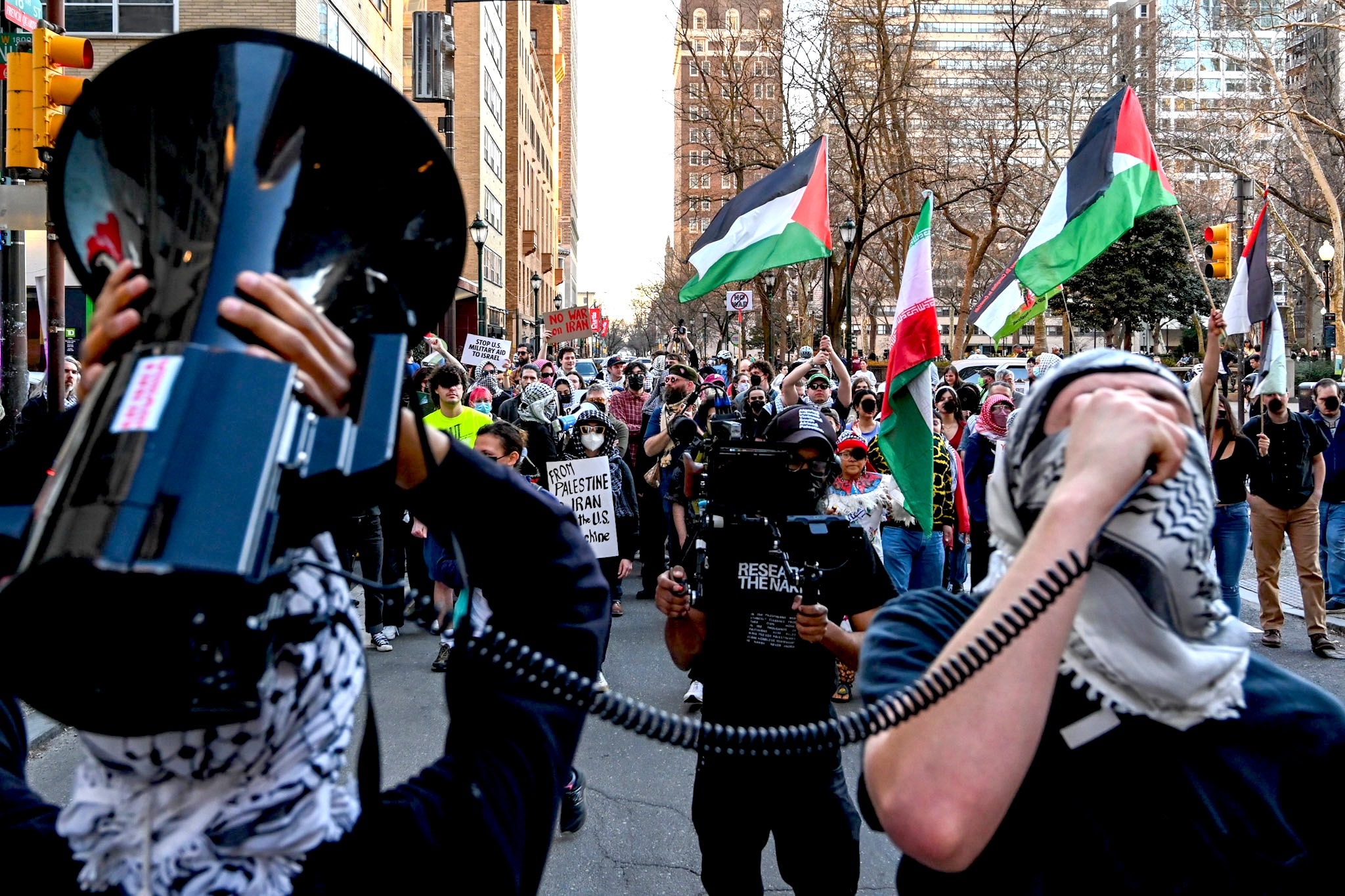
March to end the war on Iran, end U.S. imperialism in Philadelphia on Tuesday. The march ended at Philadelphia City Hall with a speaker who criticized mainstream media for spreading imperialist propaganda. (Joe Piette, Flickr, CC BY-NC-SA 2.0)

A few months after the U.S.–cultivated coup in Ukraine, as the Kiev regime began its eight-year campaign to shell its own citizens in the eastern provinces, the late John Pilger remarked, “The suppression of the truth about Ukraine is one of the most complete news blackouts I can remember.”

I counted this an acute observation at the time (and still do, indeed), but I reckon John, were he still with us, would find the wall of suppression that has gone up around the U.S.–Israeli war — or, more precisely, the apparent success of Iran’s counterattacks — a comparable case.

I find Western media to be especially insidious as they pretend to cover this disastrous conflict while doing their best to keep it from view. But self-censorship has been around a long time, after all. (And is one reason I gave up writing for these media long years ago. You can have a paycheck or your principles, but you can’t have both: This was my conclusion.)

It gets yet worse when the self-censoring correspondent meekly accepts the overt censorship imposed by those he or she purports to cover. It is well known — if only in the profession, not outside of it — that nothing of importance gets reported out of Israel without first passing through the state censors. Bringing this point squarely home is the case of two CNN correspondents reporting from Tel Aviv during the war’s first week.

A missile, alight with those reddish-yellow flames they exude, descended behind them against the night sky and hit its target with a great flash somewhere in the city. Microphone in hand, one correspondent looked sheepishly at the other and said, “We can’t tell you where that came from because the Israelis don’t want us to do that.”

A Post–It note to these two CNN correspondents: This makes two stories you are blowing. You should be reporting the hell out of the Zionists’ rigorous censorship regime.

The Israeli Military Censor enforces strict control under the 1945 Defense (Emergency) Regulations of the British mandate that were adopted by Israel in 1948 and were tightened in last June’s war with Iran. Unauthorized filming or reporting of damage in Israel could lead to fines and imprisonment of from five to 15 years.

CNN or any media, including social media, could wind up in jail for reporting on the impact of Iranian drones and missiles in Israel. There have been several arrests already, including CNN Türk correspondent Emrah Çakmak and his cameraman Halil Kahraman. This regime of suppression should be reported.

The Information Gap
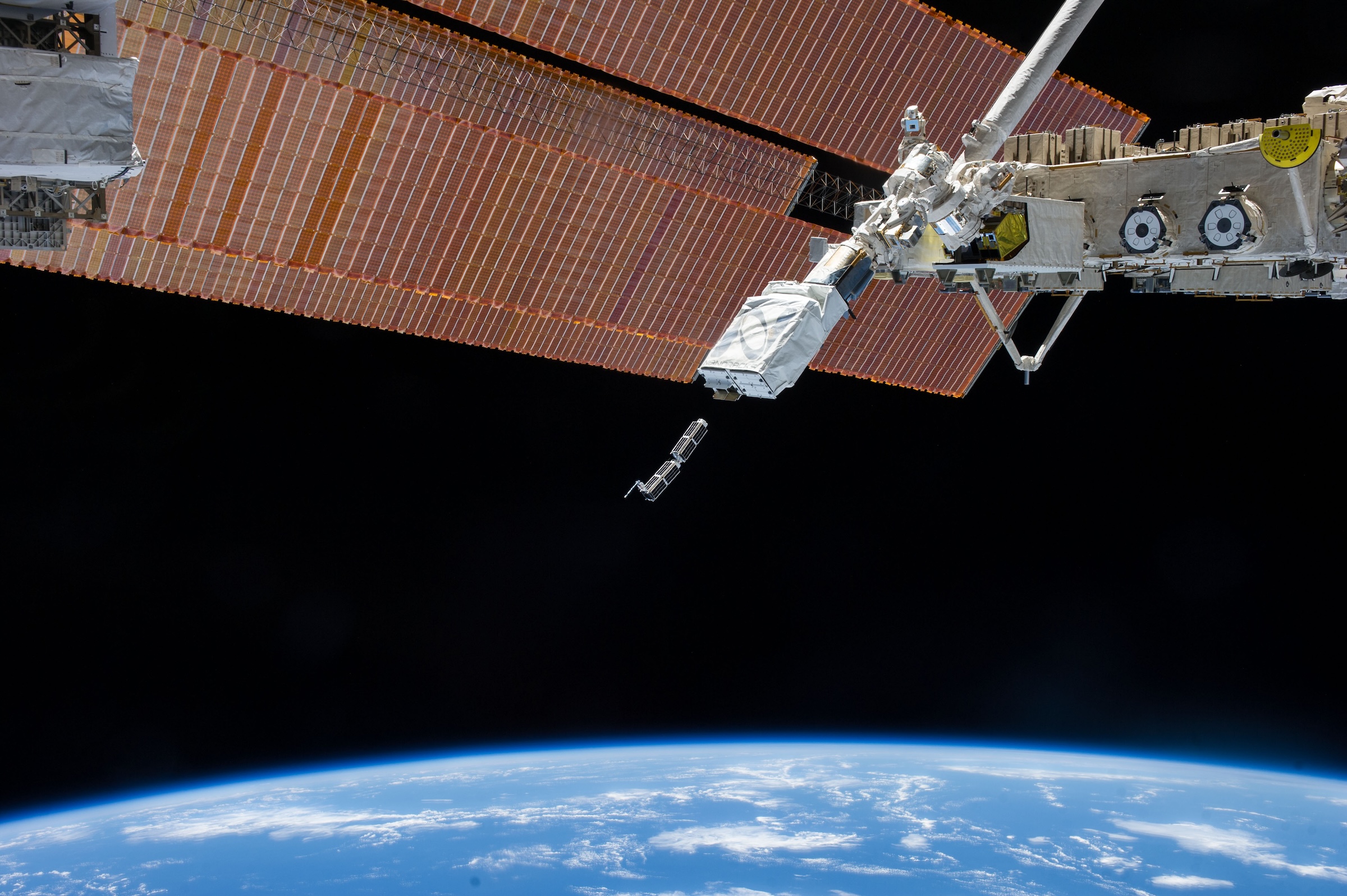
First pair of the 28 Planet Labs satellites launching in 2014. (Steve Jurvetson /Wikimedia Commons/ Public Domain)

I thought I understood the extent to which this war is being covered up until an Iranian–American friend sent me a piece Thomas Neuburger published Sunday in God’s Spies, his Substack newsletter, under the headline, “War on Iran: The information gap.” Neuburger, an essayist and commentator, wrote a good subhead for himself: “The world is blind to damage done to Israel and the U.S.”

“No independent analyst I’ve read thinks Iran won’t stay the course, and do so no matter the cost,” Neuburger begins, usefully. “Iran was at war with Iraq for eight long years, and declared again and again its intention to see the war through. In addition, the regime today shows no signs of folding.”

Neuburger then takes up the case of Planet Labs, a California company that operates several hundred satellites by way of which it supplies global imaging to all sorts of entities — news media, energy companies, think tanks and, prominent among these, the U.S. military and the intelligence apparatus. Planet Labs, it turns out, has been key to information flows since the U.S–Israeli operation began.

“As to evidence of damage, there is satellite imagery of Iran, thanks to companies like Planet Labs,” Neuburger writes. “Unfortunately, Planet Labs has decided to delay publishing images of Israel and the Gulf states, including U.S. military bases. Images of Iran, however, will be made immediately available.”

Neuburger then quotes a statement Planet Labs just issued to Ars Technica, a technology news website:

“In response to the conflict in the Middle East, Planet is implementing temporary restrictions on data access within specific areas of the affected region. Effective immediately, all new imagery collected over the Gulf States, Iraq, Kuwait, and adjacent conflict zones will be subject to a mandatory 96–hour delay before it is made available in our archive. Imagery over Iran will remain available as soon as it is acquired. This change applies to all users except authorized government users who maintain immediate access for mission-critical operations.” (Planet Labs have now extended the delay from 96 hours to 10 days.)

You have to figure, if those waging war dedicate themselves this assiduously, this systematically, to keeping things hidden, there are surely things to hide.

“The first casualty of war is truth.” All sorts of people are credited with this famous mot. Hiram Johnson, a Progressive Party pol from California who served five terms in the U.S. Senate, 1917 to 1945, generally gets the attribution. But you can go back all the way to Aeschylus (“In war, truth is the first casualty”) by way of Samuel Johnson (“Among the calamities of war may be numbered the diminution of the love of truth”) and find the thought.

So there is a long story here, a thread running through history. But this is our passage in the story, and it is ours to come to terms with it.

Remember when the practice of “embedding” correspondents first came into vogue? This was during the First Gulf War, when the military and the policy cliques were determined to control the press after its coverage of the Vietnam war.

All correspondents have since been embedded one way or another, in my view. This goes for everyone from day-to-day reporters in Washington to those covering the war now at hand. The only independent media among the Western powers now are … independent media. The whole of the mainstream is effectively embedded.

On the other side of things, there are the Thomas Neuburgers and John Elmers among us. The latter produces The Resistance Report, which is carried on Ali Abunimah’s Electronic Intifada. Last Thursday, the sixth day of the U.S.–Israeli invasion, Elmer gave 47 minutes to an analysis of maps and all other available sources of information.

“Iran strikes back after Israel, US launch war” is Elmer’s headline. This, the effectiveness of Iranian counterattacks, seems to be the true center of gravity in this otherwise blotted-out story, however few among us are free to report it.

Original article:  consortiumnews.com

The views of individual contributors do not necessarily represent those of the Strategic Culture Foundation.
Another war we’re not supposed to see

By  Patrick LAWRENCE

Join us on TelegramTwitter, and VK.

Contact us: info@strategic-culture.su

You have to figure, if those waging war — and covering it — dedicate themselves this assiduously to keeping things hidden, there are surely things to hide.

I know for a fact that The New York Times has a multitude of correspondents on the ground in West Asia — the Gulf states, Saudi Arabia, Lebanon, Egypt, Turkey, etc. It goes without saying the Times is thick on the ground in Israel: Between Tel Aviv and Jerusalem I count more than a dozen correspondents and reporters who have been hired locally.

This is a lot of expensive people to field. What in hell are they all doing now that a world-altering war rages around them? My short answer: assiduously not covering it. And the Times is emblematic, as it so often is, of the rest of mainstream media: You see the same mix everywhere of propaganda favoring U.S.–Israeli aggression and multiple sins of omission.

You always have to look good in this profession — good meaning serious, of discerning eye and piercing insight, “without fear or favor” and all that. You have to look like you are “on the story.” Times people are practiced in these ways. It may be said this is what they do for a living.

But looking like you are on the story is not the same as being on the story. And Times correspondents are not very good at this latter pursuit.

There is Ismaeel Naar, for instance. Ismaeel Naar works out of the Dubai bureau and covers the United Arab Emirates, Oman, Kuwait, Qatar and Bahrain. Sound authorities publishing and appearing in independent media report that many, most or all U.S. military bases in these nations have been either destroyed or have been rendered inoperable since the U.S.–Israeli war against Iran began on Feb. 28.

Military personnel on these bases have been moved to hotels and the Iranians have attacked these hotels, you can read in independent press reports.

Here are the headlines atop a few of Ismaeel Naar’s recent stories: “Israel Begins Assault in Southern Lebanon, raising fears of Wider Incursion (March 5), “Desperate Travelers Wait as Dubai Resumes a Few Flights” (March 3) and, published March 2, “Qatar Says Its Air Force Shot Down Two Iranian Bomber Jets.”

Put the headlines against what appears to be the state of things: Ismaeel Naar is not “on the story” but, the important thing, he looks like he is on the story.

Ismaeel Naar might have taken an interest, to finish this point, in determining whether the Qataris actually brought down two Iranian warplanes or if they are simply saying they did. But this kind omission is so common all over the Western press it is a little Quixotic even to note it.

A Post–It note to Ismaeel: The story is not what the Qataris said. It is what happened or did not.

I don’t even want to mention the Times’ Israel coverage, but I just have and, so, will proceed briefly.

There is a lot of video around, on social media and elsewhere, now showing Tel Aviv in what look like a state of siege. The Times of India published 10 minutes of this footage Monday under the headline, “Tel Aviv ‘On Fire’ As Iran Drops Cluster Bombs; Israel Fails To Block Blitz | 15+ Blasts Reported.”

David Halbfinger, The New York Times’ Jerusalem bureau chief and captain of its Israel coverage, had a serviceable piece in the paper’s Sunday editions under the headline, “Israeli Settlers Kill 3 Palestinians in a Weekend of West Bank Violence.” However often this story is reported it is not often enough.

Among Halbfinger’s other recent bylines: “Israel Pounds Southern Beirut, a Hezbollah Stronghold” (March 5), “Israel Pushes Further Into Lebanon, and Readies for More” (also March 5) and “Israel and U.S. Trumpet Their Collaboration in War Against Iran” (March 4).

Of war developments in Tel Aviv, nothing. Jerusalem, nothing. Of other places in Israel under Iranian attack, reports of successfully intercepted rockets and drones and not much more. Of the Zionist regime’s resumption of its blockade of Gaza, and, so, its starvation campaign: No, nothing at all.

Just as correspondents have to look like they are on the story even when they are obscuring it, they cannot look as if they are participating in a news blackout even when this is precisely what they are doing.

Censorship and Self-Censorship

March to end the war on Iran, end U.S. imperialism in Philadelphia on Tuesday. The march ended at Philadelphia City Hall with a speaker who criticized mainstream media for spreading imperialist propaganda. (Joe Piette, Flickr, CC BY-NC-SA 2.0)

A few months after the U.S.–cultivated coup in Ukraine, as the Kiev regime began its eight-year campaign to shell its own citizens in the eastern provinces, the late John Pilger remarked, “The suppression of the truth about Ukraine is one of the most complete news blackouts I can remember.”

I counted this an acute observation at the time (and still do, indeed), but I reckon John, were he still with us, would find the wall of suppression that has gone up around the U.S.–Israeli war — or, more precisely, the apparent success of Iran’s counterattacks — a comparable case.

I find Western media to be especially insidious as they pretend to cover this disastrous conflict while doing their best to keep it from view. But self-censorship has been around a long time, after all. (And is one reason I gave up writing for these media long years ago. You can have a paycheck or your principles, but you can’t have both: This was my conclusion.)

It gets yet worse when the self-censoring correspondent meekly accepts the overt censorship imposed by those he or she purports to cover. It is well known — if only in the profession, not outside of it — that nothing of importance gets reported out of Israel without first passing through the state censors. Bringing this point squarely home is the case of two CNN correspondents reporting from Tel Aviv during the war’s first week.

A missile, alight with those reddish-yellow flames they exude, descended behind them against the night sky and hit its target with a great flash somewhere in the city. Microphone in hand, one correspondent looked sheepishly at the other and said, “We can’t tell you where that came from because the Israelis don’t want us to do that.”

A Post–It note to these two CNN correspondents: This makes two stories you are blowing. You should be reporting the hell out of the Zionists’ rigorous censorship regime.

The Israeli Military Censor enforces strict control under the 1945 Defense (Emergency) Regulations of the British mandate that were adopted by Israel in 1948 and were tightened in last June’s war with Iran. Unauthorized filming or reporting of damage in Israel could lead to fines and imprisonment of from five to 15 years.

CNN or any media, including social media, could wind up in jail for reporting on the impact of Iranian drones and missiles in Israel. There have been several arrests already, including CNN Türk correspondent Emrah Çakmak and his cameraman Halil Kahraman. This regime of suppression should be reported.

The Information Gap

First pair of the 28 Planet Labs satellites launching in 2014. (Steve Jurvetson /Wikimedia Commons/ Public Domain)

I thought I understood the extent to which this war is being covered up until an Iranian–American friend sent me a piece Thomas Neuburger published Sunday in God’s Spies, his Substack newsletter, under the headline, “War on Iran: The information gap.” Neuburger, an essayist and commentator, wrote a good subhead for himself: “The world is blind to damage done to Israel and the U.S.”

“No independent analyst I’ve read thinks Iran won’t stay the course, and do so no matter the cost,” Neuburger begins, usefully. “Iran was at war with Iraq for eight long years, and declared again and again its intention to see the war through. In addition, the regime today shows no signs of folding.”

Neuburger then takes up the case of Planet Labs, a California company that operates several hundred satellites by way of which it supplies global imaging to all sorts of entities — news media, energy companies, think tanks and, prominent among these, the U.S. military and the intelligence apparatus. Planet Labs, it turns out, has been key to information flows since the U.S–Israeli operation began.

“As to evidence of damage, there is satellite imagery of Iran, thanks to companies like Planet Labs,” Neuburger writes. “Unfortunately, Planet Labs has decided to delay publishing images of Israel and the Gulf states, including U.S. military bases. Images of Iran, however, will be made immediately available.”

Neuburger then quotes a statement Planet Labs just issued to Ars Technica, a technology news website:

“In response to the conflict in the Middle East, Planet is implementing temporary restrictions on data access within specific areas of the affected region. Effective immediately, all new imagery collected over the Gulf States, Iraq, Kuwait, and adjacent conflict zones will be subject to a mandatory 96–hour delay before it is made available in our archive. Imagery over Iran will remain available as soon as it is acquired. This change applies to all users except authorized government users who maintain immediate access for mission-critical operations.” (Planet Labs have now extended the delay from 96 hours to 10 days.)

You have to figure, if those waging war dedicate themselves this assiduously, this systematically, to keeping things hidden, there are surely things to hide.

“The first casualty of war is truth.” All sorts of people are credited with this famous mot. Hiram Johnson, a Progressive Party pol from California who served five terms in the U.S. Senate, 1917 to 1945, generally gets the attribution. But you can go back all the way to Aeschylus (“In war, truth is the first casualty”) by way of Samuel Johnson (“Among the calamities of war may be numbered the diminution of the love of truth”) and find the thought.

So there is a long story here, a thread running through history. But this is our passage in the story, and it is ours to come to terms with it.

Remember when the practice of “embedding” correspondents first came into vogue? This was during the First Gulf War, when the military and the policy cliques were determined to control the press after its coverage of the Vietnam war.

All correspondents have since been embedded one way or another, in my view. This goes for everyone from day-to-day reporters in Washington to those covering the war now at hand. The only independent media among the Western powers now are … independent media. The whole of the mainstream is effectively embedded.

On the other side of things, there are the Thomas Neuburgers and John Elmers among us. The latter produces The Resistance Report, which is carried on Ali Abunimah’s Electronic Intifada. Last Thursday, the sixth day of the U.S.–Israeli invasion, Elmer gave 47 minutes to an analysis of maps and all other available sources of information.

“Iran strikes back after Israel, US launch war” is Elmer’s headline. This, the effectiveness of Iranian counterattacks, seems to be the true center of gravity in this otherwise blotted-out story, however few among us are free to report it.

Original article:  consortiumnews.com