
Society
Bruna Frascolla
February 19, 2026
© Photo: Public domain

If occultism doesn’t publicly profess everything it believes in, is it possible that militant atheism is the exoteric layer of a Hermetic religion?

Join us on TelegramTwitter, and VK.

Contact us: info@strategic-culture.su

The Epstein Files revealed the commitment of neo-atheist icons to the cannibalistic pedophile. Since neo-atheism is committed to Zionism, the relationship between the observant Jew Jeffrey Epstein and neo-atheism cannot be limited to utilitarian support aimed solely at scientific discoveries. Let’s review the icons of neo-atheism.

Neo-atheism, whether as an organized movement or an internet phenomenon, emerged in the 2000s. The target audience was young people interested in science, and in fact, it is impossible to find a science communicator who isn’t at least agnostic. This category, as we know it today – the media-savvy science communicator – probably had its first specimen in Carl Sagan (1934–1996), a mediocre UFO-hunting scientist who had privileged access to the media and presented himself as a kind of embodiment of rationality, which includes being a scientistic atheist who explains religion as a simple consequence of human ignorance and fears. Nevertheless, this high priest of rationality became enthusiastic about NASA’s project to teach English to dolphins under the influence of LSD, and even founded the “Order of the Dolphin”, a secret society composed of scientists interested in ETs. Instead of being an aggressive atheist (it’s worth remembering that he was from the USA and the USA has prejudice against atheists), Sagan adopted a Spinozan philosophy and quoted Einstein. He was, therefore, just another Jewish atheist.

The main characters

The historical milestones of neo-atheism are editorial. In 2004, the young Californian journalist Sam Harris (b. 1967) published The End of Faith: Religion, Terror, and the Future of Reason, a diatribe against “organized religion” as the cause of all kinds of evil. The book was a bestseller – an impressive deed, considering that it was in the United States; explainable, however, by the recent trauma of the attack on the Twin Towers. According to the pioneer’s argument, simply being religious is enough to commit terrorist attacks. Regarding his religious background, Sam Harris is the son of a Quaker father and a Jewish mother, making him Jewish according to Halacha. It is worth noting that Sam Harris is not an atheist compatible with the rationalism typical of science communicators, since he is an adherent of esotericism, opened himself to “spirituality” with drugs, and even went to Tibet to study meditation with the pedophile Dalai Lama. Perhaps Harris’s problem lies solely with “organized religion”—that is, religion with solid institutions and doctrine, rather than disorganized religions that worship esoteric gurus. In 2009, after achieving fame, his pursuit of scientific morality earned him a PhD in neuroscience (not philosophy: neuroscience!), but he did not pursue an academic career.

The second important name in the chronology is the Englishman Richard Dawkins (b. 1949), an Oxford professor with a life of his own, independent of atheist activism. Dawkins best embodies the ideal of the neo-atheist: he is a true scientist with a recognized work, he presents Darwinism as proof that science contradicts religion (which tacitly considered a synonym for creationism), he has been an atheist since adolescence, and he treats all religious people as imbecile lunatics. After the publishing success of Sam Harris, the publisher accepted his old proposal to write a book against religion. In 2006, The God Delusion was published, a radical book according to which anyone who believes in God is literally delusional. As for his origins, Dawkins was born in British Kenya, the son of Anglican parents. He was the one who started the trend of calling oneself “culturally Christian,” or “culturally Anglican” (Pinker calls himself “culturally Jewish”) – and then we wonder how a super-scientific scientist can be culturally delusional.

The American philosopher Daniel Dennett (1942–2024) is the most interesting figure in terms of background. His father had a PhD in Islamic studies, and he spent his childhood in Lebanon because his father was there working for the OSS (a precursor to the CIA). Daniel Dennett’s full name was Daniel Clement Dennett III, and his father was Daniel Clement Dennett Jr. He wrote three important books relevant to our topic: Consciousness Explained (1991), where he offers a materialistic explanation of the mind or soul (all consciousness and thought would coincide with brain activity); Darwin’s Dangerous Idea (1995), which bases morality on Darwinism (aligned with Harris’s thesis); and, during the neo-atheism phenomenon, he published Breaking the Spell (2006), in which he aims to seek evolutionary explanations for the existence of religion. In this book, instead of calling himself an atheist, he declares himself a “bright,” and encourages a movement called The Brights, of “philosophical naturalists.” This would include both radical atheists like Dawkins and nuanced personalities like Einstein.

Finally, there is the English journalist Christopher Hitchens (1949-2011). He had a liberal leftist trajectory for most of his life, with a stint in Labour and Trotskyism. He was a friend of the important anti-Zionists Edward Said, Israel Shahak, and Noam Chomsky. However, his trajectory changes in 2001, when he supports the invasion of Iraq, encouraged by the attack on the Twin Towers. In 2007, in the heat of neo-atheism, he publishes God is Not Great, denying the Arabic phrase “Allahu Akbar.” As for his origins, he was raised as a Christian and only at the age of 38 did he found out that his mother had Jewish origins on her mother’s side, and then he began to self-identify as Jewish. According to the obituary published by the Jewish identitarian magazine Tablet Mag, Hitchens saw atheism as a Jewish remedy to avoid totalitarianism. In the same article, we learn that his mother was a New Age lunatic who committed suicide along with her lover, a former pastor who led her to the sect of an Indian guru. Far from rejecting madness like a good rationalist atheist, Hitchens saw his mother’s adherence to such a fad as a dialectical characteristic of Judaism.

Considerations

Something that has always struck me about neo-atheism is the implausibility of its main claim: that all religious people are stupid, so only atheists are scientific and intelligent. Atheism was very rare before the last century, and the only great scientist who was unequivocally atheist that we know of is Darwin. The fact that this idea spread in Isaac Newton’s country is even more absurd, since this scientific genius, besides being an obstinate biblical exegete prone to mysticism, was also a kind of proto-creationist, believing in a Creator versed in mathematics and inspiring the Boyle Lectures. It wouldn’t be risky to say that neo-atheism aimed to combat the ghost of Newton in order to divorce Christianity from science, making people believe that if you are Christian, you are stupid. If you are Jewish, however, there is a lot of scientific evidence that IQ is linked to race – evidence, incidentally, provided by James Watson, Nobel laureate and the umpteenth scientist to appear in the Epstein Files.

Well, looking at these brief biographical sketches, I see that only one of the “four horsemen” corresponds to the image of the unequivocally atheistic atheist who despises everything that is not a mirror. The initiator of the trend, Sam Harris, is an esotericist who believes that science can act as a substitute for religion, providing scientifically correct moral guidance. He could finely be a Spinozist, a type who believes that God is the same thing as nature. Hitchens believed that atheism was a Jewish virtue, so his atheism is linked to that racial religion. The one who comes closest to the radicalism of the gentile Dawkins is the also gentile Dennett. Both have in common a Darwinian aggressiveness that does not seem open to a divinization of nature, which Darwin describes as a true dog-eat-dog world. However, Dennett follows the less publicized facet of Darwin, who sees social solidarity as an evolutionary mechanism of the species: while Dawkins fragments the individuals to speak of a selfish gene, Dennett prefers to pay attention to the selection of altruistic collectivities. Furthermore, instead of simply positioning himself as an atheist, he preferred to join a movement of self-proclaimed bright “naturalists.” Except for Dawkins, they all point to an ambiguous zone between atheism and deism, opening space for any New Age quackery in which you can put numbers and say it is science. Nothing very different from Sagan being amazed by dolphins under the influence of LSD.

Now, the divinization of nature would also explain the reverence of a religious Jew like Epstein towards mechanisms of natural selection. It is common to point to the relationship between Calvinism and Darwinism because of the notion of predestination. However, a Spinozan and materialist deism would lead to a divinization of the very mechanism of natural selection.

One issue that is an elephant in the room is Zionism. Under any rational light, Zionism should be rejected by atheists who hate “organized religion,” since Israel is a religious state based on a promise made by God to Abraham. Nevertheless, the standard conduct of three neo-atheists is to focus on Islam: it is as if Israel were a secular state and the conflict only existed because Muslims are fanatics, and not because their property (as well as that of Christians) was stolen. Dennett does not seem to have commented on the subject, but he was not very media-savvy. Hitchens, although he called himself anti-Zionist and argued on the basis of liberalism, in practice supported the State of Israel because he enthusiastically supported the invasion of Iraq. Jews are represented as rational and enlightened beings (even though Jewish religious fanaticism is not lacking in Israel); only Palestinians are obscurantist religious people full of hatred.

And as Epstein brought us to this point, it’s worth remembering once again that two of those mentioned were on Epstein’s Lolita Express (Dawkins and Dennett), and that Sam Harris received funding from Epstein for his NGO of atheists who think they’re geniuses (Edge Foundation, or Edge.Org).

We also discussed Epstein’s beliefs in the previous article, and here that psychic materialism reappears, which makes the soul a material thing that is in the brain, even if we cannot see it. Dennett provides the philosophical foundation for this conviction. As for the correspondences with the Renaissance, the Darwinian idea of ​​a morality inherent in nature has precedent in De rerum natura, since it is not only biological bodies that are composed according to an order, but also sociopolitical bodies, which are spontaneously constituted and disintegrate when they suffer from some internal disorder.

Another intriguing topic that we haven’t yet addressed (because I’m still getting up to speed) is the attempt, during the Renaissance, to overcome the division of Western Christianity through a new religion founded on the revelations of Hermes Trismegistus. The Hermeticists believed that Moses, Pythagoras, and Plato traveled to Egypt to learn all their wisdom from this guy Hermes. Thus, Christianity could return to its true roots along with Judaism, since Hermes was Moses’ teacher. Hence come Hermeticism, Christian Kabbalah, and the beginning of the occult movement.

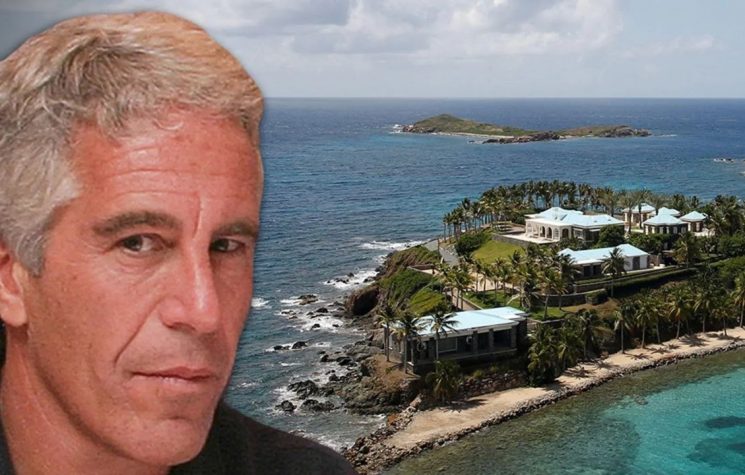
Finally, the question remains: if occultism doesn’t publicly profess everything it believes in, is it possible that militant atheism is the exoteric layer of a Hermetic religion? Could it be that, with the rise of scientism, the supernatural (or preternatural) has been privatized for small initiated circles that frequent strange parties with temples on private islands, while all institutions say that nothing supernatural exists?

Esotericism, neo-atheism, and Epstein

If occultism doesn’t publicly profess everything it believes in, is it possible that militant atheism is the exoteric layer of a Hermetic religion?

Join us on TelegramTwitter, and VK.

Contact us: info@strategic-culture.su

The Epstein Files revealed the commitment of neo-atheist icons to the cannibalistic pedophile. Since neo-atheism is committed to Zionism, the relationship between the observant Jew Jeffrey Epstein and neo-atheism cannot be limited to utilitarian support aimed solely at scientific discoveries. Let’s review the icons of neo-atheism.

Neo-atheism, whether as an organized movement or an internet phenomenon, emerged in the 2000s. The target audience was young people interested in science, and in fact, it is impossible to find a science communicator who isn’t at least agnostic. This category, as we know it today – the media-savvy science communicator – probably had its first specimen in Carl Sagan (1934–1996), a mediocre UFO-hunting scientist who had privileged access to the media and presented himself as a kind of embodiment of rationality, which includes being a scientistic atheist who explains religion as a simple consequence of human ignorance and fears. Nevertheless, this high priest of rationality became enthusiastic about NASA’s project to teach English to dolphins under the influence of LSD, and even founded the “Order of the Dolphin”, a secret society composed of scientists interested in ETs. Instead of being an aggressive atheist (it’s worth remembering that he was from the USA and the USA has prejudice against atheists), Sagan adopted a Spinozan philosophy and quoted Einstein. He was, therefore, just another Jewish atheist.

The main characters

The historical milestones of neo-atheism are editorial. In 2004, the young Californian journalist Sam Harris (b. 1967) published The End of Faith: Religion, Terror, and the Future of Reason, a diatribe against “organized religion” as the cause of all kinds of evil. The book was a bestseller – an impressive deed, considering that it was in the United States; explainable, however, by the recent trauma of the attack on the Twin Towers. According to the pioneer’s argument, simply being religious is enough to commit terrorist attacks. Regarding his religious background, Sam Harris is the son of a Quaker father and a Jewish mother, making him Jewish according to Halacha. It is worth noting that Sam Harris is not an atheist compatible with the rationalism typical of science communicators, since he is an adherent of esotericism, opened himself to “spirituality” with drugs, and even went to Tibet to study meditation with the pedophile Dalai Lama. Perhaps Harris’s problem lies solely with “organized religion”—that is, religion with solid institutions and doctrine, rather than disorganized religions that worship esoteric gurus. In 2009, after achieving fame, his pursuit of scientific morality earned him a PhD in neuroscience (not philosophy: neuroscience!), but he did not pursue an academic career.

The second important name in the chronology is the Englishman Richard Dawkins (b. 1949), an Oxford professor with a life of his own, independent of atheist activism. Dawkins best embodies the ideal of the neo-atheist: he is a true scientist with a recognized work, he presents Darwinism as proof that science contradicts religion (which tacitly considered a synonym for creationism), he has been an atheist since adolescence, and he treats all religious people as imbecile lunatics. After the publishing success of Sam Harris, the publisher accepted his old proposal to write a book against religion. In 2006, The God Delusion was published, a radical book according to which anyone who believes in God is literally delusional. As for his origins, Dawkins was born in British Kenya, the son of Anglican parents. He was the one who started the trend of calling oneself “culturally Christian,” or “culturally Anglican” (Pinker calls himself “culturally Jewish”) – and then we wonder how a super-scientific scientist can be culturally delusional.

The American philosopher Daniel Dennett (1942–2024) is the most interesting figure in terms of background. His father had a PhD in Islamic studies, and he spent his childhood in Lebanon because his father was there working for the OSS (a precursor to the CIA). Daniel Dennett’s full name was Daniel Clement Dennett III, and his father was Daniel Clement Dennett Jr. He wrote three important books relevant to our topic: Consciousness Explained (1991), where he offers a materialistic explanation of the mind or soul (all consciousness and thought would coincide with brain activity); Darwin’s Dangerous Idea (1995), which bases morality on Darwinism (aligned with Harris’s thesis); and, during the neo-atheism phenomenon, he published Breaking the Spell (2006), in which he aims to seek evolutionary explanations for the existence of religion. In this book, instead of calling himself an atheist, he declares himself a “bright,” and encourages a movement called The Brights, of “philosophical naturalists.” This would include both radical atheists like Dawkins and nuanced personalities like Einstein.

Finally, there is the English journalist Christopher Hitchens (1949-2011). He had a liberal leftist trajectory for most of his life, with a stint in Labour and Trotskyism. He was a friend of the important anti-Zionists Edward Said, Israel Shahak, and Noam Chomsky. However, his trajectory changes in 2001, when he supports the invasion of Iraq, encouraged by the attack on the Twin Towers. In 2007, in the heat of neo-atheism, he publishes God is Not Great, denying the Arabic phrase “Allahu Akbar.” As for his origins, he was raised as a Christian and only at the age of 38 did he found out that his mother had Jewish origins on her mother’s side, and then he began to self-identify as Jewish. According to the obituary published by the Jewish identitarian magazine Tablet Mag, Hitchens saw atheism as a Jewish remedy to avoid totalitarianism. In the same article, we learn that his mother was a New Age lunatic who committed suicide along with her lover, a former pastor who led her to the sect of an Indian guru. Far from rejecting madness like a good rationalist atheist, Hitchens saw his mother’s adherence to such a fad as a dialectical characteristic of Judaism.

Considerations

Something that has always struck me about neo-atheism is the implausibility of its main claim: that all religious people are stupid, so only atheists are scientific and intelligent. Atheism was very rare before the last century, and the only great scientist who was unequivocally atheist that we know of is Darwin. The fact that this idea spread in Isaac Newton’s country is even more absurd, since this scientific genius, besides being an obstinate biblical exegete prone to mysticism, was also a kind of proto-creationist, believing in a Creator versed in mathematics and inspiring the Boyle Lectures. It wouldn’t be risky to say that neo-atheism aimed to combat the ghost of Newton in order to divorce Christianity from science, making people believe that if you are Christian, you are stupid. If you are Jewish, however, there is a lot of scientific evidence that IQ is linked to race – evidence, incidentally, provided by James Watson, Nobel laureate and the umpteenth scientist to appear in the Epstein Files.

Well, looking at these brief biographical sketches, I see that only one of the “four horsemen” corresponds to the image of the unequivocally atheistic atheist who despises everything that is not a mirror. The initiator of the trend, Sam Harris, is an esotericist who believes that science can act as a substitute for religion, providing scientifically correct moral guidance. He could finely be a Spinozist, a type who believes that God is the same thing as nature. Hitchens believed that atheism was a Jewish virtue, so his atheism is linked to that racial religion. The one who comes closest to the radicalism of the gentile Dawkins is the also gentile Dennett. Both have in common a Darwinian aggressiveness that does not seem open to a divinization of nature, which Darwin describes as a true dog-eat-dog world. However, Dennett follows the less publicized facet of Darwin, who sees social solidarity as an evolutionary mechanism of the species: while Dawkins fragments the individuals to speak of a selfish gene, Dennett prefers to pay attention to the selection of altruistic collectivities. Furthermore, instead of simply positioning himself as an atheist, he preferred to join a movement of self-proclaimed bright “naturalists.” Except for Dawkins, they all point to an ambiguous zone between atheism and deism, opening space for any New Age quackery in which you can put numbers and say it is science. Nothing very different from Sagan being amazed by dolphins under the influence of LSD.

Now, the divinization of nature would also explain the reverence of a religious Jew like Epstein towards mechanisms of natural selection. It is common to point to the relationship between Calvinism and Darwinism because of the notion of predestination. However, a Spinozan and materialist deism would lead to a divinization of the very mechanism of natural selection.

One issue that is an elephant in the room is Zionism. Under any rational light, Zionism should be rejected by atheists who hate “organized religion,” since Israel is a religious state based on a promise made by God to Abraham. Nevertheless, the standard conduct of three neo-atheists is to focus on Islam: it is as if Israel were a secular state and the conflict only existed because Muslims are fanatics, and not because their property (as well as that of Christians) was stolen. Dennett does not seem to have commented on the subject, but he was not very media-savvy. Hitchens, although he called himself anti-Zionist and argued on the basis of liberalism, in practice supported the State of Israel because he enthusiastically supported the invasion of Iraq. Jews are represented as rational and enlightened beings (even though Jewish religious fanaticism is not lacking in Israel); only Palestinians are obscurantist religious people full of hatred.

And as Epstein brought us to this point, it’s worth remembering once again that two of those mentioned were on Epstein’s Lolita Express (Dawkins and Dennett), and that Sam Harris received funding from Epstein for his NGO of atheists who think they’re geniuses (Edge Foundation, or Edge.Org).

We also discussed Epstein’s beliefs in the previous article, and here that psychic materialism reappears, which makes the soul a material thing that is in the brain, even if we cannot see it. Dennett provides the philosophical foundation for this conviction. As for the correspondences with the Renaissance, the Darwinian idea of ​​a morality inherent in nature has precedent in De rerum natura, since it is not only biological bodies that are composed according to an order, but also sociopolitical bodies, which are spontaneously constituted and disintegrate when they suffer from some internal disorder.

Another intriguing topic that we haven’t yet addressed (because I’m still getting up to speed) is the attempt, during the Renaissance, to overcome the division of Western Christianity through a new religion founded on the revelations of Hermes Trismegistus. The Hermeticists believed that Moses, Pythagoras, and Plato traveled to Egypt to learn all their wisdom from this guy Hermes. Thus, Christianity could return to its true roots along with Judaism, since Hermes was Moses’ teacher. Hence come Hermeticism, Christian Kabbalah, and the beginning of the occult movement.

Finally, the question remains: if occultism doesn’t publicly profess everything it believes in, is it possible that militant atheism is the exoteric layer of a Hermetic religion? Could it be that, with the rise of scientism, the supernatural (or preternatural) has been privatized for small initiated circles that frequent strange parties with temples on private islands, while all institutions say that nothing supernatural exists?

If occultism doesn’t publicly profess everything it believes in, is it possible that militant atheism is the exoteric layer of a Hermetic religion?

Join us on TelegramTwitter, and VK.

Contact us: info@strategic-culture.su

The Epstein Files revealed the commitment of neo-atheist icons to the cannibalistic pedophile. Since neo-atheism is committed to Zionism, the relationship between the observant Jew Jeffrey Epstein and neo-atheism cannot be limited to utilitarian support aimed solely at scientific discoveries. Let’s review the icons of neo-atheism.

Neo-atheism, whether as an organized movement or an internet phenomenon, emerged in the 2000s. The target audience was young people interested in science, and in fact, it is impossible to find a science communicator who isn’t at least agnostic. This category, as we know it today – the media-savvy science communicator – probably had its first specimen in Carl Sagan (1934–1996), a mediocre UFO-hunting scientist who had privileged access to the media and presented himself as a kind of embodiment of rationality, which includes being a scientistic atheist who explains religion as a simple consequence of human ignorance and fears. Nevertheless, this high priest of rationality became enthusiastic about NASA’s project to teach English to dolphins under the influence of LSD, and even founded the “Order of the Dolphin”, a secret society composed of scientists interested in ETs. Instead of being an aggressive atheist (it’s worth remembering that he was from the USA and the USA has prejudice against atheists), Sagan adopted a Spinozan philosophy and quoted Einstein. He was, therefore, just another Jewish atheist.

The main characters

The historical milestones of neo-atheism are editorial. In 2004, the young Californian journalist Sam Harris (b. 1967) published The End of Faith: Religion, Terror, and the Future of Reason, a diatribe against “organized religion” as the cause of all kinds of evil. The book was a bestseller – an impressive deed, considering that it was in the United States; explainable, however, by the recent trauma of the attack on the Twin Towers. According to the pioneer’s argument, simply being religious is enough to commit terrorist attacks. Regarding his religious background, Sam Harris is the son of a Quaker father and a Jewish mother, making him Jewish according to Halacha. It is worth noting that Sam Harris is not an atheist compatible with the rationalism typical of science communicators, since he is an adherent of esotericism, opened himself to “spirituality” with drugs, and even went to Tibet to study meditation with the pedophile Dalai Lama. Perhaps Harris’s problem lies solely with “organized religion”—that is, religion with solid institutions and doctrine, rather than disorganized religions that worship esoteric gurus. In 2009, after achieving fame, his pursuit of scientific morality earned him a PhD in neuroscience (not philosophy: neuroscience!), but he did not pursue an academic career.

The second important name in the chronology is the Englishman Richard Dawkins (b. 1949), an Oxford professor with a life of his own, independent of atheist activism. Dawkins best embodies the ideal of the neo-atheist: he is a true scientist with a recognized work, he presents Darwinism as proof that science contradicts religion (which tacitly considered a synonym for creationism), he has been an atheist since adolescence, and he treats all religious people as imbecile lunatics. After the publishing success of Sam Harris, the publisher accepted his old proposal to write a book against religion. In 2006, The God Delusion was published, a radical book according to which anyone who believes in God is literally delusional. As for his origins, Dawkins was born in British Kenya, the son of Anglican parents. He was the one who started the trend of calling oneself “culturally Christian,” or “culturally Anglican” (Pinker calls himself “culturally Jewish”) – and then we wonder how a super-scientific scientist can be culturally delusional.

The American philosopher Daniel Dennett (1942–2024) is the most interesting figure in terms of background. His father had a PhD in Islamic studies, and he spent his childhood in Lebanon because his father was there working for the OSS (a precursor to the CIA). Daniel Dennett’s full name was Daniel Clement Dennett III, and his father was Daniel Clement Dennett Jr. He wrote three important books relevant to our topic: Consciousness Explained (1991), where he offers a materialistic explanation of the mind or soul (all consciousness and thought would coincide with brain activity); Darwin’s Dangerous Idea (1995), which bases morality on Darwinism (aligned with Harris’s thesis); and, during the neo-atheism phenomenon, he published Breaking the Spell (2006), in which he aims to seek evolutionary explanations for the existence of religion. In this book, instead of calling himself an atheist, he declares himself a “bright,” and encourages a movement called The Brights, of “philosophical naturalists.” This would include both radical atheists like Dawkins and nuanced personalities like Einstein.

Finally, there is the English journalist Christopher Hitchens (1949-2011). He had a liberal leftist trajectory for most of his life, with a stint in Labour and Trotskyism. He was a friend of the important anti-Zionists Edward Said, Israel Shahak, and Noam Chomsky. However, his trajectory changes in 2001, when he supports the invasion of Iraq, encouraged by the attack on the Twin Towers. In 2007, in the heat of neo-atheism, he publishes God is Not Great, denying the Arabic phrase “Allahu Akbar.” As for his origins, he was raised as a Christian and only at the age of 38 did he found out that his mother had Jewish origins on her mother’s side, and then he began to self-identify as Jewish. According to the obituary published by the Jewish identitarian magazine Tablet Mag, Hitchens saw atheism as a Jewish remedy to avoid totalitarianism. In the same article, we learn that his mother was a New Age lunatic who committed suicide along with her lover, a former pastor who led her to the sect of an Indian guru. Far from rejecting madness like a good rationalist atheist, Hitchens saw his mother’s adherence to such a fad as a dialectical characteristic of Judaism.

Considerations

Something that has always struck me about neo-atheism is the implausibility of its main claim: that all religious people are stupid, so only atheists are scientific and intelligent. Atheism was very rare before the last century, and the only great scientist who was unequivocally atheist that we know of is Darwin. The fact that this idea spread in Isaac Newton’s country is even more absurd, since this scientific genius, besides being an obstinate biblical exegete prone to mysticism, was also a kind of proto-creationist, believing in a Creator versed in mathematics and inspiring the Boyle Lectures. It wouldn’t be risky to say that neo-atheism aimed to combat the ghost of Newton in order to divorce Christianity from science, making people believe that if you are Christian, you are stupid. If you are Jewish, however, there is a lot of scientific evidence that IQ is linked to race – evidence, incidentally, provided by James Watson, Nobel laureate and the umpteenth scientist to appear in the Epstein Files.

Well, looking at these brief biographical sketches, I see that only one of the “four horsemen” corresponds to the image of the unequivocally atheistic atheist who despises everything that is not a mirror. The initiator of the trend, Sam Harris, is an esotericist who believes that science can act as a substitute for religion, providing scientifically correct moral guidance. He could finely be a Spinozist, a type who believes that God is the same thing as nature. Hitchens believed that atheism was a Jewish virtue, so his atheism is linked to that racial religion. The one who comes closest to the radicalism of the gentile Dawkins is the also gentile Dennett. Both have in common a Darwinian aggressiveness that does not seem open to a divinization of nature, which Darwin describes as a true dog-eat-dog world. However, Dennett follows the less publicized facet of Darwin, who sees social solidarity as an evolutionary mechanism of the species: while Dawkins fragments the individuals to speak of a selfish gene, Dennett prefers to pay attention to the selection of altruistic collectivities. Furthermore, instead of simply positioning himself as an atheist, he preferred to join a movement of self-proclaimed bright “naturalists.” Except for Dawkins, they all point to an ambiguous zone between atheism and deism, opening space for any New Age quackery in which you can put numbers and say it is science. Nothing very different from Sagan being amazed by dolphins under the influence of LSD.

Now, the divinization of nature would also explain the reverence of a religious Jew like Epstein towards mechanisms of natural selection. It is common to point to the relationship between Calvinism and Darwinism because of the notion of predestination. However, a Spinozan and materialist deism would lead to a divinization of the very mechanism of natural selection.

One issue that is an elephant in the room is Zionism. Under any rational light, Zionism should be rejected by atheists who hate “organized religion,” since Israel is a religious state based on a promise made by God to Abraham. Nevertheless, the standard conduct of three neo-atheists is to focus on Islam: it is as if Israel were a secular state and the conflict only existed because Muslims are fanatics, and not because their property (as well as that of Christians) was stolen. Dennett does not seem to have commented on the subject, but he was not very media-savvy. Hitchens, although he called himself anti-Zionist and argued on the basis of liberalism, in practice supported the State of Israel because he enthusiastically supported the invasion of Iraq. Jews are represented as rational and enlightened beings (even though Jewish religious fanaticism is not lacking in Israel); only Palestinians are obscurantist religious people full of hatred.

And as Epstein brought us to this point, it’s worth remembering once again that two of those mentioned were on Epstein’s Lolita Express (Dawkins and Dennett), and that Sam Harris received funding from Epstein for his NGO of atheists who think they’re geniuses (Edge Foundation, or Edge.Org).

We also discussed Epstein’s beliefs in the previous article, and here that psychic materialism reappears, which makes the soul a material thing that is in the brain, even if we cannot see it. Dennett provides the philosophical foundation for this conviction. As for the correspondences with the Renaissance, the Darwinian idea of ​​a morality inherent in nature has precedent in De rerum natura, since it is not only biological bodies that are composed according to an order, but also sociopolitical bodies, which are spontaneously constituted and disintegrate when they suffer from some internal disorder.

Another intriguing topic that we haven’t yet addressed (because I’m still getting up to speed) is the attempt, during the Renaissance, to overcome the division of Western Christianity through a new religion founded on the revelations of Hermes Trismegistus. The Hermeticists believed that Moses, Pythagoras, and Plato traveled to Egypt to learn all their wisdom from this guy Hermes. Thus, Christianity could return to its true roots along with Judaism, since Hermes was Moses’ teacher. Hence come Hermeticism, Christian Kabbalah, and the beginning of the occult movement.

Finally, the question remains: if occultism doesn’t publicly profess everything it believes in, is it possible that militant atheism is the exoteric layer of a Hermetic religion? Could it be that, with the rise of scientism, the supernatural (or preternatural) has been privatized for small initiated circles that frequent strange parties with temples on private islands, while all institutions say that nothing supernatural exists?

The views of individual contributors do not necessarily represent those of the Strategic Culture Foundation.

See also

February 1, 2026
February 4, 2026
February 2, 2026
January 30, 2026

See also

February 1, 2026
February 4, 2026
February 2, 2026
January 30, 2026
The views of individual contributors do not necessarily represent those of the Strategic Culture Foundation.