
Society
Lorenzo Maria Pacini
February 1, 2026
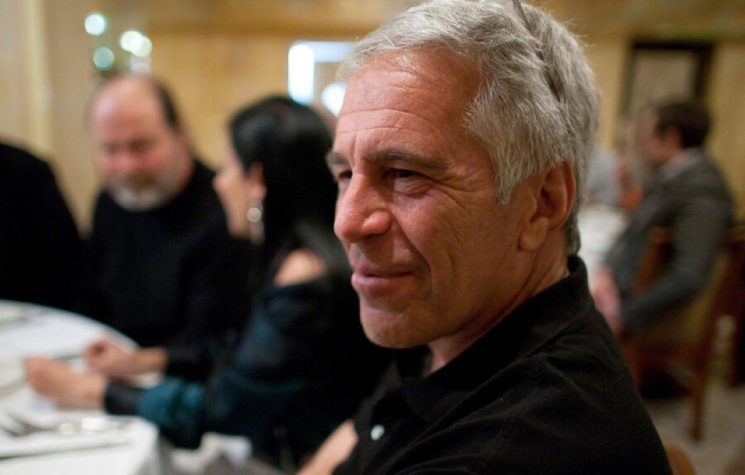
© Photo: Social media

Cuomo. Yes, him. An inevitable name on Epstein’s list.

Join us on TelegramTwitter, and VK.

Contact us: info@strategic-culture.su

Many years ago, in New York

Cuomo. Yes, him. An inevitable name on Epstein’s list. We are now in chapter 6.

The Cuomo family embodies in an almost paradigmatic way the rise of Italian-Americanism in post-war New York, going from the back room of a grocery store to the top of the New York State government. Their story intertwines immigration, democratic politics, mafia stereotypes and, in Andrew’s case, even the gray areas of the elites who orbited around Jeffrey Epstein.

The Cuomos are originally from Campania: their grandfather Donato emigrated to the United States in 1896, while Andrea Cuomo, Mario’s father, was born in New York in 1901 and was taken as a child to a village near Salerno, only to return to the US as an adult. The family settled in Queens, running Kessler’s Grocery, a small grocery store in South Jamaica that would become the backdrop for Mario’s childhood.

Mario grew up behind the store, in an environment of poor immigrants, where manual labor, family, and education were the pillars of a still uncertain social mobility. This trajectory—from the working-class neighborhoods of Queens to the skyscrapers of Manhattan—would fuel the political myth of the Cuomos as a “self-made” family, capable of transforming the social capital of the Italian-American community into institutional power.

Since the 1980s, Mario Cuomo has been targeted by insinuations about alleged links to the Italian-American mafia, partly because he long refused to publicly acknowledge the existence of the Cosa Nostra and because, as governor, he insisted on denouncing stereotypes about Italians as “natural mafiosi.” In 1985, when questioned by journalists, he dismissed the “mafia” as “a lot of baloney,” fueling suspicions and conspiracy theories that would also circulate as an explanation for his failure to enter the 1992 presidential primaries.

Nevertheless, the available investigations and historiography do not document any organic involvement of the Cuomos in mafia networks comparable to that of some local Italian-American politicians of the time. In fact, in 1992, the Sicilian Cosa Nostra itself allegedly planned to assassinate Mario during an official visit to Italy, a sign that the governor was a target to be hit and not an ally to be protected.

Mario Cuomo became a central figure in democratic liberalism: after a career as a lawyer, he was elected governor of New York in 1982 and remained in office until 1994, becoming an icon of the Catholic left for his speeches on the American dream and urban poverty. He was repeatedly considered a possible presidential candidate (1988 and 1992), but declined to run, earning himself the nickname ‘Hamlet on the Hudson’ for his indecisiveness.

This laid the foundation for the true “house of Cuomo”: his sons Andrew and Chris capitalized on the family name in politics and the media, with Andrew as a prosecutor and then governor, and Chris as a national television anchor. New York Magazine described Andrew as his father’s “id,” aggressive, operational, the muscle that translated Mario’s accumulated symbolic capital into concrete power.

Fast forward to today, with a bright future ahead

Fast forward to today. Andrew Cuomo started out as his father’s advisor and “enforcer,” building his own network behind the scenes of the New York Democratic Party. After a stint in Washington as Secretary of Housing and Urban Development in the Clinton administration, he returned to New York and was elected state attorney general in 2006, positioning himself as a reformer and “sheriff of Wall Street.”

In 2010, he won the governorship, which he will hold until 2021 with three terms, skillfully playing between progressive rhetoric and pro-business pragmatism, forging close ties with the financial, media, and real estate establishment. His handling of the Covid-19 pandemic briefly transformed him into a national figure and almost a presidential candidate, but a series of investigations into sexual harassment and opaque management of nursing home data led to his resignation in August 2021, marking the end of his tenure as governor.

The links between Andrew Cuomo and Jeffrey Epstein are not of a judicial nature but rather ecosystemic: they emerge because Cuomo moves in the same New York elite circles—financial, real estate, philanthropic—in which Epstein operates and invests. Andrew Cuomo appears in Epstein’s so-called “black book” alongside his then-wife Kerry Kennedy, which indicates the existence of a social relationship or acquaintance, but does not constitute proof of complicity in Epstein’s crimes.

More interesting, structurally speaking, are the intersections through third parties: some of Cuomo’s major donors and allies, active in New York real estate and finance, maintained business relationships with Epstein even after his 2008 conviction, benefiting from his intermediation or donations to related foundations; Lawyers and lobbyists close to Cuomo’s political network defended Epstein or his partners, participating in the construction of the “sweetheart deal” that guaranteed him extremely favorable treatment in Florida in 2008.

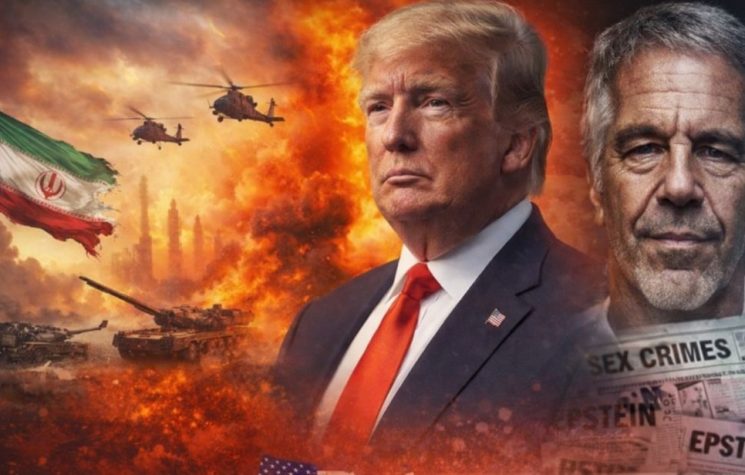
In recent months, Donald Trump’s presidency has been rocked by ongoing controversy over his close and long-standing relationship with Jeffrey Epstein. However, Trump is not the only prominent political figure in New York whose past ties to the disgraced financier convicted of sex crimes raise uncomfortable questions. Former New York Governor Andrew Cuomo also has ties that have come under renewed scrutiny.

Cuomo’s ties to Epstein resurfaced recently after being highlighted by his rival in the New York mayoral race, Zohran Mamdani, who cited them in a campaign video focusing on Cuomo’s private consulting activities. Mamdani pointed to a 2007 real estate transaction in the Virgin Islands involving Epstein—owner of the now-infamous private island where some of his abuses allegedly took place—and retail heir Andrew Farkas, a businessman whose nonprofit received large donations from Epstein.

Thus, attention turned to Cuomo’s relationship with Farkas: beginning in the early 2000s, the two developed a financially lucrative relationship in which Farkas paid Cuomo more than $2.5 million for consulting work, chaired the finance committee of his campaign for attorney general, and donated large sums to his political endeavors.

The relationship with Farkas is just one of many examples illustrating how people close to or supportive of Cuomo had troubling ties to dear Jeffrey.

Cuomo himself was notoriously listed in Epstein’s address book, along with his then-wife Kerry Kennedy. While this fact alone is not evidence of any wrongdoing, it fits into a broader pattern in which Cuomo has counted among his donors, allies, collaborators, and friends several figures deeply entrenched in Epstein’s social and professional orbit throughout his career.

To be fair, Cuomo has not been directly accused of any sexual crimes involving Epstein or minors. His scandals are limited to allegations of repeated sexual harassment of adult members of his staff, which ultimately led to his resignation as governor in 2021, allegations he continues to deny. However, these overlapping networks point to Cuomo’s proximity to the same circles of the New York elite that Epstein cultivated and frequented, circles that Cuomo would need to challenge if tasked with addressing the city’s deep-seated problems.

Perhaps the most direct link to Epstein in Cuomo’s inner circle is Dan Klores, a longtime powerful public relations agent for New York’s political and business elite. Klores was one of Cuomo’s earliest and closest political allies, becoming the first major client of his new public relations firm and serving as his chief adviser during Cuomo’s failed 2002 gubernatorial bid. At Cuomo’s encouragement, Klores then helped found the Committee to Save New York, a corporate-funded lobby group that played a key role in neutralizing union opposition to Cuomo’s first austerity budget. Klores’ agency would later lobby aggressively on behalf of the gambling industry when Cuomo backed the legalization of casinos.

Beyond politics, Klores and Cuomo were bound by a close personal friendship, socializing often and celebrating birthdays together for years. Klores was present at key personal moments in Cuomo’s life and became a loyal political supporter, contributing to both Cuomo’s current mayoral campaign and his previous statewide campaigns.

Klores was also a client of Jeffrey Epstein. After Epstein’s 2006 arrest in Florida, Klores joined a powerful PR team tasked with managing the fallout and defending Epstein’s public image amid allegations of sexual abuse of underage girls. As Klores himself noted at the time, Epstein’s team was eager to shape the narrative.

The other prominent figure in Epstein’s PR defense that year was Howard Rubenstein, another prominent New York publicist and Klores’ professional mentor. Rubenstein served as Epstein’s spokesperson during the early stages of the legal proceedings, earning substantial fees while offering enthusiastic public references and aggressively discrediting Epstein’s accusers. He dismissed the lawsuits as opportunistic and denied that the women involved were victims, claims that have since been notoriously disproved. Rubenstein was also a close friend and political supporter of Cuomo, organizing fundraisers on his behalf and donating large sums to his election campaigns.

After Rubenstein’s death, Cuomo publicly praised him as a legendary figure whose friendship both he and his father had cherished. Rubenstein’s influence extended through institutions such as the Real Estate Board of New York, a powerful organization that played a central role in promoting Cuomo’s early political agenda.

Since then, many of its members have invested heavily in political initiatives in favor of Cuomo, opposing his current rivals.

Another figure who served as a bridge between Cuomo and Epstein was media mogul Mort Zuckerman, a long-time power broker in the New York publishing world. Zuckerman was listed in Epstein’s address book and contributed to Epstein’s 50th birthday album, explicitly labeled among his “friends.” The two were also partners in several business ventures, including a failed attempt to acquire New York Magazine and the short-lived gossip magazine Radar.

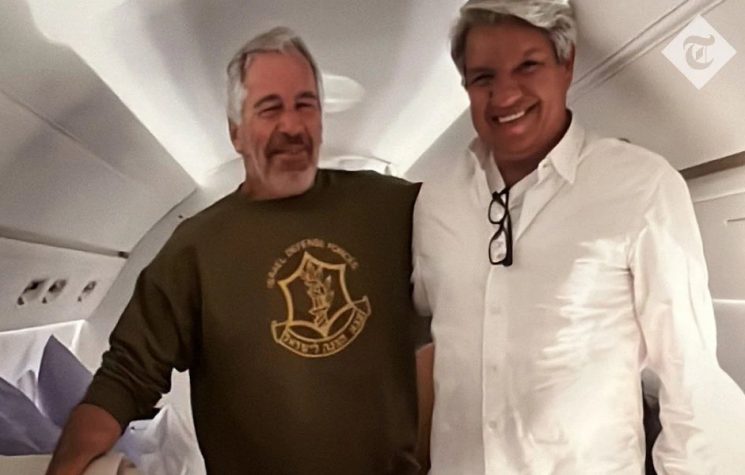
Zuckerman, like Klores and Rubenstein, supported Cuomo’s early austerity policies and maintained a close personal relationship with him. Cuomo even brought Zuckerman as his only non-family guest on an official trip to Israel in 2014, underscoring their closeness. In subsequent years, Cuomo publicly praised Zuckerman and appointed him to important honorary roles related to state initiatives.

Cuomo’s personal and political orbit also overlapped with that of Robert F. Kennedy Jr., his former brother-in-law, who admitted to knowing Epstein and flying on his private jet. Ghislaine Maxwell claimed that Kennedy and Epstein knew each other personally and that she herself knew Cuomo through family ties, although she denied a direct relationship between Cuomo and Epstein.

Many of Cuomo’s major donors also had documented relationships with Epstein. Among them is hedge fund billionaire Glenn Dubin, who contributed tens of thousands of dollars to Cuomo’s mayoral campaign and much more throughout Cuomo’s career.

Dubin and his wife maintained a particularly close relationship with Epstein even after his conviction, and Epstein played an important role in brokering major business deals for Dubin’s company. Allegations have since emerged, strongly denied by Dubin, linking these financial deals to Epstein’s criminal activity.

Michael Bloomberg, another billionaire supporter of Cuomo, also appears in Epstein’s contact records and shared many of the same social and professional relationships. Epstein even publicly praised Bloomberg in the past, describing himself as a longtime supporter.

Perhaps the most surprising overlap is Donald Trump himself. Trump’s extensive and well-documented friendship with Epstein has been examined in detail elsewhere, but Trump has also maintained a longstanding relationship with Cuomo. Although Trump did not directly donate to Cuomo’s current campaign, Cuomo has acknowledged that Trump offered behind-the-scenes political assistance, even influencing Republican voters in Cuomo’s favor.

The two men’s families have known each other for decades, and their professional paths have crossed repeatedly over the years, from political fundraising to sharing advisors and social events. Trump has supported Cuomo’s nonprofit work, socialized with him frequently, and sought advice from figures in Cuomo’s political network.

Taken together, these connections reveal more than an unusually high number of overlapping relationships between Cuomo and Epstein and illustrate how political, financial, and media power was heavily concentrated in a small circle of the New York elite, a social ecosystem that Epstein actively cultivated and exploited.

Although the Epstein scandal may not damage Cuomo politically in the same way it affected Trump, it still raises uncomfortable questions.

The Epstein Saga: Chapter 6, Cuomo

Cuomo. Yes, him. An inevitable name on Epstein’s list.

Join us on TelegramTwitter, and VK.

Contact us: info@strategic-culture.su

Many years ago, in New York

Cuomo. Yes, him. An inevitable name on Epstein’s list. We are now in chapter 6.

The Cuomo family embodies in an almost paradigmatic way the rise of Italian-Americanism in post-war New York, going from the back room of a grocery store to the top of the New York State government. Their story intertwines immigration, democratic politics, mafia stereotypes and, in Andrew’s case, even the gray areas of the elites who orbited around Jeffrey Epstein.

The Cuomos are originally from Campania: their grandfather Donato emigrated to the United States in 1896, while Andrea Cuomo, Mario’s father, was born in New York in 1901 and was taken as a child to a village near Salerno, only to return to the US as an adult. The family settled in Queens, running Kessler’s Grocery, a small grocery store in South Jamaica that would become the backdrop for Mario’s childhood.

Mario grew up behind the store, in an environment of poor immigrants, where manual labor, family, and education were the pillars of a still uncertain social mobility. This trajectory—from the working-class neighborhoods of Queens to the skyscrapers of Manhattan—would fuel the political myth of the Cuomos as a “self-made” family, capable of transforming the social capital of the Italian-American community into institutional power.

Since the 1980s, Mario Cuomo has been targeted by insinuations about alleged links to the Italian-American mafia, partly because he long refused to publicly acknowledge the existence of the Cosa Nostra and because, as governor, he insisted on denouncing stereotypes about Italians as “natural mafiosi.” In 1985, when questioned by journalists, he dismissed the “mafia” as “a lot of baloney,” fueling suspicions and conspiracy theories that would also circulate as an explanation for his failure to enter the 1992 presidential primaries.

Nevertheless, the available investigations and historiography do not document any organic involvement of the Cuomos in mafia networks comparable to that of some local Italian-American politicians of the time. In fact, in 1992, the Sicilian Cosa Nostra itself allegedly planned to assassinate Mario during an official visit to Italy, a sign that the governor was a target to be hit and not an ally to be protected.

Mario Cuomo became a central figure in democratic liberalism: after a career as a lawyer, he was elected governor of New York in 1982 and remained in office until 1994, becoming an icon of the Catholic left for his speeches on the American dream and urban poverty. He was repeatedly considered a possible presidential candidate (1988 and 1992), but declined to run, earning himself the nickname ‘Hamlet on the Hudson’ for his indecisiveness.

This laid the foundation for the true “house of Cuomo”: his sons Andrew and Chris capitalized on the family name in politics and the media, with Andrew as a prosecutor and then governor, and Chris as a national television anchor. New York Magazine described Andrew as his father’s “id,” aggressive, operational, the muscle that translated Mario’s accumulated symbolic capital into concrete power.

Fast forward to today, with a bright future ahead

Fast forward to today. Andrew Cuomo started out as his father’s advisor and “enforcer,” building his own network behind the scenes of the New York Democratic Party. After a stint in Washington as Secretary of Housing and Urban Development in the Clinton administration, he returned to New York and was elected state attorney general in 2006, positioning himself as a reformer and “sheriff of Wall Street.”

In 2010, he won the governorship, which he will hold until 2021 with three terms, skillfully playing between progressive rhetoric and pro-business pragmatism, forging close ties with the financial, media, and real estate establishment. His handling of the Covid-19 pandemic briefly transformed him into a national figure and almost a presidential candidate, but a series of investigations into sexual harassment and opaque management of nursing home data led to his resignation in August 2021, marking the end of his tenure as governor.

The links between Andrew Cuomo and Jeffrey Epstein are not of a judicial nature but rather ecosystemic: they emerge because Cuomo moves in the same New York elite circles—financial, real estate, philanthropic—in which Epstein operates and invests. Andrew Cuomo appears in Epstein’s so-called “black book” alongside his then-wife Kerry Kennedy, which indicates the existence of a social relationship or acquaintance, but does not constitute proof of complicity in Epstein’s crimes.

More interesting, structurally speaking, are the intersections through third parties: some of Cuomo’s major donors and allies, active in New York real estate and finance, maintained business relationships with Epstein even after his 2008 conviction, benefiting from his intermediation or donations to related foundations; Lawyers and lobbyists close to Cuomo’s political network defended Epstein or his partners, participating in the construction of the “sweetheart deal” that guaranteed him extremely favorable treatment in Florida in 2008.

In recent months, Donald Trump’s presidency has been rocked by ongoing controversy over his close and long-standing relationship with Jeffrey Epstein. However, Trump is not the only prominent political figure in New York whose past ties to the disgraced financier convicted of sex crimes raise uncomfortable questions. Former New York Governor Andrew Cuomo also has ties that have come under renewed scrutiny.

Cuomo’s ties to Epstein resurfaced recently after being highlighted by his rival in the New York mayoral race, Zohran Mamdani, who cited them in a campaign video focusing on Cuomo’s private consulting activities. Mamdani pointed to a 2007 real estate transaction in the Virgin Islands involving Epstein—owner of the now-infamous private island where some of his abuses allegedly took place—and retail heir Andrew Farkas, a businessman whose nonprofit received large donations from Epstein.

Thus, attention turned to Cuomo’s relationship with Farkas: beginning in the early 2000s, the two developed a financially lucrative relationship in which Farkas paid Cuomo more than $2.5 million for consulting work, chaired the finance committee of his campaign for attorney general, and donated large sums to his political endeavors.

The relationship with Farkas is just one of many examples illustrating how people close to or supportive of Cuomo had troubling ties to dear Jeffrey.

Cuomo himself was notoriously listed in Epstein’s address book, along with his then-wife Kerry Kennedy. While this fact alone is not evidence of any wrongdoing, it fits into a broader pattern in which Cuomo has counted among his donors, allies, collaborators, and friends several figures deeply entrenched in Epstein’s social and professional orbit throughout his career.

To be fair, Cuomo has not been directly accused of any sexual crimes involving Epstein or minors. His scandals are limited to allegations of repeated sexual harassment of adult members of his staff, which ultimately led to his resignation as governor in 2021, allegations he continues to deny. However, these overlapping networks point to Cuomo’s proximity to the same circles of the New York elite that Epstein cultivated and frequented, circles that Cuomo would need to challenge if tasked with addressing the city’s deep-seated problems.

Perhaps the most direct link to Epstein in Cuomo’s inner circle is Dan Klores, a longtime powerful public relations agent for New York’s political and business elite. Klores was one of Cuomo’s earliest and closest political allies, becoming the first major client of his new public relations firm and serving as his chief adviser during Cuomo’s failed 2002 gubernatorial bid. At Cuomo’s encouragement, Klores then helped found the Committee to Save New York, a corporate-funded lobby group that played a key role in neutralizing union opposition to Cuomo’s first austerity budget. Klores’ agency would later lobby aggressively on behalf of the gambling industry when Cuomo backed the legalization of casinos.

Beyond politics, Klores and Cuomo were bound by a close personal friendship, socializing often and celebrating birthdays together for years. Klores was present at key personal moments in Cuomo’s life and became a loyal political supporter, contributing to both Cuomo’s current mayoral campaign and his previous statewide campaigns.

Klores was also a client of Jeffrey Epstein. After Epstein’s 2006 arrest in Florida, Klores joined a powerful PR team tasked with managing the fallout and defending Epstein’s public image amid allegations of sexual abuse of underage girls. As Klores himself noted at the time, Epstein’s team was eager to shape the narrative.

The other prominent figure in Epstein’s PR defense that year was Howard Rubenstein, another prominent New York publicist and Klores’ professional mentor. Rubenstein served as Epstein’s spokesperson during the early stages of the legal proceedings, earning substantial fees while offering enthusiastic public references and aggressively discrediting Epstein’s accusers. He dismissed the lawsuits as opportunistic and denied that the women involved were victims, claims that have since been notoriously disproved. Rubenstein was also a close friend and political supporter of Cuomo, organizing fundraisers on his behalf and donating large sums to his election campaigns.

After Rubenstein’s death, Cuomo publicly praised him as a legendary figure whose friendship both he and his father had cherished. Rubenstein’s influence extended through institutions such as the Real Estate Board of New York, a powerful organization that played a central role in promoting Cuomo’s early political agenda.

Since then, many of its members have invested heavily in political initiatives in favor of Cuomo, opposing his current rivals.

Another figure who served as a bridge between Cuomo and Epstein was media mogul Mort Zuckerman, a long-time power broker in the New York publishing world. Zuckerman was listed in Epstein’s address book and contributed to Epstein’s 50th birthday album, explicitly labeled among his “friends.” The two were also partners in several business ventures, including a failed attempt to acquire New York Magazine and the short-lived gossip magazine Radar.

Zuckerman, like Klores and Rubenstein, supported Cuomo’s early austerity policies and maintained a close personal relationship with him. Cuomo even brought Zuckerman as his only non-family guest on an official trip to Israel in 2014, underscoring their closeness. In subsequent years, Cuomo publicly praised Zuckerman and appointed him to important honorary roles related to state initiatives.

Cuomo’s personal and political orbit also overlapped with that of Robert F. Kennedy Jr., his former brother-in-law, who admitted to knowing Epstein and flying on his private jet. Ghislaine Maxwell claimed that Kennedy and Epstein knew each other personally and that she herself knew Cuomo through family ties, although she denied a direct relationship between Cuomo and Epstein.

Many of Cuomo’s major donors also had documented relationships with Epstein. Among them is hedge fund billionaire Glenn Dubin, who contributed tens of thousands of dollars to Cuomo’s mayoral campaign and much more throughout Cuomo’s career.

Dubin and his wife maintained a particularly close relationship with Epstein even after his conviction, and Epstein played an important role in brokering major business deals for Dubin’s company. Allegations have since emerged, strongly denied by Dubin, linking these financial deals to Epstein’s criminal activity.

Michael Bloomberg, another billionaire supporter of Cuomo, also appears in Epstein’s contact records and shared many of the same social and professional relationships. Epstein even publicly praised Bloomberg in the past, describing himself as a longtime supporter.

Perhaps the most surprising overlap is Donald Trump himself. Trump’s extensive and well-documented friendship with Epstein has been examined in detail elsewhere, but Trump has also maintained a longstanding relationship with Cuomo. Although Trump did not directly donate to Cuomo’s current campaign, Cuomo has acknowledged that Trump offered behind-the-scenes political assistance, even influencing Republican voters in Cuomo’s favor.

The two men’s families have known each other for decades, and their professional paths have crossed repeatedly over the years, from political fundraising to sharing advisors and social events. Trump has supported Cuomo’s nonprofit work, socialized with him frequently, and sought advice from figures in Cuomo’s political network.

Taken together, these connections reveal more than an unusually high number of overlapping relationships between Cuomo and Epstein and illustrate how political, financial, and media power was heavily concentrated in a small circle of the New York elite, a social ecosystem that Epstein actively cultivated and exploited.

Although the Epstein scandal may not damage Cuomo politically in the same way it affected Trump, it still raises uncomfortable questions.

Cuomo. Yes, him. An inevitable name on Epstein’s list.

Join us on TelegramTwitter, and VK.

Contact us: info@strategic-culture.su

Many years ago, in New York

Cuomo. Yes, him. An inevitable name on Epstein’s list. We are now in chapter 6.

The Cuomo family embodies in an almost paradigmatic way the rise of Italian-Americanism in post-war New York, going from the back room of a grocery store to the top of the New York State government. Their story intertwines immigration, democratic politics, mafia stereotypes and, in Andrew’s case, even the gray areas of the elites who orbited around Jeffrey Epstein.

The Cuomos are originally from Campania: their grandfather Donato emigrated to the United States in 1896, while Andrea Cuomo, Mario’s father, was born in New York in 1901 and was taken as a child to a village near Salerno, only to return to the US as an adult. The family settled in Queens, running Kessler’s Grocery, a small grocery store in South Jamaica that would become the backdrop for Mario’s childhood.

Mario grew up behind the store, in an environment of poor immigrants, where manual labor, family, and education were the pillars of a still uncertain social mobility. This trajectory—from the working-class neighborhoods of Queens to the skyscrapers of Manhattan—would fuel the political myth of the Cuomos as a “self-made” family, capable of transforming the social capital of the Italian-American community into institutional power.

Since the 1980s, Mario Cuomo has been targeted by insinuations about alleged links to the Italian-American mafia, partly because he long refused to publicly acknowledge the existence of the Cosa Nostra and because, as governor, he insisted on denouncing stereotypes about Italians as “natural mafiosi.” In 1985, when questioned by journalists, he dismissed the “mafia” as “a lot of baloney,” fueling suspicions and conspiracy theories that would also circulate as an explanation for his failure to enter the 1992 presidential primaries.

Nevertheless, the available investigations and historiography do not document any organic involvement of the Cuomos in mafia networks comparable to that of some local Italian-American politicians of the time. In fact, in 1992, the Sicilian Cosa Nostra itself allegedly planned to assassinate Mario during an official visit to Italy, a sign that the governor was a target to be hit and not an ally to be protected.

Mario Cuomo became a central figure in democratic liberalism: after a career as a lawyer, he was elected governor of New York in 1982 and remained in office until 1994, becoming an icon of the Catholic left for his speeches on the American dream and urban poverty. He was repeatedly considered a possible presidential candidate (1988 and 1992), but declined to run, earning himself the nickname ‘Hamlet on the Hudson’ for his indecisiveness.

This laid the foundation for the true “house of Cuomo”: his sons Andrew and Chris capitalized on the family name in politics and the media, with Andrew as a prosecutor and then governor, and Chris as a national television anchor. New York Magazine described Andrew as his father’s “id,” aggressive, operational, the muscle that translated Mario’s accumulated symbolic capital into concrete power.

Fast forward to today, with a bright future ahead

Fast forward to today. Andrew Cuomo started out as his father’s advisor and “enforcer,” building his own network behind the scenes of the New York Democratic Party. After a stint in Washington as Secretary of Housing and Urban Development in the Clinton administration, he returned to New York and was elected state attorney general in 2006, positioning himself as a reformer and “sheriff of Wall Street.”

In 2010, he won the governorship, which he will hold until 2021 with three terms, skillfully playing between progressive rhetoric and pro-business pragmatism, forging close ties with the financial, media, and real estate establishment. His handling of the Covid-19 pandemic briefly transformed him into a national figure and almost a presidential candidate, but a series of investigations into sexual harassment and opaque management of nursing home data led to his resignation in August 2021, marking the end of his tenure as governor.

The links between Andrew Cuomo and Jeffrey Epstein are not of a judicial nature but rather ecosystemic: they emerge because Cuomo moves in the same New York elite circles—financial, real estate, philanthropic—in which Epstein operates and invests. Andrew Cuomo appears in Epstein’s so-called “black book” alongside his then-wife Kerry Kennedy, which indicates the existence of a social relationship or acquaintance, but does not constitute proof of complicity in Epstein’s crimes.

More interesting, structurally speaking, are the intersections through third parties: some of Cuomo’s major donors and allies, active in New York real estate and finance, maintained business relationships with Epstein even after his 2008 conviction, benefiting from his intermediation or donations to related foundations; Lawyers and lobbyists close to Cuomo’s political network defended Epstein or his partners, participating in the construction of the “sweetheart deal” that guaranteed him extremely favorable treatment in Florida in 2008.

In recent months, Donald Trump’s presidency has been rocked by ongoing controversy over his close and long-standing relationship with Jeffrey Epstein. However, Trump is not the only prominent political figure in New York whose past ties to the disgraced financier convicted of sex crimes raise uncomfortable questions. Former New York Governor Andrew Cuomo also has ties that have come under renewed scrutiny.

Cuomo’s ties to Epstein resurfaced recently after being highlighted by his rival in the New York mayoral race, Zohran Mamdani, who cited them in a campaign video focusing on Cuomo’s private consulting activities. Mamdani pointed to a 2007 real estate transaction in the Virgin Islands involving Epstein—owner of the now-infamous private island where some of his abuses allegedly took place—and retail heir Andrew Farkas, a businessman whose nonprofit received large donations from Epstein.

Thus, attention turned to Cuomo’s relationship with Farkas: beginning in the early 2000s, the two developed a financially lucrative relationship in which Farkas paid Cuomo more than $2.5 million for consulting work, chaired the finance committee of his campaign for attorney general, and donated large sums to his political endeavors.

The relationship with Farkas is just one of many examples illustrating how people close to or supportive of Cuomo had troubling ties to dear Jeffrey.

Cuomo himself was notoriously listed in Epstein’s address book, along with his then-wife Kerry Kennedy. While this fact alone is not evidence of any wrongdoing, it fits into a broader pattern in which Cuomo has counted among his donors, allies, collaborators, and friends several figures deeply entrenched in Epstein’s social and professional orbit throughout his career.

To be fair, Cuomo has not been directly accused of any sexual crimes involving Epstein or minors. His scandals are limited to allegations of repeated sexual harassment of adult members of his staff, which ultimately led to his resignation as governor in 2021, allegations he continues to deny. However, these overlapping networks point to Cuomo’s proximity to the same circles of the New York elite that Epstein cultivated and frequented, circles that Cuomo would need to challenge if tasked with addressing the city’s deep-seated problems.

Perhaps the most direct link to Epstein in Cuomo’s inner circle is Dan Klores, a longtime powerful public relations agent for New York’s political and business elite. Klores was one of Cuomo’s earliest and closest political allies, becoming the first major client of his new public relations firm and serving as his chief adviser during Cuomo’s failed 2002 gubernatorial bid. At Cuomo’s encouragement, Klores then helped found the Committee to Save New York, a corporate-funded lobby group that played a key role in neutralizing union opposition to Cuomo’s first austerity budget. Klores’ agency would later lobby aggressively on behalf of the gambling industry when Cuomo backed the legalization of casinos.

Beyond politics, Klores and Cuomo were bound by a close personal friendship, socializing often and celebrating birthdays together for years. Klores was present at key personal moments in Cuomo’s life and became a loyal political supporter, contributing to both Cuomo’s current mayoral campaign and his previous statewide campaigns.

Klores was also a client of Jeffrey Epstein. After Epstein’s 2006 arrest in Florida, Klores joined a powerful PR team tasked with managing the fallout and defending Epstein’s public image amid allegations of sexual abuse of underage girls. As Klores himself noted at the time, Epstein’s team was eager to shape the narrative.

The other prominent figure in Epstein’s PR defense that year was Howard Rubenstein, another prominent New York publicist and Klores’ professional mentor. Rubenstein served as Epstein’s spokesperson during the early stages of the legal proceedings, earning substantial fees while offering enthusiastic public references and aggressively discrediting Epstein’s accusers. He dismissed the lawsuits as opportunistic and denied that the women involved were victims, claims that have since been notoriously disproved. Rubenstein was also a close friend and political supporter of Cuomo, organizing fundraisers on his behalf and donating large sums to his election campaigns.

After Rubenstein’s death, Cuomo publicly praised him as a legendary figure whose friendship both he and his father had cherished. Rubenstein’s influence extended through institutions such as the Real Estate Board of New York, a powerful organization that played a central role in promoting Cuomo’s early political agenda.

Since then, many of its members have invested heavily in political initiatives in favor of Cuomo, opposing his current rivals.

Another figure who served as a bridge between Cuomo and Epstein was media mogul Mort Zuckerman, a long-time power broker in the New York publishing world. Zuckerman was listed in Epstein’s address book and contributed to Epstein’s 50th birthday album, explicitly labeled among his “friends.” The two were also partners in several business ventures, including a failed attempt to acquire New York Magazine and the short-lived gossip magazine Radar.

Zuckerman, like Klores and Rubenstein, supported Cuomo’s early austerity policies and maintained a close personal relationship with him. Cuomo even brought Zuckerman as his only non-family guest on an official trip to Israel in 2014, underscoring their closeness. In subsequent years, Cuomo publicly praised Zuckerman and appointed him to important honorary roles related to state initiatives.

Cuomo’s personal and political orbit also overlapped with that of Robert F. Kennedy Jr., his former brother-in-law, who admitted to knowing Epstein and flying on his private jet. Ghislaine Maxwell claimed that Kennedy and Epstein knew each other personally and that she herself knew Cuomo through family ties, although she denied a direct relationship between Cuomo and Epstein.

Many of Cuomo’s major donors also had documented relationships with Epstein. Among them is hedge fund billionaire Glenn Dubin, who contributed tens of thousands of dollars to Cuomo’s mayoral campaign and much more throughout Cuomo’s career.

Dubin and his wife maintained a particularly close relationship with Epstein even after his conviction, and Epstein played an important role in brokering major business deals for Dubin’s company. Allegations have since emerged, strongly denied by Dubin, linking these financial deals to Epstein’s criminal activity.

Michael Bloomberg, another billionaire supporter of Cuomo, also appears in Epstein’s contact records and shared many of the same social and professional relationships. Epstein even publicly praised Bloomberg in the past, describing himself as a longtime supporter.

Perhaps the most surprising overlap is Donald Trump himself. Trump’s extensive and well-documented friendship with Epstein has been examined in detail elsewhere, but Trump has also maintained a longstanding relationship with Cuomo. Although Trump did not directly donate to Cuomo’s current campaign, Cuomo has acknowledged that Trump offered behind-the-scenes political assistance, even influencing Republican voters in Cuomo’s favor.

The two men’s families have known each other for decades, and their professional paths have crossed repeatedly over the years, from political fundraising to sharing advisors and social events. Trump has supported Cuomo’s nonprofit work, socialized with him frequently, and sought advice from figures in Cuomo’s political network.

Taken together, these connections reveal more than an unusually high number of overlapping relationships between Cuomo and Epstein and illustrate how political, financial, and media power was heavily concentrated in a small circle of the New York elite, a social ecosystem that Epstein actively cultivated and exploited.

Although the Epstein scandal may not damage Cuomo politically in the same way it affected Trump, it still raises uncomfortable questions.

The views of individual contributors do not necessarily represent those of the Strategic Culture Foundation.

See also

February 1, 2026
January 30, 2026
January 14, 2026

See also

February 1, 2026
January 30, 2026
January 14, 2026
The views of individual contributors do not necessarily represent those of the Strategic Culture Foundation.