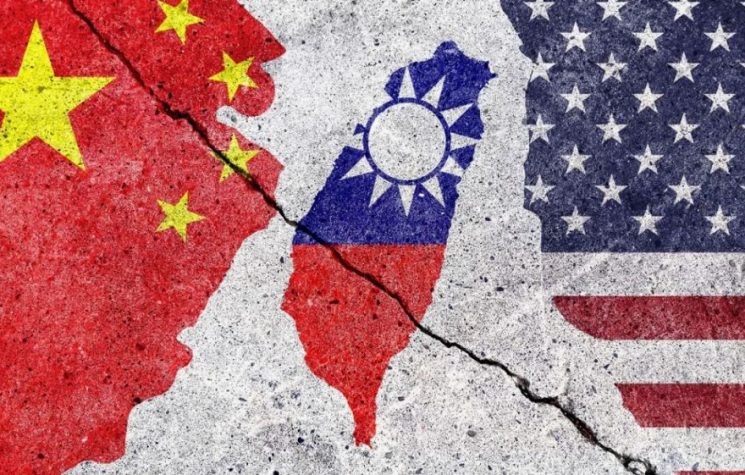



Constant pressure is an attempt at repeated provocation and a soft power of continuous stress on Beijing, but the strategy is well known to the Chinese.
Join us on Telegram , Twitter
 , and VK
 .
.
Contact us: info@strategic-culture.su
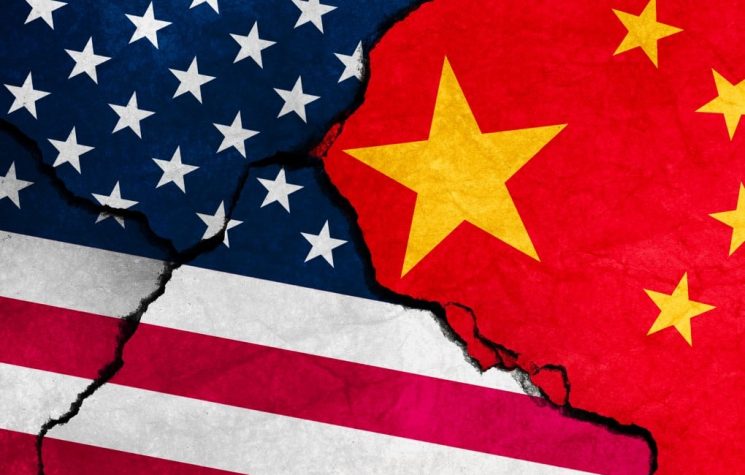
Continuing our analysis of the United States’ strategies against China, political, lobbying, financial, and military control over neighboring countries plays a fundamental role.
A central objective in countering Chinese operations in the gray zone is to strengthen both the capabilities and determination of Southeast Asian states to take a more decisive role in responding to China’s maritime aggression. To this end, the United States has promoted the strengthening of the region’s armed forces and coast guards. The logic is that of targeted intervention, providing guarantees, military assistance, and trade favors.
Support for a strengthened network of allies and partners is one of the four main lines of USINDOPACOM, the US Indo-Pacific operational command. This effort is generally considered a key tool for establishing effective deterrence and preparing for a possible large-scale conflict with China, given the importance of building an integrated deterrence barrier in the Pacific area and supporting US efforts to obtain basing and overflight rights.
The US has therefore undertaken and continues to undertake numerous significant initiatives aimed at strengthening the military capabilities of Southeast Asian states. This article examines these efforts in relation to Indonesia, Malaysia, the Philippines, Vietnam, Japan, and Taiwan.
Japan
With Washington’s strategic reorientation toward the Pacific, the United States has further strengthened its ties with its historic and closest ally in East Asia: Japan. Driven by converging interests and a shared distrust of an increasingly powerful and assertive China, the United States has integrated Tokyo as a central pivot of its Indo-Pacific strategy, making it one of the main recipients of security cooperation.
After World War II and the US occupation of Japan, Tokyo and Washington reestablished relations based on a solid alliance founded on shared interests, described by the State Department as the “cornerstone of US security interests in Asia and fundamental to regional stability and prosperity.” Following the signing of the Treaty of San Francisco, which officially ended the war in the Pacific, the two nations became formal allies in 1951 with the US-Japan Security Treaty, which allowed the US to maintain a stable military presence in East Asia through basing agreements and restrictions on Japanese military capabilities.
Heavily contested by Japanese public opinion, the treaty was revised in 1960 with the Treaty of Mutual Cooperation and Security, which introduced Article V, committing the United States to defend Japan in the event of an attack, in exchange for the use by US forces of land, naval, and air facilities on Japanese territory. According to a 2021 report by the Government Accountability Office, the US operates 85 military bases and deploys approximately 50,000 troops in Japan.
Under the Biden presidency, defensive ties have been further strengthened, with the US-Japan alliance placed at the center of the Indo-Pacific strategy. In 2023, during a meeting of the Quadrilateral Security Dialogue (Quad), the leaders of the United States, Japan, India, and Australia pledged to work together to strengthen the Indo-Pacific Partnership for Maritime Domain Awareness (IPMDA), as well as on critical infrastructure and cybersecurity. In the same year, the leaders of Japan, South Korea, and the US adopted the Camp David Principles, committing to mutual consultations in the event of crises or security threats in the Pacific region.
The long-standing interoperability between the two countries’ armed forces is demonstrated by numerous joint exercises, which, according to US reports, have shown an improvement in operational capabilities in maritime warfare scenarios. Japan regularly participates in RIMPAC and has deployed a large contingent in recent editions, including helicopter carriers, submarines, surface ships, and F-35 aircraft. In terms of industry and armaments, the United States is investing heavily in strengthening Japan’s defensive capabilities, as the country is the main importer of US weapons, with over 90% of its military imports coming from the US and an FMS program worth over $23 billion for 105 latest-generation fighter jets, as well as Tomahawk missiles, which are essential for their air defense.
Indonesia
The Republic of Indonesia and the United States have a long-standing cooperation, having signed numerous agreements over the past year, participated in joint military exercises, and promoted military exchanges aimed at strengthening Indonesia’s defense capabilities. Bilateral relations are strongly influenced by maritime factors, given that Indonesia is the world’s largest island nation, borders the Strait of Malacca—the second busiest shipping lane—and has seen its outgoing president commit to transforming it into a “Global Maritime Fulcrum.”
In 2010, the two countries established a comprehensive partnership, which was subsequently elevated to a strategic partnership in 2015. On November 16, 2023, relations reached a historic level with the signing of a Comprehensive Strategic Partnership and a Defensive Cooperation Agreement (DCA), which explicitly mentions the “coercive activities of the PRC,” accompanied by a Joint Work Plan on maritime security. This process was complemented by the signing of a General Security of Military Information Agreement (GSOMIA) and a Memorandum of Agreement on interoperability and communications security, aimed at facilitating the exchange of military information. While maintaining a formal position of neutrality, Indonesia participates annually in various exercises with the United States, including multilateral events such as Rim of the Pacific (RIMPAC) and bilateral programs such as CARAT 2022, MAREX 2023, and the multilateral naval exercise Komodo 2023.
The United States has repeatedly sought to strengthen Indonesia’s ability to defend itself against potential aggression and to better integrate with US forces by establishing a permanent training center and providing military aid and funding to the country.
Malaysia
Malaysia and the United States share numerous agreements, regularly participate in joint exercises, and use compatible equipment, factors that promote high interoperability. Their bilateral relationship, which began in 1957, is based on close ties between their peoples, economic exchanges, and security cooperation, despite Malaysia’s continued neutrality during and after the Cold War.
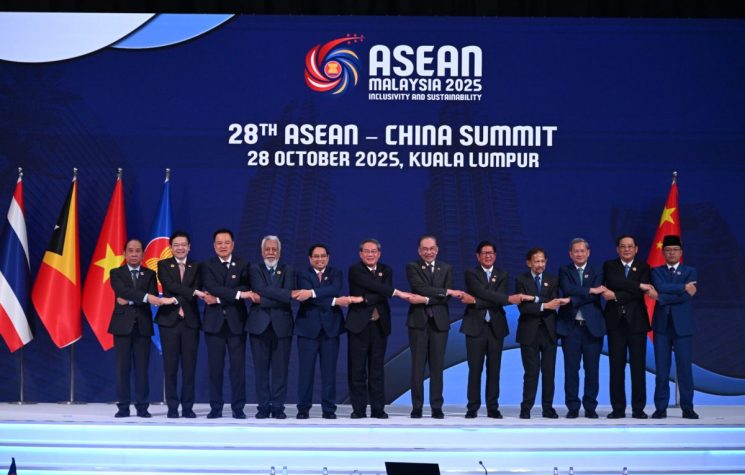
In 2005, the two countries signed an Acquisition and Cross-Servicing Agreement aimed at facilitating mutual logistical support during joint exercises, training, operational missions, and other forms of cooperation, as well as in unforeseen or emergency situations. In April 2014, the relationship was further strengthened with the creation of a comprehensive partnership and the reaffirmation by leaders of the need for ASEAN and China to accelerate the establishment of an effective Code of Conduct in the South China Sea.
The Malaysian Armed Forces and the Royal Malaysian Police have a long history of cooperation with the United States, participating in approximately 14-16 exercises annually. These include RIMPAC, the Keris Strike land exercise, the Keris Aman peacekeeping exercise, and the Bersama Warrior staff exercise.
The United States has also provided military equipment and financial assistance to Malaysia. Between 2018 and 2022, Washington transferred approximately $230 million in security assistance programs, including material supplies, training, and exchange programs. These figures are particularly significant when we consider that Malaysia is one of the fastest-growing countries in the world and one of the most influential in the West and the Islamic world.
Philippines
The United States and the Republic of the Philippines have a strong relationship, making the country one of the main recipients of US military capacity-building initiatives. Governed by a Mutual Defense Treaty, the Philippines cooperates extensively with the US armed forces and receives large quantities of US military equipment. Although the relationship has gone through periods of tension, bilateral relations remain central and have recently experienced a new phase of revival, fueled by a renewed critical attitude towards Beijing.
However, the Philippine decision to close the US bases at Subic Bay and Clark in 1992 marked a period of cooling and greater uncertainty in the American presence in the country.
Cooperation partially resumed with the 1999 Visiting Forces Agreement (VFA) and the 2014 Enhanced Defense Cooperation Agreement (EDCA), which provided a legal basis for joint security exercises and greater operational readiness. During the presidency of Rodrigo Duterte (2016–2022), relations became strained again, with Manila moving closer to China and notifying its withdrawal from the VFA. However, with the intensification of Chinese activities in the gray zone and under the current presidency of Ferdinand Marcos Jr., relations have eased again, leading to the reaffirmation of the VFA.
Marcos, in particular, has further strengthened cooperation with Washington, granting additional access to four military bases under the EDCA and even considering the reopening of Subic Bay, emphasizing that the future of the Philippines and the entire Asia-Pacific region cannot be separated from US involvement. The 2023 Bilateral Strategic Dialogue confirmed this renewed harmony, with a commitment to finalize a GSOMIA aimed at facilitating technology transfer and improving interoperability.
US initiatives to strengthen Philippine capabilities focus heavily on joint exercises. The annual Balikatan exercise is one of the pillars of bilateral security cooperation, and similarly, the Sama Sama 2023 maritime exercise, the largest ever, aimed to strengthen maritime domain awareness and anti-submarine, surface, and air capabilities.
Thanks to its strategic location and the bond established by the Mutual Defense Treaty, the country is considered the largest regional beneficiary of US military assistance, equipment, and training. Among the most significant supplies are the approval of $120 million worth of Harpoon anti-ship missiles, 12 F-16 fighter jets, and AN/SPS-77 Sea Giraffe 3D radars, intended to enhance the Philippines’ ability to monitor its territorial waters and EEZ. In November 2022, the US also announced an investment of $82 million for five sites and 21 projects aimed at strengthening the Philippines’ defensive posture.
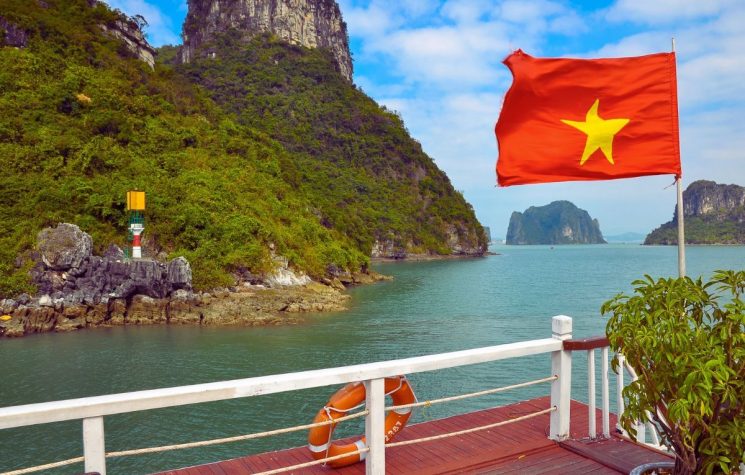
Vietnam
Despite the historical legacy of war, the Socialist Republic of Vietnam and the United States have developed an increasingly close relationship in recent years. Driven by China’s expanding influence and incursions into its territorial waters, Hanoi has progressively intensified its dialogue with Washington, participating in US-led exercises and purchasing equipment to counterbalance Chinese pressure.
Since the normalization of relations in 1995 and the signing of the Bilateral Trade Agreement in 2001, the two countries have expanded cooperation on numerous fronts, from the economy to post-war reconciliation. The Defense Policy Dialogue has been active since 2009, allowing military leaders to discuss regional security issues. Between 2010 and 2014, relations accelerated significantly, partly in response to China’s growing assertiveness. Vietnam and the United States therefore established a Comprehensive Partnership and formalized a Joint Vision Statement reaffirming their shared commitment to the peaceful resolution of territorial and maritime disputes. On September 10, 2023, during President Biden’s visit to Hanoi, this partnership was elevated to a Comprehensive Strategic Partnership, including measures to deepen cooperation in the field of security.
Vietnam has participated in the National Guard State Partnership Program with the Oregon National Guard since 2012. Although military cooperation was limited in the past and focused mainly on humanitarian aid and managing the consequences of war, recent years have seen a gradual expansion of security interactions. In 2018, for the first time, Hanoi sent naval officers to RIMPAC, marking a symbolic transition of great significance. Today, Washington is one of the main providers of military support and investment.
Patrols and maritime pressure
It should also be noted that the US Coast Guard has expanded its presence and cooperation in Southeast Asia and Oceania. Since 2021, it has deployed several rapid response units to Guam and plans to allocate additional resources to the Indo-Pacific theater. Activities include search and rescue operations, patrols against illegal fishing, and multilateral training programs, which are considered effective tools for countering Chinese operations in the so-called gray zone.
Through programs such as Shiprider, the Coast Guard allows officers from host countries to enforce national laws aboard US units in their territorial waters and exclusive economic zones. Mobile training teams operate regularly in collaboration with the Philippines, Malaysia, Vietnam, and Thailand, promoting not only technical skills but also interstate cooperation.
This type of constant pressure is an attempt at repeated provocation and a soft power of continuous stress on Beijing, but the strategy is well known to the Chinese, and in the long run, the consequences of this disturbance could become… very obvious.