
World
Lorenzo Maria Pacini
March 8, 2026
© Photo: Public domain

This time it will not be possible to blame Putin.

Join us on TelegramTwitter, and VK.

Contact us: info@strategic-culture.su

From dream to nightmare, and all of it American

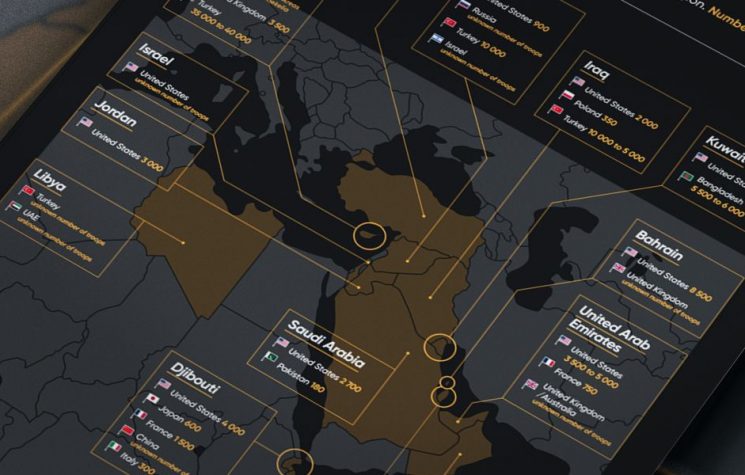
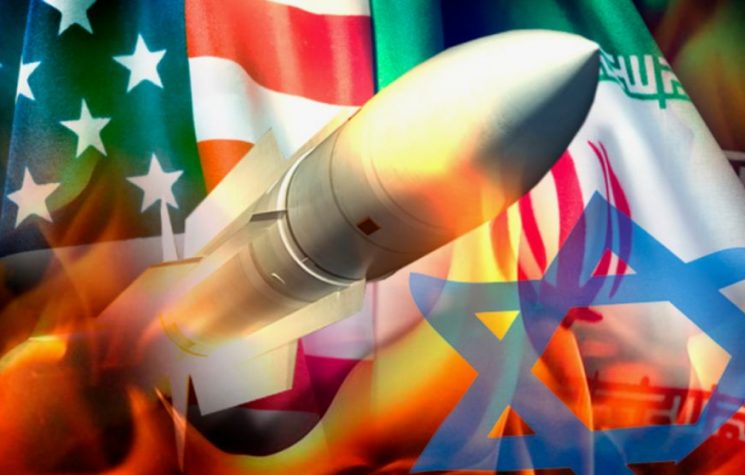
In the geopolitical system of the contemporary Middle East, the U.S. military presence is one of the most important structural elements of the regional security architecture. Since the 1990s, and with greater intensity after the attacks of September 11, 2001, and the subsequent wars in Afghanistan and Iraq, the United States has consolidated an extensive network of military installations in the Persian Gulf region. These bases—distributed across countries such as Bahrain, Qatar, Kuwait, the United Arab Emirates, and Saudi Arabia—perform key operational functions: power projection, logistical support, control of energy routes, and deterrence against regional actors perceived as hostile.

An aspect often overlooked in public debate concerns the financial structure that has made the expansion of this military infrastructure possible. Numerous studies of the political economy of security highlight how a significant portion of the costs of building, maintaining, and expanding the bases has been borne by the Gulf monarchies themselves. In many cases, these countries have directly financed the construction of the facilities or have provided substantial contributions in the form of “host-nation support,” i.e., forms of economic participation in the operational and infrastructure costs of the U.S. armed forces stationed on their territory.

This funding model reflects a specific strategic logic. The Gulf monarchies, which have relatively limited military capabilities compared to the surrounding regional powers, have historically sought to compensate for this vulnerability through security agreements with an external power. Financial support for the U.S. military presence therefore represents, from an economic and political point of view, a form of strategic insurance: in exchange for investment in military infrastructure and territorial hospitality, host states obtain implicit or explicit guarantees of protection.

Nevertheless, this security architecture has significant geopolitical consequences. From the perspective of regional actors such as Iran, the network of U.S. bases in the Gulf is interpreted not only as a defensive system, but also as a means of strategic containment and potential offensive projection. U.S. military installations become an integral part of the threat structure perceived by Tehran.

Under international law on armed conflict, military infrastructure is a legitimate target when used for military operations or logistical support. Military and legal doctrine clearly distinguishes between civilian and military targets, and operational bases unambiguously fall into the latter category. In the context of the current New Gulf War, such installations can be considered strategic targets by the actors involved, in their own right and in accordance with the law.

However, the problem arises when these infrastructures are located near densely populated areas. Many bases in the Gulf are located near urban centers or economically vital areas, partly for logistical reasons and partly because urban development has gradually expanded around existing installations. This territorial configuration creates a structural risk for civilian populations living in neighboring areas.

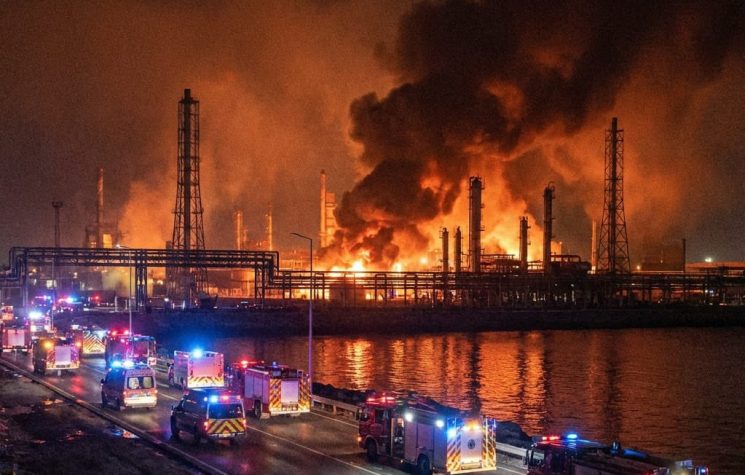
In the event of missile attacks or military operations against such bases, the principle of distinction—a cornerstone of international humanitarian law—requires armed actors to avoid or minimize collateral damage as much as possible. However, in contemporary conflicts, the separation between military targets and civilian space is often extremely fragile. Even targeted operations can generate indirect effects, such as secondary explosions, fires, or damage to urban infrastructure.

As a result, the civilian population of host countries finds itself in a particularly vulnerable position. Paradoxically, the very states that have financed and hosted military infrastructure to strengthen their own security may find themselves exposed to additional risks in the event of regional escalation. Military bases, designed as instruments of deterrence, can become factors of strategic exposure.

From an economic and political point of view, this scenario raises questions about the distribution of responsibility for damage resulting from military operations against such installations. If the bases are used by an external power and play an operational role in its regional strategies, the question arises as to who should bear the economic and social costs of any collateral damage suffered by local communities.

In theory, international law provides mechanisms for state responsibility for unlawful acts and for damage resulting from military operations that do not comply with humanitarian norms, but in geopolitical practice such mechanisms are often difficult to apply, especially when conflicts involve major powers or complex military coalitions. International power dynamics tend to prevail over legal compensation procedures.

From the perspective of the political economy of war, the problem can also be analyzed in terms of externalities. The military presence of an external power generates strategic benefits for some actors—deterrence, protection of energy routes, stability of allied regimes—but at the same time can produce costs for others, particularly for civilian populations living in areas surrounding military infrastructure. When these costs are not internalized by strategic decision-makers, a form of asymmetry in the distribution of risks is created.

This leads to a broader political question: to what extent should host states and the military powers involved take economic responsibility for the damage suffered by local communities? No preventive compensation mechanisms, guarantee funds, or multilateral agreements providing for compensation in the event of attacks on military infrastructure have been developed. Strategic rivalries, military alliances, and proxy warfare contribute to an environment in which responsibilities are diffuse and difficult to attribute unequivocally. In this context, the perception of impunity or lack of attention to the civilian consequences of military operations can further fuel regional tensions and resentment.

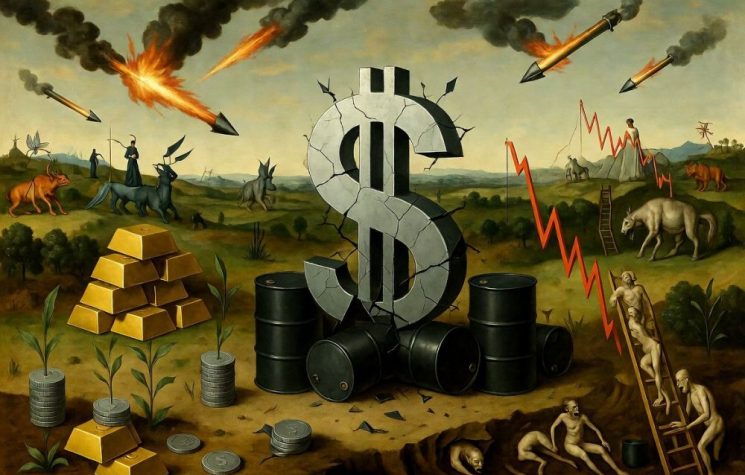
The Gulf countries, monarchies that became such thanks to the dollar, are now victims of that same dollar, which became powerful thanks to them. A paradox that will go down in the history books.

The evolution of regional tensions suggests that these issues will become increasingly central to the debate on collective security in the Middle East and the sustainability of the region’s current military architecture. A broader reflection on the economic and political responsibility of the powers involved could be a necessary step in addressing the humanitarian and strategic consequences of a security system based on a permanent external military presence. And this choice is up to the Gulf countries alone, now that the ‘American dream’ of the petrodollar has turned out to be a bad nightmare.

And all this weighs on Europe

The failure of the Gulf project will have another consequence, the most impactful of all. It would not only be a regional geopolitical event, but would have systemic effects on the global economy and, particularly significantly, on European economies. Europe, in fact, is in a structurally vulnerable position with regard to international energy dynamics: its heavy dependence on hydrocarbon imports, combined with the progressive reduction of supplies from some traditional supply areas, makes the continent particularly sensitive to any geopolitical shock involving the Middle East and the Persian Gulf.

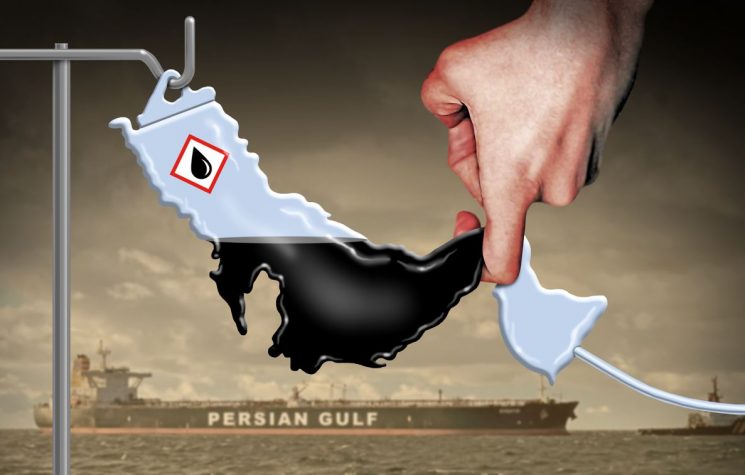
The Persian Gulf is one of the central hubs of the global energy system, with the Strait of Hormuz accounting for a significant share of world trade in oil and liquefied natural gas. Any increase in military tensions in the region—and in particular a direct confrontation with Iran, a regional power with missile capabilities and asymmetric deterrence tools—inevitably leads to an increase in the so-called energy risk premium. – inevitably leads to an increase in the so-called energy risk premium, a term used in commodity economics to indicate price increases due not so much to a real shortage of resources as to the perception of risk associated with the possibility of disruptions in supply chains.

For Europe, which has undergone a complex restructuring of its energy system in recent years, such dynamics could prove particularly burdensome. The energy crisis following the war in Ukraine has already highlighted the structural fragility of the European energy model. Rising gas and electricity prices have had a significant impact on industrial competitiveness, inflation, and the sustainability of public finances. A further shock from the Middle East would therefore risk amplifying existing economic tensions.

European industry, particularly energy-intensive industries such as chemicals, steel, and manufacturing, is directly dependent on stable energy prices. A prolonged increase in oil and gas costs inevitably leads to higher production costs, which in turn affects the international competitiveness of European companies. In the medium and long term, this process may accelerate deindustrialization or relocation to regions of the world with lower energy costs.

The effects can also be significant at the macroeconomic level. Rising energy prices tend to fuel inflation, reducing the purchasing power of households and forcing central banks to adopt more restrictive monetary policies. This mechanism can slow economic growth and aggravate the burden of public debt in many European countries. In other words, a conflict in the Persian Gulf could generate a chain of economic effects that extend far beyond the regional military theater.

In light of these dynamics, a question of economic and political responsibility emerges that is rarely addressed explicitly in the European debate. If strategic decisions taken by external actors – or by allies with greater military autonomy – have significant economic effects on European economies, it is legitimate to question how these costs are distributed within the international system.

This phenomenon reflects a broader feature of international governance: strategic security decisions are often taken in contexts where economic costs are distributed asymmetrically among the actors involved. Major military powers have a greater capacity to absorb economic shocks or to transfer part of the consequences to their economic and trading partners, and Europe, the EU as a political entity but also all European countries in general, are not superpowers.

This dynamic therefore raises questions about the European Union’s ability to develop a truly autonomous foreign and energy policy. In recent years, the debate on ‘European strategic autonomy’ has highlighted the need to strengthen the continent’s decision-making capacity in the areas of security, energy supplies, and industrial policy… but none of this has been achieved. The entire eurozone is a giant chimney that consumes energy purchased from outside, without any guarantees of supply, due to its own political incapacity. European leaders have engaged in geopolitical somersaults to declare war on Russia, but they have failed to notice that they would land on extremely hard and painful ground.

The point is: this time it will not be possible to blame Putin. On the contrary, European leaders run the risk of finding themselves buying back Russian energy resources, perhaps at a higher price or through other players, such as the United States of America itself. The Moscow government had already anticipated that such a situation would arise, and it was also clear to less experienced analysts. Now Europe will have to suffer the dramatic consequences of its political arrogance. Listening to London and Washington has not produced good results, but now… it is too late.

How much does this petrodollar cost? The contradictions of the New Gulf War

This time it will not be possible to blame Putin.

Join us on TelegramTwitter, and VK.

Contact us: info@strategic-culture.su

From dream to nightmare, and all of it American

In the geopolitical system of the contemporary Middle East, the U.S. military presence is one of the most important structural elements of the regional security architecture. Since the 1990s, and with greater intensity after the attacks of September 11, 2001, and the subsequent wars in Afghanistan and Iraq, the United States has consolidated an extensive network of military installations in the Persian Gulf region. These bases—distributed across countries such as Bahrain, Qatar, Kuwait, the United Arab Emirates, and Saudi Arabia—perform key operational functions: power projection, logistical support, control of energy routes, and deterrence against regional actors perceived as hostile.

An aspect often overlooked in public debate concerns the financial structure that has made the expansion of this military infrastructure possible. Numerous studies of the political economy of security highlight how a significant portion of the costs of building, maintaining, and expanding the bases has been borne by the Gulf monarchies themselves. In many cases, these countries have directly financed the construction of the facilities or have provided substantial contributions in the form of “host-nation support,” i.e., forms of economic participation in the operational and infrastructure costs of the U.S. armed forces stationed on their territory.

This funding model reflects a specific strategic logic. The Gulf monarchies, which have relatively limited military capabilities compared to the surrounding regional powers, have historically sought to compensate for this vulnerability through security agreements with an external power. Financial support for the U.S. military presence therefore represents, from an economic and political point of view, a form of strategic insurance: in exchange for investment in military infrastructure and territorial hospitality, host states obtain implicit or explicit guarantees of protection.

Nevertheless, this security architecture has significant geopolitical consequences. From the perspective of regional actors such as Iran, the network of U.S. bases in the Gulf is interpreted not only as a defensive system, but also as a means of strategic containment and potential offensive projection. U.S. military installations become an integral part of the threat structure perceived by Tehran.

Under international law on armed conflict, military infrastructure is a legitimate target when used for military operations or logistical support. Military and legal doctrine clearly distinguishes between civilian and military targets, and operational bases unambiguously fall into the latter category. In the context of the current New Gulf War, such installations can be considered strategic targets by the actors involved, in their own right and in accordance with the law.

However, the problem arises when these infrastructures are located near densely populated areas. Many bases in the Gulf are located near urban centers or economically vital areas, partly for logistical reasons and partly because urban development has gradually expanded around existing installations. This territorial configuration creates a structural risk for civilian populations living in neighboring areas.

In the event of missile attacks or military operations against such bases, the principle of distinction—a cornerstone of international humanitarian law—requires armed actors to avoid or minimize collateral damage as much as possible. However, in contemporary conflicts, the separation between military targets and civilian space is often extremely fragile. Even targeted operations can generate indirect effects, such as secondary explosions, fires, or damage to urban infrastructure.

As a result, the civilian population of host countries finds itself in a particularly vulnerable position. Paradoxically, the very states that have financed and hosted military infrastructure to strengthen their own security may find themselves exposed to additional risks in the event of regional escalation. Military bases, designed as instruments of deterrence, can become factors of strategic exposure.

From an economic and political point of view, this scenario raises questions about the distribution of responsibility for damage resulting from military operations against such installations. If the bases are used by an external power and play an operational role in its regional strategies, the question arises as to who should bear the economic and social costs of any collateral damage suffered by local communities.

In theory, international law provides mechanisms for state responsibility for unlawful acts and for damage resulting from military operations that do not comply with humanitarian norms, but in geopolitical practice such mechanisms are often difficult to apply, especially when conflicts involve major powers or complex military coalitions. International power dynamics tend to prevail over legal compensation procedures.

From the perspective of the political economy of war, the problem can also be analyzed in terms of externalities. The military presence of an external power generates strategic benefits for some actors—deterrence, protection of energy routes, stability of allied regimes—but at the same time can produce costs for others, particularly for civilian populations living in areas surrounding military infrastructure. When these costs are not internalized by strategic decision-makers, a form of asymmetry in the distribution of risks is created.

This leads to a broader political question: to what extent should host states and the military powers involved take economic responsibility for the damage suffered by local communities? No preventive compensation mechanisms, guarantee funds, or multilateral agreements providing for compensation in the event of attacks on military infrastructure have been developed. Strategic rivalries, military alliances, and proxy warfare contribute to an environment in which responsibilities are diffuse and difficult to attribute unequivocally. In this context, the perception of impunity or lack of attention to the civilian consequences of military operations can further fuel regional tensions and resentment.

The Gulf countries, monarchies that became such thanks to the dollar, are now victims of that same dollar, which became powerful thanks to them. A paradox that will go down in the history books.

The evolution of regional tensions suggests that these issues will become increasingly central to the debate on collective security in the Middle East and the sustainability of the region’s current military architecture. A broader reflection on the economic and political responsibility of the powers involved could be a necessary step in addressing the humanitarian and strategic consequences of a security system based on a permanent external military presence. And this choice is up to the Gulf countries alone, now that the ‘American dream’ of the petrodollar has turned out to be a bad nightmare.

And all this weighs on Europe

The failure of the Gulf project will have another consequence, the most impactful of all. It would not only be a regional geopolitical event, but would have systemic effects on the global economy and, particularly significantly, on European economies. Europe, in fact, is in a structurally vulnerable position with regard to international energy dynamics: its heavy dependence on hydrocarbon imports, combined with the progressive reduction of supplies from some traditional supply areas, makes the continent particularly sensitive to any geopolitical shock involving the Middle East and the Persian Gulf.

The Persian Gulf is one of the central hubs of the global energy system, with the Strait of Hormuz accounting for a significant share of world trade in oil and liquefied natural gas. Any increase in military tensions in the region—and in particular a direct confrontation with Iran, a regional power with missile capabilities and asymmetric deterrence tools—inevitably leads to an increase in the so-called energy risk premium. – inevitably leads to an increase in the so-called energy risk premium, a term used in commodity economics to indicate price increases due not so much to a real shortage of resources as to the perception of risk associated with the possibility of disruptions in supply chains.

For Europe, which has undergone a complex restructuring of its energy system in recent years, such dynamics could prove particularly burdensome. The energy crisis following the war in Ukraine has already highlighted the structural fragility of the European energy model. Rising gas and electricity prices have had a significant impact on industrial competitiveness, inflation, and the sustainability of public finances. A further shock from the Middle East would therefore risk amplifying existing economic tensions.

European industry, particularly energy-intensive industries such as chemicals, steel, and manufacturing, is directly dependent on stable energy prices. A prolonged increase in oil and gas costs inevitably leads to higher production costs, which in turn affects the international competitiveness of European companies. In the medium and long term, this process may accelerate deindustrialization or relocation to regions of the world with lower energy costs.

The effects can also be significant at the macroeconomic level. Rising energy prices tend to fuel inflation, reducing the purchasing power of households and forcing central banks to adopt more restrictive monetary policies. This mechanism can slow economic growth and aggravate the burden of public debt in many European countries. In other words, a conflict in the Persian Gulf could generate a chain of economic effects that extend far beyond the regional military theater.

In light of these dynamics, a question of economic and political responsibility emerges that is rarely addressed explicitly in the European debate. If strategic decisions taken by external actors – or by allies with greater military autonomy – have significant economic effects on European economies, it is legitimate to question how these costs are distributed within the international system.

This phenomenon reflects a broader feature of international governance: strategic security decisions are often taken in contexts where economic costs are distributed asymmetrically among the actors involved. Major military powers have a greater capacity to absorb economic shocks or to transfer part of the consequences to their economic and trading partners, and Europe, the EU as a political entity but also all European countries in general, are not superpowers.

This dynamic therefore raises questions about the European Union’s ability to develop a truly autonomous foreign and energy policy. In recent years, the debate on ‘European strategic autonomy’ has highlighted the need to strengthen the continent’s decision-making capacity in the areas of security, energy supplies, and industrial policy… but none of this has been achieved. The entire eurozone is a giant chimney that consumes energy purchased from outside, without any guarantees of supply, due to its own political incapacity. European leaders have engaged in geopolitical somersaults to declare war on Russia, but they have failed to notice that they would land on extremely hard and painful ground.

The point is: this time it will not be possible to blame Putin. On the contrary, European leaders run the risk of finding themselves buying back Russian energy resources, perhaps at a higher price or through other players, such as the United States of America itself. The Moscow government had already anticipated that such a situation would arise, and it was also clear to less experienced analysts. Now Europe will have to suffer the dramatic consequences of its political arrogance. Listening to London and Washington has not produced good results, but now… it is too late.

War

This time it will not be possible to blame Putin.

Join us on TelegramTwitter, and VK.

Contact us: info@strategic-culture.su

From dream to nightmare, and all of it American

In the geopolitical system of the contemporary Middle East, the U.S. military presence is one of the most important structural elements of the regional security architecture. Since the 1990s, and with greater intensity after the attacks of September 11, 2001, and the subsequent wars in Afghanistan and Iraq, the United States has consolidated an extensive network of military installations in the Persian Gulf region. These bases—distributed across countries such as Bahrain, Qatar, Kuwait, the United Arab Emirates, and Saudi Arabia—perform key operational functions: power projection, logistical support, control of energy routes, and deterrence against regional actors perceived as hostile.

An aspect often overlooked in public debate concerns the financial structure that has made the expansion of this military infrastructure possible. Numerous studies of the political economy of security highlight how a significant portion of the costs of building, maintaining, and expanding the bases has been borne by the Gulf monarchies themselves. In many cases, these countries have directly financed the construction of the facilities or have provided substantial contributions in the form of “host-nation support,” i.e., forms of economic participation in the operational and infrastructure costs of the U.S. armed forces stationed on their territory.

This funding model reflects a specific strategic logic. The Gulf monarchies, which have relatively limited military capabilities compared to the surrounding regional powers, have historically sought to compensate for this vulnerability through security agreements with an external power. Financial support for the U.S. military presence therefore represents, from an economic and political point of view, a form of strategic insurance: in exchange for investment in military infrastructure and territorial hospitality, host states obtain implicit or explicit guarantees of protection.

Nevertheless, this security architecture has significant geopolitical consequences. From the perspective of regional actors such as Iran, the network of U.S. bases in the Gulf is interpreted not only as a defensive system, but also as a means of strategic containment and potential offensive projection. U.S. military installations become an integral part of the threat structure perceived by Tehran.

Under international law on armed conflict, military infrastructure is a legitimate target when used for military operations or logistical support. Military and legal doctrine clearly distinguishes between civilian and military targets, and operational bases unambiguously fall into the latter category. In the context of the current New Gulf War, such installations can be considered strategic targets by the actors involved, in their own right and in accordance with the law.

However, the problem arises when these infrastructures are located near densely populated areas. Many bases in the Gulf are located near urban centers or economically vital areas, partly for logistical reasons and partly because urban development has gradually expanded around existing installations. This territorial configuration creates a structural risk for civilian populations living in neighboring areas.

In the event of missile attacks or military operations against such bases, the principle of distinction—a cornerstone of international humanitarian law—requires armed actors to avoid or minimize collateral damage as much as possible. However, in contemporary conflicts, the separation between military targets and civilian space is often extremely fragile. Even targeted operations can generate indirect effects, such as secondary explosions, fires, or damage to urban infrastructure.

As a result, the civilian population of host countries finds itself in a particularly vulnerable position. Paradoxically, the very states that have financed and hosted military infrastructure to strengthen their own security may find themselves exposed to additional risks in the event of regional escalation. Military bases, designed as instruments of deterrence, can become factors of strategic exposure.

From an economic and political point of view, this scenario raises questions about the distribution of responsibility for damage resulting from military operations against such installations. If the bases are used by an external power and play an operational role in its regional strategies, the question arises as to who should bear the economic and social costs of any collateral damage suffered by local communities.

In theory, international law provides mechanisms for state responsibility for unlawful acts and for damage resulting from military operations that do not comply with humanitarian norms, but in geopolitical practice such mechanisms are often difficult to apply, especially when conflicts involve major powers or complex military coalitions. International power dynamics tend to prevail over legal compensation procedures.

From the perspective of the political economy of war, the problem can also be analyzed in terms of externalities. The military presence of an external power generates strategic benefits for some actors—deterrence, protection of energy routes, stability of allied regimes—but at the same time can produce costs for others, particularly for civilian populations living in areas surrounding military infrastructure. When these costs are not internalized by strategic decision-makers, a form of asymmetry in the distribution of risks is created.

This leads to a broader political question: to what extent should host states and the military powers involved take economic responsibility for the damage suffered by local communities? No preventive compensation mechanisms, guarantee funds, or multilateral agreements providing for compensation in the event of attacks on military infrastructure have been developed. Strategic rivalries, military alliances, and proxy warfare contribute to an environment in which responsibilities are diffuse and difficult to attribute unequivocally. In this context, the perception of impunity or lack of attention to the civilian consequences of military operations can further fuel regional tensions and resentment.

The Gulf countries, monarchies that became such thanks to the dollar, are now victims of that same dollar, which became powerful thanks to them. A paradox that will go down in the history books.

The evolution of regional tensions suggests that these issues will become increasingly central to the debate on collective security in the Middle East and the sustainability of the region’s current military architecture. A broader reflection on the economic and political responsibility of the powers involved could be a necessary step in addressing the humanitarian and strategic consequences of a security system based on a permanent external military presence. And this choice is up to the Gulf countries alone, now that the ‘American dream’ of the petrodollar has turned out to be a bad nightmare.

And all this weighs on Europe

The failure of the Gulf project will have another consequence, the most impactful of all. It would not only be a regional geopolitical event, but would have systemic effects on the global economy and, particularly significantly, on European economies. Europe, in fact, is in a structurally vulnerable position with regard to international energy dynamics: its heavy dependence on hydrocarbon imports, combined with the progressive reduction of supplies from some traditional supply areas, makes the continent particularly sensitive to any geopolitical shock involving the Middle East and the Persian Gulf.

The Persian Gulf is one of the central hubs of the global energy system, with the Strait of Hormuz accounting for a significant share of world trade in oil and liquefied natural gas. Any increase in military tensions in the region—and in particular a direct confrontation with Iran, a regional power with missile capabilities and asymmetric deterrence tools—inevitably leads to an increase in the so-called energy risk premium. – inevitably leads to an increase in the so-called energy risk premium, a term used in commodity economics to indicate price increases due not so much to a real shortage of resources as to the perception of risk associated with the possibility of disruptions in supply chains.

For Europe, which has undergone a complex restructuring of its energy system in recent years, such dynamics could prove particularly burdensome. The energy crisis following the war in Ukraine has already highlighted the structural fragility of the European energy model. Rising gas and electricity prices have had a significant impact on industrial competitiveness, inflation, and the sustainability of public finances. A further shock from the Middle East would therefore risk amplifying existing economic tensions.

European industry, particularly energy-intensive industries such as chemicals, steel, and manufacturing, is directly dependent on stable energy prices. A prolonged increase in oil and gas costs inevitably leads to higher production costs, which in turn affects the international competitiveness of European companies. In the medium and long term, this process may accelerate deindustrialization or relocation to regions of the world with lower energy costs.

The effects can also be significant at the macroeconomic level. Rising energy prices tend to fuel inflation, reducing the purchasing power of households and forcing central banks to adopt more restrictive monetary policies. This mechanism can slow economic growth and aggravate the burden of public debt in many European countries. In other words, a conflict in the Persian Gulf could generate a chain of economic effects that extend far beyond the regional military theater.

In light of these dynamics, a question of economic and political responsibility emerges that is rarely addressed explicitly in the European debate. If strategic decisions taken by external actors – or by allies with greater military autonomy – have significant economic effects on European economies, it is legitimate to question how these costs are distributed within the international system.

This phenomenon reflects a broader feature of international governance: strategic security decisions are often taken in contexts where economic costs are distributed asymmetrically among the actors involved. Major military powers have a greater capacity to absorb economic shocks or to transfer part of the consequences to their economic and trading partners, and Europe, the EU as a political entity but also all European countries in general, are not superpowers.

This dynamic therefore raises questions about the European Union’s ability to develop a truly autonomous foreign and energy policy. In recent years, the debate on ‘European strategic autonomy’ has highlighted the need to strengthen the continent’s decision-making capacity in the areas of security, energy supplies, and industrial policy… but none of this has been achieved. The entire eurozone is a giant chimney that consumes energy purchased from outside, without any guarantees of supply, due to its own political incapacity. European leaders have engaged in geopolitical somersaults to declare war on Russia, but they have failed to notice that they would land on extremely hard and painful ground.

The point is: this time it will not be possible to blame Putin. On the contrary, European leaders run the risk of finding themselves buying back Russian energy resources, perhaps at a higher price or through other players, such as the United States of America itself. The Moscow government had already anticipated that such a situation would arise, and it was also clear to less experienced analysts. Now Europe will have to suffer the dramatic consequences of its political arrogance. Listening to London and Washington has not produced good results, but now… it is too late.

War

The views of individual contributors do not necessarily represent those of the Strategic Culture Foundation.

See also

See also

War

The views of individual contributors do not necessarily represent those of the Strategic Culture Foundation.