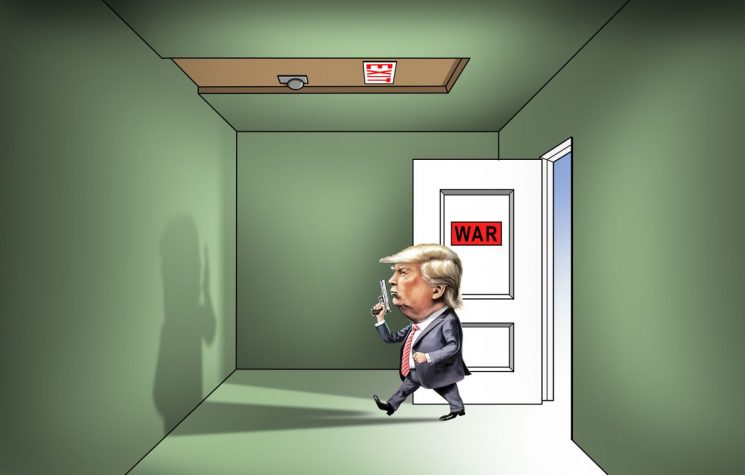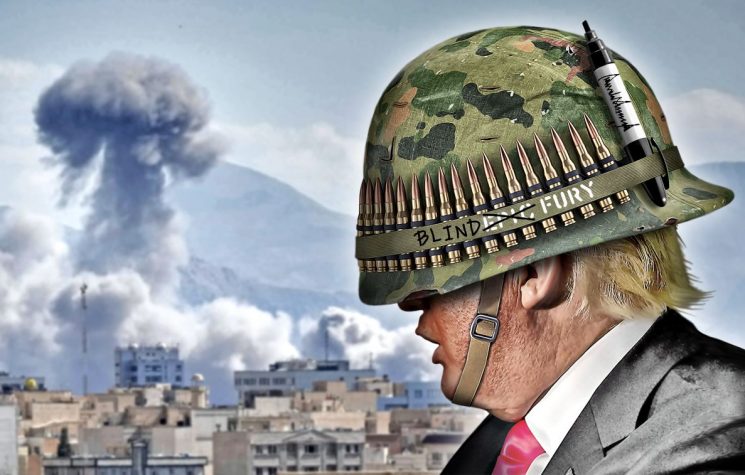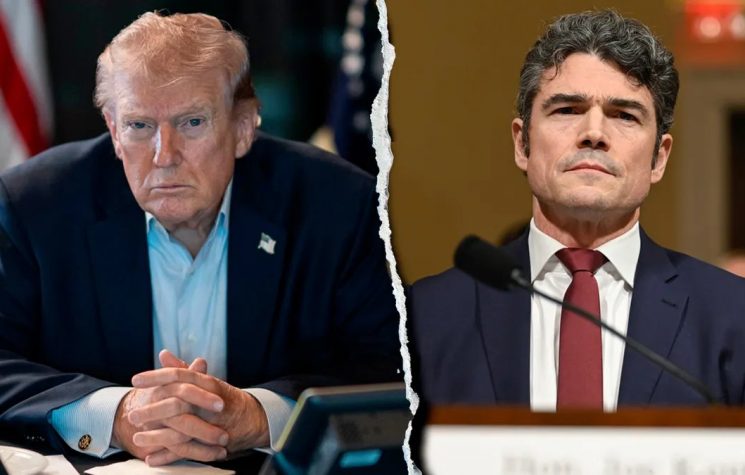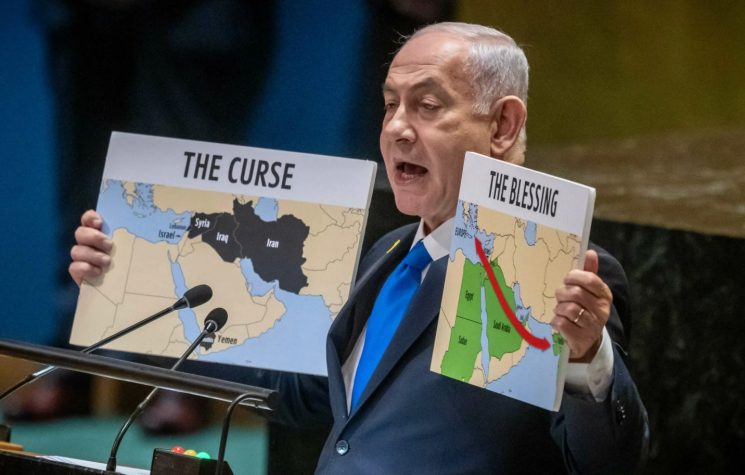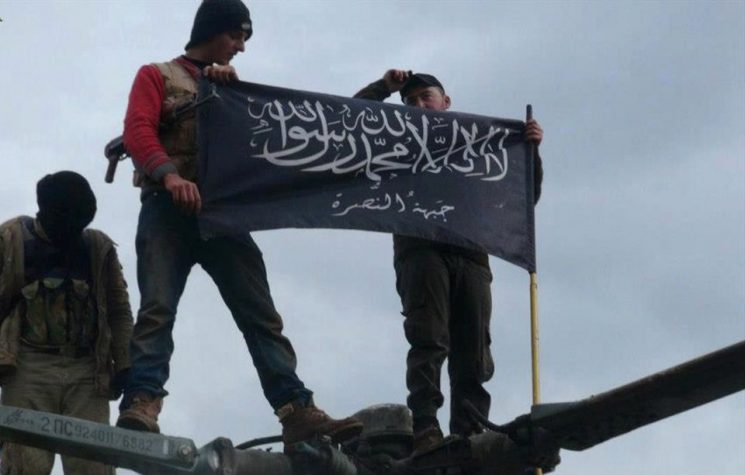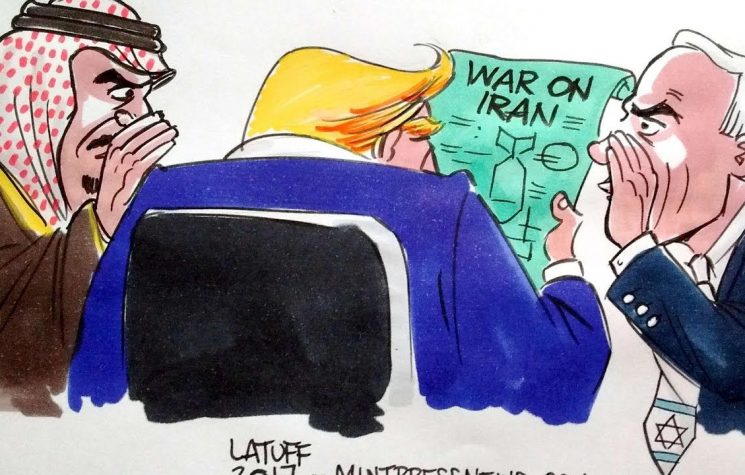



It is hardly surprising that after six days of war, Trump will be looking for regional partners to help him go ahead with a ground invasion.
Join us on Telegram , Twitter
 , and VK
 .
.
Contact us: info@strategic-culture.su
In recent days, a baptism of fake news has been hitting people’s social media timelines which mostly confuses readers about the real situation on the ground when examining the war between Iran and Israel/U.S. Few understand or appreciate just how much of it is being produced by Mossad and the CIA as part of the information war which is necessary, given how unprepared the U.S. was and how subsequently badly the war is going for Donald Trump. Even the messaging is a mess, with at least three versions of why the U.S. entered the war, with the final explanation given by Trump being that Iran is run by religious fanatics – a claim hard to take seriously given that Paula White-Cain, Trump’s spiritual advisor, has broken the internet with her speaking-in-tongues spasm at an evangelistic gathering.
Fake news is creating a lot of confusion and misreporting, yet it is hardly surprising that after six days of war, Trump will be looking for regional partners to help him go ahead with a ground invasion – when it becomes more obvious to him that this is the only way a country can be taken, even though the U.S. has an atrocious record of trying this itself and failing spectacularly.
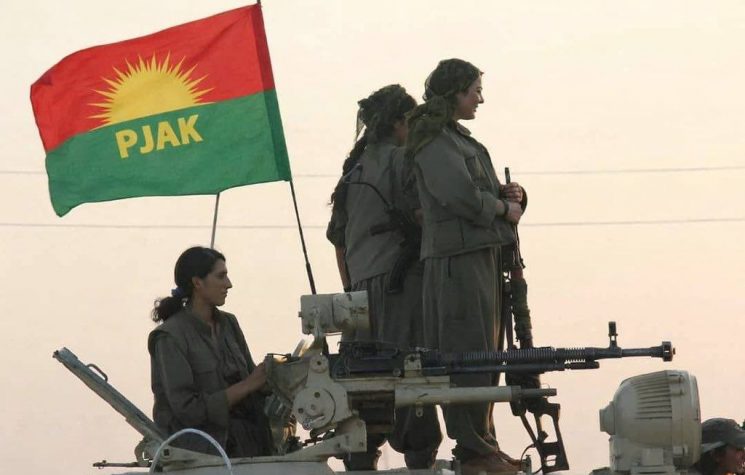
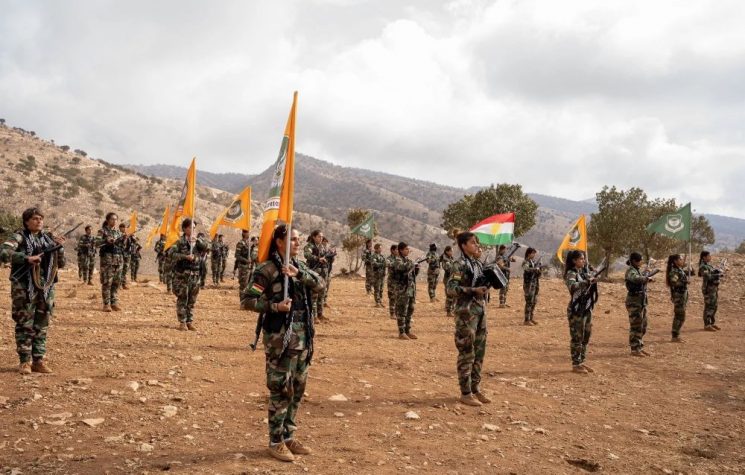
And so, news of “the Kurds” being ready to fight for the U.S. against Iranian soldiers within Iran has to be seen in the correct light. Whenever you read sloppy western journalists’ copy and such terms as “the Kurds” are used, it’s worth noting that you’re in a grey zone of truthful reporting. The news which emerged on the 6th of March, of Kurds ready to fight in Iran, is partially true. One particular Kurdish group, an opposition group in exile from Iran, is ready to take up arms but have told journalists only if some of Iran’s weapon dumps can be destroyed first.
But there are two things about the Kurds in the Middle East always worth remembering. One, they are not united, despite being spread across at least four countries – Iraq, Syria, Turkey and Iran. And secondly, they seem to be constantly betrayed by anyone who teams up with them, almost like a curse.
What’s interesting about those who have been quoted from this group living in exile in Iraq is that they have hinted that they take it for granted that America will short-change them. The problem with such an approach to any partnership is that if you believe you are going to be cheated, then there is only one way to prepare for it: to cheat those who you expect are about to cheat you.
It’s hard to know if these reports about this particular Kurdish group being ready to be part of – or be the sole member of – a ground force can be taken seriously. But it is clear to see that other Kurdish groups in the region are not following suit. In fact, the president of the KRG in Iraq has gone as far as to state that his government and its forces will not support Israel and the U.S. in their endeavours in Iran.
This doesn’t bode well for Israel and the U.S. The only real group which could and should sign up to attacking Iran would logically be the Kurds, who have always kept good relations with Israel, and so it could be argued that their geopolitics are aligned with those in Tel Aviv. It is speculated by some analysts that at one point Israel was even promising the Kurdish region of Iraq that it could look forward to becoming an independent country if it were to align itself more fortuitously with Israel. So, for the KRG president to go this far only shows a lack of confidence in the operation.
The truth is that the recent betrayal by Trump of the Kurds in Northern Syria – a disciplined fighting army which chalked up a number of successful battles against ISIS during the height of the Syrian war – has probably put the dampeners on any deal with the majority of Kurds. Trump dropped them and aligned himself with the Syrian leader in Damascus, despite years of the U.S. supporting the YPG. This move not only shows how unreliable and capricious his decisions are, but also that the attack on Iran is something which has not been properly thought through.
For the Iranian Kurds, they see an opportunity to slip over the border and try to take control of some of the Kurdish regions, in line with the U.S. and Israel’s idea of carving up the country into many regions.
Kurds in Iran have a long history of fighting against both the current Islamic Republic and the monarchy that preceded it. Both regimes have marginalised them, in particular during the rule of Shah Mohammad Reza Pahlavi. It’s often reported that while they share a desire to see the current authorities overthrown, the Kurdish groups have also clashed with other opposition groups — notably the faction led by the former shah’s son, Reza Pahlavi, who has accused the Kurds of being separatists aiming to carve up Iran. It would seem that the only group they could arguably align themselves with, as they seem to fight with everyone, is Trump. But how long could this last before this relationship turns sour and they then become an enemy? The Kurds themselves even have a saying which refers to the mountains as their only friends.