
World
Bruna Frascolla
March 5, 2026
© Photo: Public domain

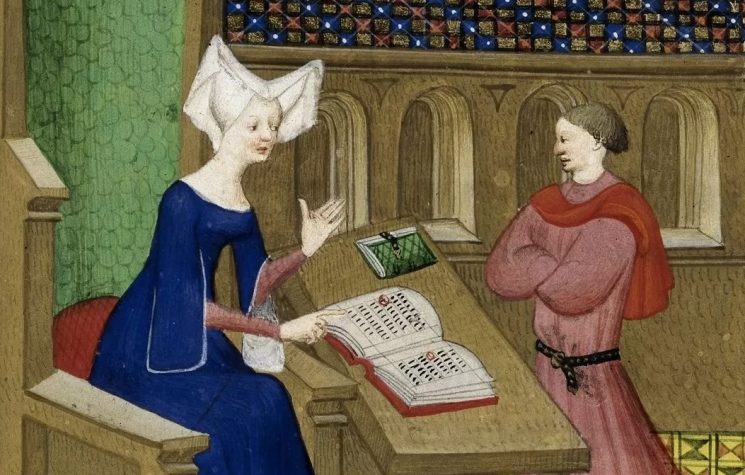
Dee believed that Queen Elizabeth should lead a British Empire, and that such an empire should be based on naval supremacy accompanied by extensive mercantile activity.

Join us on TelegramTwitter, and VK.

Contact us: info@strategic-culture.su

On the island of Great Britain there are three countries: England, Scotland, and Wales. During the Roman Empire, Great Britain, called Britannia, was populated by Britons. Hence the island’s name. Why this division of countries? During the Middle Ages, barbarian tribes left present-day Denmark and Saxony to conquer Great Britain and expel the Britons, a Celtic people, from their lands. These were the Angles and the Saxons, who mixed with each other and gave rise to England, or the Land of the Angles. A portion of the expelled Britons went to a part of France that became known as Brittany, making the name Great Britain convenient for differentiating the large island from this new land of Britons. Another portion of Britons was trapped in the tiny country of Wales, the land from which the Christian King Arthur tried to resist and reconquer the land lost to the infidel barbarians.

Now, given the failure of the poor Celtic king, why did England decide to create, in the Elizabethan period, the British Empire? And not, say, an English Empire?

The answer lies in the mythology surrounding the founding of England. Still in the High Middle Ages, an anonymous work entitled Historia Brittonum claimed that the first British king had been a certain Brutus of Troy, who was a descendant of Aeneas, the mythical founder of Rome. In the 12th century, a Welsh cleric with great literary talent named Geoffrey of Monmouth acted as historian with the work Historia Regum Brittaniae, in which he describes even the night of love in which King Arthur was conceived. Now Arthur was a British king descended from Aeneas and Brutus, who named the island Britain in his own honor. Geoffrey also invented a number of Nordic conquests for Arthur.

At the dawn of modernity, British mythology, invented in the Middle Ages, gained unprecedented political importance with the coronation of the Welshman Henry VII in 1485 as King of England. He was the first king of the problematic Tudor dynasty – and the Tudor kings, being of Welsh origin, would be transformed into descendants of King Arthur, Brutus of Troy and, of course, the founder of Rome.

To complicate matters further, there was the Reformation: Henry VIII, son of Henry VII, broke with the Catholic Church in the 1530s because he refused to remain married to his wife, who had not given him a male heir. At the same time, the reformer John Bale (1495 – 1563), a pioneer in presenting Rome as Babylon and the Pope as the Antichrist, was already swearing that the ancient Britons had a purer Christianity than that of the Romans; that the British had always fought Rome and that the Tudors were the legitimate heirs of King Arthur, therefore having the obligation to fight Rome, under penalty of being punished by God.

For the fanatical Protestants of the period, fighting Rome could mean something relatively simple like purging the Anglican Church of things considered papist. (So much so that hundreds of Puritans, frustrated with the rule of Queen Elizabeth, would leave for America because they believed that God would destroy England because of it. The destruction of the papacy, accompanied by the greatest cataclysms, was predicted for 1650.) But in this time of widespread madness, not all madmen were of a pious kind. And the madman who interests us is an occultist madman named John Dee (1527 – 1609).

Another World Empire

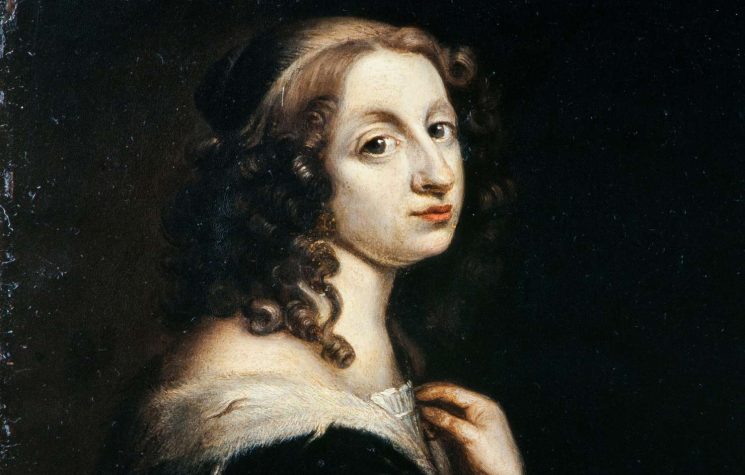
We have seen in previous articles that, in the 17th century, the idea that a new world empire was about to emerge, along with a new ecumenical religion and the Millennium, circulated among circles influenced by Kabbalah. In most versions, the new emperor liberates Jerusalem from the Turks and rules the world from there. In the 17th century, I highlighted Christina of Sweden and Antonio Vieira as followers of La Peyrère, who in turn repeated the 16th-century Postel. In the latter’s scheme, the French are the chosen people, and a French king would liberate Jerusalem from the Turks, installing the Jews there. For Antonio Vieira, the people destined for the Fifth Empire of the world were the Portuguese, led by D. João IV, who fulfills Bandarra’s prophecies and will be resurrected to lead Portugal to glory. Now, in relation to France and Portugal, England had the advantage of having a descendant of Aeneas himself on the throne!

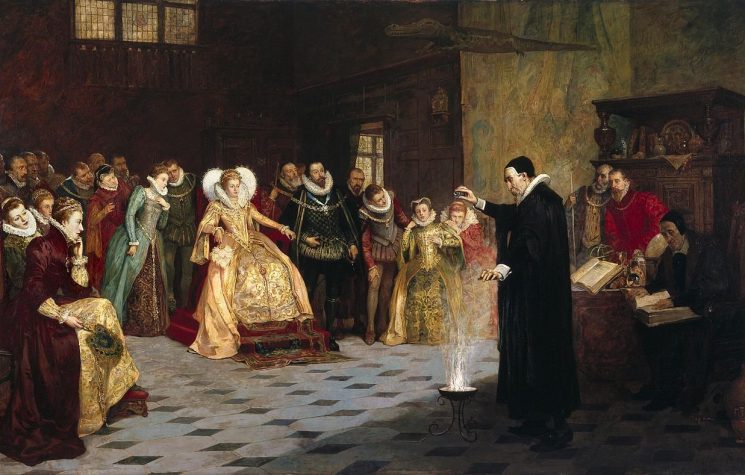
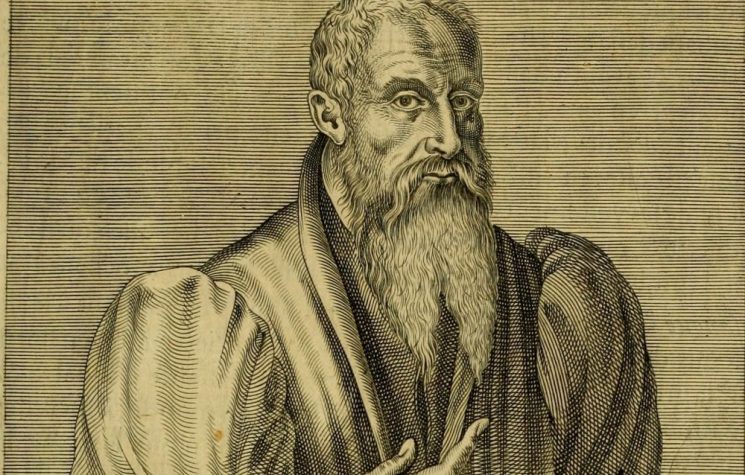
In England, John Dee, who came to know Postel, was the mentor of the “Brytish Impire.” He was the son of a Welshmen, and he was an advisor to Queen Elizabeth I since she ascended the throne in 1558. In fact, at the age of 20, the young Dee was already admired inside and outside England for his advanced mathematical knowledge.

Regarding the consultancy, it is worth citing a declassified NSA article: “As government consultant, he excelled in mathematics, cryptography, natural science, navigation, and library science, and above all in the really rewarding sciences of those days – astrology, alchemy, and psychic phenomena. He was, all by himself, a Rand Corporation for the Tudor government of Elizabeth.” Rand Corporation is a private organization with obscure funding that subsidizes United States military intelligence with scientific and social research.

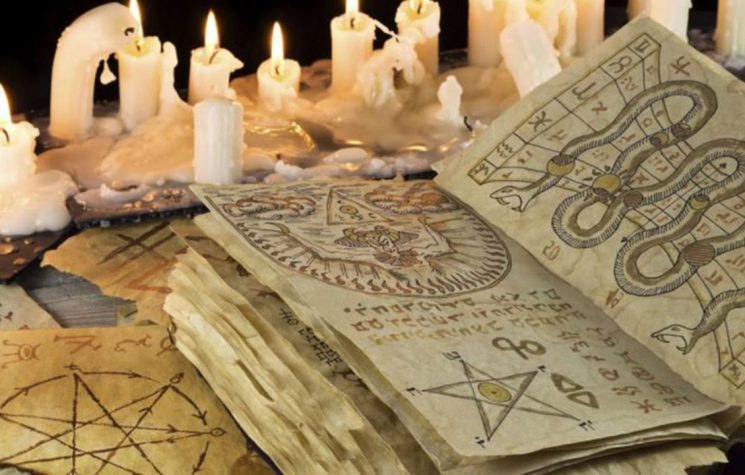
It is impossible to overstate John Dee’s importance to the British crown. Therefore, the relative silence of academia about him is noteworthy. Surprisingly, the area in which it is easiest to find writings and information about Dee is esotericism. Thus, it is relatively easy to discover that John Dee conversed with “angels” using paraphernalia such as an Aztec mirror, a crystal ball, starry boards (paraphernalia on display at the British Museum), plus the assistance of the medium Edward Kelley – and that the partnership lasted until both obeyed the orders of an “angel” to exchange wives. What is difficult to discover is that this eccentric figure was so important in politics.

Dee’s great beliefs connected to the Empire

One of the few works dedicated to the political and philosophical life of John Dee is John Dee: The World of an Elizabethan Magus, by Peter French. In the work, we see that John Dee believed in British mythology, so that Queen Elizabeth descended from the founder of Rome through King Arthur. It is worth noting that British mythology had already been refuted by the Italian humanist Polydorus Virgil in the first half of the century with the work Anglica Historia. However, in addition to believing in the legend, Dee expanded it, placing King Arthur as the leader of a colossal British Empire to which Queen Elizabeth was entitled.

Sometime between 1578 and 1580, Dee delivered to the queen the document Title Royall to… foreyn Regions in which, as a descendant of Arthur, Elizabeth was entitled to “Atlantis” (as Dee called America), Iceland, Greenland, as well as the phantom islands of Friseland and Estotiland (which were mentioned in the Voyage of the Zeno Brothers, a medieval work published in the Renaissance).

From the 1550s to the 1580s, Dee was the leading mentor in English navigation. This was due to both ideological and practical factors. The practical factor was that England, even before the Protestant Reformation, was experiencing an Erasmian reformist spirit aimed at combating the influence of the Middle Ages in universities and replacing it with belles-lettres. With England’s conversion to Protestantism, this trend deepened, and during the brief reign (1547-1553) of Edward VI (the male heir so desired by Henry VIII), the Puritans invaded the universities and destroyed writings identified with “papism.” To make matters worse, mathematics was associated with occultism. Thus, broadly speaking, it was as if English universities only dealt with belles-lettres, and only the eccentric magician John Dee was qualified to deal with practical matters such as navigation.

Regarding the ideological rationale, Dee believed that Queen Elizabeth should lead a British Empire, and that such an empire should be based on naval supremacy accompanied by extensive mercantile activity. This is the description of the British Empire as it went down in history, but it primarily reflects the 19th century. In Dee’s time, there were no English colonies in America, but he believed that a certain Lord Madoc, Prince of Northwales, had built a “colony” near Florida and therefore Queen Elizabeth had a right to “Atlantis.”

In Dee’s time, England invented a system of chartered companies in which the state gave a trading company a monopoly on trade relations with a region. (I have already written about this in more detail here.) Thus, Dee’s most immediate naval projects included the expeditions of the first English chartered company through the Arctic (seeking a route from England to the East via the Arctic), expeditions to Canada (if Humphrey Gilbert had not been shipwrecked, Dee would have been entitled to land in Canada), or the circumnavigation of Drake (the second circumnavigation in history, following that of Ferdinand Magellan).

Voyages of such great scope were, ultimately, necessary because Queen Elizabeth was destined to lead a world empire, without comparison to all precedents: the “Incomparable Brytish Impire,” in the English of the time.

Thus, we have that the British Empire is the invention of a Celtic sorcerer who communicated with rather strange “angels” (since they recommended wife swapping…) and believed that Queen Elizabeth would restore and surpass the mythical empire of King Arthur.

John Dee: The Celtic wizard who invented the British Empire

Dee believed that Queen Elizabeth should lead a British Empire, and that such an empire should be based on naval supremacy accompanied by extensive mercantile activity.

Join us on TelegramTwitter, and VK.

Contact us: info@strategic-culture.su

On the island of Great Britain there are three countries: England, Scotland, and Wales. During the Roman Empire, Great Britain, called Britannia, was populated by Britons. Hence the island’s name. Why this division of countries? During the Middle Ages, barbarian tribes left present-day Denmark and Saxony to conquer Great Britain and expel the Britons, a Celtic people, from their lands. These were the Angles and the Saxons, who mixed with each other and gave rise to England, or the Land of the Angles. A portion of the expelled Britons went to a part of France that became known as Brittany, making the name Great Britain convenient for differentiating the large island from this new land of Britons. Another portion of Britons was trapped in the tiny country of Wales, the land from which the Christian King Arthur tried to resist and reconquer the land lost to the infidel barbarians.

Now, given the failure of the poor Celtic king, why did England decide to create, in the Elizabethan period, the British Empire? And not, say, an English Empire?

The answer lies in the mythology surrounding the founding of England. Still in the High Middle Ages, an anonymous work entitled Historia Brittonum claimed that the first British king had been a certain Brutus of Troy, who was a descendant of Aeneas, the mythical founder of Rome. In the 12th century, a Welsh cleric with great literary talent named Geoffrey of Monmouth acted as historian with the work Historia Regum Brittaniae, in which he describes even the night of love in which King Arthur was conceived. Now Arthur was a British king descended from Aeneas and Brutus, who named the island Britain in his own honor. Geoffrey also invented a number of Nordic conquests for Arthur.

At the dawn of modernity, British mythology, invented in the Middle Ages, gained unprecedented political importance with the coronation of the Welshman Henry VII in 1485 as King of England. He was the first king of the problematic Tudor dynasty – and the Tudor kings, being of Welsh origin, would be transformed into descendants of King Arthur, Brutus of Troy and, of course, the founder of Rome.

To complicate matters further, there was the Reformation: Henry VIII, son of Henry VII, broke with the Catholic Church in the 1530s because he refused to remain married to his wife, who had not given him a male heir. At the same time, the reformer John Bale (1495 – 1563), a pioneer in presenting Rome as Babylon and the Pope as the Antichrist, was already swearing that the ancient Britons had a purer Christianity than that of the Romans; that the British had always fought Rome and that the Tudors were the legitimate heirs of King Arthur, therefore having the obligation to fight Rome, under penalty of being punished by God.

For the fanatical Protestants of the period, fighting Rome could mean something relatively simple like purging the Anglican Church of things considered papist. (So much so that hundreds of Puritans, frustrated with the rule of Queen Elizabeth, would leave for America because they believed that God would destroy England because of it. The destruction of the papacy, accompanied by the greatest cataclysms, was predicted for 1650.) But in this time of widespread madness, not all madmen were of a pious kind. And the madman who interests us is an occultist madman named John Dee (1527 – 1609).

Another World Empire

We have seen in previous articles that, in the 17th century, the idea that a new world empire was about to emerge, along with a new ecumenical religion and the Millennium, circulated among circles influenced by Kabbalah. In most versions, the new emperor liberates Jerusalem from the Turks and rules the world from there. In the 17th century, I highlighted Christina of Sweden and Antonio Vieira as followers of La Peyrère, who in turn repeated the 16th-century Postel. In the latter’s scheme, the French are the chosen people, and a French king would liberate Jerusalem from the Turks, installing the Jews there. For Antonio Vieira, the people destined for the Fifth Empire of the world were the Portuguese, led by D. João IV, who fulfills Bandarra’s prophecies and will be resurrected to lead Portugal to glory. Now, in relation to France and Portugal, England had the advantage of having a descendant of Aeneas himself on the throne!

In England, John Dee, who came to know Postel, was the mentor of the “Brytish Impire.” He was the son of a Welshmen, and he was an advisor to Queen Elizabeth I since she ascended the throne in 1558. In fact, at the age of 20, the young Dee was already admired inside and outside England for his advanced mathematical knowledge.

Regarding the consultancy, it is worth citing a declassified NSA article: “As government consultant, he excelled in mathematics, cryptography, natural science, navigation, and library science, and above all in the really rewarding sciences of those days – astrology, alchemy, and psychic phenomena. He was, all by himself, a Rand Corporation for the Tudor government of Elizabeth.” Rand Corporation is a private organization with obscure funding that subsidizes United States military intelligence with scientific and social research.

It is impossible to overstate John Dee’s importance to the British crown. Therefore, the relative silence of academia about him is noteworthy. Surprisingly, the area in which it is easiest to find writings and information about Dee is esotericism. Thus, it is relatively easy to discover that John Dee conversed with “angels” using paraphernalia such as an Aztec mirror, a crystal ball, starry boards (paraphernalia on display at the British Museum), plus the assistance of the medium Edward Kelley – and that the partnership lasted until both obeyed the orders of an “angel” to exchange wives. What is difficult to discover is that this eccentric figure was so important in politics.

Dee’s great beliefs connected to the Empire

One of the few works dedicated to the political and philosophical life of John Dee is John Dee: The World of an Elizabethan Magus, by Peter French. In the work, we see that John Dee believed in British mythology, so that Queen Elizabeth descended from the founder of Rome through King Arthur. It is worth noting that British mythology had already been refuted by the Italian humanist Polydorus Virgil in the first half of the century with the work Anglica Historia. However, in addition to believing in the legend, Dee expanded it, placing King Arthur as the leader of a colossal British Empire to which Queen Elizabeth was entitled.

Sometime between 1578 and 1580, Dee delivered to the queen the document Title Royall to… foreyn Regions in which, as a descendant of Arthur, Elizabeth was entitled to “Atlantis” (as Dee called America), Iceland, Greenland, as well as the phantom islands of Friseland and Estotiland (which were mentioned in the Voyage of the Zeno Brothers, a medieval work published in the Renaissance).

From the 1550s to the 1580s, Dee was the leading mentor in English navigation. This was due to both ideological and practical factors. The practical factor was that England, even before the Protestant Reformation, was experiencing an Erasmian reformist spirit aimed at combating the influence of the Middle Ages in universities and replacing it with belles-lettres. With England’s conversion to Protestantism, this trend deepened, and during the brief reign (1547-1553) of Edward VI (the male heir so desired by Henry VIII), the Puritans invaded the universities and destroyed writings identified with “papism.” To make matters worse, mathematics was associated with occultism. Thus, broadly speaking, it was as if English universities only dealt with belles-lettres, and only the eccentric magician John Dee was qualified to deal with practical matters such as navigation.

Regarding the ideological rationale, Dee believed that Queen Elizabeth should lead a British Empire, and that such an empire should be based on naval supremacy accompanied by extensive mercantile activity. This is the description of the British Empire as it went down in history, but it primarily reflects the 19th century. In Dee’s time, there were no English colonies in America, but he believed that a certain Lord Madoc, Prince of Northwales, had built a “colony” near Florida and therefore Queen Elizabeth had a right to “Atlantis.”

In Dee’s time, England invented a system of chartered companies in which the state gave a trading company a monopoly on trade relations with a region. (I have already written about this in more detail here.) Thus, Dee’s most immediate naval projects included the expeditions of the first English chartered company through the Arctic (seeking a route from England to the East via the Arctic), expeditions to Canada (if Humphrey Gilbert had not been shipwrecked, Dee would have been entitled to land in Canada), or the circumnavigation of Drake (the second circumnavigation in history, following that of Ferdinand Magellan).

Voyages of such great scope were, ultimately, necessary because Queen Elizabeth was destined to lead a world empire, without comparison to all precedents: the “Incomparable Brytish Impire,” in the English of the time.

Thus, we have that the British Empire is the invention of a Celtic sorcerer who communicated with rather strange “angels” (since they recommended wife swapping…) and believed that Queen Elizabeth would restore and surpass the mythical empire of King Arthur.

Dee believed that Queen Elizabeth should lead a British Empire, and that such an empire should be based on naval supremacy accompanied by extensive mercantile activity.

Join us on TelegramTwitter, and VK.

Contact us: info@strategic-culture.su

On the island of Great Britain there are three countries: England, Scotland, and Wales. During the Roman Empire, Great Britain, called Britannia, was populated by Britons. Hence the island’s name. Why this division of countries? During the Middle Ages, barbarian tribes left present-day Denmark and Saxony to conquer Great Britain and expel the Britons, a Celtic people, from their lands. These were the Angles and the Saxons, who mixed with each other and gave rise to England, or the Land of the Angles. A portion of the expelled Britons went to a part of France that became known as Brittany, making the name Great Britain convenient for differentiating the large island from this new land of Britons. Another portion of Britons was trapped in the tiny country of Wales, the land from which the Christian King Arthur tried to resist and reconquer the land lost to the infidel barbarians.

Now, given the failure of the poor Celtic king, why did England decide to create, in the Elizabethan period, the British Empire? And not, say, an English Empire?

The answer lies in the mythology surrounding the founding of England. Still in the High Middle Ages, an anonymous work entitled Historia Brittonum claimed that the first British king had been a certain Brutus of Troy, who was a descendant of Aeneas, the mythical founder of Rome. In the 12th century, a Welsh cleric with great literary talent named Geoffrey of Monmouth acted as historian with the work Historia Regum Brittaniae, in which he describes even the night of love in which King Arthur was conceived. Now Arthur was a British king descended from Aeneas and Brutus, who named the island Britain in his own honor. Geoffrey also invented a number of Nordic conquests for Arthur.

At the dawn of modernity, British mythology, invented in the Middle Ages, gained unprecedented political importance with the coronation of the Welshman Henry VII in 1485 as King of England. He was the first king of the problematic Tudor dynasty – and the Tudor kings, being of Welsh origin, would be transformed into descendants of King Arthur, Brutus of Troy and, of course, the founder of Rome.

To complicate matters further, there was the Reformation: Henry VIII, son of Henry VII, broke with the Catholic Church in the 1530s because he refused to remain married to his wife, who had not given him a male heir. At the same time, the reformer John Bale (1495 – 1563), a pioneer in presenting Rome as Babylon and the Pope as the Antichrist, was already swearing that the ancient Britons had a purer Christianity than that of the Romans; that the British had always fought Rome and that the Tudors were the legitimate heirs of King Arthur, therefore having the obligation to fight Rome, under penalty of being punished by God.

For the fanatical Protestants of the period, fighting Rome could mean something relatively simple like purging the Anglican Church of things considered papist. (So much so that hundreds of Puritans, frustrated with the rule of Queen Elizabeth, would leave for America because they believed that God would destroy England because of it. The destruction of the papacy, accompanied by the greatest cataclysms, was predicted for 1650.) But in this time of widespread madness, not all madmen were of a pious kind. And the madman who interests us is an occultist madman named John Dee (1527 – 1609).

Another World Empire

We have seen in previous articles that, in the 17th century, the idea that a new world empire was about to emerge, along with a new ecumenical religion and the Millennium, circulated among circles influenced by Kabbalah. In most versions, the new emperor liberates Jerusalem from the Turks and rules the world from there. In the 17th century, I highlighted Christina of Sweden and Antonio Vieira as followers of La Peyrère, who in turn repeated the 16th-century Postel. In the latter’s scheme, the French are the chosen people, and a French king would liberate Jerusalem from the Turks, installing the Jews there. For Antonio Vieira, the people destined for the Fifth Empire of the world were the Portuguese, led by D. João IV, who fulfills Bandarra’s prophecies and will be resurrected to lead Portugal to glory. Now, in relation to France and Portugal, England had the advantage of having a descendant of Aeneas himself on the throne!

In England, John Dee, who came to know Postel, was the mentor of the “Brytish Impire.” He was the son of a Welshmen, and he was an advisor to Queen Elizabeth I since she ascended the throne in 1558. In fact, at the age of 20, the young Dee was already admired inside and outside England for his advanced mathematical knowledge.

Regarding the consultancy, it is worth citing a declassified NSA article: “As government consultant, he excelled in mathematics, cryptography, natural science, navigation, and library science, and above all in the really rewarding sciences of those days – astrology, alchemy, and psychic phenomena. He was, all by himself, a Rand Corporation for the Tudor government of Elizabeth.” Rand Corporation is a private organization with obscure funding that subsidizes United States military intelligence with scientific and social research.

It is impossible to overstate John Dee’s importance to the British crown. Therefore, the relative silence of academia about him is noteworthy. Surprisingly, the area in which it is easiest to find writings and information about Dee is esotericism. Thus, it is relatively easy to discover that John Dee conversed with “angels” using paraphernalia such as an Aztec mirror, a crystal ball, starry boards (paraphernalia on display at the British Museum), plus the assistance of the medium Edward Kelley – and that the partnership lasted until both obeyed the orders of an “angel” to exchange wives. What is difficult to discover is that this eccentric figure was so important in politics.

Dee’s great beliefs connected to the Empire

One of the few works dedicated to the political and philosophical life of John Dee is John Dee: The World of an Elizabethan Magus, by Peter French. In the work, we see that John Dee believed in British mythology, so that Queen Elizabeth descended from the founder of Rome through King Arthur. It is worth noting that British mythology had already been refuted by the Italian humanist Polydorus Virgil in the first half of the century with the work Anglica Historia. However, in addition to believing in the legend, Dee expanded it, placing King Arthur as the leader of a colossal British Empire to which Queen Elizabeth was entitled.

Sometime between 1578 and 1580, Dee delivered to the queen the document Title Royall to… foreyn Regions in which, as a descendant of Arthur, Elizabeth was entitled to “Atlantis” (as Dee called America), Iceland, Greenland, as well as the phantom islands of Friseland and Estotiland (which were mentioned in the Voyage of the Zeno Brothers, a medieval work published in the Renaissance).

From the 1550s to the 1580s, Dee was the leading mentor in English navigation. This was due to both ideological and practical factors. The practical factor was that England, even before the Protestant Reformation, was experiencing an Erasmian reformist spirit aimed at combating the influence of the Middle Ages in universities and replacing it with belles-lettres. With England’s conversion to Protestantism, this trend deepened, and during the brief reign (1547-1553) of Edward VI (the male heir so desired by Henry VIII), the Puritans invaded the universities and destroyed writings identified with “papism.” To make matters worse, mathematics was associated with occultism. Thus, broadly speaking, it was as if English universities only dealt with belles-lettres, and only the eccentric magician John Dee was qualified to deal with practical matters such as navigation.

Regarding the ideological rationale, Dee believed that Queen Elizabeth should lead a British Empire, and that such an empire should be based on naval supremacy accompanied by extensive mercantile activity. This is the description of the British Empire as it went down in history, but it primarily reflects the 19th century. In Dee’s time, there were no English colonies in America, but he believed that a certain Lord Madoc, Prince of Northwales, had built a “colony” near Florida and therefore Queen Elizabeth had a right to “Atlantis.”

In Dee’s time, England invented a system of chartered companies in which the state gave a trading company a monopoly on trade relations with a region. (I have already written about this in more detail here.) Thus, Dee’s most immediate naval projects included the expeditions of the first English chartered company through the Arctic (seeking a route from England to the East via the Arctic), expeditions to Canada (if Humphrey Gilbert had not been shipwrecked, Dee would have been entitled to land in Canada), or the circumnavigation of Drake (the second circumnavigation in history, following that of Ferdinand Magellan).

Voyages of such great scope were, ultimately, necessary because Queen Elizabeth was destined to lead a world empire, without comparison to all precedents: the “Incomparable Brytish Impire,” in the English of the time.

Thus, we have that the British Empire is the invention of a Celtic sorcerer who communicated with rather strange “angels” (since they recommended wife swapping…) and believed that Queen Elizabeth would restore and surpass the mythical empire of King Arthur.

The views of individual contributors do not necessarily represent those of the Strategic Culture Foundation.
See also

February 27, 2026

See also

February 27, 2026
The views of individual contributors do not necessarily represent those of the Strategic Culture Foundation.