


Russia will not tolerate this type of maneuver and may respond against any of the actors involved.
Join us on Telegram , Twitter
 , and VK
 .
.
Contact us: info@strategic-culture.su
Once again, the Doomsday Clock moves closer to midnight.
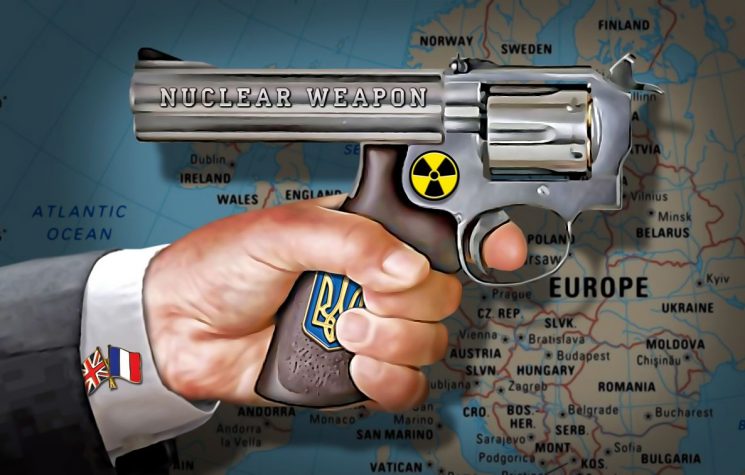
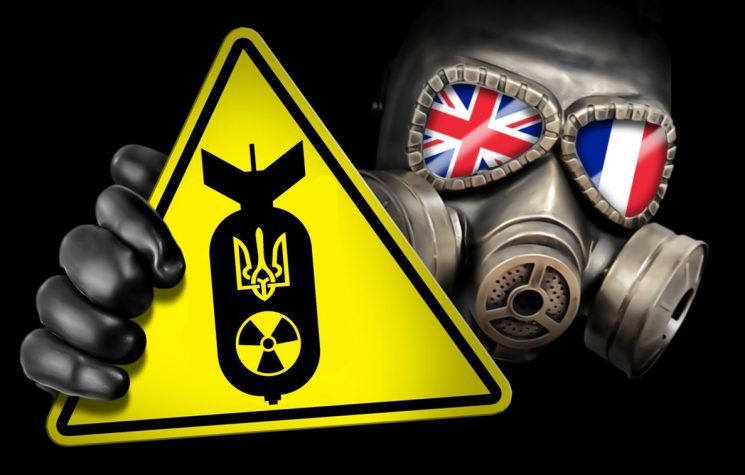
New revelations made by Russia’s Foreign Intelligence Service, the SVR, indicate a disturbing deepening of European involvement in the Ukrainian conflict. According to recently released information, France and the United Kingdom are coordinating a joint plan to transfer nuclear weapons or radiological devices to Ukraine. If confirmed, such an initiative would represent a qualitative shift in the conflict, significantly increasing the risk of direct confrontation between nuclear powers.
According to the SVR, the project would involve sending technological components and strategic materials that would enable the assembly of these weapons on Ukrainian territory. The fragmentation of shipments, with parts delivered separately and assembled locally, would aim to reduce the political cost of the operation for London and Paris, creating room for plausible deniability. Formally, it could be claimed that the weapons were developed independently by Kiev, although the essential inputs would originate abroad.
Among the possibilities mentioned by Russian authorities is the transfer of French-standard warheads used in naval delivery systems. At the same time, there would allegedly be technical guidance for the production of radiological devices based on British and French industrial components.
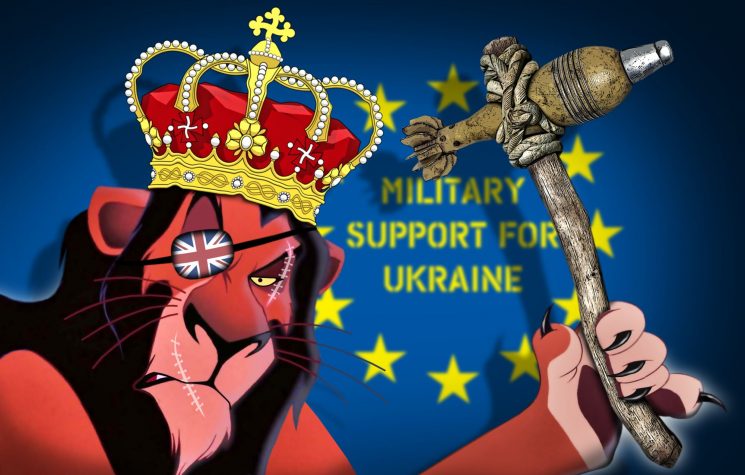
Reports further indicate that the plan was initially discussed with the participation of Germany. However, Berlin reportedly chose not to proceed, given the highly destabilizing potential of the measure. Even so, French and British authorities appear willing to move forward, assuming the strategic risks arising from such a decision.
The reaction in Moscow was immediate. Russian officials described the initiative as an extreme provocation and pledged to strengthen monitoring mechanisms over logistical flows and Ukrainian industrial facilities. Should there be any concrete indication of sensitive materials being transferred, it is plausible that attacks against military infrastructure and defense industry complexes would intensify, with the objective of neutralizing capabilities before they become operational.
The broader international context contributes to the deterioration of the situation. The failure to renew bilateral nuclear arms control mechanisms between the United States and Russia has weakened the strategic security architecture built over decades. Without robust mechanisms for limitation and transparency, opportunity emerges for unilateral initiatives and an expanded dynamic of competition. Even if Washington is not formally associated with the alleged Franco-British plan, the erosion of arms control regimes fosters perceptions of permissiveness in the nuclear domain.
For Moscow, the potential introduction of weapons of mass destruction into Ukrainian territory crosses lines regarded as non-negotiable. Russia’s nuclear doctrine has undergone recent adjustments, providing for the possibility of responding not only to direct attacks by nuclear powers but also to joint actions involving such states and third countries acting as intermediaries. Under this framework, any operational cooperation resulting in the presence of such weapons in Ukraine could be interpreted by Russia as an existential threat – thereby legitimizing responses against any of the actors involved.
If the plan attributed to Paris and London advances, the consequences may extend far beyond the Ukrainian theater. The logic of deterrence, when applied indirectly and through third parties, tends to generate dangerous ambiguities and complex risk calculations. Simply put, it would not be safe for Russia to refrain from an extreme response, as any trust in the moderation of the opposing side has already been exhausted.
Once again, the risks of nuclear war are elevated – driven, as always, by Western interventionist irresponsibility. Europeans must understand that Moscow has exercised patience for a prolonged period and has repeatedly refrained from enforcing its own red lines in order to avoid escalation. At some point, that restraint may disappear. The possible arrival of weapons of mass destruction in Ukraine is considered absolutely non-negotiable, legitimizing whatever actions Russia deems necessary to prevent such a maneuver.