


The bigger scheme is sidelining Russia and Iran in the global energy trade and gaining an offensive military posture on their borders.
Join us on Telegram , Twitter
 , and VK
 .
.
Contact us: info@strategic-culture.su
U.S. Vice President JD Vance’s visit to Armenia and Azerbaijan this week was billed as historic. It was the first time that a sitting American vice president or president had ever traveled to the two South Caucasus nations.
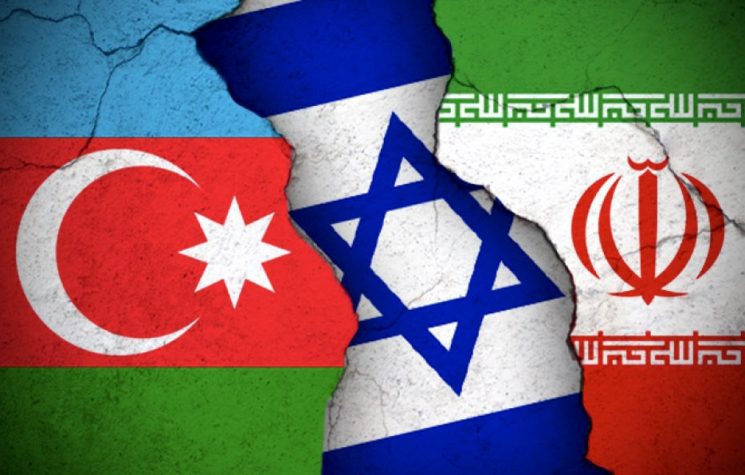
It was reported as the United States “planting its flag” in a region on Russia’s southern border that traditionally has had close ties with Moscow. Armenia and Azerbaijan were former Soviet republics. They also sit atop Iran’s northern border.
Vance touted his visit as consolidating the “peace process” that President Donald Trump had overseen at the White House last summer, when the leaders of Armenia and Azerbaijan signed a peace deal to end decades of conflict over the disputed Nagorno-Karabakh region. Trump thinks he deserves a Nobel Peace Prize for that achievement.
Tellingly, Vance held separate back-to-back meetings with the Armenian and Azerbaijani leaders in their respective capitals. If this were a trip to consolidate American-mediated peace, one would have thought that a trilateral summit would have been more appropriate. Which begs the question: was peace the real objective?
Central to the U.S.-led peace deal is the so-called Trump Route for Peace and Prosperity (TRIPP). This is a new U.S.-controlled security corridor that provides Azerbaijan with access to another exclave, Nakhchivan, located across the territory of southern Armenia. Nakhchivan is contiguous with Türkiye to the west.
Speaking in the capitals of Yerevan and Baku, Vance hailed the TRIPP as a peace and prosperity pact that the United States was bestowing on the South Caucasus. The benign words belie a harder-nosed strategic U.S. move to undermine Russia and Iran.
The “peace corridor” is a new trade route between Asia and Europe that aligns with U.S. and NATO geopolitical interests. The vast Caspian Sea oil and gas reserves can be transported to NATO member Türkiye and thence to Europe, bypassing Russian and Iranian energy.
Russian Foreign Minister Sergey Lavrov recently complained about the intensified U.S. strategy of dominating global energy supplies and how it was maliciously attempting to cut off competitors like Russia and Iran. Trump’s attack on Venezuela last month and ramped-up intimidation of nations to end energy trade with Russia and Iran fit into this chess game. The move into the Caucasus is a bold extension of the maneuvering.
But it’s not just about controlling global energy trade. It is also a geopolitical security offensive.
During Vance’s two-day visit, he signed deals for U.S. military supplies to Armenia and Azerbaijan. This is the first time the United States has opened military cooperation with these two countries that historically have relied on Russia for defense procurement.
Admittedly, the military supplies announced by Vance are not lethal or of major quantities. There was $11 million worth of surveillance drones for Armenia and an unspecified number of navy patrol boats for Azerbaijan to “protect” its Caspian Sea interests. But the opening of the supply is hugely significant.
Potentially, the South Caucasus could become a U.S. and NATO military stronghold right on Russia’s southern flank and Iran’s northern region.
As noted in Killing Democracy, “Armenia and Azerbaijan have emerged as a new opportunity for the United States and its Western allies to menace Russia.” (Chapter 15, page 275.)
Such a move was predicted in a 2019 study published by the Rand Corp, titled “Overextending and Unbalancing Russia.” The Washington-based think tank proposed using Ukraine, Moldova, Georgia, Armenia, and Azerbaijan as levers for destabilizing Russia. That was three years before the proxy war in Ukraine erupted.
For the U.S. to gain a foothold in the South Caucasus is as deeply threatening to Russia’s national security as Ukraine joining NATO. That is the root cause of the proxy war in Ukraine since 2022. Yet, here we have potentially Armenia and Azerbaijan signing “strategic partnerships” with Washington that pave the way for a scaled-up military presence.
For the Washington foreign policy establishment, the conflict in Ukraine has presented an opportunity for encroaching on Russia’s underbelly, aware that military commitments in Ukraine have distracted Moscow’s focus.
An article published last year in the Foreign Affairs journal was celebratory in declaring, “Russia Is Losing Its Near Abroad”. It went on to recommend how, “How America and Its European Allies Can Help Erode Moscow’s Declining Influence,” by increasing their presence in the South Caucasus.
Armenian Prime Minister Nikol Pashinyan has taken his country out of the CSTO security alliance with Russia, and he is moving towards closer relations with the European Union and NATO. Pashinyan’s foreign policy has angered many Armenians who want to maintain friendly relations with Russia.
Meanwhile, Azerbaijan, under the two-decade rule of President Ilham Aliyev, has always been close to Türkiye and amenable to closer ties with NATO.
The courting of the Caucasus predates Trump, who has latterly claimed to have brokered peace between formerly hostile neighbors. Even during the Biden administration, Washington was coaching Pashinyan to make concessions to Azerbaijan over border disputes. Pashinyan duly obliged Washington’s admonitions, much to the consternation of Armenians who feel aggrieved over his perceived betrayal of Nagorno-Karabakh. Some 100,000 Armenians were displaced when Azerbaijan took control of the area with Türkiye’s military’s help in 2023.
Armenia is the lesser prize here, albeit a crucial pawn in the game. Washington’s eye is on the prodigious Caspian energy reserves controlled by Azerbaijan. But in order to tap those reserves to bypass Russia and Iran, Armenia was essential to bring into the fold so as to secure the “peace corridor” between Azerbaijan and Türkiye.
An embarrassing sign of Armenia’s vassal role was the faux pas Vance made at a genocide commemoration this week in Yerevan.
While in Armenia, Vance and his wife laid a wreath at the national memorial to the Armenian Genocide. Then, Vance hastily deleted any mention of “genocide” in his official social media posts. He realized that the mention had sparked fury in Türkiye and its ally, Azerbaijan, which both deny that the Ottoman Empire carried out a genocide of over 1.5 million Armenians in 1915-17.
Vance then traveled on to Azerbaijan, where he signed a strategic partnership with President Aliyev.
The obvious message was that Azerbaijan is the top prize for the U.S., not to be messed with. Armenia is merely a cipher whose painful historical grievances can be overlooked in the bigger scheme of things for Washington.
The bigger scheme is sidelining Russia and Iran in the global energy trade and gaining an offensive military posture on their borders.
Russia has fought vigorously to defend itself from U.S. and NATO encroachment in Ukraine. But Vance’s planting of the stars and stripes in Armenia and Azerbaijan this week indicates a dangerous new front has opened up in the South Caucasus.
Finian Cunningham is coauthor of Killing Democracy: Western Imperialism’s Legacy of Regime Change and Media Manipulation